Plastic pallets are an essential part of many industries, being the most durable, the lightest, and the most environmentally friendly substitution for wooden pallets. But, when it is about picking the best plastic pallet for your operation, it is very important to comprehend the load capacity. Static, dynamic, and racking limits, among others, have a direct effect on the safety, efficiency, and performance of your entire supply chain. Knowing these weight limits can be the deciding factor, whether you are storing goods in a warehouse by stacking, delivering items, or putting very heavy loads on a racking system. This manual carefully examines the differences between static, dynamic, and racking load capacities so that you can make the most effective decisions in regard to your logistics and operations.
Understanding Pallet Load Capacity
What is Pallet Load Capacity?
Maximum weight a pallet can carry without any risk during certain conditions is called the pallet load capacity. This capacity is determined by the mode in which the pallet is used, i.e. if the pallet is static, dynamic, or placed on a racking system. Knowing these differences, one can use the pallet within its limits, thereby preventing the occurrence of damages, accidents, or inefficiencies in the operation. It is always a good practice to refer to the manufacturer’s specifications for the exact load capacity needed for your pallets.
Static vs Dynamic Load Explained
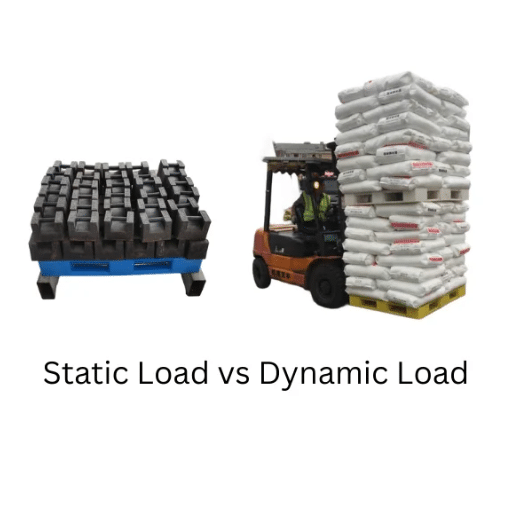
The static load is the maximum weight that can be placed on the pallet without any movement, i.e. when it is kept on a stable and flat surface. Conversely, dynamic load capacity is the maximum weight that a pallet is allowed to handle if it is being moved that way by a forklift, pallet jack, or any other transport facilities. Businesses are constantly looking for ways to improve their pallet load management, which highlights the importance of minimizing risks and securing people. It must be pointed out that static load usually has a higher weight limit compared to dynamic loads because of the non-existence of movement stress. For example, a standard wooden pallet might support up to a thousand pounds statically but only manage a dynamic load of around two thousand two hundred pounds. By recognizing these differences in your operations, you can not only prevent downtime from emergencies caused by mishandling but also comply with best practices recommended by safety experts that are aimed at improving workflow efficiency and cost savings.
The Importance of Weight Limits in Supply Chain
Weight limits are very important because they ensure the efficiency and safety of supply chain operations. Recent search data indicates that the number of queries related to “safe pallet weight limits” and “overloading consequences in warehouses” has rapidly grown, showing that businesses are getting more concerned about compliance and losing money through errors. Going beyond the recommended weight capacities might result in damaged products, dysfunctional forklifts and even injuries at the workplace which would all disrupt the flow of work and raise the operational costs.
For instance, research indicates that if a pallet is overloaded just once, machine repair costs will go up by as much as 15% over the next six months. Moreover, studies are showing that supply chains that adhere to strict weight regulations report as much as 40% fewer incidents related to load mishandling. These figures prove that it is very important to clearly define weight limit guidelines and integrate them into the operational protocols, while at the same time utilizing advanced technology, like AI-driven inventory systems, to continuously monitor and optimize load distribution in real time. By considering these practices as a priority, businesses can become more sustainable, reduce their liabilities, and reap the benefits of improved long-term cost efficiency.
Types of Plastic Pallets

Standard Pallet Sizes and Dimensions
Everything revolves around the sizes and dimensions of the standard pallets which are internationally set to match the different needs of various sectors, and at the same time, to be compatible with the transport and the storage systems. The American market’s most popular size is 48×40-inch pallets, which are used in retail and manufacturing, among others. The European market is more inclined towards the EUR-pallet or Euro pallet, which is a 1200×800 mm pallet—to be in sync with the local shipping and storage practices. The loading, stacking, and moving of the pallets in supply chains become more efficient with the help of these standard dimensions. Furthermore, the production of the custom-sized plastic pallets that meet the specific operational needs is a provision that not only offers flexibility but also maintains the attributes of durability and efficiency.
Different Pallet Materials and Their Strength
Among the customers, plastic pallets have a good reputation due to their long-lasting and moistureproof nature and easy-to-carry and light materials, thus they are perfect for the industries that seek clean and reusable solutions such as those dealing with the pharmacy and food industry. Wood is just opposite and ductile but cheap so it is widely used in logistics and agri-management but, the downside is that they need to be treated to avoid bugs which is not a problem with the plastic pallets. The metal pallets being the strongest and longest-living in the materials used are meant for hardcore-duty jobs or places where they are exposed to heat or chemicals. What the different materials have in common are that each comes with its own set of pros and cons thus offering the user to choose based on the pallet’s load requirements, the place’s environmental conditions, and the accepted standards in the specific industry.
Choosing the Right Pallet for Your Needs
When talking about the best choice of a pallet, it is all about having a good grasp of the unique needs and the given conditions in your operations. If you take issues like weight and type of load, along with the storage and transportation environments and compliance with industry-specific standards into consideration, you will be able to select the right pallet. For example, wood pallets are always the first when talking about versatile and cost-effective materials; however, they may need to be properly maintained and treated to prevent infestations. On the other hand, plastic pallets are stigma-resistant and do not decay, which makes them perfect for food and drugs industries. Metal pallets can be used for super heavy-duty applications or extreme environments as they provide unmatched strength and longevity even under severe stress or exposure to harsh chemicals.
Load Capacities of Plastic Pallets
Static Load Capacity
Static load capacity indicates the overall weight limit that a plastic pallet can withstand while being immovable. The specified load capacity is of great importance when pallets are used for storage in stacked forms, for example, in the case of warehouses, or even on storage racks. The static load capacity of a plastic pallet is in most cases determined by the material properties, design structure, and the specific industrial standards. Good quality plastic pallets usually support several tons in static loads which make them trustworthy for heavy and stable loads. While evaluating the static load capacity, one also must consider the nature of goods being stored and guaranteeing that the pallet also complies with the necessary safety and industry regulations.
Dynamic Load Capacity
Dynamic load capacity is the maximum weight that a plastic pallet can carry during the time it is in motion, for example, when transporting it with a fork-lift truck or a pallet jack. The pallet’s construction, the strength of its materials and the distribution of the load are the determinants of this capacity. Good quality pallets are able to accommodate weights of 1,000 to 3,000 pounds under dynamic conditions, which in turn guarantees the safe and efficient passage of goods. Determining an exact dynamic load capacity involves taking into consideration the weight of the goods, the frequency of movement, and the compatibility of the equipment, hence fulfilling the operational requirements and safety standards.
Average Pallet Weight Capacity
The average pallet weight capacity is a variable that depends on such factors as the type of material used, the design of the pallet as well as the purpose for which it is used. Wooden pallets, which are the most common ones, usually support 2,000 to 3,000 pounds depending on the conditions of use, while plastic pallets, which are also being widely used, can withstand the same or slightly lower loads because of their construction. In order to get the most exact results, it is important to find out the weight of the goods being transported, how often they are moved and if the equipment is suitable. When the specifications of the pallet coincide with the operational requirements it will then be possible to maintain both safety and efficiency during transit.
Comparing Plastic Pallets and Wooden Pallets

Weight Capacity Differences
Plastic pallets, in general, have similar weight capacities to that of wooden pallets, and very often their weight limits would range from 2,000 to 3,000 pounds if the conditions are dynamic. The actual limit, however, depends on the specific design and the quality of the materials of the pallet. Wood pallets have always been the first choice in applications, which include heavy load and frequent use, due to their sturdiness, even if they are heavier. On the contrary, plastic pallets offer a light option with their strength and endurance remaining the same, which makes it easier to handle them manually. For safe and effective operations, it is very important to consider the goods weight, use frequency, and handling equipment compatibility when deciding on the type of pallet.
Pallet Strength in Different Applications
A pallet’s strength and appropriateness usually depend on a particular application, load requirements, and the working environment. If we consider the most demanding situations, such as industrial production or big goods carrying, wooden pallets will certainly be the main choice because of their ability to hold a certain amount of weight that ranges, on average, from 2,500 to 3,000 pounds. Nevertheless, plastic pallets are not becoming in the range of heavy-duty ones; they still have their share of application areas, for example, the pharma and food and beverages industries, where cleanliness is of prime importance. Plastics have lower weight limits (about 1,800 to 2,200 pounds), but they do have some advantages over woods in terms of cleanroom-like areas because they are less prone to contamination, moisture, and temperature changes.
Search data has also pointed to a notable transition in which the demand for hybrid pallet designs has been rapidly and significantly increasing. This move is primarily attributed to the need of the market for ultra-high durability or advanced compliance standards in niche applications. Moreover, companies are looking for eco-friendly pallet solutions more often. This reflects the escalating demand for reusable or recyclable options that are in line with the organization’s sustainability goals. Thus, the process of defining the right pallet for an application is a complex issue because it has to juggle weight capacity, the current regulations in the particular industry, and the environmental aspects in order to tune performance and lessen operational inefficiencies.
Cost-effectiveness in the Supply Chain
Cost-effectiveness within the supply chain means finding the perfect spot between operational efficiency and cost management. In my understanding, this would entail the application of methods that optimally manage logistics to lower transport costs, taking up durable and reusable materials, including eco-friendly pallets, to lessen the expense of covering replacements, and utilizing technology to improve stock control. By giving importance to sustainability and efficiency, I can not only get substantial savings but also keep the supply chain running smoothly and in compliance with both financial and environmental objectives.
References
-
Investigation of the Environmental Effect of Unit Load Design Optimization Using Physical Interaction Between Pallets and Corrugated Boxes
Read the study -
Load-carrying capacity of deck boards for general-purpose pallets
Read the paper -
Mathematical Optimization of Pallet Loading and Line Balancing to A Manufacturing System
Read the research
Frequently Asked Questions (FAQ)
What types of pallets have an effect on maximum weight capacity?
The load support of the pallet depends on the material it is made of and also indirectly on the maximum weight he can hold. Different types of pallets have been made with different strengths, for example, a block or four-way pallet often carries more weight than a lighter stringer design. The capacities for static and dynamic loads are not the same: static load capacity is the maximum weight a pallet can hold when not in motion, while dynamic load capacity is lower and applicable during transport via forklifts and pallet jacks. The pallets used in racking systems might need to have higher weight limits, and the rackable plastic ones are specified for racking. Suggested unused terms: pallet dimensions, pallet requirements.
What is the maximum weight a standard wood pallet can support?
A standard wood pallet (usually the standard 48 size) typically has a very wide span of loads dependent on the construction quality, but the average weight capacity of most 48×40 wood pallets is about 2,000 to 4,000 lbs static. The capacity of the pallet depends on its design, its height, and whether the load is evenly distributed over the surface of the pallet. The situation of overloading and failure of the pallet is more likely if the limit of the pallet is exceeded or if the fork entry and the supporting points are subjected to uneven stresses. For heavy loads or frequent rack use consider heavy-duty plastic pallets or reinforced block pallet design with higher maximum weight capacity. Suggested unused terms: pallet can safely carry, dynamic load capacity.
How do pallet dimensions and weight distribution impact load capacity?
Pallet dimensions and weight distribution are huge factors that determine both the effective load capacity and the risk of pallet breaks. The common pallet dimensions, for instance the standard 48×40, dictate the manner in which cargo occupies the deck and interacts with the forklifts, and also with the pallet racking systems, and as such they will be affecting both static and dynamic load capacities. When weight is focused on one side or at the edges instead of being evenly spread, not only does the strength of the pallet drop but also the load under which the pallet may fail becomes lesser than that of the rated capacity. Always verify the load type and make sure that the weight across the pallet is balanced so that the full capacity of the pallets in use can be supported. Suggested unused terms: pallet height, pallet racking systems.
What is the difference between static load and dynamic load for a pallet?
The distinction between static and dynamic load capacities is such that the static load capacity denotes the maximum load a pallet can hold when it is not moving (for instance, it is in storage) while the dynamic load capacity is the max weight the pallet can carry safely while being transferred by a forklift or pallet jack. Dynamic load is usually lower since movement adds to the stresses, tipping risk, and point loads at fork contact areas. Pallet materials and pallet designs, such as whether pallets are rackable plastic pallets or wooden pallets, define both static and dynamic ratings. For safe and efficient pallet use, it is best to follow the manufacturer ratings regarding both static and dynamic loads and consider the total load including the pallet weight. Suggested unused terms: pallet’s load capacity, forklifts and pallet jacks.
How do pallet requirements change for pallet racking systems?
Pallets used in pallet racking systems must meet more demanding requirements in regards to strength, rackable design, and consistent dimensions throughout the whole pallet to avoid any risks coming from improper engagement with racks. Racking plastic pallets or reinforced wood block pallets are often specified due to their higher maximum weight capacity and predictable support points when placed in racks. Engineers look at both total load and distribution over the pallet to decide if the pallet can safely support storage loads in racking application. Always check the pallets rated capacity, take into account both static and dynamic load capacities and also the weight a pallet can hold when fully loaded and moved. Suggested unused terms: load type, standard pallet size.
How can I choose the right pallet to prevent pallet failure under heavy load?
Choosing the right pallet entails matching the load capacity of the pallet to the weight and type of the load, deciding whether the pallet will be stationary (static) or moved (dynamic), and finally making sure the dimensions of the pallet suit the racking and the handling equipment. Always use the heavier-duty pallets for the capacity you expect—heavy-duty plastic pallets and block pallet designs provide higher weight capacity and lower the risk that the pallet breaks under heavy loads. Verify pallet materials, check pallets for damage before use, and spread the weight evenly across the pallet to avoid overloading a side or point that could lead to pallet failure. For critical applications, consult load rating charts and consider testing or specifying higher-rated pallets for safety. Suggested unused terms: pallet’s weight, weight a pallet can hold.