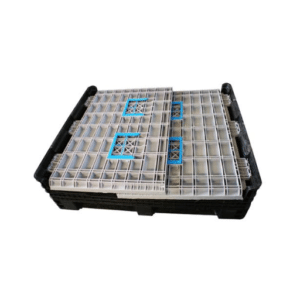
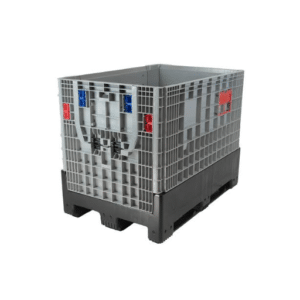
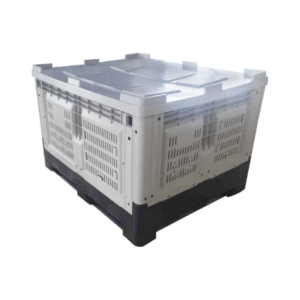
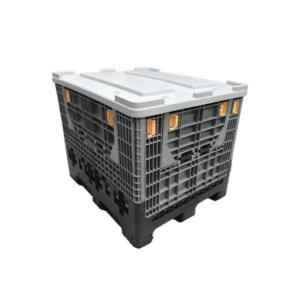
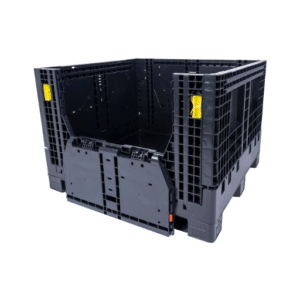
Custom plastic pallets are engineered pallet solutions molded to your exact dimensions, load requirements, handling environment, and branding needs rather than forcing your operation to fit a standard-size platform. For procurement teams, logistics managers, and OEM engineers, they solve the hidden costs of misfit pallets: conveyor jams, product damage, hygiene failures, and customs delays.
Last spring, a pharmaceutical logistics manager named Elena watched a shipment of temperature-sensitive vaccines sit at a European border for three extra days. The culprit was not the truck, the documentation, or the customs officer. It was the wooden pallets her team had used. They lacked the right ISPM-15 stamps, and the port rejected the load. After switching to custom plastic pallets designed for her cold-chain workflow, Elena eliminated fumigation delays and reduced pallet-related damage by nearly half. Her story is not unique. Across food processing, automotive assembly, e-commerce fulfillment, and pharmaceutical distribution, operations leaders are discovering that the right pallet is a supply-chain asset, not just a disposable commodity.
In this guide, you will learn when custom plastic pallets are worth the investment, which design decisions matter most, and how to choose a manufacturer that can deliver both quality and scale. We will cover real-world industry applications, cost and ROI considerations, sustainability benefits, and a practical buyer checklist you can use immediately.
Key Takeaways
- Custom plastic pallets are molded to exact specifications for size, load, material, surface, and tracking features.
- They typically outperform standard pallets in automation, hygiene, durability, export compliance, and total cost of ownership.
- The global plastic pallets market is projected to reach roughly USD 9.4–9.6 billion in 2026, with Asia-Pacific holding about 39% of value.
- Best-fit industries include food and beverage, pharmaceuticals, automotive, electronics, and e-commerce fulfillment.
- A strong manufacturer should offer engineering support, tooling transparency, ISO-certified quality control, and global logistics experience.
What Are Custom Plastic Pallets?
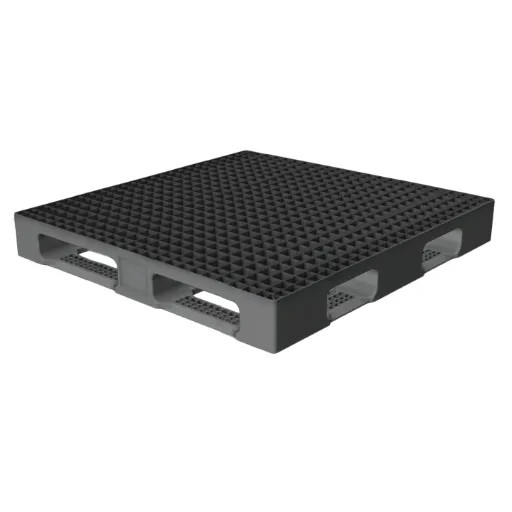
Custom plastic pallets are load platforms manufactured from polymers such as high-density polyethylene (HDPE) or polypropylene (PP) and designed around a customer’s specific requirements. Unlike off-the-shelf pallets that come in fixed sizes and load ratings, custom pallets can be tailored in almost every dimension that affects performance.
Common customization options include:
- Dimensions: length, width, height, and deck configuration to match products, racking, or shipping containers.
- Load capacity: static, dynamic, and racking loads engineered for the exact weight and distribution.
- Materials: virgin HDPE, recycled HDPE, PP, anti-static compounds, or food-grade resins.
- Surface treatments: anti-slip textures, closed decks, drainage holes, or reinforced edges.
- Structural reinforcements: steel bars, full-perimeter bases, or extra runners for heavy-duty use.
- Tracking and branding: molded logos, hot-stamped company names, color coding, barcodes, serial numbers, or embedded RFID chips.
The result is a pallet that integrates cleanly into your workflow instead of forcing your workflow to accommodate a generic platform.
Want to see what a fully engineered custom pallet looks like? Explore our OEM custom plastic pallet solutions and review the design options we offer for automation, export, and heavy-duty applications.
Custom Plastic Pallets vs. Standard Pallets: When to Go Custom
Standard pallets work well when your products, racking, and shipping channels all align with common sizes such as 48 × 40 inches or 1200 × 800 mm. But when any part of your operation deviates from those norms, a standard pallet becomes a compromise that costs money every day.
| Factor | Standard Pallets | Custom Plastic Pallets |
|---|---|---|
| Upfront cost | Lower | Higher |
| Lead time | Faster | Longer, especially for new molds |
| Minimum order | Lower | Higher for new designs |
| Dimensional fit | Fixed sizes | Exact fit |
| Load optimization | Generic ratings | Engineered for your loads |
| Automation compatibility | May need adapters | Designed to your tolerances |
| Branding and traceability | Limited or none | Logos, colors, RFID, barcodes |
| Export compliance | Varies by material | Plastic is ISPM-15 exempt |
When Custom Wins
Consider custom plastic pallets when one or more of the following conditions apply:
- Your products have unusual dimensions. A standard pallet leaves empty space, causes overhang, or forces inefficient container loading.
- You run automated lines. Conveyors, robotic palletizers, and automated storage and retrieval systems (AS/RS) need tight dimensional tolerances.
- Hygiene is regulated. Food, beverage, pharmaceutical, and medical operations often require non-porous, washable, FDA- or HACCP-compatible surfaces.
- You ship internationally. Plastic pallets are exempt from ISPM-15 fumigation rules, removing a common customs delay.
- You need traceability. RFID tags, serial numbers, or color coding help track assets through closed-loop supply chains.
- Your loads are extreme. Very heavy, uneven, or high-value products may need steel reinforcement or custom load distribution.
Mike, an operations director at a Midwest automotive parts supplier, learned this the hard way. His team used standard 48 × 40 wood pallets to ship engine components to an assembly plant. The pallets were slightly too tall for the customer’s automated unloading system, causing repeated jams. After moving to a custom plastic pallet with a lower profile and reinforced corners, his team cut unloading interruptions by 70% and reduced damage claims from the OEM.
Key Design Factors for Custom Plastic Pallets
A successful custom pallet project starts with a clear specification. Work with your manufacturer to document the following factors before any mold is cut.
Load Capacity and Structural Reinforcement
Pallet load ratings fall into three categories:
- Static load, the weight a pallet can hold when stationary on a flat floor.
- Dynamic load, the weight it can carry while being moved by a forklift or pallet jack.
- Racking load, the weight it can support when stored on rack beams.
Custom designs let you optimize these ratings for your actual products rather than buying an overbuilt pallet you do not need or an underbuilt pallet that fails. For very heavy loads, manufacturers can add steel reinforcement bars or thicker deck sections.
Dimensions and Racking or Container Fit
A pallet that is 20 mm too wide may not fit a shipping container efficiently. One that is too short may leave racking unsupported. Custom dimensions ensure the pallet fits your products, your warehouse racking, and your transport modes without compromise.
Surface Treatments
Surface design affects product stability, hygiene, and drainage:
- Anti-slip surfaces reduce load movement during transport.
- Closed decks are easier to clean and protect small items from falling through.
- Open decks allow drainage and ventilation for wet or chilled products.
- Reinforced edges protect against forklift impact.
Tracking and Branding
Customization is not only functional. It can also be strategic:
- Company colors make pallets easy to identify in shared pooling systems.
- Molded logos turn every pallet into a brand touchpoint.
- RFID or barcode integration enables real-time asset tracking and inventory visibility.
Automation Compatibility
If you use conveyors, palletizers, or AS/RS, specify dimensional tolerances, bottom-deck design, and entry configurations early. A flat-bottom pallet may be ideal for conveyors, while a full-perimeter base may be better for racking. The right design prevents jams and maximizes throughput.
Industries That Benefit Most from Custom Plastic Pallets
Food and Beverage
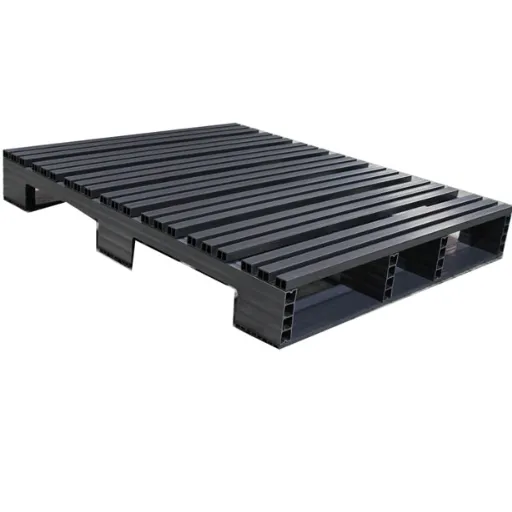
Food processors need pallets that resist moisture, chemicals, and bacterial growth. Custom plastic pallets can be designed with closed decks, smooth surfaces, and drainage channels that make washdown sanitation easier. They also avoid the splinters, nails, and mold risks associated with wood.
According to industry research, the food and beverage sector accounts for roughly 28–30% of plastic pallet end-use demand. Color coding by production zone or allergen status is another common customization that helps plants maintain HACCP and GMP compliance.
Pharmaceuticals and Healthcare
Pharmaceutical supply chains demand cleanliness, traceability, and dimensional consistency. Custom plastic pallets can be specified with smooth, non-porous surfaces for sterilization and cleanroom use, and with RFID integration for batch tracking.
A pharmaceutical 3PL we worked with replaced wood pallets with custom HDPE pallets for temperature-controlled distribution. The closed-deck design prevented contamination, and embedded RFID tags reduced manual scanning time at each transfer point.
Automotive
Automotive OEMs and tier suppliers move heavy, oddly shaped parts through just-in-time assembly lines. Custom plastic pallets can be reinforced with steel, sized to specific part footprints, and designed with features that align with robotic handling systems.
Go Plastic Pallets notes that automotive supply chains often require pallets tested to standards such as EAQF Class A, Ford IMC-ISO, and VDA-KLT. Custom designs can meet these exact specifications while remaining lighter than metal alternatives.
Electronics
Electronics manufacturers need protection from electrostatic discharge (ESD). Custom plastic pallets can be produced with anti-static or ESD-safe compounds to protect sensitive components during storage and transport.
E-Commerce and Retail
E-commerce fulfillment centers value lightweight, nestable pallets that reduce inbound freight cube and warehouse storage footprint. Custom sizing helps these operations maximize trailer and container utilization, which directly lowers per-unit shipping costs.
Manufacturing Methods: Injection Molding, Thermoforming, and Rotational Molding
The right manufacturing method depends on your volume, design complexity, and budget.
Injection Molding
Injection molding is the most common method for high-volume plastic pallets. Molten plastic is injected into a steel mold under high pressure, producing consistent, high-strength parts. It is ideal for large production runs and complex designs with precise tolerances. However, the initial mold investment is higher than other methods.
Thermoforming
Thermoforming heats a plastic sheet and forms it over a mold. Tooling costs are lower than injection molding, making it suitable for lower volumes or larger pallets. It is also useful for prototypes and designs that may change over time.
Rotational Molding
Rotational molding rotates a heated mold to distribute plastic evenly, creating thick-walled, seamless pallets. This method works well for heavy-duty, impact-resistant designs and cold-storage applications.
At Shandong Lile, we primarily use advanced injection molding for custom plastic pallets because it delivers the dimensional precision, strength, and production scale that global OEMs require. Our ISO 9001 quality system ensures every batch meets the agreed specifications.
Need help choosing the right manufacturing method for your project? Contact our engineering team for a free design consultation and production recommendation.
Cost, ROI, and Total Cost of Ownership
Custom plastic pallets usually have a higher upfront cost than standard wood or generic plastic pallets. The real question is not the purchase price. It is the total cost of ownership over the pallet’s life.
Upfront Cost Ranges
- Light-duty plastic pallets: roughly 4–4–15 each
- Standard industrial HDPE pallets: roughly 15–15–35 each
- Heavy-duty or rackable pallets: roughly 35–35–70 each
- Steel-reinforced or highly custom designs: 50–50–120+ each
- New custom mold tooling: a one-time investment that varies by complexity
Lifecycle Savings
Plastic pallets commonly last 8–15 years or 200–250+ trips, while many wood pallets last fewer than 5 years or fewer than 100 trips. When you spread the cost across trips, the per-use cost of plastic can be significantly lower.
WEE Pallets estimates that wood pallets are associated with 3–5% of goods damage due to nails and splinters. In a high-value supply chain, eliminating even a fraction of that damage can cover the cost difference quickly.
Hidden Cost Reductions
- Freight weight: Plastic pallets can be up to 40% lighter than wood, reducing fuel costs per shipment.
- ISPM-15 treatment: Heat treatment or fumigation adds 2–2–8 per wood pallet per crossing. Plastic is exempt.
- Maintenance and replacement: Plastic pallets rarely need repairs. Wood pallets frequently require nail replacement, board repair, or disposal.
- Automation uptime: Precise dimensions reduce jams and downtime in automated systems.
For a mid-sized exporter moving 1,000 pallets per year, the ISPM-15 savings alone can reach 6,000–6,000–12,000 annually. Add freight weight savings and reduced damage, and the payback period for a custom plastic pallet investment often falls between 12 and 36 months.
Sustainability and Closed-Loop Recycling
Sustainability is no longer a nice-to-have in logistics. Many brands now require suppliers to demonstrate lower environmental impact across packaging and transport assets.
Recycled Content
HDPE and PP pallets can be manufactured with recycled content without sacrificing durability. Some supply chains use pallets made from 100% recycled plastic. Go Plastic Pallets reports that up to 96% of plastic pallets in some automotive programs are made from 100% recycled material.
End-of-Life Recyclability
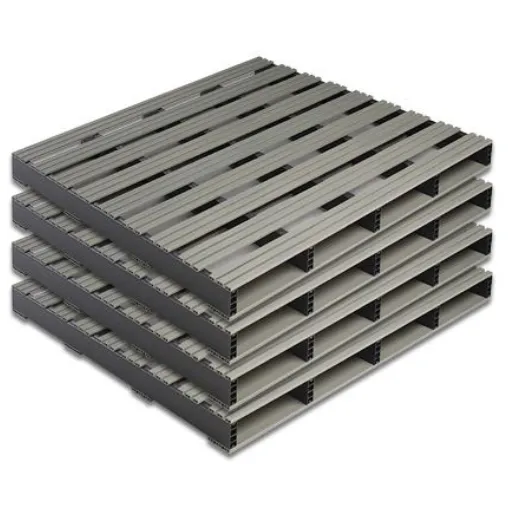
At end of life, plastic pallets can be ground into regrind and remanufactured into new pallets or other products. This closed-loop approach keeps material out of landfills and reduces demand for virgin resin.
Lifecycle Comparison vs. Wood
Wood is renewable, but single-use or short-life wood pallets contribute to deforestation and landfill waste. The longer lifespan and recyclability of plastic pallets can result in a lower overall environmental footprint in high-cycle applications.
Grupo Bimbo’s 2024 sustainability report highlights a real-world example: the company produced approximately 300,000 pallets using 20% of its own packaging waste, 2% stretch film, and 78% recovered polypropylene. Programs like this show how custom plastic pallet programs can become part of a broader circular-economy strategy.
At Lile, we offer recycled HDPE and PP options and can discuss take-back programs for large-volume customers who want to close the material loop.
How to Choose a Custom Plastic Pallet Manufacturer
Not every manufacturer is equipped to deliver a true custom solution. Use this checklist to evaluate potential partners.
- Engineering capability. Can they review your requirements, produce drawings, and recommend materials and reinforcements?
- Tooling transparency. Do they clearly explain mold costs, lead times, and ownership?
- Quality control. Are they ISO 9001 certified? Do they perform load testing, dimensional inspection, and material verification?
- Production scale. Can they handle your volume, including ramp-up schedules?
- Industry experience. Have they served your sector before, whether food, pharma, automotive, or electronics?
- Export and logistics support. Do they understand international shipping, regional pallet standards, and documentation?
- Sustainability options. Can they offer recycled materials and end-of-life recycling programs?
- References and samples. Can they provide case studies, samples, or customer references?
For a deeper walkthrough of supplier evaluation, see our buyer’s checklist for choosing a plastic pallet manufacturer.
Embedded Video: Custom Plastic Pallet Manufacturing in Action
Seeing the manufacturing process helps buyers understand what goes into a quality custom pallet. Below is an overview of how plastic pallets are engineered, molded, and finished for industrial use.
Frequently Asked Questions
What are custom plastic pallets?
Custom plastic pallets are load platforms molded to specific dimensions, load capacities, materials, and features such as anti-slip surfaces, logos, or RFID tags. They are designed for a buyer’s exact workflow rather than sold as a standard off-the-shelf product.
How do custom plastic pallets differ from standard plastic pallets?
Standard plastic pallets come in fixed sizes and load ratings. Custom plastic pallets are engineered around the buyer’s product, racking, automation, hygiene, branding, and shipping requirements.
What industries use custom plastic pallets most often?
Food and beverage, pharmaceuticals, automotive, electronics, and e-commerce fulfillment are the most common industries, although any operation with specialized handling needs can benefit.
Are custom plastic pallets recyclable?
Yes. Most are made from HDPE or PP, both of which are recyclable. Many manufacturers also offer recycled-content options and take-back programs.
How much do custom plastic pallets cost?
Pricing depends on size, material, design complexity, quantity, and features. Simple custom modifications may start around 15–15–35 per unit, while steel-reinforced or highly engineered designs can exceed 50–50–120 each, plus any one-time mold tooling cost.
Conclusion
Custom plastic pallets are not a luxury purchase. They are a precision tool for operations that need exact fit, long life, hygiene compliance, automation compatibility, or export efficiency. The decision to go custom pays off when the hidden costs of standard pallets, damage, downtime, and regulatory delays, start showing up in your monthly reports.
To make the right choice, focus on your actual workflow requirements first. Document your load, dimensions, handling environment, and compliance needs. Then partner with a manufacturer that can translate those requirements into a durable, cost-effective design.
At Shandong Lile Holding Group, we bring 14+ years of pallet packaging experience, 16 subsidiaries, and a presence in more than 108 countries to every custom project. Our engineering team works with you from concept to production, ensuring your pallets perform exactly as your operation demands.
Ready to design a custom plastic pallet for your operation? Request a quote today and let our team turn your specifications into a long-lasting logistics solution.