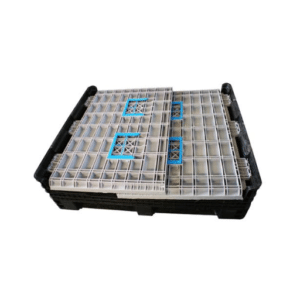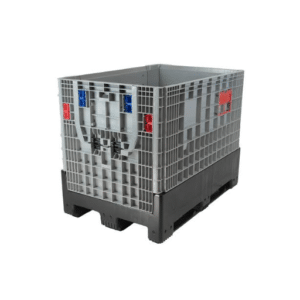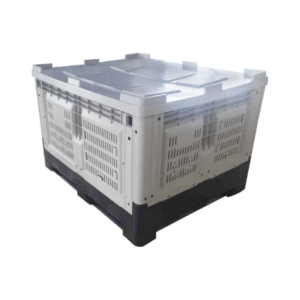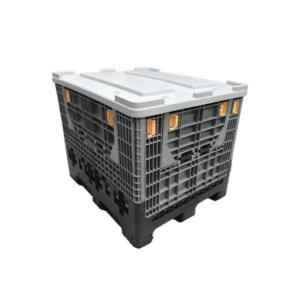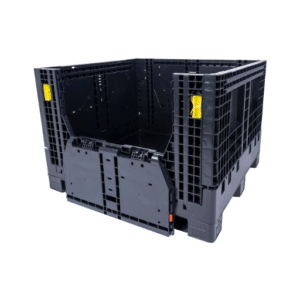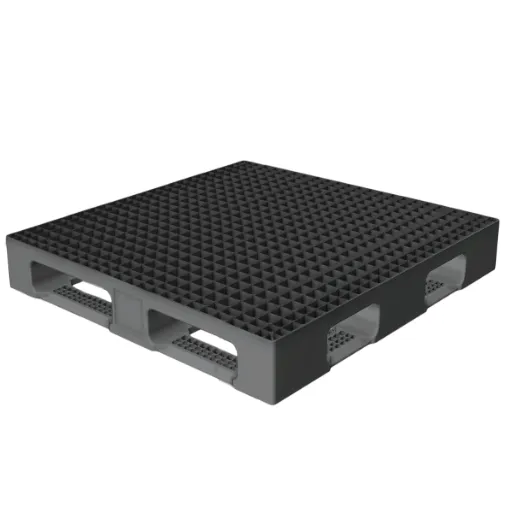

Custom plastic pallet sizes range from compact 23″ × 23″ electronics platforms to oversized 120″ × 120″ industrial load bases, with most B2B buyers starting from a regional standard and then adjusting the footprint, height, or tolerance to fit a product, container, or automation line. Choosing the right dimensions can cut freight costs, prevent conveyor jams, and extend pallet life.
Last spring, Maria Chen, a logistics manager at an electronics OEM in Shenzhen, received a shipment of standard 48″ × 40″ plastic pallets for circuit-board transport. The boards shifted during transit, three loads arrived damaged, and her cleanroom team spent an extra 12 hours each week cutting custom foam inserts. After switching to a 23″ × 23″ custom HDPE pallet with ESD protection and a recessed deck, Maria eliminated transit damage and reduced handling time by 40%. That is the power of sizing a pallet to the load instead of forcing the load to fit the pallet.
If you are evaluating custom plastic pallet sizes for the first time, you probably agree that one-size-fits-all pallets create waste, damage, and operational friction. This plastic pallet size guide shows you which regional standards to use as a baseline, how far custom dimensions can extend, what tolerances matter for automation, and how to justify a custom footprint with freight and damage savings. We will also show you how Shandong Lile engineers custom sizes for 108+ countries from a single quality-controlled production network.
Key Takeaways
- Most custom plastic pallet sizes start from a regional standard: 48″ × 40″ (GMA), 1200 × 800 mm (Euro), or 1100 × 1100 mm (Asia), then modify footprint or tolerance.
- Custom plastic pallet sizes can span roughly 19″ to 120″ in length and width, with height, deck style, and tolerance tailored to the application.
- Automation lines often need ±2 mm tolerances, while manual operations can tolerate ±5 mm or more.
- Industry-specific footprints include 48″ × 45″ for automotive, 42″ × 42″ for chemicals, and 23″ × 23″ for electronics.
- A well-sized custom pallet can pay for itself through higher container cube utilization, lower damage rates, and exemption from ISPM-15 wood-treatment costs.
What Are Custom Plastic Pallet Sizes?
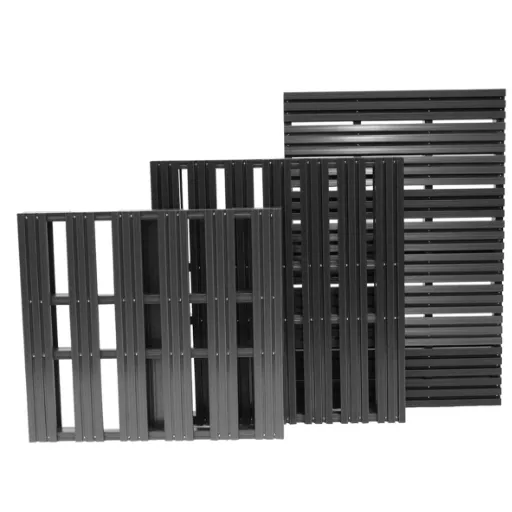
Custom plastic pallet sizes are pallets engineered to dimensions that differ from common regional standards. A custom size may be a modified standard, for example, a 48″ × 40″ pallet with a taller deck or tighter corner radius, or a fully unique footprint designed around a specific product, container, or handling system.
Unlike off-the-shelf pallets, custom plastic pallet sizes are specified by the buyer and produced through injection molding, thermoforming, or structural foam processes. The customization can include length, width, height, deck configuration, entry type, load capacity, color, embossing, and tracking features such as RFID pockets. If your product footprint differs by more than 10% from any common standard, a fully custom size is usually the better investment.
Want to see how custom sizing works in practice? Explore our custom plastic pallet solutions →
Global Standard Plastic Pallet Sizes: The Starting Points
Before you specify a custom size, you need to know the regional standards that carriers, warehouses, and retail partners expect. According to ISO 6780:2003, six primary ISO 6780 pallet sizes are recognized globally. Understanding these standard plastic pallet dimensions helps you decide which footprint to modify rather than designing from scratch.
| Standard | Dimensions (mm) | Dimensions (inches) | Region / Industry |
|---|---|---|---|
| GMA / ISO 1 | 1219 × 1016 | 48″ × 40″ | North America, retail, grocery |
| EUR / EPAL | 1200 × 800 | 47.2″ × 31.5″ | Europe, supermarkets, pharma |
| ISO 2 | 1200 × 1000 | 47.2″ × 39.4″ | International export, manufacturing |
| Asia | 1100 × 1100 | 43.3″ × 43.3″ | Japan, Korea, chemicals, automotive |
| Australia | 1165 × 1165 | 45.9″ × 45.9″ | Australia, New Zealand, agriculture |
| Telecom / chemical | 1067 × 1067 | 42″ × 42″ | Chemicals, telecom, bulk goods |
The 48″ × 40″ GMA pallet accounts for roughly 30% of all new pallets produced in the United States, according to Preface Plast. It is also the most efficient footprint for 40-foot shipping containers, achieving 96–99% cube utilization when loaded two-wide. If you ship to Europe, the 1200 × 800 mm Euro pallet is often mandatory for retail acceptance. For Japan and Korea, the 1100 × 1100 mm square pallet is frequently required.
Starting from a regional standard reduces tooling risk and speeds up supplier quotes. Many buyers choose a standard footprint and adjust only the height, reinforcement, or surface texture. Others need a fully bespoke footprint because their product, tote, or automation lane has no compatible standard.
Custom Plastic Pallet Size Capabilities
Modern custom plastic pallet manufacturing can deliver a wide dimensional range. When buyers request custom plastic pallet dimensions, they usually start with length and width, then adjust height, deck style, and tolerance. At the flexible end, some manufacturers offer tool-less molding that builds pallets from 19″ to 120″ in length and width with no traditional mold investment. At the high-volume end, custom injection molds can produce precise footprints with tight tolerances and consistent wall thickness.
| Capability | Typical Range | Notes |
|---|---|---|
| Length × width | 19″ × 19″ to 120″ × 120″ (or 500 mm to 3000 mm+) | Depends on molding equipment and mold cost |
| Height / deck thickness | 100 mm to 170 mm+ | Heavy-duty designs use thicker ribs and decks |
| Weight | 5 kg to 50 kg+ | Lighter for export, heavier for racking |
| Tolerance (manual) | ±3 mm to ±5 mm | Suitable for forklift and pallet-jack handling |
| Tolerance (automated) | ±1 mm to ±2 mm | Required for AS/RS, conveyors, robotic arms |
| MOQ (tool-less / flexible) | 15–100 units | Higher per-unit cost, faster lead time |
| MOQ (injection mold) | 500–5,000+ units | Lower per-unit cost after mold investment |
Height is often overlooked when buyers discuss custom plastic pallet sizes. A taller pallet can carry deeper fork openings or stronger bottom runners, while a low-profile design saves cube in air freight or dense storage. Deck thickness and rib density scale with footprint: larger pallets need denser reinforcement to prevent sag under load.
At Shandong Lile, we use 18 large-scale injection molding machines and ISO 9001 quality control to hold tight tolerances across high-volume custom runs. Whether you need 500 units or 50,000 units, we can match the size, load rating, and surface finish to your specification.
Industry-Specific Custom Plastic Pallet Sizes
Different industries drive different footprint decisions. A food processor may need a washable 48″ × 40″ pallet with closed deck and drainage channels. An automotive supplier may need a 48″ × 45″ reinforced base sized exactly for a returnable parts tote. Below are the most common custom plastic pallet sizes by sector.
Food & Beverage Processing
Food-grade custom plastic pallet sizes usually start at 48″ × 40″ or 1200 × 1000 mm. Buyers add smooth, easy-clean surfaces, drainage holes, and FDA-compliant HDPE or PP materials. Color coding is common: blue for raw ingredients, red for allergens, white for finished goods.
Pharmaceuticals & Healthcare
Pharma often prefers 1200 × 800 mm Euro footprints or 40″ × 48″ rotations with closed decks and tight tolerances for automated warehouses. Cleanroom-compatible materials, anti-static additives, and embedded RFID pockets are typical customizations.
Automotive & Heavy Parts
The 48″ × 45″ footprint is widely used in automotive because it fits returnable component totes and AGV lanes. Custom sizes here often include steel reinforcement, precise corner radii, and load ratings above 1,500 kg dynamic.
Tom Rivera, a plant engineer at an automotive supplier near Detroit, saw his conveyor reject one in every twenty standard pallets because the corner radius was too tight for his robotic arm. After working with his manufacturer on a 48″ × 45″ custom plastic pallet with rounded corners and ±1.5 mm tolerances, rejections dropped to zero and line throughput rose by 8%.
Chemicals & Bulk Containers
Chemical operations frequently use 42″ × 42″ or 48″ × 48″ square pallets for drum stability. Customizations include spill containment lips, chemical-resistant HDPE, and conductive materials for flammable environments.
Electronics & ESD Protection
Electronics manufacturers often need small custom plastic pallet sizes such as 23″ × 23″ or 585 × 585 mm. These pallets include ESD-safe materials, recessed decks for component trays, and nestable designs to save space on return trips.
Cold Storage & Frozen Logistics
Cold storage usually relies on 48″ × 40″ or 1200 × 1000 mm pallets built from low-temperature HDPE. Custom sizes must account for material shrinkage at -40°C and fork-entry clearance when workers wear gloves.
Retail & E-Commerce Fulfillment
Retail display pallets often use half-size footprints such as 48″ × 20″ or 40″ × 24″. E-commerce fulfillment centers may request lightweight 40″ × 48″ nestable pallets that reduce inbound freight cube and stack efficiently in trailers.
How to Choose the Right Custom Plastic Pallet Size
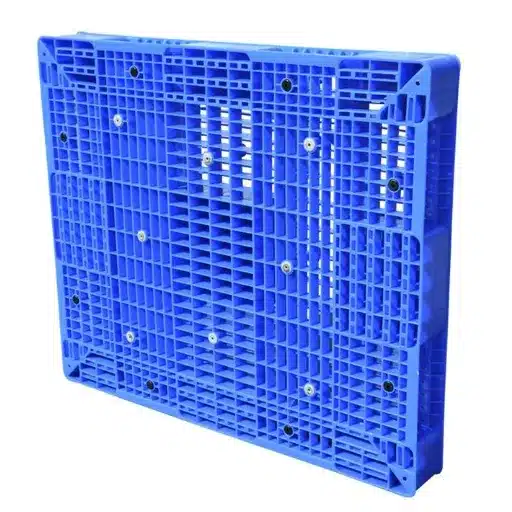
Selecting custom pallet dimensions is a six-step process. Skip any step and you risk buying a pallet that works in isolation but fails in your real supply chain.
- Map the product footprint. Measure length, width, and any overhang. If the product or tote differs by more than 10% from a standard size, consider a fully custom footprint.
- Match regional standards for your markets. Use GMA for North America, Euro for Europe, and 1100 × 1100 mm for Japan/Korea. Hybrid supply chains may need two sizes or a footprint that fits multiple regions.
- Optimize for container and trailer cube. A footprint that loads efficiently in a 40-foot container can save more than the pallet costs. The 48″ × 40″ GMA pallet typically fits 20 units in a 40-foot container with 96–99% efficiency.
- Verify equipment compatibility. Check fork spacing, racking depth, conveyor width, and AGV lane dimensions. Automation typically requires a tolerance of between ±1mm and ±2mm.
- Define load requirements. Static Load, Dynamic Load, and Racking Load should be specified independently. A large footprint without enough rib density will sag under racking.
- Balance MOQ, tooling, and volume. Tool-less flexible molding suits prototypes and low volumes. Injection molding pays off above 500–5,000 units depending on size and complexity.
Custom vs. Standard Size Trade-Offs
Standard pallets are faster to source and often cheaper per unit. Custom plastic pallet sizes require engineering time and may need a mold. The decision should be based on total cost of ownership, not just unit price.
| Factor | Standard Pallet | Custom Plastic Pallet Size |
|---|---|---|
| Lead time | 1–4 weeks | 2–12 weeks depending on tooling |
| Unit cost | Lower at low volume | Lower at scale after tooling |
| MOQ | Often 1–50 units | 15–5,000+ units depending on method |
| Fit to product | Generic | Exact |
| Container efficiency | May waste space | Can maximize cube |
| Automation tolerance | ±3 mm to ±5 mm | ±1 mm to ±2 mm possible |
| Branding / tracking | Limited | Full color, logo, RFID |
The break-even point for a custom size usually arrives when the pallet handles high volumes, supports automation, or prevents product damage. If you move 10,000 loads per year and a custom size prevents 2% damage, the avoided losses often exceed the mold cost within the first year.
Cost, Lead Time, and Total Cost of Ownership
Custom plastic pallet sizes affect cost in three ways: material, tooling, and operational savings.
Material cost scales with size and weight. A larger pallet uses more HDPE or PP. However, a well-sized custom pallet can be lighter than an overbuilt standard pallet because material is placed only where the load needs it. Tooling for injection molding typically ranges from 5,000to5,000to50,000+, while tool-less flexible molding avoids that upfront investment but carries a higher per-unit price.
Operational savings are where custom sizing pays off. According to industry analysis, plastic pallets commonly last 8–15+ years versus 1–5 years for wood. They can also be up to 40% lighter, reducing freight fuel consumption. Because plastic pallets are exempt from ISPM-15 wood treatment, exporters avoid 2–2–8 per pallet per crossing in fumigation or heat-treatment fees.
Elena Voss, a supply-chain director for a European food exporter, switched from heat-treated wood pallets to custom 48″ × 40″ HDPE pallets sized for her retail partner’s racking. Within 18 months she saved €34,000 in ISPM-15 treatment costs alone, and her damage rate fell from 3.5% to under 0.5%.
Sustainability and End-of-Life for Custom Sizes
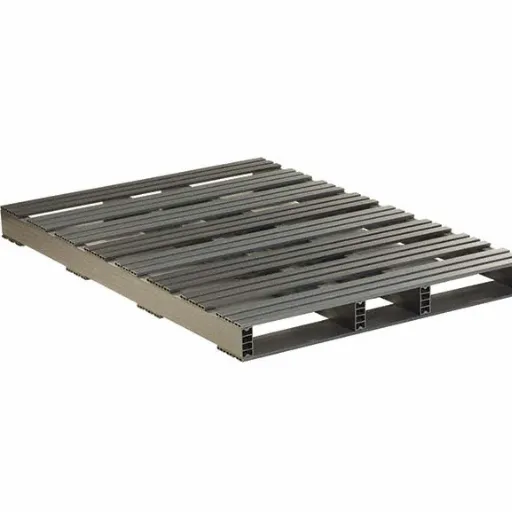
Custom plastic pallet sizes do not have to compromise sustainability. HDPE and PP are 100% recyclable, and many manufacturers offer recycled-content blends. At the end of life, custom pallets can be reground and remolded into new products, including new pallets.
Some suppliers operate closed-loop take-back programs. In these programs, worn pallets are returned, shredded, and blended back into production. This is especially valuable for high-volume operations where pallet retirement is predictable.
When you specify a custom size, ask your manufacturer for a recyclability plan. A slightly higher initial cost for a take-back program can deliver lower lifecycle cost and stronger sustainability reporting.
Conclusion
Custom plastic pallet sizes turn a generic shipping platform into a precise logistics tool. Start from a regional standard when you can, but do not force a product to fit a pallet that was never designed for it. Measure your load, map your markets, verify your equipment, and then choose a manufacturing method that matches your volume and tolerance needs. Getting custom plastic pallet sizes right pays dividends across every lane of your supply chain.
At Shandong Lile, we have spent more than 14 years engineering plastic pallets and custom plastic pallet solutions for 108+ countries. Our ISO 9001 facilities, 18 large-scale production machines, and global logistics network give procurement teams the confidence to specify exactly the size they need, and receive it on time.
Ready to size your next pallet? Request a free custom sizing consultation and quote today →