
The best plastic pallet suppliers are evaluated on seven criteria: verified quality certifications, documented load performance, material traceability, automation compatibility, production capacity, customization capability, and sustainability documentation. Choosing the wrong supplier can increase your total cost of ownership by 30-40% and expose your operation to compliance risks under the new EU Packaging and Packaging Waste Regulation (PPWR), which takes full effect in August 2026.
Most procurement teams make the same mistake. They compare unit prices and move on. That approach works for commodity purchases. It fails for pallets because the hidden costs, damaged inventory, line stoppages, and compliance penalties never appear on the initial quotation.
When Elena Martinez took over procurement at a mid-sized food distributor in Barcelona, she inherited a pallet contract that looked cheap on paper. Six months later, warped pallets had jammed her automated conveyor system three times. Each jam cost 4 hours of downtime and spoiled product worth thousands.
The supplier’s “ISO certification” turned out to be self-declared. Not third-party audited. By the time she switched vendors, the “cheap” pallets had cost her operation 3.2 times their purchase price.
By the end of this plastic pallet procurement guide, you will have a proven plastic pallet supplier selection framework, a weighted evaluation scorecard you can use immediately, and industry-specific playbooks for food, pharmaceutical, automotive, e-commerce, and cold chain operations. For a broader overview of plastic pallets and their specifications, see our complete plastic pallet buying guide.
Key Takeaways
- The lowest unit price often hides the highest total cost of ownership. Evaluate suppliers on a weighted scorecard, not quotation alone.
- EU PPWR regulations effective August 2026 require 40% of transport packaging to be reusable by 2030, making supplier selection a compliance decision.
- Seven criteria separate reliable suppliers from risky ones: certifications, load testing, material traceability, automation compatibility, capacity, customization, and sustainability.
- Automation demands dimensional tolerances of ±0.5mm or tighter. Most suppliers cannot document this level of precision.
- A structured 5-step verification process, documentation audit to contract, reduces procurement risk by verifying claims before committing capital.
Why Plastic Pallet Supplier Selection Matters More Than Ever in 2026
The global plastic pallet market reached approximately $7.1-9.9 billion in 2025 and is projected to grow at 5-10% CAGR through the next decade, according to multiple market research firms. Asia-Pacific dominates with 33-39% of global revenue. Food and beverage processing accounts for roughly 24% of demand. Rackable pallets hold 39-43% of the product mix. These numbers matter because they tell you which industrial plastic pallet suppliers are investing in capacity and which are falling behind.
The Hidden Cost of Getting It Wrong
A pallet failure does not announce itself politely. A cracked runner during a high-speed AS/RS cycle can shut down an entire warehouse lane. A warped deck can block a conveyor for hours. A supplier who delivers inconsistent dimensional tolerances can turn your automated sorting system into a daily troubleshooting exercise.
The costs compound invisibly. Shipping damage from inadequate dynamic load ratings. Racking incidents from undocumented beam support conditions.
Product contamination from porous materials in food-grade applications. Each failure traces back to one decision: prioritizing price over evidence.
EU PPWR and the New Compliance Landscape
The EU Packaging and Packaging Waste Regulation (PPWR, EU 2025/40) enters full force on August 12, 2026. This is not a minor update. It is the most significant packaging regulation in decades, and it directly impacts how you select pallet suppliers.
Key deadlines to factor into your evaluation:
| Requirement | Deadline | What to Verify With Suppliers |
|---|---|---|
| 40% of transport packaging must be reusable | January 1, 2030 | Durability ratings and multi-trip design documentation |
| 100% reusable for internal B2B transport | January 1, 2030 | Closed-loop capability and take-back programs |
| 35% post-consumer recycled content in plastic packaging | January 1, 2030 | Documented PCR percentages with chain-of-custody certificates |
| Grade C recyclability minimum (70%) | January 1, 2030 | Single-resin construction (HDPE or PP, not mixed) |
| 70% reusable target | January 1, 2040 | Long-term partnership commitment to circular models |
Your supplier selection in 2026 determines whether you are scrambling to catch up in 2029 or already compliant. At Shandong Lile, we engineer solutions that keep our partners ahead of regulatory curves, not chasing them.
Automation Demands Dimensional Precision
Modern warehouses run on tight tolerances. Automated Storage and Retrieval Systems (AS/RS), conveyor networks, and robotic palletizers require pallets that perform within narrow specifications. A variance of even ±1.0mm can cause jams, misalignment, and sensor errors.
Yet most suppliers cannot document their dimensional control. They will tell you their pallets are “automation compatible. ” Ask for the tolerance data. Ask for CMM (Coordinate Measuring Machine) verification reports. If they cannot produce them, their compatibility claim is a hope, not a specification.
The 7 Critical Criteria for Evaluating Any Plastic Pallet Supplier
Use these seven criteria as your primary plastic pallet supplier selection framework. Weight them according to your operation’s priorities, but do not skip any category entirely.
1. Verified Quality Certifications (Not Just ISO 9001)
ISO 9001 is the baseline, not the finish line. Every serious manufacturer should have it. What separates exceptional suppliers is the depth and specificity of their certifications.
Look for:
- ISO 9001:2015 with scope explicitly covering pallet manufacturing (not just “plastics” broadly)
- ISO 14001 for environmental management systems
- SGS or equivalent third-party audit reports (not self-declared compliance)
- CE marking for EU market access
- FDA 21 CFR compliance documentation for food-contact applications
- REACH and RoHS certificates for EU and electronics industry supply
Request the actual certificate numbers. Verify them on the issuing body’s website. Self-certified quality is not quality. It is a PowerPoint slide.
2. Documented Load Performance (Static, Dynamic, Racking)
Load capacity is where suppliers cut corners most aggressively. A single number on a datasheet means nothing without context.
Demand documentation per ISO 8611, the international standard for pallet testing:
- Static load: Maximum weight when pallet is stationary on a flat surface
- Dynamic load: Maximum weight during forklift transport (typically 2,000-3,000 kg for standard industrial pallets)
- Racking load: Maximum weight when supported by rack beams (often the limiting factor)
Ask for the test report, not a summary. The report should include deflection measurements, test temperature, sample size, and pass/fail criteria. If a supplier quotes a “load capacity” without specifying which of the three categories it applies to, they are either uninformed or intentionally vague. Neither is acceptable.
3. Material Traceability and Compliance
Not all HDPE is created equal. Virgin high-density polyethylene from a certified resin producer performs differently from post-industrial regrind with inconsistent molecular weight distribution.
Request a Certificate of Conformance for the resin batch. It should specify:
- Resin grade and molecular weight (Melt Flow Index, or MFI)
- Source manufacturer
- Virgin, recycled, or blended percentage
- Additive package (UV stabilizers, colorants, slip agents)
- Compliance with FDA 21 CFR, EU 10/2011, or other relevant standards
For food and pharmaceutical applications, traceability is non-negotiable. You need to know what went into the pallet that touched your product. At Shandong Lile, we maintain full material traceability from resin batch to finished plastic pallets, with documentation available on request.
4. Automation Compatibility and Dimensional Control
This is where most suppliers fall short. They will claim automation compatibility because their pallets fit on a conveyor. Fitting is not the same as performing.
Verify these specifications for automated environments:
- Dimensional tolerance: ±0.5mm or tighter for AS/RS applications
- Deck flatness: Maximum deviation across the entire surface
- Fork entry dimensions: Consistent pocket sizing for automated handling equipment
- Deck coverage: Full or open deck suitability for your specific conveyor type
- Weight consistency: Batch-to-batch weight variation within 2%
Ask for CMM measurement reports or automated dimensional inspection data. If the supplier only offers manual measurement with a tape measure, their tolerance claims are unreliable.
5. Production Capacity and Supply Resilience
A supplier with excellent product quality is useless if they cannot deliver on schedule. Evaluate capacity with hard numbers, not assurances.
Key questions:
- How many injection molding machines do they operate, and what tonnage range?
- What is their monthly production capacity for your specific pallet model?
- How many days of raw material inventory do they maintain? (Best practice: 60-90 days)
- What is their surge capacity during peak seasons?
- Do they have contingency plans for machine downtime or resin supply disruptions?
Suppliers who maintained 60-90 day raw material buffers demonstrated resilience during the 2021-2024 resin supply disruptions. Those who operated on just-in-time inventory left their customers stranded.
At our 178,000 square meter facility, Shandong Lile operates 18 large-scale injection molding machines with the capacity to handle volume spikes without compromising lead times. We do not believe in leaving our partners waiting.
Want to understand how production capacity directly impacts your delivery schedule? Explore our manufacturing capabilities and lead time commitments.
6. Custom Plastic Pallets and OEM/ODM Capability
Standard sizes work for standard operations. If your warehouse uses non-standard racking, automated systems with specific pallet footprints, or branded retail displays, you need a supplier with genuine custom plastic pallets capability.
Evaluate:
- In-house mold design: Do they employ their own engineers, or outsource to a third party?
- Prototype testing: Can they produce samples for your internal validation before mass production?
- Color matching: Pantone-level consistency for branded applications
- Feature integration: RFID tags, barcodes, anti-slip surfaces, steel reinforcement
- Mold ownership clarity: Who owns the mold after production? Where is it stored?
A supplier who cannot show you a custom project portfolio is a supplier who has not actually done custom work. Request case studies with photos, specifications, and client references.
7. Sustainability Documentation and End-of-Life Programs
Sustainability is no longer a marketing preference. It is a procurement requirement, especially under EU PPWR.
Verify:
- ISO 14001 certification for environmental management
- Documented recycled-content options with specific percentages, not vague claims
- Single-resin construction (HDPE or PP) to ensure recyclability meets Grade C standards
- End-of-life take-back programs or closed-loop recycling partnerships
- Carbon footprint documentation per pallet or per shipment
Be wary of suppliers who claim eco-friendly plastic pallets without documentation. Ask for the certificate. If they say they use “good recycled material” but cannot define the percentage, source, or certification, they are greenwashing.
Industry-Specific Plastic Pallet Supplier Selection Playbooks
Different industries have different non-negotiables. A pallet that works for e-commerce may fail in a pharmaceutical cleanroom. Use these playbooks to weight your criteria by sector.
Food and Beverage: Hygiene, FDA, and Washdown Compatibility
Food-grade operations demand closed-deck or hygienic designs that do not trap moisture or contaminants. The supplier must document FDA 21 CFR compliance for the resin and the finished product. Washdown compatibility means the pallet withstands high-pressure cleaning without degradation.
Key verification: Request documentation of bacterial resistance testing and cleaning protocol validation.
Pharmaceutical: GMP, Traceability, and Anti-Static Requirements
Pharmaceutical warehouses operate under Good Manufacturing Practice (GMP) guidelines. Every pallet must have full material traceability. Anti-static (ESD) properties may be required for sensitive electronic components or active pharmaceutical ingredients.
Key verification: Demand batch-level traceability records and ESD surface resistance test reports.
Automotive: Heavy-Duty Racking and AS/RS Integration
Automotive parts are dense. A typical engine component pallet carries 1,500+ kg dynamic loads. The supplier must document racking suitability under your specific beam support conditions, not generic claims.
Key verification: Request racking load test reports with your beam span and deflection limits for industrial plastic pallets.
E-Commerce: Lightweight, Nestable, and High-Turnover Designs
E-commerce fulfillment demands lightweight pallets to minimize shipping costs and nestable designs to maximize backhaul efficiency. High turnover means durability matters less than cost-per-trip.
Key verification: Compare weight, nest ratio, and cost-per-trip against your current solution.
Cold Chain: Low-Temperature Performance
Frozen food and pharmaceutical cold chains operate at -30°C to -40°C. Not all plastics perform at these temperatures. HDPE becomes brittle below -20°C if not formulated correctly.
For specialized solutions, see our plastic pallet boxes for cold storage and pharmaceutical use. Not all plastics perform at these temperatures. HDPE becomes brittle below -20°C if not formulated correctly.
Key verification: Request impact resistance test data at your operating temperature, not room temperature.
Buying vs. Renting vs. Pooling: Which Model Fits Your Operation?
Supplier selection also means choosing your procurement model. Each has different implications.
| Model | Best For | Key Advantage | Key Risk |
|---|---|---|---|
| Direct Purchase | High-volume, stable operations | Lowest cost-per-trip over 5+ years | Capital tied up in inventory |
| Rental | Seasonal or variable demand | No capital investment | Higher per-trip cost, less control |
| Pooling (CHEP, iGPS, Tosca) | National distribution networks | Network coverage, no maintenance | Dependency on pool provider rules |
Pallet pooling can reduce total cost of ownership by 30-40% for operations with national distribution and high pallet turnover. For export-focused or specialized operations, direct purchase from a manufacturer typically delivers better long-term value.
Not sure which procurement model fits your operation? See our complete plastic pallet cost and ROI analysis for a detailed breakdown.
The Supplier Verification Process: From Shortlist to Contract
A structured verification process separates professional procurement from guesswork. Follow these five steps.
Step 1: Documentation Audit
Request and review: ISO certificates, load test reports, material certificates, environmental certifications, and insurance documentation. Verify certificate numbers with issuing bodies. Self-declared compliance is worthless.
Step 2: Factory Verification (On-Site or Virtual)
If you cannot visit, request a live video tour. Verify machine count, tonnage, and operational status. Ask to see QC checkpoints in action. A real factory will show you. A trading company will make excuses.
Step 3: Sample Testing Protocol
Order samples and test them in your actual environment. Measure dimensions with calipers, not eyeballs. Load test with your heaviest product. Run them through your conveyor or AS/RS system. Real-world testing reveals problems datasheets hide.
Step 4: Pilot Run with Defined KPIs
Before committing to a full order, run a pilot of 50-200 pallets. Define KPIs: defect rate, dimensional consistency, delivery timeliness, and communication responsiveness. Document everything.
Step 5: Contract Protections and SLA Terms
Your contract should specify: quality standards with rejection criteria, delivery schedules with penalty clauses, mold ownership (for custom projects), warranty terms, and contingency plans for supply disruptions.
Red Flags: 10 Warning Signs to Walk Away
When a supplier exhibits these behaviors, proceed with extreme caution or eliminate them from consideration:
- Cannot provide certificate numbers for ISO or other certifications. Self-declared compliance is not compliance.
- Quotes a single “load capacity” without specifying static, dynamic, or racking. This indicates either ignorance or intentional obfuscation.
- Refuses to provide samples before a bulk order. A confident supplier stands behind their product.
- Cannot explain their batch consistency control method. You are buying a sample, not a repeatable supply chain.
- Uses vague material descriptions like “good recycled material” without percentages or certificates. This is a red flag for quality variation.
- Changes quoted material “depending on price. “ Consistency dies when formulation becomes negotiable.
- Cannot explain the difference between floor stacking and rack beam loading. Lack of engineering competency creates safety risks.
- Unwilling to support third-party pre-shipment inspection. This often hides quality control gaps.
- No documented contingency plan for machine downtime or resin supply disruption. Your supply chain is only as resilient as theirs.
- Claims to be a factory but cannot provide a specific factory address or recent production video. Trading companies posing as manufacturers are common in global sourcing.
When Marcus Chen, a procurement director for a Southeast Asian electronics manufacturer, ignored red flag number 10, he discovered too late that his “factory direct” supplier was actually a trading company. No production capability at all.
The pallets that arrived had dimensional variations of ±3.0mm. Far outside his automated line’s tolerance. The rework cost exceeded the original order value by 40%.
Compare evidence, not adjectives.
The Plastic Pallet Supplier Scorecard: Free Plastic Pallet Vendor Comparison Tool
Use this weighted scorecard to compare suppliers objectively during your plastic pallet supplier selection process. Score each category from 1 to 5, then multiply by the weight.
| Evaluation Category | Weight | Score (1-5) | Weighted Score |
|---|---|---|---|
| Manufacturing Authenticity and Capacity | 20% | ||
| Load Testing and Engineering Evidence | 25% | ||
| Material Control and Traceability | 20% | ||
| Quality System and Consistency Control | 20% | ||
| Commercial Reliability (Lead Time, Terms, Support) | 15% | ||
| Total | 100% |
**Scoring guidance: **
- Manufacturing Authenticity (20%): Verified factory address, machine list with tonnage, production video evidence, monthly capacity documentation
- Load Testing (25%): ISO 8611 test reports for static, dynamic, and racking loads, deflection curves, temperature validation
- Material Control (20%): Resin certificates of conformance, MFI specifications, batch traceability, virgin/recycled percentage documentation
- Quality System (20%): ISO 9001 scope verification, QC checkpoints, inspection protocols, documented defect rates
- Commercial Reliability (15%): Transparent pricing, sample policy, lead time commitments with penalties, warranty terms, industry references
A supplier scoring below 3.0 in Load Testing or Material Control represents unacceptable operational risk, regardless of price.
Making Your Final Decision
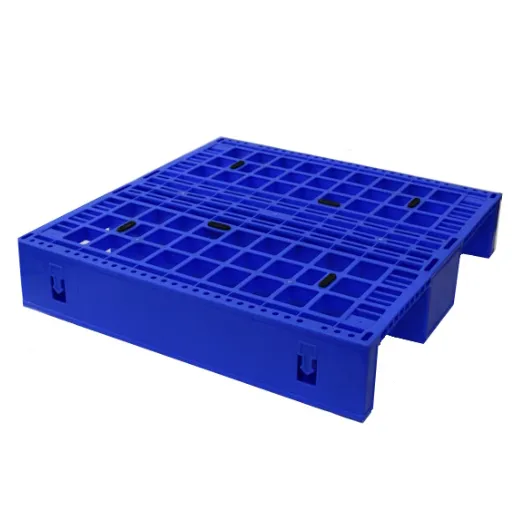
Supplier selection is not a transaction. It is the beginning of a partnership that will affect your operation every single day.
The right supplier reduces your operational burden. They deliver consistent quality that keeps your automation running smoothly. They provide documentation that satisfies your auditors. They scale with your growth and adapt to your changing requirements.
The wrong supplier becomes a recurring problem. Hidden costs accumulate. Quality variations create daily firefighting. Compliance gaps expose you to regulatory penalties.
Use the plastic pallet supplier selection framework in this guide. Demand evidence, not promises. Verify claims with documentation. Test before you commit. And remember: the lowest quotation often carries the highest price.
At Shandong Lile, we do not just manufacture pallets. We engineer solutions that optimize your supply chain. With 14 years of experience, 16 subsidiaries, and a presence in 108 countries, we deliver quality and innovation at every step.
Ready to evaluate a supplier with 14+ years of global experience and verified certifications? Request a detailed quotation and sample evaluation kit today. Our team will provide full documentation including ISO certificates, load test reports, and material traceability records for your review.
For a detailed operational checklist to complement this strategic framework, see our companion guide: How to Choose a Plastic Pallet Manufacturer: Buyer’s Checklist.