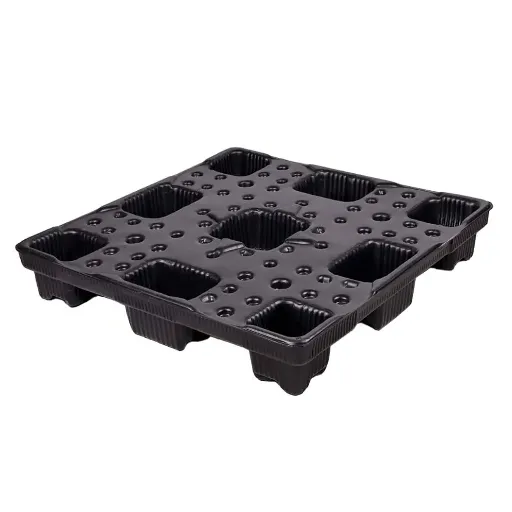

Injection molded pallets are the strongest, most precise option for high-volume, heavy-duty logistics. Thermoformed pallets are lighter, faster to tool, and more cost-effective for low-volume, export, or nestable applications. The right choice depends on your load requirements, annual volume, automation needs, and total cost of ownership horizon.
When Marcus, a logistics director at a Midwest automotive supplier, switched from wood to plastic pallets in 2024, he assumed all plastic pallets were basically the same. He chose a lightweight thermoformed model because the tooling quote was one-tenth of an injection molded alternative. Six months later, his racks started bowing, automated sensors misread pallet positions, and replacement costs erased every dollar he had “saved.” The issue was not the material but the manufacturing process.
This guide explains how injection molding and thermoforming produce fundamentally different pallets, when each process wins, and how to calculate the true cost before you commit. Whether you run a food processing plant, an e-commerce fulfillment center, or an export operation, you will leave with a clear decision framework.
Key Takeaways
- Injection molded pallets deliver the highest strength, tightest tolerances, and lowest per-unit cost at scale, making them ideal for heavy-duty racking and automation.
- Thermoformed pallets cost less to tool, weigh less, and reach production faster, making them ideal for export, low-volume, and nestable designs.
- Twin-sheet thermoforming bridges the gap, offering stronger hollow-core pallets than single-sheet versions but usually at a higher unit cost.
- Break-even analysis typically favors injection molding above 3,000-5,000 units per year, depending on pallet size and mold complexity.
- Capacity for load bearing, tolerance for dimension and compliance with industry regulations are just as important as the initial cost for tooling when selecting a process.
What Is Injection Molding for Pallets?
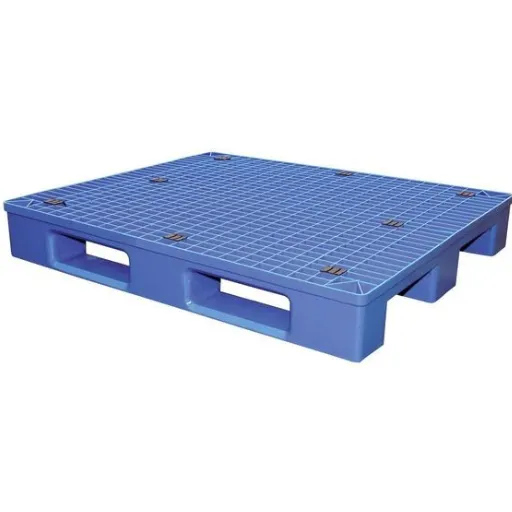
Injection Molding Process is the most widely used process for manufacturing high performance plastic pallets. Molten plastic, usually high-density polyethylene (HDPE) or polypropylene (PP), is forced into a precision steel mold cavity under extremely high pressure. After the plastic cools and solidifies, the mold opens and the finished pallet is ejected.
The process creates a dense, one-piece structure with consistent wall thickness, integrated reinforcing ribs, and smooth surfaces. Because the mold defines every detail, injection molded pallets achieve tight dimensional tolerances that automated storage and retrieval systems (AS/RS) and conveyor lines demand.
At Shandong Lile, our injection molding lines use large-tonnage machines ranging from 1,200 to 2,000+ tons, depending on pallet size and design. This scale lets us produce everything from lightweight nine-foot nestable pallets to heavy-duty rackable models rated for 1,500 kg dynamic loads and beyond. Each cycle is measured in seconds, which is why injection molding dominates when volume is high.
How the Injection Molding Process Works
- Raw material preparation. Virgin or recycled HDPE/PP pellets are dried and fed into the hopper.
- Melting and injection. A rotating screw melts the resin and injects it into the mold under 10,000-30,000 psi of pressure.
- Cooling and solidification. Water-cooled channels in the steel mold harden the plastic in 30-120 seconds, depending on wall thickness.
- Ejection and finishing. Pins push the pallet out of the mold, and any flash is trimmed automatically or by hand.
- Quality inspection. Dimensional checks, load testing, and visual inspection confirm the pallet meets specification.
Typical Injection Molded Pallet Characteristics
- Strength: Highest load capacity of common plastic pallet processes.
- Precision: Tight tolerances, often within ±0.5 mm, ideal for automation.
- Weight: 15-45 lbs (7-20 kg), depending on size and reinforcement.
- Durability: 10-15 years in normal warehouse conditions.
- Surface: Smooth, easy to clean, and compatible with hygiene-sensitive industries.
If your operation depends on racking, automation, or repeated heavy handling, injection molded pallets are usually the safest long-term investment. Want to see which specification fits your load requirements? Click here to view our line of injection molded plastic pallets.
What Is Thermoforming for Pallets?
Thermoforming starts with an extruded plastic sheet. The sheet is heated until pliable, then stretched over or into a mold using vacuum pressure, air pressure, or mechanical force. Once the sheet conforms to the mold shape, it cools and is trimmed to the final pallet dimensions.
Because the tooling is simpler, usually a single-sided aluminum or composite mold, thermoforming has lower upfront costs and faster lead times than injection molding. The trade-off is that the stretched walls are thinner and less rigid than an injection molded part, which limits load capacity and long-term fatigue resistance.
Thermoformed pallets excel when weight, nestability, and low tooling investment matter more than extreme durability. They are especially popular for export, one-way shipping, retail display, and light-duty warehouse use.
Single-Sheet vs. Twin-Sheet Thermoforming
Single-sheet thermoforming is the most economical approach. A single plastic sheet is vacuum-formed into a pallet shell. These pallets are lightweight and highly nestable, but their dynamic load capacity is often below 700 kg.
Twin-sheet thermoforming fuses two heated sheets together inside the mold, creating a hollow, double-walled structure. This method produces much stronger pallets than single-sheet forming and can rival injection molded models in some applications. However, the tooling and cycle costs are higher, narrowing the cost gap with injection molding at volume.
Typical Thermoformed Pallet Characteristics
- Weight: 5-15 lbs (2-7 kg), often 30% lighter than injection molded equivalents.
- Tooling cost: $5,000-40,000, significantly lower than steel injection molds.
- Lead time: 1-8 weeks for tooling versus 12-24 weeks for injection molding.
- Load capacity: 650-6,000 kg static, depending on whether single-sheet or twin-sheet design.
- Best fit: Export, one-way shipping, nestable returns, and low-to-medium volume programs.
Injection Molded vs Thermoformed Pallets: Side-by-Side Comparison
The table below summarizes how the two processes differ across the factors that most buyers care about.
| Factor | Injection Molded Pallets | Thermoformed Pallets | Winner |
|---|---|---|---|
| Tooling cost | $50,000-200,000+ for steel molds | $5,000-40,000 for aluminum/composite molds | Thermoformed |
| Per-unit cost at scale | Lower at high volume | Higher at high volume | Injection molded |
| Break-even volume | ~3,000-5,000+ units/year | Below ~3,000 units/year | Depends |
| Static load capacity | 1,500-6,000+ kg | 600-6,000 kg, design-dependent | Injection molded |
| Dynamic load capacity | 800-2,000+ kg | 650-2,200 kg, design-dependent | Injection molded |
| Weight | 15-45 lbs | 5-15 lbs | Thermoformed |
| Dimensional tolerance | ±0.5 mm or tighter | Wider tolerances | Injection molded |
| Automation compatibility | Excellent | Moderate | Injection molded |
| Lead time for tooling | 12-24 weeks | 1-8 weeks | Thermoformed |
| Nestability / space saving | Good | Excellent | Thermoformed |
| Design complexity | High | Moderate | Injection molded |
| Surface finish | Smooth, consistent | Good, may require trimming | Injection molded |
| Typical lifespan | 10-15 years | 3-7 years | Injection molded |
The simple rule of thumb: if your pallets will face heavy loads, automated handling, or high cycle counts, injection molding almost always wins on total cost of ownership. If you need fast entry, light weight, or short-run production, thermoforming is often the smarter starting point.
For a deeper look at how these processes fit into the broader pallet landscape, see our Industrial Plastic Pallets Guide: Types, Materials & Selection.
When to Choose Injection Molded Pallets
Injection molded pallets are the right choice when performance and precision justify the higher upfront tooling investment.
High-Volume, Long-Term Operations
If you need 5,000, 50,000, or 500,000 identical pallets per year, injection molding spreads the mold cost across a large production run. The per-unit cost drops sharply once the mold is paid off, often making injection molded pallets cheaper than thermoformed alternatives over a 3-5 year horizon.
Heavy Loads and Racking
Rackable pallets must support loads without sagging or deforming over time. Injection molded designs with steel reinforcement can handle racking loads of 1,000 kg or more. Thermoformed pallets, especially single-sheet models, may creep or bow under sustained rack pressure.
Automated Handling Systems
Conveyors, shuttle systems, and AS/RS equipment require consistent pallet dimensions. A ±0.5 mm tolerance difference can mean the difference between smooth throughput and costly jams. Injection molding delivers the repeatability automation demands.
Hygiene-Critical Industries
Food, beverage, pharmaceutical, and cleanroom operations need smooth, non-porous surfaces that resist bacteria and clean easily. Injection molded pallets meet FDA, HACCP, and GMP requirements more reliably than many thermoformed alternatives.
When Priya took over sourcing for a pharmaceutical distribution center in 2025, her first initiative was to audit pallet failures. She found that thermoformed pallets were cracking at fork entry points, creating contamination risks in the cleanroom zone. After switching to smooth-deck rackable plastic pallets, fork-related damage dropped by 80%, and the quality team stopped flagging pallet debris.
When to Choose Thermoformed Pallets
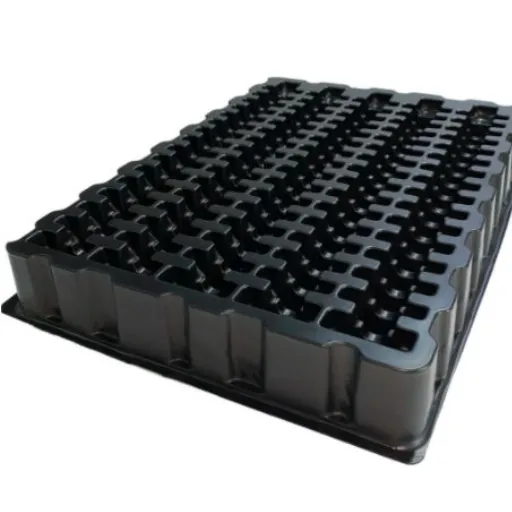
Thermoformed pallets make sense when low tooling cost, light weight, or rapid production startup matters more than maximum durability.
Low-to-Medium Volumes
If you need 500-3,000 pallets per year, the lower tooling investment of thermoforming can keep total first-year cost well below injection molding. This is especially true for prototypes, seasonal programs, or pilot launches.
Export and One-Way Shipping
International shipments often do not return pallets. A lightweight thermoformed pallet reduces freight cost and avoids the ISPM-15 treatment requirements that apply to wood. When the pallet will not come back, durability beyond a single trip is wasted investment.
Nestable Returns and Reverse Logistics
Many thermoformed designs nest inside each other when empty, reducing return freight volume by 50-70%. For e-commerce and retail reverse logistics, that space savings can outweigh the lower durability of the pallet itself.
Frequent Design Changes
Because thermoforming tooling is cheaper and faster to modify, it suits businesses that expect design iterations. If your pallet dimensions, branding, or features are still evolving, thermoforming reduces the cost of experimentation.
Industry-Specific Decision Guide
Different industries prioritize different pallet properties. Below is how the process selection translates into use cases.
Food & Beverage: Hygiene and Washdown
Injection molded pallets dominate food and beverage applications. Their smooth, sealed surfaces clean easily under high-pressure washdown, and they resist absorption of liquids or odors. If your operation runs in a HACCP-controlled environment, injection molding is usually the safer compliance choice.
Pharmaceuticals: Traceability and Cleanroom Grades
Pharma supply chains demand consistency, cleanliness, and documentation. Injection molded pallets made from virgin HDPE or PP can be produced with full material traceability and tight tolerances for automated dispensing systems. Thermoformed pallets may be acceptable for secondary shipping, but rarely for primary production zones.
Automotive and Heavy Manufacturing: Racking and Impact
Automotive suppliers often move heavy metal components, engines, or assemblies. Injection molded pallets with steel reinforcement and high dynamic load ratings are the standard. Twin-sheet thermoformed pallets can handle moderate loads, but they rarely match the fatigue life of injection molded equivalents under daily forklift abuse.
E-Commerce and Retail: Lightweight Turnover
Fast-moving e-commerce operations benefit from lightweight, nestable thermoformed pallets that reduce outbound and reverse shipping cost. If pallets cycle quickly and do not sit in racks for long periods, thermoforming can deliver the lowest operational cost.
Export and International Shipping: Weight and Compliance
Plastic pallets are exempt from ISPM-15 regulations that govern wood packaging in international trade. Thermoformed pallets add the benefit of low weight, which directly reduces air freight cost. For one-way ocean or air shipments, thermoforming is often the most economical choice.
Cold Chain and Freezer Storage: Low-Temperature Performance
Both HDPE and PP perform well in cold environments, but impact resistance becomes critical at -20°C and below. Injection molded pallets generally maintain better impact strength and dimensional stability in freezers than single-sheet thermoformed designs.
Total Cost of Ownership: The Real Math
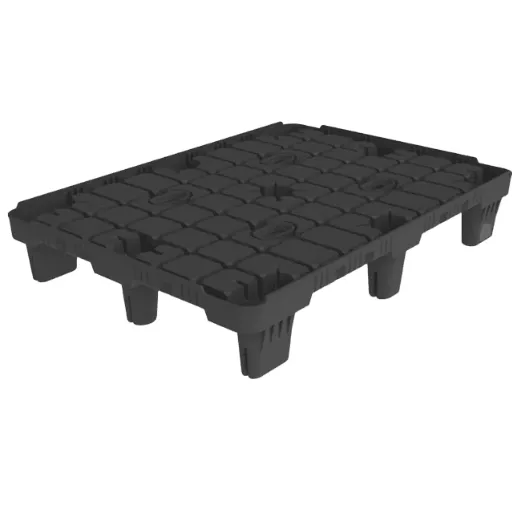
The wrong way to compare injection molded and thermoformed pallets is to look only at tooling cost. The right way is to model total cost of ownership (TCO) over the expected service life.
Upfront Tooling Investment
A typical injection molded steel mold costs 50,000−200,000+,whileathermoformingmoldcosts50,000−200,000+,whileathermoformingmoldcosts5,000-40,000. That gap can feel decisive, but it is only one line item.
Per-Unit Production Cost
At volume, injection molded pallets usually cost less per unit because cycle times are fast and material efficiency is high. Thermoformed pallets use pre-extruded sheet, which costs more per pound than virgin pellets, and trimming creates more scrap.
Lifespan and Maintenance
An injection molded pallet may last 10-15 years. A thermoformed pallet may last 3-7 years. If a thermoformed pallet must be replaced twice while an injection molded pallet remains in service, the lower tooling cost loses its advantage quickly.
Break-Even Volume Analysis
For a standard 1200 x 1000 mm pallet, the break-even point usually falls between 3,000 and 5,000 units per year, assuming a 5-year program. Below that volume, thermoforming often wins. Above it, injection molding usually wins. The exact crossover depends on pallet weight, mold complexity, and shipping distance.
For a structured approach to calculating these numbers for your specific program, see our Plastic Pallet Cost & ROI / TCO Analysis.
7 Questions to Ask Before Choosing a Process
- What is my annual pallet volume, and how many years will the program run?
- What are my static, dynamic, and racking load requirements?
- Will the pallets travel through automated conveyors or AS/RS systems?
- Does my industry require FDA, HACCP, GMP, or cleanroom compliance?
- Will pallets be reused in a closed loop, or are they single-trip/export?
- How important is nestability and return freight volume?
- What is my acceptable tooling budget and lead time?
If you are not sure how to answer all seven, our team can walk through them with you. Contact us for a free process recommendation based on your application.
Frequently Asked Questions
What is the difference between injection molded and thermoformed pallets?
Injection molded pallets are made by injecting molten plastic into a high-pressure steel mold, producing a dense, rigid, precise part. Thermoformed pallets are made by heating a plastic sheet and forming it over a mold, producing a lighter, often hollow or nestable part with lower tooling cost.
Which is stronger: injection molded or thermoformed pallets?
Injection molded pallets are generally stronger and more durable, with higher static and dynamic load ratings. Twin-sheet thermoformed pallets can approach injection molded strength in some designs, but single-sheet thermoformed pallets are usually limited to light or medium duty.
Are thermoformed pallets cheaper than injection molded pallets?
Thermoformed pallets have lower tooling cost and can be cheaper for low-volume or short-run programs. However, at higher volumes, injection molded pallets usually have a lower per-unit cost and longer lifespan, making them cheaper over time.
What are thermoformed pallets used for?
Thermoformed pallets are commonly used for export shipping, one-way logistics, lightweight retail distribution, nestable return systems, and low-volume custom programs.
How long do injection molded pallets last?
High-quality HDPE or PP injection molded pallets typically last 10-15 years in normal warehouse conditions, often making 250-500+ trips before retirement.
Can thermoformed pallets be used for racking?
Some twin-sheet thermoformed pallets are rated for racking, but single-sheet thermoformed pallets are generally not recommended for rack storage under heavy sustained loads. Always confirm the racking load rating with the manufacturer.
What is twin-sheet thermoforming for pallets?
Twin-sheet thermoforming fuses two plastic sheets together in the mold to create a hollow, double-walled pallet. It produces stronger and more durable pallets than single-sheet thermoforming, but at higher tooling and unit cost.
Which pallet manufacturing process is best for food and pharma?
Injection molding is usually best for food and pharmaceutical applications because it produces smooth, consistent, easy-to-clean surfaces with tight tolerances and full material traceability.
How much does injection molded pallet tooling cost?
Injection molded pallet tooling typically costs $50,000-200,000+ for a precision steel mold, depending on pallet size, complexity, and cavitation. The investment is amortized across the production run.
When should I choose injection molding over thermoforming?
Choose injection molding when you need high volume, heavy load capacity, tight dimensional tolerances, long service life, or automation compatibility. Choose thermoforming for low volume, fast tooling, light weight, or export programs.
Conclusion
The choice between injection molded and thermoformed pallets is not about which process is better overall. It is about which process better fits your operation. Injection molding delivers unmatched strength, precision, and long-term value for high-volume, heavy-duty applications. Thermoforming delivers speed, lightness, and low upfront investment for export, retail, and low-volume programs.
At Shandong Lile, we do not believe in one-size-fits-all answers. With 14+ years of experience, 16 subsidiaries, and a presence in 108 countries, we help buyers match the right manufacturing process to the right application. Whether you need a heavy-duty rackable pallet for automation or a lightweight nestable design for export, we engineer solutions that fit.
Ready to choose the right process? Request a free quote and process recommendation from our team today. For more guidance on selecting a reliable supplier, read our How to Choose a Plastic Pallet Manufacturer: Buyer’s Checklist.