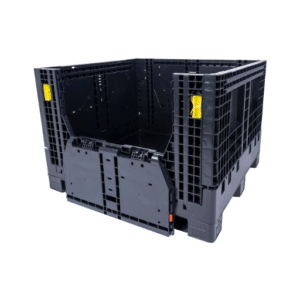
When choosing plastic pallet manufacturers, there are several key factors to be taken into consideration, suitable for a wide range of markets. Such pallet solutions must be lasting, cost-effective, and respectful due to increased environmental concerns. For this reason, any potential manufacturer has to be able to fulfill the requirements according to the customer’s particular situation without having to compromise on the quality and reliability factors. The buyer’s checklist will act as a guide in the selection of available options for a particular customer, especially towards such goals as the already mentioned factors regarding the type of material, the available manufacturing capacities, the compliance with the industry norms, and the customer service. You will be able to adhere to your preferred operational standards while determining feasible options to pursue within this guide.
Understanding the Importance of Selecting the Right Plastic Pallet Manufacturer

Finding a reputable plastic pallet manufacturer is indispensable for effective operational management and better durability of the products. An appropriate manufacturer will only supply pallets that are especially designed to prevent damage due to the environment, keep the cargo safe during transit, and meet export regulatory requirements such as ISPM-15. In addition, dependable manufacturers show up offering support whenever needed and also custom-tailor their products to meet particular functional requirements, thus minimizing operational stoppages as well as costs on a long-term basis. Deploying such a skilled provider contributes to overall business growth in addition to avoiding problems in the supply chain, and as such forms an important part of capital expenditure.
Overview of Plastic Pallets and Their Applications Across Industries
Plastic pallets are widely used in various industries, e.g., logistics, food & beverages, pharmaceuticals, manufacturing, and in multiple other arenas, for serving different purposes. The key challenge for the breakbulk sector is to find alternative materials that would allow replacements for the traditional wooden breakbulk units. Plastic pallets or drums provide high performance, hygiene, and hydrophobic longevity in harsh reuse conditions. They are light and hence save on the costs of transport, and in addition, there are no worries about moisture, chemical, or pest infestations, making them an ideal choice for an industry like food processing or pharmaceuticals that maintains highly controlled sanitary environments. Moreover, there are possibilities to produce plastic pallets meeting rigid suitability criteria, including, for example, FDA and GMP certifications, thus assuring that operational needs can be met.
The use of plastic pallets is advantageous to the various industries that use them due to the fact that the majority of these pallets are made out of reprocessed materials, and when finally worn out, can be wholly repurposed. Also, they are preferred when it comes to closed loops and distribution networks because of the predictability of quality and ease of care and service. In addition, things such as RFID and barcodes help in managing stock over a supply network. Plastic pallets are a practical and green product, very convenient for many industrial purposes.
The Role of Quality Manufacturing in Supply Chain Efficiency
Quality manufacturing has become an integral component of supply chain management aimed at improving the efficiency and effectiveness of operations. Less time will be spent on repairs, refabrication, and reassembly without wastage due to the produced goods being of superior quality. With the advancements in technology, especially in plastic pallet manufacturers offering high precision and automatic tools, the magnitude of variations in the products produced is reduced. Moreover, effective quality control systems and appropriate certification will enhance the credibility of the supply chain, such as food and beverage or healthcare.
Efficient manufacturing processes are well-aligned with supply chain strategies and facilitate the management of inventories using a just-in-time strategy or streamlining work processes. As a result, this ensures that the businesses are quick in addressing the demands of the market as lead times are shortened and stock turnover is increased. In addition, quality in manufacturing is related to the sources of inputs used as well as the ability of the manufacturer to keep the customers, since quality products that do not have any defects enhance customer loyalty and goodwill of the organization. Together, focusing on quality manufacturing encourages average efficiency and a high-performing supply chain.
Risks of Choosing Unreliable Manufacturers
⚠ Common Risks to Watch Out For
- Supply chain logjams caused by changing production patterns or non-performance against delivery timelines
- Inferior goods of poor quality with possible compliance failures against legal or consumer expectations
- Increased operating costs due to re-work, expedited shipping, and delayed market delivery
- Negative customer experience resulting in revenue forfeiture
- Defective or non-compliant products that compromise end-user safety
Making arrangements with plastic pallet manufacturers with a poor reputation can cause unnecessary trouble, costing thousands of dollars in remedial action. That’s why it makes sense to carefully select your manufacturing partners rather than leave that decision to chance: one needs an absolutely reliable, proven, and high-quality production capacity.
Key Qualities to Look for in a Plastic Pallet Manufacturer

✅ Quality Assurance Process
Verify if the industrial plant has quality assurance and control processes and if plenty of procedures and certificates comparable to those of ISO are in place to provide quality, safe, and durable products.
🔧 Ability to Customize
Ensure that custom design options are available for manufacturers in order to satisfy particular operational requirements, including sizes, weights, and load capacities, among others.
♻️ Material Specialization
Choose plastic pallet manufacturers who use high-quality, recyclable, and/or eco plastics for production, which makes pallets both usable and non-harmful to nature.
⏱ Production Efficiency & Timely Deliveries
Check on the manufacturer’s capability of supplying your product on time and regularly, and the ability to increase the production capacity without hassle in the future.
🏆 Reputation and Competence
Look into a specific manufacturer’s previous works, recommendations of their customers, and the duration of time within which they have been in operation, among other things, in coming up with the manufacturer’s credibility.
💰 Cost-Feasibility
Pick a partner who will present a reasonable offer, with no disadvantage to the quality and service offered.
Experience and Reputation in the Industry
In order to appraise the manufacturer’s level of professionalism in the industry, it is vital to take into account their years of operation, certifications obtained, and awards won by the manufacturer. Most manufacturers are well known for the delivery of top-notch products – an indicator of stability and dependability. Also, read their reviews from past client experiences to know if they provide quality services, products, and customer satisfaction. Besides, what pertains to any recognized standards is that a champion shall be either a member of any regulatory body or an industry association. Inevitably, analyzing this kind of information related to high-ranking plastic pallet manufacturers in the market facilitates an objective and comprehensive evaluation of their expertise and, more importantly, their trustworthiness.
Certifications and Compliance with Industry Standards
Standards and certification, such as ISO 9001 and ISPM 15, are of utmost significance as they indicate that a manufacturer is keen on quality assurance as well as conformity. The purpose of these certificates is to demonstrate that a company has followed stringent regulations and laws and is therefore trustworthy and capable of competing on an international scale. If you are looking for a manufacturer, make sure that they comply with the required standards and have proof of this compliance, which means that they meet all the specifications and the relevant laws and regulations regarding safety.
Product Range and Customization Options
Wood packaging material manufacturers mostly manufacture multiple products that are aimed at facilitating various shipping and storage requirements. The products include ordinary wooden pallets, crates, and boxes, among others, and also unique designs such as heated or fumigated ones tailored for overseas transportation. Any modern company offers customized design options to allow for changes in dimensions, weight-bearing capacity, and material to suit the particular haulage product in question. High-end spare parts design services might involve even the inclusion of logos, calculative design making for reasons like easily breaking goods maintained, and the use of plastics alongside metals and other conventional reinforcing designs. Suitable providers should be able to understand the clients’ needs and develop custom products that function properly and meet the relevant regulations.
Evaluating Product Quality and Material Standards

When gauging the quality standards of a product as well as the quality of materials used to manufacture such a product, one must refer to the specifications found in the product documentation. It is crucial to ensure that there is a standards conformance of materials where applicable, for instance, ISO or ASTM, and also evaluate the materials in terms of how long they will last, their tensile resistance, and how they cope with environmental conditions such as corrosion or excessive temperatures. Ask for material samples and even prototypes to enable internal testing to confirm the adequacy of the product’s impact performance. Finally, consider the quality control systems that the manufacturer/supplier puts in place, such as observation of things like inspection and traceability, and meeting of any regulatory requirements. These ensure that the quality and material standards of the project or business requirements are met.
Step-by-Step: Evaluating a Manufacturer’s Product Quality
- Review product documentation and verify conformance against ISO or ASTM material standards.
- Assess materials for longevity, tensile resistance, and performance under environmental stress (corrosion, extreme temperatures).
- Request material samples or prototypes for internal testing and impact performance validation.
- Review the manufacturer’s quality control systems, including inspection protocols and traceability records.
- Confirm all regulatory requirements are met and documented.
Types of Plastics Used in Manufacturing and Their Durability
Plastics used for manufacturing purposes can be subdivided into a variety of thermoplastics and thermosetting plastics, both of which exhibit different toughness and performance characteristics. Examples of thermoplastics include Polyethylene (PE), Polypropylene (PP), Polycarbonate (PC), and Polyvinyl chloride (PVC). This type of material is preferred as it is easy to manipulate, is not heavy, and can be subjected to varying temperatures without irreversible deformation. They were considered suitable packaging and may be used in making car parts and construction pipes, such as sewage pipes, due to their high resistance to wear, chemicals, and external elements.
Thermosetting plastics, on the other hand, such as epoxy, phenolic, and urethane (commonly known as PU), offer more durability as they cannot be remelted and formed anew. This contributes to their high resistance in harsh environments, including high temperatures and mechanical loads. The use of these plastics is centered primarily around electrical insulation, joining and bonding materials, and structural applications in aviation and the automotive industry.
The longevity of plastics is determined as a result of the particular chemical composition, exposure to ultraviolet light, temperature of use, and other variables. For instance, though HDPE is known for its water absorption resistance and outstanding toughness, polycarbonate plastic enables you to have clear and very strong materials, hence being useful in conditions where breaking or loss of clarity is not wanted.
Resistance to Wear, Chemicals, and Environmental Factors
The wear, chemical, and environmental resistance factors of plastics differ and are attributed to the molecular structure of the polymer and the elements added. These include PTFE (polytetrafluoroethylene), a polymer that is highly resistant to chemical attacks, and UHMW-PE (ultra-high molecular weight polyethylene), a polymer that has a very low coefficient of friction and is highly resistant to abrasion as a result of its unique molecular structure. In connection with the stability of chemical substances, lining polymers and fluoropolymers show the highest resistance in mediums of acids, bases, and organic solvents, which is especially important in industries using chemicals. Cases requiring tolerance of harsh temperatures or conditions will often have UV inhibitors and antioxidants, such as in PVC or ABS, to ensure that they will not easily deform under the influence of sunlight or bad weather. These combined attributes enable the adoption of plastics in robust industries.
Quality Assurance Processes Implemented by the Manufacturer
Manufacturers must use quality management systems throughout the entire manufacturing process for optimal performance and failure prevention. These systems start with the inspection of raw materials to accept or reject incoming materials that do not meet the chemical composition and physical characteristics requirements. Statistical control processes are employed during production to ensure that every product conforms to the specified dimensions of size and mechanical performance. These include tensile testing, thermal testing, and accelerated service life testing. They test the ability to withstand wear and tear while still observing key standards that have been set up in the industry, for example, ISO 9001. Some manufacturers use non-destructive methods that enable the identification of variations in the properties of a product without altering it. After manufacture, thorough random sampling and performance tests are conducted to ensure that all environmental safety and regulatory requirements are met, thus providing the end customers with reassurance on the quality of the product and its durability.
Assessing Manufacturing Capabilities and Scalability

In evaluating the ability of any manufacturer to produce certain materials, it is of paramount importance to analyze how much supply of those materials the factory is capable of producing presently and in the future. Such an analysis includes looking at the effectiveness of the machines and devices, the competencies of the personnel, and the advancement of technology. There should also be a concern about excess capacity, which refers to the ability to increase production levels above normal without much time wastage or cost increase. In addition, the aspect of ensuring resilience in the supply chain, which includes the supply of raw materials and the capacity for essential logistics, is vital in enhancing the capability of the manufacturing base. The comprehensive evaluation shall also include adherence to sector rules, the existence of quality management systems, and whether the facility is willing to incorporate environmental measures. Because of these considerations and many others, plastic pallet manufacturers will know that they will have made their systems strong as well as responsive to the changes in the market.
Production Capacity to Meet Various Order Volumes
The production capacity of a facility is of importance when assessing whether the facility will handle changes in customer order volumes efficiently and effectively. In order to maximize production, manufacturers need to take out some of the essential components, such as the functionalities of the machine, the performance of the employees, and the enhancement of the working procedures. Factories with modular machinery and flexible assembly matrices allow such facilities to react quickly to increases or decreases in customer orders. Besides that, real-world technologies, like automation tools and forecasting dashboards, give the power to take charge of the rescheduling of operations in the shortest time possible and thus aid in the reduction of clogs as well as latency.
In order to realize the benefits of efficient capacity planning, there has to be an interest in demand forecasting and inventory management to make sure that resources are allocated properly. Contingency measures, such as outsourcing or temporary staff, can also be included to enhance support during heavy workloads. Combining these approaches will allow plastic pallet manufacturers to perform consistently despite increased production levels while maintaining the same quality.
Advanced Technology and Machinery in the Manufacturing Process
Efficiency, accuracy, and capacity — the key factors of production at the present day — have been improving due to highly developed techniques and machinery. Robotic and automatic equipment, such as autonomous robot-guided vehicles, improves efficiency by automating the activities performed by manual labor, hence reducing labor consumption and mistakes made during the process. Materials are cut, drilled, and shaped with extreme accuracy using Computer Numerical Controlled machines that guarantee the quality of the manufacturing process. Plus, the implementation of Industry 4.0 or IoT-enabled devices and smart data analytics provides for predictive maintenance and streamlines processes through the monitoring of relevant statistics. Sintered or 3D printed components eliminate the need for multiple processes to make altered or new parts because they make it possible to build parts with intricate shapes without any burden of wastage. Such technology allows for increased performance as well as superior quality and a cut in operational production time by plastic pallet manufacturers.
Ability to Adapt to Custom Designs or Complex Specifications
Modern industries design and optimize the manufacturing systems according to the nature of the functional requirements in customized products. The use of technologies — computer-aided drawing, additive processes, and robotic systems — has revolutionized the manufacturing process, allowing the flexibility and precision that is required. Computer-aided design helps develop the digital model in a very detailed manner and helps to cover every single detail of the production process. Additive technology makes it possible, thanks to its opportunities, to make complex geometries that can’t be done by conventional means, while using robotics aids in the quick assembly of even more customized items. Thus, this capability upgrades the handling of the customized needs of the clients and also minimizes the lead time in production, reduces wastages, and facilitates efficiency in meeting demand.
Sustainability Practices in Plastic Pallet Manufacturing

🌿 Sustainability at a Glance
- Use of recycled plastics to reduce reliance on virgin materials
- Energy-saving equipment to minimize carbon footprint
- Circular economy models — worn pallets collected, reprocessed, and reused
- Contribution to the global sustainable development goals
The integration of sustainability in the production of plastic pallets requires the use of sustainable materials, the use of energy-saving technologies, and the application of creative recycling processes. The trend is widely observed where manufacturers begin to incorporate recycled plastics so as to alleviate the use of virgin materials and the subsequent harmful environmental effects. In addition, energy-saving equipment is encouraged for production so that the carbon footprint in production is minimal, or efficiency is enhanced as well. More manufacturers are inclined towards the concept of the circular economy in that obsolete pallets can be collected, reprocessed, and used to create new pallets, hence closing the loop economy. These efforts are extremely important as they solve the environmental issues and help the world to meet the targets for sustainable development.
Use of Recycled or Eco-Friendly Materials in Production
In recent years, the use of recycled and sustainable materials in the manufacturing process has rapidly grown. Recycling reclaimed wood, plastic, metals, etc., promotes the use of these materials as opposed to reliance on virgin materials and, in turn, reduces the amount of landfill waste. Furthermore, environmentally friendly solutions such as bio-based plastics and plant-derived materials are more sustainable in terms of resources and energy consumption. In the field of materials engineering, high-performance parts from recyclable materials are being produced, ensuring that quality does not rival sustainability. This is in line with global best practices, and many customers are finding it increasingly acceptable, especially when they are oriented towards sustainability.
Manufacturer Initiatives to Reduce Carbon Footprint
Efforts are being made to reduce the carbon footprint in production and operations. This involves implementing energy systems that are not harmful to the environment, improving supply chain design and transport so as to limit air pollution, and ensuring that the supplies are sourced from materials that do not harm the environment. Furthermore, resources go into more efficient machines, and there is waste minimization for production, aiming for quality without compromising the environment. Such activities are part of a strategic plan towards an eco-friendly agenda that adheres to existing standards within this sector.
Options for End-of-Life Pallet Recycling or Reuse
The vast society of composite plastic pallet manufacturers and the populace at large understand the importance that pallets can serve for various applications beyond just one use. End-of-life pallet management takes three primary forms:
🔨 Refurbishment & Restoration
Sometimes they need a good polish or paint, but many pallets need only a couple of hammered nails in order to be utilized again. This simplest approach extends the operational lifespan significantly.
♻️ Material Recovery
Worn pallets can be separated into base material constituents. Waste wood is processed into chippings and shavings for animal bedding, while some goes into manufacturing of pellets combusted as fuel in power plants.
🪑 Creative Upcycling
There is also the possibility of making tables, chairs, room dividers, picture frames, or wall panels out of pallets. This kind of activity stops them from ending up in the trash heap and advocates for sustainability.
Every strategic approach helps bring about the curbing of waste and reinforces the application of the circular economy by enhancing the value obtained from defunct pallets. This is a practice that is regularly used by individuals as well as companies who want more affordable and environmentally sustainable solutions.
Final Takeaway
Make Your Manufacturer Selection with Confidence
By evaluating experience, certifications, material quality, production scalability, and sustainability practices, you can identify a plastic pallet manufacturer who delivers consistent value, supports your operational goals, and aligns with your environmental responsibilities. A well-chosen manufacturing partner is not just a supplier — it is a strategic asset in your supply chain.
Reference Sources
Circular Economy in Plastic Pallet Manufacturer (PPM)
Key Findings: This study explores the application of the circular economy concept in plastic pallet manufacturing, emphasizing restorative and regenerative design principles to optimize material flow.
Efforts to Improve the Quality of Welding Plastic Pallet
Key Findings: This paper discusses quality improvement techniques in welding processes for plastic pallets, focusing on enhancing product durability and value.
Carbon Footprint of an EUR-Sized Wooden and a Plastic Pallet
Key Findings: This paper compares the carbon footprint of wooden and plastic pallets, revealing that manufacturing a virgin plastic pallet releases 62 kg CO2-eq.
Frequently Asked Questions (FAQs)
What kind of plastic pallets exist in the market offered by plastic pallet manufacturers?
Modern plastic pallet manufacturers supply the market with various types of plastic pallets. Some of them are plastic pallets that are rackable, stackable, or even nestable, as well as pallets that have to be molded using rotation technology. The designs could be all the way down to nestable lightweight designs or heavy-duty rackable pallets that may be used in automated storage and retrieval systems. High-density polyethylene (HDPE) and polyethylene hybrids are the materials most commonly utilized in this particular sphere. Manufacturers may produce standard and off-the-shelf pallet designs or special-purpose pallets that address users’ unique structural, loading, and functional needs.
What is the procedure of molding and rotational molding in the manufacture of long-lasting plastic pallets for manufacturers?
Common molding techniques, such as injection and rotational molding, both manufacture plastic pallets designed to withstand harsh conditions, have uniform shapes, and are ruggedized for optimal plastic pallet construction. The rotational molding techniques are best employed when making heavy-duty skids or pallets, emphasizing seamless walls with a strong, unbreakable base, washable, and suitable for applications involving the storage of food, cleaning rooms, and even cold storage. The pallet can be designed from a particular resin selection, such as virgin or post-consumer reprocessed polyethylene, and can be made to conform with hygiene requirements and built-in features in different pallets for slabs with a feature of return retrieval tracking or for slatted pallets, where the inside of a warehouse forklift/pallet jack is enabled and a blue-slatted armored curtain.
Could a plastic pallet be manufactured in such a way that it can be used in the automotive or heavy industrial sector?
Correct. However, in other specific product categories involving shaping and forming of plastic, various applications of plastic pallets for automotive and heavy-duty purposes include pallet design and construction, usage, safety, and appropriate handling, amongst many others. Heavy-duty plastic pallet designs and skids are designed in a way that the rib-supported base exceeds that of wooden surfaces in both cases – load bearing limits and impact strength of the materials. In the automotive industry, custom designed solution may be manufactured so that the size of pallets, special fixtures for location and clamping of the component, machined recesses for safe grabbing of forklift trucks, and hand pallet truck handling for transfer and transportation of heavy loads within assembly and material delivery areas are possible.
How can one distinguish between the following pallet types: rackable, stackable, and nestable?
Plastic pallets permit an array of storage options in line with the way a particular pallet is seated on the floor and/or racks. They are usually uplifted, including considerations for fission loading and mechanical friction stickiness. Plastic storage pallets also allow for the stacking of several pallets one over the other, and this helps in saving space within the storage facility, especially in areas where the load needs to be secured against rolling off the pallet. Nestable plastic pallets are designed thinly and save space by nesting the pallets back to back. This is in line with a system that has pallets moving in and out of the warehouse since such pallets can be returned by employees once they are empty. It is all a matter of what your suite of materials or solutions offers and the weight and size of the pallets themselves, the type of storage used, and how significant load stability, transport costs, and capacity are.
How do plastic pallet manufacturers facilitate the food and beverage industry and clean rooms?
To ensure that the provided materials in the food and beverage as well as in the cleanroom spheres are applicable, manufacturers have come a long way. They have used expensive plastic surfaces, but in this instance, the high-density polyethylene is selected, since it is non-porous; moisture is not a big deal for it, and it is easy to clean and maintain, which also means that it complies with the hygiene requirements. The use of these limits the possibility of cuts, and the design includes cutouts for easy sanitation; they are also suitable for cold rooms. There is also availability of custom plastics that are intended for certain hygiene procedures, food processing flow, and regulatory procedures, thus enhancing the cleanliness of the market in which such plastic pallet manufacturers are applied.
Do plastic pallets accommodate different designs? Also, do they have varying lead delivery times for these designs?
Certainly, there are quite a number of plastic pallet manufacturers capable of making plastic shipping pallets on order and tailored to the shape, size, and weight of the load, or even coded in a certain color for the purpose of logistic management. There are also custom plastic pallets with a number of features, such as extra pockets for attaching RFID devices, runners fully made out of molded material, and strengthened decks for carrying heavy items. However, the lead time depends on the intricacy of the product; such general and off-the-shelf pallets can be dispatched earlier, whereas complete custom and innovative pallets produced by injection or rotational molding take more time because they require approval of the design and die making. Please feel free to contact your provider or us to understand the timeframes and costs associated with the equipment used to manufacture custom products.
How about the use of reusable pallets made of HDPE in supply chain management? What are the advantages?
Plastic pallets are light, durable, and can be used for many cycles without compromising their quality. In this way, they cause less wastage than single-use wooden pallets. Furthermore, they favor sectors such as food and beverages, as these are free of moisture and pest issues, which are common with wooden construction. Recognizing the advantages of integrating into closed-loop systems, many reusable plastic pallet manufacturers produce their products for several purposes. They aim to streamline the cargo flow, reduce costs in the long run, and bring consistency when it comes to handling units with motorized pallets, hand pallets, or automation. This aspect beckons many businesses to opt for this type of shipping pallet in preference to others.