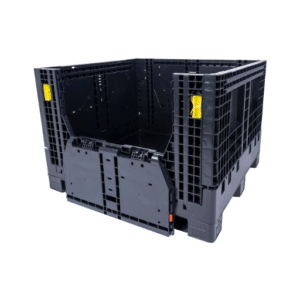
The organization of a warehouse relies on efficient methods for pallet storage which directly affects the costs of operations and the efficiency of work processes and the protection of employees. The operational needs of businesses which run either small distribution centers or extensive logistics centers require them to find a way to optimize space usage while they uphold mandatory safety regulations. This article presents essential techniques and required standards which help organizations achieve efficient pallet storage and better safety results in high-pressure work settings. Our research will demonstrate how proper pallet racking system implementation and compliance with safety regulations create safe and efficient work environments. If your goal is to achieve seamless, cost-effective, and safe warehouse management, you’ve come to the right place.
Pallet Storage Solutions for Efficient Handling

Understanding Different Types of Pallets
Pallets are available in different categories which base their classification on the materials used and the specific design requirements of different industrial functions and logistical operations. The most common types include wooden pallets which are cost-effective and widely used and plastic pallets which provide durability because they can resist both moisture and chemical substances and metal pallets which function as heavy-duty solutions because of their strength and extended lifespan. The lightweight and environmentally sustainable properties of corrugated paper pallets make them an ideal choice for single-use and export situations. The three design variations of block pallets, stringer pallets, and nestable pallets establish equipment handling and storage compatibility which determines their operational performance. The process of selecting the appropriate pallet for your business needs requires you to comprehend these various preferences.
Key Pallet Types:
- 1
Wooden Pallets: Cost-effective and widely used across industries - 2
Plastic Pallets: Durable with moisture and chemical resistance - 3
Metal Pallets: Heavy-duty solutions with extended lifespan - 4
Corrugated Paper Pallets: Lightweight and eco-friendly for single-use applications
Choosing the Right Pallet for Your Warehouse
The right pallet selection for your warehouse requires you to assess three main elements which include product weight and storage type and material handling equipment compatibility with forklifts and pallet jacks. Wood pallets provide a versatile and cost-effective solution whereas plastic pallets deliver sustainable advantages through their extended lifespan. For export purposes you must meet international shipping regulations which include ISPM-15 requirements that apply to wooden pallets. The evaluation process allows you to match operational requirements with pallet specifications which supports efficient and cost-effective warehouse management.
Factors to Consider:
- Product weight and dimensions
- Storage type and duration
- Material handling equipment compatibility
- International shipping requirements (ISPM-15)
- Cost-effectiveness versus longevity
Benefits of Using Lightweight Plastic Pallets
Lightweight plastic pallets provide multiple benefits because industries need to follow efficient and hygienic practices. Their reduced weight lowers shipping costs by minimizing overall load making them ideal for air freight and export scenarios. Plastic pallets maintain their sanitary standards because they repel moisture and pests and chemicals which allows them to meet strict health regulations in pharmaceutical and food industries. The international shipping process becomes easier because they do not need ISPM-15 treatment for international shipping. The durable design protects products from transit damage which results in financial savings and dependable business operations.
Cost Reduction
Lower shipping costs through reduced weight
Hygiene Standards
Repels moisture, pests, and chemicals
Compliance
No ISPM-15 treatment required
Warehouse Pallet Organization Techniques

Effective Pallet Racking Systems
Advanced designs in modern pallet racking systems provide warehouses with efficient storage facilities and accessible inventory storage areas and safe work environments. Drive-in and drive-through racking systems enable warehouses to store large quantities of products while selective racking systems allow workers to access single pallets which suits their needs for different types of products. The push-back racking system stores pallets in deep rows through its use of inclined rails which enables first-in-last-out inventory control. The pallet flow racks operate through gravitational force which drives rollers to create first-in-first-out stock rotation. The implementation of mobile racking systems and automated storage and retrieval systems (AS/RS) together with automated solutions enables organizations to achieve better space management while decreasing their need for human resources. The systems operate as vital components which help businesses to achieve better operational performance while lowering operational expenses.
| Racking System | Best For | Inventory Method |
|---|---|---|
| Drive-in/Drive-through | Large quantities of identical products | LIFO/FIFO |
| Selective Racking | Single pallet access, diverse products | Direct access |
| Push-back Racking | Deep storage with limited SKUs | LIFO |
| Pallet Flow Racks | High-turnover items, gravity-fed | FIFO |
| Mobile Racking/AS/RS | Maximum space utilization, automation | Customizable |
Strategies for Maximizing Warehouse Storage Space
The implementation of vertical storage solutions through tall pallet racking systems will enable businesses to maximize storage space in their warehouses because these systems use their entire building height. Automation technologies such as AS/RS should be used by businesses to optimize their storage space while improving their inventory handling processes. The combination of narrow aisle designs with specialized forklift equipment enables businesses to achieve maximum storage space efficiency. The installation of modular shelving and mezzanine floors will allow businesses to increase their capacity without needing extra floor space. The process of inventory analysis needs to occur at regular intervals which will help businesses decrease their inventory levels while they focus on products that sell quickly to achieve maximum space efficiency and product availability.
💡 Tips for Space Optimization:
- Vertical Storage: Implement tall pallet racking to maximize building height
- Automation Integration: Deploy AS/RS for optimized space utilization
- Narrow Aisles: Combine with specialized forklifts for maximum density
- Modular Solutions: Install mezzanine floors to increase capacity
- Regular Analysis: Conduct inventory reviews to focus on high-turnover items
Implementing Automated Pallet Systems
The automated pallet system uses advanced robotics together with software systems to enhance its material handling processes and inventory storage operations. These systems include automated guided vehicles (AGVs) or conveyors to transport pallets and high-density automatic storage and retrieval systems (AS/RS) for efficient stock organization. Businesses that use real-time tracking together with warehouse management software will achieve advanced operational efficiency because these systems enable them to track their inventory with precise accuracy while cutting their labor expenses and improving their output. The technology functions effectively in facilities that need continuous operation throughout the day because it maintains production levels while maximizing the efficiency of spatial resources.
Key Components of Automated Systems:
- Automated Guided Vehicles (AGVs) for pallet transportation
- Conveyor systems for continuous material flow
- AS/RS for high-density storage organization
- Real-time tracking with warehouse management software
- 24/7 operational capability for continuous production
Pallet Racking Safety Standards
Essential Safety Guidelines for Pallet Racks
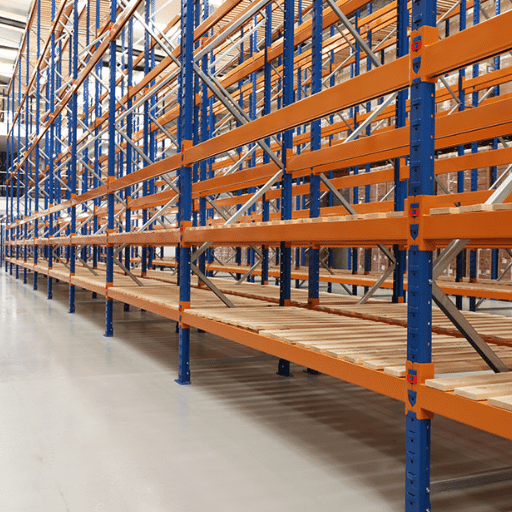
The safety of pallet racking systems requires key guidelines which must be followed for their protection. The inspection process needs to happen at regular intervals to detect any damage which includes finding bent or corroded elements that could cause the system to collapse. The installation of all racks requires proper floor anchoring because this method helps maintain system stability during heavy load conditions. Displaying load capacities in clear terms helps to prevent load exceeding while arranging pallets in a way that distributes their weight throughout the load area. Staff members require training to handle materials in a safe manner which prevents them from colliding with racks while operating forklifts and other equipment. The implementation of OSHA and ANSI standards through our racking systems ensures compliance with industry safety standards which decreases the likelihood of warehouse accidents.
⚠️ Safety Checklist:
Preventing Common Warehouse Accidents
Most warehouse accidents become preventable through two methods which include strict safety protocol enforcement and implementation of advanced technological solutions. The process of equipment maintenance together with scheduled inspections of racks and machinery and flooring systems helps decrease risks that result from equipment deterioration. Operational efficiency improves when companies use automated systems which include forklift collision avoidance sensors and real-time inventory tracking systems. Safety training programs provide complete employee development which includes teaching employees how to recognize hazards and operate equipment safely. The organization requires three essential components to stop slips and trips and falls which include labels and proper illumination and accessible pathways that remain free from obstacles.
Equipment Maintenance
Regular inspections of racks, machinery, and flooring systems
Technology Integration
Collision avoidance sensors and tracking systems
Staff Training
Hazard recognition and safe equipment operation
Regular Maintenance and Inspection Practices
The maintenance process together with inspection activities need established schedules which create specific times for checking equipment and infrastructure and safety systems to find potential wear or damage or operational problems. The process requires three components which consist of operating according to service intervals set by manufacturers and using IoT sensors for real-time performance monitoring through predictive maintenance technologies and performing complete visual and functional inspections. The maintenance process needs proper documentation in maintenance logs which serves two purposes to maintain accountability and to track repeat problems. The usage of advanced diagnostic equipment enables companies to make inspection operations more efficient while decreasing equipment downtime which results in better operational availability and longer operational life for critical company assets.
Best Practices for Maintenance:
- Manufacturer Service Intervals: Follow recommended maintenance schedules
- IoT Sensors: Implement real-time performance monitoring
- Predictive Technologies: Use advanced diagnostics for early issue detection
- Documentation: Maintain detailed logs for accountability
- Visual Inspections: Conduct comprehensive functional assessments
Designing an Efficient Warehouse Floor Plan

Factors to Consider in Warehouse Layout
The warehouse design process requires three main elements for proper development which include establishing efficient product movement paths, determining space requirements for inventory storage, and achieving maximum efficiency for all available space. The layout should enable goods to move through the space because it needs to create distinct routes which will help decrease crowding while boosting operational efficiency. The inventory types and quantities drive the design decisions for shelving systems and storage solutions which must work together with the material handling equipment. The design must create workspaces that follow safety regulations while providing ergonomic benefits to users. Modern warehouse operations benefit from enhanced efficiency and operational scalability through advanced technologies which include automated storage and retrieval systems ASRS.
| Layout Factor | Considerations | Impact |
|---|---|---|
| Product Movement Paths | Distinct routes, minimal congestion | Operational efficiency, reduced bottlenecks |
| Storage Space Requirements | Inventory types, quantities, shelving systems | Space utilization, storage capacity |
| Equipment Integration | Material handling compatibility, ASRS | Automation potential, workflow efficiency |
| Workplace Safety | Regulations compliance, ergonomics | Employee wellbeing, accident prevention |
Optimizing Transportation Routes within the Warehouse
The process of optimizing transportation routes within a warehouse requires organizations to create effective plans which use technology to decrease travel times and create more efficient work processes. The implementation of warehouse management systems WMS and route optimization software enables operations to monitor traffic patterns and inventory locations and order fulfillment priorities in real time. The implementation of dedicated movement paths together with high-demand items positioned near shipping zones and automated guided vehicle AGV systems will create better workflow results. The strategies implement operational cost reductions which lead to enhanced workplace productivity and timely order delivery together with maintaining safe environments and precise order fulfillment.
Route Optimization Strategies:
WMS Implementation
Real-time traffic and inventory monitoring
Dedicated Pathways
Reduce congestion and improve flow
Strategic Positioning
High-demand items near shipping zones
AGV Systems
Automated material transport efficiency
Integrating Technology for Enhanced Storage Solutions
Companies today use advanced technology systems which help them create storage solutions that improve their ability to use available space and their operational processes. The inventory management process at warehouses uses warehouse management systems WMS which help businesses track their products and forecast upcoming customer demands, while automated storage and retrieval systems ASRS empower warehouses to manage their inventory through automated processes that need minimal human input. Businesses utilize IoT sensor technology which delivers stock level information and environmental data to optimize their storage processes and comply with storage standards. AI analytics use pattern recognition to enhance layout design which minimizes space waste while synchronizing storage activities with changing business requirements.
Technology Integration Overview
WMS
Product tracking & demand forecasting
AS/RS
Automated inventory management
IoT Sensors
Real-time monitoring & compliance
AI Analytics
Layout optimization & pattern recognition
Managing Inventory with Pallet Systems

Tracking Inventory Levels and Replenishment
The current methods for managing inventory use modern technologies to enhance their capabilities for tracking inventory and restocking supplies. Warehouses use Radio Frequency Identification (RFID) tags together with Internet of Things (IoT) sensors which are built into pallet systems to achieve accurate real-time inventory tracking. The technologies enable efficient stock monitoring because they automatically send notifications when inventory reaches low levels and they use artificial intelligence to start the process of ordering new stock. The system achieves its objectives through automated processes which decrease human mistakes while improving stock replenishment precision and guaranteeing product availability during times of changing demand.
Modern Inventory Tracking Technologies:
- RFID Tags: Real-time location and quantity tracking
- IoT Sensors: Integrated pallet monitoring systems
- Automated Alerts: Low inventory level notifications
- AI-Powered Ordering: Predictive replenishment automation
- Error Reduction: Minimized human intervention in stock management
Bulk Storage vs. Interlock Pallet Systems
Bulk storage systems exist to keep vast amounts of identical items at one site while they achieve their goal of storing the maximum possible space at the lowest operational costs. The systems serve their best purpose when used with items that need minimal movement and basic handling procedures. Interlock pallet systems use their interlocking design to secure each pallet which enables safe stacking and fast access to stored goods. The interlock systems enable businesses to handle multiple inventory types because they allow for different storage setups which protect products from being harmed during operational procedures. The two methods serve different operational requirements because bulk storage systems need to optimize storage space while interlock systems require system performance flexibility.
| Feature | Bulk Storage | Interlock Pallet Systems |
|---|---|---|
| Primary Purpose | Store large quantities of identical items | Secure stacking with quick access |
| Space Efficiency | Maximum density, minimal cost | Flexible configurations |
| Best For | Low-movement, simple handling | Multiple inventory types |
| Accessibility | Limited during storage | Fast, secure access |
| Product Protection | Basic protection | Enhanced damage prevention |
Adapting to Changes in Inventory Demand
Data-driven inventory management systems need to be established starting point for businesses that want to handle changes in inventory demand. The systems track market trends through their use of real-time data analysis and predictive modeling together with demand forecasting methods. Businesses can anticipate demand changes while decreasing excess inventory and stock shortages through their use of AI-based algorithms and machine learning technologies which help them maintain an even distribution of supply and demand. Businesses can achieve the necessary flexibility to handle changing market demands through their use of just-in-time inventory systems and collaborative relationships with suppliers.
Demand Adaptation Strategies
Real-Time Analysis
Continuous market trend monitoring and data analysis
Predictive Modeling
AI algorithms and machine learning for forecasting
JIT Systems
Just-in-time inventory for maximum flexibility
Supplier Collaboration
Strategic partnerships for responsive supply chains
References
-
Pallet-storage in a Unit-load Warehouse
Georgia Institute of Technology
This source discusses the logistics of pallet storage in warehouses, including forklift operations and storage locations. -
Important Tips for Pallet Use
Michigan State University – Environmental Health & Safety
Offers practical tips for efficient and safe pallet use in storage areas. -
Materials Handling and Storage
Craven Community College
A detailed academic resource on material handling and storage, including pallet storage practices.
Frequently Asked Questions (FAQ)
Summary
Effective warehouse pallet storage combines strategic planning, advanced technology, and rigorous safety standards to create efficient, cost-effective operations. From selecting the right pallet types and racking systems to implementing automated solutions and maintaining compliance with safety regulations, every element plays a crucial role in optimizing warehouse performance. By integrating modern inventory management technologies, designing thoughtful floor plans, and establishing comprehensive maintenance protocols, businesses can achieve superior storage efficiency while protecting their workforce and assets. The future of warehouse management lies in the seamless integration of these components to create agile, responsive, and sustainable operations that meet the evolving demands of modern logistics.