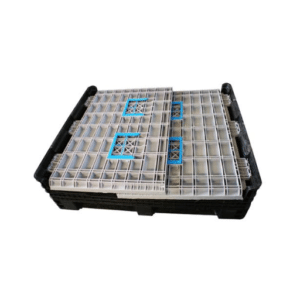
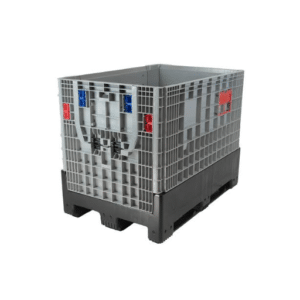
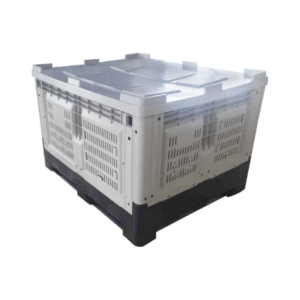
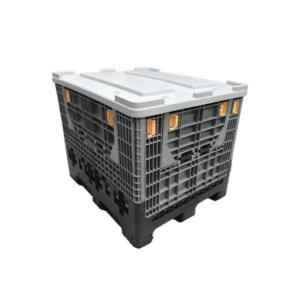
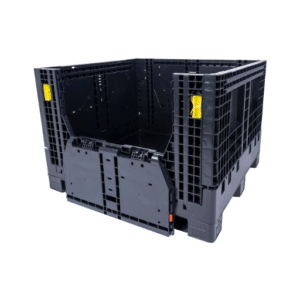
When it comes to storage and material handling in an efficient manner, the usage of rackable plastic pallets really makes a big difference. These pallets have been created and produced to be strong, durable, and easy to use with various types of racking systems, thus they give warehouse owners a dependable way to cut their expenses drastically. Besides the pallets being tough, the design features that they have are actually what make them the best performing option over the wood pallets with respect to sustainability, and also as a critical ingredient in storage space and safety optimization. Thus, this blog post is going to discuss in detail the main design aspects of rackable plastic pallets and their connection to the different warehouse set-ups, which in turn, will allow you to see how they have a good reputation in the market quite quickly.
Understanding Rackable Plastic Pallets

What is a Rackable Plastic Pallet?
Rackable plastic pallets are both sturdier and more versatile than traditional wooden pallets. The pallets have the advantage of being able to carry heavy loads as well as being less likely to break or get damaged due to the superior material used in their construction. Moreover, plastic pallets are easier to maintain and sanitize, which is most definitely a plus in industries such as food.
Advantages of Using Rackable Plastic Pallets
Plastic pallets with rackable design provide a plethora of perks, which could place them as first-rate option for industrial applications. Thanks to their durable nature, they will not succumb to any of the loads even if these are heavy; and that is why they are most of the time, racking system compatible. On top of this, they are in every respect qualified to face water, chemicals and impacts; indeed, unsurpassed for the storage and packing industry. They are light with strong mechanical properties which makes them a very handy and helpful tool in terms of easier operation and so ranks one of the very efficient asset among warehousing assets. Moreover, their re-usability will definitely save the company a significant portion of the cost in long run and, of course, it will be one way of supporting eco-friendly practices by cutting down on waste. All those elements make rackable plastic pallets a spot-on and highly feasible option for the storage and conveyance needs penetrating the widest set of koto the highest degree of effect in the marketplace.
Common Sizes: 40 x 48 and Beyond
One of the pallets made out of plastic with a dimension of 40 x 48 inches is the most adopted by the pallets industry due to the reason standard criteria set for shipping and warehousing are met, especially in North America. The three major sectors that make use of this size are grocery, beverages, and manufacturing. The pallet is picked out no matter the handling equipment, forklifts, or pallet jacks involved since it is very adaptable to the situation.
The dimensions, 40 x 48, are the most generally used standard but there exist other sizes demanded for a particular purpose. As an illustration, the pallet of size 42 x 42 inches is a common choice for the telecommunications industry for the transportation of cables and equipment while 48 x 45-inch pallets are widely used in the automotive sector for big component storage. Adding onto this, smaller dimensions such as 30 x 30-inch pallets are very convenient for this latter example.
Many companies are looking for custom pallet sizes to fit their unique requirements, This reveals that businesses are increasingly oriented towards flexible logistic solutions. As a result, we will see more and more size-optimal pallets, in all likelihood, together with shrinking the loading and unload time significantly as they will be used in a bigger number of industries.
Design Features of Rackable Plastic Pallets

Material and Construction
The construction of a plastic pallet includes reinforced edges and steel or composite reinforcements where necessary, thus making the pallet capable to endure the demands of warehouse racking systems with minimum deformation under load. The collaboration between the used material and the construction also secures the pallet as a reliable and well-functioning product in different industries.
Stackability and Weight Capacity
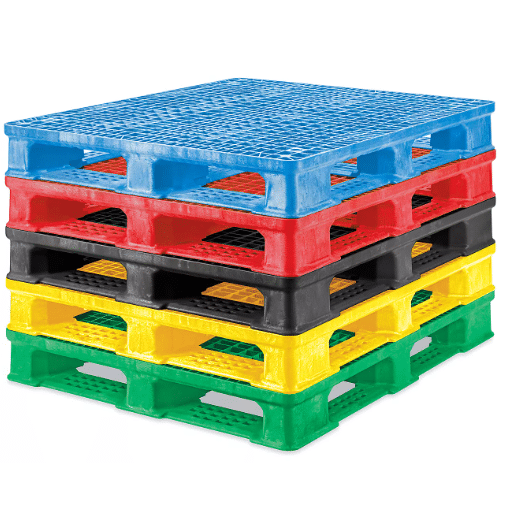
Plastic pallets have been created in a way ensuring convenient stackability for the very best storage and transportation conditions and, thus, minimized space requirement. Their interlocking structures or non-slip surfaces do not only help secure the stacks but also significantly reduce the chance of them being shifted during handling or transport. When it comes to weight limits, the pallets are still impressively high, with some setups being able to carry many thousands of pounds. Due to their high performance, they are ideal for a lot of different kinds of goods, from the lightest to the most massive ones in the industrial sector. This leads to the highest quality and variety of the pallets, and consequently the least amount of problems during the chain of supply.
Options for Customization in the Available Industries
There is a wide range of the pallet customization options available to the industries that need them. Those options are changing the dimensions to suit the specific product size, adding features to make the pallets stronger for heavy-duty applications, or using special coatings that can resist moisture, chemicals, and extreme temperatures. Moreover, the design of the pallet can have convenient features like the reinforcement of the sides, the use of RFID tags for inventory control, and the use of anti-slip material. Having a pallet customized is a sure way of avoiding the need of making operations adjust to the pallets’ lack of coverage, thereby marking the efficiency and safety of the whole supply chain.
Warehouse Compatibility and Applications

Integration with Pallet Racking Systems
Pallet racking systems are made so that they can work with many types of pallets, doing so they are able to keep the warehouse organized and ensure the fast and easy storage and removal of items. For the proper configuration of the pallets and the pallet racking systems, the compatibility includes the pallet sizes, the weight the racking can carry, and the material of the pallet itself. It is possible to use standard pallets as well as specially designed ones if they conform to the racking specifications in these systems. The location of the beam, how the load is distributed, and the access of the forklift from all aspects are important in determining the right fit for the system. Correct positioning reduces the chances of mishaps and optimizes the occupancy factor, henceforth making the pallet racking systems a must-have in warehouse management plans.
Choosing the Right Pallet for Your Warehouse
The selection of the best-fit pallet for your warehouse is a key factor for effective operations and maximizing the storage capacity. Industry trends and the most recent information confirm that the traditional wooden pallets are still the most frequently used type across the globe, and the attributes such as durability, cost-effectiveness, and compatibility with different racking systems are the ones that favor the first place of the wooden pallet usage. Nevertheless, the rise in eco-consciousness has boosted the popularity of plastic and metal pallets as well, although they are less used than wooden ones – they lead in reusability and hygiene standards, meeting the toughest industry requirements. While deciding on a pallet which will suit you the most, consider the most common factors to be weight capacity, material, and whether or not it is on par with the rest of the warehouse equipment like forklifts or automated systems. Apart from that, researching the needs, which are specific to an industry, e.g., pallets for food-grade environments or something that is just unstoppable heavy in the industrial environment, can also be of great help in sharpening your decision. The smart choice of pallets directly makes the warehouse spend less on running cost, is a contributing factor to gaining more profit, and is a guarantee for the warehouse management system to function without any disruptions.
Case Studies: Successful Implementation
Case Study 1: Optimising Pallets for Food-Grade Warehousing
A medium-sized company dealing with food storage and distribution had a tough time controlling compliance and at the same time, lowering the cost of operations. However, after they switched to food-grade plastic pallets, which are specifically designed for food industry environments, the company saw a significant reduction in the chances of contamination and the overall cleanliness and hygiene of their facility improved dramatically. Additionally, this move meant that the operation was in alignment with the laws of the land which in turn led to fewer regulatory hitches and an expanded network of client-acting as the goodman of the hour. the searches for “food-safe pallets” have merked a 35% rise in the last year, which further pointed to the increase in the market demand for solutions of the kind.
Case Study 2: Utilising Automated Systems for Improved Efficiency
A giant e-commerce firm overhauled its warehouse operations by picking custom pallets that fit their automated systems. These modern and flexible pallets were expected to cut the friction to a great extent and the company’s robotic system could easily adopt them, thus leading to 25% sorting and processing speed by 25%. A recent search data analysis exposed continuous interest in “pallets for automation”, thereby pointing out the rising necessity of making pallets for high-tech logistics.
In both cases, it is clear that for the sake of the industries and their technologies, the pallet selection must be exactly in line with the cutting edge and that one can yield productivity and quality-enforcement gains that are quantifiable through the pallet-related decisions.
Comparative Analysis of Pallet Types
Rackable vs. Stackable Pallets
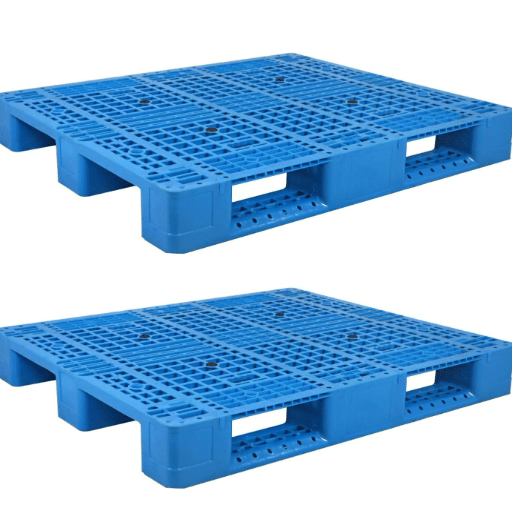
It’s important to delve deeper into the design and functionality of each type to see how they meet various logistical needs when we talk about rackable and stackable pallets in comparison. The pallets for racking are designed to be very stable on racks and hence they can easily handle heavy loads and utilize the storage space efficiently in the vertical direction. These pallets are highly recommended for the industries where safety in high rack storage and the most efficient use of warehouse space is a priority.
On the contrary, stackable pallets are created to be put on top of each other durably, thus saving the floor space either while they are in storage or in transit. These kinds of pallets are especially useful in cases where there aren’t any racking systems or simply when the ease of stacking during shipment is more important.
The trough looking for “rackable pallets for warehouses” and “stackable pallets for shipping” indicated a rising want of made-to-measure solutions in various sectors. The businesses willing to enhance their logistics are supposed to consider the technical parameters’ like capacity, allowable exposure strength, also compatibility with the automation systems before deciding which among the pallet types should be used for their specific purpose operations.
Light Duty vs. Heavy Duty Options
LITE-Duty Pallets are often found in industries that work with lightweight or mildly handled goods. They are optimal for single-time use or areas where light transportation is needed but not for frequent heavy usages. They are inexpensive and safe for these very particular needs. On the other hand, VERY-Duty Pallets are designed to hold up to difficult conditions and are ideal for high-volume usage in places like warehouses and industries. In general, one of the primary factors to consider when choosing between the two types of pallets a business is frequently are the heaviness of the products, the way they will be used and the environment they will be in throughout the journey or storage.
Industry-Specific Recommendations
Lightweight pallets are the generally recommended choice for the economical handling of light products in various industries such as food and beverage, retail, etc., i.e., those where the logistics are confined to one-way distribution, and the goods are non-returnable. Market research and case studies have been conducted by product packers and pallet suppliers, and it has been found that the amount of material lost per load has been reduced through the use of lightweight pallets. On the other hand, heavy-duty pallets are the most suitable choice for the durable handling of heavy, valuable, or bulky products in the manufacturing, logistics, and construction industries — this is what the products are to be and no better issue for handling would arise. Many factors need to be taken into account when selecting pallets that are best suited for each industry.
Future Trends in Pallets
Innovations in Plastic Pallet Design
Plastic pallet design advances are accentuated by sustainability, efficiency, and durability. New methods consist of using materials that were previously discarded or materials that decompose naturally. The end result is light-density but very strong structures, which contribute to less fuel consumption and lower power usage in transportation. Enhancements like non-slip surfaces, the use of RFID tags, the optimization of changes through modularity all represent new and useful paths. The departure from the old ways is part of the quest for better design methods and the invincible nature of new inventions.
Environmental policy and sustainability trends
Sustainability in materials and design is an indispensable aspect that would make our environment cleaner, but darker in color. The more the world uses biodegradable and lightweight materials, the less is waste that is being generated and the lower the energy consumption is during production and transportation. In the same way, RFID tracking with its efficiency enhancements could reduce resource use and thus help in cutting down on waste, while modular designs can make it simpler to make old units new and strong, also leading to less waste generation. The things that are new in the market are in fashion and the old are turned into junk; Eco-conscious companies should be the leaders of the market in this way.
The Role of Technology in Pallet Management
Innovations in technology have completely changed the way pallets are being managed, making it more efficient, less expensive, and more sustainable. As businesses carry out their pallet operations using technological advancements such as RFID tagging, GPS tracking, and IoT-enabled sensors, they achieve a continuous and real-time view of the same. These devices allow for very well-organized stock management, the pallets then being followed up and used in an effective way, so as to avoid any loss or unnecessary slowing down. In a similar fashion, the implementation of robotics in the palletizing process has indirectly increased manpower by giving the customers a better service and a higher accuracy level. The cloud is also contributing to the process through the availability of data trends, the forecasting of demand, and the optimization of logistics workflow. All in all, the mixture of these advancements takes the conventional pallet management all the way to the top as a very efficient and data-driven process, exceeding the requirements of the current supply chains with high environmental consciousness relations.
References
-
Investigation into pallet durability throughout the hazards that pallets experience during regular use and handling
Read more on vtechworks.lib.vt.edu -
Comparison of the Different Hazards Experienced by Pallets During Material Handling
Read more on vtechworks.lib.vt.edu -
Seismic evaluation and performance enhancement of industrial storage racks
Read more on rave.ohiolink.edu