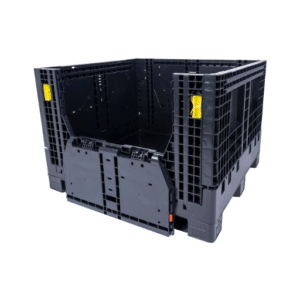
Pallets are a component that many industries might ignore, yet their credibility in production requires adherence to very stringent quality and specifications. Most manufacturers are encouraged to be ISO certified because this demonstrates that their operations are on par with the best in the world. Depending on their processes, the following section describes ISO 9001 standards. It will explain how the certification is applied in the context of the pallet manufacturing industry, apart from focusing on the improvement of the quality of these products. Such an article will be of interest to all logistics coordinators, supply chain managers, and to all those who want to understand why certified manufacturing matters.
What Does ISO Certification Mean for Pallet Manufacturing?

Having ISO certification simply means having ISO 9001 certification, specifically for a pallet manufacturing enterprise; a quality management system (QMS) is in place and on paper for the purpose of controlling customer expectations and statutory requirements. As far as pallet manufacturers are concerned, this includes setting up practice schemes which help in optimizing operations, lowering production waste, and enhancing the documentation approximation within such processes. One of the focus areas, in this case, is to prove the existence of a process improvement belief and concern for customer relations as a strategy that enhances customer confidence and expansion into high-quality, durable consumer markets.
Definition and Significance of ISO 9001 Certification
It is known that ‘ISO 9001’ is a standard that defines Quality Management Systems (QMS) in organizations. This standard has been developed by the International Organization for Standardization (ISO), referred to in short as ISO. It is an approach aimed at supporting quality measures within an organization so that the offered products and services always satisfy the needs of the customers. Some of the important principles of the certificate include customer orientation, commitment to leadership, process design approach, and data-driven decision making, providing a sustainable environment for advancing improvement.
The meaning of the ISO 9001 certification is that it helps organizations increase operational effectiveness, minimize mistakes, and improve the quality of products. For the organizations, the certification is a great instrument for building trust, satisfying demand in the international market, and increasing the level of customer satisfaction. Companies abiding by the guidelines of ISO 9001 are considered to be of high standards, which in most cases is a requirement of gaining access to certain industries or even becoming a vendor of some high-maintenance clients. Moreover, the acquisition of the ISO 9001 certification gives assurance to stakeholders by presenting a quality and compliance approach with reliance on processes.
Key Standards Set by ISO for Manufacturing Processes
The international organization uses its authority to monitor and improve production practices by formulating rules aimed at achieving some level of quality standards, optimal productivity, and safety. Of these, the Quality Management System (QMS) is the most talked-about, as it is established in ISO 9001. It had defined the data of the clientele towards policy in action, and continual development together with management of risks more robustly.
Another such significant standard is ISO 14001, which is dedicated to environmental management by controlling pollution, energy consumption, and all waste disposal activities to a reasonable extent. Furthermore, the ISO 45001 deals with occupational safety and health concerns of workers, and that implies that it assures there are working conditions that protect the workers from any dangers at the workplace.
| Standard | Focus Area | Key Requirements |
|---|---|---|
| ISO 9001 | Quality Management System (QMS) | Customer orientation, continual development, management of risks, data-driven decision making |
| ISO 14001 | Environmental Management | Controlling pollution, energy consumption, and all waste disposal activities to a reasonable extent |
| ISO 45001 | Occupational Health & Safety | Assuring working conditions that protect workers from dangers at the workplace |
| ISO/IEC 27001 | Data Security | Strengthening data protection and averting possible information leaks |
All these standards support one another in implementing and attaining the requisite desirable standards, through functional performance, and towards sustainable development. Certification guarantees adherence to principles and procedures around the world, which means that quality and compliance are always assured. It is what creates systems, processes, or frameworks for organizations to implement, to do things better, and to comply with requirements or regulations. The certification process also allows regular checks to be done to ensure compliance with the standards set for the quality and service delivery expectations promised. This process of certification simply enables the thinking process of improvement of all things, providing an opportunity to grow the business. In addition, it facilitates acceptance since all concerns related to health, morality, and the environment have been well taken care of.
The Importance of ISO Certified Pallets in Global Supply Chains

It is critical to utilize pallets that have an ISO certification in global supply chains since they are effective, safe, and in line with all the supply chain requirements across the globe. They are tailor-made for facilitating the circulation of smooth goods by maintaining consistent, straight dimensions, loading rates, or made of the best materials there is agreed upon. The adoption of ISO certified pallets by institutions, firms, and other relevant stakeholders is critical for these reasons, such as the reduction of product loss, compatibility with the different systems of product handling, and adherence to all the safety and health environmental requirements. More so, the standardization is connected with the fact that international trading becomes easy, devoid of logistical issues, and respects the environment, where most of the materials are long-lasting or recyclable. This ensures that there is no hitch in the transport of commodities from one point to another, respectively, within the borders or without, whilst meeting the regulations of the industry as well as the law.
Overview of Pallet Usage in Supply Chains
In the supply chain industry, a convenient way of doing business in the 21st century is made possible through the use of pallets. These are where all goods are usually placed so that handling, storage, and transportation can be carried out expeditiously by the application of the normal standard. This process preserves the integrity of palletised goods and facilitates or enables forklifts, pallet jacks, and conveyors. With less contact of goods with humans, the likelihood of them getting damaged is also reduced. It also enhances space utilization in the warehouse. The use of pallets also improves the speed as well as economical operation of the supply chain. This is achieved by speeding up the process of loading and unloading goods with the employment of a small amount of human labor. Besides them, quite unbearable to international trade are even the most advanced wooden and plastic ones, which have the ISPM-15 treatment against pest-resistant organisms and are designed to be able to withstand a weathery, yet functional trauma. Their multi-functions, resistance, and easy recycling help the green activity, so plastic wooden pallets are a key element of the logistics in the transport of high packing units.
The Role of ISO Certification in Reducing Risks and Inefficiencies
By developing international standards, for example, those of ISO 9001 for improving quality management and ISO 45001 for aligning with occupational health and safety, organizations can enhance the efficiency of processes and conform to legal and regulatory requirements without making any methodological errors. Certifying norm has been provided in terms of making a specified possibility consistent, as far as risk assessment is considered, to allow organisations to determine risks in their processes and take preventive actions. Enacting systems that are ISO certified assists in controlling undesirable inconsistencies because every process is structured, utilization of resources is enhanced, and growth is encouraged. Examples of such standards include ISO 14001, which encourages environmentally friendly activities, reducing damage to the environment, and ISO/IEC 27001, which strengthens data protection, thus averting possible leaks. These being international standards, ISO certified pallets also carry out this duty.
Case Studies: Benefits of ISO Certified Pallets in Logistics
These case studies highlight the various advantages of ISO certified pallets, ranging from operational efficiency and cost reduction to sustainability and safety, all of which make them indispensable in today’s logistics.
Key Benefits of Using ISO Certified Pallets

High Durability and Performance
Production of ISO pallets is in accordance with specific quality standards that enhance their strength and performance level. It lessens the possibility of damages on goods whilst being transported or handled.
Universalization
Such pallets are made in conformity with the international standards in order to enhance the overall functionality of the supply chain worldwide, making it possible. They are of standard dimensions, hence compatible with all kinds of devices and modes of transport all over the world.
Enhanced Efficiency in Operations
The control of the dimensions of these pallets and the loading capacity provided makes them fit ISO certifications. As a result, operations are quick and cost-saving in terms of labor.
Ecological and Green
Environment-friendly materials and methods are always considered in the production of such pallets. This enables entities to promote green principles as well as reduce carbon emissions in conducting their activities.
Increase in Safety of Products
The stringent standards guarantee that no defect or contaminant is present within pallets, mitigating the chances of damaging or contaminating products, especially in stringent sectors like the food and drugs sector.
Cost-Benefit Analysis and The Value of Long-term Use
The strength and dependability of ISO certified pallets mean that it costs less to replace and maintain them over time, hence there are significant savings on costs in the long run.
Quality Assurance and Safety Standards of Certified Pallets
Detailed Discussion on Quality Assurance
In terms of making sure these products are of the highest quality, the process of quality assurance (QA) of ISO certified pallets is organized to focus on maintaining quality standards in the product and the service as the customer needs. Quality assurance is the process of applying strict international norms concerning the usage of materials, processes, and techniques for testing the product. Use of quality assurance generally includes:
📦 Material Use and Inspection
In the businesses of building pallets, high-quality materials are solely used so as not to jeopardize the structures of finished products. Established quality control methods in the prevention of raw materials acceptance are introduced for their performance based on defined requirements, such as environmental resistance or load sustainment ability.
⚙️ Centralized Techniques of Construction
There is an effort to concentrate the production process at every level in order to control and reduce the deviation rate. High-precision machines for processes such as slicing and assembling with the help of robots are included to ensure that the final product is of constant quality. Intervals for preventive check-ups and process inspection are regularly done as a result of creeping changes and inefficiencies spotted during the need to improve.
🔬 Comprehensive IQA Protocols
IQA includes extensive studies to check for real-world situations. This involves withstanding the load tests, shock resistance, and being exposed to environmental loads such as humidity or temperature changes. It protects a wide variety of processes in place to make sure that any delays in the industrial application of the pallets do not affect their performance.
📄 Paperwork Management Within the Procedures
All processes shall be followed by instructions so that they can enhance traceability and efficiency in case of any incidents in relation to the pallets. For example, tracing batches, checking the results of inspections, and supplying regulated certification are carried out in the normal course of business, aiding easy problem tracing and proving compliance with standards.
📈 Practices for Continuous Growth
IQA frameworks include expectation and feedback systems to help improve the product on a continuous basis. Thanks to bottlenecks and dissatisfaction encoded by consumers, the industry has improved and increased the confidence levels of the product.
This ensures that products are correctly quality assessed through this reliable QA system, and this, therefore, decreases product loss, operations, and meets customers’ expectations due to compliance with rules, which is in line with the standards of ISO certified pallets.
Safety Standards and Durability of Certified Pallets
An essential aspect of ISO certified pallets is the strict measures in place to make sure that the pallets are suitable for usage in different sectors without structural damage. The requirements are usually set by relevant authorities such as the International Plant Protection Convention (IPPC) regulations, or organizations like the American National Standards Institute (ANSI) or the European Pallet Association (EPAL) regulations. Among the principles that incur most of the safety requirements are heat treatment or fumigation to ensure there are no pests, ensuring that the weight supported can be carried adequately, and tests for strength for extreme environments.
The longevity of ISO certified pallets results from the usage of good materials that are engineered efficiently. For example, wood is treated against pests or resistant to moisture, whereas plastic containers might be made from high-density polymers to serve for a long period. There’s also the aspect of uniformity in dimensions and strength that facilitates mechanization, minimizing cases of load failure whilst on transport or storage. There exists a perfect balance between safety, efficiency, and environment as concerns certified pallets, which are the most indispensable aspect in the chain of supply.
How ISO Pallets Enhance Environmental Sustainability
ISO certified pallets help the environment by using resources more efficiently and causing less waste. They have been designed according to international standards, thereby enhancing mobility through efficient utilization of space in cargo carriers and containers, thus lowering unnecessary fuel usage for transportation and preventing carbon footprints. These ISO certified pallets are mostly constructed from resources that can be reused, such as wood sourced from managed plantations or hard plastics that can be recycled when they reach the end of their useful life. Also, the uniformity complemented by the reusability of ISO pallets reduces the necessity for use-once modality of packing materials, thus reducing wastage along the logistic chains. They are solid and able to be used for an extended period of time, meaning that they are not needed as often, and fewer natural resources are required. Transforming ISO pallets especially illustrates the circular economy, a modern approach that allows industry to move goods whilst propagating eco-efficiency.
ISO 9001 Standards and Their Application in Pallet Manufacturing

The enterprises operating in the pallet production corner believe that ISO 9001 is core in maintaining the level of quality of the activities undertaken. The standards are more based on the methods whereby the manufacturers are expected to put in place an adequate quality management system that deals with each stage of production, from the choice of raw materials to processing the finished product. Once such a system is in place, the manufacturers can rest assured that they will be able to manufacture pallets within specific limits of strength, carrying capacity, and protective standards, which eliminates variability associated with manufacturing such pallets. Not only that, but every ISO 9001 is also carried out regular audits and performs changes in the management culture for enhancement reasons, which encourages dedication and forward thinking in production, which makes sure that all the work carried out meets the customers’ standards and exceeds all possible standards.
Real-World Examples of Certified Manufacturing Facilities
Such cases demonstrate how workplaces that are ISO certified in various industries apply frameworks to ensure quality, sustainability, and such standards as safety.
Step-by-Step Compliance Requirements for Pallet Manufacturers
-
1
Get Acquainted with Proper Standards
First off, use ISO 9001 as well as local and international pallet standards like timber packaging ISPM 15 and industry-specific requirements. Secondly, this has been put in place so that all activities are legal and of the required quality.
-
2
Quality Management Systems
Put in place a quality management system spelling out the key quality control points to be checked within scope, e.g., purchase of materials, loading limits, and testing of the structure. Prepare well-documented and detailed processes for each and every stage so that accountability for each stage in production is assured.
-
3
Carry Out the Risk Assessment and Develop Mitigation Interventions
Carry out the risk assessment in a systematic manner to find out any likelihood of production problems and or safety dangers. Identify gaps and prevent them using tools such as Failure Mode and Effect Analysis (FMEA).
-
4
Apply Heat Treatment and/or Fumigation
If you are an exporter adopting pallets, make sure that you adhere to the ISPM 15 requirements by having or employing heat treatment or fumigation techniques in accordance with the standards that seek to control pests. Always keep and maintain a careful accountability of the treatment for auditing and inspection.
-
5
Form a Routine Auditing Program
Both external and in-house audits to both ascertain compliance with ISO 9001 and operational standards must be carried out. The activity only aims at its own aims, which enables audits of different processes and a developed system of corrective measures for compliance requirements.
-
6
Instruction of the Work Force on Compliance Measures
Your people must be trained on the applicable regulations, norms, and details of handcraft and control. Such training will help avoid degradation of knowledge and quality over time.
-
7
Checking and Evaluating Product Quality Before Dispatch
Impose rigorous tests on the pallets after the manufacturing process, for instance, regarding load resistance and safety. Testing must include practical experiments to evaluate standard deviations from expected performance.
-
8
Writing Reports and Keeping Files
Documenting the adherence to inspection (monitoring), performance improvement (corrective measures taken), KPI/metrics (quality measures), and ISO standards is easier in preparation for audits.
Pallet manufacturing companies, therefore, achieve satisfaction of the rules of the game without compromising on the quality and service life of their products all at once in the course of the following actions.
Steps to Becoming an ISO 9001 Certified Pallet Manufacturer

-
1
Deciphering ISO 9001 Norms
Start with an incisive examination of the ISO 9001 standard to decipher the kinds of systems it requires for managing quality. Look at ways that these needs can be integrated into your pallet factory operations, such as those concerned with material ordering, production, and the distribution process.
-
2
Function As A Gap Analysis
Execute a systematic examination of existing practice and identify the possible inadequacies of the current state of affairs in the face of ISO 9001 standards. It will also allow focusing on and enhancing the specific areas that need value addition and optimizing the overall utilization of resources.
-
3
How to Create and Enhance Your QMS
Build or improve your quality management system so that it has structures containing features that meet the requirements of ISO 9001. Have clear details of all the processes, introduce actors and responsibilities with regard to these processes, and formulate plans to maintain or improve quality with the end consumer in mind.
-
4
Adherence to QMS Procedures
Incorporate the procedures and activities of the pallet company that will constitute the system for such purpose, thus seeking the pursuit of becoming an enterprise that guarantees the fulfillment of several requirements, making it possible to produce pallets that can carry the ISO certified pallet mark. Distribute the new QMS to all members of the firm. Instructing the staff at various levels on what is expected of them and why it is important to adhere to quality assurance standards of pallet making.
-
5
Perform Internal Audits
Carry out periodic internal audits to check contamination of the QMS. Use the audits to point out any issues and ensure that these are corrected before the external certification audit.
-
6
Engage a Certification Body
Hire external auditors from an accredited certification body. Before the audit, make sure all of the processes have been working properly, and all files are ready for checking.
-
✓
Achieve ISO 9001 Certification
After having the certification audit, you will be issued the ISO 9001 certificate. Keep on enhancing QMS because subsequent audits will be carried out to assess whether or not your compliance with the standard is still there.
Certification Process Overview
In most cases, the pathway to obtain ISO 9001 certification follows a series of steps through which an organization is able to manage its quality systems. The first step is to understand the requirements of ISO 9001 and carry out a gap analysis to compare current processes to those required by the standard. The next step is the development and implementation of an ISO certified pallets standard or adaptation to an existing QMS, which is an ISO 9001 conforming system.
Appropriate internal audits and management reviews are carried out at this level to check the performance of the ISO systems implemented, and any gaps identified are corrected. Once everything is in place, the certification body accredited by an EU body is hired to perform the two-phase inspection. The first stage covers, amongst others, reviews of documents to verify readiness, and the second stage investigates the implementation status of the systems in practice. When done successfully, certification to the requirements of ISO 9001 is issued to the organization.
Upon achieving certification, the focus turns to sustaining compliance through ensuring that internal assessments take place regularly, all activities and processes are under observation and monitoring, and there is the never-ending pursuit of quality management systems to maintain and or renew the certification when it expires.
📄 Documentation & Audits: Documents serve as the basis of ISO 9001 certification, as they provide proof that the Quality Management System (QMS) has been implemented. Documentation includes current regimes, policies, and procedures, and maintained records that reflect the standard requirements. Internal and external audits consistently check if the recorded processes are practised effectively and sustained accordingly. Such activities ensure that no loopholes exist, the qualitative goals are respected, and improvement is continually pursued. This is also why it is important for easy access to initial certification and subsequent compliance.
Best Practices for Cost-Effectively Achieving ISO Compliance
| Best Practice | What It Involves |
|---|---|
| Carry Out a Gap Analysis | First of all, conduct a detailed gap analysis that will help to identify the organisation’s processes as they are now in contrast with ISO stipulations. As a result, you can concentrate efforts on the necessary corrections and avoid investing in all areas of the business. |
| Make the Most of the Documentation Available | Do not rewrite all the policies, procedures, and practices from scratch; use what has been done, but in full compliance with the ISO needs. This way of practising saves on time as no new documents will need to be created; only changes in practice will be made for ISO purposes. |
| Train Employees within the Organization | Provide sufficient training for the employees so that they know what is expected of them in order to comply with the requirements. Capabilities within the organization translate into less need for expensive consultants and reworking of practices. |
| Embrace Technology Solutions | Then systemize and invest in the necessary yet reasonably priced set of management tools, such as document control or QMS, to help avoid compliance activities that are manual in nature, such as keeping records up-to-date. |
| Concentrate on Gradual Progress | Attention on the actual improvement Recommended Practice: use iterative methodology to know the norms and practicable non-corroboration, generalized definition, and internal audits for better control results and fewer audits meet costs and changes. |
| Emphasize the Commitment of Management | It is necessary to engage senior managers in all efforts at ensuring compliant to the set standards of ISO. The presence of the top management highly helps to avoid any and all bottlenecks and back and forth, since any certification objectives are made one of the management priorities. |
With the help of these specific strategies, companies will save resources in order to become ISO compliant.
ISO Certification: A Strategic Investment for Pallet Manufacturers
From operational efficiency and product safety to global market access and sustainability, ISO certified pallets deliver measurable long-term value. Whether you are pursuing certification for the first time or renewing your compliance, the structured approach outlined in this guide will equip your business to meet and exceed international standards.
Reference Sources
ISO – General Purpose Pallets (ISO 15629:2002)
Official ISO documentation on standards for pallets, including quality requirements for materials handling and assembly.
ISO 8611-1:2021 – Pallets for Materials Handling
A technical document prepared by ISO/TC 51, focusing on pallets for unit load methods in materials handling.
Frequently Asked Questions (FAQs)
In what way does an ISO standard for pallets constrain warehouse activities?
Warehouses are able to consolidate the storage and handling systems, and this helps because there is a standardized size for the pallet frames developed from the ISO standards. This means that they could come up with cost-effective pallet racking, limit wasted space, remove barriers for the use of forklifts and automation, and ensure proper cubing of the load when the products are being transported in other countries and borders.
What are the specifications to be followed while deciding on ISO certified pallets for carrying cargo?
This is because even though the pallets are ISO certified, the consumer should still check for the size, load capacity, material (wooden, plastic, or lightweight composite pallets, weight), and other dimensions that are in mm. In turn, examine whether or not the pallets are of International Organization Standardizations and of regional transport, border requirements, then your products will be clear of any barriers to trade action.
Why are plastic pallets a more appealing choice for some companies than wood?
Plastic pallets are made so that they are easy to clean, do not swell or absorb moisture, and need no maintenance, which allows for their use in automated systems, which is an important consideration for the supply chain. Companies operating in the food, medicine, and electronics sectors are particularly appreciative of this, for it helps them use fewer resources while ensuring clean products and enabling efficient management of the facility’s workflow.
What impact do the dimensions of pallets have on cargo and transport capacity?
The dimensions of a pallet will determine how many other products can fill a trailer, a container, or a warehouse, among other things, and as a result, influence the capacity and costs of transport. Since these dimensions are imperial, they minimize waste as they provide a way to realize if an item will fit in an area OR not, improve stacking capacities, and make it easier to plan loading margins and weights, which are important when transporting goods efficiently with regard to cost.
What are the common obstacles organizations encounter in their attempt to unify pallet sizes globally?
When integrating international standards on logistics in a company, some challenges include standard vs. specific measures across regions, such as America Vs. Europe, use of wood vs. plastic pallets, and more importantly, adjustment of systems as per the regional and “regional“ compliance cons. In dealing with the restrictions, the companies face the cost of the already existing non-standard pallets or the restriction of costs for developing a new design of standard pallet within the required market demands.
Will implementing iso certified pallets simplify automation in the warehouse system?
iso certified pallets made with standard dimensions and structures provide support for automated handling systems like AGVs, conveyors, or robotic pick-and-place equipment. The use of accepted dimensions in pallets likewise eliminates errors and maximizes productivity, and hence facilitates their incorporation into warehouse management systems, thus enhancing the operation and also lowering the extra costs involved in handling such pallets in the long run.
What factors about load and capacity should a business consider in selecting an eligible ISO certified pallet?
An ISO certified pallet may support a specific amount of weight depending on various stages, namely static, dynamic, and racking load capacities. Therefore, the static and dynamic load of the pallet should be determined as well as the load-bearing capacity of the pallet when elevated, to enhance safety and or strategic movement of goods within permissible measures. The stiffness of the pallets should be matched against the weight of the goods to be protected; again, the height of the pile and the mode used to transport the goods should be considered to prevent damage and compliance problems. Good customer service will minimize repair expenses by ensuring the goods are protected.
Is it possible to improve and lower the cost in ISO certified pallet design?
In addition to these solutions, the use of light complex materials and the use of modules and re-plastic composites for transporting plastic pallets helps in weight reduction and helps with better resistance management. Further, some pallets have been designed to integrate the use of RFID tags, or even IoT sensors, in carrying the current functionality together while also ensuring higher inventory control levels, which have brought a whole new competitive approach in the supply chain, as well as the loss reduction package, therefore reducing the total cost of ownership.
How can I determine the suitability of using either a standard or a custom-sized pallet for my industrial purposes?
When dealing with international transport, warehouse automation, and buying or sharing cost-effective delivery-oriented pallets, one should pick standard dimensions. On the other hand, pick the choice of a custom design if the cargo is of a peculiar shape and structure, has specific loading needs, or any pallet of a ready or super structure will serve its purpose much more. Find out if there is any demand for it, if it is subject to any laws and regulations, or if it is beneficial in the long run for what you are doing