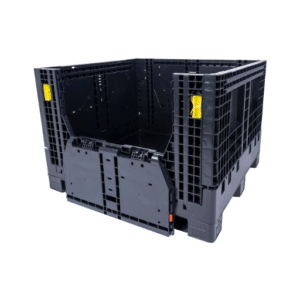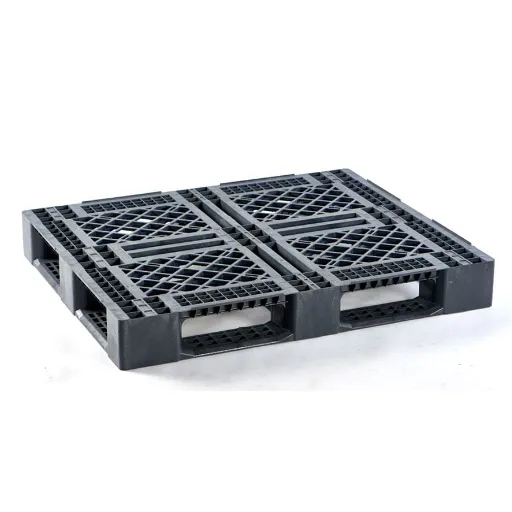

Rackable plastic pallets are injection-molded HDPE or polypropylene pallets with continuous runners engineered to bridge unsupported rack beams safely in elevated warehouse racking systems. Among all plastic pallets for racking, they are the only type designed to carry sustained loads on two-point support without deck failure. If your operation uses selective racking, drive-in racking, or automated storage and retrieval systems, rackable plastic pallets are not an upgrade. They are a requirement.
Last winter, a logistics manager loaded 1,200 kg of packaged seafood onto a pallet with a 6,000 kg static load rating. But the pallet had a nine-leg base, not continuous runners. Within 48 hours in selective racking, the deck sagged and the load crashed to the floor. The incident cost ¥35,000 in damaged goods and repairs. The problem was not the pallet’s strength. It was the wrong type of strength for the application.
At Shandong Lile, we engineer rackable plastic pallets that bridge the gap between floor capacity and rack safety. With 18 large-scale injection molding machines and ISO 9001-certified quality control, we have supplied durable plastic pallet solutions to clients in 108 countries.
Key Takeaways
- Rackable plastic pallets use continuous runners to distribute load across unsupported rack beams; stackable pallets with nine-leg bases are not rated for racking.
- Always request the rack load rating at a specific beam span, not just the static load; apply a 1.5× safety factor.
- Steel-reinforced rackable pallets reduce creep deflection by 40–60% and are essential for loads exceeding 1,000 kg and AS/RS automation.
- HDPE performs better in cold storage down to –40 °C; polypropylene offers superior creep resistance at ambient temperatures.
- Rackable plastic pallets commonly last 5–7 years in closed-loop systems, with lower total cost of ownership than wood.
What Are Rackable Plastic Pallets?
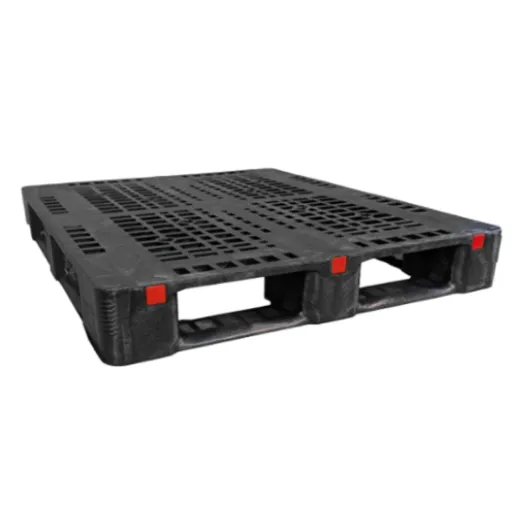
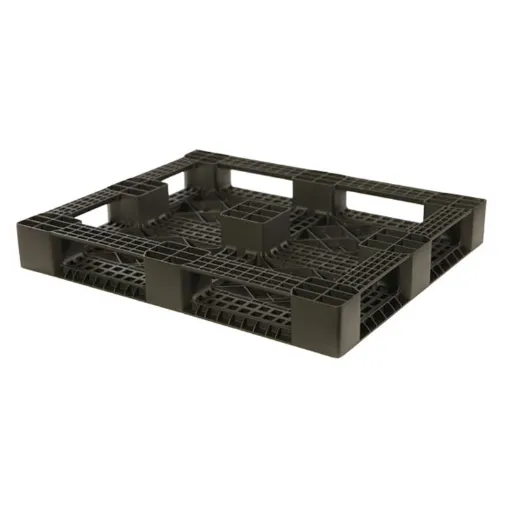
Rackable plastic pallets are injection-molded HDPE or polypropylene pallets engineered with continuous runners, typically in a three-skid or full-perimeter base configuration, to bridge unsupported rack beams and safely support loads in elevated warehouse racking systems.
The defining feature is the runner. Continuous longitudinal supports span the gap between two rack beams, distributing load along the entire beam rather than concentrating stress at discrete points. This is fundamentally different from stackable designs, which use nine-leg bases intended for floor contact and vertical stacking.
Standard stackable pallets often fail in racking because nine-leg designs create concentrated stress points on rack beams. Under sustained load, the deck between legs deflects. Most stackable pallets are not tested for unsupported span conditions. A manufacturer may quote a 6,000 kg static load, but that number applies only on a flat floor with full support. It says nothing about performance on two rack beams 900 mm apart.
The term “rackable” is sometimes used as marketing language rather than a certified rating. A genuine rackable plastic pallet has been tested according to ISO 8611 or ASTM D1185 under rack-load conditions at a specified beam span.
At Lile, every rackable pallet design undergoes in-house racking simulation before mold approval. Our engineering team validates runner geometry and steel-reinforcement placement against your specified rack load and beam span.
Understanding the differences between rackable vs stackable plastic pallets is the first step in specifying the right pallet for your warehouse. The wrong choice creates safety risks, rack damage, and hidden costs.
Rackable vs. Stackable Plastic Pallets: The Critical Differences
Structural Design
Rackable plastic pallets use continuous runners to distribute load across beam spans. The runner acts as a beam itself, transferring weight from the deck to the rack supports on either end. This two-point support geometry is the only safe configuration for elevated storage.
Stackable plastic pallets use nine-leg bases designed for floor contact and vertical stacking. The legs provide no structural bridging across an unsupported span. When placed on rack beams, the deck between legs carries the full bending stress.
Load Capacity Comparison
| Load Type | Rackable Plastic Pallet | Stackable Plastic Pallet |
|---|---|---|
| Static (floor) | 4,000–7,000 kg | 1,000–2,500 kg |
| Dynamic (forklift) | 1,500–2,500 kg | 1,200–1,500 kg |
| Rack (unsupported beams) | 800–2,000+ kg | Not rated / unsafe |
| Empty nesting ratio | 1:1 (stack at full height) | 8:1 to 10:1 space savings |
When to Choose Rackable
Choose rackable plastic pallets when your operation includes beam racking, when rack loads exceed 800 kg, or when you operate an AS/RS system.
When to Choose Stackable
Stackable pallets excel in floor block-stacking, export shipping, and one-way logistics. Their high nesting ratio, often 8:1 or better, saves space during backhaul.
Quick Decision Framework
| Your Operation | Recommended Type | Key Spec to Request |
|---|---|---|
| Selective or drive-in racking, load > 800 kg | Rackable (steel-reinforced) | Rack load + beam span |
| Floor stacking only, no racks | Stackable (nestable) | Static and dynamic load |
| Export or one-way shipping | Stackable, lightweight | Dynamic load + unit weight |
| AS/RS automated system | Rackable, tight tolerances | Deflection spec + dimensional tolerance |
If your racking system has non-standard beam spans or your loads require custom footprints, custom rackable plastic pallets can be engineered to your exact specifications. Lile’s in-house mold tooling supports bespoke runner geometries, steel-tube placement, and deck patterns for specialized applications.
Understanding Rack Load Ratings & Safety
Static Load vs. Dynamic Load vs. Rack Load
Three numbers appear on most pallet spec sheets, but only one matters for racking decisions.
Static load measures capacity when the pallet sits stationary on a flat floor with full support. It is irrelevant for racking.
Dynamic load measures capacity while the pallet is in motion on a forklift or pallet jack. It accounts for impact and acceleration forces during handling. It is also irrelevant for racking.
Rack load is the only number that matters. It measures the maximum safe load when the pallet rests on two unsupported rack beams at a specified span. This is the rating that determines whether your pallet will survive day 1,000 in the rack as surely as it survived day 1.
Why the Rack Load Is Always Lower
An unsupported span introduces bending stress that does not exist under static or dynamic conditions. The deck must bridge the gap between beams without permanent deflection. Over time, plastic materials experience creep, a slow deformation under sustained load. A pallet that holds 5,000 kg on the floor may only carry 1,000 kg safely on a rack because the unsupported span changes the stress geometry entirely.
When Marcus, a procurement engineer at an automotive parts plant in Germany, reviewed bids for a new high-bay warehouse, one supplier quoted stackable pallets with a 5,000 kg static load at half the price of rackable alternatives. Then Marcus asked for the rack load rating at a 1,100 mm beam span. The supplier could not provide one. Marcus chose steel-reinforced rackable pallets rated for 1,500 kg at 900 mm span. Three years later, his facility has recorded zero pallet-related incidents in racking.
Beam Span Matters
Rack load ratings are tested at specific beam spans, commonly 800–1,100 mm. A pallet rated for 1,500 kg at 900 mm may fail at 1,200 mm because bending moment increases with the square of the span. Always verify that the rating matches your actual beam spacing.
Safety Factor
Industry standard practice applies a 1.5× safety factor to rated rack loads. A pallet rated for 1,500 kg rack load has a safe working load of 1,000 kg. This will make provision for slight overloading and creep.
How Much Can a Rackable Plastic Pallet Hold?
A standard all-plastic rackable pallet typically holds 800–1,500 kg on rack beams at an 800–1,000 mm span. Heavy-duty rackable plastic pallets with steel reinforcement can achieve rack loads of 1,500–2,000+ kg at the same spans, with reduced long-term creep deflection. Always divide the rated rack load by 1.5 to calculate your safe working load.
Red Flags in Manufacturer Ratings
Be cautious when a spec sheet shows any of the following: no beam span specified for the rack load rating; only static and dynamic numbers provided with no rack load figure; generic “heavy duty” labeling without rack certification; no reference to ISO 8611, ASTM D1185, or third-party test documentation; or a rack load equal to or higher than static load, which is physically implausible.
Materials & Reinforcement for Racking
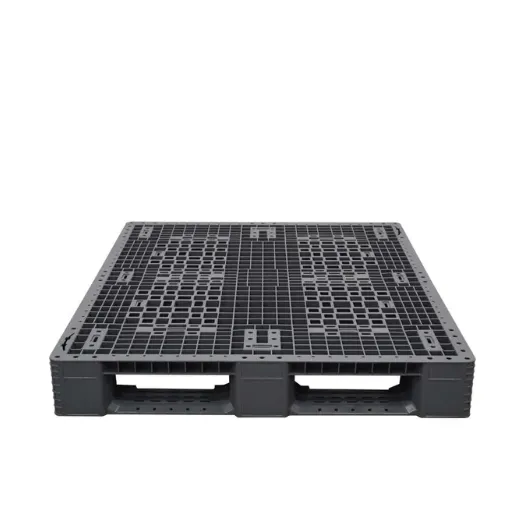
HDPE vs. Polypropylene in Racking
High-density polyethylene (HDPE) offers superior impact resistance and performs reliably down to –40 °C, making it the preferred material for cold storage racking and rough handling environments.
Polypropylene (PP) provides higher stiffness and better creep resistance at ambient temperatures. PP also produces smoother surfaces, making it the standard choice for hygienic rackable pallets in food and pharmaceutical applications.
Steel Reinforced Rackable Pallets: Reinforcement for Rack Loads
Steel reinforced rackable pallets integrate steel tubes during the injection molding process, not retrofitted afterward. Longitudinal steel runners, typically 1.2–2.2 mm wall thickness, are placed inside the primary load-bearing runners under the deck. This integration ensures the steel and plastic act as a composite structure.
The effect is significant. Steel-reinforced HDPE pallets reduce deflection by 40–60% at rated racking loads compared with all-plastic equivalents. More importantly, steel reinforcement limits creep deformation under sustained load. An all-plastic pallet may sag 20 mm after six months in a rack. A steel-reinforced equivalent may sag 5 mm.
Steel reinforcement becomes essential when rack loads exceed 1,000 kg, when storage height exceeds 8 meters, or when AS/RS systems demand tight deflection tolerances. It is also recommended for high-bay warehouses where pallet sag can interfere with shuttle mechanisms or load-cell accuracy.
Material Selection Matrix
| Application | Material | Reinforcement | Racking Type |
|---|---|---|---|
| Ambient warehouse, < 1,000 kg | PP or HDPE | All-plastic | Selective racking |
| Cold storage, –20 °C to –40 °C | HDPE (impact-modified) | Steel-reinforced | Drive-in or high-bay |
| Heavy industrial, > 1,200 kg | HDPE or PP | Steel-reinforced | Selective or push-back |
| Pharma or food, washdown required | PP (smooth surface) | All-plastic or steel | Hygienic racking |
Rackable Plastic Pallet Types & Designs
Three-Runner Rackable
The most common design features three continuous runners for excellent load distribution across standard beam spans, with 2-way or 4-way forklift entry. This is the default choice for selective racking among industrial plastic pallets.
Full-Perimeter Rackable
Frame-style bases with runners along all four edges excel in drive-in and push-back racking where edge support varies. They also provide superior stability for loads that slightly overhang the deck.
Steel-Reinforced Rackable
Internal steel tubes integrated during molding deliver maximum creep resistance and load capacity. These are essential for high-bay racking, sustained loads above 1,000 kg, and automated systems with tight deflection tolerances.
Hygienic Rackable (Closed Deck)
Smooth, non-porous surfaces with no gaps meet FDA and HACCP requirements for food and pharmaceutical racking. Easy to clean and sanitize, they are standard where product purity is non-negotiable.
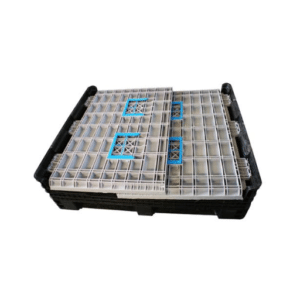
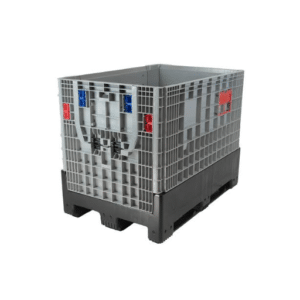
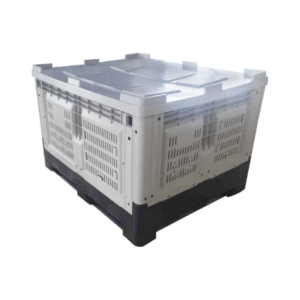
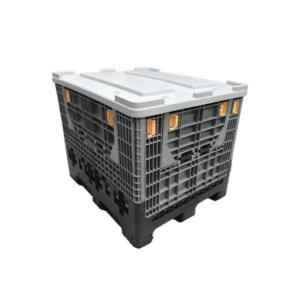
For operations that also require bulk container solutions, plastic pallet boxes offer complementary racked storage capacity for loose materials, powders, and semi-finished goods.
Industries & Racking Applications
Food & Beverage Cold Storage
Frozen goods spend months in sub-zero selective racking. HDPE rackable pallets with steel reinforcement handle thermal cycling and sustained loads in cold stores. A major frozen seafood processor in East Asia replaced wood with Lile HDPE rackable pallets and plastic pallet boxes in –25 °C storage and eliminated splintering, mold, and rack damage that had required quarterly replacement.
Pharmaceutical & Healthcare
Active pharmaceutical ingredients require hygienic racking with batch traceability. PP closed-deck rackable pallets support cleanroom and washdown protocols, with RFID embedding for real-time inventory tracking.
Automotive Manufacturing
Engine blocks and transmissions demand high rack loads and tight dimensional tolerance. Steel-reinforced rackable pallets rated for 1,200+ kg are standard in automotive high-bay warehouses. Custom plastic pallet tooling supports exact footprint matches for component-specific stillages.
E-Commerce & Retail Distribution
High-velocity SKU storage favors lightweight rackable pallets in the 22–26 kg range with RFID compatibility for WMS integration and pick-to-light systems.
Rackable Plastic Pallets in Automated Warehouses
AS/RS, AGV & High-Bay Compatibility
Automated storage and retrieval systems cannot compensate for pallet sag or dimensional drift. A pallet that deflects 15 mm under load may fail to engage with shuttle mechanisms or snag on rack frames during retrieval. Automated guided vehicles and robotic palletizers also require four-way entry, smooth undersides, and consistent runner geometry for reliable engagement with forks and roller conveyors.
AS/RS-grade rackable pallets must demonstrate dimensional stability within specified tolerances under sustained rated load. Key requirements include minimal deflection, consistent tare weight for accurate load-cell readings, and uniform deck stiffness. Lile’s automation-grade rackable pallets are manufactured with tight dimensional tolerances and optional steel reinforcement to meet these specifications.
An e-commerce fulfillment center in the Netherlands launched an AS/RS system with 12-meter-high racks in 2024. Their team selected lightweight nestable pallets to save on shipping costs. Within six months, deck sag caused two retrieval failures. Each incident required a 4-hour shutdown at €12,000 per hour in lost throughput. The center replaced the entire fleet with automation-grade rackable pallets that guaranteed deflection tolerances within 5 mm under rated load.
Automation leaves no margin for pallet failure. A collapsed pallet in an AS/RS creates cascading downtime and safety incidents during manual intervention.
Cost Analysis: Rackable Plastic vs. Wood in Racked Warehouses
The unit acquisition cost of a rackable plastic pallet, typically 55–85,ishigherthananewwoodpalletat55–85,ishigherthananewwoodpalletat25–45. But unit cost is the wrong metric for racked warehouses.
Wood pallets in racking create hidden costs that accumulate rapidly. Splintering deck boards protrude nails that scratch rack beams and tear packaging. Most critically, wood pallets fail catastrophically in racking without warning. A broken stringer at height drops the entire load.
Rackable plastic pallets have no such weaknesses. They don’t crack, decay, or get wet. Their consistent dimensions improve rack density and automation compatibility.
Lifecycle data tells the rest of the story. A rackable plastic pallet in closed-loop use commonly lasts 5–7 years, or 200+ trips. A wood pallet in racking typically requires repair or replacement after 8–15 trips. Factor in rack damage, product loss, and maintenance labor, and the total cost of ownership for rackable plastic pallets typically falls 30–50% below wood within the first three years.
How to Choose a Rackable Plastic Pallet Supplier
Manufacturer-Direct vs. Distributor Procurement
Buying direct from the manufacturer eliminates markup, provides access to engineering expertise, and enables custom tooling for specialized requirements. Distributors offer convenience for small orders but rarely provide the technical depth needed for racking system integration.
Key Evaluation Criteria
When evaluating a rackable pallet supplier, verify the following:
- ISO 9001 certification for quality management
- In-house mold design and tooling capability
- Third-party rack load testing with documented beam spans
- Warranty terms that cover structural failure under rated conditions
- Repair, recycling, or take-back programs for end-of-life pallets
At Shandong Lile, we manufacture rackable plastic pallets on 18 large-scale injection molding machines under ISO 9001-certified quality control. Our engineering team designs custom tooling, integrates steel reinforcement during molding, and validates every design against your specified rack load and beam span. From our facility in Shandong to your warehouse via Qingdao Port, we deliver rackable pallet solutions to clients in 108 countries.
Request a custom rackable pallet quote →
Frequently Asked Questions
What are rackable plastic pallets?
Rackable plastic pallets are injection-molded HDPE or polypropylene pallets with continuous runners designed to safely support loads on unsupported rack beams in elevated warehouse racking systems.
How much weight can a rackable plastic pallet hold?
Standard all-plastic rackable pallets hold 800–1,500 kg on rack beams. Steel-reinforced models can achieve 1,500–2,000+ kg. Always apply a 1.5× safety factor to the rated rack load. Request a load capacity assessment for your specific beam span and weight.
What is the difference between rackable and stackable plastic pallets?
Rackable pallets have continuous runners for unsupported beam support. Stackable pallets have nine-leg bases for floor contact and vertical stacking. Stackable pallets are not rated for racking and will fail under sustained elevated loads.
What is a rack load rating?
The rack load capacity refers to the weight limit that a pallet must be able to bear safely when placed on two rack beams at a defined span distance apart. This is different from static load (ground) and dynamic load (moving forklift).
Do rackable plastic pallets need steel reinforcement?
Steel reinforcement is required for rack loads exceeding 1,000 kg, high-bay storage above 8 meters, and automated systems with tight deflection tolerances. It is optional for lighter ambient-warehouse applications.
Are rackable plastic pallets suitable for cold storage?
Yes. HDPE rackable pallets perform reliably down to –40 °C. Steel reinforcement is recommended for sub-zero racking to counteract the increased brittleness of plastic at low temperatures.
Can rackable plastic pallets be used in automated warehouses?
Yes, but they must meet tight dimensional tolerance and deflection specifications. Automation-grade rackable pallets with steel reinforcement and validated deflection data are essential for AS/RS and AGV systems.
Are rackable plastic pallets ISPM-15 exempt?
Yes. Because they contain no wood, rackable plastic pallets are exempt from ISPM-15 phytosanitary regulations. They require no heat treatment or fumigation for international shipping.
Conclusion
Rackable plastic pallets are defined by one capability: the engineered ability to bridge unsupported rack beams safely. Whether you are evaluating rackable vs stackable plastic pallets or specifying plastic pallets for racking in a new high-bay warehouse, this capability is non-negotiable.
There are three factors that need to be considered when using racking pallets. The first factor is requesting the rack load rating for your particular beam span. Second, apply a 1.5× safety factor to determine your safe working load. Third, match material and reinforcement to your racking environment.
The global plastic pallet market is projected to reach $14–16 billion by 2033, with rackable designs capturing an increasing share as warehouses move toward higher-density storage and automation.
At Shandong Lile, we engineer rackable solutions that integrate with your racking system, automation infrastructure, and supply chain goals. With 18 large-scale production machines, ISO 9001-certified quality control, and direct factory pricing, we deliver rackable plastic pallets tailored to your exact beam span, load requirement, and industry standard.
Ready to spec your rackable pallet fleet? Contact our engineering team for a custom quote or sample evaluation.