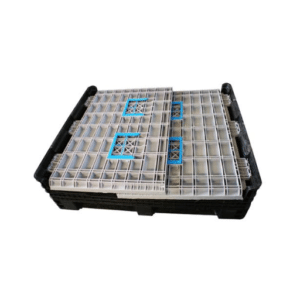
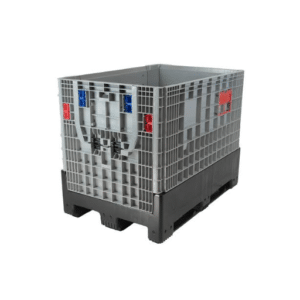
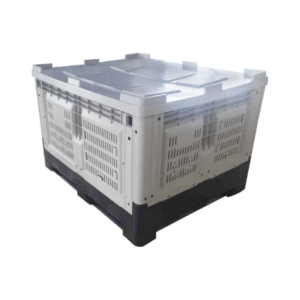
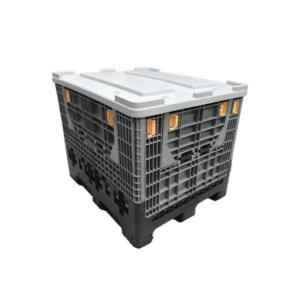
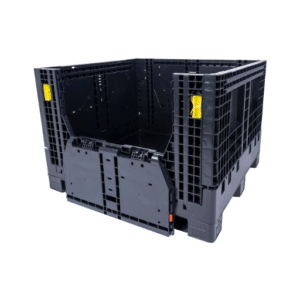
Plastic pallets for pharmaceuticals are specialized load carriers made from virgin HDPE or PP, designed with smooth, non-porous surfaces to meet FDA, cGMP, and GDP hygiene expectations while supporting cold-chain distribution and global export. They reduce contamination risk, simplify regulatory audits, and typically last 7–15 years—far longer than wood.
In 2010, two of the world’s largest pharmaceutical companies learned a costly lesson. Johnson & Johnson recalled roughly 53 million bottles of Tylenol, Benadryl, and St. Joseph’s Aspirin. Pfizer recalled about 360,000 bottles of Lipitor. The common culprit was a musty, mold-like odor traced to 2,4,6-tribromoanisole (TBA), a chemical contaminant linked to wooden pallets. The combined cost to J&J alone approached $900 million in one year.
If you manage pharmaceutical logistics, quality assurance, or procurement, you already know the pressure: every touchpoint in the supply chain must protect product integrity. The pallet is easy to overlook, yet it touches raw materials, work-in-process, finished goods, and cold-chain shipments. Choose wrong, and you risk contamination, recall, audit findings, and export delays. Choose right, and the pallet becomes a silent ally for compliance, efficiency, and total cost of ownership.
In this guide, you’ll learn what makes a pallet pharmaceutical-grade, which regulations matter, how to select materials and designs for GMP and cold-chain use, and how to justify the investment to your leadership team.
Key Takeaways
- Pharmaceutical-grade plastic pallets are typically made from virgin HDPE or PP with smooth, closed-deck designs that resist contamination and support cGMP/GDP compliance.
- The pharma/healthcare segment is the fastest-growing end-user of plastic pallets, projected at 11.79% CAGR through 2031 as cold-chain rules tighten.
- The FDA does not certify pallets directly; compliance depends on material choice, design, documentation, and validated cleaning procedures.
- Plastic pallets are exempt from ISPM-15, eliminating heat-treatment and fumigation delays for global pharma exports.
- High-quality plastic pallets last 7–15 years, often 5–10 times longer than wood, while lowering contamination risk and sanitation labor.
What Are Pharmaceutical Grade Plastic Pallets?

A pharmaceutical grade plastic pallet is a load carrier engineered and manufactured to meet the hygiene, material, and documentation expectations of pharmaceutical operations. Unlike general-purpose pallets, these are designed to minimize contamination risk, support validated cleaning, and integrate with automated warehouses and cold-chain systems.
The most common materials are high-density polyethylene (HDPE) and polypropylene (PP). For GMP zones, manufacturers typically specify virgin resin rather than recycled content. Virgin polymer offers consistent composition, full batch traceability, and no unknown contaminants from prior use. This matters because recycled plastics can introduce substances that fail migration limits under FDA 21 CFR §177.1520 or EU food-contact regulations.
Surface design is equally important. Closed-deck pallets—with a solid or nearly solid top deck—are preferred over open-deck styles in hygienic zones because they eliminate cavities where dust, powder, or moisture can collect. Rounded corners, sealed edges, and one-piece molded construction further reduce places where microbes or residues can hide.
At Shandong Lile, we produce pharmaceutical-grade plastic pallet solutions using virgin HDPE and PP on large-scale injection molding equipment. Our facility spans 178,000 square meters and runs 18 production machines, giving us the capacity to deliver consistent quality at volume for global pharma clients.
Why Pharmaceuticals Are Switching to Plastic Pallets
The move from wood to plastic in pharmaceutical supply chains is not a passing trend. It is a structural shift driven by five operational realities.
Contamination Control and Patient Safety
Wood absorbs moisture, harbors mold and pests, sheds splinters, and can retain chemical treatments. In a pharmaceutical environment, any of those factors can compromise product safety. Plastic pallets are non-porous, do not absorb liquids, and do not require fumigants or preservatives that could migrate into product packaging.
Washability and Chemical Resistance
Pharma pallets must withstand repeated cleaning with high-pressure washers, steam, disinfectants, and solvents. HDPE and PP resist most cleaning chemicals and can be dried quickly, reducing downtime between uses. Some polypropylene designs can even tolerate autoclave sterilization.
Consistent Dimensions for Automation
Automated storage and retrieval systems (AS/RS), conveyors, and AGVs demand tight dimensional tolerances. Wood warps, splits, and varies in weight. Plastic pallets maintain consistent size and weight over thousands of cycles, protecting both automation uptime and load stability.
Longer Service Life and Lower TCO
A quality plastic pallet lasts 7–15 years in pharmaceutical use. A typical wooden pallet lasts 3–5 trips under demanding conditions. Fewer replacements mean lower purchasing labor, reduced waste handling, and more predictable budgets.
ISPM-15 Exemption for Global Exports
Wooden pallets used in international shipping must comply with ISPM-15, which requires heat treatment or methyl bromide fumigation and official marking. Plastic pallets are exempt. For pharmaceutical exporters, this removes treatment delays, documentation complexity, and the risk of shipment rejection at borders.
Pharmaceutical Compliance Standards Explained
No single regulation “approves” a pallet for pharmaceutical use. Instead, compliance is built from a stack of material, design, process, and documentation requirements. Here are the frameworks QA and supply chain teams need to understand.
FDA 21 CFR Parts 210 & 211 (cGMP)
These regulations govern pharmaceutical manufacturing. While they do not name pallets specifically, they require that equipment and utensils do not alter the safety, identity, strength, quality, or purity of drug products. Pallets that contact product packaging—or that move through clean and controlled areas—must be included in your contamination-control program.
FDA 21 CFR §177.1520 (Olefin Polymers)
This regulation lists olefin polymers, including HDPE and PP, that may be used in contact with food and, by extension, are commonly accepted for pharmaceutical packaging contact applications. Suppliers should provide a compliance statement confirming that resins meet this standard.
EU GMP Volume 4 / Annex 15
Annex 15 addresses qualification and validation. In the EU, pharmaceutical warehouses and distribution centers must demonstrate that equipment—including pallets—suitably protects product quality. This often means validated cleaning procedures, material certificates, and load-test documentation.
Good Distribution Practice (GDP) and Cold-Chain Rules
GDP guidelines from the WHO and EU require that medicines are stored and transported under suitable conditions. For temperature-sensitive products, this means continuous monitoring, qualified equipment, and documented handling. Pallets used in cold rooms and freezer warehouses must maintain structural integrity at low temperatures and must not introduce contamination.
REACH / RoHS and Migration Limits
In Europe, pallet materials must comply with REACH (chemical registration and restriction) and RoHS (hazardous substance limits). Migration testing confirms that substances do not transfer from the pallet into product packaging in unsafe quantities.
ISO 9001 and ISO 14644 Cleanroom Alignment
ISO 9001 certification from your pallet supplier signals a managed quality system. ISO 14644 defines cleanroom classifications. Pallets entering ISO-classified areas should be selected and cleaned to match the particle and microbial limits of the zone.
Want to see how material and design choices map to specific pharma workflows? Explore our pharma pallet solutions for GMP-aligned options.
Pharmaceutical Pallet Materials: What to Look For
Material selection is where compliance begins. The wrong resin or construction can create audit findings before a single pallet enters the warehouse.
Virgin HDPE vs. Polypropylene (PP)
HDPE offers excellent impact resistance, moisture resistance, and cost efficiency. It performs well in ambient and refrigerated warehouses.
PP is lighter, more rigid, and more chemically resistant. It also tolerates higher temperatures, making it the better choice when autoclave sterilization is required.
For most pharmaceutical warehousing and distribution, virgin HDPE is the default. For sterile manufacturing or autoclave environments, PP is often specified.
Closed-Deck vs. Open-Deck Designs
Closed-deck pallets provide a flat, sealed surface that is easier to clean and inspect. They are preferred in GMP zones, cleanrooms, and finished-goods areas.
Open-deck pallets are lighter and less expensive, but the gaps can trap debris. They may be acceptable for secondary packaging or outer-carton loads in lower-risk areas, but most pharma operations specify closed-deck for primary product contact zones.
One-Piece Molded Construction
Pallets built in one piece have no nails, screws, or separate components that can loosen, corrode, or harbor contaminants. They also hold dimensional tolerances better over time, which protects automation and racking fit.
Additives for Specialized Environments
Depending on the application, you may need:
- Metal-detectable additives for operations where foreign-object control is critical.
- Anti-static or ESD properties for areas with sensitive electronics or solvents.
- UV stabilizers for outdoor staging or transport.
- RFID tags or QR codes molded into the pallet for track-and-trace programs.
Key Pharmaceutical Applications and Use Cases

Plastic pallets serve pharmaceuticals across the full product lifecycle. Here is how different teams use them.
Finished Drug Distribution and Warehousing
Once packaged, pharmaceuticals move from manufacturing to regional distribution centers and wholesalers. Closed-deck HDPE pallets protect carton integrity, support racking, and allow repeated cleaning between product changeovers.
Active Pharmaceutical Ingredients (APIs) and Raw Materials
APIs and excipients often arrive in drums, supersacks, or fiber drums. Rackable plastic pallets with high dynamic load capacity keep raw materials organized, stable, and off the floor while supporting first-in-first-out inventory control.
Vaccine and Biologics Cold Chain
The pharmaceutical cold-chain packaging market is projected to grow from 17.93billionin2024to17.93billionin2024to63.30 billion by 2033. Within that market, the pallet segment is expected to grow at the fastest CAGR of 15.9%. Plastic pallets perform reliably in refrigerated and frozen environments, unlike wood, which can crack, warp, or absorb moisture.
Mini-story: In 2022, a European biologics 3PL noticed recurring temperature excursions during summer transits. The root cause was not the refrigerated truck—it was warped wooden pallets creating air gaps between insulated shippers and the trailer floor. After switching to closed-deck plastic pallets with consistent dimensions, the 3PL eliminated the gaps and reduced temperature deviations by 34% within two quarters.
Sterile and Cleanroom Manufacturing
Cleanrooms demand pallets that do not shed particles. Smooth, closed-deck plastic pallets meet this requirement and can be cleaned to match ISO 14644 classifications. PP options support autoclave cycles where sterilization is required.
Clinical Trials and Sample Logistics
Clinical trial materials move between sites, labs, and central depots. Small runs of branded, RFID-tagged plastic pallets help sponsors maintain chain-of-custody records and reduce mix-ups between protocols.
Pharma Exports and International Distribution
Because plastic pallets are ISPM-15 exempt, exporters avoid the delays and paperwork of heat treatment or fumigation. This is especially valuable for time-sensitive shipments and markets with strict border controls.
Plastic vs. Wood Pallets in Pharmaceutical Operations
The choice between plastic and wood is one of the most common decisions procurement teams face. The table below summarizes the practical differences.
| Factor | Plastic Pallets | Wood Pallets |
|---|---|---|
| Contamination risk | Low: non-porous, no splinters, no chemical treatments | Higher: absorbs moisture, harbors mold/pests, can retain fumigants |
| Washability | Easy: steam, pressure wash, disinfectants | Difficult: moisture absorption damages wood and promotes microbes |
| Lifespan | 7–15 years | 3–5 trips in demanding use |
| Dimensional consistency | High: stable for automation | Low: warps and splits over time |
| ISPM-15 export | Exempt | Requires heat treatment or fumigation |
| Traceability | RFID/QR tags can be embedded | Difficult to track |
| Initial cost | Higher | Lower |
| Total cost of ownership | Lower over 3–5 years | Higher due to replacement and treatment |
The 2010 recalls are the cautionary benchmark. J&J traced TBA contamination to wooden pallets and packaging materials, leading to a recall that cost the company roughly $900 million. Pfizer identified TBA exposure in Lipitor shipments and publicly committed to increasing its use of plastic pallets. Those events reshaped how the industry thinks about pallet selection.
For a deeper comparison, see our complete plastic pallets vs. wood pallets analysis.
Cleaning, Validation, and Traceability Best Practices
A pharmaceutical pallet is only as compliant as the program around it. Here are the practices QA teams should build into their SOPs.
Validated Cleaning Procedures
Define wash cycles by risk level. High-risk zones may require cleaning after every use, while lower-risk warehouses might schedule cleaning weekly or monthly. Document water temperature, detergent type, contact time, and drying method. Validate that the procedure consistently reduces bioburden and residue to acceptable limits.
Inspection and Damage Protocols
Inspect pallets on receipt and before each use. Remove cracked, chipped, or permanently stained units from service. Many companies use color-coded tags: green for clean and available, yellow for quarantine, red for scrap.
Documentation and Batch Traceability
Maintain records that link pallet batches to cleaning dates, inspections, and product lots. This supports recall investigations and GDP audits. Suppliers should provide material certificates, load-test reports, and compliance statements with each batch or lot number.
RFID and QR Traceability for GDP
Embedding RFID chips or QR codes into pallets enables automated tracking through the warehouse and across the supply chain. This supports the lot-level visibility that GDP and, in the U.S., the DSCSA require for pharmaceutical distribution.
Choosing the Right Pharmaceutical Plastic Pallet
Selection should match the pallet to the specific workflow. Use these criteria as a checklist.
Closed vs. Open Deck
Choose closed-deck for GMP zones, cleanrooms, finished goods, and any area where hygiene is paramount. Choose open-deck only for lower-risk secondary packaging where weight and cost are the main drivers.
Rackable, Nestable, or Stackable
- Rackable pallets support edge-racking loads and are ideal for warehouses with high-bay racking.
- Nestable pallets save space when empty and work well in reverse logistics.
- Stackable pallets maximize floor loading and are common in distribution.
Load Capacity
Understand the difference between dynamic load (moving under forklift), static load (stationary stacking), and racking load (supported by rack edges). Always select a pallet with a safety margin above your heaviest expected load.
Custom Sizing, Branding, and Tracking
Pharmaceutical operations often need non-standard sizes, specific colors for zone control, molded logos, or embedded RFID. A manufacturer with custom molding capability can deliver these without forcing you into a one-size-fits-all design.
At Shandong Lile, we offer custom plastic pallet options tailored to pharmaceutical workflows, including Pantone color matching, reinforced designs, and tracking features.
Cost Justification: Are Pharmaceutical Plastic Pallets Worth It?
The upfront cost of a plastic pallet is higher than wood. The business case usually wins on total cost of ownership and risk reduction.
Reduced Contamination and Recall Risk
A single Class I drug recall can cost hundreds of millions in direct expenses, lost sales, and brand damage. Plastic pallets remove one vector of contamination from the supply chain.
Lower Sanitation Labor and Water Usage
Plastic pallets clean faster and more predictably than wood. Automated wash systems can process hundreds per hour with consistent results, reducing manual labor and variability.
Fewer Replacements and Reduced Waste
With a 7–15 year lifespan, plastic pallets reduce purchasing cycles and waste disposal. Over five years, many operations find the per-trip cost of plastic is lower than wood.
Avoided ISPM-15 Treatment Costs
Wood pallets used in export require heat treatment or fumigation and official marking. Plastic pallets skip this entirely, saving treatment fees and avoiding border delays.
Break-Even Considerations
Most pharmaceutical operations break even on plastic pallets within 2–4 years, depending on trip frequency, cleaning requirements, and automation intensity. High-volume distribution centers often see payback sooner.
Cold-Chain Plastic Pallets: A Growing Priority

The cold chain is where pallet performance is most visibly tested. According to industry estimates, 25% of vaccines reach their destination in a degraded state due to incorrect shipping, and roughly 20% of temperature-sensitive healthcare products are damaged during transport from broken cold chains. Seven out of ten top pharmaceuticals used in the U.S. require temperature-controlled shipping.
Plastic pallets help in three ways:
- Dimensional stability prevents air gaps and load shifts that disrupt insulated packaging performance.
- Moisture resistance eliminates the warping and microbial growth that wood experiences in refrigerated environments.
- Low-temperature toughness keeps pallets intact in freezers and blast-chill rooms.
For operations storing or shipping temperature-sensitive products, our cold storage plastic pallets guide covers material selection, load ratings, and freezer-safe designs.
Mini-story: Marcus, a supply chain manager at a mid-sized generics company, spent six months defending his budget for plastic pallets to finance. After a wooden pallet collapsed in a cold room, damaging $85,000 of finished product, the business case became obvious. His team switched to rackable HDPE pallets, eliminated cold-room collapses, and cut pallet replacement spend by 62% in the first year.
Conclusion
Plastic pallets for pharmaceuticals are no longer optional equipment for leading operations—they are a foundational part of cGMP, GDP, and cold-chain compliance. The right pallet reduces contamination risk, supports validated cleaning, simplifies exports, and lowers total cost of ownership over time.
When you evaluate options, focus on four pillars: material compliance (virgin HDPE or PP), hygienic design (closed-deck, one-piece construction), documentation (certificates, load tests, traceability), and application fit (cold chain, automation, racking, export).
At Shandong Lile, we’ve spent more than a decade manufacturing plastic pallets and pallet boxes for industries where quality cannot be compromised. Our 18 production machines and ISO 9001 quality system support custom pharmaceutical designs shipped to over 108 countries.
Ready to upgrade your pharmaceutical pallet program? Contact our team for a free consultation, material sample, or custom quote tailored to your GMP or cold-chain requirements.
FAQ
Are plastic pallets FDA approved for pharmaceuticals?
The FDA does not approve or certify pallets directly. However, plastic pallets made from FDA-compliant resins—such as HDPE and PP meeting 21 CFR §177.1520—and used within a validated cleaning program align with FDA cGMP expectations.
What makes a pallet pharmaceutical grade?
A pharmaceutical-grade pallet is typically made from virgin HDPE or PP, has a smooth closed-deck surface, is one-piece molded, and comes with material and compliance documentation suitable for GMP and GDP environments.
Can plastic pallets be used in cleanrooms?
Yes. Smooth, non-porous plastic pallets are suitable for cleanrooms because they minimize particle shedding and microbial harborage. Select designs that match your ISO 14644 classification and cleaning validation.
Do plastic pallets need ISPM-15 treatment for export?
No. Plastic pallets are exempt from ISPM-15, so they do not require heat treatment, fumigation, or official markings for international shipping.
How long do pharmaceutical plastic pallets last?
High-quality pharmaceutical plastic pallets typically last 7–15 years, depending on use intensity, cleaning cycles, and load conditions. This is often 5–10 times longer than wooden pallets.