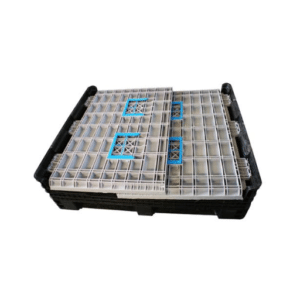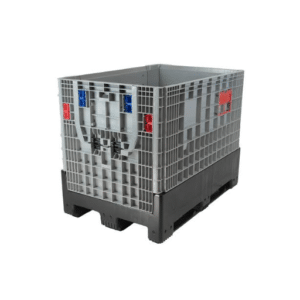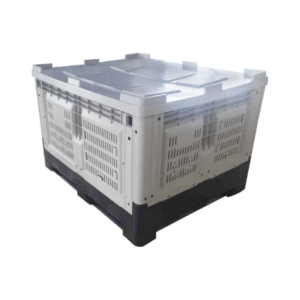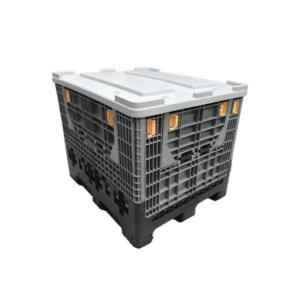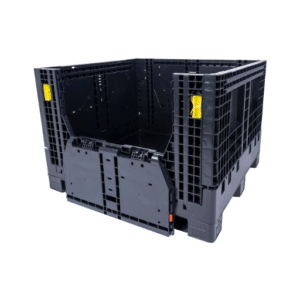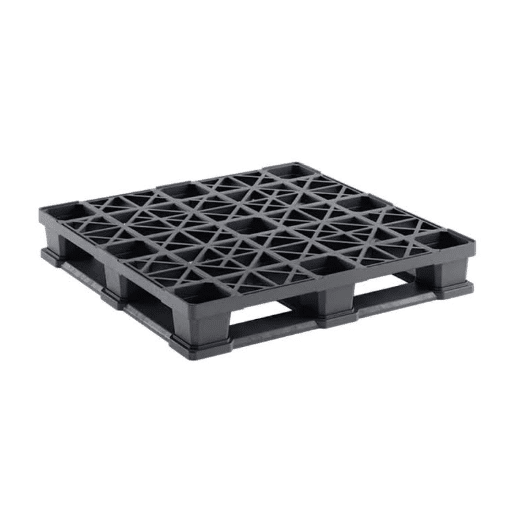

Industrial plastic pallets are heavy-duty load platforms molded from HDPE or PP, designed for repeated use in manufacturing, warehousing, food processing, pharmaceuticals, and export supply chains. They outperform wood in durability, hygiene, and total cost of ownership when used in closed-loop or high-cycle operations.
Heavy duty plastic pallets are the most common choice for these demanding environments. They handle high rack loads, repeated forklift impacts, and exposure to chemicals or moisture better than wood alternatives.
Here is the problem. A single pallet failure can delay a shipment, contaminate a product batch, or trigger a customs hold.
Marcus, a logistics manager at a mid-sized automotive parts supplier, learned this the hard way last year. His team shipped a $40,000 order to Germany on wooden pallets. German customs flagged the load because the wood certification paperwork was incomplete. The delay cost the customer a production line shutdown.
Three months later, Marcus switched to industrial plastic pallets. Since then, his ISPM-15-related delays have dropped to zero.
In this guide, you will learn what makes industrial plastic pallets different from standard pallets and wood alternatives. You will also learn how to interpret material and load specifications, which industries benefit most, and how to choose a supplier that can scale with your operation.
Key Takeaways
- Industrial plastic pallets typically last 50–100+ use cycles, while wood pallets often fail after 10–20 cycles.
- HDPE handles cold and chemicals; PP offers rigidity for high-rack and high-heat environments.
- Food, pharmaceutical, and export operations gain the fastest ROI from plastic due to hygiene and ISPM-15 exemption.
- A full truckload can hold roughly 1,500 nestable plastic pallets versus 450 wooden pallets, cutting return freight costs.
- Custom sizing, steel reinforcement, and RFID tracking let you match the pallet exactly to your operation.
What Are Industrial Plastic Pallets?

Industrial plastic pallets are reusable platforms built to move, store, and protect goods in demanding environments. They are injection-molded or blow-molded from high-density polyethylene (HDPE) or polypropylene (PP), often with steel reinforcement for racking or heavy loads.
Unlike light-duty retail pallets, industrial plastic pallets are engineered for:
- Repeated forklift and pallet-jack handling.
- Exposure to moisture, chemicals, and temperature swings.
- Compliance with food safety, pharmaceutical, and export regulations.
- Compatibility with automated storage and retrieval systems (AS/RS).
Standard features include 2-way or 4-way entry, open or closed decks, and load ratings for static, dynamic, and racking applications. A static load rating measures capacity when the pallet sits on a flat floor. A dynamic load rating measures capacity while the pallet is being moved.
A racking load rating measures how much weight the pallet can hold when supported only by rack beams.
If you are new to pallet specifications, our complete guide to industrial plastic pallets breaks down every design option in detail.
Why Industrial Plastic Pallets Outperform Wood
Wood pallets have dominated logistics for decades because the upfront price is low. That price hides a long list of operational costs.
Wood absorbs moisture. It splinters. Nails loosen. It harbors mold and pests. It requires heat treatment or fumigation for most international shipments under ISPM-15 rules.
Each of these issues creates friction in a modern supply chain. Industrial plastic pallets eliminate most of that friction.
Durability and Lifespan
According to life-cycle testing cited by ORBIS Corporation, wood pallets often fail after roughly 11 cycles. Reusable plastic pallets regularly exceed 200 cycles, with some models tested beyond 400 cycles.
Our own comparison at Shandong Lile shows plastic pallets delivering 50–100 trips versus 10–20 for wood. In closed-loop systems, plastic usually reaches break-even within 18–24 months despite the higher purchase price.
Hygiene and Safety
Elena runs quality assurance at a dairy processing plant. Two years ago, her team traced a bacterial contamination scare to a wood pallet. The pallet had absorbed moisture in a cold-storage area.
The incident triggered a recall review, extra sanitation labor, and a tense audit.
She switched to food-grade industrial plastic pallets. Non-porous HDPE surfaces do not absorb liquids, bacteria, or odors. They wash down quickly. They do not shed splinters or nails.
For Elena, the switch was not just about pallets. It was about removing a recurring risk from her food safety program.
You can read more about compliance requirements in our guide to plastic pallets for the food industry.
Dimensional Stability for Automation
Automated warehouses depend on consistent pallet dimensions. Wood swells and shrinks with humidity. A warped board can jam a conveyor or misalign in an AS/RS shuttle.
Industrial plastic pallets maintain tight tolerances, smooth edges, and consistent tare weight. That predictability protects expensive automation equipment and reduces downtime.
ISPM-15 Exemption for Export
Plastic pallets are exempt from ISPM-15 phytosanitary treatment requirements. That means no heat-treatment certificates, no fumigation stamps, and no customs delays related to wood documentation.
For exporters, this alone can justify the switch.
For a side-by-side comparison, see our plastic pallets vs. wood pallets analysis.
Materials Matter: HDPE vs. PP
Not all industrial plastic pallets use the same resin. The two most common materials are HDPE and PP, and each has distinct strengths.
HDPE (High-Density Polyethylene)
HDPE is the workhorse material for industrial plastic pallets. It offers excellent impact resistance, performs well in cold temperatures, and resists many chemicals. HDPE plastic pallets are especially reliable if your operation involves freezers, outdoor storage, washdown areas, or chemical exposure.
HDPE also handles recycled content well. An estimated 58% of plastic pallet production volume uses recycled material, and HDPE is the most common carrier for that recycled resin.
PP (Polypropylene)
PP is stiffer and more rigid than HDPE. It performs better in high-heat environments. PP is often preferred for high-rack storage where deflection must be minimized.
If your pallets spend most of their life in dry warehouses, high-bay racking, or sterilization processes, PP may be the right specification.
Virgin vs. Recycled Resin
Virgin resin delivers the most consistent performance. It is preferred for food-grade and pharmaceutical-grade applications. Recycled resin reduces cost and environmental impact while still meeting many industrial requirements. The right choice depends on your load, environment, and compliance needs.
At Shandong Lile, we engineer industrial plastic pallets with both virgin and recycled HDPE and PP options. Our team matches the resin to your application rather than forcing a one-size-fits-all material.
Load Capacity and Technical Specifications

Buying an industrial plastic pallet without understanding load ratings is like buying a truck without checking payload capacity. You need the right specification for the actual job.
Standard Load Ratings
| Load Type | What It Measures | Typical Range |
|---|---|---|
| Static Load | Pallet at rest on flat floor | 1,000–6,000 kg |
| Dynamic Load | Pallet moved by forklift or pallet jack | 500–1,500 kg |
| Racking Load | Pallet supported by rack beams | 500–1,200 kg |
Always match the rating to your real-world use. A pallet rated for 1,500 kg dynamic load may not handle the same weight in a rack. A pallet with a high static load rating may still fail if a forklift hits it at the wrong angle.
Steel Reinforcement
For heavy racking loads or dynamic handling of dense products, steel-reinforced industrial plastic pallets add internal galvanized steel pipes to the deck or runners. This increases rigidity without adding significant weight. Steel reinforcement is common in automotive, beverage, and bulk-chemical applications.
Standard Sizes
Common industrial sizes include:
- 1200 × 1000 mm — widely used in Asia and global automotive supply chains.
- 1200 × 800 mm — standard Euro pallet footprint.
- 48 × 40 inches — North American GMA standard.
- 1100 × 1100 mm — common in Asian markets and sea-freight containers.
Custom sizes are also available for specialized equipment, retail displays, or unique product footprints.
Deck and Runner Configurations
- Open deck — allows drainage and ventilation; lighter and often lower cost.
- Closed deck — provides a solid, easy-to-clean surface preferred for hygiene.
- 3-runner (skid) — strong for racking and conveyor systems.
- 6-runner (picture frame) — excellent stacking stability and floor load distribution.
- Nestable — legs nest inside each other when empty to save return freight space.
- Stackable — flat bottom designed for loaded stacking.
- Rackable — reinforced for use in pallet racking.
Industry Applications for Industrial Plastic Pallets
Different industries stress pallets in different ways. Here is how industrial plastic pallets solve specific problems across major sectors.
Food and Beverage
Food safety rules keep getting stricter. The Food Safety Modernization Act (FSMA), HACCP programs, and retailer audits all push facilities toward washable, non-porous handling equipment. Industrial plastic pallets do not absorb moisture, support bacterial growth, or shed contaminants like wood.
Food grade plastic pallets are built with FDA-compliant resins and smooth, easy-to-sanitize surfaces. Our food-grade plastic pallets are ideal for meat, dairy, bakery, beverage, and ready-to-eat operations.
Pharmaceuticals
Pharmaceutical supply chains demand traceability, cleanliness, and dimensional consistency. A 2025 case study summarized by Plastic Pallet Pros reported strong results. After a manufacturer switched from wood to plastic pallets, contamination incidents fell by 35% and warehouse throughput improved by 25%.
For GMP environments, our pharmaceutical plastic pallets guide explains material certificates, cleaning protocols, and validation support.
Agriculture
Agriculture involves mud, moisture, chemicals, and outdoor storage. Wood pallets rot quickly in these conditions. HDPE industrial plastic pallets resist water, fertilizers, and pesticides. They are easy to clean between seasons and do not harbor pests that could spread between fields or greenhouses.
Automotive and Manufacturing
Automotive suppliers run tight just-in-time (JIT) schedules. A pallet failure can shut down an assembly line.
Steel-reinforced industrial plastic pallets provide the consistent dimensions and load capacity that automated production lines require. They also reduce foreign object debris that could damage sensitive components.
E-commerce and Retail
E-commerce fulfillment centers move thousands of pallets per day. Nestable industrial plastic pallets reduce the space needed for empty returns. A truck can carry roughly 1,500 nestable units versus 450 wooden pallets. That density directly lowers reverse-logistics costs.
Cold Storage and Export
Cold-chain logistics punish pallets. Wood absorbs condensation and freezes into misshapen boards. HDPE industrial plastic pallets maintain their dimensions from -40°C to +60°C.
Plastic pallets for export are exempt from ISPM-15 phytosanitary treatment requirements. That means no heat-treatment certificates, no fumigation stamps, and no customs delays related to wood documentation. Combined with ISPM-15 exemption, they are the default choice for frozen food, pharmaceutical cold chain, and international shipping.
How to Choose the Right Industrial Plastic Pallet
Selecting the right pallet comes down to five questions.
1. What Will the Pallet Carry?
Define your maximum unit load, including product, packaging, and dunnage. Then add a safety factor. If your heaviest load is 1,000 kg, specify a dynamic load rating comfortably above that.
2. Where Will It Operate?
Cold storage favors HDPE. High-heat sterilization favors PP. High-bay racking often needs steel reinforcement. Wet or chemical environments require closed decks and chemical-resistant resins.
3. How Will It Move?
Manual pallet jacks, forklifts, conveyors, and AS/RS systems all impose different stresses. Automated systems need consistent dimensions and smooth edges. Forklift handling benefits from 4-way entry and impact-resistant corners.
4. What Compliance Do You Need?
Food and pharmaceutical operations may need FDA or EU food-contact declarations. Exporters need ISPM-15 exemption. Medical-device manufacturers may need full traceability and validation documentation.
5. What Is Your Real Total Cost of Ownership?
David, a procurement director at a consumer goods company, ran the numbers last quarter. Wood pallets cost 12each.Industrialplasticpalletscost12each.Industrialplasticpalletscost45 each. At first, the wood option looked cheaper.
Then he added repairs, replacements, product damage, sanitation labor, and customs delays. Over 60 months, the plastic option cost 8perpalletperyear.Thewoodoptioncost8perpalletperyear.Thewoodoptioncost18 per pallet per year. David’s CFO approved the plastic pallet program the same afternoon.
If you want help building that calculation for your operation, request a custom quote and our team will model the payback period with your actual volumes.
Custom Industrial Plastic Pallets from Shandong Lile

Off-the-shelf pallets work for many operations, but they are not always the best fit. Custom plastic pallets let you optimize dimensions, load distribution, color coding, branding, and tracking features. Custom industrial plastic pallets are especially valuable when standard sizes create load overhang, wasted cube space, or handling inefficiencies.
Customization Options
- Size and footprint — match your product, container, or automation system.
- Material selection — HDPE, PP, virgin, recycled, or antimicrobial additives.
- Steel reinforcement — added to decks or runners for heavy racking loads.
- Color and logo — support visual inventory management and brand identity.
- RFID and barcode integration — enable asset tracking and cycle counting.
- Anti-slip surfaces and edge guards — improve load stability and corner durability.
The Custom Process
- Requirements review — we analyze your load, environment, handling method, and compliance needs.
- Design proposal — our engineers create a CAD model and specification sheet.
- Prototype sampling — we produce samples for your testing and approval.
- Production — we manufacture at scale using our advanced injection molding lines.
- Global delivery — we ship from Qingdao Port to your facility anywhere in the world.
With 16 subsidiaries, 18 large-scale production machines, and distribution to over 108 countries, Shandong Lile has the capacity to support both prototype trials and high-volume rollouts.
Frequently Asked Questions About Industrial Plastic Pallets
How long do industrial plastic pallets last?
In closed-loop operations, industrial plastic pallets typically last 50–100 trips or 5–15 years. Wood pallets often fail after 10–20 trips, depending on handling and environmental conditions.
What are industrial plastic pallets made of?
Most industrial plastic pallets are molded from high-density polyethylene (HDPE) or polypropylene (PP). HDPE handles cold and chemicals well. PP offers more rigidity for high-rack storage and high-heat environments.
Are plastic pallets better than wood?
For high-cycle, closed-loop, hygiene-sensitive, or export operations, plastic pallets are usually better. They last longer, resist moisture and contaminants, maintain consistent dimensions, and are exempt from ISPM-15 requirements.
Can plastic pallets be used for food and pharmaceuticals?
Yes. Food grade plastic pallets use FDA-compliant resins and smooth, washable surfaces. Pharmaceutical plastic pallets support GMP, traceability, and validated cleaning protocols.
Do plastic pallets save money compared to wood?
Over a multi-year lifecycle, plastic pallets often have a lower total cost of ownership. The upfront cost is higher, but savings come from reduced repairs, longer service life, lower sanitation costs, and fewer customs delays.
The Bottom Line on Industrial Plastic Pallets
The global plastic pallets market is valued at approximately USD 7.51 billion in 2025. It is projected to reach USD 14.68 billion by 2035, according to Market Growth Reports. That growth is driven by one simple fact: industrial plastic pallets solve real problems in durability, hygiene, automation, and total cost of ownership.
Wood still has a place in low-cycle, domestic, disposable applications. But for closed-loop logistics, food and pharmaceutical compliance, automated warehouses, and international shipping, industrial plastic pallets are the engineered choice.
At Shandong Lile, we don’t just manufacture pallets. We engineer pallet solutions that match your load, your environment, and your compliance requirements.
Whether you need a standard heavy-duty pallet or a fully custom design, our team can help you reduce long-term cost and operational risk.
Ready to see what industrial plastic pallets can do for your supply chain? Contact our team for a free consultation, custom specification review, or competitive quote.