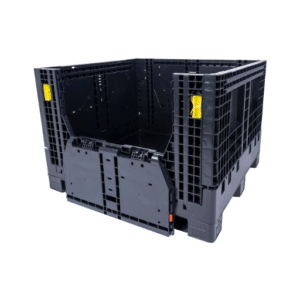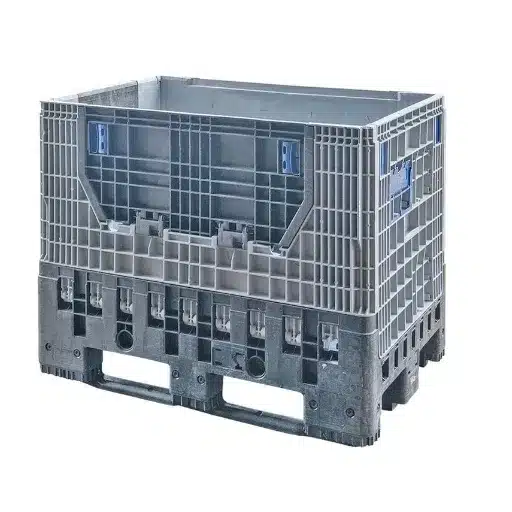

The Shanghai warehouse manager Chen discovered a minor crack which extended across the plastic pallet deck during the previous quarter. He used an industrial adhesive which he obtained from a hardware store to fix the item and returned it to operational use instead of removing it from service. The pallet broke after three days when it supported a 1 200 kilogram weight. The falling goods caused damage to three electronics cartons and resulted in a delay for all outbound shipments to a major retail partner.
People who have looked at broken plastic pallets and tried to decide between repair and replacement face a common experience. Plastic pallets have a long lifespan but they will eventually break. Operations teams must make quick decisions about broken plastic pallets because they need to choose between two options which include plastic pallet repair and plastic pallet replacement which offers better safety and cost benefits. The wrong choice can cost money, time, and customer trust.
This guide will provide you with information about the actual methods used to fix plastic pallets. The training will teach you about the different types of damage which can be repaired, the correct repair methods, and the times when recycling or replacement should be chosen as the better option. The maintenance practices we will discuss will help your pallets last longer while preventing damage from occurring.
Can Plastic Pallets Be Repaired?
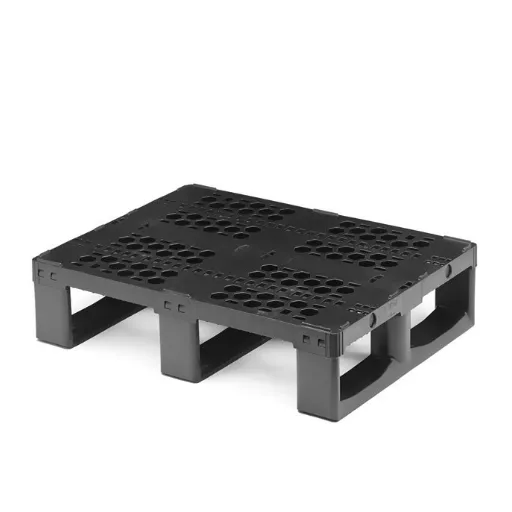
Yes, the answer to this question is positive but there are essential restrictions that need to be considered. Plastic pallets are created through a single molding process which produces complete units made from high-density polyethylene (HDPE) and polypropylene (PP) materials while wooden pallets need to be built up from multiple wooden boards and stringers. The construction material provides the item with outstanding strength together with stable measurement properties and protection against both water and insect damage. The system presents challenges because it requires automatic construction to operate at its highest efficiency.
Many operations leaders ask, can plastic pallets be repaired? The answer is yes, but only when the damage is minor and non-structural. Small surface cracks, shallow chips, and cosmetic scuffs are often fixable without compromising safety. The load-bearing areas of an object become impossible to repair when its parts have sustained damage because these areas include broken corners and cracked runners and split feet and warped decks.
Molded pallets need uninterrupted material flow through their design to maintain their structural integrity. The pallet loses its original safe working load capacity after any break in its material continuity. The understanding of plastic pallet repair limitations enables companies to avoid expensive errors that would occur on their warehouse operating space.
Want to understand exactly how much weight your pallets should handle? Explore our guide to pallet capacity testing standards →
This limitation surprises many procurement teams who are used to the wood pallet model. With wood, a broken stringer is simply swapped out in minutes. With plastic, the repair toolkit is narrower, the labor costs are higher, and the economics are different.
Common Plastic Pallet Repair Methods
The service life of a pallet can be extended through multiple methods of plastic pallet repair which become applicable when only minor damage exists. The different methods to approach the problem all have unique requirements while their expenses and their capabilities remain restricted. The evaluation process for plastic pallet repair solutions should give priority to safety elements and future expenses.
Plastic Welding
The most common method to repair plastic pallets involves plastic welding which technicians use to fix HDPE and PP plastic pallets. Technicians need to select rod material that matches base polymer when they perform plastic welding on pallets. A technician applies heat to both the damaged plastic area and the plastic welding rod through a hot air gun which he uses to fuse the rod material into the crack. This method works best for non-load-bearing surfaces which have small cracks that exist between the deck’s outer rim and the deck’s minor sidewall damage.
The welding process requires both skilled workers and proper equipment together with materials that need to match the project requirements. A weak point develops through an improperly executed weld which becomes vulnerable to unpredictable failure when exposed to operational stress. The welded sections to the base material of molded products will experience permanent loss of original tensile strength.
The majority of manufacturers recommend against welding cracks which extend through load-bearing surfaces that include runners and feet. The successful welding process results in pallet dimension changes that create challenges for automated handling systems.
Untrained personnel should not attempt to manually repair plastic welding pallets which require rod welding duties because these processes need official training. Before starting the process proper assessment needs to be conducted because welding procedures do not guarantee success for all repair attempts.
Industrial Adhesives
Industrial-grade plastic adhesives provide an effective solution for treating small chips and cosmetic damage because they deliver fast results at low costs. The application process requires minimal effort because it does not demand any specialized knowledge. Adhesive bonds develop weak connections which cannot withstand shear forces and temperature variations. The material cannot withstand weight-bearing cracks which will flex when forklift operations occur.
Adhesive use in food-grade and pharmaceutical applications creates major compliance problems. Many adhesives lack FDA approval and bacteria can become trapped between bonded surfaces.
Automated Thread Welding
The PRS project developed an automated thread-welding system through EU funding for its patented technology. The process uses a specialized plastic thread material that is welded into broken returnable transport plastics. The project data shows that this method restores materials to their original strength while companies can achieve 70 percent savings through the use of this method instead of purchasing new equipment. The process has received ISO 14067 certification which claims that it cuts CO2 emissions by 311 times when compared to recycling and remanufacturing operations.
Automated thread welding still functions as a specialized service that exists within its own specific market. The product is currently used in Europe and Mexico but it has not yet gained acceptance as a standard solution for Asian manufacturing facilities. The technology development will create a work solution which combines manual welding with automatic welding systems.
Part Replacement
Some modern pallet designs use modular, snap-together components. In these cases, individual feet, blocks, or runners can be replaced without discarding the entire pallet. This is the closest plastic gets to the wood pallet repair model.
Modular designs exist as a solution for certain situations. Most standard injection-molded pallets do not have replaceable parts, so this option depends entirely on the original design. Organizations that prioritize repairable equipment should choose to purchase modular or spliced pallet systems during their purchasing process.
Repair vs Replace Plastic Pallets: When to Fix and When to Replace
The choice between repairing or replacing plastic pallets depends on three factors which are safety considerations and cost evaluation and assessment of damage extent. The pallet industry uses a basic guideline which states that repair work becomes cost-effective when total labor expenses and material costs remain under half of replacement pallet expenses. The moment you reach that point, it becomes more advantageous to purchase a complete new unit which offers an entire operational lifespan.
Liu Wei serves as the distribution manager for a regional area in Qingdao, who converted his entire fleet from wood materials to plastic materials during his two years of operation. His team began their initial efforts to repair all broken plastic pallets by using the same methods which they had implemented for wood materials through using fast repairs and spare components and adhesive.
Liu conducted a six-month assessment of their operations, which revealed that 80% of the repaired plastic pallets experienced failures within three months. The repeated process of labor work and operational downtime together with product loss incurred higher expenses than the cost of replacing the equipment. He changed his operational procedure, which stated that minor cracks should go to welding while all structural elements should be sent to recycling and new equipment.
The story demonstrates to the audience two critical concepts about pallet repair work: only small damage needs to be repaired. The process of fixing broken runners or load-bearing surfaces should be avoided because it presents significant dangers to workers. You can determine the actual expense of repairs and replacements by evaluating the complete expense which prevents you from spending money on temporary fixes for pallets that need to be retired from service.
| Condition | Recommended Action |
|---|---|
| Small, non-structural crack or chip | Repair |
| Broken corner, foot, or runner | Replace |
| Multiple cracks or visible warping | Replace |
| Load-bearing surface damage | Replace |
| Repair cost exceeds 50% of replacement | Replace |
Safety should always override cost. If a pallet cannot be restored to its original rated capacity and dimensional stability, it belongs out of your supply chain. A failed pallet risks worker injury, product damage, and automated system jams. In high-turnover environments like online retail distribution, consistent pallet quality is essential for throughput.
Need help evaluating your current pallet fleet? Explore our range of durable replacement pallets and custom OEM solutions to find the right fit for your operation.
Plastic Pallet Maintenance: Preventing Damage Before It Happens
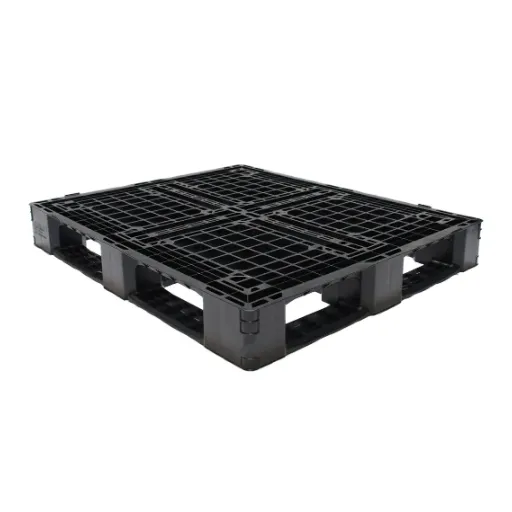
The optimal method for plastic pallet repair is to achieve no need for repairs. Plastic pallets experience extended operational life through a structured maintenance system which prevents users from repairing damaged pallets. A plastic pallet maintenance system enables companies to handle their plastic pallet needs without performing any repairs throughout its operational lifespan.
At MediFlow Pharmaceuticals, Anna who worked as a logistics supervisor established a basic three-step procedure which required users to clean their equipment after each use and conduct weekly inspections while storing their equipment indoors. Before the protocol, her facility replaced roughly 12% of its plastic pallet fleet annually due to preventable damage — cracks from UV exposure, warping from uneven stacking, and corner chips from forklift abuse. After one year of consistent maintenance, that replacement rate dropped to 4%. The savings allowed her team to reinvest in higher-capacity custom pallets for temperature-sensitive shipments.
Proper Cleaning
Clean pallets last longer because dirt and debris do not abrade surfaces or hide developing cracks. For industrial applications, a monthly wash with mild detergent and water is usually sufficient. Food-grade and FDA-approved pallets should be cleaned after every use to prevent cross-contamination.
The use of bleach and harsh chemicals needs to be avoided because these substances degrade HDPE and PP materials through surface pitting and brittleness development. Harsh cleaners can also leave residues that compromise food safety.
Use only plastic-safe, mild detergents. For food-grade pallets, use only cleaning agents that are certified safe for contact with food surfaces.
Storage Best Practices
UV radiation is one of the biggest threats to outdoor-stored plastic pallets. Over time, sunlight breaks down the polymer chains in HDPE and PP, making the material brittle and prone to cracking. Store pallets in a dry, shaded area away from direct sun. If outdoor storage is unavoidable, use moisture-resistant and UV-stable pallet designs and keep them covered with tarps or stored under canopies.
Always stack on flat, even surfaces. Uneven ground or haphazard stacking causes warping, which can make pallets unusable in automated systems. Nestable pallets should be stacked properly to maximize space without crushing lower units.
Routine Inspections
The training program will educate forklift operators and floor staff members about recognizing initial damage indicators. The inspection procedure requires you to search for cracks that exceed 50 millimeters in length and for flatness deviations that exceed 10 millimeters per meter and for corner or foot damage. The procedure requires you to remove all questionable pallets from their active schedule because you should not depend on their ability to last through another trip.
The system uses pallet age information and trip count records to develop replacement schedules which occur before pallets reach their end-of-life period. Many closed-loop systems use RFID tags or color-coding to track pallet history. A shipment will face unexpected delays when even a basic logbook fails to function properly.
The Bigger Picture: Repair, Recycling, and the Circular Economy
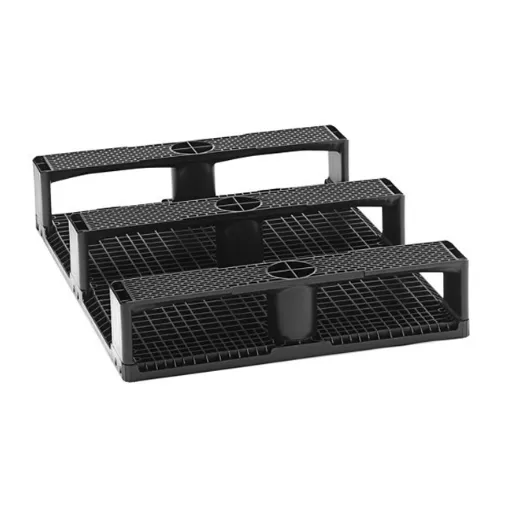
Every plastic pallet will reach its end of useful life despite proper maintenance of the plastic pallet. The main circular solution for plastic pallets requires recycling because repair work does not provide enough benefits.
The global pallet repair services market was valued at USD 4.7 billion in 2024 and is projected to reach USD 8.1 billion by 2033, growing at a 5.8% compound annual growth rate, according to Dataintelo. Asia Pacific represents the fastest-growing region, with a market size of roughly USD 1.1 billion in 2024 and growth exceeding 7.2% annually. That expansion is driven by rising raw material costs, stricter sustainability mandates, and the growth of closed-loop logistics systems across manufacturing and retail.
The plastic pallets have an exclusive market presence because they operate within the expansive market. The permanent damage to plastic pallets becomes recyclable because their materials consist of 100% recyclable HDPE and PP which can be transformed into new products through the process of grinding plastic into flakes and melting it down. The process of recycling generates savings which offer better financial value and environmental advantages than the expenses involved in structural restoration. The process creates a pure material stream which meets food-grade and pharmaceutical compliance requirements but repairing pallets makes it difficult to achieve this standard.
Repair work maintains its importance because it enables equipment to continue functioning. The system needs to conduct minor repairs which extend the lifespan of equipment while postponing its need for recycling.
The development of automated thread welding technology will create new possibilities for plastic pallet repair which will become available in the future. The process of repairing these units functions effectively, however, plastic pallet recycling serves as the primary method which most businesses choose for their end-of-life waste management. Organizations should use their assets until they reach full operational efficiency, while only fixing minor issues and recycling all pallets which have lost their strength back into the manufacturing process. This method achieves a middle ground which supports both environmental protection and optimal business operations.
Conclusion
Plastic pallets provide outstanding durability, yet these materials do not match the properties of wood. The manufacturing process of plastic pallets creates limitations for their repair methods, which results in businesses needing to choose between recycling and replacing equipment. Your plastic pallet repair strategy should match your operational needs and safety standards..
Here are the key takeaways:
- Plastic pallet repair works for minor, non-structural damage such as small cracks and chips.
- Plastic welding and adhesives are the most common repair methods, but they cannot restore load-bearing strength.
- Automated thread welding shows promise for the future, but it remains a niche service outside mainstream supply chains.
- Follow the 50% rule: if repair costs more than half the price of a new pallet, replacement is the smarter choice.
- A strong plastic pallet maintenance program — cleaning, proper storage, and routine inspection — is the most cost-effective way to extend pallet life.
- Partner with a manufacturer that follows rigorous pallet capacity testing standards to ensure every unit matches your operational loads.
- When pallets reach end-of-life, plastic pallet recycling is the preferred circular strategy.
Need guidance on managing your pallet fleet? Contact Shandong Lile Holding Group to discuss custom replacement pallets, OEM designs with modular components, and recycling programs that keep your supply chain running safely and efficiently.