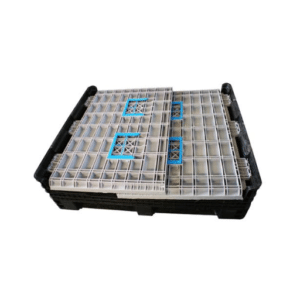
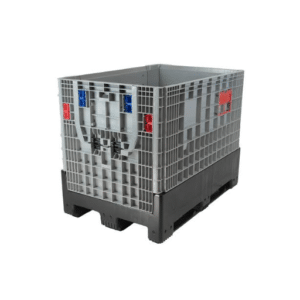
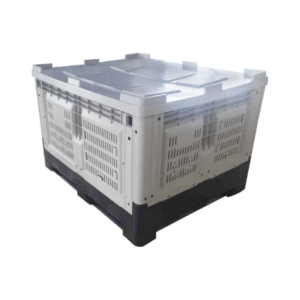
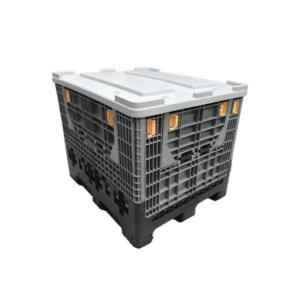
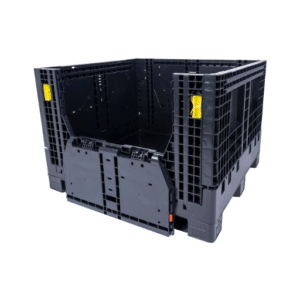
Warehousing automation is transforming the delivery of commodities across logistical systems, speeding up the processes of handling goods and increasing optimization beyond prior measures. One of the critical factors in such systems is how the design of pallets and related equipment that are to be used in such an environment is considered. In contrast to conventional warehouses, fully logistics-enabled warehouses require units fitted onto pallets that are compatible with all existing systems that could be used in material movement, robotics included. The article will examine the important aspects of warehouse pallet design and the use of automated warehouse systems, and how they can improve business performance. If you are an established professional or a beginner in the field of automation, this article will provide you with tips for managing this fast-changing area.
Introduction to Automated Warehouse Pallets

Robots need a special type of pallet to be able to transfer or move goods from one place to another through an automated system. These automated warehouse pallets come in various sizes, and each one of them must have a specific weight capacity and durability requirements to meet the requirements. Important considerations include the use of identical units that will interface with the automated handling equipment, and this upholds the function with concern for thickness, how the handling mediums will carry or move such loads, layers in this case. Designing pallets for an automated system increases productivity, reduces downtime, and prolongs the reliability of the system.
What Automated Warehouse Pallets Are
Warehouses that employ automated warehouse pallets have very particular shaped platforms since they are compatible with conveyor belts, robotic arm-driven pallets, and AGVs material transfers. The pallets have been developed for the purpose of providing exact dimensions and having the structural strength required for sensors, machines, and robots that are widely applied in current warehouses. They cite the rather consistent geometry of the pallet as the foremost improvement that removes chances of the pallet getting stuck, misaligned, or damaged, and increases efficiency and effectiveness. Although most automated pallets are made of stronger but very light materials to provide better support for loads, while at the same time allowing for heavy usage in keeping purposes, which is essential in such high-volume industries.
Significance in Modern Warehouse Operations
Undeniably, one of the essential, yet mostly invisible, elements of searched efficiency and scalability in a modern warehouse is automated warehouse pallets. The fact that they can be adapted to many modern materials flow systems, including but not limited to robot-based palletizing, AGV trucks and transport systems, suggests that these pallets as such belong to each and every system imaginable. Again, this reduces the jobs and operational downtime, increasing efficiency and reducing costs in the organization. Since the sizes of the automated warehouse pallets are defined, the calibration of stocks is carried out quickly and more simply, hence the optimization of racks and processing of orders is carried out most efficiently. Their strong, lightweight design causes no damage to the equipment and encourages the flow of energy within the transport of the automated systems. In the end, automated warehouse pallets are supplied in order to meet the requirements faced in high-volume, e-commerce-focused, fast, and efficient logistics operations.
Role in Enhancing Efficiency and Reducing Manual Labor
The efficiency of operations can be notably enhanced thanks to automated warehouse pallets because they do away with the necessity to engage in interacting with repetitive tasks manually. Due to the inclusion of robotics technology and conveyor belts, it manages to do away with conventional confinement systems as goods move inside storehouses seamlessly and with the least possible complement of human beings. This helps minimize the possibility of accidents in the workplace as people do not have to thump or engage in such motions for long periods of time, while at the same time increasing the pace of serving customers quickly. Automated pallets allow very accurate and trouble-free performance in material handling, minimization of the labor force, deployment of resources, and quickness of every process required in a contemporary logistics system with high efficiency.
Key Features of Pallets Designed for Automated Systems

- 1
Exact Dimensions
Specifically constructed to comply with the requirements of extremely precise industrial standards such as ISO or specific local standards for compatibility with such equipment as conveyor belts, robot arms, or AS/RS (Automated Storage and Retrieval Systems). - 2
High Durability
Made of materials that can bear the impact, as the pallet will be frequently moved by programmed systems. It can be composite plastics, metals, or treated timber. - 3
Advanced Engineering
Designs incorporating these details, one of them being equalizing the weight bearing that can be without excessive loading and extents through the dimensional tolerance without any defects, play a very important role in all trying to put together and function the automatic system. - 4
Compatibility of RFID and Barcodes
Implantations of the embedding of these RFID and/or barcodes play an indispensable part in the integration of real-time monitoring, stock tracking, and feedback interaction of the WMS. - 5
Anti-Slip Top Layer
It has a variety of surface coatings and/or textures, which help prevent loads from shifting while the machine is changing direction fast or performing high-speed operations. This feature enhances security in operations and that of stored products, as well as minimizes the chances of product damage. - 6
Flexible Preparation
A desk can be prepared for each task, be it with a couple of shelves, or with strengthened lines of side walls, or in whatever way the delicate or odd-shaped outsize facility may require. - 7
Green Ideas
Green designs for use in automation are accomplished through the incorporation of recycling or reusable materials without compromising the efficiency of the system.
Such elements facilitate efficient integration as well as optimization of automated warehouse pallets rather than just being compatible with them.
Compatibility with Automated Guided Vehicles (AGVs) and Robotics
In designing pallets for automation, manufacturers must consider the dimensions and load-bearing capacity of the pallets to ensure that their application in the context of AGVs and robots is effective. The baseboards should be identical in all pallets to ease movement, gaps should be within the permissible limits, and the weight should be distributed evenly to prevent tilting when in motion. As AGVs are equipped with cameras and detectors for efficiency, the integrated pallets must have clear access points and other markings for better positioning. Furthermore, the movement of materials is fluid and quite slippery, yet the materials used will have to be strong enough to last many mechanical processes. These principles are among the essentials of automated warehouse pallets and other related process installations, which contribute to the optimization of turnaround time and the entire system capacity.
Uniform Dimensions and Structural Integrity
In automated warehouse pallets, dimensional uniformity as well as structural rigidity are crucial considerations for operation as well as successful operation. Also, the existence of common applications of dimensional standards (ISO, for instance, or regionals such as the EUR/EPAL pallets) places handling in various equipment, as well as countries, under no challenges whatsoever. Structural stiffness is crucial in ensuring that the rigidity of the load does not fail and is often provided by strong materials such as hardwood or high-density plastics, or even selected metal inserts. Engineers and testers with the necessary skills and machinery ensure that loads are distributed evenly, which avoids the risk of bulging or breaking due to excess loads. Combined, all these factors allow the pallet to function much better and consume less cost and time on maintenance of such systems.
Durability and Resistance to Environmental Conditions
Pallets in intense industrial uses are better suited when they are durable and resistant to bad weather conditions. Quality pallets can be exposed to very high temperatures, intense sun, and a lot of water without breaking apart. Advanced composite materials, treated hardwood, and high-density polyethylene are common because they resist the utmost abrasion, chemical, and biological aggressions, as well as the growth of mold and pests. Additionally, the use of coatings and the addition of various types of chemicals, such as UV stabilizers and anti-fungal coatings, all serve the purpose of enhancing the performance of the pallets indoors and out in the sun. There will be fewer frequent replacements due to such modifications, which will, in turn, help in cutting costs as well as supply chain operational efficiency.
Material Selection for Automated Pallets
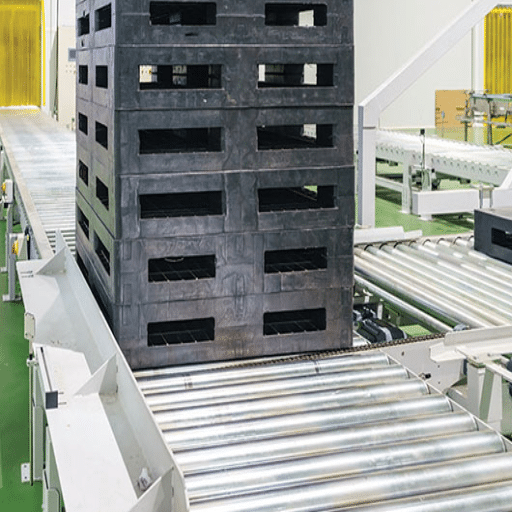
When choosing materials for automated warehouse pallets, several considerations must come into play, as one would want to use materials that would be compatible with the automated system and optimized for long-term use. High-density polyethylene material (HDPE) and polypropylene plastics (PP) come highly recommended as they have been proven to be strong, resistant to impacts, and subject to repeated applications, such as those of this type of system. The addition of such materials would curtail the strain of mechanical handling tools while at the same time allowing for weight on the equipment. In addition, the desired materials should also include dimensional stability for applications with conveyor belts, robotic systems, or automation system which incorporates storage and retrieval of material. Textured surfaces or any such patterns could also be introduced in order to improve the performance and safety of the operations involving pallets in such facilities. Whenever possible, choices should be made for materials that have low waste material at the end of life and that are economical to use.
Comparison of Wood, Plastic, and Metal Pallets
Advantages and Disadvantages of Each Material in Automated Systems
Recommendations for Specific Use Cases
The material choice in every design should be in alignment with the functional requirements, operating conditions, and the economic feasibility for the particular project. The planning of optimization of the performance and the economics of costs should involve more than time and effort, or inactivity.
Standards and Guidelines for Pallets in Automated Warehouses
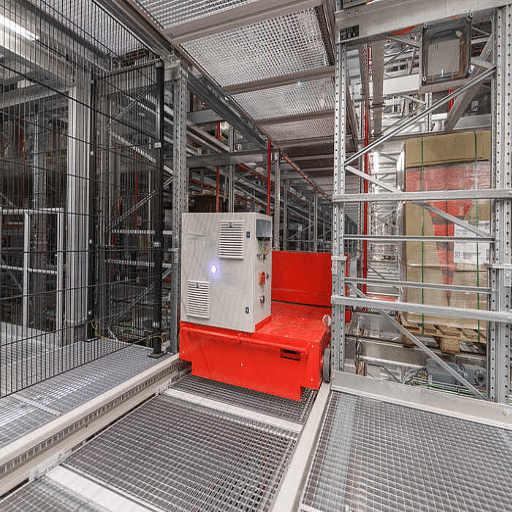
Automated warehouses often require pallets to meet certain specifications and regulations to function optimally. The key requirements are outlined as follows:
- 1
Their dimensions must be in accordance with the norm defined by the International Standards Organization and regional norms such as the European Pallet Association or the Grocery Manufacturers Association. This allows machines to function properly without causing a decrease in the ability to effectively handle products.
- 2
Automated warehouse pallets should have sufficient structural strength to bear both dynamic and static loads without damaging the goods. This includes high endurance against overpressure conditions and mechanical retrieval equipment.
- 3
The materials should be designed in such a way that the weight, resistance to motion, and distortion due to changes in moisture level are uniformly consistent for better functionality of the retrieval and transportation process. In such circumstances, modern materials like composite plastic or chemically modified wood are recommended.
- 4
Device identifiers such as RFID chips or bar coding should be harnessed for efficient control of inventory. Such standards make operations much more effective, reduce production standstill periods, and help improve the robustness of automated systems over time.
Overview of Industry Standards (e.g., ISO 8611, GMA Standards)
Standardized practices guarantee that automated warehouse pallets are both functional and protective by the standards of the supply chain’s regulations. Performance and durability characteristics of flat pallets under some specified loads are tested in accordance with ISO 8611. Therefore, testing of various qualities of pallets, such as flexural strength, anti-shear stress ability, and maximum loading, is done to meet the requirements of the global supply chain. On the continent of North America, companies operating in the grocery manufacturing industry are expected to adhere to the GMA (Grocery Manufacturers Association) standards, where it outlines the dimensions, in most cases 48×40 inches, the strength of the materials used in the pallet, features to enhance performance, and interface with machines. Complying with such standards increases the efficiency of warehousing, distribution, and transportation cost objectives in an integrated approach, as all such activities will be able to perform without interruption, and the goods will remain intact. The use of such concepts reduces the bottlenecks and encourages smooth association in a variety of industries.
Importance of Adherence to Load-Bearing Specifications and Dimensional Accuracy
Strength satisfaction with regards to correct load capability and dimensional conformity of materials is of utmost importance for users’ safety, functionality, and stability. Load capacities relate to the safe loading of the mass carried by a certain pallet or any other platform built for usage in which the storage or transportation of goods should not be a cause of concern due to dangers related to the structure or pathology. The need for dimension accuracy is also very important, owing to the fact that the measurement of systems is related solely to the rules of doing things in a well-organized way, incorporating automated warehouse pallets. Distances do have various technical problems which affect the operation of equipment and lead to the wastage of space, and incur costs for repair or modification. In observing these limits, there is an improvement in resources, an improvement in quality management systems, as well as a mitigation of risks in a working environment, indeed, a better and more efficient mode of transport.
Safety Considerations and Compliance Requirements
Logistics management envisages safety practices as a concern of the highest priority for both the workforce and the goods handled. Ensuring that the staff is well instructed on the handling of the equipment, making sure that the weight values are not exceeded, and wearing appropriate PPE substantially reduces the risk of accidents. Being equally important, well-positioned signs and good lighting at the workplace, and well-maintained machines also help to decrease the number of accidents at the workplace.
⚠️ Compliance Scope by Region
- The scope of compliance is predicated on the region in question and may include the United States, where there are OSHA standards that govern practices, among which are hazard communication, use of physical force in materials handling, and storage.
- The safety of hazardous materials should be considered through proper documentation and labeling to provide mechanisms for control and risk reduction.
- There is also a requirement for audits as well as routine checks to ensure that there is compliance with such provisions, and failure to enforce such provisions often calls for sanctions, sometimes even punitive measures.
Businesses enhance operational performance and, at the same time, promote the safety of employees and the protection of resources by having sound safety measures and ensuring compliance with standards.
Design Considerations for Enhanced Compatibility

Through ensuring compatibility between the systems under design, the system interoperability, modularity, and scalability become of paramount importance. The systems should conform to the respective existing and new standards and protocols within the industry for them to work with any technology in use. It is also important to invest in modular systems because they are easy to upgrade and service, which maximizes the utility of the equipment without incurring extended idle time. It equally follows that systems have to be designed such that they are sustainable in case there is an increase in use, without a lot of effort in redesigning the whole system. Taking this into account helps businesses enhance their current capabilities and build systems that will not need changing again in the future.
Role of Pallet Designs in Conveyor and Racking Compatibility
Pallet design can be considered a factor that limits the material handling system efficiency, especially for conveyors or racking systems. The dimensions of pallets, shape, and physical make-up should conform to the conveyors and racks to provide smooth and efficient operations. Most designs of pallets are more standardized, like the conventional one that is as per ISO standards, and hence make them useful in practically every automated conveyor system application. Besides the overall size, the undersurface of the pallet, stringers, or blocks would impact how the loaded pallets are positioned and whether they can be used on the conveyors on rollers or chains.
The rack systems’ structural stability, as well as load distribution, are determined by pallet design. A feature such as a uniform base of the pallets is optimal for load support on beams, as it minimizes the risks of load tipping or instability. Other factors, such as load capacity and the thickness of the edge board, must also be considered to ensure that the load can be safely stacked and the entire vertical space can be efficiently utilized. Such integration between pallets, conveyor systems, and racking designs ensures that the working of the system is enhanced and the equipment meets the longevity requirements, eventually lowering the operational cost of running and maintaining an automated warehouse.
Impact of Pallet Surface Design on Load Stability and Automation Efficiency
Evaluating pallet texture and structural specifications forms the focal points of the analysis, especially with regard to the effect of surface design on the stability of the load and efficiency in packaging automation. In order to assure and maintain stability around the load, a non-slip surface is indispensable as it avoids any possible movement or overturn of the load during transportation and/or storage. The design of the surface facilitates the use of pallets on mechanized handling systems such as conveyors, sorters, and robotic arms. Smooth and even surfaces with very little tolerance for imperfections or variations make it easier to handle operations and changing stations. Such enhancements are to enhance operational safety and performance in the given set of automated warehouse pallets.
The Importance of Edge and Corner Reinforcement
Strongly built edges and corners make it possible to secure both the boxes and goods within them, particularly during transit and in storage. Each wall and edge of the package is supported in order to ensure that it does not taper or crack under stress, hence saving the contents from damage. Furthermore, reinforcement is generally concentrated at the corners to avoid stressing the materials, which usually results in their failure. This is especially important in cases where there are many layers of goods on top of each other or when goods are intended for repeated movement. In some cases, reinforced polymers or corner design with relative grooves in corrugated boards are used in place of these areas. Strengthening edges and corners keeps damage rates low, makes them easier to handle in building containers, and increases the efficiency of packaging, as it significantly reduces the price of the packaging material and assists in the proper management of the automated warehouse pallets.
Design Feature Summary Table
Final Takeaway
The Right Pallet Drives the Entire System Forward
Automated warehouse pallets are far more than passive platforms — they are precision-engineered components that define the performance ceiling of every automated system they operate within. From material selection and dimensional accuracy to RFID integration and edge reinforcement, every design choice has a direct impact on efficiency, safety, and long-term operational cost.