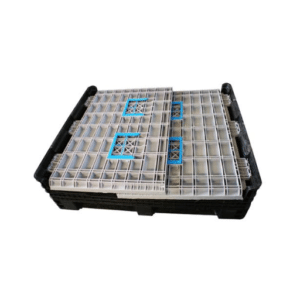
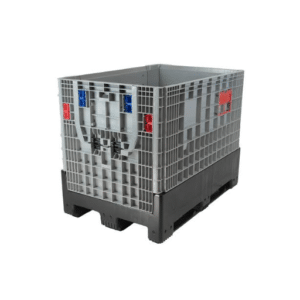
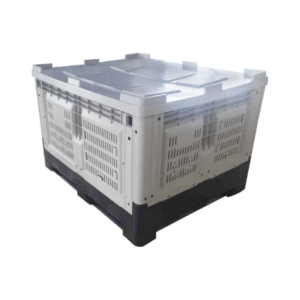
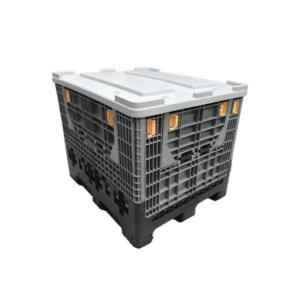
The automotive industry is operating in a highly challenging and demanding situation where production and logistics have to demonstrate efficiency, endurance, and accuracy through every phase. Pallets are among the many unsung heroes that play a critical role in the transport of large and bulky automotive parts such as engine blocks and drivetrain assemblies—basic yet powerful tools for the heavy and safe transport of automotive components. But, having just any type of pallet is not enough. Pallets for automotive applications are to withstand extremely high weights, careless handling, and still not lose their original shape even under the most severe conditions. In this blog, we will explore the detailed load and durability requirements of the automotive industry pallets and also reflect on the design, materials, and innovations that have made these tools so crucial for both the smooth production flows and the durability aspect.
Understanding Automotive Pallets
Definition and Importance of Automotive Pallets
Automotive pallets are specific transport carriers customized to carry components, parts, and assemblies within an automotive sector. Rated with high precision, long life, and load stability, these pallets can even be cheaper, for high-volume projects, than the normal pallet unless the normal pallet becomes fully rechargeable. Often these are the very reasons why the manufacturers of automotive pallets do not tend to build to the standard sizing required for the industry, while the inherently built materials are excessively strong and with a modular design, can be morphed for instance, to carry engines, gearboxes, or even precision electronic modules.
One of the remarkable advances in industrial management is automotive pallets which help to improve supply chain management and also protect costly items that are hard to make right. A study reported how major companies in the global automotive logistics market are switching to reusable pallets, elegantly engineered pallets, and precisely typed pallets so as to minimize the consumption of wasteful resources and enhance sustainability. Additionally, there has been a considerable trend in tracking technology innovation to include smart pallets in inventory which, based on very advanced monitoring, increases beyond any reasonable doubt that the correct inventory is maintained. In such a situation, all the production lines find incorporation of such cutting-edge designs to not only provide for easy operations but also bring sound financial and eco-friendly awareness and drive that has tied them integrally with the automotive industry.
Types of Automotive Pallets
The industry groups automotive pallets into different categories due to differences in their design, material content, and the purpose for which they should be used in the supply chain. Some of the main types are:
Stackable Pallets – These pallets are developed so as to be able to be stacked on top of each other vertically, thus maximising the warehouse storage space. They have a very sturdy structure which provides for the stability of the pallets even under very heavy loads, hence making them the best choice for transporting big automotive components like engines or transmissions.
Rackable Pallets – This is an automotive pallet which is designed to fit perfectly and safely on the racking systems of the different warehouses. These rackable pallets have a long history of being the most important equipment in the automotive industry, people use them in the assembly lines of cars and trucks and their industry standards (brick) are very high that even though the pallets are made of metals, they do not break easily and not easily on the parts that apply pressure.
Nestable Pallets – The nestable pallet is designed to be a retor-clogging item, and it is a fact that the un-stacked pallets will create much less storage space. They are very light in weight, but at the same time, they are strong enough to hold the distribution of small automotive components or packaging materials.
Customized/Returnable Pallets – Custom-designed pallets are made with the first-class standards that makes them a hit in the automotive industry. Due to their quality construction and reusability, they have the advantage of fulfilling requirements of eco-friendly packaging while providing the best possible processing while handling smartly the high-priced components.
The latest data from the market research reported that the use of pallets made of a combination of high-density plastics and metal reinforcements, which are stronger than the ones made from traditional materials, has gone up. Light materials are easy to handle, but at the same time allow increased loading capacity. Thus, the hybrid material pallets are the best of both worlds. The inclusion of RFID tracking and IoT sensors to the schemes of such pallets has also brought the benefits of traceability, which makes it easier to manage large inventories that are critical for just-in-time manufacturing systems.
Specifications for Durable Pallets
Due to their ability to operate in many handling cycles, provide protection against heavy loads and severe conditions without material loss- these are the characteristics that ensure a pallet lasts longer. Apart from this, their high resolution really has a really long life effective because of all factors that can resist physical wear, thermal stress, and chemical exposure. The load support itself plays a very important role in consideration, falling between 1,000 and 3,000 pounds in industrial field, depending on the design and material used. More than what enhances (chamfered edges to improve compatibility with forklifts) add to improved compatibility in use with automated systems, along with precision technically ensuring that their counterparts are in such a relationship that will not be slow to deploy. Modern versions have RFID tags and IoT-enabled sensors incorporated within to allow better tracking and real-time status monitoring, in return able to support inventory and logistics operations in a better way. These are the very specifications that allow any business procuring high-quantity optimized supply chains to meet their requirements.
Manufacturing Solutions for the Automotive Industry

Custom Automotive Pallets for Specific Needs
Specialized automotive pallets are now effectively suited to fit the particular specifications of the diversified auto industry, thus imparting both efficiency and safety in their handling. These auto pallets are made to meet the diverse shapes, weights, and fragility levels of parts used by the automotive industry, starting with rather hefty and voluminous items, like engines and gear boxes, to very fragile electronic bits. The rearrangements in weight distribution, the use of HDPE (high-density polyethylene) as one of the building materials, and modularity also define the reused custom pallet system for its stability. Made-up characteristics like tight cut pockets, non-slipping surfaces, and stacking opportunities aid in space utilization and further lower the chances of eventual damage arising from handling and transportation. Some of the customized solutions meeting strict auto-industry norms, among such requirements available, facilitate the processing of manufacture and distribution.
Wooden versus Plastic Pallets Comparison
No comparison of plastic and wooden pallets can be complete without considering the crucial performance indicators, including durability, cost-effectiveness, environmental impact level, and application requirements. Recent research data shows that wooden pallets are widely in use, thanks to their low initial cost, easy availability, and mendable quality. Their recyclability is quite good because they can be recycled and are biodegradable as well, being produced from renewable resources of timber. Wooden pallets are quick to deteriorate because of high moisture content, extreme usage, and insect infestation, resulting in a short lifespan in certain environments.
Let’s put it another way: Plastic pallets are known for their good durability and resistance to moisture, chemicals, and contamination, making them suitable for industries such as pharmaceuticals and food processing where strict hygiene is needed. While initial investment may be high, long life durability, minimal maintenance, and an almost insignificant net cost could more than outweigh the large initial charge. Moreover, their light weight reduces the costs of handling much less heavy items, providing an additional measure of safety at the factory-it is highly unlikely workers will be injured lifting heavy items.
In the long term, from a sustainability point of view, plastic ISPM pallets can have a positive impact on the environment; if it is recycled accordingly, this reduction in the entire environmental footprint would prevail. For recycling to be effective, wood pallet repair too may be the second best option. Plastic pallets are ideal for operations in which durability and sanitation standards are essential. This somehow will largely depend on what the industry wants, what the operation priorities will be, and what the total cost will be over time.
Benefits of HDPE and Thermoformed Pallets
HDPE (high-density polyethylene) pallets can endure the very worst wear-and-tear moments, and maintain their proofing against water and chemicals for total guarantee about their longevity–attributes that also cater to the right segregation and durability requirements for sectors like pharmaceuticals and food processing. Their lightweight yet sturdy dimensional attributes make them ideal for easier load handling, transportation, and even reduced shipping charges, making them competitive when compared to the rest. Thermoformed pallets are cost-effective options suited more for export or one-way shipment in comparison. Their lower cost allows for the would-be applied molds to be disposable, whilst the tough, lightweight structure of the materials allows for nesting, saving warehouse space and improving overall logistics as well. The choice between these will eventually boil down to the operational need, with HDPE pallets serving longevity and cover for high turnover shopping environment categories (as opposed to the thermoforms made for one-way stocks benefiting from economy sales).
Streamlining the Automotive Supply Chain

Impact of Pallet Solutions on Supply Chain Efficiency
The automotive supply chain greatly benefits from pallet solutions by creating improvements in all day-to-day operations, reducing costs, and promoting product safety. Those closed circuits, due to sustainability, reuse, and eco-sensitivity as their main properties to justify the use of HDPE pallets, prove to be well suited. However, only universal from commerce, thermoformed pallet solutions come into the picture-oversize, universal for a single, global trip, and one-off usage. Depending on the most specific transport mode, those pallets present advantages in logistics and storage, not to mention an alternative to delivery logistics devoid of regular, hidden cost bottlenecks on the supply chain.
Just-in-Time Delivery with Automotive Pallets
But Pallet Solutions play a crucial role in JIT (Just-in-time) based automotive production which keeps up with speedy deliveries on strict time scales together with the continuance of smooth business operations. Thus, auto companies create a linkage between pallets and JIT because pallets must accurately and orderly deliver the parts to be assembled into the production line. The height of the pallets a bit higher than the machinery that handles the product automatically; hence, one can able to work in close proximity of the working staff without worrying that the scaffold is delaying them because they are adjusting the working liaisons on their own now. Further, many pallets combine light weight together with strength, consequently, it will be difficult to produce a minimum even if they wanted, and manufacturers can keep their inventories thin and always ready to respond to production needs in no time. Thus, the proper pallet’s system working in synergy with JIT processes for contributing across the board to improving the productivity of auto companies, waste reduction, and an underpinning stable supply chain performance over time.
Fulfilling OEM Requirements through Tailored Pallets
For satisfying the requirements at an OEM level, it is necessary to custom-make pallets that will cater to various parts having different sizes, weights, and manufacturing process requirements. This will ensure that parts are rightly oriented, transported safely, and made ready for easy automation systems’ integration. The pallets of precision-design will at the same time help to minimize damage or misalignment during movement, directly supporting the OEM’s quality standards. Moreover, an effective choice of materials and finishing per general industry regulations would allow the makers to comply with the most stringent safety and performance measures laid down. Linking these pallet designs to OEM work-flows and product specifications will not only supply companies with improved operational efficiency benefits but also ensure they continually fulfill their contractual obligations.
Packaging Solutions for Automotive Parts

Optimizing Packaging with Parts Pallets
In the automotive industry, parts pallets, however, are beyond just essential to ensure that the parts are packed optimally; their structural qualities work wonders for ensuring safe transportation in the least amount of space possible-therefore reducing damages. Made to fit around parts, they also need only the stabilizing feature, eliminating all extents of play-which in turn removes friction. Additional items like partitioners, live loads, deploying aeration, or plastic molded goods are incorporated into pallets for an extra layer of cushioning when under inter-robotic arms. Additionally, this confluence of lightweight yet durable material minimizes the burden of transportation but ensures a longer service life; ultimately increasing profitability while having a positive influence on the environment. Consequently, if pallets are designed for specific parts to accommodate an industrial demand, it supports the company’s logistics performance while upholding its product quality to those tough engineering specifications.
Durability and Load Capacity of Pallets
Material, design specifications, and the conditions for which they are being used are interconnected and affect the load-bearing capacity and the durability of the pallet. Various materials are available to choose from, such as hardwood, plastic, or metal, etc., with their rate of endurance against stresses of repeated handling, environmental conditions, and load limits. Load capacity, in this context, is determined by dynamic, static, and racking loads during either storage or transit. The pertinent adaptability of pallets to determine weight limits adheres to industry standards that help define the structural suitability such that the risk of collapsing is very low, along with performance remaining unwavering and uniform in different operating environments.
Innovative Packaging Solutions for the Automotive Sector
Probably because of the unusual requirements that the automobile industry places on their usage, packaging solutions for this sector can take on a number of varied applications. They are being specifically designed to enable safe transport and storage of highly valuable components such as engines, transmissions, and electronic modules, with an additional effort being devoted toward economizing space wherever possible. Reinforced plastics, expanded polypropylene (EPP), and corrosion-resistant coatings may be used as strengtheners to ensure longevity. With respect to creating waste over a long period, modular, and returnable packaging systems, such as the collapsible containers and custom racks, are justifiable objectives of sustainability for the industry. The novel forms of packaging offer compliance with supply chain standards and provide tailored solutions for specific areas concerning the safe and successful transportation of automobile parts.
References
-
Design optimization and simulation study of the engine transportation metal pallet for stationary and movable condition – This paper discusses the use of plastic and metal pallets as alternatives to wooden pallets, focusing on their benefits and applications in engine transportation.
-
Comparison of the Different Hazards Experienced by Pallets During Material Handling – This study investigates the hazards faced by pallets in different facilities, including automotive manufacturers, distribution centers, and pallet manufacturers.
-
Evaluation of a custom designed plastic pallet – This research evaluates the structural integrity and performance of custom-designed plastic pallets under normal usage conditions.
Frequently Asked Questions (FAQ)
How the automotive industry needs inspiring is the need for wood pallets in their services.
A broad base of wood pallets in human resources has tripods that permit the parts to be taken to healthcare institutions. Pallets can hold heavy loads when built in order to strike that purpose, thereby having certain design input variables so as ensuring that the problems are well distributed on the base deck and make the pallet hard for the product to shift on their journey. The type of treatment the wood undergoes is significant in determining the width of concern in the wood that is why supported hints should be detected. Furthermore, in permanent commercial operations, many wood pallets fulfill IPPC standards. Wood pallets will be very useful concerning maintaining their protection from decay, as they will be subjected to treatment when the decays start or else be recycled or repaired to minimize environmental footprints. Suggest unused keywords: plastic handcraft or moulds, 4-way forklift and forkjack, and high-quality.
What are the pallet needs the pallets meet to transfer parts and assemblies?
Pallets facilitate the handling of parts and assemblies by offering optimal solutions for the size and security of the production line. Suitable pallets help in providing high rigidity while size and weight can be varied according to given specifications and help keep minimal movement while on the move. Many pallets come with OEM standards and can be practically combined with fixtures or racks for securing complex components. By choosing the right pallet, the use of extra packaging will be eliminated and at the same time less damage will be inflicted upon the goods in transit moving throughout the supply chain. Suggested unused terms: “plastic containers,” “designed specifically,” and “long-lasting.”
Why were wooden pallets developed to meet carmaking production lines?
Aim to design wooden pallets that are suited for the automobile assembly line for the use of different handling denomination with forkjet actions as well as 4-way forklifts, assembly jigs, or conveyor handling. According to the special requirements of the automotive industry, the properties that need to be integrated in the wooden pallet are the following- Weight load and footprint size in perspective of allowing manufacturing line flow. IPPC or international standard treatment for wooden pallets customizes these logistics addresses primarily to production lines where several corners are carved to adequately implement the management system between OEMs or suppliers. Durability against repairs really scores the wooden pallets a massive plus in operation costs. Wooden pallets exhibit a drastic cost advantage and better environmental impact where several one-time using solutions offer cost benefits. Additional words: disposable plastic containers, transport damage, custom.
Do pallets fulfill pallet operator needs to safely and securely transport heavy build components?
Heavy loads can be safely and conveniently transported using pallets due to the structure and the robustness inherent in them from high load resistance that supports components of structures and prevents deformation on high power requirements under stress. various solutions meant for heavy parts use reinforced deck boards, block designs, or metal inserts to distribute weight as evenly as possible to avoid getting damaged during shipping. The selection of pallets requires a must measure of consideration for dimensions and weight, compatibility of handling equipment, and whether a bespoke option is essential for special cases. Perfect procurement will raise the cost-efficient service levels by ensuring faster movement up chain and averts downtime for damaged components. Excluded terms that can be useful. E.g., plastics containers, customised solutions, OEMs .
Can pallets be a solution to green and efficiency challenges thereby catering to the automotive industry?
The use of the pallet can be linked fairly closely to sustainability in a number of senses-whether through the use of sustainable materials, mended or reclaimed wooden pallets, or the designing of strategies with a view to lessening the need for packaging and raising transport utility (in particular, for all relevant parties). The long-lasting, superior-quality standard pallets, in addition to lowering lifecycle environmental footprint by lessening replacement rates due to reuse across the supply chain, would carry over from multiple staged deliveries and possibly to pot value. The tailor-made pallets envisaged to fulfill the needs of the automotive industry could thus alleviate empty air space left in transports, lowering the costs for each unit of transport, and hence diminish linked emissions. Pallet return system operations and closed-loop pallet management apparently lendtt or support sustainability initiatives and efficiency standards through the automakers. Less used keywords potentially containing the intended meaning are plastic totes, tough enough to get themselves, or safe carry-able.