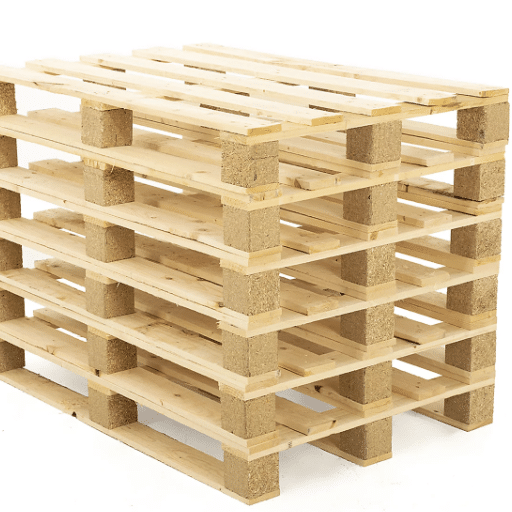

Introduction to Pallets

Pallets are flat structures that support the goods while they are transported and stored. They are the basis for the efficient handling, storing, and moving of goods that are often lifted or moved with the help of forklifts or pallet jacks. The three main materials used for pallets are wood, plastic, and metal, and they all have different pros and cons according to the application. Standard pallet sizes eliminate compatibility issues with transport and storage systems, which leads to easier logistics and less damage during shipment. Pallets, being a common factor in supply chains, play an essential role in the quick operation of various industries.
What is a Pallet?
A pallet is a flat and movable structure that helps hold the cargo during the different phases of transport, storage, and handling. It is the base on which products are put together, piled up, and fixed, thus often making it possible to move them around efficiently with forklifts, pallet jacks, or other material handling equipment. The materials used for pallets are primarily wood, plastic, or metal, and the selection of the material depends on the load, the durability required, and the standards of the industry. The standard sizes of the pallets, for instance, the very common 48×40 inches, fit in with the global logistics systems and therefore speed up the process while minimizing the risk of damage. Pallets are one of the fundamental elements in the supply chain, and they make the transfer of goods between different industries very smooth.
The Importance of Standard Pallet Sizes
The adoption of standard pallet sizes is very important for maintaining global supply chains that are both uniform and efficient. The popularly accepted 48×40-inch pallet, supported by the Grocery Manufacturers Association (GMA) and similar organizations, has become a standard in the industry due to its wide use. The use of a single size makes it possible for different types of warehousing systems, transportation equipment, and automated material-handling technologies to work together smoothly, which in turn leads to a huge reduction in logistical bottlenecks. Besides, standard-sized pallets have the advantage of being easier to stack, load, and store, while at the same time, the risk of goods getting damaged during transit is greatly reduced. Companies that stick to predefined pallet sizes are able to improve their operations, cut down on costs, and be consistent across different areas and markets.
Overview of Different Types of Pallets
Pallets play an important role in the functioning of the supply chain, and they also come in different types that are made for certain applications. The following lists the types of pallets that are most used:
Wooden Pallets
Wooden pallets are the most popular type, which is the least expensive, and their versatility in being repaired spreads their use. They come in different configurations, including two-way or four-way entry, so they can be accessed by different handling equipment. However, they are easily damaged and their life span is shorter than most materials.
Plastic Pallets
Plastic pallets are strong and moisture-proof, and they can be easily cleaned, which makes them perfect for industries that require strict hygiene, like the pharmaceutical and food processing industries. Even though their initial cost is more than wooden pallets, their lifespan is almost three times longer, and they are also an environmentally friendly option (recyclable).
Metal Pallets
Pallets made mainly from steel or aluminum are of metal and extremely durable, capable of withstanding heavy loads and harsh conditions. They are regularly used in industries that demand high strength and corrosion resistance, like military or chemical handling. But their weight and high price are two aspects that can limit their usage.
Composite Pallets
The composite pallets made of materials such as engineered wood or a plastic-wood mixture offer strength similar to that of wood and the durability of plastic. They are eco-friendly and accept multiple applications, but the supply and price may vary.
Corrugated Paper Pallets
The corrugated paper pallets, which are lightweight and recyclable, are made for one-time use in shipments and air freight, where transport weight reduction is of utmost importance. Heavy loads and high humidity are the two conditions that are not good for.
Key Takeaway: Every pallet type has its own pros and cons depending on factors like toughness, price, weight, and the specific industry involved. The right pallet selection rests on the logistics requirements, the environmental settings, and the budget limits.
Standard Pallet Size Dimensions

In the US, the standard pallet size that is most widely used is 48 inches by 40 inches. This dimension has gained diverse industrial applications and is even accepted by various shipping and storage systems. Other parts of the world might have different standard sizes, for instance, the European pallet measuring 1200mm by 800mm. The use of these standardized dimensions leads to more efficient transportation, storage, and handling.
Common Pallet Sizes Around the World
Pallet sizes differ across the world, and in some regions, there are multiple standards for them, depending on the logistics requirements of that particular area. The primary sizes are as follows:
North America:
The most significant size is the 48″ × 40″ pallet, which is widely adopted across the retail and food processing industries. Additionally, pallets with the dimensions of 42″ x 42″ and 48″ x 48″ are also used mainly for the beverage or chemical sectors.
Europe:
The European Pallet Association (EPAL) sets the standard for the EUR pallet, which is 1200mm by 800mm in size. This size is very common in the countries of the EU since it can be used with both storage systems and transport infrastructure.
Asia and Oceania:
The most common pallet sizes in these regions are 1100mm × 1100mm, which promotes easy movement of freight across these areas. Japan often uses the specific 1100mm by 1100mm standard for its domestic warehouses. In contrast, Australia frequently adopts 1165mm by 1165mm, which is suited for rail and warehouse operations.
The diversity in pallet sizes hints at the contrasting areas in supply chain infrastructure and containerization. However, all these variations are in line to facilitate organized and efficient transport and storage.
North American Standard Pallet Size
The standard pallet size in North America is 48 inches by 40 inches (1219mm by 1016mm), which is usually called the GMA (Grocery Manufacturers Association) pallet. The global pallet has been designed to fit the needs of the grocery industry and has since been adopted as the main pallet used in different industries within the United States, Canada, and Mexico. Depending on the usage, the pallets can be made from either wood or plastic and are perfectly compatible with forklifts, automatic handling systems, and warehouse racking. The standard measurements make it very easy to integrate them into global shipping containers and supply chains, which, in turn, assures maximum efficiency in storage, conveyance, and handling of products. Moreover, the GMA pallet’s weight limit usually enables it to carry loads of 2,000 to 2,800 pounds, thus offering a combination of strength and economy.
European Pallet Dimensions and Variations
The European pallet, which is often called the EUR-pallet or EPAL pallet, is a standardized pallet having the dimensions of 1,200 mm x 800 mm (around 47.2 in x 31.5 in). This type of pallet is known to comply with the standard of the European Pallet Association (EPAL), which ensures the same dimensions and quality throughout the industries and countries involved. Using these pallets for logistics and warehousing is very advantageous, as they are compatible with European racking systems and vehicles, thereby making it easy for them to be included in the regional supply chains.
Different types of European pallets exist, such as the half-pallet (800 mm x 600 mm) and quarter-pallet (600 mm x 400 mm), which can provide more flexibility to retail and small-sized needs. Moreover, pallets can be made of hardwood, softwood, or plastic, with the choice of the material depending on the load, environmental laws, and cost. European pallets are commonly known for their strong construction, which usually enables them to hold a maximum weight of up to 1,500 kilograms (3,300 pounds), and their compliance with EPAL guidelines, which allows them to be reused or repaired. The uniformity of this design leads to the compatibility of the pallets with the automated systems, thus facilitating the handling process and minimizing operational downtime.
Pallet Size Overview
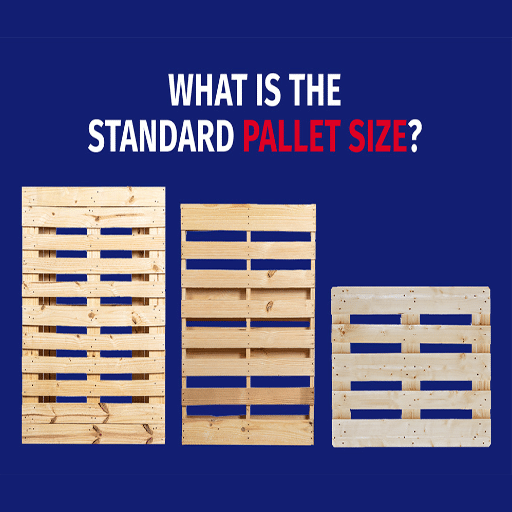
Standard pallet sizes differ from one region to another so that they can meet the various industrial and logistical demands. The European (EUR/EPAL) pallet of 1,200 x 800 millimeters and the North American standard pallet of 48 x 40 inches are the most widely used sizes. Such dimensions help to ensure that the transportation and storage systems can work together, and at the same time, the process is highly efficient. It is necessary to consider factors like the size of the cargo, the type of equipment, and the standard of the area while choosing the right pallet size.
Visual Representation of Standard Pallet Sizes
Here is the graphical illustration showing the standard pallet sizes that are most widely used globally:
| Pallet Type | Dimensions | Primary Region | Key Features |
|---|---|---|---|
| European (EUR/EPAL) Pallet | 1,200 x 800 mm | Europe | A standard pallet that is largely used throughout Europe; it is perfect for cross-border transportation as it can easily be accommodated by the European warehousing systems. |
| North American Standard Pallet | 48 x 40 in (1,219 x 1,016 mm) | North America | The size of this pallet is that of the largest in the US and Canada; thus, it allows for excellent shipping and storage efficiency when working with the standardized systems in this region. |
| Asian Standard Pallet | 1,100 x 1,100 mm | Asia | Asia’s common pallet pattern allows for great comfort in being stable, especially in the carrying of goods like chemicals and drinks that require safety as the main concern. |
| Australian Standard Pallet | 1,165 x 1,165 mm | Australia | This pallet is square-shaped and is mainly for Australian domestic use. Its shape is perfect for rail transport and warehouse storage. |
The variations in dimensions are indicative of the influence of regional preferences that are rooted in the characteristics of the industries, the mode of transport, and the layout of the warehouses. It is necessary to choose pallets that match not only the handling equipment but also the logistical operations in the specific regions for maximum efficiency.
Comparing ISO and Euro Pallet Sizes
In comparing the sizes of the ISO and Euro pallets, their dimensions and compatibility have to be taken into consideration. The ISO standard provides for six different pallet dimensions, with the size of 1,200 x 1,000 mm being the most widely adopted worldwide, thanks to its suitability for international trade. Besides, Euro pallets, regulated by the European Pallet Association (EPAL), are usually 1,200 x 800 mm in size and are manufactured for the European logistics systems, particularly for the regions of the warehouse racking and transportation networks.
The main aspect that differentiates these two is the application to which they are designed. The ISO 1,200 x 1,000 mm pallet is the one that is preferred by the large industries that deal with bulk shipments, as it provides the container with the maximum space efficiency worldwide markets. The dimensions of the Euro pallet are only slightly smaller, which gives it the ability to fit into the narrower storage spaces and trucking configurations that are typical in Europe. The two designs do aim at facilitating efficient load handling, but the preferences vary based on supply chain, regional standards, and existing equipment compatibility. It is essential to understand these differences for the purpose of maintaining seamless operational efficiency in the context of global and regional trade.
Understanding the CP Pallet Sizes
CP (Chemical Pallets) is a typical and recognized pallet system that was mostly used in the chemical and plastics industry for the purpose of global supply chain operations and making them easier. The CP pallet types are categorized from CP1 to CP9, there being nine different pallet types in total, and the dimensions and functions of each of them were specifically designed to meet the needs of different kinds of cargoes. For example, CP1 and CP6 have the same size base of 1200 x 1000 mm, but at the same time, CP6 has base boards around the base for even more stability. CP2 (1200 x 800 mm) and CP3 (1140 x 1140 mm) are intended for particular regions or materials, while CP5 is rectangular (760 x 1140 mm), and it is suitable for smaller areas. CP7 and CP9 are pallets designed for heavy loads and equipped with full-bottom boards, which give them the necessary strength to handle the most challenging and high-load conditions. CP8 is the only one of its kind in the pallet range that is specifically made for cylindrical cargo, and at the same time, it uses its strong structure to keep cargo from rolling over during transportation. The decision about which CP pallet to choose is a matter of considering the factors such as material compatibility, load type, and transport efficiency, which again highlights the importance of these pallets in specific industrial operations.
Types of Pallets and Their Uses

| Pallet Type | Key Characteristics | Primary Applications |
|---|---|---|
| Wooden Pallets | Widely utilized in different industries, mainly due to their low cost and high strength. Heavy loads can be placed on them, and they are reusable if proper maintenance is done. | Good for storage and transport in general. |
| Plastic Pallets | Strong, lightweight, and do not get damaged by moisture or chemicals. | Often used in industries that need to maintain very high cleanliness conditions, like hospitals and food factories. |
| Metal Pallets | Highest possible strength and very durable as they are rust-resistant; can be used for transporting heavy machinery or materials that are hazardous. | Usually preferred for long-term storage or specific industrial use. |
| CP Pallets (Chemical Pallets) | Made for the chemical and pharmaceutical industries, where precision and compatibility are of utmost importance. Different types for each load (e.g., CP1-CP9). | Helps in accommodating particular load shapes and requirements. |
| Export Pallets | Light in weight and heat-treated so that they don’t have any problems with shipping regulations worldwide. | Mainly aimed at one-way shipments to avoid the costs of returns or compliance problems. |
Important Note: Choosing the right pallet type is the key to efficient transport, proper support for loads, and regulatory compliance in various industries.
Wooden Pallets vs. Plastic Pallets
When weighing the pros and cons of wooden pallets versus plastic pallets, the selection of either would be entirely dependent on the operational needs, budget, and environmental considerations of the business:
Wooden Pallets
- Durability: Generally quite durable but prone to wetness, splintering, and breakage
- Cost: Less expensive initially, can be repaired easily
- Weight: Heavier, increasing shipping weight but providing solid option for heavy loads
- Hygiene: Can attract microorganisms, insects, and fungi; may need fumigation or heating for international shipping
- Environment: Produced from sustainable resources, biodegradable and easily recyclable
- Best For: Short-term applications and heavy-duty usage
Plastic Pallets
- Durability: Extremely durable, weather-resistant, chemical-resistant, less likely to get damaged
- Cost: More costly initially but lower total cost of ownership long-term
- Weight: Lighter, lowering shipping costs and ergonomically favorable for manual handling
- Hygiene: Wash-friendly, non-porous, and pest-resistant; best for sectors requiring cleanliness
- Environment: Eco-friendly when extensively reused; can be recycled into new pallets or industrial products
- Best For: Repeated cycles in closed-loop systems and industries with strict hygiene requirements
In the end, the decision of choosing between wooden and plastic pallets will be based on the supply chain’s specific needs, such as shipment distance, industry regulations, and cost. Both types will be able to serve well if they can fit into the operational priorities.
Common Pallet Types and Their Applications
Wooden Pallets
Among all the options for logistics, the wooden pallets remain the best choice because they are very cheap, sturdy, and easy to repair. They are perfect for heavy loads and are available in a wide range of sizes according to customers’ needs. Famous for their use in big manufacturing industries and parts of the construction and food distribution sectors, wooden pallets also come with the drawback of needing heat treatment or fumigation if they are to be shipped internationally, plus they can absorb moisture and even get contaminated in a strict hygiene area.
Plastic Pallets
In pharmaceuticals, food, and beverage processing, plastic pallets are the undisputed choice. They are hygienic and very strong. They are resistant not only to moisture but also to chemicals and pests, which contributes to their hygiene standards. Unlike wood, plastic pallets do not splinter, and they are easier to sanitize. Pallets are great for closed-loop systems where repeated use is essential, even though their upfront cost is higher.
Metal Pallets
Steel or aluminum are the usual metals of choice for pallets that are designed for demanding applications that need the highest possible strength, load-bearing capacity, and resistance to very harsh environmental conditions. They are common in the automotive, military, and chemical industries. The main advantages of metal pallets are their extreme durability and recyclability, but they are still the most costly option and weigh more than wood or plastic alternatives.
Composite Pallets
Composite pallets, which are made of presswood or recycled plastic, take the best qualities of both wood and plastic. They are lightweight, cost-effective, and can be exported since they comply with phytosanitary regulations. These pallets are an eco-friendly option for industries that want sustainable packaging options.
Summary: Each pallet type is tailored to different operational needs depending on the load factors, environmental conditions, and regulatory compliance. The right pallet type will not only help efficiency but also reduce waste and fit exactly with the supply chain requirements.
Specialty Pallets: Chemical and Wing Pallets
Chemical Pallets
Chemical pallets or CP pallets are the name of the chemical and pharmaceutical industries, which necessitated such special pallets. These pallets come under strict European guidelines as the CP1 to CP9 classifications that determine their design, size, and load capacity. Chemical pallets are made of strong materials like treated wood or plastic, and their high resistance to pests, moisture, and chemical spills ensures that hazardous materials are safely stored and transported. They are crucial in compliance with the international transportation regulations, including ADR (European Agreement concerning the International Carriage of Dangerous Goods by Road).
Wing Pallets
Wing pallets, in contrast, have their long deck boards that extend over the stringers or blocks to form “wings.” Such a design promotes the ease of handling, stable load distribution, and better use of strapping and shrink wrap. Wing pallets are in constant use in areas where stable load securing is of primary concern, namely, food and beverages, consumer goods, and manufacturing sectors. Their versatile design is compatible with both automated and manual handling systems, which makes them an efficient and flexible option in high-demand supply chain operations. However, both chemical and wing pallets still have their specialized roles, ensuring safety, reliability, and adaptability in their respective applications.
Pallet Shipping Considerations

Load stability, pallet compatibility, and transport conditions are the main factors to consider when thinking about pallet shipping. Be sure the materials and design of the pallets are proper for the weight and kinds of goods shipped. Movement of the cargo should not occur during transit and must be securely fastened using straps or shrink wrap. Moreover, it is necessary that the pallet dimensions conform to the carrier’s specifications, so that there are no problems with handling or stacking. Moreover, proper labeling and compliance with shipping regulations are indispensable for a glitch-free logistics process.
Best Practices for Pallet Shipping
-
Select High-Quality Pallets
The first step is to buy long-lasting pallets matching the weight and volume of your items. The most common materials for pallets are wood, plastic, and metal. When purchasing, check for the condition of the pallets, the presence of any cracks, and if they are capable of handling the load to not causing damage by the time delivery is done.
-
Evenly Distribute Weight
An even weight distribution over the pallet surface helps to strike a proper load balance. Do not place heavy and light items alternately, as this may lead to balance loss and, consequently, tipping over during transport or handling.
-
Stack Items in a Smart Way
Put the heaviest goods on the bottom and the lightest on the top so that the whole thing is stable. If possible, use the interlocking stacking method to make a firm structure. Do not let the goods hang over the edges, as this could result in them being damaged or hard to load.
-
Load Securely
The use of industrial-grade straps, shrink wrap, or stretch film to attach cargo to the pallet tightly is a must. All items must be fixed in place and sheltered from potential movement during transit; thus, the risk of accidents or damage is limited.
-
Follow Carrier Guidelines
Make sure your shipment is palletized in a way that conforms to carrier specifications concerning weight, dimensions, and stacking height. Ignoring these rules can lead to shipment delays, fines, or the need for extra handling, which can add to the cost.
-
Label Properly and Clearly
Besides your pallet shipments, also attach labels that are clear and easy to see with the destination addresses and the handling instructions. To prevent the entire labels from becoming illegible during the shipping process, use materials that are resistant to wear and tear caused by the weather.
-
Goods to be Protected from the Elements
Protective materials such as corner boards, plastic covers, or air pillows can be used to prevent moisture, dust, or temperature changes from affecting your goods during transit. Choose depending on the nature of your goods.
Result: You can increase the productivity of your pallet shipping operations by applying these practices while at the same time reducing the risk of damage or problems during transit.
How Pallet Size Affects Shipping Costs
There are two basic reasons that the size of a pallet has a direct effect on the shipping costs: space and weight. More space is taken up by larger pallets in a truck, container, or warehouse, which leads to higher freight charges, especially for less-than-truckload (LTL) shipments. In addition, oversized pallets may attract extra charges if they go beyond the dimensional limits set as standard. My personal experience tells that making the pallet dimensions fit in the most efficient way within the carrier’s requirements usually results in a cost reduction. Choosing the right pallet size and applying the correct stacking techniques, I have found that it is possible to maximize space and, at the same time, minimize expenses.
International Shipping and Standard Pallet Sizes
In the case of global shipping, knowing about typical pallet sizes is a must if one wants to avoid problems with complying with the requirements of logistics worldwide. The standard wooden pallet sizes differ from one region to another. For example, the most used pallet size in North America is usually 48 x 40 inches (1219 x 1016 mm), called the GMA pallet. On the other hand, the Euro pallet with the size of 47.2 x 31.5 inches (1200 x 800 mm) is the one generally used in European countries. Slightly different dimensions, like the Japanese Industrial Standard (JIS) pallet being 43.3 x 43.3 inches (1100 x 1100 mm), are used in some parts of Asia.
Looking at it from a cost-effectiveness point of view, it would be much cheaper to ship the goods in the biggest standard pallet sizes of the destination country than if the small ones were used, due to the possible repackaging or reconfiguration fees getting canceled. It would further surprise you if this were the case for the global trade niche and thus, less trouble for the carriers and customs daft representatives. Besides, weight distribution and packing methods need to be addressed too to ensure that no damage to the products occurs during transit. If you know the pallet standards that apply to your shipping lanes, you will be able to operate internationally with no hassles and save some money in the process.
Conclusion
Understanding standard pallet sizes is fundamental to optimizing logistics operations, reducing costs, and ensuring seamless supply chain management across different regions and industries. From the widely adopted 48×40-inch GMA pallet in North America to the 1200x800mm EUR/EPAL pallet in Europe, each standardized dimension serves specific logistical needs and regional requirements. The choice between wooden, plastic, metal, composite, or specialty pallets depends on various factors, including durability requirements, hygiene standards, load capacity, and environmental considerations.
By adhering to best practices in pallet selection, loading, and shipping, businesses can significantly enhance operational efficiency, minimize product damage during transit, and maintain compliance with international shipping regulations. Whether dealing with domestic or international shipments, selecting the appropriate pallet size and type that aligns with your carrier’s specifications, handling equipment, and destination country standards is crucial for cost-effective and efficient logistics operations.
As global supply chains continue to evolve, staying informed about pallet standards and making strategic decisions based on your specific operational needs will remain essential for maintaining competitive advantage and ensuring smooth, reliable transportation and storage of goods worldwide.
Ready to optimize your logistics operations? Apply these insights to select the right pallet sizes and types for your business needs, and experience improved efficiency in your supply chain management.
Reference Sources
Behavior of Steel Storage Pallet Racking Connection – A Review
Implementation of Low-Pressure Water Mist System for Fire Suppression inside a Model of Road Tunnel
Adoption of Value-Adding Processes in Swedish Sawmills
Frequently Asked Questions (FAQs)
What is the standard pallet size used in shipping?
The shipping pallet’s usual size is the GMA pallet with dimensions of 48×40 inches. This size is the most recognized and also used in North America; therefore, it became the standard in many shipping businesses.
How do pallet sizes vary internationally?
The different standards and regulations affect the international pallet sizes. For example, the ISO pallet dimensions are often applied in Europe, and they differ from the North American standards of pallets. This difference has an impact on the international shipping logistics.
What are the common pallet types and their dimensions?
The block pallet, the stringer pallet, and the Euro pallet are the most frequently used pallet types. Every type varies in dimensions and load capacity, with the Euro pallet measuring 1200×800 mm and the North American standard pallet being 48×40 inches.
What is the difference between a two-way and a four-way pallet?
A two-way pallet is accessible from two sides only, whereas a four-way pallet can be accessed from all four sides. The latter design makes four-way pallets more handling-friendly with forklifts and pallet jacks.
What are the dimensions of wooden pallets?
Wooden pallets are available in several dimensions, but the standard size of 48×40 inches is the one usually used. Other sizes could be the custom pallets that are made specifically for the shipping requirements of that customer.
What are the benefits of using ISO standard pallets?
The use of ISO pallets in shipping and logistics is one of the ways that companies can reduce their operating costs and improve their efficiency. This is because the pallets can easily be handled and transported across borders without any compatibility issues.
How do I choose the right pallet for my needs?
To choose the proper pallet, one must take into consideration several aspects, like the maximum load it has to bear, the type of pallet (e.g., block or stringer), and the size. It is crucial to determine your shipping and storage needs to choose the proper pallet.
What are new wood pallets and their advantages?
New wood pallets are the very first class performance and durability pallets manufactured from the best wood. They are frequently chosen for carrying products because they conform to the industry standards and provide consistently dependable support for different loads.
What is the Australian standard pallet size?
The Australian standard pallet size generally ranges around 1165×1165 mm, which is not the same as the North American standard. This dimension is essential for logistics within Australia, and it also helps the local transport systems to be compatible with each other.
What are specialized pallets, and when are they used?
Specialized pallets are made for certain industries and products, such as chemical pallets that are designated for the transport of hazardous materials. These pallets are specifically crafted to meet the safety and handling requirements that are particular to the industry.