Workplace safety and environmental protection require effective spill containment. Whether it’s a minor leak or a major spill, the consequences of poor containment are far-reaching, affecting the well-being of workers, interfering with efficient operations, and contaminating the environment. This blog will dissect some of the practices and new-fangled solutions that businesses employ to minimize risks and treat spills. From the right containment systems to proactive measures, we equip you with invaluable knowledge to protect your operations and make them compliant with recent industry standards. Learn how choosing to safeguard against spills helps protect your business while sustaining your stand on environmental sustainability and safety.
Understanding Spill Containment
Spill containment refers to various arts and systems that are observed to control and prevent the spread of hazardous substances if they are inadvertently released, which can already become a hazard to people. The primary goal is to contain spills as quickly and as efficiently as possible, thus saving life, property, and the environment. This normally requires a spill pallet, some absorptive materials, containment berms, etc. Proper spill containment is also essential to follow safety regulations and lessen the potential damage a spill can cause.
What is Spill Containment?
Speaking to an area of spill situation management, the intent is to contain and limit the spread of hazardous liquids or materials in case a spill threatens the scenario. Usually, the spill is prevented via the formation of a barrier and specialised equipment such as containment pallets, berms, absorbent pads, or booms. A successfully executed containment drops exposure so that people, property, and ecosystems are protected from harmful substances while meeting environmental and safety requirements.
Importance of Secondary Containment
On the environment, it protects human beings, and it ensures regulatory compliance. They are the secondary means of containing or holding hazardous materials in cases where the primary containment fails. In designing the containment system, it requires that the spill does not immerse into the environment and cause serious harm. This almost becomes a must-have from an environmental perspective in industries that store or handle chemicals, fuels, or other toxic substances, for it essentially diminishes the risk of groundwater contamination, soil pollution, and exposure to toxic fumes.
With secondary containment systems, enterprises are able to meet environmental regulations laid down by agencies such as the EPA or standards established by OSHA. Compliance with these standards lessens the imposition of fines and legal procedural actions against the company, while at the same time, it supports corporate responsibility and sustainability. Secondary containment does an effective job of reducing operational risks and preserving ecosystems, whether by containment trays for spills or tanks and barriers, thus making it an absolute necessity in an operation involving hazardous materials.
Types of Spill Containment Solutions
Spill Containment Trays and Pallets
Lightweight and portable, these solutions are used for leakages and spills from drums, containers, or machinery. They are usually constructed from polyethylene and other high-grade materials that resist chemical damage and corrosion. Spill containment pallets allow for the protection of spills in industrial settings where multiple drums or tanks are being stored.
Secondary Containment Berms
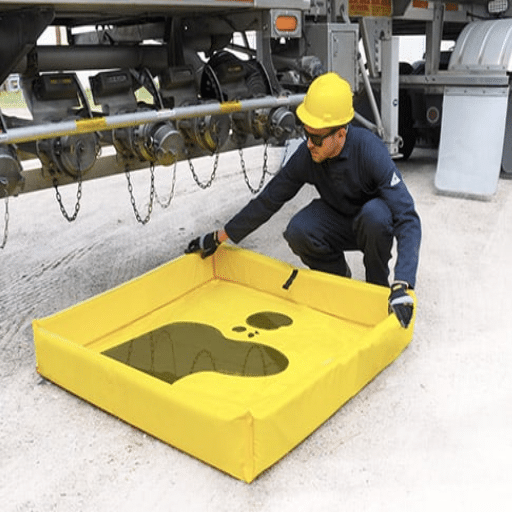
Berms stand as flexible barriers that surround and contain spills from larger tanks, delivery vehicles, or equipment. They are predominantly outdoor equipment and come with customizable size options for short-term or long-term applications. They are collapsible, making them easy to carry and deploy in emergencies.
Spill Containment Tanks and Sumps
These are rigid, durable structures capable of capturing large volumes of hazardous liquids. Tanks and sumps are often considered fixed containment solutions for long-term storage or heavy-duty applications. They must be kept clean to meet regulations and to prevent dangerous leaks into the environment.
Spill Absorbent Kits
They include pads, socks, and granular materials designed to soak spills in an instant. The kits are good for smaller-scale spills and form an integral part of any emergency response plan. They are usually used at worksites as the first line of defense.
Important Note: These solutions are available in a variety of options, depending on operational needs, thereby assuring safety, compliance, and environmental protection. Any eventual containment method would depend upon the associated risks and the materials handled at the site.
Regulations and Requirements

For safety and compliance purposes, organizations must adhere fully to regulatory agencies governing spill containment and response at the local, state, and federal levels. Some of the important standards include those outlined by OSHA, requiring spill containment plans to be developed by employers and spill containment training to be provided to employees. Moreover, the acceptable methods of handling discharges of harmful substances into water bodies or that cause environmental damage are enforced by the EPA under the Clean Water Act (CWA) as well as the Resource Conservation and Recovery Act (RCRA). Keeping up with these requirements and updating response plans regularly increases compliance while ensuring the protection of personnel and the environment.
Spill Containment Regulations Overview
Spill containment regulations are created to save the life of a human being, protect environmental resources, and prevent hazardous materials from causing harm. Constituting major components are the spill containment requirements imposed on facilities that store, handle, or transport hazardous substances under federal and state laws. Secondary containment facilities are required under the Clean Water Act (CWA) and the Spill Prevention, Control, and Countermeasure (SPCC) rule to handle such spills so as to prevent pollution of navigable waters. As per the Resource Conservation and Recovery Act (RCRA), hazardous waste must also be stored and managed so as to limit the possibilities of releases.
The existence of inspection and maintenance activities of containment systems periodically is a must for functioning and compliance purposes. A facility, at any rate, shall maintain a Spill Prevention Plan in force that sets forth response protocols, employee training, and mitigation strategies in the event of a spill. At a state level, additional regulations may be in force, somewhat complementary to federal regulations but addressing localized environmental concerns. From an operational standpoint, it would be wise to review up-to-date SPCC guidelines, recommended online resources of the EPA, and state regulations so that they can comply and form comprehensive solutions to spill management.
Understanding Spill Containment Requirements
Spill containment requirements keep harmful substances from being released and entering the environment. As stated in the EPA’s Spill Prevention, Control, and Countermeasure (SPCC) Rule, facilities must set up means of containing spills, which could come in the form of secondary containment, such as dikes or berms, to help manage any leaks in storage containers. Containers containing oils or hazardous substances must be inspected at regular intervals to ensure their integrity, and spill response kits must be within arm’s reach.
Moreover, keeping records that accurately note inspections, maintenance, or training is necessary to remain compliant. Various state-specific rules may impose additional conditions, such as lower spill report thresholds or industry-specific containment methods. It is essential for businesses to consider federal and state rules and regulations to draft their spill containment plan.
Routine employee training, plan reviews, and the implementation of modern technology, such as leak detection systems, ought to be part and parcel of a sound spill management strategy. By staying proactive and well-informed on these fronts, an organization ensures that the environmental risks and operational disruptions emanating from spills are significantly diminished.
Compliance and Liability Issues
All compliance and liability issues relating to spill containment are subject to relevant federal and state laws such as the Clean Water Act (CWA) and the Resource Conservation and Recovery Act (RCRA). Compliance is required to oversee environmental damage, while noncompliance could lead to fines and legal action against the entity involved. Companies must ensure that the necessary spill prevention and containment methods are in place, have their systems inspected periodically, and make reports concerning any spills to the authorities concerned within the designated time as stated in regulations.
Issues relating to liability arise when an organization does not take an effective preventive measure or does not adequately respond to the occurrence of a spill that leads to environmental harm and public health risks. Environmental liability insurance and proper documentation of preventive actions can serve as a means for lodging these claims. Protective measures in training, advanced leak detection technologies, and constant evolution with regulatory changes all benefit the social good by preventing both organizations and businesses from suffering financial and reputational damage.
Effective Spill Containment Systems

An effective spill containment system includes prevention, control, and management of accidental releases of hazardous substances. These components basically include:
- Spill Containment Barriers – Physical barriers such as berms or dikes constructed to contain a spill and prevent its dispersal.
- Spill Kits and Absorbents – Materials such as absorbent pads, booms, and socks to clean up spills quickly, available instantly.
- Secondary Containment Units – These capture leaks or spills from primary containers and can be drip trays, containment pallets, or bunded areas.
- Prevention Through Inspection and Maintenance – Frequent inspection of storage tanks, pipelines, and containment systems to detect and resolve vulnerabilities in time.
- Emergency Response Plan – Well-defined and rehearsed methods to address spills and work to minimize their impact.
Together, these components ensure strong protection against environmental and operational risks.
Components of a Spill Containment System
A spill containment system serves as a vital protection engineering barrier against hazardous spills and protects the environment. The major components involved in these are:
| Component | Function | Description |
|---|---|---|
| Primary Containment Unit | First Defense | These are the first defense measures, such as drums and tanks, which securely hold materials to prevent leakage. |
| Secondary Containment | Backup Protection | Systems placed as backup to intervene should there be a leak from the primary containment; examples include spill pallets, berms, or diking systems. |
| Spill Containment Barriers | Spill Control | Physical barriers such as booms, absorbent pads, or absorbent socks are employed for spill containment and spill absorption so that further dispersion is prevented. |
| Drain Protection | Environmental Safety | Covers or sealing mechanisms to prevent spilled substances from entering stormwater systems or drains, thereby reducing environmental contamination risks. |
| Spill Kits | Emergency Response | Pre-assembled kits that contain all the essentials, such as absorbent materials, personal protection equipment (PPE), and disposal bags, so that response to spills may be carried out swiftly. |
| Inspection & Maintenance | System Reliability | Goes through periodic and scheduled maintenance checks to ensure that the containment systems stand the test of time. |
Key Insight: When these elements work in harmony, functional facilities can abate operational hazards and work towards the fulfillment of considered environmental regulations, thereby charting a 360-degree approach towards spill containment.
Choosing the Right Spill Containment Products
- Type of Spill – The activities undertaken involve containing or intercepting the free liquid, hence identifying the nature thereof. Spills of oils, chemicals, or hazmat have to be reactive or reactive or incompatible materials to prevent leakage or reaction.
- Capacity and Size – Assess the quantity or volume of the possible spill to determine whether whatever containers chosen for the job will have adequate capacity. It is better to overestimate the capacity rather than have spills due to a lack of containment.
- Durability and Material – Choose products manufactured with materials that are resilient and chemically resistant to the substances they are intended to hold and resistant to the environmental conditions they materials do not intended to withstand.
- Regulatory Compliance – Ensure that the spill containment products selected are certified that meet the industry standard and are compliant with environmental regulations for safety and legal reasons.
- Portability and Accessibility – For faster deployment and cases demanding immediate use, spill containment solutions should be portable or have from modular design, especially in highly dynamic environments.
- Maintenance Ease – Ensure the product is easy to clean, inspect, and maintain in the long term. Also, replacement parts for liners should be convenient to purchase.
By putting hazards into perspective, spill containment solutions can be chosen by companies that keep risks down, maintain safety, and comply with regulatory requirements.
Best Practices for Spill Control
- Create a Spill Response Plan – This shall be a clear, short, and precise spill response plan customized for your operations. It shall include clearly defined procedures for containment, cleanup, communication protocols, and usage of equipment.
- Use Appropriate Spill Containment Tools – Equip your facility with forefront spill containment products, including absorbent mats, spill kits, and drainage covers. These tools must be strategically placed for easy access, minimizing response times.
- Conduct Regular Training – Train employees in spill prevention and response techniques. Teach them the use of spill control equipment and emphasize the importance of safety and environmental protection.
- Conduct Inspections – Inspect areas prone to a spill, such as storage or transfer points. Take care of any leaks, structural wear, or improper storage to lessen the chances of incidents.
- Act Quickly and Effectively – Upon occurrence of a spill, the first reaction should be to control the area, isolate it, and put any containment implementation tools and cleanup materials to proper use. Inadvertently leaving the hazardous waste to be disposed of might lead to environmental pollution.
Remember: If these practices are followed, spills can diminish in risk to the organization, protect outstaff and the environment, and guarantee their statutory rights.
Specific Spill Containment Solutions
Spill Kits
Preassembled kits allow for a speedy response to spills. These kits are often composed of absorbent pads, absorbent socks, and disposal bags for more efficient spill control.
Secondary Containment
Employ containment pallets or trays beneath storage containers to receive any leaks or spills that may occur, thus preventing hazardous substances from reaching the floor or environment.
Spill Barriers and Dikes
Flexible barriers and dikes are implemented for the containment and redirection of spilled materials, especially in large-scale industrial settings.
Drain Covers
Drain covers will ensure that these substances do not get into water systems.
Absorbent Materials
Establish different kinds of absorbent materials, such as mats, granules, and booms, to control spills and clean-ups of various chemical types.
Implementing these solutions will help organizations contain spills efficiently, thereby minimizing hazards to health, safety, and the environment.
Flexible Spill Containment Berms
Flexible spill containment berms provide a portable and durable solution designed to prevent spills from spreading into surrounding areas. These berms are easily deployable, are made from chemical-resistant materials, and can be used with a variety of liquids, including oils, fuels, and hazardous chemicals. These are highly preferred in industrial, commercial, and emergencies to help contain an unexpected leak or spill. Some benefits to the use of these berms include ease of use, reusability, and adaptability to the volume and size of the spill. With features such as foldable sidewalls and a lightweight design, these flexible spill containment berms provide an efficient way of protecting health, safety, and environmental standards.
Spill Pallets and Their Uses
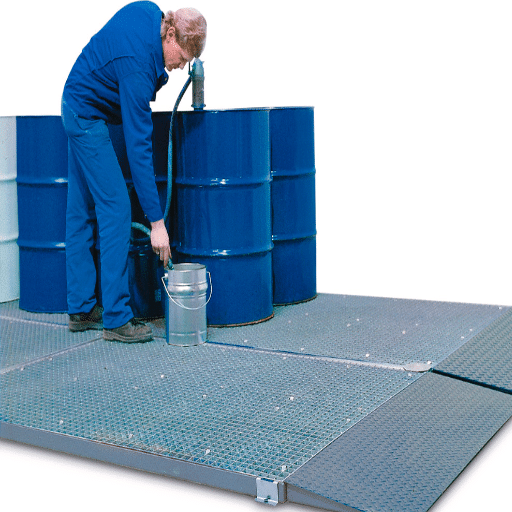
Spill pallets are important tools that safely store and handle drums or containers filled with hazardous or non-hazardous liquids. While spill pallets are meant to catch leaks, drips, and spills to keep harmful substances from contaminating the work area or the environment, they stand the test of time and resist chemical action. Typically, the materials used to make these pallets are durable and resistant to chemicals, such as polyethylene. Spill pallets, being of another kind, can withstand heavy loads, while ensuring compliance with necessary laws and codes of environment and safety directions issued, among others, by the EPA and OSHA.
Spill pallets are commonly used in the storage of oil, chemical, or other potentially hazardous substances in different workplaces such as factories, warehouses, and laboratories. They may be very helpful in instances where secondary containment is required during the transfer or storage of such liquids so as to reduce any associated risk.
Usually equipped with a grating for easy drainage and cleaning, they also have forklift pockets for mobility. Spill pallets incorporated into daily activities enable them to remain safe, with minimal impact on the environment, and in line with the regulations.
Secondary Spill Containment Products for IBCs
Secondary spill containment for Intermediate Bulk Containers (IBCs) remains very much essential to prevent any leak or spill that may harm the environment or create workplace hazards. The products are intended to capture any spills occurring during the storage, dispensing, or transportation of liquids. The most common solutions are IBC spill containment pallets, which offer a high capacity to hold the volume of an IBC and its potential spill. There are button options available with removable grates to facilitate cleaning, materials that have been treated for corrosion resistance to increase strength and durability, and ones that comply with EPA regulations, 40 CFR 264.175, or OSHA.
The most advanced designs may also have weatherproof covers or tarps to prevent water from mistakenly intruding upon spill containment capacity. Modular systems are offered for containing more than one IBC unit so that bigger operations may scale up their solutions. Choosing a secondary containment product will depend on the type of liquid being stored, the necessary capacity, and any regulatory requirements specific to that product, with safety and efficiency always being the priority.
Managing Small Spills and Hazardous Waste

Immediate Response Protocol
Small spills and hazardous waste must be managed promptly under strict safety guidelines. Absorbent materials, such as spill pads or granules, should be employed to contain the spill immediately before it has a chance to spread elsewhere. The cleanup must be thorough; all collected waste should be disposed of in appropriate hazardous waste containers. Dependence on PPE to protect oneself from exposure when handling hazardous substances must always be placed above everything. Dispose of the waste collected following local environmental regulations, with licensed disposal companies if so determined. Periodic training and easy access to spill kits will guarantee preparedness and enable the minimization of any risks.
Strategies for Small Spill Management
Small spills, if not managed immediately and properly, can affect the safety of humans and the environment. Hence, first identify the type of spill and its magnitude, and the real hazards that it poses. Small spills that can be handled should be stopped from spreading and being absorbed by materials such as pads, booms, or granules for spill management. In case of foot traffic, isolate the place to avoid further contamination of the area. Clean it thoroughly and ventilate the area well if hazardous substances are involved.
During cleanup, always wear PPE such as gloves, goggles, and masks. All soiled absorbents and contaminated materials should be put into approved hazardous waste containers, ensuring sealing and labelling thereof. In disposing of the waste, follow local environmental disposal regulations and use only certified disposal companies when necessary. Conduct a post-cleaning inspection to ensure all traces of the spill have been removed.
Continuous training of personnel in spill response techniques, as well as provision of easy access to spill kits (well-stocked), boosts response times and minimizes risks. Documenting spill incidents as well as preventive measures can also lead to improvements in processes and compliance for subsequent situations.
Handling Hazardous Waste Containment
Proper storage in compatible and labeled containers is of utmost importance in hazardous waste containment. Disposal systems, other permits, and regulations are followed to ensure compliance with the law. Containment areas are inspected regularly by trained personnel who look for leaks and damage, and the records of waste are maintained and kept up to date. For safe handling practices, regular training is provided. An emergency plan is always in place in case the event needs an immediate response.
Drip Containment Solutions
These sorts of containment alternatives stop spills and leaks, protect safety, and stay on the right side of environmental regulations. Spill pallets, drip trays, and absorbent mats would be the best solutions; they capture and contain drips coming off from machines, containers, or pipes. Containment tools should be chosen wisely and should have high resistance to chemicals while being compatible with their specific application needs. Regular checks, proper placement, and adherence to storage guidelines are some of the mitigating actions that further ensure risk reduction in handling these containment systems. Practicality and durability make containment solutions a major key to waste control, safeguarding the workers, and protecting the environment.
Environmental Compliance Checklist
- Ensure all containment systems meet EPA and OSHA standards
- Conduct regular inspections of storage areas and equipment
- Maintain up-to-date SPCC plans and documentation
- Provide comprehensive employee training programs
- Keep spill response kits readily accessible
- Establish relationships with certified waste disposal companies
- Document all spill incidents and corrective actions
- Review and update emergency response plans regularly
Key Takeaways: Essential Points for Effective Spill Containment
- Proper spill containment protects workers, operations, and the environment from hazardous substance exposure
- Secondary containment systems are critical backup measures that prevent environmental contamination when primary containment fails
- Multiple containment solutions exist including pallets, berms, tanks, and absorbent kits to suit different operational needs
- Compliance with EPA, OSHA, CWA, and RCRA regulations is mandatory to avoid fines and legal consequences
- Effective spill containment systems require prevention, control, and management components working together
- Regular inspections, maintenance, and employee training are essential for system reliability and emergency preparedness
- Quick response with appropriate containment tools and PPE minimizes the impact of spill incidents
- Documentation of spills, inspections, and preventive measures ensures compliance and continuous improvement
- Selecting the right containment products based on spill type, capacity, durability, and regulations is crucial for safety
- Proactive spill management strategies protect organizations from financial, legal, and reputational damage
Final Recommendations
Implementing comprehensive spill containment measures is not just about regulatory compliance—it’s about protecting your workforce, preserving the environment, and ensuring the long-term viability of your operations. By investing in quality containment systems, maintaining rigorous inspection schedules, and fostering a culture of safety through regular training, organizations can significantly reduce the risks associated with hazardous materials. Remember that prevention is always more cost-effective than remediation, and a proactive approach to spill management demonstrates corporate responsibility while safeguarding both human health and environmental resources for future generations.
Reference Sources
3. DSS-OSM: An Integrated Decision Support System for Offshore Oil Spill Management
Frequently Asked Questions (FAQs)
What is a spill containment system, and its necessity?
A spill containment system is meant to prevent and contain variables leading to environmental damage. The system is thus critical in ensuring the meeting of legal parameters concerning spills and spill containment procedures, and safety standards. In practical terms, we are mainly thinking of spill pallets, berms, or any other containment installations as per specific containment applications.
What is best in spill containment?
To practice best practices for spill containment, periodically have your spill containment equipment inspected, train your staff on spill response procedures, and make sure your spill containment solutions are tested and approved for use. Also have spill control products available that will go a great distance in lessening the impact of any spill.
What are spill containment regulations that I should know about?
Depending on the location, spill containment regulations may vary, but generally, enforcement lies with the Environmental Protection Agency and local governing bodies. These regulations provide spill capacity containment requirements and often require secondary containment for dangerous materials, such as with compliant spill berms or spill pallets.
How do spill containment pallets work?
The spill containment pallets are placed under 55-gallon drums or IBCs to serve as a secondary containment system for leaks or spills. Therefore, these containment pallets must be of a capacity to contain at least 10 percent of the total volume of the primary containers to contain them in case of leaks.
What is the spill containment berm capacity?
The capacity of the spill containment berm is generally decided to contain the volume of the largest container it is designed to protect. With consideration of possible leaks and spills, ensure that the berm can contain the hazardous materials without overflow.
Are flexible spill berms useful?
Yes, flexible spill berms work really well for temporary storage or containment of spills in various settings. They are easy to set up and can conform to different surfaces, making them suitable for any containment need.
How will the spill-containment setup be compliant?
To be compliant, regularly check the local spill containment rules and the guidelines by the Environmental Protection Agency and ensure that your containment systems, i.e., spill pallets, berms, etc., satisfy the spill containment requirements and are being maintained and inspected.
What are the types of containment solutions for hazardous waste?
In several containment solutions for hazardous waste, spill containment pallets are available; rigid spill containment systems, and secondary containment berms. Each type will serve its specific kind of hazardous material to be safely stored and handled so that spills do not occur.