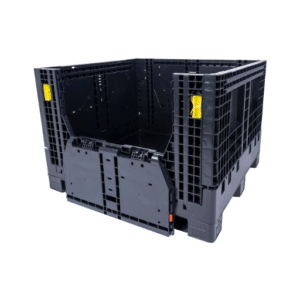
Selecting a type of pallet for any heavy-duty manufacturing firm has to do with many factors, which include efficiency, effectiveness, and safety at the workplace. Both plastics and metal pallets are the most common materials used in such industries. And why is that? Glass is fragile. In such a case, which one would be most productive in heavy-duty manufacturing? This article will cover all the important aspects that need to be considered when making a choice between the two, such as how strong they are, how much weight they support, whether they are eco-friendly, how much they cost over a period of time, and much more. By the time you reach the end of this article, you will be in a better position to make a decision which will complement your business objectives and sustainability issues.
Introduction to Pallets in Manufacturing

Pallets are common and invaluable in a production line; their main purpose is to support goods for the sole purpose of stacking, storage, and transportation. There are types of pallets depending on the material, and the most common types are made from wood & plastic, each one having its own benefits that can be used in different ways. Plastic pallets, to their benefit, are cheap and easy to make. Therefore, they can be used for heavy goods where no extra spending is required. On the other hand, Plastic pallets score high in the aspect of durability, water/spill/mud-resistance, and hygiene. Plastic pallets can be easily cleaned. Thus, they can be used in clean or other longer usage areas. Both of these types are very important in terms of logistics and overall safety of the state of materials, which requires them to be internal and external in production as well as distribution.
Define the role of pallets in manufacturing and logistics.
Pallets are an intrinsic part of manufacturing and logistics as they are a simple, unified means for transport and storage of products, which rails are built upon. They enhance efficiency by enabling easy movement of materials using forklifts, pallet jacks, or other equipment, whilst cutting down on the number of employees using muscles and thus improving activity facilitation processes. Pallets also allow stacking, whereby making it possible to make more use of the available warehousing space and or storage area while guaranteeing the stability of products in transit. Besides that, they encourage compliance with supply chain norms so that there is no disconnection among various transport systems employed worldwide. By improving material flow and protecting product, pallets are one of the key vehicles modernizing the way in which today’s manufacturing and logistics take place.
Explain the importance of selecting the right pallet material.
Efficiency in the logistics arena, protection of goods, and cost preservation are all reasons why special emphasis needs to be given to selecting a proper pallet material. One can choose from wood, plastic, metal, and cardboard – each has its peculiarities, beneficial for specific applications. Wooden pallets are inexpensive and easily carry huge weights, but they also draw water and bacteria in and out. Sometimes, plastic pallets are preferred because they can withstand quite a lot, are waterproof, and are also reusable, which is a requisite in the food or drug industries. However, it costs more in terms of buyers who wish to purchase metal pallets for bulky and or dangerous loads since they are superior and can withstand a lot of force. Some transport requirements include light and recyclable items that can be used once only and discarded afterwards. In addition, in choosing the materials of the pallets, it should be understood how these decisions affect the load management, environmental impact, regulations, and even sustainability goals. Industry research assists in product protection from damage, increases operational efficiency, and follows supplementary guidelines such as those specific to a certain industry.
Brief overview of plastic and steel pallets.
Plastic vs steel pallets are a common comparison for industries, as the material used for its construction serves different functions. The main advantage that can inevitably lend the plastic pallets towards several industries, especially pharmaceutical, food and beverage, export industries, etc., is moisture resistance and uniform dimensions. Unlike steel, they weigh less, can be cleaned easily, and stainless steel is most of the time used in order to comply with regulatory standards. Of course, that comes at a price, which is, in fact, higher than that of traditional wooden pallets, which is the reason some may prefer the latter, but this is typically balanced out by the life expectancy of the other. They also have holes, which will be unwelcome in clean or safe environments due to such inconveniences as washing and humid heating.
Meanwhile, steel pallets offer the greatest strength and can withstand gigantic loads, thus are indispensable in such heavy-duty industries as automotive, construction, and metal-fabrication, where these industries involve heavy mechanical structures. Apart from this, their intrinsic nature makes them fire-resistant, equips them with resistance to weather changes, and enables them to withstand adverse conditions, among others. This surfaces despite their rigidity; steel pallets are heavier, hence transport costs may go up, and also compared to plastic and safe pallets, these are way more expensive to some industries. Before deciding on this, each material has an advantage over another depending on its most applicable environment and use, hence accommodating any purpose.
Key Differences Between Plastic and Steel Pallets

The differences between plastic and steel pallets are often dictated by their material and usage characteristics. Due to their considerably lower weight, inability to sustain moisture and chemical changes, plastic pallets are the preferred choice in fields that require cleanliness in handling processes, including the food and pharmaceutical supply chains. On the other hand, steel pallets are very strong, last long, and cannot burn, so they are well-suited for heavy loads’ storage and transportation in industrial set-ups. Steel pallets also have the drawback of being rather heavy and expensive in comparison to plastic ones; the practicality of their use would be dictated by the operational requirements of the user. This challenging task of choosing plastic vs steel pallets is based on various loads, conditions, prescriptions, or cost benefits.
Durability and load-bearing capacity.
As far as the durability and capability of supporting weight of certain products is concerned, most of the time, steel pallets tend to be preferred over plastic pallets. This is because steel is known to be stronger than plastic. The number of static and dynamic loads that can be supported by steel pallets is generally higher than that of plastic pallets, suggesting that the former is adapted for heavier use in industrial activities or areas where the limits are pushed. Additionally, they can be used in harsh, high-temperature environments or environments characterized by heavy battering without experiencing any deformation.
However, instead of steel, plastic pallets have been used for less rigorous uses, as they are not delicate to wet and chemical treatments and are not prone to rust. Hence, their use in medical, food, and other such stringent environments is no surprise. Large numbers of poly-ethyl-ethylene-foil (HDPE) and polypropylene (PP) find their way into these counter plastic palettes, making them a little flexible and slightly tough when imposed loads to the pallets exceed a certain level, except for the fact that one cannot compare the overall capacity of the plastic vs steel pallets.
The choice ultimately boils down to the needs of the operations. Plastic vs steel pallets is a function of usage because steel is often favored for racking and strenuous activities where the pallets are used continuously for long periods, while plastics meet the applications of modest weight, sanitation, or cheap cost requirements.
Resistance to environmental factors (e.g., temperature, moisture).
The fact that steel pallets can withstand very high and low temperatures makes them extremely beneficial for use in industries with cold-storage facilities or flames, such as industries next to furnaces. The moisture element does not affect their longevity as they are waterproof. Nevertheless, there is one limitation with a steel pallet; with time on exposure to moist surfaces or rain, the steel will rust if it is not coated with suitable anti-corrosive agents.
On the other hand, plastic pallets are waterproof by nature, eliminating the possibility of water-related distortions, decay, or corrosion. They can be used in damp settings without losing their shape, and this also means little to no fungal growth, hence good for clean environments. On the flip side, some plastics will become fragile if they are exposed to very low temperatures and will collapse if warmer temperatures exceed the elastic range that can bear the weight limit of these plastic vs steel pallets.
Weight and ease of handling.
Plastic as opposed to wooden pallets, has advantages in terms of weight, so they are easy to handle and are more economical in terms of shipping as they lessen the total weight. Also, they are easier to transport and store since all dimensions of the pallet are standard and even. However, the wooden pallets are quite bulky in weight, especially when they become wet, which may add to the burden while lifting things, and transportation costs may increase. Yet, that might be a plus point when heavy stuff is in consideration. In general, the lighter weight of the plastic pallets means easier and more convenient handling and transportation of them than the wooden pallets.
Advantages of Plastic Pallets for Heavy-Duty Manufacturing

Heavy manufacturing has come a long way regarding pallet packaging, with plastic pallets proving to be more advantageous in terms of endurance, hygiene, and cost effectiveness. Due to the fact that they are made from tough materials, they last longer than wood and do not deteriorate easily as timber pallets do. Moisture and pests do not affect plastic pallets; they are more suited for applications and environments like the Pharmaceutical and Food Industries, where it is critical to maintain a very clean state of affairs without contamination issues. In addition, since very little volume weight is present, transport becomes cheaper and easier as there is no need to trade off carrying capacity. All these serve in making plastic vs steel pallets in heavy-duty applications, rather cost-friendly in the long run.
Lightweight and ergonomic benefits for manual handling.
Several ergonomic benefits are provided by the lightweight plastic pallets that make them particularly appealing for situations involving manual handling. Since their weight is far less compared to that of wooden pallets, the likelihood that users will be injured while lifting or moving a heavy load is less. This assists in conformity with health and safety norms, thereby enhancing the productivity of the workers and the organization at large. In addition to this, the lightweight pallet design promotes easier manipulation of the pallet itself, thus achieving operational effectiveness when it comes to loading, unloading, or storing goods. Latitudes provided by ergonomic designs, e.g., curved edges and grip regions, help in managing such functions without putting much stress on the users. All these features make plastic vs steel pallets an ideal solution for specific businesses where materials are safely and effectively handled.
Resistance to corrosion, chemicals, and moisture.
Plastics have the advantage of being able to resist corrosion, chemicals, and moisture, which is an essential requirement in many industries with high hygiene standards and durability levels. Unlike the wood-pallets, the plastics do not absorb any liquids, nor do they encourage the growth of any bacteria, hence ensuring that the required hygiene standards in the food, pharmaceutical, and chemical industries are met. The chemical-resistant property in them means they can withstand various chemicals without breaking apart, while the non-porous feature signifies that it does not contain water and thus there are minimal chances of warpage, formation of molds, or collapse of the structure when stored for long periods. Consequently, these features guarantee dependable functionality even in such extreme conditions as cold storage and chemical plants where other materials, such as steel, always fail.
Longevity under specific use cases with low-maintenance requirements.
The use of materials with high structural stability and resistance to environmental stresses ensures a long operating life. Plastic polymer, being one of the examples, as well as stainless steel, does not deteriorate or decompose easily, even under conditions of humidity, solar radiation, or exposure to harsh chemicals. Their solid surfaces, which are not susceptible to corrosion, help them stay intact, such that they hardly need a touch-up because they do not crack, rust, or harbor germs. In such industries where attention is given to reduce maintenance, such as food, drugs, or sewage treatment, people tend to use such materials because they know they would not spend so much money over the lifetime of the equipment that they put in place. The materials are tested for protracted periods within a context of severe stress, and thus, there is no requirement for regular repairs or replacements. One can obtain the above-mentioned benefits very easily from durable and low-maintenance items applied to a few activities.
Advantages of Steel Pallets for Heavy-Duty Manufacturing

Steel Pallets are considered a standard of choice in any heavy-duty manufacturing as they hold the advantage of being strong and durable over other types of pallets. Steel pallets, unlike those made of plastic or wood, can withstand heavy weights without breaking or getting damaged by impact, moisture, or heat. Their solid design helps maintain durability, which means the pallets need not be changed now and then thus lowering costs while minimizing downtime. Furthermore, companies embolism using plastic vs steel pallets, which, however, encourages the dust that could accumulate during transportation, are returnable and end-of-life recyclable and therefore do fit in the green building concept.
Exceptional strength for ultra-heavy loads.
The reason these are made available in steel is because of its superior ability to withstand extreme weights. This is an essential property when dealing with huge, heavy items that are being transported or stored. This component of greater compressive strength and less deformability allows supports on these pallets to carry even a greater load than plastic or wooden ones. Since steel pallets are not deformed even under high load compared to traditional plastics or wood, the goods remain in proper handling, and damage and deformation do not occur to the structures. Other than that, the design of these pallets is seamless, thus making it possible to handle them with ease in systems that have to operate without the interference of a person. The above features make the containers made of steel so useful in the areas of the manufacture of airplanes, cars, and other heavy equipment.
High durability in rugged operating environments.
Steel pallets are industrial strength and can easily survive in the most hostile operating conditions. This is because they are protected by coatings resistant to corrosion or adverse effects of the presence of fat or acids, with very high or very low temperatures. Apart from this, they do not suffer from problems such as warps, cracks, or splinters, which are usually faced by other materials, such as wood or plastics. This advantage, on the other hand, saves money on repair work while increasing its operation considerably, even in harsh conditions such as mining, construction, or shipping activities. In addition to this, thanks to the fact that they can bear great loads in a stable manner, plastic vs steel pallets are mainly used in extreme conditions since the latter demonstrate maximum performance and durability.
Performance in high-temperature or highly abrasive conditions.
In many applications where one can expect record-high temperatures or rough conditions, steel pallets, more than plastic ones, are used because steel has much better material properties. For instance, plastic can weaken and even melt when the heat reaches a certain point, whereas steel remains intact, performing without fail. In addition, in high-stress environments, steel pallets’ secondary surfaces are more resistant to cuts, dents, and abrasion, thus reducing wear and tear. This accounts for a preference for steel over plastic in work environments, e.g., foundries, chemical plants, steel mills, etc., which are characterized by harsh heat, usage, and operations where reliability is extremely important.
Cost Analysis and Longevity Comparison

If cost is considered, plastic vs steel pallets, it is uncommon that the plastic alternative is more expensive than the other. This is for the reason that such alternatives are built more strongly than the two, on top of very expensive materials and processes used to make them. Nonetheless, the people who buy steel pallets do not necessarily suffer financially because of the long usage time that these pallets offer. The extent to which they resist damage, wear, and other hostile conditions is so great that large amounts of money that would have been spent on replacement can be saved. In the long run, it tends to be less expensive to invest in durable items, especially where operations are harsh. Furthermore, considering that they are reusable can also be a bonus in terms of costs, which increases their attractiveness.
Upfront cost of plastic vs. steel pallets.
|
Parameter |
Plastic Pallets |
Steel Pallets |
|---|---|---|
|
Cost |
Lower |
Higher |
|
Durability |
Moderate |
High |
|
Weight |
Light |
Heavy |
|
Maintenance |
Minimal |
Moderate |
|
Lifespan |
Moderate |
Long |
|
Recyclable |
Yes |
Yes |
|
Load Capacity |
Medium |
High |
|
Moisture Resistance |
High |
High |
Cost per use over the product lifecycle.
While assessing the cost attribute of a product throughout its lifecycle, several aspects such as purchase price, servicing charges, wear and tear, and usage and control can be observed. In the case of plastic pallets, they charge lower at the outset and for handling, and these features make them an economical choice for medium loads with high reuse. On the contrary, despite the fact that steel pallets are fairly more expensive, they last longer and sustain a heavier load, thus the cost per use may be higher in the case of depositing and retrieving pallets that are heavy-duty. The choice, therefore, depends on the need, availability, and usage of the requirements.
Maintenance and replacement costs.
Cost variance depends on the type of pallet and the place of its usage. Pallets made of wood mostly require periodical checks in case of any damage to the wooden planks or nails sticking out, and therefore repairs or replacement are needed for proper usage and care. Wood is especially more useful in a long span of time since it deforms more cubically, decays in fewer years, and harbors more insects. Compared to wood, plastic pallets do not have such a disadvantage because they do not get wet, get eaten by pests, or dissolve in most chemicals and consequently require very little care. Indeed, they have their weak points because they may break when a very heavy load is placed on them, or when they face extreme cold or heat, necessitating replacement from time to time. Needless to say, write the ‘Appropriate use of steel pallets’ due to l low wear and tear and the ability to be used in stringent conditions. As such, the upfront costs and also the costs associated with their repairs are higher, but in terms of replacement within their lifespan, steel pallets tend to be the cheapest because they last the longest. In choosing the best pallets, however, consideration must be given to every possible cost, and let the user decide which material suits the use in the given conditions.
Reference Sources
Wooden and Plastic Pallets: A Review of Life Cycle Assessment (LCA) Studies
This meta-analysis reviewed 16 studies on the environmental impacts of wooden and plastic pallets. Plastic pallets were found to have a higher carbon footprint compared to wooden pallets, but recycled plastic pallets showed significantly reduced environmental impacts.
Design of New Modular Metal Pallets: Experimental Validation and Life Cycle Analysis
This study introduced a new modular metal pallet design that outperformed wood, plastic, and aluminum pallets in terms of stiffness, deformation, and environmental impact.
Frequently Asked Questions (FAQs)
In what ways does a warehouse layout affect the decision to use plastic or steel pallets?
The layout of a warehouse—including how pallets are meant to be navigated through aisles, on conveyors, and using forklifts—determines the appropriate form of a pallet vehicle. For instance, plastic pallets are highly preferred due to their lightness, great manoeuvrability, and less fatigue upon the operator, while on the contrary, the heavier steel pallets offer an advantage in terms of stability to the stored goods and can store higher loads of dense materials. This section focuses on the facilitation of the equipment, such as forklift tine spacing and conveyor belt, but also the behavior of the pallet during stacking and transport; plastic ones are usually unibody and more suitable for such practices, whereas steel and wood may need changes in the navigation systems.
How does the lifelength of plastic and steel pallets physics and service life differ?
The duration of use and the effective life expectancy are dependent upon the purpose and the appropriate conditions. Steel pallets are strong and durable for a longer period when stored in controlled conditions because they can withstand a lot of weight impacting them without easily breaking; however, they are not free from rusting and corrosion once in humid or salty environments. Plastic pallets don’t rust easily, and best of all, they don’t soak up moisture or other chemicals very easily, unlike steel, so they turn out to be an economical option in the long run because of their lightweight reduction possibilities. In contrast, some plastics may become very resistant to high temperatures or bright light; this affects how long adopted plastic materials last.
When it comes to the selection of either plastic or steel, depending on hygiene, how crucial is it?
Maintaining hygienic conditions is cardinal in food, pharmaceutical, and cleanroom environments. Easy to clean, non-porous, and impervious to the accumulation of bacteria, plastic pallets are ideal for high compliance as well as cold storage applications. It is possible to clean steel pallets, and they have an anti-corrosion coating applied on their surfaces; however, in the absence of thorough care, joints and welds are potential areas for waste or bacteria contamination. For the most hygienic applications, the use of plastic pallets is preferred since they have no joints and are easy to clean.
Are plastic pallets usable in cold storage and low temperatures?
Cold warehouses frequently utilize plastic pallets due to the fact that a lot of polymers do not separate at freezing temperatures and do not absorb water. But certain plastics may become susceptible to cracks in severe cold, hence grades appropriate for freezing temperatures should be preferred. As for metal pallets, their heat transfer characteristics (thermal conductivity) can have an impact on the temperature of the product and act as a collection point for frost; both steel and plastic serve their purpose, but don’t assume the pallet is fit for your needs without checking the temperature limitation of the material.
What are the differences in mode of transport, handling capacity, and stability between plastic and steel pallets?
In comparison to plastic pallets, steel ones can usually withstand more weight due to their structure, which tends to be more rigid. As a result, steel pallets are used for loads of high density over long distances or whenever stability is required. One advantage of using plastic pallets is that they are much lighter and thus transport costs are less, and the handling of them becomes easier to do manually; however, on the downside, the weight capacity may not be as much, and with heavy loads, strengthened designs may be necessary. Price, maneuverability, and whether the pallet will have a use or not over others during transportation should also be taken into account. Heavy steel pallets enhance the stack-formed wind stability of the load but otherwise contribute to additional load.
How efficient are they in terms of costs, and what is the cost of plastic vs steel pallets?
The initial investment and budget for an asset often differ depending on the material being used: plastic pallets may seem more desirable, effective, and cheaper for operations requiring light and bulky materials in high volumes. Additionally, they could help reduce shipping costs, particularly because they are light. Steel pallets are more expensive, but for heavy, long-term, or specialized use, they are more durable, leading to cost savings. Include cost factors like repair/replacement, service life, particular ends of usage, and suitability (e.g., regulations, freezing storage) in your budget to determine which one you can afford from the two.