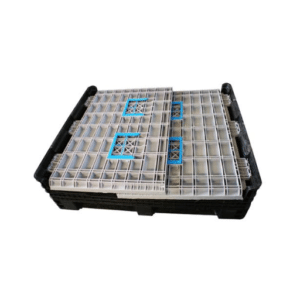
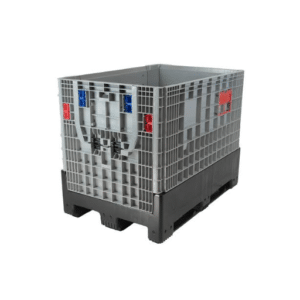
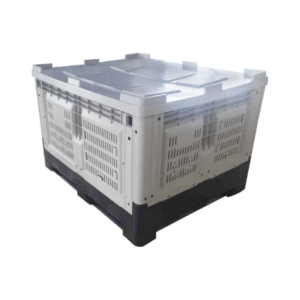
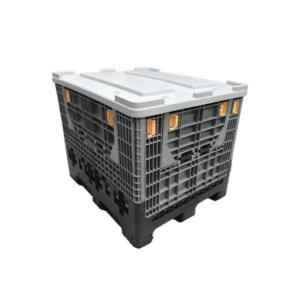
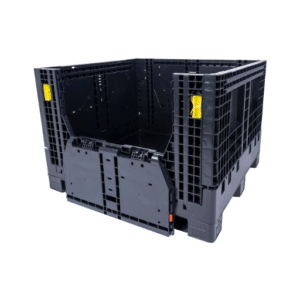
Heavy duty plastic pallets are engineered load platforms designed to handle static loads from 4,000 kg to 7,000 kg, dynamic loads from 1,500 kg to 2,500 kg, and rack loads from 1,000 kg to 1,500 kg in warehouses, manufacturing plants, and export supply chains. Unlike standard plastic pallets, they use thicker walls, deeper structural ribs, and often steel reinforcement to survive repeated impact, racking, and long-haul transport.
Last quarter, a procurement manager at a Midwest automotive parts supplier told us she had rejected three pallet samples in six weeks. Each one carried the words “heavy duty” molded into the deck. Yet under a 2,200 kg racking load, two cracked at the corners and one deflected beyond safe limits. The label meant nothing without verified load data.
That story is more common than it should be. Buyers everywhere are comparing quotes on industrial plastic pallets without a clear framework for what “heavy duty” actually means for their operation. In this guide, we will show you how to read load ratings, choose the right material and construction, compare total cost of ownership against wood, and verify supplier claims before you place an order.
Key Takeaways
- Heavy duty plastic pallets typically support 4,000–7,000 kg static, 1,500–2,500 kg dynamic, and 1,000–1,500 kg racking loads.
- HDPE dominates for stiffness and moisture resistance, while PP handles higher temperatures; steel reinforcement cuts racking deflection by 40–60%.
- Plastic pallets often last 100–500 trips in closed-loop systems, compared with 8–80 trips for wood.
- They are exempt from ISPM-15, making them ideal for export shipping without heat treatment delays.
- Always request ISO 8611 test reports and working-load safety factors before specifying a pallet.
What Are Heavy Duty Plastic Pallets?

Heavy duty plastic pallets are high-performance pallets built for repeated use under substantial loads. They differ from standard plastic pallets in wall thickness, rib depth, corner reinforcement, and often the addition of steel tubes or rods in the runners.
A standard pallet might handle a 1,200 kg dynamic load comfortably. A durable plastic pallet rated as heavy duty is designed for dynamic loads starting around 1,500 kg and climbing to 2,500 kg or more. Static loads can reach 7,000 kg on the floor, and rackable models can sit safely in warehouse racking at 1,000–1,500 kg.
The phrase “heavy duty” is not regulated. One supplier’s heavy duty pallet may be another supplier’s medium-duty model. That is why procurement teams should specify by numbers, not labels. Load capacity, material, reinforcement, and testing standards matter far more than marketing language.
Load Capacity Explained: Static, Dynamic & Racking
Understanding the three load ratings is the single most important step in buying heavy duty plastic pallets that will not fail in your facility.
Static Load
Static load is the maximum weight a pallet can hold when it sits stationary on a flat floor with the load evenly distributed. For heavy duty plastic pallets, this usually ranges from 4,000 kg to 7,000 kg. It is a useful ceiling for floor-stacked storage, but it does not predict behavior during transport or racking.
Dynamic Load
Dynamic load is the weight a pallet can carry while being moved by a forklift or pallet jack. This rating is lower than static load because movement introduces impact, vibration, and uneven stress. Most heavy duty models are rated for 1,500 kg to 2,500 kg dynamic load.
Racking Load
Racking load is the weight a pallet can hold when supported only by its edges in warehouse racking. This is the most demanding test because the pallet spans an open gap. Heavy duty rackable pallets typically support 1,000 kg to 1,500 kg, with steel-reinforced versions at the upper end.
Safety Factors and Real-World Derating
Engineers apply a safety factor, often 1.5x, to convert a test rating into a safe working load. If a pallet is rated for 3,000 kg dynamic in a lab, the working load might be 2,000 kg in practice. Always ask your supplier for the rated load and the recommended working load.
| Load Type | Typical Heavy Duty Range | Common Use Case |
|---|---|---|
| Static load | 4,000–7,000 kg | Floor-stacked raw materials or finished goods |
| Dynamic load | 1,500–2,500 kg | Forklift transport inside a plant or DC |
| Racking load | 1,000–1,500 kg | Pallet racking and automated storage systems |
CTA: Need help matching a pallet rating to your actual warehouse loads? Explore our complete plastic pallet range and request a load-spec review.
Materials & Construction: HDPE, PP, and Steel Reinforcement
The material inside a pallet determines how it behaves under load, in temperature extremes, and around chemicals. Most heavy duty plastic pallets are molded from one of two polymers, sometimes with steel reinforcement.
HDPE: The Workhorse
High-density polyethylene, or HDPE, is the most common material for industrial plastic pallets. It offers excellent stiffness, impact resistance, and moisture resistance. HDPE performs well across a wide temperature range, typically from -40°C to +60°C, and it resists most acids, oils, and cleaning chemicals.
Because HDPE is also widely recycled, it supports closed-loop and sustainability programs. At Shandong Lile, we use virgin and recycled HDPE blends to balance performance with environmental goals.
PP: The Heat Specialist
Polypropylene, or PP, handles higher temperatures than HDPE, often up to +100°C to +120°C. It is a good choice for hot-fill applications, autoclave sterilization, or facilities where pallets pass through wash-down cycles at elevated temperatures. PP is slightly more flexible than HDPE and can perform better in applications with repeated flexing.
Steel Reinforcement
Steel tubes or rods inserted into the pallet runners transform a standard plastic pallet into a steel reinforced plastic pallet. This reinforcement increases racking capacity and reduces deflection. Internal testing and industry data suggest steel reinforcement can cut racking deflection by roughly 40–60% compared with all-plastic designs.
Steel-reinforced pallets are common in automated warehouses and high-bay racking, where dimensional stability matters as much as load capacity. The trade-off is slightly higher weight and cost, but the gain in racking performance usually pays for itself quickly.
Types of Heavy Duty Plastic Pallets
Not every heavy duty pallet is built the same way. The deck style, runner configuration, and nesting behavior all affect where a pallet performs best.
Rackable Pallets
Rackable pallets are designed to span the gap between rack beams. They have reinforced bottom runners or picture-frame bases that distribute weight to the rack supports. These are the right choice for high-bay warehouses and automated storage and retrieval systems (AS/RS).
Stackable Pallets
Stackable pallets have a flat top deck and a base that sits cleanly on the pallet below. They maximize cube utilization in floor-stacked storage and are common in manufacturing and distribution centers with limited racking.
Nestable Pallets
Nestable pallets fit inside one another when empty, saving significant space during return transport. They are useful in closed-loop systems where empty pallets travel back to the supplier. Some heavy duty nestable designs still achieve impressive dynamic loads by using reinforced legs and frames.
Solid Deck vs Ventilated Deck
Solid deck pallets provide a smooth, easy-to-clean surface ideal for food, beverage, and pharmaceutical applications. Ventilated deck pallets allow drainage and airflow, which can be important in agriculture, cold storage, and wash-down environments.
Single-Face vs Double-Face
Single-face pallets have a deck on top only. They are lighter and often less expensive. Double-face pallets have decks on both top and bottom, making them stronger, more durable, and better suited to repeated forklift handling.
Industries & Applications
Heavy duty plastic pallets serve some of the most demanding supply chains in the world. Their durability, hygiene, and dimensional consistency make them a fit across multiple sectors.
Manufacturing and Automotive
Automotive suppliers move engines, transmissions, and stamped metal parts on heavy duty pallets for manufacturing. Steel reinforcement is common here because components are dense, and racking loads are high.
Food and Beverage
Food producers need pallets that can be washed, sanitized, and returned to service without absorbing moisture or harboring bacteria. Solid-deck HDPE pallets with FDA-compliant materials are the standard. They also avoid the splinters and nails common in wood pallets.
Pharmaceuticals and Healthcare
Pharmaceutical companies need pallets that support cleanroom requirements, temperature-controlled transport, and regulatory traceability. PP pallets that tolerate autoclave temperatures are often preferred here.
Agriculture
Ventilated deck pallets allow produce to breathe and drain. They hold up in cold storage and can be washed between uses, reducing cross-contamination risk.
Export and International Shipping
Plastic pallets are exempt from ISPM-15, the international wood treatment standard. That means no heat treatment, no fumigation certificates, and no delays at customs. For exporters shipping to strict markets like the EU, Australia, and North America, this is a major advantage.
Automated Warehouses
AS/RS systems demand pallets with tight dimensional tolerances and consistent weight. Rackable plastic pallets, especially steel-reinforced models, maintain their geometry under load and over thousands of cycles.
Heavy Duty Plastic Pallets vs Wood: Cost-Per-Trip & Sustainability

Procurement teams often focus on the purchase price. The smarter comparison is total cost of ownership across the pallet’s life.
Upfront Cost
A heavy duty plastic pallet typically costs more upfront than a new wood pallet. However, the gap narrows when you compare plastic against heat-treated export wood or specialty wood designs.
Lifespan and Trips
Plastic pallets commonly last 100 to 500 trips in closed-loop systems. Wood pallets in similar conditions may last 8 to 80 trips, depending on handling and environment. In high-turnover operations, plastic can deliver a lower cost per trip within the first year.
Maintenance and Breakage
Wood pallets split, lose fasteners, and create debris. Broken wood pallets can damage product, injure workers, and jam conveyor systems. Plastic pallets resist impact and moisture, and they do not produce splinters or nails.
Sustainability
At end of life, HDPE and PP pallets can be ground and remolded into new products. Their longer service life also reduces the total material consumed over time. For companies tracking Scope 3 emissions and waste reduction, plastic pallets can be a measurable improvement over single-trip wood.
Mini-Story: A European food exporter named Elena switched from heat-treated wood to ISPM-15-exempt plastic pallets in 2024. Her customs clearance time dropped by two days per shipment, and pallet-related damage claims fell by 34% in the first six months. The higher purchase price was recovered in under nine months through faster transit and fewer replacements.
Standards, Compliance & What to Verify
Before you commit to a supplier, verify that the pallets meet the standards your operation or regulators require.
ISO 8611 Testing
ISO 8611 is the international standard for pallet testing. It defines tests for bending, impact, durability, and racking performance. Ask your supplier for ISO 8611 test reports that match your intended application.
FDA and EU Food Contact
For food and pharmaceutical use, confirm the material is FDA-compliant or meets EU food contact regulations. Request a certificate or declaration from the supplier.
HACCP and Hygiene
HACCP-aligned facilities often prefer non-porous, washable pallets that do not harbor pests or bacteria. Smooth, sealed decks are easier to sanitize than wood.
ISPM-15 Exemption
Because ISPM-15 applies only to wood packaging, plastic pallets can cross borders without treatment documentation. Always confirm with your logistics provider, but this exemption is one of the strongest reasons exporters choose plastic.
How to Request Test Reports
When contacting a supplier, ask for:
- ISO 8611 test reports for static, dynamic, and racking loads
- Material specifications (HDPE, PP, or blend)
- Safety factor and recommended working load
- Temperature range and chemical resistance data
- Warranty and end-of-life recycling policy
How to Choose a Heavy Duty Plastic Pallet Supplier

The right supplier is not just the one with the lowest price. It is the one whose manufacturing capability, quality system, and logistics network match your volume and specification.
Manufacturing Scale and Capacity
Look for a manufacturer with the machinery and floor space to produce consistently at your required volume. At Shandong Lile, we operate 18 large-scale production machines across a major manufacturing base, with the capacity to fulfill high-volume orders without sacrificing lead times.
Customization Capability
Standard sizes like 1200×1000 mm, 1200×800 mm, and 48×40 inches cover many needs, but custom dimensions, colors, logos, and reinforcement patterns are often necessary. A supplier with in-house mold engineering can adapt designs faster and at lower cost than one that outsources tooling.
Quality Certifications
ISO 9001 certification indicates a structured quality management system. Ask about incoming material inspection, in-process checks, and final testing. Consistent quality reduces the risk of batch failures and supply disruptions.
Global Logistics and Support
If you ship internationally, your supplier’s export experience matters. Qingdao Port access, familiar Incoterms, and reliable freight partnerships simplify global delivery. With a presence in over 108 countries, Lile has built the logistics network to support multi-region programs.
CTA: Ready to source pallets that match your load, material, and compliance requirements? Contact our team for a custom quote and technical review.
Frequently Asked Questions
How much weight can a heavy duty plastic pallet hold?
Most heavy duty plastic pallets hold 4,000–7,000 kg static, 1,500–2,500 kg dynamic, and 1,000–1,500 kg in racking. Steel-reinforced models can exceed these ranges.
What is the difference between heavy duty and standard plastic pallets?
Heavy duty pallets have thicker walls, deeper ribs, reinforced corners, and often steel runners. They support roughly double the loads of standard pallets and are rated for warehouse racking.
Are heavy duty plastic pallets rackable?
Yes. Most heavy duty designs are rackable, with racking loads starting around 1,000 kg. Steel-reinforced versions are specifically engineered for high-bay and automated racking.
Are they FDA approved?
Heavy duty pallets made from food-grade HDPE or PP can comply with FDA standards for indirect food contact. Always request a food-contact certification from the supplier.
Do they need ISPM-15 compliance?
No. ISPM-15 applies only to wood packaging. Plastic pallets are exempt, which simplifies international shipping.
What sizes are standard?
Common sizes include 1200×1000 mm, 1200×800 mm, 48×40 inches, and 48×48 inches. Custom sizes are widely available.
Can they be repaired or recycled?
Minor damage can often be repaired with plastic welding. At end of life, HDPE and PP pallets are recyclable and can be reground into new products.
Conclusion
Choosing the right heavy duty plastic pallets comes down to matching verified load ratings with real operational demands. Start with static, dynamic, and racking requirements. Then select the material, deck style, and reinforcement that fit your industry, temperature range, and compliance needs.
Plastic pallets are not just a durable alternative to wood. In many operations, they deliver lower cost per trip, faster export clearance, better hygiene, and measurable sustainability gains.
At Shandong Lile, we engineer plastic pallets for logistics managers, manufacturers, and exporters who cannot afford pallet failure. With advanced injection molding, ISO 9001 quality control, and a global logistics network, we help customers specify pallets that perform from the first trip to the last.
CTA: Request a free quote for heavy duty plastic pallets tailored to your load, size, and compliance requirements.