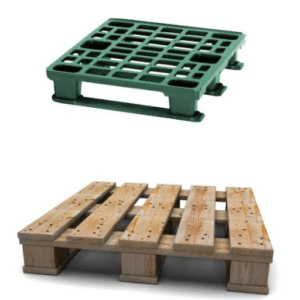
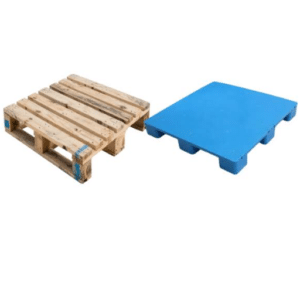
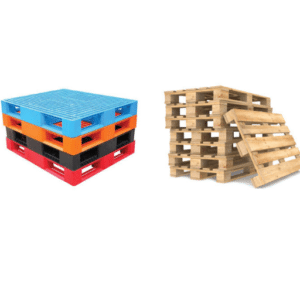
Eco-friendly plastic pallets can be the lowest-carbon choice in your supply chain, but only when four things line up: recycled feedstock, a long reuse life, a real closed-loop recovery program, and a logistics network that fits the pallet. Miss any one of those, and a “green” pallet can quietly carry a bigger footprint than the wooden one it replaced.
That is the part most supplier blogs leave out. If you have searched for eco-friendly plastic pallets, you have probably seen two confident claims repeated until they sound like facts: that plastic is always the sustainable option, and that wood is always the wasteful one. The life-cycle data says something more useful, and more honest. The material matters far less than how the pallet is made, how many times it circulates, and what happens to it at the end.
Here is what this guide gives you: the actual numbers from peer-reviewed life-cycle assessments (LCAs), a clear framework for when recycled plastic pallets beat wood and when they do not, and a buyer’s checklist you can hand straight to your procurement team. No greenwash. No “best in the market.” Just the evidence you need to defend your next pallet decision, to your finance team and to your sustainability lead.
Key Takeaways
- Virgin plastic pallets are rarely the eco-friendly choice. Their cradle-to-gate footprint runs roughly 30 to 62 kg CO2-equivalent, versus about 5 kg for a wooden pallet. Recycled feedstock is the swing factor.
- Recycled plastic pallets win on longevity. They average 100 to 250+ trips against 5 to 15 for wood, which can cut cumulative carbon by up to 80% in high-return, closed-loop systems.
- One-way, low-return shipping usually favors wood. Closed-loop, hygiene-critical, automated, or export operations usually favor recycled plastic.
- Your logistics network is a hidden carbon lever. Extending backhaul routes by 500 km can raise life-cycle global-warming potential by 15 to 22%, often outweighing the material choice.
- Proof beats claims. Ask every supplier for recycled-content percentage, third-party certification, and a written take-back or buy-back program before you sign.
What Actually Makes a Plastic Pallet Eco-Friendly?

An eco-friendly plastic pallet is one made mostly from recycled plastic (typically post-consumer or post-industrial HDPE or PP), built to survive 100 or more trips, and backed by a program that collects, regrinds, and remolds it into a new pallet at end of life. The sustainability is not in the resin. It is engineered through recycled content, durability, and closed-loop recovery.
Four levers decide the real footprint, and none of them is a marketing slogan:
- Recycled content. Pallets molded from recycled HDPE or PP divert plastic from landfill and avoid the energy cost of virgin resin. This is the single biggest lever.
- Service life. A pallet rated for 200 trips spreads its manufacturing footprint across 200 journeys. A 6-trip wooden pallet has to be replaced, and remanufactured, far more often.
- Recovery at end of life. A recyclable pallet only helps if it actually comes back. Closed-loop take-back is what turns “recyclable” into “recycled.”
- Logistics fit. Weight, nestability, and return distance decide whether the pallet saves fuel or burns it.
Get all four right and a recycled plastic pallet is hard to beat on carbon. Get them wrong and you have paid a premium for a heavier object with a higher embodied footprint.
This is exactly how we approach our full range of plastic pallets: sustainability is specified and documented, not assumed. Want recycled-content documentation for your next RFQ? Request it from our team and we will send material certifications with your quote.
Recycled Plastic Pallets vs. Wooden Pallets: A Life-Cycle Comparison
The fairest way to compare pallets is across the full life cycle, not at the factory gate. LCAs split a pallet’s footprint into three phases: cradle-to-gate production, the use phase (every trip it carries), and end-of-life. Wood and recycled plastic win in different phases, which is why the honest answer to “are plastic pallets eco-friendly?” is “it depends on your operation.”
Cradle-to-gate: where wood usually wins
Per pallet produced, wood has a clear advantage. A wooden pallet’s cradle-to-gate footprint sits near 5 kg CO2-equivalent, and can even register as carbon-negative when the biogenic carbon stored in the timber is credited. A virgin HDPE or PP pallet lands closer to 30 to 62 kg CO2-equivalent because resin and molding are energy-intensive, according to data summarized by the Sustainable Pallet Association and multiple LCAs. On a pure per-unit basis, an Iowa State University LCA found wooden pallets carry a 71.8 to 80.3% lower life-cycle carbon footprint than plastic on a one-trip basis.
That is a real win for wood, and pretending otherwise would be dishonest.
Use phase and longevity: where recycled plastic pulls ahead
The picture flips once you count trips. Recycled plastic pallets routinely deliver 100 to 250+ round trips, while wood averages 5 to 15, according to ProStack and industry pooling data. Each replacement wooden pallet means new timber, new transport, and new manufacturing energy. One analysis cited by All Green Pallets found that, across 1,000 trips, a recycled plastic pallet generated roughly 80% less cumulative carbon than wood once replacements and freight were counted. Longevity amortizes the higher manufacturing footprint until it barely registers per trip.
End of life: recyclable is not the same as recycled
Wood has a genuine strength here: roughly 95% of U.S. wooden pallets are recovered, repaired, or recycled, often into mulch or biomass fuel, per the Pallet Foundation. Plastic is technically 100% recyclable into new pallets, but real-world recovery is far lower without a take-back program, and low-grade mixed plastic often ends up landfilled. The lesson is simple. Circularity is a system, not a material property.
| Life-cycle factor | Wooden pallet | Virgin plastic pallet | Recycled plastic pallet |
|---|---|---|---|
| Cradle-to-gate CO2-eq | ~5 kg (can be negative) | ~30 to 62 kg | Lower than virgin; varies by recycled % |
| Typical trips | 5 to 15 | 100 to 250+ | 100 to 250+ |
| End-of-life recovery | ~95% (US), repair/reuse/mulch | 100% recyclable, low real-world recovery | 100% recyclable with take-back |
| ISPM-15 treatment | Required for export | Exempt | Exempt |
| Best-fit operation | One-way, low-return | Closed-loop, hygiene-critical | Closed-loop, export, automated |
A 2020 Environmental Resource Management study, cited via Inbound Logistics, reached the practical conclusion: in a high-return pooling system, recycled-content plastic pallets showed significantly lower environmental impact than pooled multi-use wood. The functional unit, one trip versus one thousand, decides the winner.
Mini-story: the closed-loop that paid for itself. When Sarah, procurement lead at a Midwest beverage distributor, audited her pallet spend in early 2025, she expected the cheap wooden pallets to win. They did, on unit price. But her team was reordering replacements every quarter and scrapping damaged stock after roughly eight trips. She moved two closed-loop DC lanes to recycled HDPE pallets with a buy-back agreement. Twelve months later, replacement orders had dropped by more than half, and her sustainability report could finally show a lower carbon-per-trip figure, not just a lower invoice. The pallet did not change. The system around it did.
Ready to compare carbon-per-trip on your own lanes? Get a custom assessment built around your routes, volumes, and return rates.
How Recycled Plastic Pallets Are Made

Understanding the process makes the recycled-content claim concrete, and it helps you ask sharper questions when a supplier says “eco-friendly.” A recycled HDPE or PP pallet typically moves through six stages:
- Collection. Post-consumer and post-industrial plastic, everything from used containers to production scrap, is gathered and consolidated.
- Sorting and washing. Material is separated by polymer type and cleaned to remove labels, residue, and contaminants that would weaken the final product.
- Regrind and pelletizing. Cleaned plastic is shredded into flake, then melted and extruded into uniform pellets ready for molding.
- Molding. Pellets are formed into pallets through injection or compression molding, with options for custom dimensions, colors, and branding.
- Quality control. Load capacity, dimensional stability, and hygiene are tested against specification before shipment.
- End-of-life take-back. Damaged or retired pallets return to the start of the loop, reground into feedstock for the next generation.
One important exception: food, pharmaceutical, and FDA-regulated applications sometimes require virgin HDPE for compliance and traceability. The material choice between HDPE and PP also affects stiffness, temperature tolerance, and chemical resistance, which is why our HDPE vs. polypropylene material guide is worth reading before you specify. The sustainable answer is still recycled wherever the application allows, with virgin resin reserved for the grades that genuinely require it.
The Hidden Carbon Lever Nobody Mentions: Your Logistics Network
Here is the finding most pallet articles skip entirely: the way you move pallets can matter more than what they are made of. A 2026 review from UCL on the circularity of global pallet systems found that extending reverse-logistics backhaul routes by 500 km can raise cradle-to-grave global-warming potential by 15 to 22%. Empty returns and long backhauls quietly erase the carbon savings you thought the material was buying.
There is also a weight debate worth settling honestly. Lightweight nestable plastic pallets can be up to 30% lighter than wood, cutting fuel on loaded legs. But heavy-duty rackable plastic pallets can weigh 30 to 50% more than a comparable wooden pallet, which raises fuel use on both loaded and empty-return legs. The UCL authors flag this explicitly: pallet class, not just pallet material, drives the transport penalty. Matching the pallet to the duty is the whole game.
Three design moves protect your carbon savings:
- Shorten the loop. The closer your recovery and remanufacturing are to your operation, the less the backhaul tax eats your gains.
- Choose the right class. Nestable lightweights for one-way export and tight freight costs; rackable heavy-duty only where racking loads demand it.
- Decide on pooling versus ownership. Rental and pooling models, where a provider collects, repairs, and reintegrates pallets, can push reuse and recovery rates far higher than buy-and-forget purchasing.
Real networks prove the point. Q-Pall and Tetra Pak built a closed loop in 2025 using pallets made from 100% recycled plastic, increasingly from PolyAl recovered from beverage cartons, fully recyclable at end of life. Japan’s PALENET system collects damaged rental pallets, crushes and remanufactures them, and targets a 99% recycling rate across more than 20,000 pallets a year. These outcomes are engineered by network design, the same thinking behind the global logistics trends shaping 2026.
Eco-Friendly Plastic Pallets for Export, Food, and Regulated Supply Chains
For international and regulated operations, recycled plastic pallets carry advantages that never show up in a simple carbon-per-pallet comparison, starting with a rule every exporter knows.
ISPM-15 exemption
Wooden pallets crossing borders must meet ISPM-15 phytosanitary rules, which means heat treatment (about 12.69 kg CO2-equivalent per pallet) or methyl-bromide fumigation (about 15.95 kg CO2-equivalent), plus the delays and paperwork that come with them. Plastic pallets are exempt. For a manufacturer shipping to the 108 countries Lile serves, that exemption removes both a carbon cost and a customs bottleneck on every single export pallet.
Hygiene and product protection
Plastic is non-porous and dimensionally stable, so it does not absorb moisture, harbor pests, or shed splinters into cartons. In food, beverage, and pharmaceutical supply chains, that translates into less product damage, fewer contamination holds, and less waste, all of which are indirect but very real sustainability wins. Recycled-content grades serve most of these lanes well, with virgin HDPE reserved for the strictest FDA or cleanroom requirements.
Regulation is now a procurement driver
Extended producer responsibility (EPR) rules and recycled-content mandates across the EU and markets like India are turning sustainability from a nice-to-have into a buying requirement. Procurement teams are increasingly scored on documented recycled content and end-of-life recovery, not just unit price. The wider shift toward circular, low-impact production is the same force reshaping sustainable manufacturing in China, and pallets are one of the easiest places to show measurable progress.
Mini-story: the export lane that cleared faster. The logistics team at a pharmaceutical exporter in Gujarat used to build a two-day buffer into every shipment for wooden-pallet fumigation and ISPM-15 stamps. After switching their highest-volume export lanes to recycled plastic pallets, the treatment step disappeared entirely. No fumigation queue, no methyl-bromide emissions, and one less reason for a container to miss its vessel. The sustainability team claimed the carbon win. The operations team claimed the schedule. Both were right.
How to Choose a Genuinely Eco-Friendly Plastic Pallet

Strip away the marketing and a defensible pallet decision comes down to a short checklist. Use it to compare suppliers on evidence, not adjectives, and to make sure the pallet you buy is eco-friendly in your actual operation, not just in a brochure.
- Recycled-content percentage and proof. Ask for the exact recycled percentage and third-party certification or material documentation. “Made with recycled materials” can mean 10% or 100%.
- A real closed-loop program. Confirm a written take-back, buy-back, or pooling agreement. Recyclable without recovery is a dead end.
- The right pallet class. Match nestable, rackable, or export designs to your loads and your loop. Do not pay for, or carry the weight of, a heavy-duty pallet you do not need.
- Total cost of ownership plus carbon-per-trip. Divide price and footprint by realistic trip count. A pallet that costs three times more but lasts thirty times longer is usually the cheaper and greener option.
- Supplier transparency and scale. Look for ISO 9001 quality systems, documented manufacturing capacity, and the ability to certify materials for regulated industries.
Mini-story: the unit-price trap. Marcus, a logistics director at a regional retailer, bought the lowest-cost plastic pallets he could find, which happened to be virgin-resin imports with no recovery program. On paper he had “gone green.” A year later his team could not document any recycled content for an EPR audit, damaged pallets went straight to landfill, and the heavier rackable design had nudged his freight costs up. He switched to a recycled-content pallet with a buy-back agreement and a lighter nestable spec for his one-way lanes. The new pallets cost more per unit and less per trip, and this time he could prove the footprint.
At Shandong Lile, we manufacture both virgin and recycled HDPE pallets from a 178,000-square-meter facility with 18 production lines and ISO 9001 quality control, and we provide recycled-content certification documentation with export orders. The goal is not to sell you the most expensive pallet. It is to specify the one that is genuinely lowest-impact for your lanes.
Conclusion: Eco-Friendly Is Engineered, Not Assumed
Eco-friendly plastic pallets are real, but they are not automatic. The LCAs are clear that virgin plastic carries a high manufacturing footprint, that wood often wins the one-way, low-return comparison, and that recycled plastic earns its advantage only through recycled content, long service life, closed-loop recovery, and a logistics network designed to capture all three.
Five things to remember:
- Recycled content is the swing factor. Virgin HDPE rarely qualifies as the eco-friendly choice.
- Longevity is the multiplier. 100 to 250+ trips amortize footprint until per-trip carbon collapses.
- Closed loop is the system. Recovery turns “recyclable” into “recycled.”
- Logistics geometry matters. Backhaul distance and pallet class can swing your result by 15 to 22%.
- Proof beats claims. Certification, take-back agreements, and carbon-per-trip data separate a real solution from a slogan.
Your next step is straightforward: map your lanes, separate the closed-loop and hygiene-critical routes from the one-way ones, and demand documentation from every supplier on your shortlist.
Request a quote with recycled-content certification → and tell us your routes, volumes, and return rates. We will model carbon-per-trip alongside cost-per-trip, so you can choose the pallet that is genuinely eco-friendly for your operation, and prove it to anyone who asks.