
Plastic pallets for food industry operations are the safest choice because their non-porous surfaces do not absorb moisture, bacteria, or odors. For food processors, dairies, meat packers, and cold chain operators, switching to food grade plastic pallets means cleaner facilities, simpler compliance with FDA and HACCP standards, and lower long-term costs.
But not every plastic pallet qualifies as food safe. The wrong material, design, or certification can turn a pallet into a liability rather than an asset. We’ve seen facilities spend thousands on plastic pallets only to discover their supplier used recycled resin that failed an FDA audit. That’s why this guide exists.
By the end of this article, you’ll know exactly what makes a plastic pallet food grade, which certifications your operation needs, how to integrate pallets into your HACCP plan, and why the right choice can cut your total cost of ownership by 40% or more over five years. For a broader overview of our pallet range, see our complete plastic pallet solutions.
Key Takeaways
- Food grade plastic pallets must use virgin HDPE or polypropylene and meet FDA 21 CFR or EU 1935/2004 standards, recycled resin is not suitable for direct food contact.
- The NCL found 10% of wooden pallets carried E. coli versus 1.4% of plastic pallets, making plastic the clear hygiene winner for food operations.
- Plastic pallets are exempt from ISPM 15 fumigation requirements, saving food exporters time and money on every international shipment.
- HDPE pallets perform reliably from -40 degrees C to +60 degrees C, making them ideal for frozen food logistics and cold chain operations.
- Over a 5-year lifecycle, plastic pallets typically cost 40-60% less than wood when you factor in replacement, sanitation, and compliance costs.
What Makes a Plastic Pallet Food Grade?
A food grade plastic pallet is not just a plastic pallet used near food. It is a pallet engineered, manufactured, and certified specifically for food contact applications. That distinction matters because auditors, and pathogens, do not forgive shortcuts.
Virgin Resin: The Non-Negotiable Starting Point
Food grade pallets must be molded from virgin high-density polyethylene (HDPE) or polypropylene (PP). Virgin resin means the plastic has never been used before. It contains no unknown contaminants, no residual chemicals from previous applications, and no degradation that could leach into food products.
Recycled HDPE might seem like the sustainable choice, and for general industrial use it often is. But for food contact, recycled content carries risk. The FDA explicitly states that recycled plastics must demonstrate the same safety profile as virgin materials. Most recyclers cannot meet that standard consistently.
At Shandong Lile, we produce food grade pallets exclusively from virgin HDPE and PP. Our resin certificates trace every batch back to its source. That gives our customers the documentation they need for audits.
Surface Design That Prevents Contamination
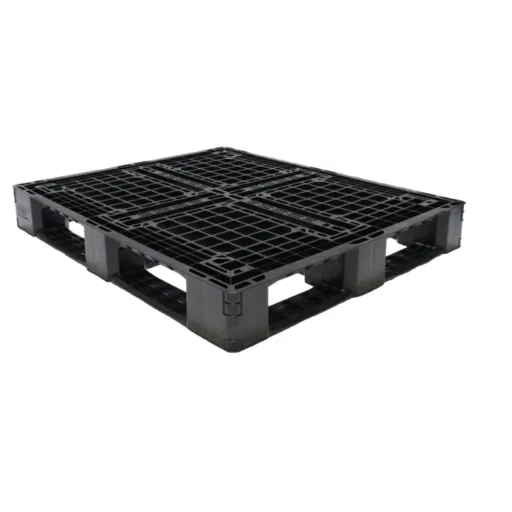
The surface of a food grade pallet is as important as its material. Smooth, seamless decks with rounded corners and minimal joints leave nowhere for food particles, moisture, or bacteria to hide. Solid-top designs are preferred over perforated decks for finished product contact. Any drainage channels must slope to prevent standing water after cleaning.
At our production facility, we use advanced injection molding to create single-piece pallet designs without screws, nails, or inserts. That matters because every fastener is a potential harborage point. Cracks and crevices give pathogens like Listeria monocytogenes a foothold on any plastic pallets for food industry use.
The Certifications That Matter
Different markets demand different proof. Here’s what your food grade pallets should carry, depending on where you operate:
| Certification | Region | What It Covers |
|---|---|---|
| FDA 21 CFR 177.1520 | United States | Olefin polymers safe for food contact |
| EU Regulation 1935/2004 | European Union | Materials safe for food contact |
| EU Regulation 10/2011 | European Union | Specific migration limits for plastics |
| HACCP | Global | Hazard analysis for food safety systems |
| ISO 22000 | Global | Food safety management systems |
| BRCGS | UK/Global | Brand reputation compliance for food |
Want to see how these certifications apply to your specific operation? Explore our hygienic pallet compliance guide for a detailed breakdown of FDA, EU, and HACCP requirements. For pharmaceutical applications with equally strict standards, see our pharmaceutical-grade pallet solutions.
Why Plastic Pallets for Food Industry Operations Outperform Wood
The shift from wood to plastic in food operations is not a trend, it is a response to data. When independent researchers test pallets in real-world conditions, the results tell a clear story.
The Wooden Pallet Contamination Problem
When comparing plastic pallets vs wooden pallets for food safety, the data is stark. In 2010, the National Consumers League collected samples from 140 used pallets across Houston and Miami. Their lab analysis revealed a disturbing pattern:
- E. coli: Found on 10% of wooden pallets versus 1.4% of plastic pallets
- Listeria: Present on 2.9% of wooden pallets, including the dangerous Listeria monocytogenes strain, zero plastic pallets tested positive
- General unsanitary conditions: Roughly one-third of wood pallets showed high aerobic plate counts indicating poor hygiene versus one-fifth of plastic pallets
Wood is porous. It absorbs moisture, food residue, chemicals, and pathogens deep into its grain. Even aggressive cleaning cannot reliably sanitize wood because bacteria embed themselves in cracks and fibers beyond reach. Wood also splinters, producing physical hazards that can puncture packaging and introduce foreign material into food.
“We switched from wood to plastic after a third-party audit flagged our pallet sanitation procedures as a critical risk. Our auditor told us something that stuck: ‘You can power-wash a plastic pallet until it shines. You can power-wash a wooden pallet until it looks clean. Those are not the same thing.'”
— Operations Director, Midwest Dairy Processor
The Hygiene Advantage of Non-Porous Surfaces
Plastic pallets do not absorb anything. Their non-porous surfaces prevent moisture, bacteria, and odors from penetrating the material. When contamination occurs, it stays on the surface where cleaning agents can reach it.
This property transforms sanitation from a guess into a process. Food facilities can establish validated Standard Operating Procedures (SOPs) with defined parameters: water temperature, detergent concentration, contact time, and drying protocols. ATP testing and microbiological swabbing can verify effectiveness with measurable, repeatable results.
ISPM 15 Exemption: A Hidden Export Advantage
For food companies shipping internationally, wooden pallets create an additional headache. The International Standards for Phytosanitary Measures No. 15 (ISPM 15) requires all wood packaging material to be heat-treated or fumigated to prevent pest spread. That means extra costs, delays at customs, and documentation requirements.
Plastic pallets are exempt from ISPM 15 entirely. They require no heat treatment, no fumigation, and no phytosanitary certificates. For a food exporter sending hundreds of shipments annually, that exemption means faster customs clearance, lower costs, and fewer rejected loads. This alone makes plastic pallets for food industry export operations a smarter choice than wood.
Material Selection: HDPE vs. Polypropylene for Food Applications
Not all food grade plastics perform the same way. The two dominant materials, HDPE and polypropylene, each bring distinct advantages to different food industry environments.
HDPE: The Workhorse of Food Logistics
High-density polyethylene is the most common material for hygienic plastic pallets, and for good reason. HDPE offers excellent impact resistance, low moisture absorption, and broad chemical compatibility with standard food sanitizers. It performs reliably across the temperature range most food facilities operate in.
At Shandong Lile, our standard food grade HDPE pallets operate from -40 degrees C to +60 degrees C. That range covers everything from blast freezer storage to ambient warehousing. For facilities running automated storage and retrieval systems (AS/RS), HDPE’s dimensional stability ensures pallets maintain their shape under repeated load cycles.
Polypropylene: When Heat Resistance Matters
Polypropylene handles higher temperatures than HDPE, typically up to 100 degrees C or more. That makes PP the better choice for applications involving hot fill products, steam sterilization, or autoclave processing. PP is also slightly lighter than HDPE, which can reduce shipping weights in high-volume operations.
The trade-off? PP becomes brittle in extreme cold. For deep-freeze environments below -20 degrees C, HDPE is the safer choice. At temperatures approaching -30 degrees C or lower, standard PP can crack under impact, a risk no food facility should accept.
Color Coding for Zone Segregation
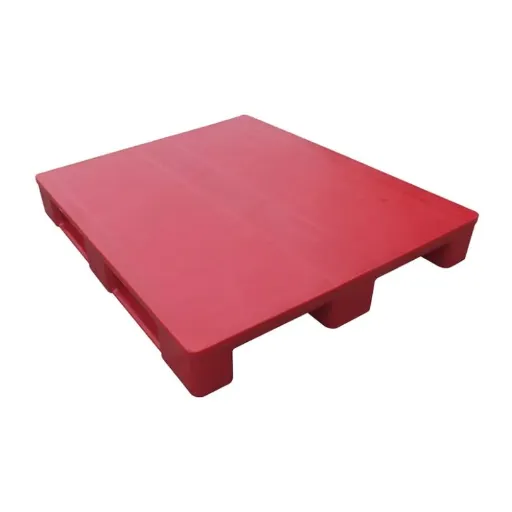
Beyond material choice, color is a powerful food safety tool. Many facilities use color-coded pallets to enforce zone segregation:
- Blue: Raw materials and ingredients
- White or natural: Finished products and ready-to-eat foods
- Red: High-risk or allergen-containing products
- Yellow: Quarantine or hold items
- Green: Produce and fresh vegetables
Shandong Lile offers custom color matching to Pantone standards, allowing facilities to implement zone control systems that are visually obvious and audit-friendly.
Cleaning and Sanitation Protocols for Food-Grade Plastic Pallets
Having the right pallet is only half the battle. Maintaining it through validated cleaning protocols is what turns a food grade pallet into a genuine food safety asset.
The Five-Step Cleaning SOP
A robust pallet sanitation procedure should follow these steps:
- Pre-rinse: Remove loose debris with ambient or warm water
- Detergent wash: Apply food-grade alkaline detergent at the manufacturer’s recommended concentration
- Mechanical action: Brush, pressure wash, or run through an automated tunnel washer
- Rinse: Thoroughly remove all detergent residue with clean water
- Sanitize: Apply food-grade disinfectant (peracetic acid is common for organic soils) at proper concentration and contact time
Validation: Proving It Works
Cleaning without validation is hope, not hygiene. Every food facility should establish baseline microbiological data and verify their cleaning SOP achieves measurable results:
- ATP bioluminescence testing: Provides rapid pass/fail results on surface cleanliness
- Aerobic plate counts: Quantifies total microbial load before and after cleaning
- Pathogen-specific testing: Targeted swabs for Listeria, Salmonella, and E. coli in high-risk zones
Validation should include at least three consecutive successful runs to confirm repeatability, followed by periodic verification sampling to catch process drift.
Zone Control and Pallet Dedication
The most effective food safety programs do not just clean pallets, they control where pallets go. Dedicating specific pallet colors or batches to specific zones prevents cross-contamination between raw and finished product areas.
“When Maria took over as QA manager at a poultry processing plant, she discovered the same wooden pallets moved from the raw receiving dock to the finished goods cooler without any cleaning in between. She implemented a color-coded plastic pallet system, red for raw, white for finished, and cut their microbiological failure rate by 80% in the first quarter. The audit findings went from ‘critical’ to ‘commendable’ in six months.”
— Food Safety Consultant, Southeast US
Need pallets designed for your specific sanitation workflow? Contact our team for custom food grade pallet solutions tailored to your facility’s HACCP plan.
Plastic Pallets in Cold Chain and Frozen Food Logistics
The cold chain is where plastic pallets for food industry applications prove their worth most dramatically. Freezers, blast chillers, and refrigerated warehouses create conditions that destroy wooden pallets and compromise food safety.
Temperature Performance You Can Count On
HDPE food grade pallets maintain structural integrity at temperatures as low as -50 degrees F (-45 degrees C). In practice, that means they perform reliably in:
- Blast freezers operating at -40 degrees C
- Deep cold storage at -30 degrees C
- Standard frozen warehouses at -18 degrees C
- Refrigerated docks and transfer areas at +2 to +4 degrees C
Wooden pallets, by contrast, absorb moisture and freeze solid. They warp, split, and become heavy with ice. Workers struggle to handle them. Automated systems jam.
The moisture absorbed into the wood also creates a persistent microbial risk. That risk remains even after the pallet thaws.
Moisture Resistance in Frozen Environments
Plastic does not absorb water. That single property solves multiple cold chain problems:
- No freeze-together stacking: Plastic pallets separate cleanly even after extended frozen storage
- No weight gain: Wood pallets can gain 15-20% of their weight in absorbed moisture, increasing freight costs
- No mold or mildew: Plastic surfaces resist the fungal growth that thrives on damp wood in temperature-fluctuating environments
- Consistent dimensions: Automated handling systems require pallets that maintain precise measurements; wood warps and swells, plastic does not
Airflow and Energy Efficiency
Ventilated plastic pallet designs allow chilled air to circulate around stacked products more effectively than solid wood decks. Better airflow means more uniform temperatures, faster pull-down times after door openings, and potentially lower energy consumption in refrigerated spaces.
For facilities handling high volumes of frozen food, that improved airflow can translate into measurable energy savings and reduced product temperature excursions.
Learn more about our cold storage pallet solutions designed for extreme temperature performance.
Applications by Food Sector
Different food sectors face different pallet challenges. Here’s how plastic pallets address the unique demands of each industry.
Dairy and Beverage
Dairy operations demand the highest hygiene standards because milk and dairy products are ideal growth media for bacteria. Smooth, solid-top plastic pallets prevent milk residue from pooling in deck openings. Their compatibility with caustic cleaning agents, standard in dairy sanitation, ensures they can withstand daily washdowns without degrading.
For beverage operations, plastic pallets’ consistent dimensions and weight make them ideal for high-speed automated lines. Their resistance to moisture prevents the warping and swelling that can jam conveyor systems.
Meat and Poultry Processing
Meat and poultry facilities operate under intense regulatory scrutiny. USDA inspectors expect documented sanitation procedures for all equipment that contacts product or product packaging. Plastic pallets support this requirement because their surfaces can be validated as clean through ATP and microbiological testing.
Color-coded systems are especially valuable here. Red pallets for raw meat areas, white for packaging and finished goods, create visual barriers that reinforce HACCP zone controls.
Fresh Produce and Agriculture
Produce pallets face unique challenges: field dirt, moisture from washing, and varying temperatures from field to cooler to distribution. Ventilated plastic pallets allow water to drain and air to circulate, preventing the anaerobic conditions that accelerate spoilage.
For organic produce operations, plastic pallets eliminate the risk of chemical cross-contamination from treated wooden pallets. That matters when organic certification auditors review your entire supply chain.
Bakery and Packaged Goods
Bakery pallets must handle flour dust, oil residue, and temperature variations from hot ovens to ambient storage. Plastic pallets’ non-stick surfaces clean more easily than wood, and their resistance to oils and fats prevents the degradation that affects wooden pallets in bakery environments.
Frozen Food and Seafood
Frozen food and seafood operations push pallets to their thermal limits. HDPE pallets designed for cold chain applications maintain impact resistance at temperatures where polypropylene becomes brittle and wood becomes fragile. For seafood exporters, the ISPM 15 exemption eliminates the fumigation delays that can spoil time-sensitive shipments.
Total Cost of Ownership: Plastic vs. Wood for Food Operations
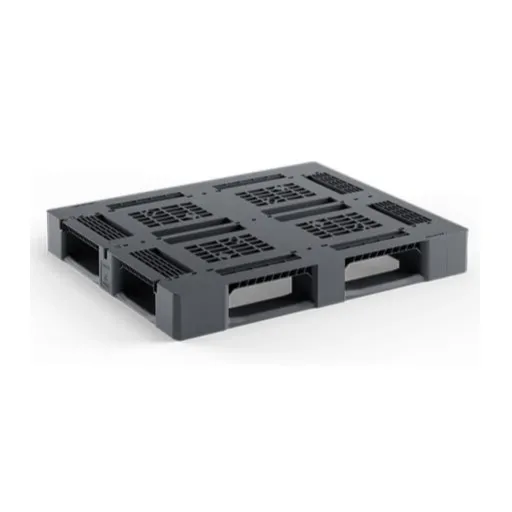
The upfront price of a plastic pallet is higher than wood. No one disputes that. But procurement decisions based on purchase price alone miss the majority of costs food facilities actually incur.
The Five-Year Math
Consider a medium-sized food processing facility using 1,000 pallets:
| Cost Factor | Wooden Pallets | Plastic Pallets |
|---|---|---|
| Initial purchase (1,000 units) | 7,000−7,000−10,000 | 40,000−40,000−70,000 |
| Average lifespan | 1-2 years | 5-10 years |
| Replacements needed (5 years) | 3-4 full sets | 0-0.5 sets |
| Sanitation labor (annual) | Higher (inconsistent results) | Lower (validated SOPs) |
| Product contamination incidents | More frequent | Rare |
| ISPM 15 compliance (exports) | $3-8 per pallet treatment | $0 |
| Disposal costs | Landfill fees | Recyclable (residual value) |
Over a five-year period, the total cost of ownership for plastic pallets for food industry use typically runs 40-60% lower than wood when all factors are included. The break-even point usually arrives between 18 and 30 months, depending on usage intensity and sanitation frequency.
Hidden Costs of Wooden Pallets in Food Operations
Beyond the obvious replacement costs, wooden pallets create expenses that do not show up on pallet purchase orders:
- Recalls and remediation: A single contamination incident traced to pallet sanitation failure can cost hundreds of thousands in product destruction, customer notifications, and regulatory response
- Line downtime: Warped or damaged wood pallets cause jams in automated systems, stopping production until cleared
- Worker injuries: Splinters, nail punctures, and strain from handling waterlogged wood increase workers’ compensation claims
- Audit failures: Third-party food safety audits (SQF, BRC, FSSC 22000) increasingly flag wooden pallets as material risks
The Sustainability Equation
Plastic pallets last 5-10 years and are 100% recyclable at end of life. A single plastic pallet can replace 10-20 wooden pallets over its lifespan, reducing total material consumption. At Shandong Lile, we use recyclable HDPE and PP, and we offer take-back programs for end-of-life pallets to close the material loop.
“Our finance team fought the switch to plastic for two years based on purchase price alone. Then we had a Listeria scare that cost us $180,000 in product destruction and a lost retail contract. When we finally ran the true five-year numbers, including sanitation labor, replacements, and risk, plastic was the cheaper option by a wide margin. We switched the following month.”
— Plant Manager, Frozen Food Manufacturer, Canada
Choosing Plastic Pallets for Food Industry: A Buyer’s Checklist
With so many options on the market, how do you select the right food grade pallet for your operation? Use this checklist to cut through marketing claims and focus on what matters.
Step 1: Define Your Application Requirements
Before contacting any supplier, document your needs:
- Static load: Maximum weight when stacked in storage
- Dynamic load: Maximum weight during transport
- Racking load: Maximum weight when stored in pallet racking
- Temperature range: Minimum and maximum operating temperatures
- Frequency of use: Single-trip, limited reuse, or closed-loop
- Handling method: Forklift, pallet jack, AS/RS, or manual
Step 2: Verify Material and Compliance Documentation
Request and review these documents from any supplier:
- Resin certificates: Confirming virgin HDPE or PP from a certified source
- FDA or EU compliance declarations: Matching your target market requirements
- Migration test reports: Proving no chemical leaching under intended use conditions
- ISO 8611 performance data: Load capacity and durability test results
Step 3: Match Design to Your Facility
| Pallet Type | Best For | Key Feature |
|---|---|---|
| Rackable | Warehouse storage in pallet racking | Reinforced edges for racking loads |
| Nestable | Space-saving when empty | Stack inside each other to reduce storage volume |
| Stackable | High stack stability | Full perimeter base for stable stacking |
| Solid deck | Finished product contact | Smooth, continuous top surface |
| Ventilated | Produce and drainage needs | Open deck for air and water flow |
Step 4: Plan for Cleaning and Maintenance
Evaluate how the pallet design supports your sanitation program:
- Are corners rounded for easy wiping?
- Does the deck slope to prevent standing water?
- Are there dirt-trap-free recesses?
- Can the pallet withstand your cleaning chemicals and temperatures?
Step 5: Consider Customization for Your Workflow
Off-the-shelf pallets work for many applications, but custom solutions often deliver better ROI. At Shandong Lile, we design and manufacture custom food grade pallets with:
- Custom dimensions to match your product footprints and racking systems
- Color coding to support your zone segregation program
- Logo and branding for traceability and theft deterrence
- RFID integration for automated tracking and recall support
- Steel reinforcement for ultra-heavy loads in concentrated racking
Ready to specify the perfect food grade pallet for your operation? Request a custom quote from our engineering team. We’ll review your requirements, recommend the optimal design, and provide samples for evaluation.
Conclusion
The pallet beneath your product is not packaging, it is a critical control point. For food processors, the choice between wood and plastic is no longer a matter of preference. It is a matter of compliance, safety, and economics.
Plastic pallets for food industry operations deliver what wooden pallets cannot: verifiable hygiene, consistent performance across temperature extremes, exemption from international shipping restrictions, and a total cost of ownership that improves with every year of use. The data from independent testing, the requirements of global regulators, and the experience of thousands of food facilities all point in the same direction.
At Shandong Lile, we have spent over 14 years engineering plastic pallet solutions for industries where failure is not an option. Our food grade pallets are manufactured from virgin HDPE and PP, certified for FDA and EU compliance, and customized to meet the specific demands of your operation. With 16 subsidiaries and a presence in 108 countries, we bring global expertise to every pallet we produce.
Your food safety challenges are our challenges. Contact our team today for a consultation, and let’s build a pallet solution that protects your products, your reputation, and your bottom line.