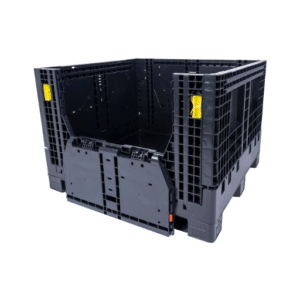
Introduction to Plastic Pallet Load Capacities

Plastic pallets’ load capacity gives us an idea of how much weight a pallet will hold when placed under different conditions. It is subdivided into three categories: static, dynamic, and racking. The static load simply means the weight that you can improve a pallet while it is resting on a flat surface. A dynamic load is the maximum weight a pallet can carry when it is being moved, such as by a forklift, for example. The racking load explains the maximum weight a pallet is able to bear whenever it is placed on a rack without any support from below. After all, knowing these differences helps you make the right choice of pallet depending on the operations performed, ensuring that handling and storage of materials are carried out most safely and efficiently.
Static Load
The weight a pallet can bear while resting on a flat, solid surface. Essential for long-term storage applications.
Dynamic Load
The maximum weight a pallet can carry while being moved — such as by a forklift or conveyor belt.
Racking Load
The weight a pallet can bear when suspended in a rack with no support from below.
Importance of Understanding Plastic Pallet Weight Capacity
It is imperative to comprehensively assess the load capacity of plastic pallets in order to promote users’ safety, increase efficiencies, and avoid premature wear and tear of both pallets and goods supported. This will lead to conditions when the recommended weight capacity is surpassed, causing structural damage to the pallets, distortion of products, and even danger to the workers. Also, identifying precisely the kind of load, whether in static, dynamic, or racking condition, that is applicable, enhances the storage optimization process and cost savings by means of the elimination of any damages that might occur to the pallets or goods kept in them.
Static load capacity is an important factor more in the case of long-term storage applications; however, to store goods that are regularly mobilized or stored at higher levels, dynamic and racking capacities become core elements. Choosing a pallet of a certain specification, it allows for better application. Besides, the load-bearing capacities of plastic pallets can differ because they are made of different materials and construction designs, which is a major consideration when looking at plastic pallets’ load capacity for a given task. Considering design for weights enables efficient processes of storage and/or transport, creates equilibrium within the business system, and also impacts the well-being of employees.
Operational Safety and Efficiency Considerations
Proper administration of plastic pallet load capacity involves adherence to basic rules of safety and operation. Before anything else, consider how the weight is distributed in the pallet; otherwise, the pallet may collapse under the weight of the load during handling or transportation. It is not encouraged to place the load in one section of the pallet as it will be subjected to high stresses, which will cause it to warp and create a hazard of breakages. As a second point, provide an opportunity for the storage machinery, whether it is a forklift or any other kind of robot, to work with the pallet, so that this machinery can reduce its downtime as a result of being unable to fit between the changed equipment.
Follow-up testing was conducted in all load capacity cases, and the test fittings provided, which failed within the expected load range, were identified. Regular proper maintenance and periodic inspections should be undertaken to identify any damage or wear that may compromise the quality and wear resistance of such loaded wooden plastic pallets and materials. The company must find such a solution because of its chemical and temperature considerations, rather than the company using this very incendiary environment. Given these measures, the employees must undergo extensive training on how to use and safely store pallets. All these help in the improvement of work practices, reducing expenses, and improving a place of work environment.
Defining Load Capacities

Load capacities, expressed in units of weight, indicate the threshold beyond which pallets collapse or deform. In ascribing load capacities, the following three elements must be addressed:
- 1
Static Load Capacity
This is how much weight the pallet will take without the risk of structural damage when it is left on a flat, solid surface. It is necessary for the case where pallets have to be nested or stacked for storage. - 2
Dynamic Load Capacity
This indicates the weight-bearing capacity of the pallet and any material transported by it. It finds application when active handling processes are undertaken. - 3
Racking Load Capacity
This refers to the weight that can be borne by the pallet after it is suspended in a rack under load. This capacity depends strongly on the placement and construction of the rack and also on the manner of support.
Proper evaluation, however, requires extensive empirical testing in situ as per the industry norms and standards, as well as the type of material, design, construction, and environmental conditions. Meeting all these standards reduces the risk during operations and encourages safe practices in handling materials.
Each Load Capacity Type — Explained in Detail
Static Load Capacity Explained
Static load rating is the limit to the load a pallet can handle while simply standing on a hard level surface. This load rating is dependent on the load-bearing material of the pallet, design and build quality of the pallet in terms of blocks, constraints, and/or different regions of the pallet, and outlets or channels. Standards like ISO (International Organization for Standardization) and ASTM International (American Society for Testing and Materials) outline ways of determining and categorizing the Arithmetic Average plastic pallet load capacity.
Certain factors affect the capacity to withstand static loads, which are namely uniformity of load on the pallet, tendency towards bending, and climatic conditions such as heat or moisture where the pallet is to be used. Testing is usually conducted in the laboratory under simulated conditions, which means loading of the pallet under particular extreme loads to determine if it can be operated within the safety limits. These aspects help organizations in designing their storage systems according to the design limitations and to prevent any damage cases.
Dynamic Load Capacity Explained
The dynamic load capacity is defined as the weight that can be carried by the pallet when it is being transported on moving equipment, such as forklifts and conveyor belts, among others. Several factors contribute to this capacity, including the material type of the pallet design of the pallet, and also the positioning of the load on the surface of the pallet. It must be noted that simple motion is not the only type of movement, and shocks or force imbalance while loading or transporting also play a major role in the stability of the loads.
Such standardized tests are used in assessing the dynamic load capacity as they reproduce the actual working conditions, which facilitate the determination of the expected capacities of various products. These standardized tests involve determining the pallet’s resistance to forces of vibration, acceleration, and oscillations without damaging or distorting the structure of the pallet. It is important to understand that the dynamic capacities of various materials, such as wood, plastic, or metal, are very different, and an appropriate type of pallet must be selected for a given purpose for this reason and others.
The optimization of the dynamic load capacity of any material handling equipment allows for the safe transport of materials, reduces the potential for damage to products, and lowers equipment downtime. In this case, businesses should consider the distribution of the load on the plastic pallets’ load capacity limits, check the integrity of the pallets through regular inspection, and follow the manufacturer’s recommendations to help ensure continued use under dynamic conditions.
Racking Load Capacity Explained
Racking load capacity – generally, the amount of weight on a single plastic pallet that can withstand without stacking – is a function of several elements. These include the material the plastic pallets are made of, the construction and shape of the pallets, the size of the units, the location of the weight, and the condition of the racking onto which the pallet is placed. Loads that have to be transported on a rack for an extended period of time usually have to be supported by stronger materials because this is not only about lifting a certain weight, but also if it is put in a skew manner, wherein other parts either tension or compress.
In order to understand the load-bearing capacity of the racking system, it is important to perform all the tests in accordance with the manufacturer’s directions and guidelines. This entails conducting overhead visual checks for the reason that both the pallets and racks require scheduled checks for deterioration, breakage, and, even more importantly, distortions that would render the structure invalid. More to that, correct loading involves placing the load symmetrically so as to maintain the balance and loading up without excess or overhanging weight, which results in overstressing the system and increased hazards.
Various pallet composition timber, plastic, or metal, have different limits to carry under pressure in a racking system determined by their features. Whereas plastic pallets than plastic pallets tend to have more built-in reinforced structures, plastic pallets’ load capacity is often increased in racking by metal ones because of their strength. All organizations must check whether the pallets will work within the racks, satisfying the safe work practices and processes.
Key Factors Influencing Plastic Pallet Weight Capacities

Material Make-Up
The choice of a plastic, for instance, high-density polyethylene (HDPE) or polypropylene (PP), is paramount in enhancing the strength and durability. HDPE is amongst the popular choices when strength and load-bearing are important parameters.
Shape or Structure
This includes the use of reinforced beams, ribs, or a molded deck, among others, all of which serve to improve the load distribution on the pallet as well as the weight each pallet can comfortably carry.
The Purpose
Pallets destined to statically carried loads will hold more weight than those meant for dynamic loads. Similarly, some pallets meant for racking may be reinforced to accommodate relatively higher loads when racked.
How the Weight is Laid
The simple case where all the weights and their centers are altered to fit among the load capacities of many plastic pallets. Suboptimal load distribution leads to a higher risk of pallet failure as well as deterioration of the capacity.
Environmental Conditions
The temperature and humidity levels affect how flexible and effective plastic is. At extreme temperature ranges, the structures become weak and therefore their weight-carrying capacity is adversely affected.
Material Types and Their Impact on Capacity
Plastic pallets, load capacity, longevity, and perfectly safe performance under different conditions. Depending on the aim of the pallet, such materials are as follows:
| Material | Key Strengths | Limitations | Best Use |
|---|---|---|---|
| HDPE | High impact resistance, temperature-stable, durable | Higher cost than standard options | Static & dynamic heavy loads |
| Polypropylene (PP) | Superior rigidity, chemical & temperature resistance | Lower impact strength than HDPE | Load-bearing, chemical environments |
| Recycled Plastics | Eco-friendly, lower cost | Strength depends on recycled material quality | Light-to-medium loads, sustainability goals |
| Metal-Reinforced Plastic | Significantly higher load capacity & lifespan | Heavier, higher cost | High-weight, extreme-use environments |
Selecting a material for a given operation depends on various factors such as the size of the load, the environment, and the cost, as each type of material comes with its own set of benefits and drawbacks.
Temperature Effects on Plastic Pallets
Due to the nature of some materials, the plastic pallets’ load capacity can vary with temperature. At high temperatures, some plastics like HDPE and PP may become soft, warp, sag, or even change their shape under heavy loads. Cold, in turn, makes plastic brittle and vulnerable to breaking apart if hit by a force. Most plastic pallets tend to respond to temperature based on their plastic composition, and some of them can be reinforced to resist these changes. This is necessary for areas with unpredictable weather or rather postal temperatures when more robust than ordinary pallets are used, and such pallets need to be tested for safe usage in these temperature ranges.
Understanding Load Distribution for Optimal Use
Appropriate allocation of a load is crucial for enhancing the stability as well as the working potential of pallets. Load allocation refers to the art of spreading the mass on a given surface of a pallet, which has a tremendous effect on the effectiveness of such a pallet. Where load weight is evenly distributed, there is no risk of having stresses concentrated in some parts, which would fail the other parts or the entire pallet.
Considering the effect of a pallet’s geometry and construction on its ability to help distribute the load is equally important as the design of the load itself. A box that has reinforcing beams or lateral members will accept a lot, because it is designed to accommodate uneven distribution of mass within its confines. Hence, the center of mass plays an essential role in facilitating the usage of a pallet whose properties will accommodate all stresses without tipping. For instance, in the context of availability, stringer pallets, block pallets, plastic pallets, and wooden or steel pallets, the initial focus is on the weight and size of the objects. There are also some tests, like ISO 8611, that can be useful for understanding certain load conditions for using specific pallets or when dealing with the plastic pallets’ load capacity.
All aspects of applying forces, be it vertical or horizontal, and carrying out forward movement need to be considered — especially with industries that deal with variable loads, for instance, shipping or automated handling systems. The method of properly stacking using the basic tools, as well as some additional hardware such as a strap or wrapping, significantly improves the load stability. These practical guidelines benefit organizations as they help minimize the risk, damage to the goods, and, most importantly, preserve the use of the pallets for a longer period.
Industry Standards and Safety Certifications for Plastic Pallets

Essentially, each standard is clearly established in the specific industry class of plastic pallets to cover the available performance, safety, and agreement standards. For instance, International Organization for Standardization Industry (Manufacture) 8611 stipulates test skills in terms of loading strength, reshaping, and excretion of stacks. In addition, pallets utilized in food as well as pharmaceutical production must be legally binding under the jurisdiction of the FDA or other region equivalent authority since all materials have to be safe and clean.
Such safety in construction can be extended to construction components that also require fireproofing, together with holding UL 2335 and FM Approval 4996 certification, where necessary. Also, a producer should aim at conformance to environmental design objectives such as those that will contribute towards recyclability and sustainability. By acquiring such plastic pallets that can meet these requirements, the company maximizes its level of within regulations and curbs expenses with regard to operational safety and efficiency.
Overview of Key Industry Standards
The choice of plastic pallets requires a firm grasp of the applicable standards in the industry, as well as compliance, safety, and efficiency considerations. Some of the most pertinent certifications include:
ISO Standards
ISO 8611 offers comprehensive testing techniques to establish plastic pallets’ load capacity and endurance of such products under static, dynamic loadings, and racking loadings.
Clean Maintenance Standards
For plastic pallets intended for use in food and pharmaceuticals, FDA Materials in contact with food and drugs must be used. Manufacturers doing business in Europe should also comply with the EU 1935/2004 regulation.
Fire Protection Standards
The UL 2335 and FM Approval 4996 are the primary standards governing loss from fire hazards. These resources lower the combustible nature of the pallets, making it possible to store them in highly flammable environments safely.
Environmental Standards
Products sought after often carry certification marks like UL Environment product certifications or participation in the Design for the Environment (DFe) program, which exhibits sustainability principles such as recyclability and non-contaminating materials.
In fulfilling such standards, plus those aimed at increasing safety and those promoting ethics, companies ensure that the plastic pallets do not fall below the regulatory load capacity of the pallets.
Importance of Safety Certifications
For any industry, it is necessary that the safety certifications in their materials, products, and processes are obtained only if these heightened modern thresholds do not guarantee usage on any occasion and in any region. Certifications, like being ledger compliant with OSHA, meeting ISO 45001 requirements in regard to occupational health and safety management, or with ANSI standards, are periodic ways to prevent courses of occupational accidents and material failures. These certifications are indispensable and confer a systematic process for the hazard analysis, the corrective action, and the monitoring of compliance over time. For firms, it is necessary to adopt safety certifications because, besides employee and customer protection, there is an enhancement of confidence, vulnerability to lawsuits is mitigated, and reputation is improved through the exhibition of high safety and quality standards.
Choosing the Right Type of Plastic Pallet

When selecting the ideal plastic pallets, it is important to understand the relevant aspects of the application. Factors such as load capacity, which refers to the ability of the pallet to carry a given static or dynamic weight, and storage compatibility through shelving or automation compatibility. It is also important to take into account the type of material because, for instance, HDPE or PP pallets consist of varying ranges of strength and impact resistance, as well as resistance to chemicals. Furthermore, weighs up the appropriateness of some of these rationalization features, such as solid deck, airflow in the design, and the nestable structure. Knowing these factors helps one to consciously make decisions on the type of pallet to adapt in order to achieve the utmost productivity and safety in the most cost-effective way.
Heavy-Duty Plastic Pallets vs. Standard Plastic Pallets
🏋️ Heavy-Duty Plastic Pallets
- Designed to withstand static and dynamic loads over 5,000 lbs
- Suitable for shipping industry and companies operating machine equipment
- Composite structures made from advanced plastics such as HDPE
- Resistant to aggressive wear and tear and/or environmental conditions for long periods
📦 Standard Plastic Pallets
- For holding average loads without any specific application in mind
- Less expensive; used more in retail or food distribution sectors
- Can often be stacked or nested for efficient storage
- Lightweight partitions designed for long exposure without damage
In the end, it is important to make a choice between heavy-duty and standard plastic pallets based on the load capacity, the frequency of reformed plastic pallets for reuse, the operational environment, and expectations as well. Every firm needs to tailor its pallets to these criteria so that safety and cost-effective supply chains are guaranteed to be optimally achieved.
Understanding Rackable vs. Nestable Plastic Pallets
| Feature | Rackable Pallets | Nestable Pallets |
|---|---|---|
| Primary Purpose | Long-term rack storage at height | Space-saving during storage & transport |
| Load Capacity | High — enhanced base for heavy loads | Moderate — optimized for light returns |
| Space Efficiency | Takes more storage space when empty | Fit into one another — reduces empty space |
| Best For | Warehouse rack systems, heavy-duty storage | Retail, export, return logistics |
Selecting Pallets Based on Industry Requirements
One of the most important things to bear in mind when choosing pallets is the requirements of operation, the products, and the storage system to avoid downtime.
- 🍔
Food & Pharmaceutical Industries: Plastic industry-specific pallets will work best, considering hygiene, waterproofness, and acceptance of both FDA and ISO standards. - 🏗️
Construction & Heavy-Duty Manufacturing: Wooden pallets would be preferred where heavy load capacities are required, and such pallets are ordinarily affordable. - 🤖
Automated Storage / Rack Systems: Rackable pallets will be the top preference for industries that employ automated storage or rack storage if they are looking for strength and compatibility. - 🛒
Retail & Export Processes: Nestable plastic pallets serve as the best option due to being light in design, easy to handle, and minimizing the return of freight when empty.
Efficiency, cost-effectiveness, and operational excellence may be attained by matching the appropriateness of the pallets to the storage conditions, regulatory, and logistical requirements, as appropriate.
Summary: Key Takeaways
- The three pallet load capacities — static, dynamic, and racking — serve distinct operational roles and must be matched to the correct application.
- Material choice (HDPE, PP, recycled plastic, metal-reinforced) directly determines the strength, durability, and load performance of any pallet.
- Temperature and environmental conditions can significantly impact plastic pallet performance; reinforced pallets may be required in extreme conditions.
- Even load distribution is critical — concentrated weight increases pallet failure risk and reduces usable capacity.
- Compliance with standards such as ISO 8611, FDA regulations, UL 2335, FM Approval 4996, and environmental certifications ensures safety and regulatory alignment.
- Heavy-duty pallets suit high-load, intensive operations; standard pallets are cost-effective for lighter-duty applications.
- Rackable pallets are ideal for rack storage; nestable pallets save space and reduce return freight costs in retail and export contexts.
Reference Sources
Virginia Tech – Center for Packaging and Unit Load Design: How Much Load Can My Pallet Carry?
This white paper discusses the load-carrying capacity of pallets, including static and dynamic capacities.
VTechWorks – Virginia Tech Repository: How much load can my pallet carry?
A detailed academic resource explaining the factors influencing pallet load capacity and the methodologies used to determine it.
Frequently Asked Questions (FAQs)
How Much Weight Can Nestable Pallets Carry?
The weight that a nestable pallet can handle depends on the design of the pallets, the type of plastic used, and whether the load is static or dynamic. If a customer asks for static load capacity, it means the maximum weight of the loaded pallet in still condition. It is usually more compared to dynamic capacity, which is the weight of the fully loaded pallet while being lifted and moved by a forklift or pallet jack. There are many nestable pallets with a static capacity between 2,000 and 10,000 lb and a dynamic capacity of 1,000–4,000 lb; however, consult the pallet specifications to know the weight a particular pallet can hold. For optimum load stability, place loads evenly and avoid placing multiple heavy loads in one area unless that particular pallet is reinforced to handle the same.
What is the weight-carrying capacity of these pallets?
Load bearing capacity of pallets is the maximum weight a pallet is expected to bear, given specific circumstances. So, when you are wondering how much weight such or other pallets can hold, look at the manufacturer’s ratings in capacity, which include static, dynamic, and racking capacities of the pallet. Static capacity refers to situations where the pallet is at rest, dynamic capacity refers to situations where a forklift or a pallet jack is being used, and racking capacity refers to racking systems where a pallet is kept with support only to the edges. It is necessary to properly take into consideration the kind of weight that will be placed on the pallet (point loads versus distributed loads) and the material from which the pallet is constructed, namely, tough plastic or recycled plastic, in order to make the right choice of a heavy-duty pallet.
Does the weight of a load affect the loading capacity of plastic pallets?
How well a plastic pallet will perform under pressure greatly depends on where the load is concentrated. When building orders, it is common to think that the load is uniformly distributed across the pallet; however, if the centre of gravity of the weight is offset to one side, the radius of capacity is smaller, and thus there is a greater possibility of the pallet. It is the positioning of the weights inside a forklift or a pallet jack that matters, and once that is done, the weight is to be restrained. As far as storage racks are concerned, improper placement of load results in an increase in local pressure at the edges of the pallet, hence reducing the racking capacity. There is a need to think of solutions that incorporate including load bars to avoid unequal distribution of the load inside the package.
Are wood or plastic pallets preferable as regards their weight and load capacity?
The good thing with plastic pallets is that they offer a predictable maximum load capacity, are impervious to water and dirt, and are usually more long-lasting than their wooden counterparts. The same may not be true when it comes to static loading capacity for some wood pallets, but all plastic pallets are engineered to perform as expected, are easy to wash, and are free of sharp splinters or metallic parts. Therefore, if the application requires a clean room or chemical resistance or certain capacity numbers in environments like engagement of food, pharmaceutical, or even fast-moving warehousing, plastic pallets will most likely be the appropriate pallets for use. Make a choice depending on the load weight, the load carrying capacity that is needed, and other Oother factors such as whether it will be a forklift or a pallet jack.
When choosing a pallet, what equipment limits should be considered?
In determining the most appropriate pallet usage, it is important to consider these durability levels in terms of handling capability; static load (meaning weight supported by the pallet while stationery), dynamic load (the amount of weight in motion especially when being lifted with the help of a forklift or pallet jack), and racking load (the weight in question is placed on the edge of the shelf). Learn about load limits specific to occupations and tasks, manufacturer’s load specifications on a pallet, and environmental conditions – if any – that will come into play. Correct assessment of these ratings will aid in identifying the number of objects that can be stacked on each pallet without exceeding the limit, help in deciding whether to use plastic pallets, steel frame rack or space-saving pallets.
How do I work out the weight capacity of a pallet used for the purpose of transporting goods in my facility?
To assess the amount of weight a pallet can hold safely, one must first evaluate the loading rated capacities of the static, dynamic, and racking conditions of the particular pallet. Identifying load conditions, whether they will be free-standing, moved with a forklift or pallet jack, or stored, ensures that they are stored on racking. The weight of the product and its packaging is effectively calculated to find the load weight, and it is then ascertained that the weight does not exceed its rated capacity. Plan on load distribution—try to keep loads balanced as much as possible—and leave some weight buffer below the limit. More importantly, if rackable plastic pallets are used, also check the rack load capacity of the pallet and the rack to avert loads and ensure that the load does not collapse.