Modern distribution networks, including those that include air transportation demanding the utmost weight management, include imperative factors such as effective service delivery and cost control in their management systems.
Export-ready pallets that are lightweight have been developed and are revolutionizing the way goods are shipped without incurring additional costs or sacrificing any load strength. This study examines why and how these modern pallets are designed to, and do, lower transportation costs, increase efficiency, and encourage sustainable development in businesses.
In view of their structure, advantages, and uses, how best can firms manage these aspects and improve business performance, as well as alleviate burdens on the surroundings? We will decode only the importance of the application of lightweight pallets in the freight distribution, including the airline industry.
Understanding Lightweight Pallets
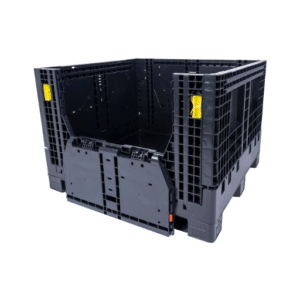
Specially designed platforms known as lightweight pallets are used to move and store aesthetic goods and counteract the weight of pallets by design without affecting the strength and abilities of the pallet. Such pallets are usually constructed from polymers like polyethylene, HDPE, and PP or compressed wood composite materials. These types of pallets are considerably lighter than traditional timber or steel pallets. The minimized weight cuts the carrying capacity of the transport as opposed to increasing the internal cargo, which helps reduce fuel burning and cargo rates but is not sacrificed in terms of rigidity for efficient, safe loading or delivery of goods. This ensures lightweight pallets in sectors whose processes are driven by cost reduction and environmental consciousness.
Definition of Lightweight Plastic Pallets
Lightweight pallets made of plastic are a new breed of engineered polymer platforms engineered for enhanced transport of goods. Generally, they are crafted with such strong plastics as high-density polyethylene (h.d.p.e) or polypropylene (p.p.). A typical feature of these pallets is that, unlike other types, i.e., wooden ones or steel ones, they weigh less.
Plastic pallets of low weight are specific for these environments because they do not absorb moisture, do not get infested with pests, and do not undergo chemicals without much damage. As a result, they have been seen in industries that deal with pharmaceuticals, food and beverages, and export shipping. Furthermore, their reusability and recyclability are in line with sustainable development goals that aim at an eventual decline of the carbon emissions associated with the transport of goods.
Materials Used in Lightweight Pallets
In most instances, lightweight pallets are made from heavy-duty polyethene and polymer syntheses, generally due to the material’s strength, safety, and multidimensional resilience. In the course of manufacturing these plastic components, the majority come from injection or compression molding methods, for the purpose of attaining high quality and reproducible designs. Furthermore, there is extensive use of post-consumer plastics in the making of these products, as it enhances the reusability cycle, without compromising on the structure itself. Furthermore, certain types of pallets may contain composites, such as plastics with variations or additions of fiberglass, which will perform better under load. The materials selected for compact pallets make sense in terms of cost, protecting the environment, and ensuring adherence to industry standard requirements.
Polypropylene (PP)
Recycled / Post-Consumer Plastics
Fiberglass Composites
Polymer Syntheses
Characteristics of Nestable Plastic Pallets
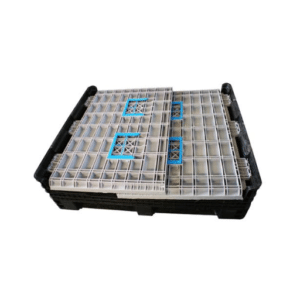
Make use of these plastic pallets that can be nested, for they were made to enhance storage and transportation efficiency. When not in use, these pallets can be nested into each other, reducing their overall volume and space required, much more than conventional pallets, almost by three-quarters, 75%. Therefore, especially in facilities that are infested with pallets that keep on rotating round and round, this advantage goes a long way in reducing freight charger costs and also enhances and expedites internal processes.
In order to make these pallets, most often HDPE or recycled plastics are used, which have a high density but lower weight as well as strength. However, it does not mean they are porous to moisture, chemicals, or temperature. Such types of pallets are conventionally lightweight pallets, yet they often withstand impressive weight, both static and dynamic, thereby enabling their use in harsh industrial conditions such as commerce including warehouses and exports.
Furthermore, these pallets decrease the time necessary for handling, thanks to a convenient and trustworthy design with most of them consisting of slip-resistant surfaces and integrated systems for accommodating different packaging sizes. Their adherence to international standards of health and safety, particularly for exports, encourages their use in the food processing, pharmaceuticals, and semiconductor industries.
Implementation of stackable, lightweight pallets implies operational improvement along with sustainability over the long term.
Comparing Lightweight Pallets to Traditional Wood Pallets

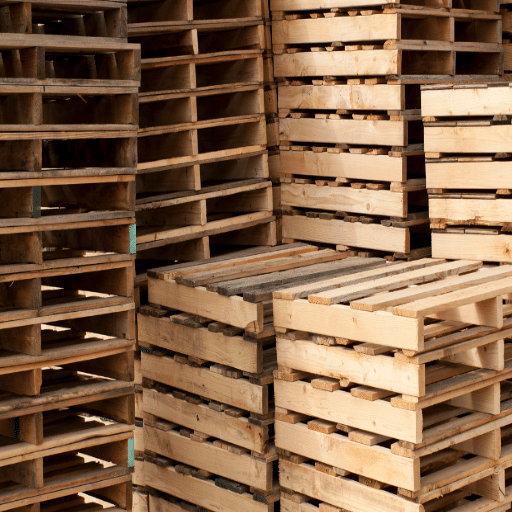
Conventional wood pallets are known to be inferior to innovative lightweight pallets in numerous ways. They do not get wet, can’t be eaten, and don’t splinter, which translates to less contamination of the goods being transported during shipment. Not only that, but also, due to their lighter weight, most of them can be picked up by hand without too much stress to the workers and without high shipping costs. Lightweight pallets can be reused and reprocessed, unlike those made of wood, thus enhancing environmental sustainability. More often than not, they do not require treatment as wood does, thus facilitating international shipping through achieving international standards. For these reasons, lightweight pallets are better where hygiene issues, cost-economy, and environmental protection are key.
Weight Differences and Shipping Implications
The importance of it is that shipping cost, on the other hand, is leveled up as carrier companies usually charge by weight for rates. For example, in reality, if a normal wooden pallet weighs ten kg, then the lightweight pallets would weigh about three kg. This would save a lot of expenses in terms of both funds and freight, both local and overseas. In addition to that, it conserves energy, which assists in meeting the supply chain’s greener mobility and carbon reduction strategies and objectives at the same time. There is also the disadvantage that their shape and light weight result in lower costs of handling because it does not require much effort in lifting them, thus reducing injury costs. All these benefits highlight the need for lightweight pallets in contemporary industries and their enhancement in logistics operations, particularly in cost efficiency.
Cost Analysis: Wood vs. Lightweight Plastic Pallets
One must look into various aspects when evaluating the expenses of wooden and lightweight plastic pallets; the most common cost considerations include purchase cost, durability, sustainment costs, and potential cost savings in the future.
Generally, wooden pallets are much cheaper in terms of the initial expense; thus, in cases where many units may be needed, they are a cost-effective choice for the business. Unfortunately, wood does have its disadvantages. They can get damaged easily, chip off in pieces, or even grow mold, hence they might require replacements, and one should be ready to incur the high cost of maintaining them.
For instance, lightweight plastic palettes are quite expensive to acquire from the beginning, but the small maintenance and elastic properties make them last significantly longer. It is also a lot easier to keep such pallets clean and sanitary, so there is less concern about their use in such cases as food production or the pharmaceuticals industry. In addition to their benefits, these lightweight pallets may also present some packaging advantages when air freight or international shipping is considered; therefore, they help cushion the higher costs incurred early on.
At last, it is the individual requirement of the firm that will guide the decision whether to adopt wooden pallets or their counterpart, plastic pallets. For instance, using wood may turn out to be less expensive, whether in the short term or in cases of one-time use, but lightweight pallets offer a sustainable solution for lean logistics characterized by long-term use of pallets.
Durability and Longevity Considerations
When considering durability and longevity, one cannot fail to note the superiority of plastic pallets over wooden ones. Such benefits stem from the fact that plastic pallets are made of certain composites of materials, for instance, high-density polyethylene (HDPE) or polypropylene (PP). Therefore, moisture, chemical, or pest ravages are kept at bay, hence the constitutional staidness of a plastic pallet is not susceptible even when it has been in use for a long time.
In sharp contrast to wood, which as a material may easily splinter, warp, or be colonised by fungi in disagreeable conditions, plastic pallets experience minimal deviation in performance even when used in extreme environments of cold storage and the likes of equally humid ones. Further, plastic pallets have a longer service life, lasting hundreds of turns of transportation, while, on the contrary, wooden pallets are constantly in need of repair or replacement owing to breakages.
Colors in the description of operational structures do not use fiction; durability, operationally enhanced supply chain may be observed. Nevertheless, such advantages are crossed against the higher basic price of plastic pallets, which points to the fact that there must be a kind of cost-benefit analysis specific to the case and such goods handling.
Benefits of Using Lightweight Export Pallets

Using lightweight pallets has several benefits in many supply chain activities. Most importantly, the cut in weight translates to a lower cost of bringing the cargo, especially when flying, because the charges are always based on weight. Consequently, elements of occupational health and safety are better served since their designs and weights make them easier to carry. They also allow vertical stacking to the greatest extent possible with the available space in compact form. Another point worth mentioning is that some designs of these pallets provide a better environmental impact, as most of them are ‘green’. Considering all these benefits, lightweight pallets are a good option for businesses that are mindful of costs as well as being eco-friendly.
Freight Savings
Lower cargo weight directly reduces freight bills across air, ocean, and road transportation — especially impactful for airfreight where every gram counts.
Worker Safety
Easier to lift, carry, and place — significantly reducing workplace injuries to muscles and joints and lowering associated costs.
Sustainability
Reusable and recyclable designs support carbon reduction goals and greener supply chain mobility strategies.
Space Efficiency
Nestable designs save up to 75% storage space; increased payload percentages mean more cargo within given weight limits.
Freight Savings through Weight Reduction
Many expenses incurred through shipment weights in case of airways, ship, or road logistics can be minimized because lightweight export pallets have contributed to low freight rates. With freight carriers being very strict with weights and dimensions, the use of lighter pallets gives greater advantages than heavy pallets. Reducing weight decreases the amount of gas used in movement. This eventually brings down the above cost for air, ocean, and road transportation too. Furthermore, the lightweight pallets tend to impact additional transportation costs by increasing the percentage payload, which in turn means more cargo within the given weight limitation. These characteristics, along with providing durability and having low tare weight, make these pallets an economical and very effective way to control expenditures on logistics without affecting the normal operational effectiveness.
Enhanced Worker Safety and Ergonomics
Lightweight pallets pay enormous attention to the health and safety of workers in handling and storage duties as well. Because they don’t weigh a lot, they do not put a heavy burden on a worker’s body when lifting things, which lessens the chance of any injury occurring in the muscles and joints. Also, these materials do not weigh much and therefore can be lifted, carried, and even placed easily, allowing more efficiency in completing the job. Most lightweight pallets are made with safety and comfort in mind, such as with smoothed outer parts or non-slick coatings, making it much harder to cause accidents. These particular types of pallets are regarded as satisfactory with regard to workers’ health and safety, as they address these aspects for the benefit of the workplace and the workers.
🌐 Export Compliance: ISPM 15 and Its Importance
The International Standards for Phytosanitary Measures No. 15, also known as ISPM 15, deals with extremely important issues and was prepared by the IPPC (the International Plant Protection Convention) to control and prohibit the transmission of plant pests and diseases through the use of wooden packaging for shipping products from one country to another. In accordance with this particular standard, any type of wooden packaging, such as pallets or crates, should undergo approved treatment using either heating technique (HT) or methyl bromide treatment (MB), then marked with a specific stamp called a “wheat stamp”. This stamp is proof that the packaging has already met the requirements of ISPM 15 standards.
It is necessary to adhere to ISPM 15 due to it being the current law in international trade and not to incur huge fines, delays, or rejections at customs checks. Improper packaging may lead to the detention of cargo or its destruction, or payment of fines. This standard not only helps to maintain the ecosystems in different parts of the world but also facilitates steady trade by reducing contributing factors to biosecurity issues. Abiding by ISPM 15 reduces the biosecurity concerns and helps companies in building and keeping strong international operations.
Applications and Industries for Lightweight Pallets

Cost efficiencies, versatility, and adherence to international shipping rules drive the extensive use of lightweight pallets in numerous industries. For instance, they are used in the retail, pharmaceuticals, electronics, food and beverage storage and transportation, to name some sectors. Their lower mass allows even reduced freight bills, which is great, especially when dealing with airfreight and being in the e-commerce business. Industries, such as medical services and Fast-Moving Consumer Goods, that focus on hygiene and environmental sustainability also take advantage of food pallet systems, thanks to the robust and simple construction materials. They are also extensively applied in export undertakings as most of them are manufactured to comply with the ISPM 15 standard, thus do not require any treatment or any resources for certification purposes. In general, most industries that strive for robustness, eco-friendliness, and low-cost supply chains find lightweight pallets quite beneficial.
Common Use Cases in Logistics
There are numerous spheres where lightweight pallets can be effectively utilized, as they are much more practical in such industries than other pallets. The reason for this is that in most cases, goods are being exported to other countries, and these pallets help avoid certain inconveniences and unnecessary extra certifications, and allow for ISPM 15-compliant pallets. These types of pallets are also common in clean industries such as the pharmaceutical and FMCG industries. They have smooth, washable surfaces that do not absorb dirt, and so are used to package food items, or even medical goods and other products where cross-contamination is not allowed. In e-commerce and retail logistics, tilt-trays are used because they are economically beneficial for operations and especially for the automated warehouses due to the very lightweight pallets, where reducing the weight of handles and transport in general facilitates the effectiveness of the processes.
Industries That Benefit from Lightweight Plastic Pallets
A broad array of industries makes use of lightweight pallets because they are versatile, hygienic, and economical.
Take, for example, the case of pallets used in the food and beverage industry, where very high standards of hygiene must be maintained. The pallets used in such cases – given the nature of the products to be carried – cannot retain water or any other contamination and must be easily cleaned. Similar to this, medical supplies are very fragile and perform better with such lightweight pallets, which fulfil the hygienic as well as submission specifications of the pharmaceutical and health care sector.
E-commerce and retail sectors, as well, benefit immensely from lightweight pallets. The technology integrated in them that enables automatic warehouse systems and the reduced load carried when compared to wooden pallets enhances efficiency and also reduces shipping charges. In addition, pallets are used in industries manufacturing export of goods; they enhance operations due to the advantage that they do not require fumigating as they comply with ISPM-15 requirements and therefore most activities that do not fail operation are easy to cross borders. This flexibility that these plastic pallets offer amongst such varied modes of trade makes self-weighted pallets an essential component of supply chains.
Success Stories: Case Studies of Effective Use
Enhancing Retail Supply Chain Productivity
One of the primary retail corporations worldwide undertook a full shift to lightweight pallets across the chain of warehouses it operates. In order to enhance supply chain efficiency, the retailer has replaced the conventional wooden pallets with the new plastic ones. There have been improvements related to load handling and, most importantly, a decrease in mishandling of the products due to this introduced change. Moreover, these pallets made of light materials worked to reduce the amount of fuel used in their delivery, which is in line with the organization’s environmental policies.
Achieving Success in Exporting Goods for Agriculture
A firm that exports agricultural products, namely fruits and vegetables, encountered a hurdle in ensuring proper hygiene and standards enforcement during shipping. Introduction of plastic containers and ISPM-15 compliance was instrumental in the company being able to suspend fumigation. This change was not only cost-effective but also helped expedite the customs procedures that made it possible to improve on-time deliveries and the number of deliveries by 20% to foreign markets.
improvement in on-time deliveries to foreign markets
Technological Developments in the Field of Drug Delivery
Although a pharmaceutical company planned or implemented all standard cold storage systems, it made the task of transporting temperature-controlled products much easier by loading them on lightweight pallets made of plastic. Such pallets were good at bearing the load without absorbing moisture or being contaminated in any manner, regardless of temperature changes. The conversion improved product safety, motivating adherence to the strict regulations of the pharmaceutical sector, instilling confidence in the clients and the relevant authorities as well.
Innovations in Lightweight Pallets for Modern Logistics

Lightweight pallets have become revolutionary in logistics because of their extremely simple manufacturing process. They also helped lower transport costs by reducing the weight of cargo to be transported due to the low fuel consumption requirement. Additionally, they are adaptable to a wide range of conditions, including wet, chemically contaminated, or extremely dry, which allows them to keep their effectiveness in storage and transportation. Since lightweight pallets are enhanced with the standards of hygiene, particularly in such industries as the pharmaceutical and food industry, it ensures the most efficient distribution and fulfillment with zero risk from the regulatory framework in place.
Advances in Plastic and Composite Pallet Technology
The technology of plastic and composite pallets is an advanced area in the pallet industry, mostly due to the increased need for long-lasting, more eco-friendly, and efficient in-use pallets. A relevant advancement currently being applied is the use of recyclable material together with the use of polymers, which increases the environmental friendliness of the pallets without weakening their structural strength. In an effort to minimize the waste produced throughout different sectors, most of the designed pallets tend to be modular; hence, repair becomes easy, and their lifespans tend to be longer.
Among the improvements is the capable incorporation of RFID as well as IoT sensors. These innovations facilitate the logistics of pallets by allowing the pallets to be monitored in real time once they are in motion within the superior supply chains. This illustrates the benefits of this type of traceability as it is best used, for example, in the management of inventory, as well as in the processes highly regulated, such as those of pharmaceuticals, diet, and food, where every detail is very closely monitored.
Better yet, the advancement of production technology, including injection, compression, and blow molding, has led to model improvements with regard to versatility during transportation. Today’s pallet has elements designed, engineered, and coated with an antimicrobial layer mainly to comply with hygiene standards and resource mobilization. It follows that the development of lightweight pallets in plastic and composite materials is a perfect example of how more can be achieved in a shorter time in the logistics industry.
📡 RFID Tag Integration for Enhanced Traceability
Embedding RFID tags within the pallets has benefited a great deal in relation to traceability, as it allows flows to be segmented across different geographical locations. RFID technology simplifies obtaining vital details, such as position, who handled what, and how it was handled, which serves as a mechanism for better inventory and error management. This rationalized approach not only enhances operations but also meets the requirements outlined by the respective industry norms.
- Real-time monitoring of cargo position and handling
- Improved inventory accuracy and error management
- Compliance with regulated industry norms
- Seamless integration with supply chain IoT ecosystems
Future Trends in Lightweight Pallets for Air Freight
There is a huge market need for lightweight pallets, especially in air freight, as lowering the weight automatically translates to costs and emissions benefits. More and more composite materials, such as carbon fibre or reinforced thermoplastics, are used since these are lightweight and as strong as conventional materials. Products are also being developed to focus on custom design that makes it possible to carry out repairs more easily and keeps the product in use for longer periods, thereby enhancing the benefits of sustainability while keeping the costs of the lifecycle low.
All these changes exemplify a current drive of making airfreight more effective, safe, and sustainable.
The Future of Freight is Light
Lightweight export pallets represent a convergence of cost efficiency, worker safety, regulatory compliance, and environmental responsibility — making them an indispensable component of modern supply chains.
Reference Sources
Pallets – an overview | ScienceDirect Topics
This source provides an academic overview of pallets, including the benefits of lightweight plastic pallets in reducing diesel consumption and improving transport efficiency.
A New Pallet-Positioning Method Based on a Lightweight Component Segmentation Network
This research paper explores innovative methods for pallet positioning, emphasizing lightweight components and advanced segmentation techniques.
Plastic Pallets: The Lightweight Powerhouse for Modern Warehousing
This blog highlights the advantages of plastic lightweight pallets in terms of durability, hygiene, and sustainability.
Frequently Asked Questions (FAQs)
Are lightweight pallets the most convenient option for cost savings associated with the movement and management of goods?
Indeed, lightweight pallets hold potential in lowering costs when it comes to the movement and management of goods. This can be attributed to their weight and efficient design that helps in lowering freight costs and enabling more volumes per trip and fuel savings. They are very economical, especially where the concern is total cost rather than unit cost, especially for one-way transportation, air transport, or when distributing goods in large numbers, and as such, the grams count in costs.
Do snap-on components, or even attachment mods, have any effect on pallet stacking and forklift usage?
Sure, storage and transportation of goods use snap-on parts and house-style bases, whose purpose is to develop wooden pallets functionally, with a 4-way entry for pick trucks, safe piling, and easy loading. Grates of runners head pallets on racking systems and facilities, such as snap-on deck or skirt panels, assemble quite fast, repair is sectioned and damages are resolved with ease, hence, pallets have a longer structure, and the volume of economic waste is reduced.
How strong are lightweight pallets used for transportation or storage?
The loading capacity differs based on various aspects of the design, but recent low mass pallets have been built in such a way that they can accept heavy dynamic and static loads at a minimum weight. In most of the cases, they are made to fit standard sizes, including 48 x 40, with optimized strength by appropriate design of deck pattern and blocks or runners and supporting structures that are able to carry loads even when the weight is equally distributed. They usually have weight ratings designated for dynamic, static, and racking loads for a specific purpose, which is for the warehouse or transit use.
How effective are lightweight pallets when used within hygienic, clean, and moisture-exposed premises?
Non-absorbent materials manufacture lightweight pallets that do not absorb moisture, rot, or crack, and can be cleaned better than wooden ones. This makes them ideal for food, pharmaceutical, or any other sensitive supply chains. Owing to benefits such as superior hygiene and containment qualities, the pallets do not have to be fumigated, they do not cross-contaminate, operations are hence puppy clean, and there is compliance with the regulations.
Are lightweight pallets able to withstand extensive usage and stacking?
There are many types of lightweight pallets that aim to provide durable and functional solutions for high-frequency usage. They have stiffened decks with strength-giving materials for added reinforcement so that they can be handled, stacked, and lifted with forklifts many times over without damage. By providing enhanced support through design blocks or runners and appropriate component distribution, these units provide enhanced stability and are useful when the aim is to reduce the replacement costs and waste in warehouses or distribution centers, hence making them a cost-effective alternative in the long run.
In what manner are measures of recycling or waste reduction undertaken by businesses with the use of lightweight pallets?
Switching to recyclable lightweight pallets helps achieve environmental objectives because the materials used in these pallets can be recovered at the end of their life cycle, reducing the cost of waste management. Limitations on pallet movement may also be placed by restricting the number of pallets through inventory and logistics enhancement, and ensuring that, for any damage or malfunction, easy-to-replace parts are used in the pallet’s design rather than the whole pallet to reduce materials usage and the carbon footprint of transportation.