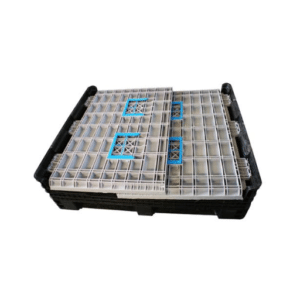
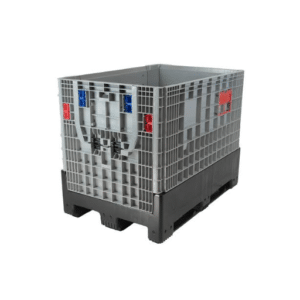
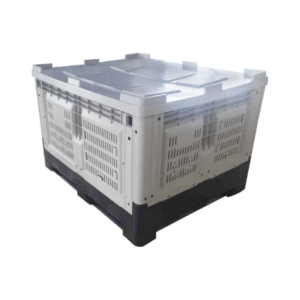
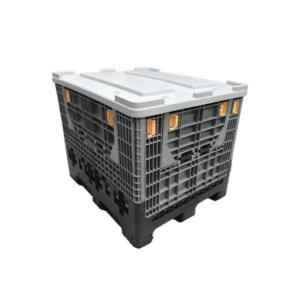
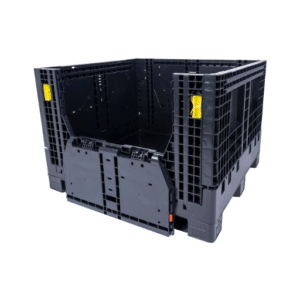
In the highly regulated and efficiency-driven world of cold chain logistics, the materials used for storage and transport have a huge effect on the integrity of the products. Among those materials, plastic pallets are crucial in food and pharmaceuticals industries that require very stringent temperature control and hygiene standards. The purpose of this article is to discuss the benefits of plastic pallets when used in cold chain applications, particularly their exceptional temperature resistance and suitability for food storage. By the end of this article, you will have gained a deeper insight into how these advanced materials not only prevent the loss of perishable goods but also improve the operations and ensure the strict compliance with the standards imposed on the industry.
Understanding Cold Storage Pallets

What are Cold Storage Pallets?
Cold storage pallets are remarkable platforms that the manufacturers offer for the storage and transportation of products inside environments that are maintained at a certain temperature. The pallets are produced with raw materials that last for a long time such as plastic and they are very broken by extreme cold and changing temperatures but they also preserve the quality of the product. One Of the key uses of these pallets is cold chain logistics where they help to safely transfer perishable goods such as food, drugs, and chemicals. Their characteristics like resistance to moisture, maintenance of hygiene, and reduction of contamination risks make the pallets a must-have for industries where compliance with strict regulations is mandatory.
Plastic Pallets Types for Cold Storage
Rackable Plastic Pallets
Rackable Plastic Pallets are engineered to provide the most stability possible when they are used and stored in cold storage. The supports that reinforce the pallets guarantee the longest life and the highest capacity of the pallets even if there are the most extreme situations of changing temperature and weight. The pallets are suitable for high-density storage and the strength of the pallets is kept even in the process of space maximization.
Nestable Plastic Pallets
Nestable pallets are cheap and light and that’s why they are the perfect ones for the operation that usually requires moving or return shipping very often. The floor-saving feature of these pallets allows them to be nested together when they are not being used and thus, the space required for storage is reduced. The nests are made so that they are able to perform perfectly in cold storage by fending off the attributes of the plastic that are detrimental, i.e. brittleness, and at the same time, retaining their structural reliability intact.
Hygienic Plastic Pallets
Hygienic pallets, which are known as food-grade or pharma-grade pallets, are made for those industries which demand the highest sanitary standards. Only virgin plastic materials are used in the making of these pallets so that the risk of contamination is completely eliminated; they are also easy to clean hence the strict health and safety regulations are fully met. These pallets can be placed in areas where daily washing or sterilization is required without any negative impact on their low-temperature performance.
Heavy-Duty Plastic Pallets
Heavy-duty plastic pallets are not only strong but they are also tough enough to endure the weight of larger and more robust conditions. These pallets are crafted from the finest quality, impact-resistant materials making them suitable for cold rooms that are frequently subjected to loading by hand or machine. The chemical and industrial sectors make the most use of these pallets since they have another criterion of priority—security—that is also very high.
Anti-Slip Plastic Pallets
Anti-slip plastic pallets are the ones that have surface textures or coatings that define their different applications as a safer choice compared to the others. They perform the same functions as non-slip pallets, i.e. preventing the product from sliding during handling and in a cold environment storage, but they also offer the additional advantage of no slips occurring at all. This risk mitigation helps to decrease accidents and concurrently, the safety of both employees and goods is assured especially in areas with automated systems.
By taking into account the distinctive features of different plastic pallets, businesses will not just be able to select the options specifically made for them and their particular operational needs but also, cold storage logistics will be both efficient and regulatory compliant.
Benefits of Using Freezer Pallets
Freezer pallets have a considerable amount of advantages that are specially designed for cold storage logistics. They are made of strong and non-porous materials, thus they are really the ones who will endure the extreme temperatures and their likelihood of cracking and warping is very low indeed. This durability will not only last longer but also makes structuring or load-bearing under extremely harsh conditions. Moreover, the hygiene of freezer pallets is maintained to the highest level, such that they are non-absorbent and easy to clean thereby the risk of contamination is almost zero. Their mixed characteristics of lightness and sturdiness do not only make handling easy but also contribute to the reduced cost when transporting over long distances. If freezer pallets are used, companies can make their operations more fluent, keep regulations compliance, and raise the level of safety in the whole area of cold storage.
The Importance of Cold Chain Logistics

How Cold Chain Logistics Works
Effective full pallet storage strategies are to be considered the foundation of optimized warehouse operations and the best possible space utilization. The main methods include high-density storage systems such as drive-in racking, which enable the storage of multiple pallets of the same SKU in deep lane arrangements and thus very efficient storage of large amounts of stock. Also, selective racking systems allow easy and fast access to palletized stock, which is beneficial to warehouses where mixing of different turnover rate SKUs occurs. Automated storage and retrieval systems (AS/RS) personnel are not needed and operations become more accurate. Regular inventory assessments are a must in order to ensure the strategies are successful and along with this throughput requirements analysis and investment in a robust warehouse management system (WMS) that will provide real-time inventory visibility and streamline workflows.
Cold Storage Warehousing Best Practices
The factors deciding the establishment of cold-storage warehousing best practices are temperature uniformity, energy efficiency, and good maintenance of equipment. The temperature in controlled environments of products might be maintained only between certain limits and this leads to the constant monitoring and calibration of refrigerators. Thus, the costs can be lowered by using well-insulated buildings, new cooling technologies, and the use of energy controls that do not exceed the environmental standards. However, the upkeep of specialized equipment is crucial especially if it is the case of pallet systems for low-temperature environments that have to be able to avoid the expensive losses of product downtime. Furthermore, the employees’ training in the areas of perishables handling and safety is a must so that the operations remain consistent and product quality is high.
Reducing Footprint with Efficient Pallet Racking
The reduction in the operational footprint of cold storage facilities is a great deal dependent on the use of efficient pallet racking systems. Not only do these systems allow the use of vertical space, they also help create better layouts resulting in increased storage density while quick access to the perishable products is still maintained. The use of high-density racking technologies like mobile pallet racks or drive-in systems is just the start of the series of innovations that aid in storage efficiency and help the companies cut down on their product storage costs, for they can now pack more in a smaller area. Besides, the systems create an environment that consumes less energy because they allow refrigeration only for the necessary space and this takes the facility closer to its sustainability goals. The use of customized pallet racking solutions that cater to the specific needs of a given facility guarantees the provision of the expected streamlined workflows, almost no downtime, and consistent product quality.
Optimizing Storage Solutions
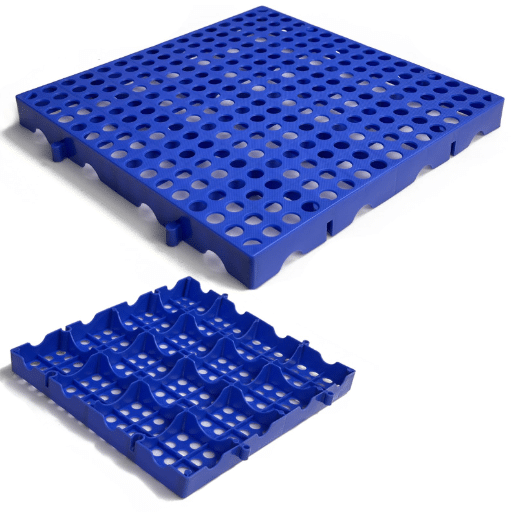
Effective Full Pallet Storage Strategies
The implementation of full pallet storage strategies that are effective, is a very crucial factor for the performance of the warehouse to be optimized and the use of space to be maximized. One of the key measures is using storage systems that have high density, for instance, drive-in racking, which makes it possible to store the same SKU in a deep lane layout and use it effectively. Furthermore, selective racking systems allow the effortless retrieval of single pallets which is the scenario prevalent in warehouses having a variety of SKUs with different turnover rates. Automated storage and retrieval systems (AS/RS) could further bring about an increase in efficiency of operations through the reduction of manual labor and enhancement of accuracy. In order for those strategies to be effective, regular assessments of the main characteristics of the products stored, throughput requirements analysis, and investment in a powerful warehouse management system (WMS) to provide real-time monitoring of inventory and to make workflows more efficient are essential.
Cold Storage Warehousing Best Practices
One of the first building blocks is temperature control which is very vital to the smooth and efficient running of cold storage practices, and in this regard, energy conservation, as well as maintenance of the right equipment, are the main contributors. In order to keep the products intact, temperature-controlled environments have to be constantly and consistently held at the defined range, thus making it necessary for the refrigeration systems to be frequently monitored and calibrated. Besides, energy efficiency can be attained by means of employing well-insulated buildings, using advanced cooling technologies, and setting up automated controls to lower expenses but not at the cost of compromising environmental standards. And also, training staff for proper handling of perishables and strict safety is required to achieve product quality and operational consistency.
Reducing Footprint with Efficient Pallet Racking
To a considerable extent, the cold storage facilities’ operational footprint can be reduced through the use of efficient pallet racking systems. These systems make the most of the vertical space available and contribute substantially to warehouse layout design thus achieving a balance between storage density and the quick access to perishable goods. The application of high-density racking technologies, such as mobile pallet racks or drive-in systems, further leads to the enhancement of storage efficiency, thus allowing the facilities to contain more products but in less physical space. In addition to that, these systems save energy as they limit the amount of space that needs to be cooled by refrigeration thereby contributing to the compliance with the environmental sustainability objectives. The tailored pallet racking solutions that are specifically developed for the individual requirements of the facility, ensure the flow of work is efficient, downtime is minimal, and the product quality is always maintained.
Keeping it Cool: Temperature Resistance

Temperature Control in Storage Facilities
Shipping the products with proper storage temperature is a critical aspect of every operation. There are modern insulation materials, precise monitoring systems, and cutting-edge refrigeration technology to keep the temperature stable in the storage facility within the prescribed temperature range of the products. Moreover, automated systems and real-time sensors work together to allow control over temperature changes and hence spoilage or degradation risk an instant reduction of elimination. The cooling practices that have been zoned are also aiding in energy use efficiency besides helping the operative to be efficient with the regulators’ requirement.
Tracking and Preserving Ideal Conditions
The success of monitoring and maintaining the ideal conditions in the warehouse is tied to deploying professional techniques like IoT-enabled sensors and automated control systems. The above-mentioned devices provide continuous real-time information on crucial aspects, such as temperature, humidity, and airflow, thus prompting accurate adjustments to maintain the desired levels. Sensor calibration is carried out periodically to maintain the accuracy and predictive maintenance is also practiced to reduce the risk of equipment breakdowns. Detailed documentation and compliance with the established standards are other major aspects of meeting the regulatory requirements and preserving the product through the processing period.
Temperature Resistance Future Innovations
Research in temperature resistance is emphasizing shifting more and more to the development of new materials as well as improved coatings capable of withstanding extreme conditions. The leading-edge ceramics, nanocomposites, and metal alloys with the best performance are the sources of innovation since they are more thermally stable and structurally strong. Besides, the creation of adaptive materials that can automatically alter their characteristics according to environmental changes is also very promising and could open a large area of applications in various industries. Furthermore, the use of AI-powered modeling and simulation tools is allowing to accurately foresee the behavior of materials at extreme heat, thus, saving time, cutting down the cost of technology transfer while still ensuring reliability. These innovations have rendered previously inhospitable environments to be more amenable to taking the human footprint.
References
-
Design of a small-scale, low-cost cold storage system
Read the full report here
This document discusses the design and implementation of cold storage systems, including the use of pallet jacks for moving produce. -
Marketing geography of open display cold storage equipment
Access the thesis here
This thesis explores the geographical and marketing aspects of cold storage equipment. -
Pallet Racking Using Cold-reduced Steel
View the paper here
This paper examines the structural features and testing of pallet rack systems, including the use of cold-reduced steel.
Frequently Asked Questions (FAQ)
What are the advantages of cold storage pallets when it comes to airflow and temperature regulation?
The choice of cold storage pallets can greatly influence the airflow in the full pallet storage area, which in turn aids in temperature stability and lessens the frequency of cold spots. Perforated plastic or ventilated wooden pallets are used for the cold storage so that the movement of chilled air is facilitated thus the temperature-sensitive goods like food and pharmaceuticals are saved. Proper pallet positioning in racking and leaving clear aisles for movement enhances the airflow and minimizes the time taken by the cooling process during loading and unloading. The selection of pallet material and rack layout also results in less run-time for the freezer and thus increased energy efficiency. Suggested unused terms: structural steel racking, forklift abuse, hygiene, demand increases, footprint.
What is the best combination of pallet material and pallet rack system for freeze and freezer warehouse environments?
In freezing conditions, the plastic pallets and the steel pallet options offer the highest resistance with regard to hygiene and durability in freezer warehouses when compared to untreated wooden pallets which have the least resistance. The formation of moisture due to the freezing conditions along with the temperature changes is one of the factors that contribute to the corrosion of the materials used in the structural pallet rack systems. The right choice of pallet material and rack finish can help to prevent damage from forklift abuse and maintain the structure’s integrity during high-throughput operations. Many suppliers offer customizable storage solutions that fit capacity, aisle width, and automated solutions for the distribution of chilled goods. Suggested unused terms: e-commerce, guard, throughput, inventory rotation, condense.
What is the impact of palletized full pallet storage on cold chain logistics and distribution optimization?
The first factor to consider when optimizing cold chain logistics is to choose the right pallets to match the climate-controlled environments, integrate them into an efficient pallet racking that supports full pallet storage and high density, and then partition the cold rooms accordingly. The right inventory rotation practices and clear labels on pallets facilitate faster order fulfillment and thereby shorten the time that products spend in refrigerated storage. The use of automated systems like conveyors and robotic forklifts can further enhance throughput and reduce forklift-related damage while maintaining even temperature control. Additionally, planning for capacity increases and flexible aisle configurations can be an effective way for manufacturers and distributors to cope with demand increases with little to no rework. Suggested unused terms: specification, freezer, precision, unloading, tailer.
What safety and compliance requirements must be met by temperature-sensitive pallets storage solutions?
Temperature-sensitive product storage must fully comply with all industry regulations concerning the control of temperature, hygiene, and traceability which is most critical in the food and pharmaceutical sectors. The choice of pallet material, cleaning practices, and contamination prevention measures are very crucial to ensure product quality during refrigeration and freezing. The specifications for pallet racking and guard rails completely eliminate the possibility of rack collapse or product being damaged by forklifts thus, the entire facility’s safety is improved. The routine inspections and maintenance schedules are critical for ensuring compliance and reliability in cold storage warehousing. Suggested unused terms: specification, contamination, reliability, chill, unload.
How do pallet racking layout and aisle configuration influence the storage capacity and productivity of the cold warehousing industry?
The racking layout is one of the main factors that dictate the amount of usable space and the possibility of getting high-density storage while maintaining proper airflow and accessibility for pallet handling. Narrow aisle or very narrow aisle systems can save footprint and thereby increase capacity however, these may require the use of specialized forklifts and automated solutions to prevent forklift misuse. An optimal mix of aisle width, rack height, and pallet orientation can result in high throughput, less handling time during loading, and better inventory rotation. The flexibility in racking design allows facilities to quickly modify their layouts in case of a surge in demand or a change in product mix. Suggested unused terms: footprint, material handling, automated solutions, high density, flexibility.
What are the recommended procedures for pallet handling, loading and unloading in cold storage?
Pallet handling and loading in cold storage environments should always involve the following best practices: pre-cooling the pallets and products, using moisture and freezing resistant pallets, and training the cold chain handling skills operators in order to lessen the temperature excursions during loading and unloading. The reliability of the forklifts and pallet handling equipment operating in low temperatures will reduce both downtime and misuse. Clearly defined procedures for inventory rotation (FIFO/LIFO as required), securing loads and documenting temperature logs will guarantee accuracy and traceability throughout the distribution process. Supplier specifications should be continuously reviewed and the storage facilities should be maintained at a level that ensures performance and compliance throughout. Suggested unused terms: reduce, refrigeration, supplier, throughput, temperature-controlled.