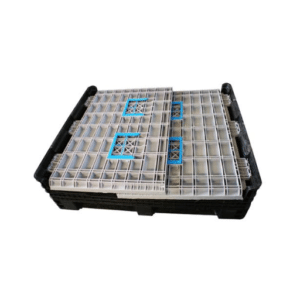
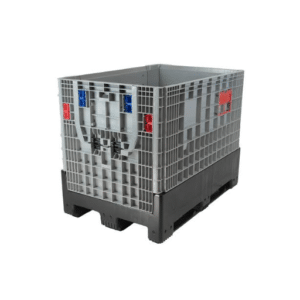
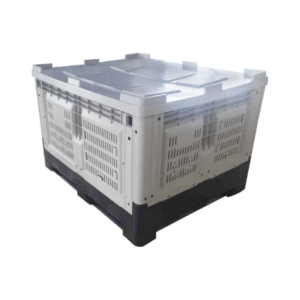
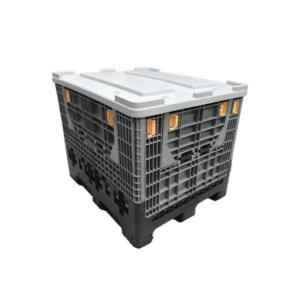
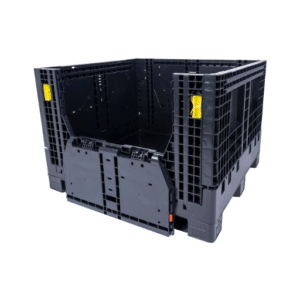
The selection of pallets for warehouse operations and material handling can have a great impact on efficiency. Pallets that allow access from all four sides and those that permit access from only two sides are among the most commonly used pallets, and they each have their specific pros and cons according to the different situations. But, how would you know which one fits your business the best? This article is going to provide you with a thorough comparison of the 4-way and 2-way entry pallet types based on forklift access, efficiency, and applicable settings. Whether you are reducing the number of steps in your supply chain or improving storage, having a good grasp of the main differences between 4-way and 2-way entry pallets will help you to make the right choice. Keep reading to find out which option is in tune with your operational goals.
Understanding Pallet Types
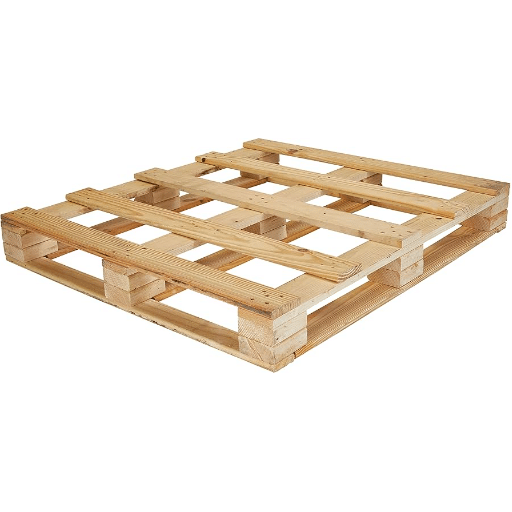
What are 4-Way Pallets?
4-way pallets are robustly constructed in such a way that they can be easily accessed by forklift or pallet jack from all four sides, thus giving full wilderness and handling facility in either warehouse or shipping operations. This construction works better since it provides free movement and placement flexibility no matter how the pallet is positioned. Wood, plastic, and metal are the usual materials that the manufacturing companies use in making 4-way pallets, which are suited for those places where every inch counts and logistics are smoothed out at least a little. They are not only less hefty but also have greater flexibility which in fact, makes up an industry where sometimes storage and transportation are high demands.
Characteristics of 2-Way Pallets
2-way pallets are usually the easiest or cheapest solution for two-way access. Designed to be accessible by forklifts or pallet jacks only from two sides (normally front and back), they are characterized by strength and durability and sometimes even solid deck boards which provide a stable platform for goods. The latter is most often the case with these pallets that mark their lower cost than 4-way pallets because of the simpler design and fewer manufacturing complexities. Thus, it can be assumed that a 2-way pallett has less maneuverability than a 4-way one; however, its heavy-duty build makes it a pallett for robust applications and long-term storage, thus common industries that use such a pallett comprise agriculture, construction, and manufacturing where the goods are barely handled in inaccessible areas.
Comparing Wood Pallets and Block Pallets
Wooden pallets and block pallets each have distinct and essential roles to play in the logistics and supply chain industries, and recent trends depict their usage change driven by cost, durability, and efficiency factors. Traditionally built with stringers, wooden pallets are lightweight, cost-effective, and widely available thus they remain the most favorite choice for companies seeking economical ways of transporting goods. However, they are already less durable than block pallets and, besides that, repairing and replacing them can be frequent.
Conversely, block pallets are mostly wooden, plastic, or metal, and they support a heavier duty by way of sturdier construction with blocks instead of stringers. With this design, full 4-way entry is allowed which improves the maneuverability and may be helpful in easily getting the forklift working in a crowded warehouse, thus making it a block pallet that is more durable and able to bear up the difficult loads thus being suitable for industries needing rigorous handling like international shipping or heavy manufacturing.
As per the latest reports, industries are steadily shifting towards block pallets because of the long-term cost savings that come with their durability and efficiency. On the opposite side, wood pallets are still a practical option for the low upfront costs and the lighter load handling priority businesses. Finally, selecting between wood and block pallets is dependent on the particular usage of the operation, weighing the initial investment against the total cost of ownership, durability, and the type of goods being carried.
Benefits of 4-Way Entry Pallets

Enhanced Forklift Access
The pallets with four-way entry give better access of forklift and at the same time enable the forklifts to come closer and take the pallet from all four sides. This equipment has a very strong impact on the efficiency of operation as it directly affects to the less time taken for material handling and less time consumed for moving in the narrow areas. This design has its positive aspects not only in the warehouses but also in the distribution centers as these places require optimum flows and excellent space utilization. Moreover, the better accessibility that’s been an advantage to this operation also favours faster loading and unloading thus leading to the increase of productivity in general and at the same time the reduction in labor costs.
The efficiency of the warehouse is improved
The reason for improved warehouse efficiency can be attributed to the whole pallet’s versatile and accessible design. The pallet allows the forklift to approach and lift from all four sides which reduces the time taken and the effort involved in maneuvering the forklift in a less space area. This process of material handling not only consumes less space and keeps the operations of loading and unloading running faster but the combined effect leads to an overall quicker flow of work, which in turn means less manpower required and reduced costs. Thus the usage of such pallets is very much suited for the high-paced environments like warehouses and distribution centers.
The recycling and sustainability aspects
Pallets are the key factors in sustaining the environment and this is particularly so when they are made from recyclable materials such as wood, plastic, or metal. For example, wooden pallets are constantly being recycled or repaired thereby their life span gets extended and waste is decreased. Plastic pallets, on the other hand, though more durable, are often made with the idea of recyclability in mind such that these can be melted and reused during their life cycle. Presently, the stats say that almost 95% of the wooden pallets are either recycled or reused which results in very low emissions from these pallets. In addition to that, the recycling of materials used in making new pallets also supports the circular economy as it reduces virgin material demand. Going for a sustainable pallets solution is not only environmentally sound but also a clever business scheme if the enterprises are aiming for lower carbon footprints and being in sync with the global sustainability targets.
Choosing the Right Pallet for Your Supply Chain
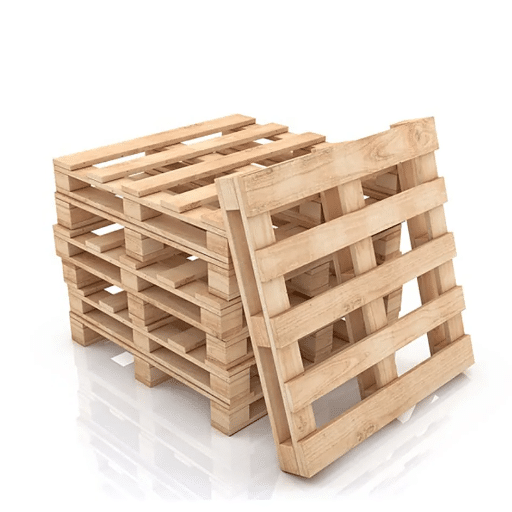
Factors to Consider
The decision-making process involved in choosing the right pallet for your supply chain should take into account various factors to guarantee effective logistic flow, compliance and cost-efficiency:
Material Type
Wood, plastic, metal, and corrugated paper are some of the most frequently used materials for making pallets, each possessing some unique benefits. Wood is a great candidate because it is cheap and most accessible but at the same time the disadvantages come from it being ‘less durable’ needing treatment to conform to ISPM-15 which regulates international shipment. Plastic pallets on the other hand survive for long, lightweight, and are not affected by moisture or even chemical products thus making them ideal for pharmaceuticals and food industries. Metal pallets are at their best in heavy and high-temperature conditions, whereas corrugated pallets are light but eco-friendly and only good for light loads.
Load Capacity and Weight Distribution
It is very important to know how heavy the load is going to be and how the weight will be distributed on the pallet. Overloaded pallets can lead to structural failures which will cause delays in the logistics and will also be a potential safety hazard. When looking at load capacities, it is important to consider both static and dynamic since they show how much weight the pallet can hold when the weight is stationary or when it is during transit.
Pallet Dimensions and Compatibility
The region and the industry dictate different standard sizes for pallets. The dimensions of 48 inches by 40 inches is the one generally accepted for North America while the 1200 by 800 mm Euro pallet is the one commonly used in Europe. It is a must to check that the pallet is compatible with your supply chain equipment including forklifts, racks, and transport vehicles to avoid operational hitches.
Sustainability and Reusability
Easier and greener logistics have become business priorities not to mention environmental sustenance. The use of recycled and reusable pallets is a practice that both reduces the impact on the environment and lowers operational cost over time. An example is the case where certain plastic pallets can be recycled up to 100 times which means a really high return on investment relative to single-use wood pallets.
Temperature Tolerance
In case of supply chains working in very hot or very cold conditions, the material’s temperature tolerance is a key factor. It is the case that plastic and metal pallets frequently outdo wood when it comes to tolerating such extreme conditions.
Through comprehensive examination of these factors, companies can later on refine their logistics network, enhance their productivity and make the right choices that are in line with their sustainability goals.
Cost Implications of 4-Way vs 2-Way Pallets
When analyzing the cost differences between 4-way and 2-way pallets, it is mandatory to take into account both the initial investment and the operational efficiency aspect. Generally, the 4-way pallets look like they have a higher upfront cost due to their more advanced design, however, if looking at them from the long-term perspective then they are the more economical option as the cost will be offset by their high manouverability and versatility with different kinds of equipment. Better handling translates to lower labor costs and greater efficiency in the warehouse, especially in the areas of space optimization and flexibility. However, the 2-way pallets represent a more cost-efficient solution from the start, but they might incur higher handling and operational costs in the long run, particularly in complicated or high-volume supply chains. Therefore, it is crucial for the companies to evaluate their short-term budget restrictions against the possible long-term operational advantages to come up with a sound decision.
Impact on Logistics and Distribution
The distinction between 4-way and 2-way pallets is a significant factor affecting logistics and distribution strategies. The 4-way pallets come with the advantage of being able to smooth the whole process of handling materials thus leading to less time for loading and unloading which is in line with the growing trend of faster delivery in retail and e-commerce supply chains. Current search insights indicate that logistics managers list efficiency and flexibility in pallet handling as their top concerns. On the other hand, the 2-way pallets, despite their lack of versatility, may still be adequate for sectors that have a uniform and predictable pattern of movement. Through recognizing the interplay among costs, operational efficiency, and supply chain specificities, companies can adjust their pallet use accordingly to improve the effectiveness
Applications of 4-Way and 2-Way Pallets
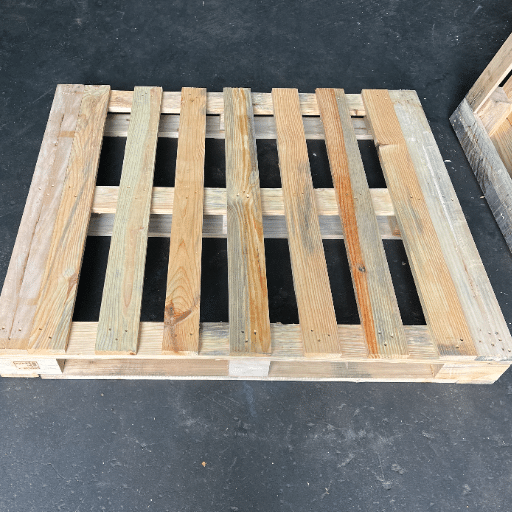
Industries Utilizing 4-Way Block Pallets
The 4-way block pallets are a lot of the times used in industries that need high degrees of flexibility and compatibility with the automatics. The manufacturing industry, for example, 4-way pallets and their ability to help material handling companies get more done and also to increase the output on production lines significantly. The same applies to the food and beverage industry which is very much dependent on these pallets as they are the only ones that fit with forklifts and pallet jacks in the small spaces of warehouses and thus they take care of the movement of the goods in an efficient way.
Moreover, the pharmaceutical and retail industries rely on 4-way pallets for their sturdiness and smoothness in the global supply chain. In these industries, product-handling risks have to be reduced and, at the same time, operational efficiency has to be maximized; thus the 4-way block pallet’s tough and unfettered nature becomes a necessity. The trend of increasing automation in warehousing and logistic operations across different industries is taking place and it will also mean an increase in the demand for 4-way block pallets.
Best Use Cases for 2-Way Pallets
2-way pallets, which are also referred to as stringer pallets, are the best option for applications that do not require multi-directional handling. They are most appropriate for simple workflows with direct lines of handling, mainly in cost-conscious and simple industries. Recent reports show that these pallets have great use in agriculture and manufacturing for moving heavy, even products that need stability during transport, among other things. They are also very much used in operations that can only afford manual handling or where the forklifts usually go only in straight lines.
Besides that, 2-way pallets are also chosen in less-equipped warehouses or factories mainly because their structure allows good stacking and better utilization of the available space. They are still a dependable and economical choice for those firms that strike a chord between using the best quality and cost-effective products in the less intricate areas of the supply chain.
Case Studies: Successful Implementations
Case Study 1: 2-Way Pallets for Applying Warehouse Operations next to Each Other
The 2-way pallet was applied by a medium-sized retail warehouse located in the Midwest in order to efficiently store, and cut down on the expense and make the area easy to use. The facility raised its warehousing space by 20% using the optimized design of 2-way pallets. Forklift operators reported being less stressed when carrying out straight-moving operations and also they had a 15% decrease in time spent in handling materials. Apart from that, the cheaper cost of the 2-way pallet has worked towards the overall 10% reduction in the total cost of the supply chain. This deployment is a good example of 2-way pallet’s suitability in places where simple but effective solutions are a must.
Case Study 2: Logistics Supporting the Green Goals
A European food distribution company was using 2-way pallets made of recycled material as part of their sustainability initiative. The company reported a huge 25% reduction in waste generation due to prioritizing pallet reuse in one year. This shift not only detrimental to the environment but at the same time saved the company from incurring costs that would have been otherwise spent on frequent pallet replacement. The durable construction of the 2-way pallets has so far proven to be adequate for the company’s operations thus showing that even in the green movement there is a gain in productivity.
These cases validate that the 2-way pallet is versatile and can cope with a range of operational challenges, while at the same time the cost savings and efficiency in terms of sustainability are not less than measurable.
Conclusion
Summary of Key Differences
When it comes to 2-way pallets andother types of pallets, there are several main differences that one can point out. The first difference is the fact that 2-way pallets are made to allow forks to go only in two ways which makes it easier to kill it in structure and give it more time under certain load conditions. On the contrary, 4-way pallets allow for access from all four sides thus making it possible to use them even in very small warehouse spaces and also in processes such as automated handling. In addition to that, the way 2-way pallets are made (which is normally wood or composite materials) is a reason for their lower production costs when compared to some other types such as plastic and metal pallets that are more common in 4-way designs.
Final Thoughts on Pallet Selection
The process of finding the optimal type of pallet is a delicate one that depends on a variety of factors, such as the needs of the operation, the cost-saving aspect, and the sustainability targets. The latest reports from the market suggest that the global pallets industry will experience over 5% growth in the compound annual growth rate (CAGR) through 2030, with the driving force being the growing demand for logistics solutions that are both affordable and environmentally friendly. One of the trends that are noticeable is the increasing use of reusable plastic pallets that are made of sturdy material and are resistant to getting contaminated in areas like medicines and food and beverages. The longer life of plastic pallets has been an important factor in their acceptance despite their higher initial costs, thus being a friendly option for companies seeking to develop greener supply chains.
On the flip side, the old-style wooden pallets continue to be the most popular choice, making up around 90% of the market share at present, mainly due to their low initial cost and being widely available. Their design indeed has not been left behind as heat-treated wood, for example, has been used for durability which has still very much helped them hold their ground in industries that demand heavy-load support and even repairability. When it comes to operations that require quick movements, the preference is still for 4-way entry pallets as these facilitate the handling of materials by forklifts in automated warehouses.
The bottom line is that companies need to make their pallet choice through thorough examination of their particular supply chain needs, financial constraints, and ecological objectives. By utilizing cutting-edge technologies like IoT-enabled pallets with RFID tracking or those made from post-consumer recycled cardboard, organizations can not only increase their operational efficiency but also help promote environmentally friendly practices.
References
-
Pallet management system: a study of the implementation of UID/RFID technology for tracking shipping materials within the department of defense distribution network
Read more here -
Pallets Make the World Go ‘Round: Circular versus linear economies and their effects on the pallet industry
Read more here -
Box redesign: eliminating waste and improving space utilization by reducing box pallet footprint
Read more here
Frequently Asked Questions (FAQ)
Are 4 way pallets compatible with pallet trucks and forklifts without the need for modifications?
Most of the 4 way pallets are made in such a way that there are no restrictions for pallet trucks and forklifts to pick up the load from any side thus making the handling versatile and the operations in busy warehouses faster. The true 4-way entry usually employs notched stringers or wood block pallet constructions that allow forks to enter from the short and long sides. Conversely, some pallets with stringers on one side may require a specific lift method. If the pallet is accessible from only two sides, a pallet truck might not be able to pick it up from any side this will result in slowed loading and repositioning. To ascertain compatibility, determine whether the pallet is designated as 4-way or has notched stringers and confirm if the fork spacing will fit your equipment. Also check the weight capacity and static capacity ratings to ensure that heavy loads can be lifted safely.
What is the distinction of a 4-way pallet when compared to a 2-way or 4-way entry pallet?
The first difference between a true 4-way entry pallet and a 2-way pallet is that the former can be accessed from all four sides by most forklifts and pallet trucks, while the latter allows entry on two opposite sides only. However, the solid stringer or notched stringers usually characterize the 2-way pallets. A 4-way configuration not only solves the problem of accessing the pallet from only two sides but also improves warehouse space utilization, thus leading to stackable pallets with the entry from any side, thus requiring less time to maneuver. When stringers are solid from end to end, only two sides are accessible and such designs may necessitate special storage orientation and can limit the number of pallets per truckload. The 4-way pallet may, on the other hand, support higher throughput during shipment handling and is frequently the choice of picking up the pallets from any side.
Will the recycled wood pallet options accommodate heavy loads and truckload shipments as suitable?
Recycled wood pallet options are a cost-effective, yet not always suitable for heavy loads, choice for many shipments; nevertheless, static capacity and weight capacity of each pallet must be verified first before they are applied for heavy loads. Some recycled wood pallets are being restored in the process of solid stringer or wood block pallet designs, thereby giving the manufacturers the option of offering a more durable product if the reconstruction is done properly; however, others might have their strengths reduced and be more variable. Thus, for large orders of truckload, confirm the number of pallets per truckload, how they can be stacked for safe transport and the risk of damage during transit should be minimized. The choice of using recycled pallets may affect both cost and environmental impact, but the tradeoff still is that they can be more inspection-requiring and sometimes have to be replaced compared to new, true 4-way entry pallets. In case you need a regular spacing of x 36 or x 48 dimensions, you have to check that recycled options are according to those specifications.
Why is a wood block pallet preferable to notched stringers or solid stringer constructions?
Wood block pallet constructions are such that long stringers are replaced with blocks positioned between the top and bottom decks, thus creating a very stable top and bottom as well as often enabling true 4-way entry without notched stringers. There is no doubt that the blocks provide support all around so a wood block pallet is more resistant to sagging under distributed load thus improving its static and performance capacities for heavy loads. Such pallets are stackable and thus commonly found in warehouses and truckload shipments where repeated forklift access from any side is required. The higher cost of wood block pallets is sometimes offset by enhanced durability and longer life, thus lowering the frequency of replacements over time. Always verify that the pallet has a static rating and per pallet weight capacity that match your shipping needs.
How do pallet dimensions like x 36 or x 48 affect pallets per truckload and space utilization?
Pallet dimensions like x 36 or x 48 have a direct impact on how many pallets you can loading per truckload and how efficiently space will be utilized in trailers or warehouses. The dimensions that are standard, support predictable stacking patterns and also better truckload planning, while the nonstandard sizes may lead to a decrease of pallets per truckload and consequently higher costs per shipment. When pallets are built to standard sizes, it becomes easier to pack trailers, and pallet truck and forklift operators can handle loads with less repositioning and wasted space. Do consider the entry style of the pallet — true 4-way entry allows for maximum loading flexibility as pallets can be accessed and oriented to fit more tightly. When calculating how many units you can safely stack and ship always confirm the static capacity and weight capacity per pallet.