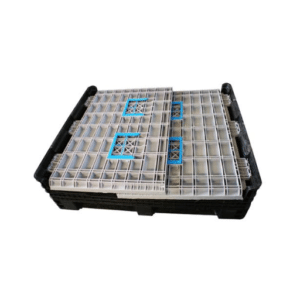
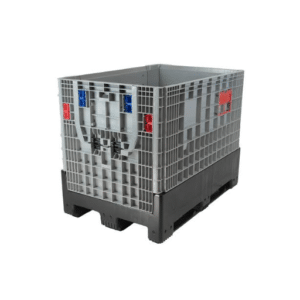
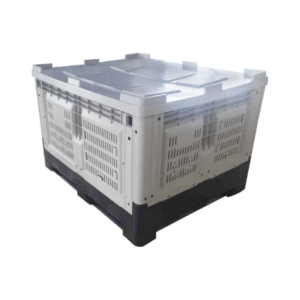
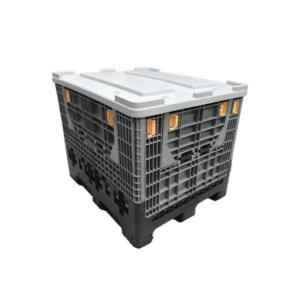
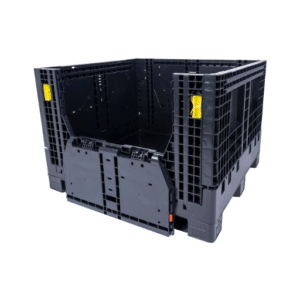
Plastic pallets are necessary for the logistics sector at present. However, the issue of their environmental impact is gaining more and more attention. In response to the increasing global focus on sustainability, companies are trying to find smarter, more eco-friendly alternatives to traditional materials. The current post provides a glimpse into the sector of sustainable plastic pallets, analyzing their environmental impact and the role that recycling plays in waste reduction. This is a must-read for supply chain professionals who are looking for eco-friendly options or for business owners who are ecologically aware. We will present how innovation is changing our perception of plastic pallets and their use. Stay with us as we reveal the practical solutions that can combine profitability and environmental responsibility.
Understanding Plastic Pallets

What are Plastic Pallets?
Plastic pallets are items that have long-lasting durability and very low weight; therefore, they are used everywhere for storing, handling, and transporting goods in different sectors. They are made from high-density materials like recycled polyethylene or polypropylene and not wood like in the case of traditional pallets which makes them immune to the attacks of moisture, bugs, and bacteria. Plastic pallets are built for multiple uses, provide uniform dimensions, require no cleaning, thus offering a more sanitary and lasting solution for today’s supply chain activities.
Types of Plastic Pallets
Different kinds of plastic pallets can be found, each one representing a certain application and industry need. The following list includes the most popular types:
- Stackable Pallets – Paired with efficient stacking requirements and little storage space for when not in use, these pallets serve the purpose perfectly. Their design of nesting diminishes costs during storage as well as transport.
- Rackable Pallets – Built for heavy-duty use, rackable pallets can sustain large weights and are even suitable for racking systems in warehouses. These pallets offer strength and stability for goods to be safely held in elevated storage setups.
- Nestable Pallets – Lightweight and space-saving, nestable pallets are nice for applications where saving space is paramount. They fit into one another when empty, hence cutting down the space required for storage drastically.
- Export Pallets – Affordable and in keeping with international shipping regulations, export pallets are for one-way shipments only. They help to make global supply chains more efficient and at the same time, they are durable.
- Hygienic Plastic Pallets – They are made from food-grade plastic and are used in the pharmaceutical and food processing industries. Their smooth surface makes cleaning very easy and they are thus suitable for areas with strict cleanliness standards.
- Custom Plastic Pallets – These pallets can be altered to specific sizes, shapes, and features for highly specialized requirements in unique manufacturing or shipping processes.
Each plastic pallet type provides its own special advantages, and choosing one depends on the application’s specific requirements such as durability, weight capacity, handling ease, and adherence to industry standards.
Comparison with Wood Pallets
Initially, wood pallets have been the most favored option in shipping and storage because their price is low and they can be found almost anywhere. Nevertheless, they are not as good as plastic pallets when it comes to durability, since they easily break, chip, or lose strength due to moisture absorption; hygiene concerns may arise as a result. Plastic pallets are stronger, impervious to moisture, and more suitable for the industries that have high hygienic standards as food and pharmaceutical. While wooden pallets are bulky which can incur heavy transportation costs, plastic ones are light and not a strain to work with. What’s more, pallets made from plastic are versatile and can be tailored to meet specific industry requirements while wooden pallets are often inflexible. Plastics are generally associated with higher costs at the initial purchase but their longevity and reusability give them an advantage that eventually translates into getting the best value for money for operations that can afford it.
The Environmental Impact of Plastic Pallets

Lifecycle Analysis of Plastic Pallets
The evaluation of the lifecycle of plastic pallets has come to a conclusion, both positive and negative, regarding their environmental impact. Plastics in general and plastic pallets, in particular, are the products of a long and energy-consuming process that includes several steps in the raw material transformation. One way of reaching the goal of the desired durability is the use of plastic pallets that are less damaging to the environment as compared to wood pallets that also have a shorter lifespan. Fewer resources will be used for ensuring the aforementioned durability than would have been if the plastic pallets were going to be disposed of as waste.
Moreover, the carbon footprint of production is being reduced through innovations in manufacturing and the use of post-consumer waste as raw material. The latest studies suggest that the incorporation of plastic waste into new pallet production can cut down carbon dioxide emissions by as much as 30% when compared to the processing of fresh plastic. In spite of these pluses, plastic pallets are still heavily criticized for being oil-derived and hence, the investment in eco-friendly options in production should not be stopped.
Advantages of Eco-Friendly Pallets
The eco-friendly pallets’ benefits make them an option companies can’t ignore if they want to shrink their environmental footprint. The use of recycled material in these pallets not only reduces the volume of waste but also keeps the emission of carbon down, and thus, the less harm done to Mother Earth. These pallets are generally lighter and more robust than wood ones, thus incurring less transport cost and fewer replacements. Besides, the full recyclability of the eco-friendly pallets upon their lifecycle completion further makes their contribution to the landfill less. These pluses not only foster environmental stewardship but also come in hand with the consumers’ ever-increasing demand for sustainable companies.
Using Plastic Pallets to Cut Down on Carbon Footprint
Plastic pallets have a great part in the environmental scenario saving carbon footprints through their eco-friendliness offering a substitute for the wood pallets that are already not used in a sustainable way. The heavy-duty nature and lightness of plastic pallets reduce the fuel usage in transportation; hence, there is less carbon emission just as a result of the transportation of these products. The plastic pallets can be recycled finally after being used many times thus lessening the demand for primary materials and the waste in the landfills. By making use of the plastic pallets in their supply chain, companies are not only reaching their sustainability targets but also conserving nature.
Recycling and Reusing Plastic Pallets

Pallet Recycling Process
The recycling of plastic pallets consists of a no-nonsense series of steps. Initially, the non-recyclable materials are taken out from the pallets that are either damaged or at the end of their life after the collection and sorting process. Then, the plastics are subjected to cleaning, where they get rid of the impurities to become clean and pure, after which they are further sliced into smaller bits. The small pieces are then melted and turned into new raw material for the production of pallets or other plastic goods. This not only minimizes the amount of garbage produced but also the material’s efficient reuse of materials through the circular economy.
Recycled Plastic Pallets: A Sustainable Option
Recycled plastic pallets can be considered as a plant-friendly replacement for the conventional wooden pallets. They are characterized by their durability, lightness, and resistance to water and chemicals; hence they are perfect for a variety of industries. The recycled plastics used in making these pallets not only contribute to waste reduction but also help in the decrease of the overall environmental impact. Their further recyclability at the end of the long-use period and their lifespan factor into a more circular economy that encourages both economic and environmental benefits.
Creative Applications for Recycled Plastic
The recycled plastic has a wide range of creative applications that are now being experimented with in various industries and thus, its versatility and environmentally friendly nature are being demonstrated. The recycled plastic is not only used for pallets but also being turned into outdoor products like furniture and the likes, decking materials, roofing tiles, bricks, and construction components. Also, it is here in the fashion industry where reclaimed plastics find their way into the garments and accessories as fabrics. Moreover, they are also used for the production of packaging materials, kids’ play parks, and even car parts. All these activities not only help in prolonging the life cycle of plastic but also create a significant impact towards reducing plastic waste, sustainability efforts, and resource efficiency.
Advantages of Sustainable Plastic Pallets

Durability and Heavy Duty Options
Sustainable plastic pallets are built to perform along with the rigorous demands of various industries, thus winning their approval for heavy-duty applications. Users most frequently search for the pallets that can take on a lot of weight, The sustainable plastic pallets are able to deliver on such demanding requirements by their superior offer to natural wooden pallets that are quite brittle and prone to splitting and long-lasting they tot. Hence, the infantile construction that would be worn out, therefore, not needing replacing as often, is and so saving quite a lot in terms of costs over the years, their use will very likely be less costly than that of less durable ones. The fact that they do not alter under weight at all makes them dependable for various sectors, both logistics, manufacturing and warehousing.
Hygienic Features of Plastic Pallets
Plastic pallets, thanks to their non-porous surface resistant to moisture, bacteria, and other contaminants, are a perfect fit for industries with high hygiene standards demands. Unlike their wooden counterparts, they do not just need to be cleaned but also sanitized; the cleaning methods that can be applied are often pressure washing and chemicals, hence they are practically ready for use in the food and pharmaceutical industries, where it is critical to keep up with the standards of cleanliness. Additionally, their resistance to absorption of odors and liquids not just assures the safety of the environment but it also fosters the creation of a more hygienic workspace.
Future Trends in Plastic Pallet Recycling

Innovations in Recycling Technologies
The developments in recycling technologies are making it possible to reuse plastic pallets in a more efficient and sustainable manner. Besides, the advanced sorting systems are now employing AI and machine learning to classify and separate different kinds of plastics with very high precision, which also helps in increasing of recycling rates. Chemical recycling techniques are turning the plastic pallets back into their most basic compounds thus allowing the manufacturers to produce new pallets from high-quality recycled material. Furthermore, the closed-loop recycling programs are getting popular, where companies retrieve the used pallets, recycle them and make new ones, thus cutting waste to a great extent. The advancements in recycling tech not only bring down the environmental impact but also improve the plastic pallet recycling process’s cost-effectiveness.
Market Trends for Recycled Plastic Pallets
The recycled plastic pallets market is experiencing a significant upward trend mainly due to the growing concern of the public towards the sustainability of the environment and the turning of industries towards the circular economy. Thus, firms are giving preference to pallets that are both strong and environmentally friendly so as to minimize their CO2 emissions and be in compliance with the environmental laws that are getting the more and more strict. The technological advancements in recycling have not only increased the recycled materials but also made the use of recycled plastic for pallets a viable alternative to conventional ones. Moreover, the demand for logistics solutions that are durable and reusable has increased significantly because of e-commerce and global trade which in turn has resulted in widespread acceptance of recycled plastic pallets across various sectors.
Regulatory Impacts on Pallet Production and Recycling
The effects of regulations on the production and recycling of pallets have been considerable, and I consider them a key factor in the industry’s drive for innovativeness. Environmental laws that are more stringent than ever before compel companies to be socially and environmentally friendly by such means as using recycled material, getting rid of non-green processes, etc. Also, from my point of view the rules are really pushing the firms to take more serious the issue of their ecological responsibility thereby creating a path for newer and more efficient methods of pallet making and disposal that are less pollution-prone and green ones.
References
-
An Investigation of the Plastic Pallet Industry in the United States in 2018
View Source
This research examines the material use in the plastic pallet industry, including the percentage of recycled plastic used. -
Environmental analysis of pallets using life cycle analysis and multi-objective dynamic programming
View Source
This study analyzes the environmental impact of pallets, including the carbon footprint of virgin and recycled plastic pallets. -
Investigation into the Landfilling and Recovery of Wood and Wooden Pallets at US Landfills in 2021
View Source
Frequently Asked Questions (FAQ)
Do recyclable plastic pallets have promising offers for food and beverage sectors?
Recyclable plastic pallet offers can be quite beneficial in the food and beverage sector as most models are either made from recycled or virgin resin and can be produced according to the FDA-approved hygiene standards. The new pallets are not only easy to clean but also do not allow moisture or pests which in turn lowers the contamination risks as compared to the traditional wood pallets. A line of plastic pallets very often comprises of hygienic pallets having smooth top deck surfaces to reduce slippage and microbial growth. They also provide a longer service life and lower cost in total when you consider reduced replacement and maintenance.
How does the performance of duty pallets made from recyclable materials compare?
Duty pallets composed of recyclable materials can be designed to satisfy several standard performance requirements of regular-duty pallets while being ecologically friendly at the same time. Recycling plastic for pallets often results in a combination of regrind with virgin and thus making it strong and also cost-effective, hence a meeting point of durability and sustainability. Usually, such pallets are lighter, hence freight costs may be lower and handling with fork trucks becomes easier. Plastic pallets, when used, result in lower total lifecycle costs and higher performance consistency compared to wooden pallets over time.
What are the pros of nestable pallets and environments friendly designs?
Nestable pallets come in the design that permits the return trips to save the truckload space by stacking inside each other, which is very advantageous for logistics and distribution. Eco-friendly nestable pallets can be produced out of recycled materials and can be recycled when their life is over, thus promoting circular material flows and decreasing energy consumption in manufacturing. Plastic pallets’ advantages include being resistant to decaying, requiring less maintenance, and a predictable service life that is helpful for planning the inventory. Numerous manufacturers provide various plastic pallets that are designed precisely for that particular application, including customized solutions for the optimization of truckload.
Is it possible to meet the requirements for export pallets with recyclable plastic pallets?
Recyclable export pallet choices could fulfill the international shipping requirements and at the same time skip the fumigation or ISPM-15 treatments that are mandatory for wood pallets. Plastic export pallets are usually favored for cross-border shipments as they are not prone to infestations and can also be built in a way that they just pass customs and quarantine examinations quite easily. They can be custom-built in different sizes and stringer arrangements so they fit both the pallet racks and handling instruments. Moreover, using recycled material for pallets can also help in the sustainability goals of global supply chains and make the transport’s carbon footprint smaller.
What is regrind’s contribution to the performance of recyclable plastic pallets?
Regrind is plastic that has been powdered or ground that is obtained from either the scraps of pallet manufacturing or the end-of-life pallets and can be used in the production of new pallets as a means of lowering material costs and also the environmental impact. The regrind, when properly mixed with virgin resin, ensures that the strength and dimensional stability are kept and at the same time in increasing the recycled content percentage. The manufacturers will very carefully monitor the regrind percentage so as to maintain the hygienic characteristics and structural qualities especially in case of heavy-duty or stringer-style pallets. The use of regrind does render plastics eco-friendly; however, specifications still need to be confirmed for particular applications such as food and beverage or export.
Are there any specific advantages of using biodegradable steps and recyclable plastic pallets over wood ones?
To cut waste, prevent splinters and nails, and to get stable dimensions that help with automation and forklift handling, among others, one has to opt for biodegradable steps and recyclable plastic pallets. Apart from being extremely strong, plastic pallets can also be reused several times, thus the frequency of replacement is lowered and long-term costs are very much comparable to those of the wooden ones when their life span is about the same. Besides, they are often less heavy which not only saves shipping costs but also reduces the physical strain involved in handling them while still being strong enough for many consumer product and industrial loads. Moreover, their end-of-life recyclability feature allows pallets to be ground and reprocessed, thus closing the loop, which cuts down the use of virgin resin and the need for deforestation.