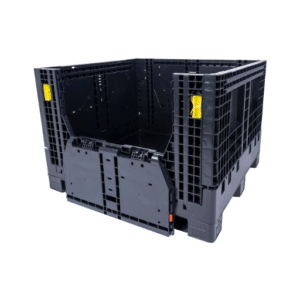
Plastic pallets serve as a secure solution to expose cost-driven companies to the differences in pricing amongst differing and contrasting plastic pallet products. If you have any expectations of purchasing plastic pallets, a demystified understanding of pricing, the nature of the material, and functional benefits will help you choose the right pallets based on cost-effective needs. The article covers significant elements that impact pricing and features for the potential supply chain operations, whether you are looking at sturdy, rackable pallets or at pegging disposable materials in mind. Let us maintain an intriguing run on the tightrope, balancing the cost-effective navigation hindrance down the trail of peak quality so that supply chain operations may exhibit the same efficiency and economy.
What are Plastic Pallets?

Plastic pallets refer to durable platforms for storing, stacking, or transporting products in various industries. They are manufactured, mainly from polyethylene or polypropylene, and provide an alternative to traditional hard wooden boxes. These plastic pallets are protected from moisture, chemicals, or other pests, making them suitable for clean environments; these are preferred for activities like food processing and pharmaceuticals. As their design remains consistent, this assures that the shipping-borne requirements for international systems and automation are met; plastic pallets have the added advantage of being reusable and recyclable, making them an economical and ecological choice.
Definition and Types of Plastic Pallets
Plastic pallets are rigid platforms that are made out of materials such as high-density polyethylene (HDPE) or polypropylene (PP), which have been designed to support and transport goods efficiently through the supply chain. Plastic pallets are very different from the traditional wooden pallets – they are long-lasting, lightweight, and undeterred by environmental factors such as moisture and pests. They can be of immense use to industries whose sanitation levels are rigorously thorough and that have to use them on a repetitive basis.
Different types of plastic pallets serve various operational purposes:
- Stackable Pallets—Constructed with sturdy bases for stackability, these pallets allow for increased vertical storage while still maintaining the structural integrity necessary for transportation. Ideal for use in small areas or during low-activity warehouse operations.
- Nestable Pallets—With their tapered design, these pallets can be nested in each other when not in use, saving much space.
- Rackable Pallets—Made to handle high load-bearing capacity, and they can handle heavy loads with comparatively less deflection on racks or conveyor systems for extended periods of storage and distribution purposes.
- Hygienic Pallets—Also known as pharma or food-grade pallets, specifically built to hygiene-conscious requirements, with all neat and smooth surfaces ensuring against any contamination.
- Export Pallets—Demand lightness and a small pric,e and are capable of meeting exact export regulations, which allows a cost-effective way to transport locally.
These types of plastic pallets exhibit a variety of characteristics that suit practically any industry-from retail and industrial manufacturing to food processing and logistics, to enhance efficiency and compliance in supply chains.
Benefits of Using Plastic Pallets
- Exceptional Durability: Plastic pallets tend to be exceedingly resilient due to their strong structure and are resistant to moisture, much better than wood when faced with chemicals/pests. This translates into long service life for the pallets, an upstream benefit that also helps reduce maintenance expenses.
- Lightweight Design: These containers weigh less, have a stronger design, and are easily handled and transported have been built with heavy-loaded use in mind.
- Superior Hygiene: Hygienic conditions are provided through the plastic pallets, with the smooth and unyielding surface that fulfills the cleaning and sterilization requirements of sanitary regulations.
- Automation Compatibility: These pallets are ideal for automation systems, as regards the operational efficiency that computers in automated warehouses offer.
- Environmental Sustainability: Many of these plastic pallets are environmentally sustainable, being made of recycled materials, and can be recycled many times after disposal without crippling the reclamation of resources.
Comparison with Wooden Pallets
When comparing plastic pallets to wooden pallets, one can differentiate the two on the grounds of cost, durability, hygiene, and environmental impact. Wood pallets are relatively less expensive at the outset, making them a go-to option for many organizations with tight budgets or open to using a single-use pallet. However, they can easily get splintered, will require repairs or frequent replacements, and thus lead to higher maintenance expenditure over time; conversely, plastic pallets come with better long-term durability against cracking, rusting, and moisture.
Hygiene is another significant consideration. Due to their porous nature, wood pallets can harbor bacteria, mold, and pests. They are thus not widely accepted in any strict sanitary environments. The use of pharmaceuticals and the food-and-beverage industries can be best dealt with by using clean and easy-to-sanitize plastic pallets. Equally good for plastic pallets is that they are lighter, resulting in cheaper shipping and more efficient handling by automated systems.
Wooden pallets offer a unique advantage from an environmental perspective since they are manufactured for the most part out of renewable resources and are biodegradable when put in their decomposition ambient. The problem, though, is that they usually end up as rubbish once they get destroyed. Plastic pallets, an alternative, are man-made and cannot biodegrade. Nevertheless, they are frequently produced from recycled plastics and can be 100% recycled when their job is done, complying with today’s green thinking and modern principles of the circular economy.
Factors Influencing Plastic Pallet Cost

Several essential factors govern the cost of plastic pallets:
- Material Type: Pallets from pure plastics of classification may cost more than recycled pallets, because of the high price of the raw material.
- Manufacturing Process: The pallets that are transformed into the typical injection molds are costly by way of the cost of precision in their production as well as the required durability.
- Size and Shape: Increasing the size or an exceptional order of pallet design would only augment manufacturing processes and the material used, while causing an added price.
- Strength and Load Capacity: Pallets will be produced in composite or virgin materials, with higher penetration and load capacity, or with matching features that are costly in production and add to the selling price.
- Volume Purchase: A purchase in bulk, i.e., a high volume purchase, in general, signifies paying lower prices per unit, which is equivalent to a volume advantage.
- Logistics and Freight: Transportation expenses and logistics incur additional charges greater in respect to heavy and oversized loads.
These factors affect the price of the plastic pallet, which would eventually allow a balanced way to deal with cost, performance, and application requirements.
Material Types: HDPE vs Polyethylene
High-Density Polyethylene (HDPE) is a type of polyethylene known for its high strength-to-density ratio, making it one of the best for industrial applications like plastic pallets. All HDPE is made of polyethylene. However, not all the polyethylene is HDPE. During the process, HDPE is fabricated at low pressure so that it develops a high crystalline structure that provides higher rigidity, impact quality, and chemical resistance as compared to the various types of low-density and medium-density polyethylene.
Polyethylene is a broader category and includes materials of varied density, such as Low-Density Polyethylene (LDPE) and Linear Low-Density Polyethylene (LLDPE). LDPE offers high flexibility but lower strength, making it suitable for applications like plastic bags or shrink wrap. Yet HDPE, due to its possible thickness and resistance to wear and environmental stress cracking, is the preferred choice for other industrial purposes, such as pallets.
Generally speaking, HDPE is higher priced when compared to general-purpose polyethylene because of more complex manufacturing costs and higher performance attributes. A major advantage of HDPE is its low cost in many applications without sacrificing its technology. When the application does require high load-bearing capacity, exposure to chemicals, or other severe environmental conditions, these robust characteristics make HDPE an obvious choice for companies searching for long-term low maintenance. While alternatives to polyethylene do not provide as much robustness, they might be beneficial if cost-effectiveness is more of a matter of importance than drastic requirements.
Production Techniques and Their Impact on Cost
Various production routes for low-density and medium-density polyethylene depend upon the associated costs and properties of the materials affected. High-density polyethylene (HDPE) is fabricated chiefly by means of low-pressure polymerization, such as the Ziegler-Natta or metallocene-catalyzed versions, yielding polymers with closely packed molecular structures. These happen to be quite expensive regarding resource utilization and, therefore, high costs, not to forget that these designs of materials are attributed to superior strength, exceptional durability, and resistance to chemical spillage.
Low-Density Polyethylene, LDPE. It has been characterized by high-pressure polymerization, usually in free radical reactions, which result in the less dense material in a more dense branch structure with higher levels of flexibility and lower strength parameters when compared with those of HDPE. Linear Low-Density Polyethylene (LLDPE) formed through copolymerization brings the characteristics of both HDPE and LDPE, and is among the choices available as a balance between performance and cost for the production of cost-sensitive film applications.
The overall cost of the material is influenced by the complexity of the manufacturing process, the cost of the catalysts, the cost of energy, and the efficiency of production. Advanced methods are much more expensive to initiate but bring higher-quality performance for use in specific applications and long-term cost-effectiveness.
Load Capacity and Design Features
Material’s load strength is governed by various mechanical capabilities, including tensile strength, yield strength, and ductility. HDPE offers a great deal of tensile strength as well as resilience, thus rendering its use over heavy loads or pressure obvious. LDPE, as it confers more flexibility, serves best upon lighter loads and impact resistance. Both materials can be engineered to meet any specific design requirements through the judicious incorporation of thickness, geometry, and reinforcement.
Design features are critical in ensuring structural integrity and performance. Therefore, wall thickness, webbing, and material distributions have been optimized to meet the load-carrying requirements while minimizing material usage and production costs. To meet the requirement of making products robust under various stress conditions, Finite Element Analysis (FEA) and simulation tools are often resorted to, thereby enhancing the dependability and safety of the product. These design strategies are in consonance with the customer requirements and industrial benchmarks, thereby giving optimum results, ensuring efficacy, and market acceptance.
Types of Plastic Pallets and Their Costs

The design and intended usage of plastic pallets divide them into various types:
| Pallet Type | Description | Cost Range |
|---|---|---|
| Nestable Pallets | Entirely lightweight pallets, they are designed to nest within one another in a configuration that reduces storage and transport space. | $10 – $25 per pallet |
| Stacking Pallets | Such pallets have typically plain bottom surfaces and are quite rigid to hold more than their own weight stacked when being loaded. | $20 – $50 per pallet |
| Racking Pallets | Engineered for racking operations, these types are really heavy-duty and more reinforced in design to handle weight. | $40 – $100+ per pallet |
| Hygienic or FDA-Approved Pallets | Best for industries, be it food processing or pharmaceutics, where cleanliness is paramount, and they need to have zero compromises on it. | $50 – $150 per pallet |
Costs typically change with materials (recycled vs. virgin plastic), dimensions (size), load requirements, and production quantity. Generally, buying in bulk would reduce the cost per unit.
Rackable Plastic Pallets
In comparison to nestable pallets that are meant for one-way transport, the features of rackable plastic pallets concentrate on maximizing strength and stability. This feature is just as essential during the use of a rack system for storage as it is under the hammering of conditions where the worker’s safety would also depend. Frequently seen in various sectors, these pallets can protect heavy loads from the normal resistance of damage to cargo when fully supported.
Key Features:
- Material Composition: Typically built of high-density polyethylene (HDPE) or polypropylene (PP); chemicals, liquid, and temperature differences have little to no effect on the material.
- Load Capacities:
- Static loads: 5,000 to 10,000 lbs
- Dynamic loads (items being transported): 1,500 to 3,000 lbs
- Racking load capacity: 1,000 lb to 3,000 lbs depending on design and material
- Design Options: Open/closed top decks, four-wall bases, perimeter stacking, or nestable bases for Asian style stacking, heavy patterns for tough-duty applications.
Cost: The price of rackable plastic pallets is generally between $50 and $200 per pallet. This distinguishes them on a number of factors, including size, weight carrying capacity, and the quality of materials utilised. The cost per pallet is reduced by bulk quantity, i.e., 200 or more pallets. Repro features, such as included ribs or an anti-slip surface, can maximize the overall cost.
Advantages:
- Durability: Ideal for a long life cycle compared to wood, resistant to fracturing, warping, and splintering.
- Sanitary Ease: Being sanctified limits the feasibility of multiple scrub-downs for the packaging of food and/or pharmaceuticals.
- Environment: True rackable plastic pallets contain recycled materials, are meant to be further recycled. Supporting green operations.
- Safety: There are fewer injuries and less product damage on well-groomed surfaces free of nails and splinters.
Industry Adoption
Rackable plastic pallets have been gaining acceptance primarily due to their compatibility with automated systems like conveyors and robotic arms, whereas a long way to go in modern storage. Being precisely made and assembled meet the specification and hence all are ready to be used for integrated logistics.
Material science and vendors’ evolving techniques fill in the blanks for a combination of light materials and stronger pallets, thereby urging the various industries to search for lighter and stronger materials to cater to unmet demands.
Nestable and Stackable Pallets
The newer design of pallets, which is based on nestability, has enabled pallets to be stacked within one another when empty, which in turn serves to reduce storage space requirements as well as return transportation costs. Nestable pallets become very useful for industries best by cramped warehouses or aiming to reduce their logistics expenditure.
Contrastingly, the stackable pallets aim at huge stacking and vertical warehousing design. The new pair of pallets comes with stronger design features and the ability to lock the devices under loads that will accommodate groupings of these. Both pallet pairs are designed in most cases with high-density polyethylene material or polypropylene, suspecting that this will support, in the first place, weight and stability to resist competitive environmental forces.
Nestable and stackable pallets, once included in the supply chain, provide a boost to operational efficiency and cost reduction and support sustainability through sustainability. This is mainly because of the ability to suit changing systems within the automated network that can be assigned to today’s extended logistics network.
Heavy Duty vs Lightweight Plastic Pallets
Heavy-duty plastic pallets are meant to be sturdy and able to carry massive weights for highly industrial applications. Created from materials such as High-density polyethylene (HDPE), the main distinguishing factor of these pallets is their greater capacity with heavy weights, static and dynamic, which suits them for stowing and holding volumes of material, for long-term warehousing, and for export applications. Often, these strong pallet pilings or designing structures exhibit higher resistance to impact, temperature fluctuations, and very harsh handling conditions, hence lasting and resolving reproducibly in tough working conditions.
Plastic pallets weigh much less than all kinds of other pallets. For example, plastic pallets with lightweight pallets are considered ideal for weight-sensitive conditions such as air freight or one-way shipping. Being made from economical materials, plastic pallets have less lifting capacity and are primarily designed for single-use or limited reuse applications. The construction of their lids lowers freight costs and carbon emissions, whereas they are easier to move around if poured manually. The disadvantage of this pallet is that in various instances, they aren’t as sturdy and long-lasting as heavy-duty pallets that can be used for many years with respect to heavy-duty tasks.
Regardless of the plastic pallet’s thickness, they can be integrated with many automated systems, a vital factor when trying to accomplish sustainability-related aims. The choice between heavy-duty and lightweight pallets would then depend on the weight requirements, the operational places they operate in, and the cost. One can easily see how selecting the appropriate pallet type may help to lessen the logistics costs and, more importantly, foster product safety.
Cost-Effective Solutions for Warehousing

In cost-effective warehousing, businesses are meant to focus on space utilization maximization, operational efficiency upgrade, and waste elimination. These storage schemes decrease an organization’s expansion-related burden, increase revenue, and cut costs. The immediate inventory management system assures the proper evolution of stock to eliminate excessive stock and out-of-stock conditions. Furthermore, energy-efficient systems, like LED lights, automated HVAC controls, and reusable packing materials, go a long way in cutting operational expenses. Regular training of staff in proper material handling ensures fewer errors and sustained productivity. Together, such processes can serve as the great saviors of indirect costs while supporting higher performances.
Low-Cost Options for Indoor and Outdoor Storage
When looking for budget-storage solutions, one can either take an indoor or outdoor approach. For instance, indoors, stacking mechanisms like pallet racks and staging systems that elevate storage towards ceiling levels should be chosen to avoid the use of any additional floor area for storage. Other inexpensive choices have been constructed around modular shelving systems, which allow greater flexibility with easy adjustments in scale in an all-space context. Insulation control and moisture prevention are significant cost-saving measures for the preservation of more sophisticated inventory-from classic papers to biological specimens.
Storage containers are a great investment for outdoor storage for their logistical and economic advantages. The containers offer security for their occupants and can be moved as needed. However, the extra merchandising could include tarp or canopy weather guards, so no money will go down the drain for household resources in the future with vendors. As a result, these types of outside surface pads in gravel or concrete serve as a foundation for stacks of materials or containers while reducing the ground-level moisture problems. Finally, outdoor security could be implemented through a variety of camera systems with very little outlay for large operations. By applying these ideas, companies could store economically and securely in these different environments.
Waterproof and Ventilated Pallets
Material storage bracing initiates a climate-controlled condition to keep items looking new. Investing in a waterproof/mould-resistant design of pallet could have an added advantage, keeping delicate pallet goods in a proper area in the outdoor section. Such pallets, typically made of durable plastics or hard materials, are perfect for casting and preventing moisture absorption. Other types of pallets have ventilation in the form of risers, promoting the flow of cooled air to prevent water vapor from causing moisture. These conditions (temperature-sensitive pallets and perishable goods) play very critical functions.
Waterproof, freely ventilated pallets are able to show much longer usage than traditional light wooden pallets, as they are not subjected to rotting or warping. Their relatively lightweight yet sturdy nature makes handling a pleasant and easier process. Transportation costs are conveniently slashed on account of this unique feature. Besides, care and maintenance are a lot easier with respect to cleanliness; hence, they are designed to meet the exacting special cleanliness standards of most food and pharmaceutical industries. A reliable application of these pallets will improve the storage efficiency along with a reduction in losses, which occur from a variety of diabolical conditions, to ensure the cost-effectiveness at all levels.
Using Plastic Pallets for Basement Storage
Plastic pallets are perfect for storing in basements because they are robust and can resist the moisture, mold, and mildew sure to appear in most basements. Unlike wooden pallets, plastic ones do not absorb water, meaning they will not warp and can keep items off the damp basement floor. Further, with their non-absorptive surfaces, they resist a breeding bed for bacteria and should protect any sensitive goods, such as tools, electronics, or any seasonal possessions, that you may wish to put in elevated storage. Because of this, plastic pallets’ consistent, reliable load-bearing performance is important in helping them to safely support heavy, unevenly distributed loads. Regularized shapes of the pallets allow them to be stacked quite nicely, providing some organized storage that optimizes storage space. Therefore, plastic pallets represent a very helpful and efficient asset for the storage and organization of goods in high-challenge basements.
Choosing the Right Plastic Pallet Manufacturer

- Material Quality: Always see that the manufacturer uses high-grade and tough materials that meet the standards of safety and tolerance laid down by the industry. Look for certifications, including compliance with ISO.
- Customization Options: The pallet vendor offers different layouts that are configurable for particular transport and storage requirements.
- Reputation: Review client feedback, endorsements, and case studies to know the manufacturer’s reputation. Any old success story suggests reliability.
- Price: Compare the price structures that different vendors demand to ensure you get the commodity for your bucks. This is because no value is rewarded for money more than another.
- Customer Support: Moral support is the golden rule in looking for companies with magnificent customer service for order entry, queries, and other post-sales issues.
By sticking to these factors, it is expected that your local plastic pallet producer will harmonize with your resistant usage and material aspiration sites.
Factors to Consider When Selecting a Manufacturer
The operation and efficient results cannot all be left to maker-based selection. There are a few key points that have to be taken into account:
-
- Production Capacity and Scalability: The tree must be able to scale up its operations in a way that represents your business growth. An up-scaling tree-working firm that can scale operations will therefore be in a better position to manage and take on any challenges that might arise from distinct circumstances with higher demands.
- Certifications and Compliance: Every manufacturer must comply with the industry standards. ISO compliance and environmental and safety screens ensure product reliability and that legal requirements are met.
- Timings and Reliability in Delivery: Delivery record – and Delivery dates – come to measure your dependence in rope on the assurances made by the manufacturer. Late or delayed deliveries can upset your supply chain, hamper timely delivery, or just interfere with operational efficiency.
- Technological Capabilities: Key highlights for investigation will be the manufacturer’s integration of advanced technologies such as automation, precision machinery, or digital inventory systems. It has been witnessed with these technologies that the output results are generally of a higher quality and more reliable.
- Sustainability Practices: As part of the analysis, it becomes important to ascertain whether the manufacturer regards sustainability as a priority, i.e., by the use of eco-friendly materials or energy-efficient means of production. This consideration can assist businesses in harnessing potential synergy with sustainability.
- When analyzing such factors, the purchasing decision to be taken shall not only satisfy the present requirement but also allow a company to meet its very long-term objectives.
Evaluating Quality and Price
It is all about optimizing the value, striking the right balance between quality and price. I weigh quality jewellery, the performance an item is likely to deliver, and consider how well the thing stands up with respect to adherence to professional standards. Obviously, that calls for a broader cross-spectrum analysis of service providers together with their pricing standards. So, with these considerations as top priority, I can make a decision that best conforms with both price limits and quality in the ultimate analysis.
Supplier Relationships and Supply Chain Efficiency
In the scope of enhancing supply chain efficiency, having strong supplier connections is essential. Such relationships are endowments that can flourish only with clear communication, trust on mutual terms, and continuous collaboration. When businesses become consistent in maintaining long-term relationships with some of the major suppliers, they enhance coordination, thus reducing the lead time, and become more assured of product deliveries. Aggregated from these, value chains may – with concerted sharing of real-time data and technology from various points – seamlessly track goods and increase demand forecasting accuracy, thereby reducing disturbances. Additionally, periodical performance assessment and legally binding conditions aimed towards mutual goals will incline compliance to integrity in the deliveries, ensuring fulfillment of quality standards, and optimizing cost structures. All of these factors make the supply chain more robust towards the pursuit of total operational excellence.
Reference Sources
Operational concept of an innovative packaging management system
Frequently Asked Questions (FAQs)
What is the average cost for a plastic pallet?
The cost of an average plastic pallet generally varies based on several attributes, such as size, type, and manufacturer. As per the general trend, new plastic pallets cost from $20 to $150 each, but those that have been used previously tend to be even cheaper. In contrast, the use of heavy-duty pallets might push up prices because of the better quality and load-bearing capacity.
How do I calculate cost savings from using plastic pallets?
Major things here will be the investment in utility for buying and maintaining the pallet; every such extra value must be subtracted from the cost savings one stands to gain by using plastic rather than wooden pallets. The savings in buying regularly over the near future will be immense because a plastic pallet is reusable, light in weight, and virtually maintenance-free compared to its wood counterpart.
What are the benefits of using light plastic pallets?
Light plastic pallets are appreciated since they are designed to be handled easily, reducing warehousing and distribution costs, with the added advantage of having a lower dynamic load capacity, which ensures that they can suit various storage requirements without becoming brittle or failing with a long life span.
Can plastic pallets withstand the weather that might irrevocably damage them?
Yes, the plastic pallet is excellent for outdoor storage due to its waterproof nature, rot resistance, and the ability to withstand various elements. Hence, these pallets allow moisture and pests to reach your stuff.
What types of plastic pallets are available for various applications?
There are nestable pallets, stackable plastic pallets, and heavy-duty plastic pallets from which one can choose for various applications, such as export, shipping, storage-lightweight, or warehouses and distribution.
How do plastic pallets differ from wood pallets?
Unlike wood, plastic pallets are easy to clean and hygienic-they cannot be homes for pests. They are more long-lasting than previous kinds and can stand up to harder conditions, making them go-to choices for many industries. Changing to plastic pallets could bring a grab bag of savings in the future.
Do I need to look for specific demands in plastic pallets?
Yes, many plastic pallet vendors have plastic pallet species, which are decorated for certain needs. Be it size, shape, or carrying capacity, there is a palette tailor-made for storage that is made heavy, more efficient in your supply chain.
What impartiality does a plastic pallet carry with its waterproof and ventilated lattice?
Waterproof mesh structure inside the panels has the advantage of airing the pallets properly, yet the difference possesses another advantage: aiding in the ventilation of things while they are in storage. This makes for a package good for storage and applications.
Are there some plastic pallet myths I need to be aware of?
This actually opens up a lot of points regarding perceptions and misconceptions with the wooden ones, most notably in qualities of rigid plastic compared with others-whether or not pallets snap. But they are durable, actually, and far more stable in need of transport and wear-resistance due to the routine extreme handling. This understates the occasional (though mostly marginal) failure of wood pallets.