Considered an efficient pallet racking system in any warehouse point, it is truly a life-supporting key, while safety and compliance are ensured through a thorough knowledge of industry standards and regulations. Poor design, installation, and maintenance often cause operational downtimes, workplace accidents, and legal penalties. We shall review crucial pallet racking standards impacting warehouse operations on the best methods for safety, structural soundness, and compliance. This comprehensive guide will provide warehouse managers, safety officers, or supply chain professionals with the knowledge to maximize their storage system while maintaining the highest standard of safety precautions and regulatory requirements.
Understanding Pallet Racking Systems

Pallet-shelf arrangements refer to storage options kept in warehouses to arrange goods on pallets. They are expected to have storage space above and horizontal on the largest scale, while allowing goods to be easily accessible for use. The two main components of a pallet rack involve upright frames and horizontal beams that are used with some kind of decking or pallet supports that, in turn, form a stable-appearing structure capable of bearing heavy loads. A good design and installation are necessary for load-bearing capacity and, further, from the very moment it does not collapse and then lend the workplace unsafe. Compliance with standards such as ANSI/RMI and OSHA remains highly recommended due to increased efficiency promulgated by the associations.
What is a Pallet Rack?
A pallet racking system represents a material storage method that is frequently encountered in warehouses and factories for the purpose of stacking the materials in pallets or “skids” in rows placed horizontally and levels placed vertically in the distance. It was created to allow for maximum density of storage with easy access to goods through forklifts or other material handling equipment. The construction of pallet racks is conventionally wider, steel-made, comprising an upright with frames, horizontal beams, and decking or pallet support. They are available in several types, such as selective, drive-in, push-back, pallet flow, and cantilever racks to meet various storage requirements. Efficient application of pallet rack systems assures the best use of space, safe inventory handling, and optimal operational efficiency.
Types of Pallet Racking Systems
Understanding the various types of pallet racking systems is essential for selecting the right solution for your warehouse needs. Each system offers unique advantages tailored to specific operational requirements.
Selective Pallet Racking
Because of its versatility and ease of access, selective pallet racking is surely the most commonly used system. It is perfect for those warehouses that deal with a large product variety and low volume because of the direct access allowed to the pallet. This type of racking can be serviced using virtually any type of forklift, and it accommodates both FIFO (first-in, first-out) and LIFO (last-in, first-out) inventory systems.
Drive-In and Drive-Through Racking
Drive-in racking tries to create high storage density by cutting aisles out so that forklifts can drive right into the racking structure. It follows the LIFO mode of operation and is suitable for products that have high volume but low variety. On the contrary, drive-through racking can be accessed from both ends and is better suited for a FIFO inventory management system.
Push-Back Racking
Introduced in this section is the push-back racking, a system that improves storage efficiency by means of angled rails and carts to store different pallets in a single lane. A new pallet coming into the system pushes the one back, thus creating a LIFO sequence of storage. This system is most suitable for warehouses lacking much space and requiring a high turnover.
Pallet Flow Racking
Pallet flow racks or gravity flow racks are sloped with rollers, so the pallets move forward in FIFO mode. This kind of arrangement is suited for facilities where inventory rotation is of paramount importance, such as food and beverage storage or pharmaceutical storage.
Cantilever Racking
Used for keeping long or bulky items like lumber, pipes, or furniture, cantilever racks have extended arms supported by very strong columns. It is a solution for materials that cannot be easily stored on pallet racks.
Selection Criteria: These rack systems are tailored to the specific needs of the operation; therefore, their selection must consider such factors as size, weight, turnover of inventory, and available warehouse area. A prudent evaluation of these factors aids in assuring that the storage is managed safely, efficiently, and at a reasonable cost.
| Racking System Type | Inventory Method | Storage Density | Best Application |
|---|---|---|---|
| Selective Pallet Racking | FIFO or LIFO | Low to Medium | High product variety, direct access required |
| Drive-In Racking | LIFO | High | High volume, low variety products |
| Drive-Through Racking | FIFO | High | Products requiring rotation from both ends |
| Push-Back Racking | LIFO | High | Limited space, high turnover warehouses |
| Pallet Flow Racking | FIFO | Medium to High | Perishable goods, time-sensitive inventory |
| Cantilever Racking | N/A | Medium | Long, bulky items (lumber, pipes, furniture) |
Components of a Rack System
The rack system is basically made up of several key components that work for better space efficiency and structural support. The principal components are as follows:
Uprights (Frames)
They act as the vertical structures forming the backbone for the entire system and conveying loads. Uprights, manufactured from high-strength steel, are mostly perforated so that beams may be placed at flexible distances.
Beams
Horizontal connectors joining the uprights and directly supporting the stored loads. Available in different lengths and load capacities, beams can be box-shaped or step-profiled depending on the rack type.
Decking
Used mostly to support smaller or oddly-shaped goods, these decking panels–that may come out as wire mesh, steel, or wood–offer stability and make sure items will not fall through.
Anchors and Base Plates
These stabilize the system by anchoring it to the warehouse floor to secure it against the load.
Braces
Diagonal or horizontal bracing is secured between the uprights to provide lateral stability and to resist swaying upon the application of a load.
Safety Accessories
These are column protectors, safety bars, and rack guards. They protect against accidental damage to the racking systems as well as the goods stored therein.
Critical Note: Proper design, installation, and regular inspection of these components all aid in the safe and efficient running of warehouse operations.
Importance of Safety Standards in Warehouse Racking

Safety standards in warehouse racking prevent accidents, protect employees, and minimize damage to goods. These standards ensure that racking systems shall be built, erected, and maintained in such a manner as to bear verified specified loads without risk of collapse. When used and erected in accordance with recognized guides, such as OSHA or FEM standards, the chances of structural failure are minimized, and safe use is promoted. Periodic inspection, keeping the weight properly distributed, and using protective accessories will maintain system integrity and give a safe environment for working.
Overview of OSHA Compliance
The term OSHA compliance means obeying the many standards and policies established by the Occupational Safety and Health Administration (OSHA) to assure workplace safety and health. OSHA compels the employer to provide a workplace free from hazards recognized under the act, which could cause death or serious harm; among them are yearly safety training for the employees, proper labeling and handling of hazardous materials, and keeping records of incidents and accidents that provide for transparency and monitoring of the safety program.
In the Act, OSHA has laid down standards specific to each industry, such as construction, manufacturing, and warehousing, with respect to equipment safety, fall protection, and machine guarding. There are checks and inspections conducted to see if the relevant safety standards are being followed, and offending employers may be fined. By undertaking risk assessments and instituting a safety management system, businesses will be able to maintain compliance and effectively ensure protection for their workforce.
ANSI Pallet Racking Safety Guidelines
Though technically correct, the ANSI standards for pallet racking safety, such as ANSI MH16.1, provide criteria that concern the structural integrity and safe use of racking systems. Accordingly, the design, installation, maintenance, and operation of pallet racks must be done in proper manners so that pallet racks do not fail and cause injuries or damage. Some important considerations are:
Load Capacities
The racks must be labeled with the load capacities, and storage configurations must not exceed their respective structural limits.
Installation Requirements
Proper anchoring to the floor and alignment during installation are required to maintain stability. Racks should be installed following the manufacturer’s instructions and verified by qualified personnel.
Inspection and Maintenance
Periodic inspections are necessary to detect damage caused by impact or wear. Beams and frames that are compromised on any level must immediately be replaced or repaired.
Worker Training
Proper training should be given to workers so that they understand weight limits and appropriate stacking techniques, as well as how to avoid rack overloads.
Seismic Design
In areas susceptible to seismic activity, buildings are thus subject to additional design and safety considerations aimed at mitigating earthquake risks.
By adhering to ANSI standards, storage systems can be kept in compliance and safe so as to minimize risks and foster a safe warehouse environment.
Common Safety Standards for Pallet Racks
In case you want your pallet rack system to be structurally sound and safe, observing safety norms is paramount. The following are some canons to abide by in conformity with commonly accepted safety codes:
Load Capacity and Weight Distribution
It is common for load capacities to be posted on a rack so that persons are informed not to overload it. Weight must be properly distributed on beams and shelves to impart stability and lessen the chance of collapse. An ongoing inspection must ensure that racks stay within their respective design limitations.
Rack Installation and Anchoring
Proper installation according to the manufacturer’s specifications is essential. Locks must be firmly anchored to the floor to avoid toppling or shifting, especially in places of high forklift traffic or seismic activity.
Rack Alignment and Spacing
Sufficient spacing shall be maintained between racks to allow for safe forklift operation and smooth handling of goods. Pallets should be properly placed so that they do not protrude out of the rack edges, as this could form hazards.
Material and Structural Integrity
Use good-quality materials conforming to or exceeding recognized engineering standards. Whenever a rack or its components show signs of damage, rust, or wear during periodic inspection, immediate replacement must be carried out with the damaged component to keep up with safety compliance.
Employee Training and Protocols
Operations employees working on pallet racks should also be given thorough training on safety measures, including stacking considerations, load-limit considerations, and signs of potential structural failure. Protocols should include situations where unexpected failure occurs.
Safety Reminder: The adoption of these provisions can greatly reduce hazards in the warehouse and protect workers, while at the same time, meeting the guidelines of OSHA and ANSI. An environment of accountability and vigilance in warehouses must be nurtured to reap long-term benefits in safety and operational efficiency.
Standard Pallet Racking Heights
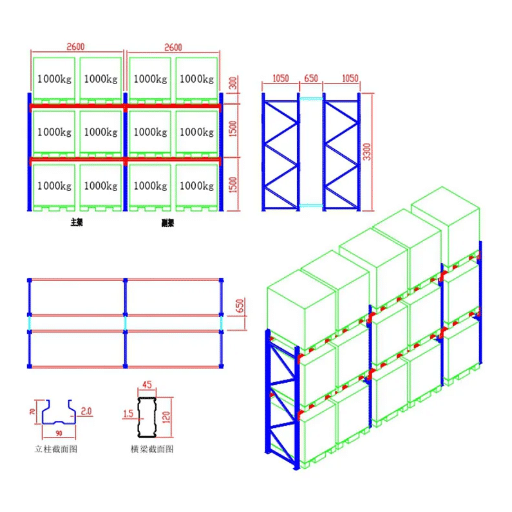
Standard pallet racking heights typically range from 8 to 16 feet according to ceiling height and building requirements for storage. These systems are set up to utilize as much vertical space as possible while maintaining safety and accessibility. For special environments like high-bay warehouses, racking systems can be designed in excess of 40 feet; however, such a tall structure requires extra planning and considerations, including specialized equipment such as forklifts with extended reach. Choosing the correct racking height should be a compromise between storage needs, ease and efficiency of operations, and safety requirements. Always check manufacturer specifications-environmental type local regulations for suitable height determination in your facility.
Understanding Rack Height Regulations
Rack heights are governed by regulations intended for the safety of workers and buildings in accordance with local building codes. For instance, the seismic zone classification and fire code, such as loadrequire the height of racks and capacity. OSHA requires that all rack systems must be structurally safe, and many local fire codes specify the clearance between racks and sprinklers to allow water distribution when the sprinkler system is operative due to a fire.
Moreover, the height of a racking system must be consistent with the load specified by the manufacturer, considering factors such as limitations on beam deflection and stability of the beams under weight application. Many jurisdictions also require permits for rack systems exceeding commonly set height limits of 8-12 ft., depending on the geographical and seismic conditions. Racking systems need to be inspected regularly by the facility owners to ensure their soundness and adherence to these regulations. A qualified engineer should be consulted for an exact interpretation of compliance or in close association with the local authorities for their requirements.
Typical Standard Pallet Racking Heights
| Warehouse Type | Typical Height Range | Special Considerations |
|---|---|---|
| Small-Scale Warehouses | 8 to 12 feet | Standard forklift access, basic ceiling clearance |
| Medium-Scale Warehouses | 12 to 20 feet | May require reach trucks or order pickers |
| High-Bay Warehouses | 40 to 60+ feet | Specialized equipment, enhanced safety measures, permits required |
Standard vertical beam increments are spaced at every 2 to 3 inches so that storage levels can be customized quite precisely. In determining suitable rack height, one can observe reach limitations of forklifts, clearances for sprinklers as defined in the NFPA, actual building laws with respect to earthquakes, and other local laws. To optimize for use and safety, always factor in the load capacity of the racks at these heights, which includes pallet weight, limits for beam deflection, and the integrity of uprights.
Impact of Rack Height on Warehouse Efficiency
Rack height has a direct bearing on warehouse efficiency by way of the vertical storage potential and retrieval speeds. Bigger rack heights mean more cubic storage space offered by a warehouse, allowing warehouses to make optimal use of what little floor space they might have. As they get taller, there are added complications, such as taller heights leading to lengthened pick times-elongating the travel and retrieval cycle for forklift pickers. There are also more stringent safety concerns at higher heights-whether OSHA standards relating to general safety or NFPA codes relating to sprinkler clearance.
A key operational issue lies in balancing the rack height with the accessibility and capability of the equipment. Please note that forklift specifications, which include lift height and load-handling stability, must be compatible with the racking dimensions to avoid any waste and accidents. Furthermore, the correct load distribution and durability of the racking system are critical considerations to avoid failure, particularly in higher storage. Hence, the decision of rack height is one that strategically balances spatial efficiency with equipment compatibility and building code/safety considerations to ensure a safe and productive warehouse environment.
Inspection and Maintenance of Pallet Racking

Regular inspection and maintenance of pallet racking systems are essential to ensure safety and operational efficiency. Inspections should be performed regularly to detect indicators of wear, damage, or misalignment that could include bent beams, loose bolts, or compromised uprights at any level. Expedient rectification of all identified issues is necessary to avoid potential structural failure.
Tightening hardware, replacement of worn-out parts, and maintaining even load distribution across the racks are key maintenance activities. Staff must also be educated in the proper use and handling of racks to avoid accidental damage. Complying with industry safety standards and manufacturer specifications maintains the structural integrity and life span of the racking system.
Importance of Regular Inspections
Safety inspections are of utmost importance; they ensure that the racking maintains its performance. During inspections, impressions of wear, overloading, misalignment, and other damage can be identified, and if these are left unattended, they may culminate in structural failure or operational hazards. Weekly visual inspections can be performed for immediate concerns, while full-scale inspections performed by certified inspectors every six months to one year will honor safety standards and load limitations. The aspects that need to be checked are: beams,” upright” braces, and anchors, as well as the correct assignment of load capacities. Post inspection, during which remedial action should be taken at once, if any item is to be repaired or enhanced to reduce risk; keeping the operators on the safer side and older records duly maintained will ensure regulatory compliance as well.
How to Inspect Pallet Racks for Compliance
To certify pallet racks for compliance, a systematic approach must be applied for safety considerations and regulatory adherence. First, pay attention to structural members: beams, uprights, braces, and ascertain the presence of damage such as bends, cracks, or corrosion. Check that all anchor bolts and anchor bits are securely anchored to the concrete floor, and also ensure that those anchor bolts show no signs of wear or displacement. Check that the load label is present and readable with information on the load capacity of the racks so that the weight limits stipulated are not exceeded.
Considerations on the overall alignment of the rack system include that the vertical upright frames are plumb and square so as not to exhibit any signs of leaning or instability, and measure clearances between racks for conformity with local fire safety codes, while giving enough room for forklifts to operate. Finally, ensure all safety clips or locking devices are properly installed on beams so that beams cannot inadvertently be knocked off.
The regular inspection should also consider the rack environment. Look for potential hazards such as improper stacking practices, overloading, or damaged pallets. Inspections should be performed at regular intervals as recommended or after any significant event such as impact or seismic activity, to maintain safety and operational efficiency. Results of the inspections should be well documented, and any issues identified should be resolved immediately to ensure continuous compliance.
Inspection Checklist
- Structural Members: Examine beams, uprights, and braces for bends, cracks, or corrosion
- Anchoring System: Verify all anchor bolts are secure with no signs of wear or displacement
- Load Labels: Confirm load capacity labels are present and readable
- Alignment: Ensure vertical frames are plumb and square without leaning
- Clearances: Measure spacing between racks for fire safety and forklift operation
- Safety Devices: Check that all safety clips and locking devices are properly installed
- Environmental Factors: Identify improper stacking, overloading, or damaged pallets
- Documentation: Record all findings and implement corrective actions immediately
Best Practices for Maintenance and Safety
Conduct Periodic Checks
Set up a routine inspection schedule for the storage racks to identify, correct concerns such as wear and tear, corrosion, or structural damage. Use standardized checklists to ensure inspections are done uniformly and thoroughly. Special focus should be given to those areas that experience frequent usage or traffic.
Adhere to Load Capacities
The maximum load capacities of all racks should be clearly displayed, with strict enforcement of weight limits imposed. Racks, when overloaded, become weakened and could give way. Staff should be taught proper loading and unloading techniques, as uneven weight distribution is equally dangerous.
Train Employees on Rack Safety
Conduct safety trainings for employees concerning the handling of materials, the identification of rack defects, and emergency response procedures. These trainings should be reinforced regularly.
Clean and Organized Working Space
Keep aisles and spaces around racks clear of debris or anything that might hamper the movement of forklifts or other equipment against structures. Conduct periodic inspections of the rack environment to remove hazards likely to interfere with safe operations.
Use Proper Equipment
Using forklifts and other material-handling equipment carefully will prevent accidents with racks. Provide racks with protection against any minor impacts-e.g., column guards or beam end protectors.
Follow Manufacturer Guidelines
Install, use, and maintain racks according to the manufacturer’s recommendations and industry standards. In case of any changes to the rack configuration or loads it supports, review the operational guidelines to validate their compatibility.
Implementation Success: By observing these guidelines, the company can maintain decades of experience working on safety in the workplace, prolong the service life of its storage racks, and remain compliant with the required regulations.
Automation and Pallet Racking Systems

In pallet racking systems, automation enjoys an integration with warehouse technologies such as automated storage and retrieval systems (AS/RS), conveyors, or robotic handling equipment to optimize warehouse operations. These systems enhance efficiency by reducing manual intervention, improving pick accuracy, and using the space efficiently. The usual automated systems range from shuttles to vertical lift module solutions, and high-density racking combined with automated machinery. In case one is considering implementing automation, they need to analyze the company’s actual storage and throughput requirements carefully in order to opt for the most feasible solution.
Integrating Automation in Warehousing
Warehousing automation has a wide range of benefits, from enhancing operational efficiency, greater accuracy, and storage cost optimization. Automated systems such as conveyor belts, robotics, and warehouse management software help reduce human errors, quicken order fulfillment, and offer real-time tracking of an item in inventory. Technology companies are thus able to reduce operational expenses in the long run while absorbing ever-increasing customer demands.
Yet, implementation has its share of challenges to be carefully taken into consideration. High initial capital investments hamper; system integration complexities hamper; with scarce manpower processes that need management and maintenance of automated tools, also are considered an impediment. Additionally, the respective operations and scale need to be assessed to make a tailored solution that matches its long-term goal. By careful planning and cost analysis with a phased approach to development, these challenges can indeed be surpassed, such that automation can be installed smoothly with the warehousing operation.
Benefits of Automated Pallet Racking Systems
Key Advantages
- Increased Storage Capacity: Automated systems optimize vertical and horizontal space utilization
- Reduced Retrieval Time: Faster picking and placement operations improve throughput
- Minimized Manual Labor: Automation reduces physical strain and labor costs
- Enhanced Inventory Accuracy: Real-time tracking and data management improve stock control
- Improved Safety: Reduced human interaction with heavy loads decreases accident risk
- Reduced Goods Damage: Precise handling minimizes product damage during storage and retrieval
- Better Decision-Making: Current data enables analytical insights for warehouse management
- Long-Term ROI: Despite initial costs, automation provides sustainable operational benefits
There are numerous benefits offered by the automated pallet racking system, which, in turn, contribute to increased operational efficiency and productivity. By implementing these systems, I can augment storage capacity, lessen retrieval time, and avoid heavy manual labor. Moreover, these systems serve to increase inventory accuracy, keeping data current and facilitating improved analytical decision-making with respect to warehouse management. These enhance safety in the warehouse and reduce damage to goods, making automated pallet racking systems a worthy investment for a sustainable operational future.
Challenges and Considerations for Automation
Having faced many challenges in implementing automated technology for warehouses, all of which have to be satisfactorily overcome for smooth integration, the first is the cost of getting the automation set up and installed. This is of serious concern, especially for small and medium-sized businesses. This price factor encompasses the purchases of equipment, structural modifications (on walls or ceilings), and other related costs such as software upgrades. Secondly, to ensure compatibility between the new automation system and existing infrastructure, one would have to painstakingly plan the solution and customize its implementation; this, therefore, complicates the timeline for implementation.
Another highly pertinent concern is skilled personnel to operate and maintain automated systems. Employees must be trained to work with new technology, and any resistance to change must be addressed for successful adoption. Other technical issues can also arise, causing disruptions to operations, such as software glitches or mechanical malfunctions, calling for a strong maintenance plan and acting as a deterrent for any consideration in keeping costs down. Lastly, data security within automated systems is extremely important because of the inherent open or compromised connectivity; hence, automated systems must be safeguarded against any cyber threats that could impede the operational integrity of the automated system. All these, if addressed well, would need thorough planning, substantial resource mobilization, and a continuous effort in optimizing the systems commissioned.
Automation Implementation: Challenges vs. Solutions
| Challenge | Recommended Solution |
|---|---|
| High Initial Costs | Phased implementation approach with cost-benefit analysis |
| System Integration | Careful planning and customized solutions for existing infrastructure |
| Skilled Personnel | Comprehensive training programs and change management strategies |
| Technical Issues | Robust maintenance plan with preventive measures |
| Data Security | Cybersecurity protocols and regular security audits |
Pallet racking systems serve as the backbone of modern warehouse operations, and their proper implementation is crucial for both safety and operational excellence. Throughout this comprehensive guide, we have explored the critical aspects of pallet racking standards, from understanding different system types to implementing rigorous inspection and maintenance protocols. The knowledge shared here empowers warehouse managers, safety officers, and supply chain professionals to make informed decisions that protect their workforce while maximizing storage efficiency.
Adherence to industry standards such as ANSI/RMI and OSHA regulations is not merely a compliance requirement—it represents a commitment to creating a safe working environment where employees can perform their duties without fear of structural failures or accidents. Regular inspections, proper load management, employee training, and the integration of safety accessories all contribute to a holistic approach to warehouse safety that pays dividends in reduced incidents, lower insurance costs, and improved operational uptime.
As warehousing technology continues to evolve with automation and advanced material handling systems, the fundamental principles of structural integrity, load capacity management, and safety compliance remain constant. Whether implementing traditional selective racking or cutting-edge automated storage and retrieval systems, the core focus must always be on creating an environment that balances maximum efficiency with uncompromising safety standards.
By investing in quality racking systems, maintaining rigorous inspection schedules, providing comprehensive employee training, and staying current with evolving regulations, organizations can build a warehouse infrastructure that not only meets today’s demands but is also prepared for tomorrow’s challenges. The commitment to excellence in pallet racking safety and compliance is an investment in your company’s most valuable assets—your people, your inventory, and your operational future.
Essential Takeaways
- Proper selection of pallet racking systems based on inventory type and warehouse requirements is fundamental to operational success
- Compliance with ANSI/RMI and OSHA standards protects employees and reduces legal liabilities
- Regular inspections—weekly visual checks and biannual certified inspections—are critical for identifying and addressing structural issues
- Load capacity adherence and proper weight distribution prevent catastrophic failures and extend system lifespan
- Employee training on safety protocols, load limits, and hazard identification creates a culture of safety awareness
- Rack height decisions must balance storage optimization with equipment capabilities and regulatory requirements
- Proper installation, anchoring, and maintenance of all components ensure structural integrity and system stability
- Automation integration offers significant benefits but requires careful planning and consideration of associated challenges
- Documentation of inspections, maintenance activities, and compliance measures provides essential legal protection and operational insights
- A proactive approach to pallet racking safety and standards creates long-term value for both employees and the organization
Final Recommendations
For Warehouse Managers: Establish a comprehensive safety management system that integrates inspection schedules, maintenance protocols, and employee training programs. Regularly review and update your procedures to align with current industry standards and regulatory requirements.
For Safety Officers: Develop detailed inspection checklists based on ANSI and OSHA guidelines, and ensure all findings are documented and addressed promptly. Create a culture where safety concerns can be reported without hesitation.
For Supply Chain Professionals: When evaluating warehouse operations or planning new facilities, prioritize safety compliance and structural integrity alongside cost and efficiency considerations. The long-term benefits of a well-designed, compliant racking system far outweigh short-term savings from compromised solutions.
Remember: Safety is not a one-time achievement but an ongoing commitment that requires vigilance, continuous improvement, and unwavering dedication to protecting your most valuable asset—your people.
Reference Sources
Behavior of Steel Storage Pallet Racking Connection – A Review
Seismic Performance of Dissipative Automated Rack-Supported Warehouses
Numerical Study on Seismic Response of Steel Storage Racks with Roller Type Isolator (2021)
Frequently Asked Questions (FAQs)
What are the ANSI requirements for a safe pallet rack?
The American National Standards Institute (ANSI) makes provisions that underpin pallet racking systems to maintain safety and operational efficacy in storage environments. These guidelines cover design, construction, and maintenance of racking systems; they create a safe working space for forklift operators and warehouse workers, so that neither sides are involved in accidents. The measure helps prevent these systems from crashing into each other or causing catastrophic structural failures.
What are the standard pallet rack heights?
Standard pallet rack heights differ quite widely but are mostly about 8 feet to 30 feet, depending on the peculiarities needed by a warehouse or distribution center. The height should be given due consideration vis-à-vis the pallet load and beam length when a racking system is being schemed for safety and storage capacity.
How does OSHA-compliant pallet-rack safety work?
OSHA compliance is very important in order to secure pallet rack safety. The Occupational Safety and Health Administration prescribes safety regulations, which have to be adhered to in workplace settings, including when it comes to pallet racking systems. Observance of these regulations helps prevent accidents from occurring, such as collisions or structural failures, and rack permits are obtained and maintained in good standing.
What are the ramifications of structural calculations in pallet-racking installations?
Structural calculations constitute the heart of pallet-racking designs and installations. With the calculations, structure considerations can be checked so that the racking sustains the pallet load for which it is intended, considering beam length and the number of pallets piled on one pallet bay. Improper calculations may cause overloading, resulting in not only the loss of serviceability of the rack but also the launch of an outage of the rated life of the rack system over time.
Why are transverse spaces significant in pallet-racking?
Transverse flue spaces are necessary for fire safety and access in pallet racking systems. These spaces provide proper air circulation and reduce the occurrence of situations favorable to fire hazards in the storage area. This speaks to one of the essential issues in ensuring safety compliance and satisfaction of ANSI standards in relation to adequate transverse flue spaces.
Can pallet sizes affect rack system design?
Pallet sizes are vital in rack system design. The pallets, say the usual size of 48 inches by 40 inches, will determine the spacing in the racks and consequently the layout of the racks. Customization may be needed for those with unusual pallet sizes to make sure they stay safe and use storage space efficiently.
What are the safety standards recommended for the inspection of pallet racking?
Keeping pallet racking systems in working order means undergoing periodic inspections for safety criteria. Inspections include ensuring structural integrity, damage to uprights and beams, and sufficient spacing between pallets. OSHA regulations and ANSI guidelines provide support for safe working environments when followed during inspections.
How do building elements influence pallet racking systems?
Building elements substantially affect the design and operation of pallet racking systems-they affect ceiling height and floor load capacity. These elements must be understood to indicate the rack height, beam length, and layout so the system can safely support the pallets it is designed for.
What big role does automation play in setting up pallet racking systems?
Greater efficacy and safety define automation systems regarding pallet storage at warehouses and distribution centers. An automated system will store and retrieve pallets efficiently, thereby freeing forklifts from manually handling them. This frees up productivity capacity and helps in avoiding accidents related to manual handling of pallets.