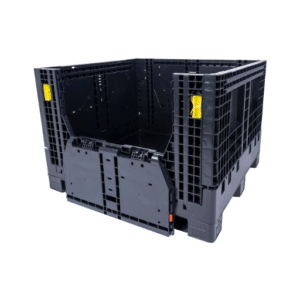
Introduction to Pallet Designs

Stackable and nestable pallets will serve different requirements from logistics. Stackable pallets maintain a solid, flat base that lets them be stacked securely on top of each other, hence affording vertical storage capability. Otherwise, nestable pallets may be positioned into one another when empty and occupy less space while in storage or being transported. If operations pipe for utmost space utilization when pallets are out of use, then nestable pallets would fit best. Stackable pallets remain preferable when stability is a feature, alongside heavy-duty stacking.
What are Stackable Pallets?
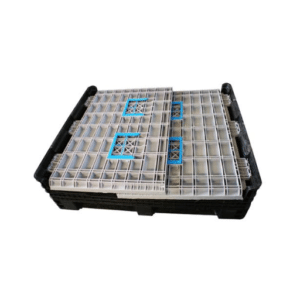
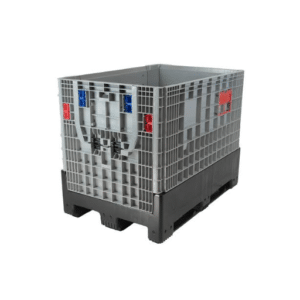
Designed to maximize warehouse or shipping space, stackable pallets are types of pallets that allow balanced and secure stacking of loaded pallets one upon the other. These pallets usually feature a rigid sturdiness with a flat top and an interlocking base that guarantees stability during stacking. Made of materials such as wood, plastic, or metal, stackable pallets are widely used in industries where vertical storage turns out to be very important.
According to the information from the industry, plastic stackable pallets rose in fame because it was stronger, did not rot with moisture, and were lighter in weight as compared to wood pallets. They also assist in fostering sustainability, insofar as many plastic pallets can be recycled. Metal stackable pallets, in contrast, find their use in heavy-duty work due to their unprecedented strength and resistance towards extreme conditions.
The weight capacities of stackable pallets usually range between 2,000 to 5,000 pounds and sometimes even more, depending on their material and design. Their versatility and robustness make them employed in industries such as manufacturing, retail, and logistics, where maximizing in-space load packages is essential.
What are Nestable Pallets?
Nestable pallets are one of the most efficient ways for an industry to save space and minimize logistics costs. A nestable pallet is designed uniquely to nest into each other when empty, greatly minimizing the storage and shipping space. These pallets are mostly plastic, light in weight, and easy to maneuver.
Nestable pallets, being the most economical choice, are known for reducing almost 75% of storage space while stacked and thus directly lowering warehousing and transport costs. Depending on the model and material, most nestable pallets, despite being lightweight, provide extremely high static and dynamic load capacities, generally within the range of 1,500 to 3,000 pounds. Many models have reinforced decks and anti-slip surfaces to keep the products stable while product handling occurs.
Due to the sustainability aspects, such pallets, popular also in retail, food and beverage, and distribution center industries, are manufactured with recyclable materials, and being lightweight, they require less fuel for transportation. Combining utility with sustainability, nestable pallets provide just the right solution for businesses looking to streamline their operations while placing their environmental commitment in front.
Key Differences Between Stackable and Nestable
When comparing stackable versus nestable pallets, one must understand the differing design features, intended uses, and benefits to various industry applications. Stackable pallets usually have solid bottoms or supports, thereby supporting the weight of multiple layers. Hence, from a stacking point of view, they are preferred in applications where vertical storage is required, as it provides stability for the stacking even if subjected to a heavy load. Conversely, nestable-style pallets have interlocking bases, thus allowing the empty pallets to nest inside one another, which greatly reduces storage requirements, up to 75% in most cases.
In terms of materials, both types of pallets are generally made from sturdy plastics, wood, or metal. Plastic stackable pallets are often utilized for heavier, high-value goods because of their ability to withstand substantial load weights—usually cast and static or loads of more than 2,500 lbs. Nestable pallets, on the other hand, are lower-weight versions optimally designed for lighter, frequent tasks, with load capacities customarily ranging between 1,200 and 2,000 lbs. Nestable pallets require less effort for shipment back or storage, and hence translate into a cost advantage on transport.
Another distinction lies in the supply chain integration. Stackable pallets find their place in industries requiring high-density storage, such as manufacturing or warehousing, where maximizing vertical space is paramount. Nestable pallets, in turn, get used more often in industries like retail and distribution, where considerations go toward ease of handling and reduction in return freight volume. Due to their light weight and easy-to-maneuver design, they cut well for rapid rotations.
Deciding upon stackable versus nestable pallets is truly an assessment based on operational needs. Whereby industries prefer high storage capacities and strong stacking utility, stackable pallets are adequate for reliable service. Where the focus is on lightweight and space-saving considerations for transportation and storage, the practicality of nestable pallets will surely play to a company’s benefit.
Stackable Pallets

These stackable pallets are designed for a stable and secure stacking process, something especially important in vertical storage. Besides, typical pallets come with a flat, smooth base intended to offer excellent load support and to secure the safety of the goods during storage or transportation. These pallets see most uses in industries like manufacturing and retail when space efficiency in warehousing is paramount. They offer reliability and cost-effectiveness, being designed for durability and hence repeated use.
Benefits of Stackable Pallets
Space Efficiency
When they are not being used, stackable pallets can be placed one on top of the other, so there is less clutter and higher storage potential in warehouses or distribution centers.
Durability
These pallets are extremely durable and made to be used over and over again, making them a cost option over time.
Smooth Operations
Stackable pallets allow for smooth operations, given their regular shape, making them easy to handle and compatible with numerous systems for material handling.
Environmentally Friendly
Most of them are environmentally friendly since the materials they are composed of can be recycled and reused.
Versatile Applications
Stackable pallets find applications that can range anywhere from manufacturing to retail to shipment, offering unmatched stability, reliability, and flexibility.
Stackable pallets provide many advantages for industries intent on optimizing storage and logistics. One of these benefits is space efficiency; when they are not being used, stackable pallets can be placed one on top of the other, so there is less clutter and higher storage potential in warehouses or distribution centers. These pallets are extremely durable and made to be used over and over again, making them a cost option over time. Stackable pallets also allow for smooth operations, given their regular shape, making them easy to handle and compatible with numerous systems for material handling. There is yet another advantage to stackable pallets in that most of them are environmentally friendly since the materials they are composed of can be recycled and reused. Stackable pallets find applications that can range anywhere from manufacturing to retail to shipment, offering unmatched stability, reliability, and flexibility.
Applications of Stackable Plastic Pallets
Stackable plastic pallets find extensive utilization across diverse industries and applications owing to their robustness, lightweight nature, and multipurpose design. Typical applications cover areas like:
Warehousing and Storage
These pallets are best for maximizing storage space in a warehouse and allow efficient vertical storage because of their stackable design, thereby minimizing the floor space required.
Shipping and Transportation
They provide enhanced stability during transit, enhancing the protection of goods from damage, all in securing domestic and international shipments.
Food and Pharmaceutical Industries
Being non-porous and easily cleaned, these pallets comply with hygienic standards, making them well-suited for industries that require high sanitization.
Retail and Display
Many shops use stackable pallets for displays in retail stores for their look and practicality.
Stackable plastic pallets offer a realistic, tailor-made solution to meet the various needs of modern supply chains where efficiency, safety, and cost-effectiveness are paramount.
Considerations for Choosing Stackable Pallets
When considering stackable pallets for your business, the following factors should be taken into consideration to ensure that the pallets suit your specified needs:
- Material Composition: Are plastic, wood, or metal pallets more suitable for your application? Plastic pallets are lighter, more durable, and can be thoroughly cleaned, while wooden ones are typically less expensive but not as resistant to moisture or insects.
- Load Capacity: Check static and dynamic weight capacity limits to make sure the products can be placed and transported on pallets without causing safety hazards or compromising structural stability.
- Dimensions and Compatibility: Check that the pallets are compatible with your storage systems and racking needs and that they fit well with your transport mode to enhance space utilization and process efficiency.
- Durability and Lifespan: Look at the resistance to moisture, UV rays, or temperature fluctuations to ascertain pallet longevity, especially if the pallet has to function under adverse conditions.
- Stacking and Design Features: Check if your pallets can safely maximize vertical storage by securely stacking. Mention other features, such as an interlocking design or lip edges, that might ensure stacking stability.
- Industry Compliance: Look out to see if any industry-specific standards apply to the pallets, such as food-grade certification or hygiene requirements, in particular situations like food, pharmaceutical, or healthcare.
This analysis would allow companies to select stackable pallets that would best optimize logistics, cut costs, and implement specific requirements of their industries.
Nestable Pallets
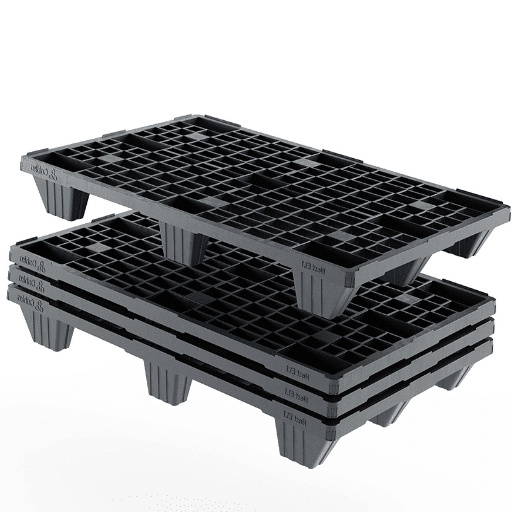
Nestable pallets are smart storage solutions for companies to save space and cut costs. These pallets can be nested inside one another when empty, offering great space savings during storage or return trip. Since they are lighter, these pallets can be handled with less effort, and they incur less shipping cost. Moreover, most nestable pallets are made of sturdy materials like plastic, which makes them durable and resistant to moisture or pests. They would hence be a good choice equally for all sorts of industries, including retail, food distribution, and manufacturing.
Advantages of Nestable Plastic Pallets
Space Efficiency
Nestable plastic pallets, by design, save space when not in use. They tightly stack to further use the already limited warehouse space better and reduce storage costs.
Cost Savings
Being lightweight, they bring down the expenses of shipping and handling. Their strength ensures fewer replacements, resulting in greater cost benefits over a longer period.
Durable and Hygienic
These pallets, being plastic, will resist water, chemical, and pest attacks. Therefore, they remain perfect for industries that are highly concerned with hygiene, such as food and pharmaceuticals.
Ecologically Friendly
Several nestable plastic pallets are made from recycled materials and can be recycled in the end, thereby supporting sustainability.
Versatility
Due to their high strength, adaptability, and keeping to cleanliness standards, these pallets find use in numerous applications across industries such as retail, manufacturing, and logistics.
Common Uses for Nestable Pallets
Nestable plastic pallets find common usage in various fields because of their practical design and features. The more common ones include:
Warehousing and Storage
It is best to optimize space in the warehouses, so wherein in a non-operational state, they can be nested into one another, thereby minimizing storage footprint while maximizing efficiency.
Shipping and Distribution
A supremely lightweight yet nestable type of pallet acts really well in carrying goods for both import and export. Being compatible with automation and the supply chain, hazard-proof against moisture and threats of impurities and contamination, wins their choice in the supply chain.
Retail and Display
The nestable pallet sees continual usage in the retail trade; they facilitate the easy handling of products cleanly and sometimes also serve as display units upon which these products are kept in the store.
Food and Pharmaceutical
Sometimes nestables are kept clean to service restricted hygiene animals that are being handled, where sterility or cleanliness is the name of the game.
Export Packaging
Being cheap and meeting import-export norms, these are often used to reduce export shipping.
The aplenty with general-purpose pallets rarely find application where strength, efficiency, and cleanliness become the prime concerns.
Factors to Consider for Nestable Pallets
Some highly important factors must be taken into consideration in choosing the nestable pallets so that they fit operational considerations and improve efficiency:
Weight Capacity and Load Types
Nestable pallets come to handle different load capacities, ranging from 1,500 lbs to various 5,000 lbs for dynamic loads or higher in static storage. Consider the weight of your goods along with the type of load considered in the carrying of the goods, say uniform, partial, or heavy-point load, and ensure that the pallet capacity is in matches your needs.
Material Composition
Typically, nestable pallets are manufactured from HDPE or PP. The HDPE classification of pallets is deemed more highly acceptable because of its durability, resistance to extreme temperatures, and recyclability. These pallets work well in most heavy-duty applications. Choose materials that are appropriate for the anticipated environmental conditions, such as freezing temperatures or high-heat settings.
Industry Standards and Compliance
Ensure that the pallets meet industry regulatory standards, such as ISPM 15 for export compliance. For industries such as food and pharmaceuticals, ensure that the materials shall be FDA- or USDA-compliant to require hygiene and sterility maintenance during loading and unloading conditions.
Weight and Transportation Efficiency
Nestable-type pallets cut shipping and storage expenses with their design, which is light and has high nesting ratios. Nestable pallets, for instance, can be stacked almost 50 or more inside a standard truck, making full utilization of space and bringing down freight charges.
Longevity and Reusability
The long-life consideration of the pallet should be kept in mind. If the pallets are of good quality, then nestable pallets last for a few years, which leads to the reduction of wastage and disposal costs. This also supports your goals of sustainability if you continue recycling them.
Customizing
Customizing with optional lids, straps, or footprints (e.g., 48×40 in. or 1200×800 mm) is important to ensure pallet functionality for specific applications. Dividers and logos serve a purpose in organizing and increasing brand presence for businesses.
Businesses will be able to identify some nestable pallets that satisfy operational requirements while improving their operations’ efficiency and compliance in the supply chain processes by analyzing these factors with due concern.
Comprehensive Comparison: Stackable vs Nestable Pallets
| Feature | Stackable Pallets | Nestable Pallets |
|---|---|---|
| Design | Solid bottoms or supports with flat top and interlocking base for stability | Interlocking bases allowing empty pallets to nest inside one another |
| Storage Space (Empty) | Require more space when stored empty | Reduce storage space by up to 75% when nested |
| Load Capacity | 2,000 to 5,000+ pounds; often exceeds 2,500 lbs for static loads | 1,500 to 3,000 pounds; typically 1,200 to 2,000 lbs range |
| Best For | Heavy loads, vertical storage, high-density storage applications | Lighter loads, space-saving, frequent transportation |
| Primary Industries | Manufacturing, warehousing, retail (heavy-duty operations) | Retail, distribution, food & beverage (lighter operations) |
| Transportation Efficiency | Standard shipping efficiency | Can stack 50+ pallets in standard truck; reduces freight charges |
| Weight | Heavier construction for durability | Lightweight and easy to maneuver |
| Initial Cost | Higher upfront cost due to robust construction | Lower initial cost |
| Warehouse Costs | May increase warehouse costs when empty | Significantly cuts storage and warehousing costs |
| Material Options | Wood, plastic, metal | Primarily plastic (HDPE, PP) |
Stackable and Nestable: Which is Right for You?

Choosing between stackable and nestable pallets depends greatly on your storage, transportation, and operation requirements. Stackable pallets are best suited for applications where maximum stability and space are required in their stacking configuration. These are why they are well-suited for static storage and when loads must be secured for transport.
Nestable pallets, on the other hand, find application when storage is limited. Empty pallets nest within one another and hence require very little space for storage or return shipment, thus cutting down costs.
Choosing stackable pallets will be recommended for those businesses that consider secure stacking during use as more important. Nestable pallets represent a cost-efficient and space-saving solution when maximizing storage for unused pallets takes priority.
Evaluating Your Storage Needs
In considering your storage needs, look first at the product you are handling, the weight of the product, and how often pallets are used. Stackable pallets work well for heavier loads or products that may require extra stability since they have a design ideal for reinforced stacking. Nestable pallets, meanwhile, save space during idle time or return shipments because of their compact structure. Next comes the sort of environment in which you will store the materials—consider moisture level, temperature variations, or any exposure to chemicals, etc. You might want to have pallets made out of special materials, for example, plastics for durability or woods for cheapness. Moreover, consider long-term operational expenses versus up-front savings and opt for what is economically favorable for you.
Cost Analysis: Stackable vs Nestable
When considering costs, stackable pallets will usually come with a higher upfront cost because of their heavy construction and durability. However, this may be a bit discouraging for storage space. Therefore, warehouse costs may rise with stackable pallets. Nestable pallets, in contrast, come at a lower initial cost and save space because they can be nested when not used. Notice how this considerably cuts down on storage and transportation costs. They are more suited for lighter loads and situations where space is an issue.
This scenario dictates the choice between stackable and nestable pallet bases based on individual requirements. So if you are working with long-term value and heavy loads, it would appear that you are with the set of stackable pallets on a cost-benefit basis. But if you are mainly interested in cutting back on shipping and storage costs-yet mainly lighter loads-nestable pallets work out to be a more practical buy. It is best to balance your short-term needs with your long-term needs for cost and operational efficiency.
Investment Returns on Pallet Choices
With returns on investment in pallet options, productivity, life, and operational saving capacity must be considered. Stackable pallets that are good for heavy-duty industries favor reuse as their plan offers a great ROI because of longevity and strength. Ninja nestable pallets are good for light loads and a scenario that favors space savings; such nestable solutions help save on shipping and storage costs. Industry research studies stress that the business must consider freight weight, storage plan, and reuse cycle when deciding upon pallet types to use in maximizing ROI. In the end, a selection tied to logistical needs, frequency of use, and long-term costs will yield the utmost financial and operational benefit.
Pallet Storage Solutions

In addressing questions concerning pallet storage, hinge upon the following points:
- Space Maximization: From a layout perspective, they should utilize racking systems that accommodate the specific size and weight of the pallets in question. In the event of adjustable racking, it may also be used to serve varying needs over time.
- Material Selection for Durability: For all-purpose use or heavy-duty loads, select plastic or metal pallets. Wooden pallets are cheaper and thus suitable for lighter shipments that might be mailed only once; however, they might need more frequent repairs or replacements.
- Handling and Equipment Compatibility: Pallets must work efficiently with the handling equipment employed, such as forklifts, pallet jacks, etc. Only then will there be minimized disruptions in operations and streamlined efficiency.
- Costs and Reuse: Consider the reuse of pallets to keep costs low. Stronger pallets, therefore, pay back in cheaper maintenance and longer lifecycles.
Because of the above considerations, a company can best set up a pallet storage solution that balances operational efficiency with cost-effectiveness.
Optimal Racking Systems for Stackable Pallets
Choosing a racking system suitable for stackable pallets involves load capacity, storage space, and accessibility requirements. Industry best practices state:
Selective Pallet Racking
Pallets are directly accessible, so the system works well in scenarios where there is a wide variety of products and a high turnover rate. This system is adjustable, so it can accommodate pallets of various sizes.
Drive-In/Drive-Through Racking
The system provides high-density storage by maximizing the depth of pallet storage inside the lanes. Drive-in systems better serve the LIFO inventory in contrast to the drive-through systems that suit FIFO workflows.
Push-Back Racking
Making medium-to-high selectivity and high-density storage, push-back racks store pallets on carts that slide back along inclined rails. It works well with LIFO inventory by using less floor space while providing easy pallet retrieval.
Pallet Flow Racking
This one makes use of inclined rollers for pushing pallets forward on the removal of other pallets and is apt for FIFO inventory. This system can handle all sorts of high-volume operations perfectly, ensuring utmost efficiency and reducing transportation times.
By analyzing operations and combining various elements such as rate of inventory turnover, storage density, and kind of product, the respective business would be able to select a suitable racking system that maximizes spatial efficiency and productivity.
Using Rackable Pallets Efficiently
For rackable pallets to be used efficiently, I ensure that the pallets fit well with the racking system to promote stability and safety, so I also see that the load is evenly distributed across the pallet to avoid endangering its structure and to support the weight being placed on it better. By regularly inspecting the pallets for wear and tear, I enhance their durability and follow proper stacking standards for safety and efficient storage. Proper space utilization and good organization on my part can make operations faster and reduce handling time.
Configuring Your Pallet Storage
When configuring your pallet storage, begin by examining your warehouse area and determining a racking system that will fit your needs, convincing you of options like selective racks to be accessible, and drive-in racks to be denser. The layout should be optimized according to material flow, and aisles should be wide enough for equipment to maneuver. Assess pallet weight and dimensions provided by load-bearing racking systems, safe against these. Processes of labeling and tracking should be applied for better organization and reduced retrieval time. Use inspections over pallets and racks that can become weathered, hence hazardous. This will ensure that all life it should be focused upon during space utilization and safety, alongside operational efficiency.
Making the Right Choice for Your Business
The decision between stackable and nestable pallets ultimately comes down to understanding your specific operational needs, budget constraints, and long-term business goals. Stackable pallets excel in environments requiring maximum load stability, vertical storage optimization, and heavy-duty performance. They represent a solid investment for businesses dealing with substantial weights and high-value goods where reliability is paramount.
Nestable pallets shine in scenarios where space efficiency and cost reduction are top priorities. Their ability to nest when empty makes them ideal for operations with limited storage space or high-volume return shipments. The significant reduction in transportation and warehousing costs makes them particularly attractive for businesses focused on operational efficiency and sustainability.
Consider conducting a thorough assessment of your current and future needs, factoring in load requirements, storage capacity, transportation frequency, and industry-specific regulations. The right pallet choice can significantly impact your bottom line through improved efficiency, reduced costs, and optimized logistics operations.
Reference Sources
Wooden and Plastic Pallets: A Review of Life Cycle
Carbon Footprint of an EUR-Sized Wooden and Plastic Pallet
Frequently Asked Questions (FAQs)
What are stackable and nestable pallets?
Stackable and nestable pallets are two different types used in material-handling operations. Stackable pallets can be stacked upon each other without the loss of stability, allowing for more storage capacity. Nestable pallets, on the other hand, are manufactured with close nesting ability to reduce your storage space by allowing more empty pallets to be stored efficiently.
How do stackable plastic pallets differ from nestable plastic pallets?
Stackable plastic pallets are purposely designed for heavy loads and to provide stability when stacked. They form an excellent base upon which the operator can stack multiple pallets on top of one another. Nestable plastic pallets were designed to nest more closely together and hence maximize the usage of available storage when free. Each type serves different needs in a warehouse or storage facility.
What are the benefits of using rackable and stackable pallets?
Rackable and stackable pallets offer a host of benefits in terms of efficiency and storage. They let you go vertical and hence store a little bit more material within limited areas. On the other hand, rackable pallets fit into pallet racking systems and also provide a solid platform for heavy loads and stability. This is the configuration whereby you choose the right pallet for your needs.
How can I select the right pallet for my storage facility?
In selecting a suitable pallet for your storage facility, consider its weight capacity, the type of goods to be stored, and the mechanism you intend to move or store pallets by. Possibly you would want to stack pallets to the maximum height or would prefer empty nestable units for their space-saving advantages. Once these factors are weighed, a decision between stackable vs. nestable can be reached in accordance with operational needs.
Can nestable pallets sit tightly together when empty?
Yes, nestable pallets are designed such that they sit tightly together when empty, making very efficient use of storage space. This advantage benefits a company that is aiming to reduce its warehousing footprint to handle a greater number of empty pallets. Hence, these condensed-rewarded pallets help in organizing smaller facilities.
Are stackable pallets good for heavy loads?
Stackable pallets are certainly good for heavy loads. They are manufactured so that it can bear very considerable weight whilst remaining stable when stacked. This means there is no risk that your product is going to tip over or collapse once it is stacked, making it an ideal pallet for warehouse use.
What is the benefit of using pallet racking systems with stackable pallets?
Using a pallet racking system alongside stackable pallets means that storage efficiency and access to goods are improved. Stackable pallets allow vertical space in your warehouse to be used to the greatest possible extent, in turn allowing a greater number of pallets to be stacked securely. It also makes it easier to access goods that have been stored, thus improving the overall handling processes.
How do plastic pallets return investments?
Plastic pallets return investments by reducing the costs involved in managing pallets. They are durable and resist abrasion, so they require fewer replacements compared to wooden pallets. In addition, the efficient design of nestable and stackable plastic pallets allows one to better manage inventory and optimize storage, thereby increasing productivity and profits.