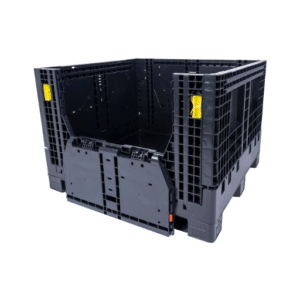
HDPE is the safer choice for cold storage, impact resistance, and automated handling. Polypropylene wins for high-heat sanitation, lightweight export, and rigid ambient racking. The right material depends on your temperature range, load profile, and total cost of ownership, not just the upfront price.
What if the pallet you bought to save money became your biggest hidden cost? Last year, a European food distributor switched to lightweight polypropylene pallets for their frozen warehouse. Six months later, they were replacing cracked units every three weeks. Forklift impacts at −25°C were shattering the PP resin. Their “cheaper” choice cost 40% more than HDPE when they added replacement labor, downtime, and product damage.
You have probably faced a version of this decision. Procurement sends three quotes. Sales claims every pallet is “heavy-duty.” Your warehouse team needs reliability. And you need a material that matches your actual operating conditions.
This guide compares HDPE vs polypropylene pallets across the factors that truly matter: temperature performance, impact strength, load capacity, weight, chemical resistance, lifecycle cost, and industry-specific demands. You will get a practical decision framework, real-world scenarios, and a clear answer for your application.
Key Takeaways
- Temperature is usually the deciding factor: HDPE performs from −40°C to +60°C; polypropylene becomes brittle below 0–10°C but withstands autoclave heat above 100°C.
- HDPE suits cold chain, automation, and rough handling because of superior impact resistance and a lower friction coefficient (~0.22).
- Polypropylene suits hot-fill, steam sterilization, air freight, and ambient heavy racking because it is lighter (15–25% less) and stiffer.
- Upfront price is misleading: lifecycle cost, freight savings, and replacement frequency determine the real winner.
- Both materials are recyclable: HDPE (#2) is more widely accepted; polypropylene (#5) is recyclable but less common in some regions.
What Are HDPE and Polypropylene Pallets?

Before choosing a side in the HDPE vs polypropylene pallets debate, it helps to understand what each material actually is.
HDPE (High-Density Polyethylene) Explained
HDPE is a thermoplastic polymer made from petroleum. It has a high strength-to-density ratio, excellent chemical resistance, and strong impact performance across a wide temperature range. In pallet manufacturing, HDPE is the most common resin globally, accounting for roughly 47% of plastic pallet revenue in 2025 according to Mordor Intelligence.
The material is naturally moisture-resistant and does not rot, splinter, or absorb odors. That makes it popular for food, pharmaceutical, and cold-chain logistics. HDPE also accepts UV stabilizers and recycled content well, which supports sustainability goals without sacrificing durability.
Polypropylene (PP) Explained
Polypropylene is another thermoplastic polymer, but it has different mechanical properties. It is stiffer and more rigid than HDPE at room temperature. It also handles higher temperatures, which is why PP pallets are common in hot-fill operations, steam sterilization, and automotive manufacturing.
The trade-off is low-temperature toughness. PP’s glass-transition temperature sits around 0°C to 10°C. Below that range, the material shifts from ductile to brittle. A PP pallet dropped or struck by forklift tines in a freezer can crack or shatter.
At-a-Glance Material Comparison
| Property | HDPE Pallets | Polypropylene Pallets |
|---|---|---|
| Temperature range | −40°C to +60°C | 0°C to +110°C (varies by grade) |
| Impact resistance | Excellent, even in cold | Good at room temp; brittle in cold |
| Stiffness / racking | Moderate; some creep under load | Higher stiffness; less sag in racking |
| Weight | Slightly heavier | 15–25% lighter |
| Friction coefficient | ~0.22 (better for automation) | ~0.32 |
| Chemical resistance | Acids, alkalis, aqueous solutions | Oils, solvents, detergents |
| Heat resistance | Deforms above ~110°C | Withstands autoclave >100°C |
| UV resistance | Good with stabilizers | Moderate; needs additives |
| Recycling code | #2 (widely accepted) | #5 (less widely accepted) |
| Typical service life | 10–15 years | 8–15 years |
| Relative upfront cost | Standard / lower | Often 10–20% higher |
Performance Comparison: HDPE vs Polypropylene Pallets
Temperature Resistance and Operating Range
Temperature is the single most important factor when comparing HDPE vs polypropylene pallets. Get this wrong, and every other advantage disappears.
HDPE retains toughness and flexibility from −40°C up to +60°C. It will not crack in freezers or cold-storage rooms. For cold-chain logistics, pharmaceuticals, seafood, and frozen food, HDPE is the default choice.
Polypropylene performs well in elevated temperatures. It can withstand autoclave and steam sterilization cycles above 100°C. That makes it ideal for hot-fill packaging, dairy processing, and medical sterilization workflows. But once temperatures drop below 0–10°C, PP loses impact strength. In freezing conditions, a forklift strike can cause catastrophic failure.
Impact Strength and Durability Under Rough Handling
Warehouse floors are not gentle. Forklift tines miss entry points. Pallets get dropped. Loads shift. HDPE absorbs these impacts better because it is more ductile, especially at low temperatures.
Izod impact values for HDPE typically range from 80–100 J/m, while unfilled polypropylene ranges from 35–55 J/m. Those numbers explain why HDPE lasts longer in rough handling, cross-docking, and outdoor environments.
Polypropylene is not fragile. At room temperature it performs well and resists fatigue from repeated flexing. But if your operation involves cold rooms, outdoor winter storage, or aggressive forklift handling, HDPE is the safer investment.
Load Capacity, Stiffness, and Racking Performance
Both materials can support static loads of 5,000–7,000 kg and dynamic loads of 1,000–2,000 kg when properly designed. The difference appears under long-term static racking.
Polypropylene is stiffer and exhibits less creep under sustained load at room temperature. That means a PP pallet in warm warehouse racking is less likely to sag over months of storage. HDPE can sag slightly under constant heavy racking unless it is steel-reinforced or designed with thicker deck sections.
For automated warehouses, the story shifts again. HDPE’s lower friction coefficient (~0.22 vs. PP’s ~0.32) reduces slippage on conveyor systems and AGV paths. If your facility runs robotics or automated storage and retrieval systems, HDPE usually performs more predictably.
Weight and Handling Efficiency
Polypropylene is 15–25% lighter than equivalent HDPE designs. That matters when every kilogram affects freight cost.
An air freight forwarder in Germany learned this the hard way. They used standard HDPE pallets for aerospace parts shipments. After switching to polypropylene pallets, they cut pallet weight by 4.2 kg per unit. Across 11,000 annual shipments, the weight reduction saved approximately €47,000 in air freight charges. For export, lightweight PP can pay for itself.
For manual handling, lighter PP pallets also reduce worker strain. But if the pallet will see rough handling or cold temperatures, the weight savings can disappear quickly when replacements start piling up.
Chemical and Moisture Resistance
Both HDPE and polypropylene resist moisture, rot, and most common chemicals. Neither absorbs water, so they will not swell, warp, or harbor mold like wood.
The difference is in chemical specificity:
- HDPE resists acids, bases, alcohols, and aqueous sanitizers. It performs well in food processing, chemical handling, and caustic washdown environments.
- Polypropylene resists oils, organic solvents, greases, and detergents better. Automotive parts manufacturers often prefer PP for oil-exposed components.
If your pallets will face concentrated acids or strong oxidizers, consult your supplier for grade-specific compatibility. Not all HDPE or PP formulations behave the same way.
UV Stability and Outdoor Aging
Neither material loves direct sunlight. Prolonged UV exposure degrades both HDPE and polypropylene over time, causing chalking, embrittlement, and color fading.
HDPE with UV stabilizers generally lasts longer outdoors than standard PP. If you must store pallets outside, choose UV-stabilized HDPE and rotate stock to minimize sun exposure. Polypropylene can work outdoors with heavy UV additives, but it typically requires more protection.
Cost Analysis: Upfront Price vs. Total Cost of Ownership

Typical Purchase Price Ranges
Plastic pallet prices vary widely by size, design, load rating, and order volume. Standard new HDPE or polypropylene pallets typically range from 40to40to200 per unit. Bulk industrial orders from manufacturers like Shandong Lile Holding Group can reduce per-unit costs significantly for high-volume buyers.
Some sources report PP pallets cost 10–20% more upfront than equivalent HDPE models. Others show the opposite, depending on regional resin prices and supplier specialization. The key point: upfront price is a poor standalone decision metric.
Lifecycle Cost Factors
The real cost of a pallet includes:
- Purchase price
- Replacement frequency
- Freight cost (pallet weight × shipments)
- Cleaning and inspection
- Downtime from pallet failures
- Product damage from collapsed loads
- Recycling or disposal at end of life
A cold-storage distributor who chose PP to save on purchase price ended up spending 40% more over five years. Cracked pallets required constant replacement. The hidden labor cost of removing broken units and re-stacking damaged product erased any upfront savings.
Conversely, the German air freight forwarder who switched to PP saved €47,000 annually because the weight reduction more than offset any price premium. Context determines the winner.
When PP’s Weight Savings Justify Higher Upfront Cost
Choose polypropylene when:
- You ship by air freight where weight drives cost
- You handle lightweight products manually
- Your facility operates in stable ambient temperatures
- You need maximum stiffness in racking
- Hot-fill or steam sterilization is required
When HDPE’s Durability Pays Off
Choose HDPE when:
- You operate freezers or cold rooms below 0°C
- Forklift handling is aggressive or inconsistent
- Your pallets travel across temperature zones
- You need automation compatibility
- Outdoor or variable-climate exposure is likely
Industry-Specific Recommendations
Cold Storage, Freezers, and Cold Chain Logistics
Winner: HDPE
Cold-chain operations should almost always choose HDPE. The material stays tough down to −40°C. It resists the thermal shock of moving between freezer, loading dock, and refrigerated truck. For frozen food, pharmaceuticals, and seafood, HDPE is the standard.
Food and Beverage Processing
Winner: Depends on process temperature
For cold storage, beverage distribution, and dairy coolers, HDPE is the better fit. For hot-fill lines, baked goods, and retort operations, polypropylene handles the heat. Many food plants use both: PP near production lines and HDPE in cold storage and shipping.
Pharmaceuticals and Medical Devices
Winner: Depends on sterilization method
If your operation uses autoclave or steam sterilization, polypropylene is required. If you need cold storage for vaccines, biologics, or temperature-sensitive APIs, HDPE is the safer choice. For cleanroom storage at room temperature, either material works with proper cleaning protocols.
Automotive and Chemical Manufacturing
Winner: Polypropylene for oil exposure, HDPE for general durability
Automotive parts exposed to oils, greases, and solvents often perform better on PP. Chemical manufacturing leans toward HDPE for acid and base resistance. When in doubt, test the specific resin grade against your chemicals.
E-Commerce, Retail, and Export Shipping
Winner: Mixed
Lightweight PP pallets reduce air freight and parcel shipping costs. HDPE pallets offer better durability for repeated DC-to-store cycles. For export, both plastic pallets avoid ISPM-15 wood-treatment requirements, which simplifies international shipping.
Automated Warehouses and AGV Systems
Winner: HDPE
Automated warehouses need consistent dimensions and predictable friction. HDPE’s lower friction coefficient and better dimensional stability across temperature zones make it the preferred choice for AGV and AS/RS operations.
Sustainability and Recyclability
Recyclability of HDPE (#2) vs. Polypropylene (#5)
Both HDPE and polypropylene are 100% recyclable. HDPE carries recycling code #2 and is accepted in most municipal and industrial recycling streams. Polypropylene carries code #5 and is recyclable, but collection infrastructure is less widespread in some regions.
At end of life, HDPE pallets are often ground into flakes and reused in new pallets, drainage pipes, or composite lumber. PP pallets can be recycled into automotive parts, battery cases, or household goods. Closed-loop return programs help both materials stay out of landfills.
Recycled-Content Performance Considerations
Recycled HDPE and PP can perform nearly as well as virgin resin when sourced and processed correctly. However, recycled content may have slightly lower impact strength or more color variation. For non-critical applications like export or one-way shipping, recycled-content pallets offer strong cost and sustainability benefits.
At Shandong Lile Holding Group, we engineer custom plastic pallet solutions with specified recycled content ratios to balance performance, cost, and environmental goals.
Lifecycle Carbon Footprint Overview
Plastic pallets generally have a lower lifecycle carbon footprint than single-use wood pallets when reused over many trips. A plastic pallet used 100+ times displaces dozens of wooden units, reducing material extraction, treatment chemicals, and landfill waste. The exact footprint depends on resin source, shipping distance, and end-of-life recycling rate.
How to Choose: A Practical Decision Framework

Decision Tree for Material Selection
- Will the pallet regularly see temperatures below 0°C?
- Yes → HDPE
- No → Continue
- Will the pallet face autoclave, steam sterilization, or hot-fill above 80°C?
- Yes → Polypropylene
- No → Continue
- Is the pallet used in an automated warehouse or AGV system?
- Yes → HDPE (preferably with stable design)
- No → Continue
- Is weight reduction more valuable than impact toughness? (e.g., air freight, manual handling)
- Yes → Polypropylene
- No → HDPE
5 Questions to Ask Before Buying
- What is the temperature range in every part of my supply chain?
- How many handling cycles will each pallet see per year?
- What is my cost per shipment, and how much does pallet weight affect it?
- Do my pallets need to meet food, pharma, or export regulations?
- What is my target service life, and what happens if a pallet fails mid-shipment?
If you are unsure which material fits your operation, contact our team for a free material-selection review. We can evaluate your load, temperature, and handling profile against our full range of industrial plastic pallets.
Frequently Asked Questions
What is the difference between HDPE and PP pallets?
HDPE pallets are tougher, more impact-resistant, and perform reliably in cold temperatures down to −40°C. Polypropylene pallets are lighter, stiffer, and more heat-resistant, making them ideal for autoclaving and lightweight shipping. Both resist moisture and chemicals, but each excels in different conditions.
Are HDPE pallets better than polypropylene?
Neither is universally better. HDPE is the safer default for cold chain, automation, and rough handling. Polypropylene is better for high-heat sanitation, air freight, and rigid ambient racking. The best choice depends on your operating environment and total cost of ownership.
Can polypropylene pallets be used in freezers?
Not recommended. Polypropylene becomes brittle below approximately 0–10°C and can crack under impact. For freezer or cold-storage use, HDPE is the standard material.
Which is more expensive: HDPE or PP pallets?
Upfront pricing varies by supplier, region, and grade. Polypropylene pallets often cost 10–20% more upfront, but lifecycle cost depends on replacement rates, freight savings, and operating temperature. In cold environments, cheaper PP can become more expensive due to premature failure.
Which material is best for automated warehouses?
HDPE is generally preferred for automated warehouses and AGV systems. Its lower friction coefficient (~0.22) reduces slippage, and it maintains better dimensional stability across temperature zones.
Are both HDPE and PP pallets recyclable?
Yes. HDPE is recycling code #2 and is more widely accepted. Polypropylene is code #5 and is recyclable, though collection programs are less common in some regions. Both can be reused in closed-loop systems.
Conclusion
Choosing between HDPE vs polypropylene pallets is not about finding the “best” material. It is about matching the material to your operating reality.
HDPE wins in cold chain, automation, rough handling, and general industrial durability. Polypropylene wins in high-heat sanitation, lightweight export, and rigid ambient racking. The wrong choice can inflate costs through replacements, freight charges, and product damage. The right choice can quietly improve efficiency for a decade.
Before you buy, map your full temperature range, handling intensity, load requirements, and freight economics. Then test samples in your actual environment. A 30-day trial in your own warehouse will reveal more than any specification sheet.
At Shandong Lile Holding Group, we manufacture both HDPE and polypropylene pallets for operations in over 108 countries. Whether you need durable plastic pallets for freezer storage or food-grade plastic pallets for hot-fill lines, our engineers can recommend the right resin, design, and load rating for your application.
Ready to choose the right material? Request a free quote and send us your load, temperature, and handling requirements. We will recommend the most cost-effective pallet for your operation.