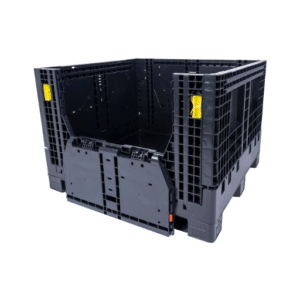
Returnable plastic pallet ROI typically breaks even in 14 to 18 months for closed-loop operations, then continues to generate savings for 7 to 15 years. The key is measuring total cost of ownership plastic pallets (TCO) rather than comparing purchase prices alone.
What if the cheapest pallet on your quote sheet is actually the most expensive one you can buy? Marcus, a procurement manager at a mid-sized automotive supplier, learned this the hard way. He awarded his 2023 pallet contract to the lowest wood-pallet bidder and celebrated the 12−per−unitsavings.Eighteenmonthslater,replacementorders,emergencyrepairs,andarejectedexportshipmenthaderasedeverydollarofthat”saving”,andcosthisdepartmentanother12−per−unitsavings.Eighteenmonthslater,replacementorders,emergencyrepairs,andarejectedexportshipmenthaderasedeverydollarofthat“saving“,andcosthisdepartmentanother47,000.
Returnable plastic pallets demand a higher upfront investment. That single fact stops many buyers from running the full math. However, procurement teams who model TCO, trip volume, and asset life usually find that the right plastic pallet pays for itself well inside a five-year capital plan. This guide gives you a practical reusable plastic pallet ROI formula, a worked example you can adapt, and industry benchmarks to build a finance-ready business case.
Key Takeaways
- Returnable plastic pallet ROI is best measured with total cost of ownership, not upfront price.
- Most closed-loop operations hit break-even in 14-18 months and save money for 7-15 years.
- A 1,000-pallet operation can often save $150,000+ over five years when loss rates and trip volume are managed.
- Plastic pallets commonly complete 200-350 trips; wood pallets often last only 15-20 trips in the same loop.
- Pallet pooling can improve cash flow and ROI by converting a capital expense into a per-trip operating cost.
Want to see what returnable plastic pallets could save your operation? Request a free ROI assessment from Lile Group →
What Is Returnable Plastic Pallet ROI?

A returnable plastic pallet is a durable, reusable load platform designed for multiple trips through the supply chain rather than disposal after one use. It is part of the broader family of Returnable Transport Packaging (RTP), which also includes crates, totes, plastic pallet boxes, and sleeve packs.
Returnable plastic pallet ROI measures the financial return you earn from investing in these reusable assets. Reusable plastic pallet ROI follows the same formula; the terms are interchangeable for most buyers. The calculation compares the total cost of owning and operating the pallet fleet against the savings and revenue protection the fleet delivers over its life.
Returnable packaging ROI extends the same logic to the whole RTP family. The pallet is usually the highest-volume asset, so it is often the fastest place to prove the business case.
The reason this metric matters is simple: a heavy-duty plastic pallet can cost 3 to 10 times more than a standard wood pallet. That price gap creates sticker shock. But the comparison is misleading unless you also count how many trips the pallet makes, how much damage it prevents, and how many secondary costs it removes.
At Shandong Lile, we produce returnable plastic pallets from high-density polyethylene (HDPE) and polypropylene (PP). These materials resist moisture, pests, and chemicals, and they can be recycled into new pallets at end of life. For a deeper look at durability and lifecycle, see our guide to reusable plastic pallets or browse our full plastic pallet range.
The ROI Formula: How to Calculate It
The simplest way to express returnable plastic pallet ROI is:
ROI = (Total Savings − Total Costs) ÷ Total Costs × 100
A positive result means the investment pays back. A plastic pallet ROI calculator puts the variables below into one formula so procurement and operations can test sensitivity before presenting the business case. The real work is defining what belongs in each bucket. Below is a checklist that finance and operations teams can use together.
Costs to Include
Initial investment
- Purchase price per pallet
- Fleet size required in circulation (usually larger than the number shipped per day)
- Shipping and import duties, if applicable
Operating costs
- Reverse logistics to retrieve empties
- Cleaning, inspection, and minor repair
- Storage space for empty pallets
- Tracking technology such as RFID, QR codes, or barcode labels
Loss and shrinkage
- Theft, misplacement, or damage beyond repair
- Industry benchmarks typically model 2% to 7% annual loss; unmanaged fleets can exceed 10%
Savings to Include
Eliminated or reduced spend
- Wood pallet purchases
- Shrink wrap, tape, banding, and dunnage
- ISPM-15 heat treatment or fumigation fees for export
- Waste disposal and landfill charges
Operational savings
- Lower freight costs from lighter, consistent weights
- Reduced product damage in transit
- Less labor spent sorting, repairing, or disposing of wood pallets
- Fewer automation jams from splinters, nails, or inconsistent dimensions
Risk and compliance savings
- Avoided customs rejections from non-compliant wood packaging
- Reduced contamination risk in food, beverage, and pharmaceutical supply chains
A Surgere analysis of returnable-container programs notes that container loss alone often runs 3-10% per year. Adding RFID or RTLS tracking can cut that loss dramatically. That is why many high-volume operations treat tracking technology as part of the ROI model rather than an optional extra.
Total cost of ownership plastic pallets analysis is the only way to compare a durable asset against a disposable one. It forces the team to count every cost that appears after the invoice.
Worked Example: 1,000-Pallet Operation Over 5 Years
Let’s walk through a realistic scenario. The numbers are illustrative, but they reflect the cost structure we see in closed-loop manufacturing and distribution.
Assumptions:
- Operation ships 500 palletized loads per day in a closed loop
- Fleet size needed in circulation: 1,000 plastic pallets
- Average trips per year per pallet: 100
- Plastic pallet purchase price: $75
- Equivalent wood pallet purchase price: $15
- Plastic pallet lifespan: 10 years (1,000 trips)
- Wood pallet lifespan in this loop: 20 trips
- Annual plastic pallet loss rate: 5%
- Annual wood pallet replacement rate due to damage/loss: 50%
Cost Side
| Cost Item | Plastic Pallets | Wood Pallets |
|---|---|---|
| Initial fleet purchase | $75,000 | $15,000 |
| Replacement pallets over 5 years | $18,750 | $37,500 |
| ISPM-15/export treatment (20% of volume) | $0 | $9,000 |
| Repair, cleaning, disposal labor | $8,000 | $22,000 |
| Product damage claims (estimated) | $5,000 | $18,000 |
| Tracking/loss management | $6,000 | $1,000 |
| 5-year total | $112,750 | $102,500 |
Savings and Revenue Protection
At first glance, wood looks cheaper. But this table omits two major items: freight savings and automation efficiency.
A plastic pallet is typically 30% lighter than a comparable wood pallet. On 50,000 annual trips, that weight reduction can cut fuel and freight charges by 15-22% on affected lanes. If annual freight spend on palletized loads is 400,000,a15400,000,a1560,000 per year**, or $300,000 over five years.
Add the freight savings to the model, and the five-year picture flips:
| Scenario | 5-Year TCO |
|---|---|
| Wood pallets + freight | $402,500 |
| Plastic pallets + freight | 412,750−412,750−300,000 = $112,750 |
In this example, the returnable plastic pallet investment breaks even before the end of year one and delivers roughly $290,000 in net savings over five years.
Elena, a supply-chain director at a European pharmaceutical distributor, ran a similar model in 2024. Her team shipped temperature-sensitive products to hospitals on wood pallets. They faced recurring contamination concerns from splinters and moisture. After switching to closed-deck hygienic plastic pallets, her damage claims fell by 60% in the first year. The finance team initially balked at the $85,000 fleet cost. By month 16, the avoided product loss and eliminated fumigation paperwork had fully recovered the investment.
Plastic Pallets vs Wood ROI: The Real TCO Breakdown

The plastic pallets vs wood ROI debate is usually decided by cost per trip, not by purchase price. Here is how the two materials stack up across the factors that actually drive TCO.
| Factor | Returnable Plastic Pallets | Wood Pallets |
|---|---|---|
| Upfront unit cost | 40−40−120+ | 10−10−25 |
| Typical lifespan | 7-15 years | 2-5 years |
| Trips before major failure | 200-350+ | 15-25 |
| Weight | ~30% lighter | Heavier |
| Moisture resistance | High | Low (warping, rot) |
| Pest/mold risk | None | Requires treatment |
| ISPM-15 export compliance | Exempt | Required |
| Repairability | Limited; recyclable | Easy board replacement |
| Hygiene | Washable, non-porous | Porous, hard to sanitize |
| Automation compatibility | Excellent (consistent dimensions) | Variable (nails, splinters) |
Wood pallets remain the right choice for some applications, especially one-way shipping or operations with strong local repair and recycling networks. But in closed-loop, high-trip environments, plastic’s durability and consistency create a lower cost per trip. For a broader material comparison, read our guide on plastic pallets vs. alternatives.
For a full side-by-side analysis, read our plastic pallets vs. wood pallets comparison.
When Returnable Plastic Pallets Deliver the Best ROI
Not every operation is a perfect fit. Returnable plastic pallet ROI is strongest when several conditions align.
Closed-Loop Supply Chains
The pallets must come back. If your customers keep, discard, or forward the pallets, you lose the asset before it can pay for itself. Closed loops are ideal, whether plant-to-plant, plant-to-distribution-center, or supplier-to-manufacturer.
High Trip Frequency
The more times a pallet moves per year, the faster it amortizes its upfront cost. Operations with 50+ trips per pallet per year usually see the fastest payback.
Hygiene-Sensitive Industries
Food, beverage, pharmaceutical, and medical-device operations benefit from plastic’s washability and non-porous surface. Regulatory audits and contamination risks are easier to manage.
Automation-Heavy Warehouses
Conveyors, automated storage and retrieval systems (AS/RS), and robotic handling need consistent dimensions and debris-free surfaces. Plastic pallets reduce jams and downtime.
Export-Heavy Operations
Plastic pallets are exempt from ISPM-15 heat treatment and fumigation requirements. That removes paperwork, delays, and the risk of customs rejection.
Wondering whether your operation fits the profile? Talk to a Lile specialist about your loop and volume →
Pallet Pooling vs. Buying: Which Improves ROI?
Buying a returnable plastic pallet fleet is not the only option. Pallet pooling turns the asset into a service.
Capital Purchase Model
You buy the pallets, own them, and manage retrieval, cleaning, and replacement. This model offers the lowest per-trip cost over a long horizon and full control over specifications. The downside is capital tied up in the fleet and the operational burden of managing the loop.
Pallet Pooling / Rental Model
A pool operator owns the pallets, delivers them when needed, and collects empties from your customers. You pay a per-trip or per-day fee. This converts CAPEX to OPEX and removes reverse-logistics management. Pooling providers often quote a single per-trip fee. That makes returnable packaging ROI easier to present to finance, even though the lifetime per-trip cost may be higher than ownership. The trade-off is a higher unit cost per trip and less control over pallet design.
Hybrid and Managed Pools
Some manufacturers run managed pools for specific customers or supply chains. You get a semi-custom design without owning the entire fleet. This works well for large OEMs with tiered supplier networks.
Pool operators like iGPS, CHEP, and Loscam have built global networks around plastic pallets. For companies with irregular demand or limited capital, pooling can deliver a faster, simpler ROI story even if the per-trip rate is higher than ownership.
Industry ROI Scenarios
The same pallet investment produces different returns depending on the industry. Here are four common scenarios.
Automotive: Just-in-Time Sequencing
Automotive suppliers run tight, repeated loops between plants. A returnable pallet with a consistent footprint protects high-value parts and integrates with sequencing systems. A Cassia Networks case study found that real-time location tracking reduced returnable-container loss by 70% and improved return-cycle time by 30%.
Food & Beverage: Hygiene and High Turnover
Food and beverage is the largest end-use segment for returnable packaging, accounting for roughly 34% of market share. Plastic pallets withstand repeated washing, resist moisture, and help meet food-safety audits. High turnover means the cost per trip drops quickly.
Pharmaceuticals: Compliance and Traceability
Pharmaceutical logistics demands clean, sealed surfaces and often requires temperature control. Returnable plastic pallets support Good Distribution Practice (GDP) and can be fitted with RFID or data loggers for traceability. Some European networks now use temperature-controlled returnable pallets with phase-change materials for specialty shipments.
Retail & E-Commerce: Nestable Pallets for Backhaul
Retail distribution centers often face empty-truck inefficiencies on return legs. Nestable plastic pallets reduce empty-pallet volume by up to 50%, making backhaul more economical. David, a logistics manager at a regional grocery chain, replaced wood pallets with nestable plastic units for store deliveries. His backhaul utilization improved enough to eliminate one empty-pallet collection route, saving $38,000 in fuel and driver hours in the first year.
Common ROI Mistakes to Avoid

Even strong candidates can undermine their own returnable plastic pallet ROI. Watch for these errors.
Ignoring loss and shrinkage. A 5% annual loss rate sounds small until it compounds across a 1,000-pallet fleet. Track assets from day one.
Underestimating reverse logistics. Returning empties costs money. Model the transport, labor, and storage honestly.
Using purchase price instead of cost per trip. A 15woodpalletthatlasts20tripscosts15woodpalletthatlasts20tripscosts0.75 per trip. A 75plasticpalletthatlasts1,000tripscosts75plasticpalletthatlasts1,000tripscosts0.075 per trip.
Choosing the wrong pallet type. A lightweight export pallet in a heavy racking application will fail early. A rackable pallet on a one-way trip wastes money. Match the design to the workflow.
Forgetting integration costs. New pallets may require rack, conveyor, or forklift adjustments. Include these in the business case.
For guidance on matching pallet design to lifespan, see our article on how long plastic pallets last.
Frequently Asked Questions About Returnable Plastic Pallet ROI
What is a good ROI for returnable plastic pallets?
Most closed-loop operations break even in 14 to 18 months. After payback, a well-managed plastic pallet fleet can deliver a positive return for 7 to 15 years, with the strongest results in high-trip, hygiene-sensitive, or export-heavy applications.
How long do returnable plastic pallets last?
High-quality returnable plastic pallets typically last 7 to 15 years, or 200 to 350+ trips. Lifespan depends on material, handling, load, environment, and maintenance. For a detailed breakdown, see our article on how long plastic pallets last.
Are plastic pallets cheaper than wood pallets over time?
Plastic pallets cost more upfront, but their cost per trip is usually lower in closed-loop systems. A 75plasticpalletthatlasts1,000tripscostsroughly75plasticpalletthatlasts1,000tripscostsroughly0.075 per trip. A 15woodpalletthatlasts20tripscosts15woodpalletthatlasts20tripscosts0.75 per trip. Freight, damage, and compliance savings can widen the gap further.
What industries benefit most from returnable plastic pallet ROI?
Automotive, food and beverage, pharmaceuticals, and retail/e-commerce see the strongest returns. Each industry benefits from different pallet features: just-in-time sequencing for automotive, washability for food and pharma, and nestability for retail backhaul.
How does pallet pooling affect ROI?
Pallet pooling converts a capital expense into a per-trip operating cost. It can improve cash flow and simplify ROI presentation to finance, although the lifetime per-trip cost may be higher than owning the fleet outright. Pooling works best for companies with variable demand or limited capital.
What is the break-even period for returnable plastic pallets?
The typical break-even period is 14 to 18 months for closed-loop operations with healthy trip volume. High-loss rates, expensive reverse logistics, or low trip frequency can extend the payback timeline.
Do plastic pallets require ISPM-15 treatment for export?
No. Plastic pallets are exempt from ISPM-15 heat treatment and fumigation requirements. That removes compliance paperwork, treatment fees, and the risk of customs rejection tied to wood packaging.
Conclusion
Returnable plastic pallet ROI is not a mystery, but it does require looking past the purchase price. The buyers who build the strongest business cases measure total cost of ownership, model cost per trip, and account for loss rates, freight savings, and damage reduction.
The data points to a clear pattern. In closed-loop, high-trip operations, returnable plastic pallets typically break even in 14 to 18 months and continue delivering value for years. Whether you buy a fleet or work with a pooling partner, the decision should be driven by your loop structure, trip volume, and hygiene or compliance needs.
At Shandong Lile, we have spent more than a decade manufacturing plastic pallets and returnable packaging for logistics, automotive, food, pharmaceutical, and retail customers across 108 countries. Our ISO 9001-certified facility and custom molding capabilities let us match the pallet design to your exact workflow.
Ready to build your returnable plastic pallet ROI business case? Contact Lile Group today for a free assessment and custom quote →