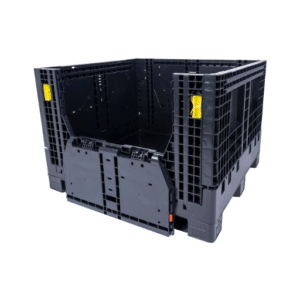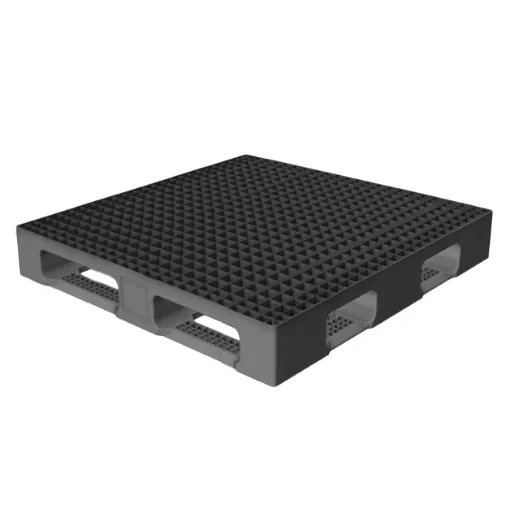

The best custom plastic pallet materials for most operations are high-density polyethylene (HDPE) for cold, impact-heavy environments and polypropylene (PP) for high-heat, rigid-racking applications. Recycled HDPE or PP blends work well for light-duty, cost-sensitive, or sustainability-focused programs, while advanced composites fill narrow export or specialty niches.
That choice sounds simple until you realize the resin determines whether a 5,000to5,000to50,000 custom mold investment lasts 15 years or cracks in the first winter. However, material selection is often treated as an afterthought. At Shandong Lile, we have spent more than a decade matching materials to real operating conditions across 108 countries. This guide shares what we have learned so you can specify pallets that perform from day one.
Key Takeaways
- HDPE excels below freezing and absorbs forklift impacts; PP excels in heat and rigid racking but turns brittle below 10°C.
- Virgin resin is required for FDA and EU food-contact compliance; recycled blends cut cost 20–40% but sacrifice long-term durability.
- Steel reinforcement and deck flatness often matter more than resin choice for heavy racking and automated warehouses.
- Plastic pallets last 250+ cycles versus roughly 11 for wood, lowering total cost of ownership even when upfront cost is 3x higher.
- Recycled plastic pallet materials are the fastest-growing segment at 10.96% CAGR, driven by circular-economy regulations and buyer pressure.
What Custom Plastic Pallet Materials Are Used in Manufacturing?
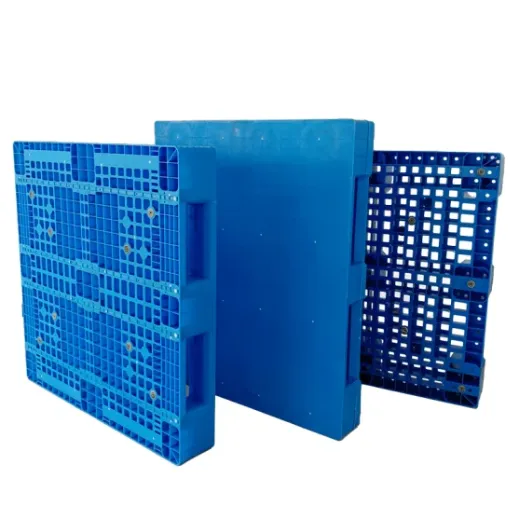
Custom plastic pallets are made by molding thermoplastic resins — plastics that soften when heated and harden when cooled — into a deck-and-runner shape designed for a specific load, footprint, and handling environment. The material is not a minor detail — it controls temperature range, impact resistance, chemical compatibility, hygiene compliance, and recyclability.
Most custom plastic pallets use one of four material categories:
- Virgin HDPE (High-Density Polyethylene): The industry default for cold storage, food contact, and heavy-duty logistics.
- Virgin PP (Polypropylene): The go-to for hot-fill lines, autoclave sterilization, and rigid static racking.
- Recycled HDPE/PP blends: Lower-cost options for closed-loop or one-way shipping where food contact is not required.
- Advanced composites and specialty formulations: POE-modified blends, anti-static resins, UV-stabilized grades, and fire-retardant compounds for niche applications.
The resin choice works together with mold design, wall thickness, reinforcement tubes, and production method to create the final performance envelope. A custom pallet is only as good as the match between those variables and your actual operation.
HDPE vs. PP: The Two Workhorse Resins
If you remember only one thing from this guide, make it this: HDPE buys you impact resistance and cold tolerance; PP buys you stiffness and heat tolerance. Everything else is detail. This comparison is at the heart of most HDPE vs PP pallets decisions. For a deeper dive, see our complete HDPE vs. PP comparison.
High-Density Polyethylene (HDPE)
HDPE dominates the plastic pallet market, holding roughly 47.33% of global revenue share in 2025 according to Mordor Intelligence. It is tough, chemically stable, and widely recyclable. For general logistics, it is usually the safest starting point.
Key properties include:
- Temperature range: Typically -40°C to +60°C.
- Impact resistance: Excellent; absorbs shocks without brittle cracking.
- Chemical resistance: Strong against acids, bases, solvents, and detergents.
- UV resistance: Good with proper stabilization.
- Recyclability: Widely accepted as #2 plastic.
HDPE is the material we specify when a customer operates in freezers, ships internationally, or runs automated systems where consistent dimensions matter. Its molecular structure stays flexible at low temperatures, so a dropped HDPE pallet in a -25°C freezer is far less likely to shatter than a PP equivalent.
When to choose HDPE: cold storage, food and beverage, pharmaceuticals, outdoor use, AGV/AS/RS automation, and general closed-loop distribution.
Polypropylene (PP)
PP is the second-most-common resin for plastic pallets. It is about 30% stiffer than HDPE and tolerates much higher temperatures, which makes it popular in automotive, pharmaceutical sterilization, and hot-fill applications.
Key properties include:
- Temperature range: Up to ~100°C or higher for short exposures.
- Flexural modulus: Higher than HDPE; resists bending under static load.
- Fatigue resistance: Excellent for repeated flexing.
- Chemical resistance: Superior against aggressive solvents and caustic chemicals.
- Cost: Usually 10–20% more than HDPE.
The trade-off is cold performance. Below roughly 10°C, PP becomes progressively more brittle. Forklift impacts or drops in freezing conditions can cause catastrophic cracking. We have seen procurement teams select PP because it sounded “more industrial,” only to watch pallets fail within a single winter in refrigerated warehouses.
When to choose PP: hot-fill operations, steam cleaning or autoclave cycles, heavy static racking in ambient temperatures, and caustic chemical environments.
When to Blend or Modify
Some custom formulations blend HDPE and PP, or add impact modifiers such as ethylene-octene copolymer (EOC), to capture benefits from both families. These modifications are useful when:
- You need better low-temperature performance than virgin PP can deliver.
- You need more rigidity than standard HDPE provides without switching fully to PP.
- You want a recycled feedstock with more predictable properties.
Blending adds complexity, so it should be driven by tested specifications rather than guesswork. Ask your manufacturer for material datasheets and, when possible, sample trials in your actual environment.
HDPE vs. PP Quick Comparison
| Property | HDPE | PP |
|---|---|---|
| Cold tolerance | Excellent down to -40°C | Brittle below ~10°C |
| Heat tolerance | Up to ~60°C | Up to ~100°C+ |
| Impact resistance | Superior | Good, but brittle when cold |
| Stiffness / rigidity | Good | ~30% higher than HDPE |
| Chemical resistance | Excellent | Excellent (broader solvent range) |
| Typical cost | Lower base cost | 10–20% more than HDPE |
| Best applications | Cold storage, food, pharma, automation | Hot fill, autoclave, heavy racking |
This table gives you a fast starting point. Your final custom plastic pallet materials choice should still be confirmed against load, compliance, and lifecycle requirements.
Virgin vs. Recycled Custom Plastic Pallet Materials
Material selection does not stop at HDPE versus PP. You also need to decide between virgin resin, recycled content, and specialty composites. Each option changes the performance, cost, and sustainability profile of your custom plastic pallet materials.
Virgin HDPE and PP
Virgin resin offers the longest polymer chains, the most predictable performance, and the cleanest regulatory profile. For example, it is the only practical choice when you need:
- FDA or EU food-contact compliance
- Pharmaceutical-grade hygiene
- Maximum lifespan in demanding environments
- Consistent color matching and surface finish
Virgin pallets typically last 10 to 15 years in closed-loop systems. That longevity is what makes their higher upfront cost disappear over a total cost of ownership analysis.
Recycled HDPE and PP
Recycled content falls into two buckets:
- Post-industrial recycled (PIR): Factory regrind and production scrap. Cleaner and more consistent than post-consumer material.
- Post-consumer recycled (PCR): Used consumer plastics such as milk jugs and detergent bottles. More variable but higher environmental narrative value.
Recycled resin costs 20–40% less than virgin material and supports circular-economy goals. However, each heat cycle shortens polymer chains. The result is reduced impact resistance, lower stiffness, and more batch-to-batch variation. For that reason, recycled pallets are best suited to light-duty warehousing, one-way export, non-food applications, and sustainability programs where the environmental story justifies a shorter service life.
The recycled plastic pallet segment is growing at 10.96% CAGR, the fastest clip in the materials category, as EU regulations and corporate sustainability targets push buyers toward lower-carbon options.
Advanced Composites and Specialty Formulations
Beyond standard HDPE and PP, custom pallets can be produced with additive packages that target specific risks:
- UV stabilizers: Essential for outdoor storage in sunny climates; without them, plastics can chalk, crack, and lose strength.
- Anti-static additives: Reduce dust attraction and electrostatic discharge risk in electronics and pharmaceutical cleanrooms.
- Fire-retardant grades: Required in some aircraft, military, or high-hazard facilities.
- POE-modified blends: Improve low-temperature toughness beyond what virgin PP allows.
These formulations cost more, but they solve problems that off-the-shelf resins cannot. If your operation has a known environmental hazard, specify it early in the design conversation.
How to Match Material to Application: A Decision Framework
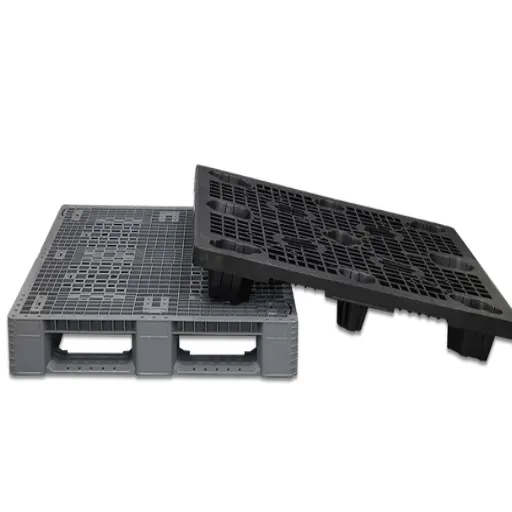
The right material is the one that matches your operating conditions, not the one that wins a spec-sheet contest. Use this framework when briefing a manufacturer, or read our full custom plastic pallets guide for the complete design and procurement process.
Temperature Environment
Start here when selecting custom plastic pallet materials. If your pallets will ever see freezer temperatures, HDPE is almost always the safer choice. If they will endure repeated steam cleaning or hot filling, PP becomes attractive. Ambient warehouses can use either resin, but HDPE usually offers more margin for unexpected cold snaps or rough handling.
Load and Racking Requirements
Pallets are rated for three load types:
- Static load: Weight the pallet can hold when stationary on a flat floor.
- Dynamic load: Weight it can carry while being moved by forklift or pallet jack.
- Racking load: Weight it can support when span-loaded in a rack.
Resin choice affects stiffness, but steel reinforcement and deck geometry often matter more for racking performance. A well-designed HDPE pallet with steel tubes can outperform a plain PP pallet in a rack.
Hygiene and Compliance Requirements
Food, beverage, and pharmaceutical operations usually require virgin, food-grade HDPE or PP. These materials resist moisture absorption, do not harbor mold or bacteria, and can withstand aggressive washdown protocols. They also help with ISPM-15 compliance because plastic pallets need no heat treatment for international export, unlike wood.
Automation Compatibility
Automated warehouses need dimensional consistency. HDPE tends to offer better dimensional stability and a lower friction coefficient than PP, which helps AGVs and AS/RS systems grip and position pallets predictably. Deck flatness and tolerance control at the mold level matter as much as resin selection here.
Sustainability Goals
If your program prioritizes circularity, recycled HDPE or PP may be the right call. Pair recycled content with a take-back or recycling program so the pallets re-enter the material stream at end of life. Be honest about the performance trade-off; a recycled pallet that fails prematurely creates more waste than a durable virgin pallet that lasts a decade.
Industry-Specific Material Recommendations
Different industries stress pallets in different ways. Here is how material selection typically plays out across the sectors Shandong Lile serves most often.
Food and Beverage
Food-grade pallets are almost always virgin HDPE. The material withstands freezing, resists acids and cleaning chemicals, and will not absorb moisture or harbor pathogens. Smooth, closed-deck designs make sanitation easier, and consistent tare weights help with inventory accuracy.
A dairy distributor we worked with in Northern Europe switched from wood to virgin HDPE pallets and cut pallet-related contamination events to zero while extending average pallet life from six months to more than ten years.
Pharmaceuticals and Cold Chain
Pharmaceutical pallets lean toward HDPE for freezer and cold-room use, making it the preferred resin for plastic pallets for cold storage. Optional RFID or IoT sensor integration adds traceability. In sterilization corridors, PP can be the better choice because it tolerates autoclave temperatures that would deform HDPE. Some operations use a mixed fleet: HDPE for storage and distribution, PP for sterilization loops.
Automotive and Heavy Manufacturing
Automotive suppliers often need high racking loads and precise footprints for just-in-time delivery. PP or HDPE with steel reinforcement works well here. The resin choice depends more on temperature and chemical exposure than on load, because reinforcement handles most of the structural demand.
Retail and E-Commerce
Retail distribution values lightweight, nestable pallets that reduce freight cost and storage space. Recycled HDPE or lightweight virgin HDPE designs are common. One-way export programs may use lower-cost composite or recycled options where return logistics are impractical.
Cost, Lifespan, and Total Cost of Ownership
Material selection always runs into the same question: are the more expensive custom plastic pallet materials worth it?
Upfront, plastic pallets cost roughly three times as much as wood. PP is usually 10–20% more expensive than HDPE, and recycled resin is 20–40% cheaper than virgin. However, upfront cost is the wrong metric for most operations.
According to ORBIS Corporation, wood pallets last around 11 cycles, while plastic pallets last 250 cycles or more. That durability changes the math entirely. A pallet that survives 20 times longer does not need to be 20 times cheaper to win on cost; it just needs to avoid the hidden costs of replacement, product damage, downtime, and rejected loads.
A documented custom implementation showed pallet damage drop 87% within one quarter after switching to a properly specified plastic design. When you add automation compatibility, lower shipping weight, and reduced sanitation labor, the total cost of ownership often favors plastic within 12 to 24 months.
Pallet pooling models can push savings further. By converting a fixed capital expense into a per-trip service fee, third-party pooling operators report 30–40% reductions in total cost of ownership for shippers.
Emerging Trends in Custom Pallet Materials
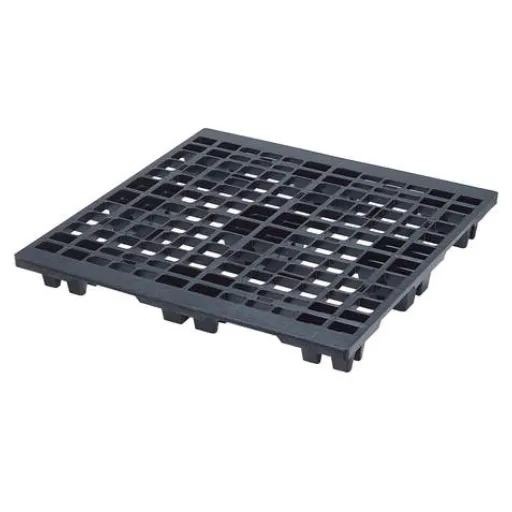
The plastic pallet market is projected to grow from roughly 8.67 billion in 2025 to 8.67 billion in 2025 to 15.68 billion by 2031, according to Mordor Intelligence. Several material trends are driving that growth. We explore the full picture in our 2026 plastic pallet industry trends report.
Recycled and Ocean-Plastic Resins
Sustainability pressure is pushing manufacturers toward higher recycled content, including ocean-bound plastics. The challenge is maintaining performance. Leading manufacturers are solving this through better sorting, wash systems, and virgin-recycled blends that hit specific mechanical targets.
Smart Pallets
RFID tags, temperature sensors, and impact detectors are becoming standard in pharmaceutical and high-value supply chains. The material must tolerate sensor embedding and repeated exposure to the conditions the sensors are monitoring. HDPE generally integrates well with embedded electronics because of its stability and low moisture absorption.
Bio-Based and Biodegradable Experiments
Bio-based polyethylene and biodegradable additives are gaining attention, especially in Europe. These materials are not yet competitive for heavy-duty pallets, but they are worth monitoring for light-duty and single-use applications where brand sustainability messaging matters more than long life.
Regional Growth
Asia-Pacific accounts for 38.91% of plastic pallet market value in 2025, driven by e-commerce and manufacturing expansion. The Middle East is the fastest-growing region at 11.41% CAGR, supported by large logistics investments such as Saudi Vision 2030.
Frequently Asked Questions About Custom Plastic Pallet Materials
What is the best material for custom plastic pallets?
There is no single best material. HDPE is best for cold storage, impact resistance, and food-contact compliance. PP is best for heat tolerance and rigid racking. The best choice depends on temperature, load, compliance, and budget.
Are recycled plastic pallets as strong as virgin pallets?
No. Recycled resin has shorter polymer chains, so it is generally less impact-resistant and less stiff than virgin material. Recycled pallets work well for light duty, one-way export, and non-food applications where cost or sustainability is the top priority.
Can plastic pallets be used in freezers?
Yes, but resin choice matters. HDPE performs well down to -40°C. PP becomes brittle below ~10°C and is not recommended for freezer use.
What is ISPM-15 compliance and does it apply to plastic pallets?
ISPM-15 is an international standard that requires heat treatment of wood pallets to prevent pest transfer. Plastic pallets are exempt, which simplifies export documentation.
How long do custom plastic pallets last?
Virgin HDPE or PP pallets in closed-loop systems typically last 10 to 15 years, or 250+ handling cycles. Recycled pallets have a shorter lifespan depending on duty cycle and material quality.
Why do plastic pallets cost more than wood?
Plastic pallets cost roughly 3x more upfront than wood, but they last 20x longer. Lower replacement, damage, sanitation, and automation costs usually produce a lower total cost of ownership within 12 to 24 months.
Conclusion: Material Selection Is the Foundation of Pallet Performance
Choosing the right custom plastic pallet materials is not a secondary detail. It determines whether your pallets survive freezer shock, pass regulatory audits, keep automated lines running, and deliver a positive return over their lifespan.
The decision usually starts with a simple temperature question. Need cold tolerance and impact resistance? Choose HDPE. Need heat tolerance and rigid racking? Choose PP. Working within tight budget or aggressive sustainability targets? Recycled blends may fit. Facing specialty hazards like UV, static, or fire risk? Specify an advanced composite or additive package.
At Shandong Lile, we do not just mold plastic. We engineer material systems around the way our customers actually operate. If you are planning a custom pallet program, start with your environment, your loads, and your compliance requirements. Then let us help you select the resin that turns those requirements into a durable, cost-effective solution.
Ready to choose the right material for your next custom pallet project? Explore our custom plastic pallet services or contact our team for a material consultation and quote.