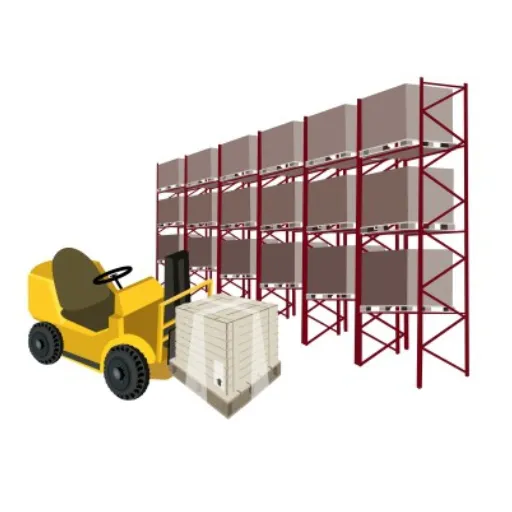

Pallet racking safety is the practice of ensuring warehouse storage systems are inspected, loaded, and maintained within manufacturer and regulatory guidelines to prevent collapse, injury, and inventory loss. It combines adherence to pallet rack safety standards like OSHA and ANSI MH16.1, regular inspection protocols, proper load distribution, and smart equipment choices, including the pallets you place on those racks.
But here is the reality most warehouse managers learn too late: a rack system can meet every engineering standard on paper and still fail because of what sits on it. The wrong pallet, unevenly loaded, damaged from previous use, or incompatible with beam spacing, creates stress the rack was never designed to handle.
At Shandong Lile, we have manufactured plastic pallets for warehouses across 108 countries. We have seen how the interaction between pallet and rack determines real-world safety. This guide covers everything you need to know about pallet racking safety, from regulatory standards to inspection checklists, with a focus on how your pallet choice either supports or undermines the entire system.
Key Takeaways
- Pallet racking safety failures cost warehouses 100,000to100,000to500,000 per incident on average, yet most are preventable with proper inspection and load management.
- OSHA does not have a dedicated pallet rack standard but enforces safety through the General Duty Clause, while ANSI MH16.1 and FEM 10.2.02 provide the technical design and testing frameworks.
- The pallets you choose directly impact racking safety through load distribution consistency, dimensional accuracy, and resistance to moisture and damage.
- SEMA and FEM recommend annual expert inspections by a technically competent person, supplemented by weekly visual checks and daily pre-start reviews.
- Cold storage, automated systems, and high-bay operations each introduce unique racking safety risks that require specialized protocols.
What Is Pallet Racking Safety and Why Does It Matter?
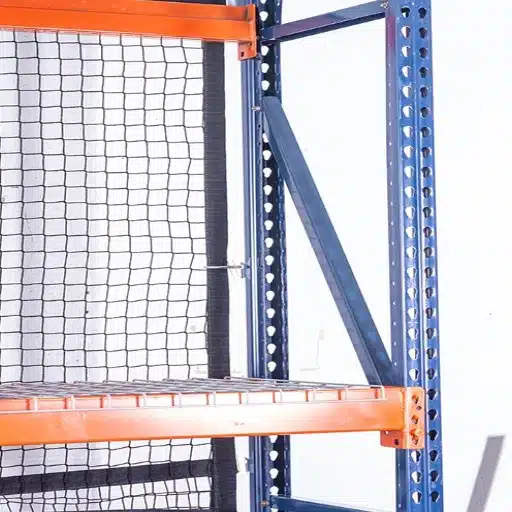
Warehouse racking safety encompasses the structural integrity of rack systems, the proper placement and weight distribution of loads, and the protocols that keep workers safe in environments where tons of inventory sit overhead. It is not a single checklist item. It is an ongoing system of design, inspection, training, and maintenance.
The stakes are higher than many operators assume. A single rack collapse can destroy inventory worth hundreds of thousands of dollars, shut down operations for weeks, and cause serious or fatal injuries. OSHA reports that forklift and warehouse incidents account for roughly 95,000 injuries annually in the United States alone. A significant portion of these involve racking, falling loads, or structural failure.
The true cost extends beyond the immediate incident. Insurance premiums rise. Regulatory investigations delay operations.
Customer orders go unfulfilled. And perhaps most damaging, the confidence of your workforce erodes when they no longer trust the infrastructure above their heads.
At its core, pallet racking safety is about control. You cannot predict every variable in a busy warehouse, but you can control the condition of your racks, the training of your team, and the quality of the equipment you put on those racks, starting with the pallets themselves.
Learn how rackable plastic pallets engineered for dimensional consistency support safer warehouse storage systems.
Key Pallet Racking Safety Standards and Regulations
Understanding which standards apply to your operation is the foundation of compliance. No single global standard governs all racking systems, but several frameworks dominate depending on your location and industry.
OSHA Pallet Racking Requirements and the General Duty Clause
In the United States, OSHA pallet racking requirements do not include a regulation dedicated solely to pallet racking. Instead, enforcement falls under the General Duty Clause, which requires employers to provide a workplace free from recognized hazards. For racking, this means maintaining systems in safe condition, addressing visible damage, and training employees on proper loading procedures.
OSHA also references 29 CFR 1910.176, which covers material handling and storage. While this regulation focuses broadly on storage practices, it supports racking safety by requiring stable loads, clear aisles, and protection against falling objects. A warehouse with damaged racks, overloaded beams, or missing safety clips is operating outside OSHA compliance.
ANSI MH16.1: The Engineering Standard
ANSI MH16.1, published by the Rack Manufacturers Institute, is the authoritative design, testing, and utilization standard for industrial steel storage racks in North America. It specifies load capacities, beam deflection limits, seismic considerations, and installation requirements.
When you purchase a rack system, the manufacturer provides load capacity ratings based on ANSI MH16.1 testing. Exceeding those ratings, altering the configuration, or removing components voids both the warranty and the engineering certification. Many warehouse managers do not realize that swapping beam heights or adding unsupported levels changes the structural calculations the original design relied on.
FEM 10.2.02 and SEMA: European and UK Standards
In Europe, FEM 10.2.02 governs the design of static steel storage systems. It aligns closely with ANSI standards but includes additional provisions for European building codes and material specifications.
In the United Kingdom, the Storage Equipment Manufacturers Association publishes the SEMA Code of Practice for the Use of Static Racking. SEMA also certifies inspectors through its SEMA Approved Rack Inspector program, widely recognized as the gold standard for racking safety assessments in Europe.
Load Capacity Placards and Signage
Every rack installation should display load capacity placards at eye level on each rack system. These placards must specify the maximum uniformly distributed load per beam level and the total maximum bay load. If your facility lacks these signs, or if they do not match your current configuration, you are operating without a clear safety reference.
How Pallet Choice Impacts Racking Safety
This is the connection most safety guides ignore. The rack structure is only one half of the equation. The pallet sitting on those beams determines how weight transfers, how evenly loads distribute, and whether the rack experiences stress it was never designed to absorb.
Dimensional Consistency and Beam Compatibility
A rack beam pair is engineered for a specific pallet footprint. When pallets vary in size, even by a few centimeters, loads shift toward the beam edges or center, creating uneven stress. Over time, this accelerates beam fatigue and increases the risk of deflection beyond safe limits.
Plastic pallets manufactured through precision injection molding maintain consistent dimensions batch after batch. Wooden pallets, by contrast, warp, splinter, and vary in size due to moisture absorption and wear. A warped wooden pallet that no longer sits flat on beam levels introduces torsion forces the rack designer never calculated for.
Load Distribution and Weight Concentration
Rack beams are rated for uniformly distributed loads. This means the weight should spread relatively evenly across the beam pair. When a pallet has weak spots, broken boards, or an uneven base, the load concentrates at specific points rather than distributing across the full beam length.
Steel-reinforced plastic pallets with engineered deck structures distribute weight predictably. Their uniform construction ensures that the rated load capacity of your rack beams is used as the manufacturer intended. Wooden pallets with missing bottom boards or cracked stringers create point loads that can exceed local beam stress limits even when the total weight appears within range.
Moisture, Contamination, and Material Degradation
Wooden pallets absorb moisture. In humid warehouses, cold storage environments, or facilities handling food and pharmaceuticals, this moisture causes expansion, warping, and mold growth. A swollen wooden pallet may not fit properly on rack beams, leading to overhang or unstable placement. A mold-contaminated pallet in a food-grade facility creates compliance issues entirely separate from structural concerns.
Plastic pallets made from HDPE or polypropylene do not absorb moisture. They maintain their dimensions and structural integrity across temperature ranges and humidity levels. For operations where consistency matters, which is every operation concerned with safety, this material stability translates directly into more predictable racking performance.
Rackable Plastic Pallets: Designed for the Job
Not all pallets belong on racks. Stackable pallets, for instance, are optimized for floor stacking and may lack the structural features needed for safe beam support. Rackable plastic pallets are specifically engineered with reinforced feet, bottom runners, or picture-frame bases that engage properly with rack beams.
At Shandong Lile, our rackable plastic pallets are designed with beam engagement geometry that ensures stable placement on standard selective racking. Steel reinforcement options add load capacity for heavy-duty applications while maintaining the dimensional consistency that protects your rack investment.
Pallet Racking Inspection: What to Check and When
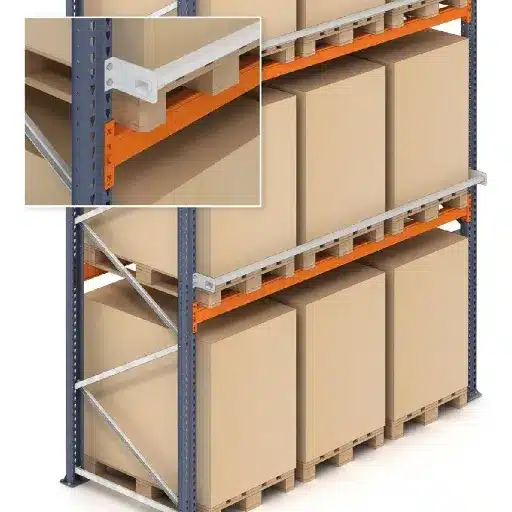
Inspection frequency is where good intentions often collapse under operational pressure. Everyone agrees racking should be inspected. Few facilities maintain a disciplined schedule. The result is damage that accumulates unnoticed until it becomes critical.
Daily Pre-Startup Inspections
Before operations begin each day, a designated employee should walk the racking areas and check for obvious hazards. This is not a structural engineering assessment. It is a common-sense scan for immediate risks. Look for missing safety clips, visible beam deflection, leaning uprights, product that has shifted overnight, and any signs of recent impact.
This daily check takes ten minutes in a typical facility. It prevents the kind of small problems that become catastrophic under load.
Weekly Visual Checks
A more thorough visual inspection should occur weekly, documented with notes and photographs. Focus on:
- Beam deflection: Beams should not sag more than the manufacturer specifies, typically 1/180th of the beam length under load.
- Upright plumbness: Uprights should be vertical within tolerance, usually 1/500th of the height from true vertical.
- Safety clips and connectors: Every beam must have both safety clips or locking devices engaged. Missing clips are one of the most common and dangerous violations.
- Anchor bolts: Check that base plates remain firmly bolted to the floor. Loose or missing anchor bolts allow the entire rack to shift under load.
- Damage from impact: Look for scrapes, dents, or bent components near aisle intersections where forklifts operate.
Annual Expert Inspections
SEMA, FEM, and ANSI all recommend that racking be inspected at least annually by a technically competent person. In the UK, this means a SEMA Approved Rack Inspector. In the US, a qualified structural engineer or certified rack inspector fulfills this role.
The annual inspection produces a formal report with risk classifications, typically a color-coded system: green for acceptable, amber for damage requiring monitoring or repair, and red for immediate danger requiring unloading and isolation. Facilities that skip annual inspections operate without an objective assessment of their structural safety.
The 12-Point Racking Safety Checklist
Use this checklist for weekly inspections and before any operational change:
- Load capacity placards are present and legible.
- Current configuration matches placard specifications.
- All beam safety clips or locking devices are in place.
- No beam deflection exceeds manufacturer limits.
- Uprights are plumb within tolerance.
- Base plates are anchored to the floor.
- No visible upright damage, dents, or twisting.
- No beam damage, cracks, or connector deformation.
- Loads are uniformly distributed and within rated capacity.
- Pallets are undamaged and properly sized for the rack.
- Aisle clearances allow safe forklift operation.
- Previous inspection reports are on file and accessible.
Documentation and Record-Keeping
Inspections without documentation are opinions. Every inspection, daily, weekly, or annual, should produce a dated record with findings, actions taken, and the inspector’s name. In the event of an incident, these records demonstrate due diligence. In the event of an insurance claim, they may determine coverage.
Common Pallet Racking Hazards and How to Prevent Them
Most racking failures are not sudden catastrophes without warning. They are the result of hazards that develop gradually and are either ignored or never recognized. Understanding the most common hazards helps you spot them before they escalate.
Overloading and Uneven Loading
The most common cause of racking failure is simply too much weight on too little structure. This happens when operators add inventory without checking load ratings, when beam levels are reconfigured without recalculating capacity, or when dense products concentrate weight in unexpected ways.
Prevention is straightforward but requires discipline. Post load ratings at every level. Train operators to check ratings before loading.
Never assume that because a beam looks strong, it can handle more than its placard specifies. And remember that dynamic loads, meaning the forces generated when a forklift places or removes a pallet, exceed static load calculations. Your rack must handle both.
Impact Damage from Material Handling Equipment
Forklifts, reach trucks, and order pickers collide with racking thousands of times per day in warehouses worldwide. Most impacts are minor and go unreported. Over time, cumulative damage weakens uprights, dislodges beams, and compromises structural integrity.
Install rack protection at aisle ends and high-traffic intersections. Column guards, end-of-aisle barriers, and floor-mounted bollards absorb impact and protect vulnerable uprights. Train operators on aisle widths and turning radii appropriate for your equipment. And most importantly, create a no-blame reporting culture where near-misses and minor impacts are documented and assessed.
In 2023, a regional food distributor in the Midwest experienced a partial rack collapse that destroyed $200,000 in inventory and shut down their facility for eleven days. The investigation revealed that a forklift had clipped an upright three months earlier. The dent was visible to anyone who looked, but no one reported it.
The upright failed progressively under normal loading until the beam above it dropped. The entire incident was preventable with a simple impact reporting protocol.
Missing or Damaged Safety Clips
Beam safety clips, also called locking pins or beam connectors, prevent beams from dislodging if a pallet is pushed upward during placement or removal. They are small, inexpensive, and absolutely critical. A beam without safety clips is a beam waiting to drop.
During every inspection, verify that every beam has both safety devices engaged. If clips are damaged or missing, replace them immediately before loading that level. Do not operate a rack with unsecured beams. This is one of the fastest ways to turn a manageable incident into a serious injury.
Unauthorized Modifications and Repairs
Cutting, welding, drilling, or otherwise altering rack components voids engineering certification and introduces unpredictable stress points. We have seen facilities weld additional brackets to beams, drill holes through uprights for cable routing, and splice damaged sections with improvised plates. Every one of these modifications weakens the system and exposes the operator to liability.
If a component is damaged, replace it with a manufacturer-approved part of the same specification. If your configuration needs to change, consult the manufacturer or a qualified engineer to recalculate loads. Racking is engineered as a system. Changing one component changes the performance of the entire bay.
Understanding Beam Deflection Limits
Beam deflection is the visible sag that occurs when a beam carries load. Some deflection is normal and expected. Excessive deflection indicates overload or beam fatigue.
ANSI MH16.1 specifies that beam deflection under load should not exceed the beam length divided by 180. For a standard 96-inch beam, that means deflection should remain under 0.53 inches.
Measure deflection with a straightedge or laser level. If you observe visible sagging that approaches or exceeds this limit, unload the beam and investigate. The beam may be overloaded, damaged, or simply the wrong specification for the application.
Pallet Racking Safety in Special Environments
Standard racking safety protocols cover most warehouse operations. But certain environments introduce variables that require additional attention. If your facility operates in cold storage, pharmaceuticals, or automation, your safety program needs to account for these specialized conditions.
Cold Storage: Material Behavior at Low Temperatures
Cold storage warehouses operate at temperatures ranging from just above freezing to minus twenty degrees Celsius or lower. At these temperatures, steel becomes more brittle. While properly rated rack systems are designed for cold environments, impact damage becomes more critical because the material has less ductility to absorb energy.
Plastic pallets perform well in cold storage when manufactured from the correct resin formulation. HDPE maintains impact resistance at low temperatures better than many alternatives. However, verify that your pallets are rated for your specific temperature range. Some plastics become brittle at extreme cold, increasing the risk of breakage under load.
For operations with frequent temperature cycling, such as blast freezing or shipping dock transfers, thermal expansion and contraction affect both racks and pallets. Monitor clearances and fit during seasonal transitions or process changes.
Pharmaceutical and Food-Grade Facilities
Regulatory requirements in pharmaceutical and food-grade warehouses extend beyond structural safety into hygiene, traceability, and contamination prevention. Wooden pallets, with their porous surfaces and tendency to harbor moisture and pathogens, create compliance risks in these environments.
Plastic pallets are non-porous, easy to sanitize, and resistant to the chemicals used in cleaning protocols. From a racking safety perspective, they also eliminate the debris, splinters, and loose fasteners that wooden pallets shed onto rack components. A clean rack is easier to inspect, and inspection is the foundation of safety.
Automated Warehouses and AS/RS Systems
Automated storage and retrieval systems place pallets with machine precision rather than human judgment. This precision is an advantage when pallets are uniform and rack systems are properly aligned. It becomes a hazard when pallet dimensions vary or rack tolerances drift.
Automated systems depend on consistent pallet footprints. A pallet that is 5 millimeters wider than specification may jam in an automated shuttle. One that is narrower may slip during retrieval. The same dimensional consistency that makes plastic pallets safer in manual operations becomes essential in automated environments.
Building a Racking Safety Culture
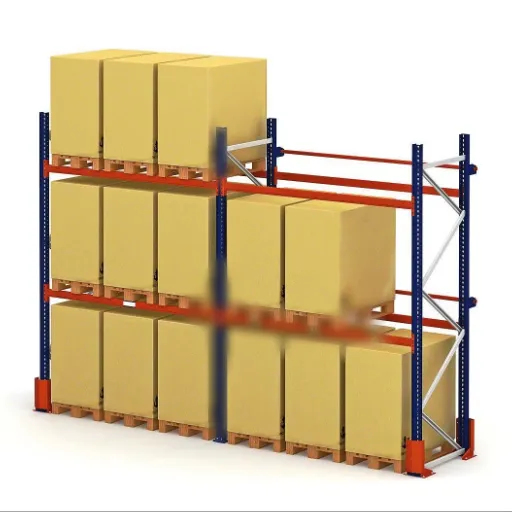
Standards, inspections, and equipment matter. But the most reliable safety system is a culture where every employee feels responsible for identifying and reporting risks before they become incidents.
Employee Training Programs
Every warehouse employee who works near racking should understand the basics: how to read load capacity placards, how to identify visible damage, what to do if they observe an unsafe condition, and why reporting matters. This training should be part of onboarding and refreshed annually.
Forklift operators need additional training on aisle navigation, turning clearances, and the specific rack configurations in your facility. They are the front line for impact prevention.
Incident and Near-Miss Reporting
A near-miss reporting system captures the incidents that almost happened. A clipped upright that did not collapse. A pallet that shifted but did not fall.
These reports reveal patterns. If the same aisle corner generates three near-misses in a month, you have a design or traffic flow problem that needs fixing.
Make reporting easy and non-punitive. The goal is information, not blame.
Regular Safety Audits
Beyond racking-specific inspections, integrate rack safety into broader warehouse safety audits. Review traffic patterns, lighting, signage, and housekeeping. A clean warehouse with clear aisles and good visibility is inherently safer than a cluttered one where hazards hide in plain sight.
At a pharmaceutical distribution center we partnered with in Europe, the operations manager implemented a simple but effective practice. Every Monday at 8:00 AM, the shift supervisor walked the entire warehouse with a printed checklist and a camera. Findings were shared in a five-minute stand-up meeting.
Over eighteen months, racking incidents dropped by 60 percent. The investment was thirty minutes per week.
Conclusion
Pallet racking safety is not a destination. It is a continuous practice of inspection, training, and informed equipment selection.
The racks in your warehouse represent a significant capital investment. The inventory on those racks represents your business. The people working beneath them represent your most valuable asset.
Protecting all three starts with understanding that safety is a system. The rack structure matters. The inspection schedule matters.
The training program matters. And the pallets you place on those racks matter more than most safety guides acknowledge.
Plastic pallets with consistent dimensions, engineered load distribution, and resistance to the environmental factors that degrade wooden alternatives are not merely a product choice. They are a safety decision that supports the structural integrity of your entire storage system.
At Shandong Lile, we engineer plastic pallets for the realities of modern warehouse operations. From standard rackable designs to custom solutions for specialized applications, our products are manufactured to ISO 9001 standards and delivered to facilities in 108 countries. We understand that safety begins with quality, and quality is not negotiable.