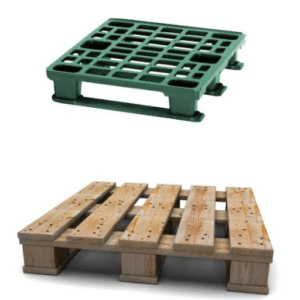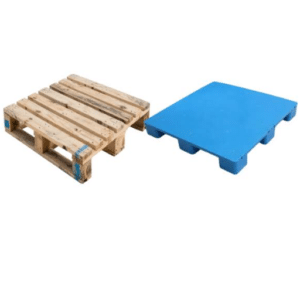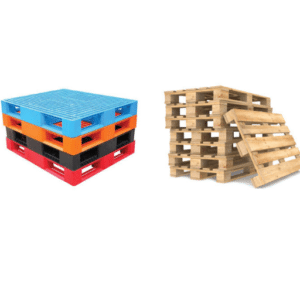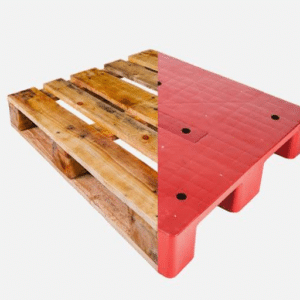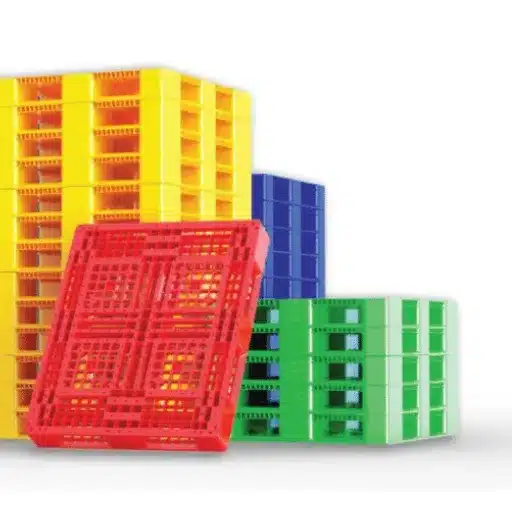

HDPE pallets outperform polypropylene in cold environments and impact resistance, while polypropylene excels in high-heat applications and lightweight export shipping. The right choice depends entirely on your operating temperature, load requirements, and handling conditions.
Last winter, a Canadian cold-storage facility manager named Derek ordered 500 new plastic pallets for his freezer operation. He chose polypropylene because the upfront price was 15% lower. Within three months, 12% of those pallets had cracked under forklift impacts at −25 degrees C. The “savings” cost him nearly $8, 000 in replacements and lost product.
If you’re weighing HDPE vs polypropylene pallets, you have probably noticed they look nearly identical on a spec sheet. Both are molded thermoplastics. Both resist moisture, chemicals, and pests. But beneath the surface, these materials behave very differently when temperatures drop, loads increase, or automation enters the picture.
In this guide, you will get the exact specifications that separate these materials: operating temperature thresholds, load ratings, friction coefficients for automated systems, and real cost-per-trip data. We will also walk through industry-specific recommendations so you can match the right material to your environment.
Key Takeaways
- HDPE operates reliably from −40 degrees C to +60 degrees C; polypropylene becomes brittle below freezing but withstands autoclave temperatures above 100 degrees C.
- HDPE absorbs impact without cracking, making it the safer choice for cold-chain logistics and rough forklift handling.
- Polypropylene is approximately 15 to 25% lighter and stiffer, which benefits air freight and heavy static racking in ambient conditions.
- Both materials are 100% recyclable, but HDPE is more widely accepted in recycling streams than PP (#5).
- For automated warehouses with AGV systems, HDPE’s lower friction coefficient (~0. 22 vs. ~0. 32) reduces slippage risk.
What Are HDPE and Polypropylene Pallets?
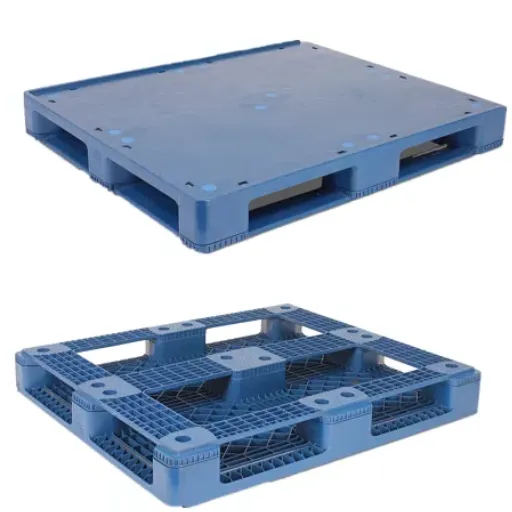
HDPE (High-Density Polyethylene)
HDPE is a petroleum-based thermoplastic made through a catalytic polymerization process. Its molecular structure packs polyethylene chains tightly together, giving the material high tensile strength and excellent resistance to impact, moisture, and chemicals.
In pallet manufacturing, HDPE dominates the market. Industry estimates place HDPE at roughly 50 to 73% of all plastic pallets produced globally. Manufacturers favor it because it injection-molds cleanly, accepts colorants and UV stabilizers well, and maintains performance across a wide temperature range.
At Shandong Lile, we mold HDPE pallets on high-tonnage injection presses with virgin and recycled feedstock options. The material’s natural flexibility allows it to deform slightly under impact rather than crack, which is why it survives repeated forklift strikes and conveyor drops that would destroy more rigid plastics.
Polypropylene (PP)
Polypropylene is also a thermoplastic, but its molecular structure arranges polymer chains in a more crystalline pattern. This gives PP higher stiffness and a higher melting point than HDPE, though at the cost of reduced low-temperature toughness.
PP pallets shine in environments where heat resistance matters. Steam sterilization, autoclaving, and hot-fill operations all fall within PP’s comfort zone. The material is also less dense than HDPE, so finished pallets weigh less, an advantage when every kilogram affects shipping costs.
However, that crystalline structure becomes a liability in freezing conditions. Below approximately 10 degrees C, polypropylene transitions from ductile to brittle behavior. A PP pallet dropped from forklift height in a freezer is far more likely to fracture than its HDPE equivalent.
At-a-Glance Material Comparison
| Property | HDPE | Polypropylene (PP) |
|---|---|---|
| Operating Temperature | −40 degrees C to +60 degrees C | +10 degrees C to +110 degrees C |
| Impact Resistance | Excellent (80–100 J/m) | Moderate (35–55 J/m) |
| Stiffness / Rigidity | Moderate; flexible under stress | High; resists bowing under load |
| Weight | Heavier (~7–11 kg typical) | Lighter (~4. 5–9 kg typical) |
| Friction Coefficient | ~0. 22 (lower) | ~0. 32 (higher) |
| Chemical Resistance | Excellent against acids, bases, alcohols | Better against organic solvents, oils |
| Heat Resistance | Deforms above ~110 degrees C | Withstands autoclave >100 degrees C |
| UV Resistance | Good with stabilizers | Moderate; requires additives |
| Recycling Code | #2 (widely accepted) | #5 (less widely accepted) |
| Typical Lifespan | 10–15 years | 8–15 years |
| Market Share | ~50–73% of plastic pallets | ~25–30% of plastic pallets |
Want to explore specific pallet specifications for your operation? Browse our complete plastic pallet range to see HDPE and PP options side by side.
Performance Comparison: HDPE vs Polypropylene
Temperature Resistance
Temperature is the single most important factor when choosing between these materials. Get this wrong, and even a high-quality pallet will fail prematurely.
HDPE retains its toughness down to −40 degrees C. In freezer and cold-chain applications, it survives thousands of thermal cycles without embrittlement. This is why pharmaceutical distributors, frozen-food processors, and seafood exporters overwhelmingly specify HDPE for refrigerated transport and storage.
Polypropylene, by contrast, has a glass transition temperature around 0 to 10 degrees C. Below this threshold, the material loses ductility. A PP pallet stored at −20 degrees C and struck by a forklift tine can shatter. Above ambient temperatures, however, PP outperforms HDPE significantly. Its melting point of approximately 164 to 170 degrees C allows it to withstand steam sterilization and hot-fill processes that would warp HDPE.
Impact Strength and Durability
Impact resistance is where HDPE truly separates itself. The material’s Izod impact strength ranges from 80 to 100 J/m, compared with 35 to 55 J/m for standard polypropylene. In practical terms, this means HDPE pallets absorb energy from drops, collisions, and rough handling without propagating cracks.
At Shandong Lile’s testing facility, we conduct drop tests from 1. 2 meters onto concrete corners. HDPE pallets typically survive 50+ drops at room temperature and 20+ drops at −25 degrees C. PP pallets perform comparably at room temperature but fail after 3 to 5 drops in freezing conditions.
That said, PP has superior surface hardness and abrasion resistance. In applications where pallets slide repeatedly against rough surfaces or where fork tines scrape the deck constantly, PP shows less visible wear over time. For ambient-temperature operations with controlled handling, this can translate to a cleaner appearance and longer cosmetic life.
Load Capacity and Rigidity
Both materials support substantial loads when properly designed. A well-engineered plastic pallet can handle static loads of 5, 000 to 7, 000 kg and dynamic loads of 1, 000 to 2, 000 kg, regardless of base resin. The difference emerges under long-term static racking conditions.
Polypropylene’s higher stiffness means less creep deformation when pallets sit in rack systems under constant load for weeks or months. If your operation stores heavy inventory on edge-racked pallets in ambient conditions, PP may maintain dimensional stability slightly better over time.
However, this advantage narrows considerably with steel-reinforced designs. At Shandong Lile, we offer steel-reinforced HDPE pallets that match or exceed PP’s racking performance while retaining HDPE’s cold-weather toughness. For operations that need both high racking capacity and freezer compatibility, steel-reinforced HDPE is often the engineered solution.
Weight and Handling
PP’s lower density translates directly into lighter pallets. A standard 1200 x 1000 mm PP pallet might weigh 6. 5 kg, while an equivalent HDPE pallet weighs 8 kg. In industries where workers handle pallets manually or where air-freight dimensional weight drives costs, this 15 to 25% weight reduction matters.
Logistics teams shipping by air often calculate that every kilogram saved across thousands of pallets yields measurable freight-cost reductions. For these operations, PP’s lightweight profile can offset its higher upfront price within a single shipping season.
Chemical and Moisture Resistance
Both HDPE and PP resist water, oils, and most common industrial chemicals. Neither absorbs moisture, which eliminates the rot, mold, and pest issues associated with wood pallets.
HDPE offers broader resistance to acids, bases, and aqueous solutions. If your pallets encounter cleaning chemicals, food acids, or caustic washdowns, HDPE holds up reliably.
PP has an edge against organic solvents such as acetone, methyl ethyl ketone, and certain petroleum-based greases. Automotive parts manufacturers and chemical processors sometimes prefer PP when specific solvent exposure is part of the operational environment.
UV Stability and Outdoor Aging
Prolonged sun exposure degrades most plastics through UV-induced oxidation. HDPE with carbon black or UV stabilizer additives performs well in outdoor storage, maintaining structural integrity for years under direct sunlight.
PP is more sensitive to UV radiation without proper stabilization. Uncovered outdoor storage of non-UV-grade PP pallets can lead to surface chalking and embrittlement within 12 to 24 months. If you store pallets outdoors, specify UV-stabilized resin regardless of base material, and verify the additive package with your manufacturer.
Cost Analysis: Which Material Saves More Long Term?
Upfront Purchase Price
PP pallets typically cost 10 to 20% more than equivalent HDPE models at the point of purchase. Raw-material pricing fluctuates with oil markets, but the specialized performance profile of PP generally commands a premium.
Standard plastic pallets range from 40to40to200 per unit depending on size, specification, and virgin versus recycled content. For context, wood pallets usually run 10to10to16 but require far more frequent replacement.
Total Cost of Ownership
The real financial picture emerges over the pallet’s full lifecycle. A single HDPE or PP pallet can deliver 100 to 150 trips over 10 to 15 years with minimal maintenance. Wood pallets, by comparison, often last only 1 to 2 trips before repair or disposal.
When you annualize the cost, plastic pallets typically run approximately 6 per year, including cleaning and inspection. Wood pallets cost close to 6 per year, including cleaning and inspection.Woodpalletscostcloserto10 per year when you factor in repairs, replacements, and disposal fees.
For Derek’s Canadian cold-storage operation, the TCO calculation flipped dramatically. His cheaper PP pallets lasted an average of 18 months in the freezer before cracking. Replacing them twice over a 5-year period made the PP option 40% more expensive than HDPE would have been from day one.
The weight advantage of PP can also shift the TCO equation in the other direction. One European electronics exporter we work with ships 50, 000 pallets annually by air. Switching from HDPE to PP reduced their air-freight weight charge by roughly €47, 000 per year. For them, the upfront premium paid back within 8 months.
Not sure which material delivers the best ROI for your operation? Contact us for a custom pallet assessment tailored to your environment, volume, and handling conditions.
Industry-Specific Recommendations
Cold Chain and Freezers: Choose HDPE
Cold-chain logistics is HDPE’s home territory. Frozen food, pharmaceuticals, seafood, and dairy operations all benefit from HDPE’s low-temperature toughness.
When a pallet moves from an ambient loading dock into a −25 degrees C freezer and back out again, it undergoes thermal shock. HDPE absorbs this stress. PP does not. If your facility includes blast freezers, refrigerated transport, or cold-storage warehousing, HDPE is the clear and proven choice.
Food and Pharmaceutical Processing: It Depends on Your Process
Both materials meet FDA and EU food-contact requirements when manufactured from virgin resin. The deciding factor is your cleaning and processing temperature.
If you wash pallets with hot water or steam, or if you autoclave them for sterile pharmaceutical environments, polypropylene is the safer choice. HDPE begins to deform at temperatures above 110 degrees C, which can compromise dimensional accuracy in high-heat sanitation cycles.
For general food handling, cold storage, and ambient distribution, HDPE remains the industry standard. Its non-porous surface resists bacterial growth, and it withstands standard pressure-washing protocols without degradation.
At a pharmaceutical packaging plant in Germany, the operations team faced exactly this decision. Their ambient warehouse stored finished goods on HDPE pallets, but their sterile filling suite required autoclave-compatible pallets for component transport. Rather than forcing one material across both zones, they standardized on HDPE for warehousing and PP for the cleanroom. The dual-spec approach eliminated the $12, 000 annual replacement cost they had been absorbing from warped HDPE pallets in the autoclave cycle.
Automated Warehouses and AGV Systems: Choose HDPE
Warehouse automation is one of the fastest-growing trends in logistics for 2026. Automated guided vehicles (AGVs) and autonomous mobile robots (AMRs) place new demands on pallet consistency and surface friction.
HDPE’s lower friction coefficient, approximately 0. 22 compared with PP’s ~0. 32, reduces slippage risk on robotic conveyors and lift mechanisms. The material also offers more consistent dimensional stability across temperature variations, which matters in large facilities where different zones may have different climate controls.
When a robotic system grips a pallet at a precise coordinate, even minor variations in deck height or runner alignment can trigger jams. HDPE’s slight flexibility helps it conform to robot mechanisms without cracking, while PP’s rigidity can create stress points at gripper contact zones.
If you are designing or retrofitting an automated warehouse, specify HDPE pallets and verify dimensional tolerances with your automation vendor before placing volume orders.
Export and Air Freight: Choose PP
Every kilogram matters in air freight. PP’s lower density directly reduces chargeable weight, and its adequate performance in ambient cargo holds makes it well-suited for international shipping.
For one-way export shipments where pallets will not return, lightweight PP models minimize shipping cost without sacrificing load security. Many exporters pair lightweight PP pallets with ISPM 15 exemption status, since plastic pallets bypass the heat-treatment requirements that apply to wood.
Heavy Static Racking: Choose PP (or Steel-Reinforced HDPE)
In ambient-temperature warehouses where pallets sit motionless in rack systems for extended periods, PP’s higher stiffness resists creep deformation. If your racking loads regularly exceed 1, 200 kg per pallet and your facility maintains stable temperatures above 15 degrees C, PP offers marginal structural advantages.
That said, steel-reinforced HDPE pallets close this gap entirely. The steel tubes integrated into the pallet frame carry the majority of the racking load, making the base resin choice less critical. For operations that need both freezer access and heavy racking, steel-reinforced HDPE delivers the best of both materials.
Sustainability and Recyclability
Both HDPE and PP are 100% recyclable thermoplastics. At end-of-life, they can be ground, reprocessed, and remolded into new products. This closed-loop potential is a major reason why sustainability-focused logistics operations are shifting from wood to plastic pallets.
At Shandong Lile, we manufacture pallets from both virgin and recycled feedstock. Our recycled-content HDPE pallets incorporate post-consumer and post-industrial regrind without sacrificing structural performance. For customers with internal sustainability targets, we provide material-certification documentation that tracks recycled content percentage.
The environmental math favors plastic over wood in most lifecycle analyses. A single plastic pallet replaces dozens of wood pallets over its service life, eliminating the deforestation, chemical treatment, and landfill burden associated with disposable wood platforms. According to industry projections, the global pallets market is expected to reach $128 billion by 2035, with plastic pallets capturing an increasing share driven partly by circular-economy mandates.
How to Choose: A Practical Decision Framework
Use this checklist to match material to your operational reality:
- Does your facility operate below 10 degrees C? → HDPE
- Do you autoclave or steam-sterilize pallets? → PP
- Do you ship by air in high volumes? → PP
- Do you use AGVs or AS/RS automation? → HDPE
- Do pallets sit in static racks for weeks at a time above 15 degrees C? → PP (or steel-reinforced HDPE)
- Is recycling infrastructure a priority? → HDPE
- Do you need the lowest upfront cost? → HDPE
If you checked multiple boxes on both sides, consider a dual-spec strategy like the German pharmaceutical plant, or explore steel-reinforced HDPE as a hybrid solution.
Frequently Asked Questions
What is the difference between HDPE and PP pallets?
HDPE (high-density polyethylene) and PP (polypropylene) are both thermoplastic resins used to manufacture plastic pallets. HDPE offers superior impact resistance and cold-weather performance, operating reliably down to −40 degrees C. PP is stiffer, lighter, and more heat-resistant, withstanding autoclave temperatures above 100 degrees C. The right choice depends on your operating environment.
Are HDPE pallets better than polypropylene?
Neither material is universally better. HDPE is the safer default for most logistics operations because it handles cold temperatures, rough handling, and chemical exposure with proven reliability. Polypropylene is the better choice for high-heat sanitation, lightweight export shipping, and heavy static racking in ambient conditions.
What temperature can HDPE pallets withstand?
HDPE pallets perform reliably from −40 degrees C to approximately +60 degrees C. They retain impact resistance and structural integrity across this entire range, making them the standard choice for freezer, cold-chain, and outdoor applications.
Can PP pallets be used in freezers?
Polypropylene pallets are not recommended for freezer use. Below approximately 10 degrees C, PP transitions from ductile to brittle behavior. Forklift impacts, drops, or stress concentrations in freezing conditions can cause cracking and catastrophic failure.
Which is more expensive: HDPE or PP pallets?
PP pallets typically cost 10 to 20% more upfront than equivalent HDPE models. However, total cost of ownership depends on application. PP’s lighter weight can reduce air-freight costs, while HDPE’s longer lifespan in harsh environments often delivers lower lifecycle costs.
Are both materials recyclable?
Yes. Both HDPE (#2) and PP (#5) are 100% recyclable. HDPE is more widely accepted in recycling streams. Many manufacturers, including Shandong Lile, offer pallets made from recycled content without sacrificing performance.
Which material is best for automated warehouses?
HDPE is generally preferred for AGV and AS/RS environments. Its lower friction coefficient reduces slippage on robotic conveyors, and its dimensional stability across temperature variations minimizes jamming risks.
Conclusion
The HDPE vs polypropylene pallets debate does not have a single winner. It has a right answer for your specific environment.
If you operate in cold storage, outdoor conditions, or automated warehouses, HDPE’s toughness and low-temperature reliability make it the logical choice. If you autoclave pallets, ship by air, or rack heavy loads in climate-controlled ambient spaces, polypropylene’s heat resistance and stiffness deliver measurable advantages.
At Shandong Lile, we manufacture both materials across 18 large-scale production lines. Over 14 years and 108 countries, we have seen HDPE outperform in cold-chain environments 9 out of 10 times. We have also seen PP save export operations thousands in freight costs annually.
The key is matching material to mission. Use the temperature thresholds, load ratings, and decision framework in this guide to make an informed choice. And if you need a second opinion on your specific operation, our engineering team is ready to help.
Ready to optimize your supply chain with the right pallet material? Get a free quote today and let our team recommend the exact specification for your environment.