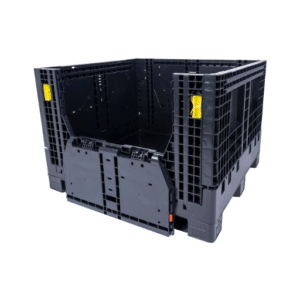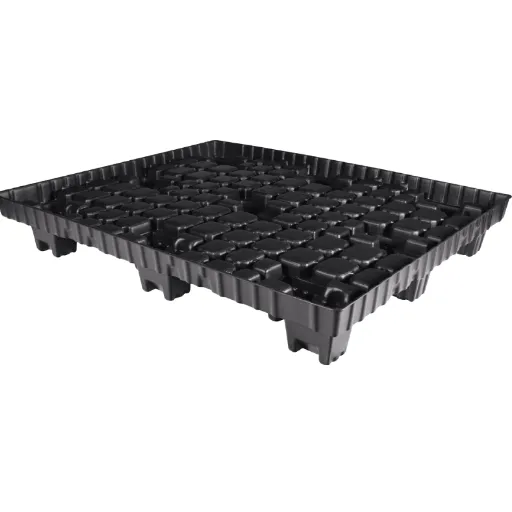

Custom plastic pallets are engineered shipping and storage platforms molded to exact specifications for dimensions, load capacity, and operational requirements. Unlike standard off-the-shelf pallets, they solve problems that generic designs cannot: automation compatibility, regulatory compliance, irregular product loads, and supply chain traceability. For operations leaders who have outgrown one-size-fits-all logistics, custom plastic pallets represent the difference between forcing products to fit infrastructure and building infrastructure around products.
When Marcus Chen took over logistics at a Midwest automotive parts supplier, his team was losing $40, 000 annually to product damage. The culprit was not careless handling. It was a standard 48×40-inch pallet forcing irregular transmission housings to overhang the edges. Every fork insertion risked a shift. Every rack placement added stress. When Marcus switched to custom plastic pallets sized precisely for his component footprints, damage dropped 87% within one quarter. The mold investment paid for itself in seven months.
That is the power of engineering logistics around your products instead of the reverse.
In this guide, you will learn exactly when custom plastic pallets justify the investment, what design options exist, how the manufacturing process works from sketch to delivery, and what to budget. You will also see how to evaluate a custom pallet manufacturer and what industry-specific requirements demand tailored solutions. By the end, you will have a clear framework for deciding whether custom or standard is the right choice for your operation.
Key Takeaways
- Custom plastic pallets are molded to exact specifications for load, dimension, and operational requirements, solving problems standard pallets cannot address.
- The mold investment typically ranges from 5,000to5,000to50, 000+, but total cost of ownership often favors custom within 12-24 months for high-volume operations.
- Industries including food & beverage, pharmaceuticals, automotive, and retail benefit most from tailored sizing, material formulations, and traceability features.
- The design process moves through seven stages: requirements gathering, CAD engineering, prototyping, load testing, approval, mass production, and delivery.
- Choosing the right manufacturer means evaluating design capability, tooling ownership policies, certification (ISO 9001), sample policies, and export logistics experience.
What Are Custom Plastic Pallets?
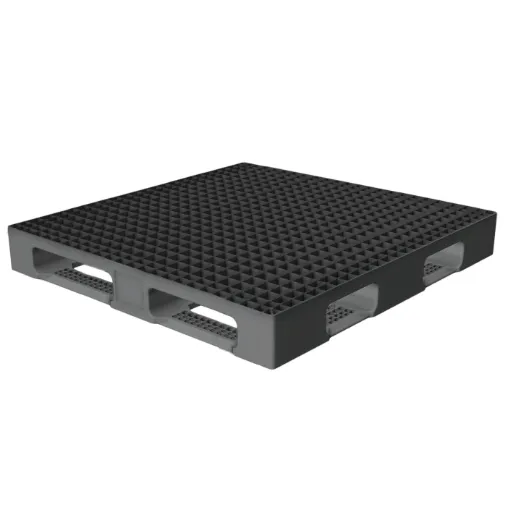
Custom plastic pallets are shipping and storage platforms designed and manufactured to meet specific operational requirements rather than conforming to industry-standard dimensions. They are produced through injection molding or rotational molding processes using resins selected for the intended application — typically high-density polyethylene (HDPE), polypropylene (PP), or specialty formulations.
The defining characteristic is precision engineering. Where a standard pallet offers approximate compatibility, a custom pallet delivers exact fit. Dimensions can be tailored to product footprints. Load ratings can be engineered for static, dynamic, and racking requirements. Deck designs can be open or closed based on hygiene needs. Materials can be selected for temperature resistance, chemical exposure, or regulatory compliance.
Custom vs. Standard: At a Glance
| Feature | Standard Plastic Pallets | Custom Plastic Pallets |
|---|---|---|
| Dimensions | Fixed (48×40 in, 1200×1000 mm, etc. ) | Tailored to product specifications |
| Load Capacity | General-duty ratings | Engineered for exact weight requirements |
| Material | Standard HDPE or PP | Virgin, recycled, or specialty resins |
| Features | Basic configurations | Steel reinforcement, RFID, color coding, branding |
| Best For | General warehousing and shipping | Automation, compliance, irregular loads, branding |
| Upfront Cost | Lower per unit | Higher (includes mold investment) |
| Total Cost of Ownership | Higher for mismatched applications | Lower when designed for the operation |
Standard pallets work when products, equipment, and regulations align with common footprints. Custom plastic pallets become essential when any of those three factors deviates from the norm.
When Should You Invest in Custom Plastic Pallets?
Not every operation needs custom pallets. In fact, forcing customization where standard designs suffice wastes capital and extends lead times. The decision to invest should be driven by operational friction that standard pallets create. Here are the five scenarios where customization delivers measurable return.
Load and Product Mismatch
When products are oversized, narrow, tall, or irregularly shaped, standard pallets create gaps or overhangs. Both conditions increase damage risk. Overhanging loads catch on rack uprights during placement. Gaps allow products to shift in transit. A custom pallet sized to the product eliminates both problems.
Elena Vasquez ran quality control for a Pacific Northwest bakery supplying artisan bread to 400 retail locations. Her team used standard wooden pallets for everything — flour sacks, packaged bread, and ingredient totes. During a routine allergen audit, inspectors flagged cross-contamination risk. Wooden pallets absorbed flour dust, making it impossible to guarantee a gluten-free chain of custody. Elena transitioned to custom plastic pallets with closed decks, color-coded blue for allergen-free zones, and embedded RFID tags for batch tracking. The investment eliminated her biggest audit vulnerability and reduced ingredient loss by 12%.
Automation and Compatibility Requirements
Automated warehouses, conveyor systems, and robotic handling equipment demand dimensional consistency. Standard pallets vary within manufacturing tolerances. Custom pallets can be held to ±2 mm across every dimension, ensuring smooth interaction with automated storage and retrieval systems (AS/RS), conveyor belts, and robotic arms.
Regulatory and Hygiene Constraints
Food, pharmaceutical, and medical device operations face strict hygiene standards. The U. S. Food and Drug Administration (FDA) regulates materials that contact food under 21 CFR 177. 1520. The European Union enforces similar requirements through Regulation (EC) No 1935/2004. Custom plastic pallets can be manufactured from FDA-compliant virgin resins with non-porous, seamless decks that wooden pallets cannot replicate.
Branding and Traceability Needs
Color-coded pallets simplify SKU management and inventory segregation. Custom colors support HACCP allergen programs, safety zone identification, and department-based workflows. Logo embossing turns functional equipment into brand assets. RFID and barcode integration enable real-time asset tracking, trip counting, and maintenance scheduling.
Space and Logistics Optimization
Container shipping rewards cube utilization. A custom pallet footprint that maximizes product density per container can reduce freight costs more than the pallet investment itself. Nestable and stackable custom designs further reduce storage space when pallets are empty.
Want to explore whether custom sizing fits your operation? Browse our plastic pallet solutions to see standard and custom options side by side.
Custom Plastic Pallet Sizes and Standards
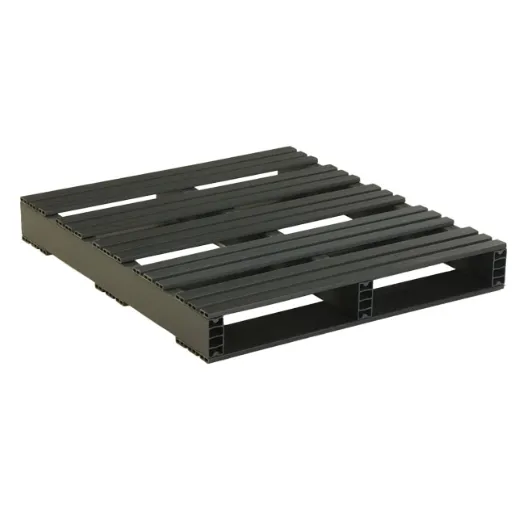
Most custom pallet projects start with a standard footprint and modify it. Understanding these standards helps buyers decide whether to adapt an existing design or engineer something entirely new.
Common Standard Footprints
- GMA (Grocery Manufacturers Association): 48 x 40 inches (1, 219 x 1, 016 mm). North American dominant pallet. Roughly 30% of pallets manufactured worldwide use this size specification.
- ISO 6780: 1, 000 x 1, 200 mm. The most frequently adopted international standard, prevalent in Europe, Asia, and international transportation networks.
- Euro Pallet (EPAL): 1, 200 x 800 mm. Required for many European retail and grocery supply chains. Strict dimensional and quality standards apply.
- Asian Standard: 1, 100 x 1, 100 mm. Common in Japan, Korea, and China for domestic and regional logistics.
- Australian Standard: 1, 165 x 1, 165 mm. Required for many Australian retail chains.
When to Modify vs. Design from Scratch
Modify a standard footprint when your product is close to a common size and the primary need is height adjustment, deck style change, or feature addition. Design from scratch when the product footprint differs by more than 10% from any standard, when automation requires exact dimensions, or when container cube optimization demands a non-standard footprint.
Dimensional Tolerance for Automation
Standard plastic pallets typically hold ±5 mm tolerance. For automation compatibility, custom pallets should be engineered to ±2 mm or tighter. This level of precision requires high-cavitation injection molds and process control that not all manufacturers can deliver.
Understanding Custom Pallet Costs and Tooling Economics
Cost is the single biggest barrier to custom pallet adoption. Understanding the economics removes the guesswork and helps buyers build accurate business cases.
Mold and Tooling Investment
The injection mold is the largest upfront cost. Mold prices depend on:
- Cavitation: Single-cavity molds cost less but produce one pallet per cycle. Multi-cavity molds increase output but add complexity.
- Complexity: Pallets with steel tube inserts, complex undercuts, or variable wall thickness require more sophisticated mold design.
- Material: P20 steel molds are standard for lower volumes. H13 hardened steel molds last longer and suit high-volume production.
Typical mold investment ranges from 5,000forsimplesingle−cavitydesignsto5,000forsimplesingle−cavitydesignsto50, 000+ for complex multi-cavity tooling.
Per-Unit Pricing by Volume
Once tooling is complete, per-unit pricing depends on material weight, resin grade, cycle time, and volume. Typical ranges:
| Volume Tier | Per-Unit Price Range | Notes |
|---|---|---|
| 500-1, 000 units | 45−45−85 | Higher per-unit due to setup amortization |
| 1, 000-5, 000 units | 35−35−65 | Sweet spot for mid-sized operations |
| 5, 000-10, 000 units | 25−25−50 | Economies of scale kick in |
| 10, 000+ units | 18−18−40 | Best pricing, full amortization |
Prices vary based on material, size, and features. Contact us for a detailed quote.
Feature Add-Ons
- Steel reinforcement: Adds 8−8−15 per unit depending on tube count and grade
- Custom colors: Minimal cost for standard pigments; Pantone matching adds 2−2−5 per unit
- RFID embedding: 5−5−12 per unit depending on tag type
- Logo embossing: Usually absorbed into mold cost if designed initially; retrofitting adds expense
Total Cost of Ownership Model
The real question is not upfront cost but total cost of ownership over the pallet lifespan. Consider this comparison for a logistics operation using 2, 000 pallets over five years:
| Cost Factor | Standard Wooden | Standard Plastic | Custom Plastic |
|---|---|---|---|
| Initial purchase | $15, 000 | $50, 000 | $85, 000 (includes mold) |
| Replacement (5 years) | $22, 500 | $5, 000 | $2, 000 |
| Damage/repair | $8, 000 | $1, 500 | $500 |
| Product damage | $12, 000 | $4, 000 | $1, 000 |
| 5-Year TCO | $57, 500 | $60, 500 | $88, 500 |
In this scenario, custom plastic pallets carry a higher TCO. But add automation compatibility that prevents a single conveyor jam per month, or eliminate one product recall through better traceability, and the economics flip immediately. The break-even point depends on the specific operational gains customization unlocks.
Curious about pricing for your specific requirements? Request a detailed quote including mold investment and per-unit pricing tailored to your volume.
The Custom Design Process: From Concept to Production
Understanding the design journey helps buyers set realistic expectations, prepare accurate requirements, and evaluate manufacturers effectively. At Shandong Lile, the process follows seven distinct stages.
Step 1: Requirements Gathering
The buyer and engineering team document:
- Maximum static, dynamic, and racking load requirements
- Product dimensions and weight distribution
- Operating environment (temperature, moisture, chemical exposure)
- Handling equipment (forklift type, conveyor specs, AS/RS compatibility)
- Compliance requirements (FDA, GMP, ISO)
- Volume forecasts and reorder timelines
- Branding, color, and traceability needs
The quality of output depends on the quality of input. Vague requirements produce vague designs.
Step 2: CAD Design and Engineering
Engineers translate requirements into 3D CAD models. Mold flow analysis simulates how molten resin will fill the cavity, identifying potential weak points, weld lines, or air traps before any metal is cut. Structural simulation predicts deflection under load and helps optimize rib placement and wall thickness.
Step 3: Prototype Production
A prototype mold or 3D-printed sample produces physical units for evaluation. This stage validates dimensions, ergonomics, and fit with existing equipment. Prototype lead time typically ranges from 2-4 weeks.
Step 4: Load Testing and Validation
Prototypes undergo rigorous testing:
- Static load test: Weight applied uniformly to the top deck to verify maximum stationary capacity
- Dynamic load test: Simulated transport conditions with vibration and impact
- Racking load test: Edge or center racking simulation to verify deflection limits
- Dimensional verification: CMM (Coordinate Measuring Machine) inspection against CAD tolerances
Step 5: Design Approval and Tooling
After test data review and any design revisions, the buyer approves the final CAD. The production mold is then machined, assembled, and sampled.
Step 6: Mass Production and Quality Control
Injection molding runs begin. In-process inspection checks dimensional consistency, visual quality, and weight. Final testing samples each production lot for load verification.
Step 7: Delivery and Documentation
Pallets are packaged for export, accompanied by certificates of conformity, material certifications, and customs documentation. For global shipments from Qingdao Port, typical transit times range from 15-35 days depending on destination.
Total project timeline: 30-60 days for straightforward designs; 60-90 days for complex projects requiring extensive prototyping or specialty materials.
Materials and Specialty Resins for Custom Pallets
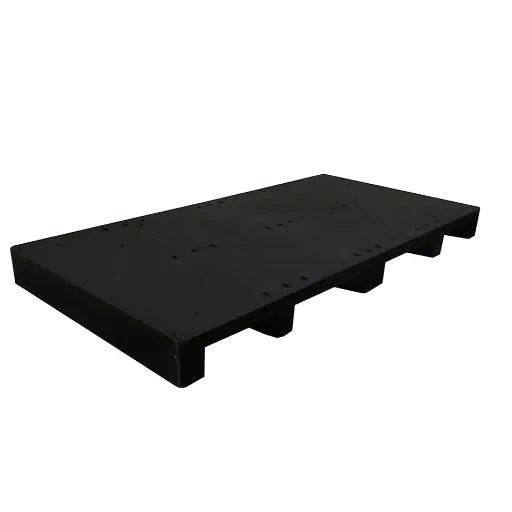
Material selection is one of the most consequential decisions in custom pallet design. The right resin delivers performance, compliance, and longevity. The wrong resin compromises all three.
HDPE (High-Density Polyethylene)
HDPE is the workhorse of plastic pallet manufacturing. It offers excellent impact resistance, chemical resistance, and cost-effectiveness. HDPE performs well in ambient and refrigerated conditions (-30°C to +60°C). It is also 100% recyclable and available in recycled-content blends.
Best for: General industrial use, food and beverage logistics, export shipping, closed-loop systems.
PP (Polypropylene)
PP is stiffer than HDPE and offers better performance at elevated temperatures (up to +100°C). It has slightly lower impact resistance at cold temperatures but excels in hot-fill applications and autoclave sterilization cycles.
Best for: Hot-fill operations, pharmaceutical sterilization, high-temperature warehouses.
Recycled-Content Blends
Post-industrial and post-consumer recycled resins reduce cost and environmental impact. Quality varies based on source material and reprocessing standards. For non-critical applications, recycled blends offer compelling value. For food-contact or pharmaceutical use, virgin resin is typically required.
Specialty Formulations
| Formulation | Property | Application |
|---|---|---|
| ESD-safe | Electrostatic discharge protection | Electronics, semiconductors, explosives |
| Flame retardant | Self-extinguishing | Chemical warehouses, aviation cargo |
| UV stabilized | Resists degradation from sunlight | Outdoor storage, open-yard logistics |
| Antibacterial | Inhibits bacterial growth | Food processing, healthcare |
| Cold-impact | Maintains strength at -40°C | Frozen supply chains, cold storage |
Material selection should be finalized during the requirements-gathering phase. Changing resin after mold design adds cost and delays.
Structural Customizations: Steel, Color, Branding, and RFID
Beyond material and size, structural features transform a basic pallet into a precision logistics tool.
Steel Reinforcement
Steel tubes integrated into the pallet structure dramatically increase racking load capacity and reduce long-term deflection. Common configurations include:
- Single-bar reinforcement: One steel tube along the primary axis for moderate racking improvement
- Cross-bar reinforcement: Two intersecting tubes for balanced load distribution
- Full-frame reinforcement: Tubes along all major load paths for maximum capacity
Steel-reinforced custom plastic pallets can achieve racking loads exceeding 2, 000 kg, compared to 500-1, 000 kg for unreinforced designs. The trade-off is increased weight and per-unit cost.
Color Coding
Color serves operational functions beyond aesthetics:
- SKU segregation: Assign colors to product families for instant visual identification
- Allergen management: Blue for allergen-free, yellow for caution, red for restricted under HACCP programs
- Safety zones: Green for general storage, orange for quarantine, red for rejected goods
- Department workflows: Different colors for inbound, staging, and outbound areas
Logo and Branding
Logo embossing, hot stamping, and screen printing turn pallets into mobile brand assets. For OEM and private-label partners, branded pallets reinforce distributor identity throughout the supply chain.
RFID and Barcode Integration
Embedded RFID tags enable:
- Real-time asset location tracking
- Automated trip counting for lifecycle management
- Maintenance scheduling based on actual usage
- Temperature logging for cold chain validation
Barcode labels offer a lower-cost alternative for operations that do not require real-time tracking.
Industry-Specific Custom Pallet Solutions
Different industries impose different demands. Custom plastic pallets excel when those demands exceed what standard designs can satisfy.
Food and Beverage
The food industry requires hygiene, traceability, and compliance. Custom designs for food operations typically include:
- Seamless closed decks: Eliminate crevices where bacteria or food residue accumulate
- Drainage channels: Direct liquids away from products during washdown
- FDA-compliant virgin resins: Meet 21 CFR 177. 1520 requirements for food-contact materials
- Color coding for allergen segregation: Support HACCP and BRC audit requirements
- Moisture-resistant formulations: Prevent degradation from repeated sanitation cycles
For operations handling both raw and finished goods, custom color-coded pallets create a visible barrier that prevents cross-contamination.
Pharmaceuticals
Pharmaceutical logistics operates under Good Manufacturing Practice (GMP) and Good Distribution Practice (GDP) guidelines. Custom pharma pallets address:
- Cleanroom compatibility: Smooth, non-shedding surfaces that do not generate particulates
- Batch traceability: RFID or QR code integration linking pallets to specific production batches
- Validation documentation: Material certificates, dimensional reports, and load test data for audit trails
- ESD protection: For active pharmaceutical ingredients sensitive to electrostatic discharge
David Park managed inbound logistics for a generic drug manufacturer in New Jersey. During an FDA inspection, auditors requested documentation tracing every pallet that had touched a recalled batch. His wooden pallets had no identification. His team spent 72 hours manually tracing movements through warehouse logs. After the audit, David switched to custom plastic pallets with embedded RFID tags and sequential serial numbers. The second recall took only four hours to solve. This alone made the investment worthwhile.
Automotive
Automotive supply chains demand precision, strength, and just-in-time reliability. Custom automotive pallets feature:
- Exact part fitment: Deck geometry matching component footprints to prevent movement
- Heavy-duty reinforcement: Steel tubes and thick walls for engine blocks, transmissions, and axle assemblies
- Returnable packaging integration: Compatibility with dunnage, totes, and layer pads
- Kanban-friendly colors: Visual signals for production line replenishment
Retail and E-Commerce
Retail operations prioritize handling efficiency and seasonal flexibility. Custom retail pallets offer:
- Lightweight designs: Reduce freight cost and improve manual handling ergonomics
- Custom carton footprints: Maximize product density per pallet for store replenishment
- Nestable configurations: Reduce empty pallet storage space by 60-70% during off-peak periods
- Retail-ready branding: Store-appropriate colors and logos for back-of-house visibility
Cold Chain and Export
Frozen supply chains and international shipping present unique challenges:
- Cold-impact resins: Maintain structural integrity at -40°C without brittle failure
- ISPM-15 exemption: Plastic pallets bypass the heat-treatment requirements that wooden pallets need for international phytosanitary compliance
- Container optimization: Custom footprints that maximize cube utilization in 20-foot and 40-foot containers
For export operations, the ISPM-15 exemption alone can save days of processing time and eliminate certificate costs that add up across thousands of shipments.
OEM and Private-Label Manufacturing Partnerships
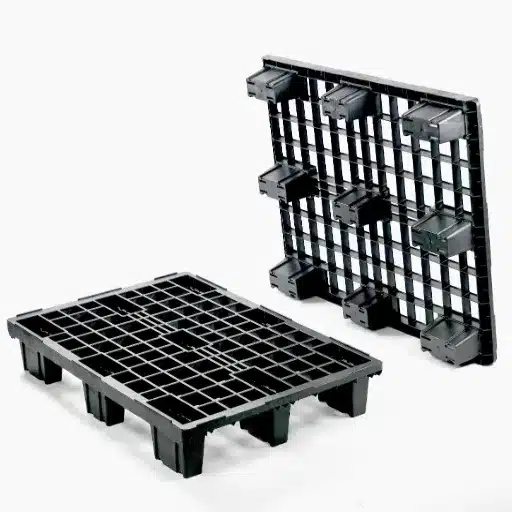
Custom plastic pallets are not only for end users. Distributors, logistics providers, and brand owners can use OEM and private-label partnerships to build proprietary pallet lines.
White-Label Manufacturing
A white-label partnership allows a distributor to sell custom plastic pallets under its own brand without investing in manufacturing infrastructure. The manufacturer handles design, tooling, production, and quality control. The partner handles sales, marketing, and customer relationships.
Mold Ownership Agreements
Mold ownership is a critical contract term. Two models dominate:
- Client-owned molds: The buyer pays full tooling cost and owns the mold. This provides maximum flexibility but requires higher upfront investment.
- Shared or manufacturer-owned molds: The manufacturer retains ownership and amortizes cost across production volume. This lowers initial investment but may limit portability.
Before signing any agreement, clarify who owns the mold, what happens if the relationship ends, and whether the mold can be transferred to another manufacturer.
Production Flexibility
OEM partners need production schedules that match their sales cycles. Look for manufacturers who offer:
- Flexible minimum order quantities
- Batch production for seasonal demand
- Inventory holding agreements
- Priority scheduling for repeat orders
At Shandong Lile, OEM partnerships include dedicated account management, tailored production schedules, and full branding integration from color matching to logo embossing.
Choosing a Custom Plastic Pallet Manufacturer
The manufacturer you choose determines the quality, timeline, and success of your custom pallet program. Evaluate candidates across six dimensions.
Design Capability
Does the manufacturer have in-house engineering staff proficient in CAD, mold flow analysis, and structural simulation? Can they produce prototypes before committing to production tooling? A manufacturer who outsources design adds communication overhead and reduces accountability.
Tooling Ownership and Portability
Clarify mold ownership upfront. If you pay for tooling, you should own the mold. Confirm whether the manufacturer uses standard mold bases that can be transferred if needed.
Certification and Compliance
ISO 9001 certification indicates a structured quality management system. For food-contact applications, verify the manufacturer can provide FDA or EU material compliance declarations. For pharmaceutical work, ask about GMP alignment and validation documentation capabilities.
Sample Policy
A reputable manufacturer produces prototype samples for evaluation before mass production. Be cautious of any supplier who asks for full production commitment without physical samples.
Lead Times and Logistics
Standard custom projects require 30-60 days from approval to first production. Complex projects may extend to 90 days. For global buyers, manufacturing location and port access matter. Qingdao Port, one of China’s largest container ports, offers direct shipping routes to major global destinations with transit times of 15-35 days.
After-Sales Support
Quality issues happen. What matters is how the manufacturer responds. Ask about warranty terms, replacement policies, and design iteration support for future modifications.
The Shandong Lile Advantage
With over 10 years of industry experience, 16 subsidiaries, and a presence in 108 countries, Shandong Lile combines engineering depth with global logistics capability. Our ISO 9001-certified facilities use 18 large-scale injection molding machines to deliver consistent quality at scale. From concept to delivery, we engineer custom plastic pallets that solve real logistics challenges.
Frequently Asked Questions
What are custom plastic pallets?
Custom plastic pallets are shipping and storage platforms engineered to specific dimensions, load capacities, and operational requirements. They are manufactured through injection molding using resins selected for the intended application, with options for steel reinforcement, color coding, and traceability integration.
How much do custom plastic pallets cost?
The mold investment typically ranges from 5,000to5,000to50, 000+ depending on complexity and cavitation. Per-unit pricing usually falls between 18and18and85 after tooling, depending on volume, material, and features. Total cost of ownership often favors custom designs within 12-24 months for high-volume or damage-prone operations.
How long does it take to manufacture custom plastic pallets?
Straightforward custom projects typically take 30-60 days from design approval to first production. Complex projects requiring extensive prototyping, specialty materials, or multi-cavity tooling may extend to 60-90 days. Prototype samples are usually available within 2-4 weeks.
What sizes can custom plastic pallets be?
Custom plastic pallets can be manufactured in virtually any size. Many projects start with standard footprints — such as GMA 48×40 inches, ISO 1, 200×1, 000 mm, or Euro 1, 200×800 mm — and modify height, deck style, or features. Fully custom dimensions are engineered from scratch for products that do not align with standard footprints.
Can custom plastic pallets be used in racking systems?
Yes. Many custom plastic pallets are specifically designed for racking applications. Rackable designs feature reinforced bottom decks, support columns, and engineered stringer geometry to prevent sagging. Steel reinforcement can increase racking load capacity to 2, 000 kg or more.
What materials are used for custom plastic pallets?
The most common materials are high-density polyethylene (HDPE) and polypropylene (PP). HDPE offers excellent impact resistance and cost-effectiveness. PP performs better at elevated temperatures. Specialty formulations include ESD-safe, flame retardant, UV stabilized, antibacterial, and cold-impact grades for specific applications.
Can I get a sample custom plastic pallet before ordering?
Yes. Reputable manufacturers produce prototype samples for evaluation before committing to mass production. Prototyping validates dimensions, ergonomics, and equipment compatibility. Always request samples before approving production tooling.
Are custom plastic pallets eco-friendly?
Custom plastic pallets are 100% recyclable and can be manufactured from recycled-content resins. Their long lifespan — typically 5-10 years compared to 1-2 years for wooden pallets — reduces material consumption over time. At end of life, they can be ground and reprocessed into new products.
What industries benefit most from custom plastic pallets?
Industries with specialized requirements see the strongest returns: food and beverage (hygiene and compliance), pharmaceuticals (traceability and GMP), automotive (precision fitment and heavy loads), retail (branding and handling efficiency), and cold chain (temperature resistance and ISPM-15 exemption).
How do I choose a custom plastic pallet manufacturer?
Evaluate manufacturers on design capability, tooling ownership policies, certification (ISO 9001 minimum), sample policies, lead times, logistics experience, and after-sales support. Request references from customers in your industry and review prototype quality before committing to production.
Conclusion
Custom plastic pallets are not an expense. They are an engineering investment that pays returns through reduced damage, improved automation compatibility, regulatory compliance, and supply chain visibility. The key is knowing when standard designs create enough friction to justify the mold investment.
If your operation struggles with product damage from poorly fitting pallets, conveyor jams from dimensional inconsistency, audit vulnerability from wooden pallet hygiene, or traceability gaps that complicate recalls, custom plastic pallets likely deserve a place in your logistics strategy.
The process is straightforward: define your requirements, partner with a manufacturer who can engineer and prototype before production, validate through load testing, and scale with confidence. Total cost of ownership analysis usually reveals that the break-even point arrives sooner than expected — especially when you factor in hidden costs like product damage, compliance risk, and operational inefficiency.
At Shandong Lile, we do not just manufacture pallets. We engineer solutions that optimize your supply chain. With over 14 years of experience, ISO 9001 certification, and a global logistics network serving 108 countries, we guide clients from initial concept through production and delivery. Whether you need a single custom size or a complete OEM pallet line, our engineering team is ready to transform your requirements into validated, production-ready designs.
Ready to engineer a pallet solution that fits your operation perfectly? Contact our design team for a free consultation and custom quote. From Shandong to the world, we deliver solutions that transcend borders.