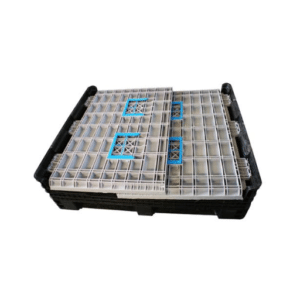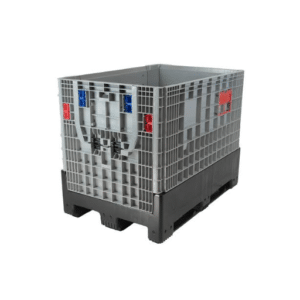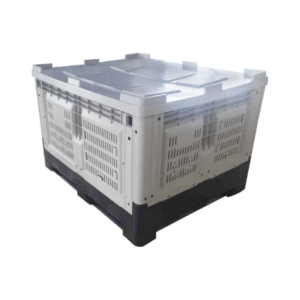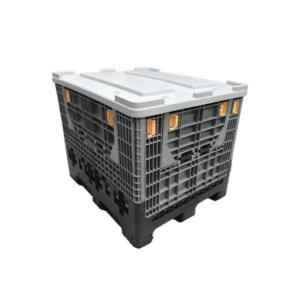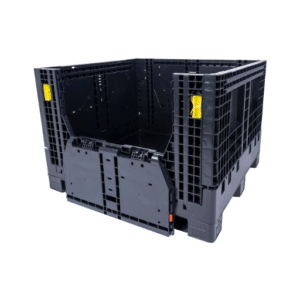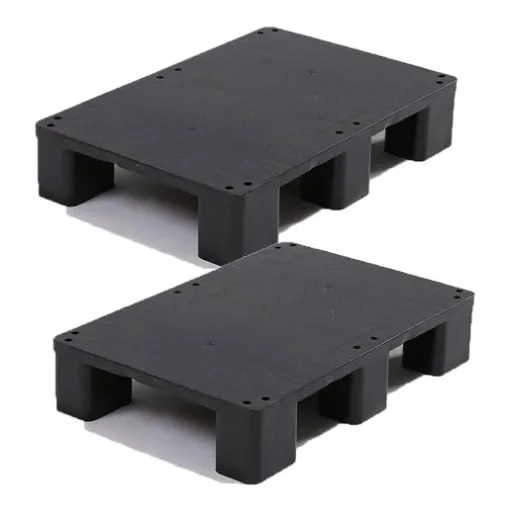

Industrial plastic pallets are heavy-duty, reusable platforms engineered from HDPE or polypropylene for repeated use in manufacturing, warehousing, and logistics environments. They outperform wood alternatives in durability, hygiene, and automation compatibility, often delivering measurable total cost of ownership savings within three to five years.
The global plastic pallet market is projected to reach USD 9.4 billion by 2026, yet many procurement teams still choose pallets based on upfront price alone. If you’ve ever felt overwhelmed by conflicting specs, vague supplier claims, and hidden long-term costs, you’re not alone.
This guide gives you a data-driven framework for selecting industrial plastic pallets by type, material, load requirement, and compliance need. You’ll learn how to interpret load ratings, compare materials, calculate true total cost of ownership, and evaluate suppliers with confidence.
Here’s what we’ll cover: pallet types and load capacities, material selection, industry-specific compliance, a worked TCO example, customization options, and a practical supplier checklist.
Key Takeaways
- Industrial plastic pallets last 100–500 trips and break at roughly 1% versus 25% for wood in comparable logistics environments.
- HDPE excels in cold and impact resistance; polypropylene delivers stiffness for high-temperature racking applications.
- Static, dynamic, and racking load ratings each require distinct safety factors, never operate at the rated maximum.
- A 1,000-pallet plastic fleet can reduce 5-year TCO by 27% or more compared to wood in closed-loop systems.
- Selection depends on industry compliance (FDA, GMP, ISPM-15), automation needs, and return logistics.
What Are Industrial Plastic Pallets?
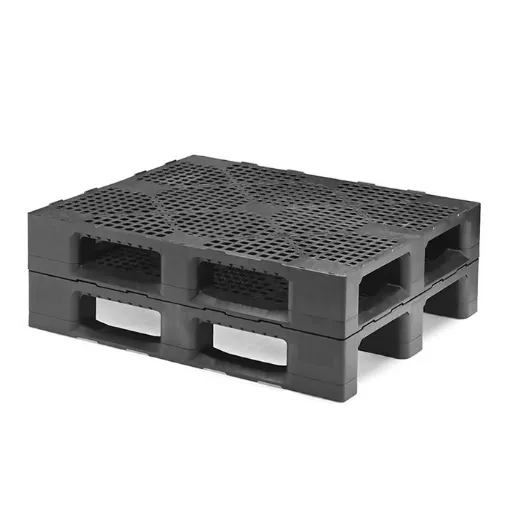
Industrial plastic pallets are engineered load-bearing platforms manufactured from high-density polyethylene (HDPE), polypropylene (PP), or specialty resins. Unlike light-duty consumer pallets, industrial variants are designed for repeated use in demanding environments such as automated warehouses, cold storage facilities, and high-throughput manufacturing lines.
These pallets differ from standard or light-duty options in three key ways. First, they use thicker wall sections and reinforced corner blocks to handle sustained dynamic loads. Second, they maintain dimensional stability across wide temperature ranges, which is critical for automated handling systems. Third, they resist moisture, chemicals, and biological contamination, properties that make them essential in food, pharmaceutical, and chemical logistics.
Primary use cases include closed-loop supply chains where pallets return to the point of origin, automated storage and retrieval systems (AS/RS) that demand precise dimensions, export shipping that benefits from ISPM-15 exemption, and cold chain operations where wood absorbs moisture and degrades. At Shandong Lile, we manufacture industrial plastic pallets on 18 large-scale production machines, ensuring consistent quality for operations across 108 countries.
Types of Industrial Plastic Pallets
Choosing the right type of industrial plastic pallet starts with understanding how your operation stores, moves, and returns empty units. Each design solves a specific logistics problem.
Nestable Pallets
Nestable pallets feature tapered legs that fit into the deck of the pallet below. When empty, they nest together to reduce return volume by roughly 3:1 compared to non-nestable designs. Some models stack 40 high when nested, while wood pallets typically max out around 15 high. This density matters enormously for backhaul logistics. A beverage distributor running 500 routes per week can cut return truckloads by 60% with nestable plastic pallets.
Stackable Pallets
Stackable pallets use solid blocks or reinforced corners that allow vertical stacking of loaded units. They maintain consistent stacking heights, which simplifies rack planning and truck loading. These are the workhorses of manufacturing environments where pallets sit in production queues or buffer stock areas. If your operation stores loaded pallets more than two units high, stackable designs distribute weight more evenly than nestable alternatives.
Rackable Pallets
Rackable pallets include reinforced edges or steel reinforcement to span warehouse racking beams without support from below. This is the most structurally demanding application. A rackable industrial plastic pallet must resist deflection under racking loads, typically rated at 1,000–2,000 kg (2,200–4,400 lb) depending on the model. If your warehouse uses selective pallet racking, drive-in racking, or push-back systems, rackable designs are non-negotiable.
Solid Deck vs. Vented Deck
Solid deck pallets offer a continuous surface ideal for small items, bagged goods, and hygienic applications where drainage is not required. Vented deck pallets allow water and debris to pass through, making them easier to clean and dry, an important consideration in food processing and outdoor storage.
| Pallet Type | Best For | Static Load Range | Dynamic Load Range | Racking Load Range |
|---|---|---|---|---|
| Nestable | Return logistics, retail | 1,000–4,000 kg (2,200–8,800 lb) | 500–1,500 kg (1,100–3,300 lb) | Not rated |
| Stackable | Manufacturing, buffer stock | 2,000–6,000 kg (4,400–13,200 lb) | 1,000–2,000 kg (2,200–4,400 lb) | Limited |
| Rackable | Warehouse racking, AS/RS | 3,000–10,000 kg (6,600–22,000 lb) | 1,000–2,500 kg (2,200–5,500 lb) | 1,000–2,000 kg (2,200–4,400 lb) |
| Heavy Duty Rackable | Automotive, heavy components | Up to 15,000 kg (33,000 lb) | Up to 3,000 kg (6,600 lb) | Up to 2,500 kg (5,500 lb) |
Note: These ranges represent typical industry ratings. Always confirm specific load capacities with your supplier and request test data. For a deeper dive into load testing methodology, see our guide to pallet capacity testing standards.
Ready to explore which type fits your workflow? Browse our full range of plastic pallet solutions to compare specifications side by side.
Materials: HDPE vs. Polypropylene vs. Specialty Resins
The material of your industrial plastic pallet determines its temperature tolerance, impact resistance, chemical compatibility, and cost. Most industrial pallets use either HDPE or polypropylene, with specialty resins reserved for specific hazards.
HDPE (High-Density Polyethylene)
HDPE is the most common material for industrial plastic pallets. It absorbs impact without cracking, performs reliably in freezing environments, and resists a broad range of acids and alkalis. HDPE also maintains flexibility at low temperatures, which reduces brittle fracture risk in cold storage. Typical operating range: -40°C to +60°C (-40°F to +140°F).
The primary limitation of HDPE is creep deformation under sustained racking loads at elevated temperatures. In warm warehouses with heavy racking, HDPE may sag over time.
Polypropylene (PP)
Polypropylene offers higher stiffness and better resistance to creep under load. It tolerates higher temperatures than HDPE, typically up to +90°C (+194°F), making it suitable for warm warehouses and autoclave sterilization cycles. PP’s rigidity makes it the preferred choice for rackable pallets where minimal deflection is critical.
The trade-off is reduced low-temperature toughness. Below -20°C (-4°F), polypropylene becomes more susceptible to impact damage.
Specialty Resins
Fire-retardant additives meet UL 94 or FMVSS 302 standards for warehouse fire safety. Conductive grades dissipate static electricity in electronics manufacturing. UV-stabilized formulations extend outdoor lifespan by resisting photodegradation.
| Property | HDPE | Polypropylene (PP) | Specialty Resins |
|---|---|---|---|
| Temperature Range | -40°C to +60°C | -20°C to +90°C | Varies by additive |
| Impact Resistance | Excellent | Good | Comparable to base resin |
| Stiffness / Racking | Moderate | High | High |
| Chemical Resistance | Broad (acids, alkalis) | Good (solvents, oils) | Varies |
| Typical Cost Tier | Standard | Standard +10–20% | Premium +25–50% |
When Marcus took over logistics at a Midwest frozen food distributor, he inherited a fleet of PP pallets in a -28°C freezer. Within one winter, corner cracks appeared on 12% of the fleet. Switching to HDPE eliminated cold-impact failures entirely. The lesson: match the material to the temperature, not just the load.
Load Capacity Explained
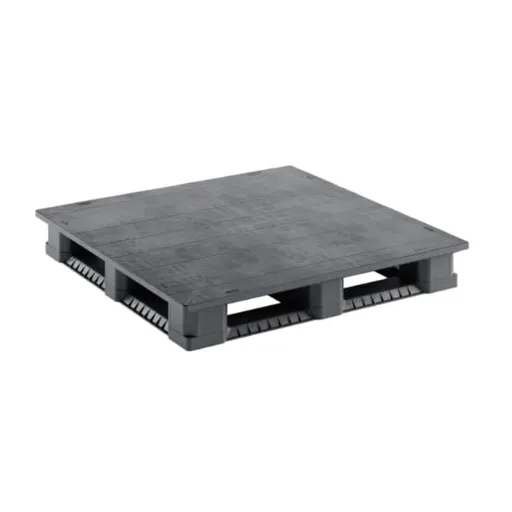
Load capacity ratings for industrial plastic pallets fall into three categories. Understanding the difference prevents warehouse accidents and premature pallet failure.
Static load is the maximum weight a pallet can support when stationary on a flat floor. This rating assumes even weight distribution and no dynamic forces. A pallet rated for 5,000 kg static might hold a stacked block of raw material indefinitely.
Dynamic load is the maximum weight during transport by forklift or pallet jack. This rating accounts for acceleration, deceleration, and minor shocks. Dynamic ratings are typically 40–60% lower than static ratings.
Racking load is the maximum unsupported weight a pallet can hold when spanning rack beams. This is the most demanding test because the pallet must resist bending without support from below. Racking loads are usually the lowest of the three ratings.
Safety Factors
The rated load is not your operating load. Best practice is to apply a safety factor of 1.5 to 2.0. If a pallet is rated for 2,000 kg dynamic load, plan your operation around 1,000–1,300 kg. This accounts for uneven loading, operator variability, and the occasional dropped corner.
At Shandong Lile, we test every pallet design to ISO 8611 standards. We recommend requesting test reports from any supplier and verifying that the test method matches your application.
Industry Applications & Compliance
Different industries impose distinct regulatory and operational requirements on industrial plastic pallets. Choosing a pallet that meets your industry’s standards prevents audit failures, product contamination, and supply chain delays.
Food Industry: FDA Compliance, HACCP & Washdown Compatibility
Food-grade industrial plastic pallets must use FDA-compliant resins for direct or indirect food contact. Solid deck designs with smooth surfaces prevent bacterial harborage. Vented decks with large openings allow thorough washdown and rapid drying. HACCP-aligned operations often color-code pallets by zone (raw, processed, finished) to prevent cross-contamination.
If your operation handles bulk ingredients, pairing pallets with hygienic plastic pallet boxes creates a complete food-safe logistics system.
Pharmaceuticals: GMP, Cleanroom Grades & Traceability
Pharmaceutical logistics demands higher cleanliness standards than food. Pallets may need to withstand autoclave sterilization or gamma irradiation. Smooth, sealed surfaces resist particle shedding in cleanroom environments. Some operations require batch traceability, which drives demand for embedded RFID tags or molded-in serial numbers.
Cold Chain & Freezer Storage
Cold chain operations expose pallets to thermal cycling, condensation, and brittle temperatures. HDPE performs better than PP in sub-zero environments. Pallets with closed decks and drainage channels manage meltwater during thaw cycles. For frozen food distribution, pallet longevity directly affects cost per trip because replacement logistics are expensive in remote cold storage facilities.
Automotive Manufacturing
Automotive suppliers move heavy components such as engine blocks, transmissions, and body panels. Heavy-duty rackable pallets with steel reinforcement handle loads up to 15,000 kg static. Just-in-time delivery requirements mean pallets must perform reliably, any failure stops the production line.
Export & International Shipping
Plastic pallets are exempt from ISPM-15 phytosanitary regulations because they do not harbor wood-boring pests. This exemption eliminates heat treatment costs, certificate paperwork, and customs delays associated with wooden pallets. For exporters shipping to the EU, North America, or Australia, this regulatory advantage alone can justify the switch to plastic.
| Industry | Key Requirement | Pallet Feature | Compliance Standard |
|---|---|---|---|
| Food & Beverage | Hygiene, washdown | Smooth surface, drainage | FDA 21 CFR, HACCP |
| Pharmaceuticals | Sterilization, traceability | Autoclave-safe, RFID-ready | GMP, USP <661> |
| Cold Chain | Low-temp impact resistance | HDPE, closed deck | No specific pallet standard |
| Automotive | Heavy loads, JIT reliability | Steel reinforcement, rackable | OEM-specific |
| Export | ISPM-15 exemption | Any plastic design | ISPM-15 (exempt) |
Plastic vs. Wood: Total Cost of Ownership
Upfront price is the wrong way to compare industrial plastic pallets and wood. The real question is cost per trip over the operational lifespan.
Reusable plastic pallets commonly last 100–500 trips. Wooden pallets average 10–80 trips before repair or replacement. Plastic breakage rates sit around 1% in comparable logistics environments, while wood can experience breakage rates near 25%. Reusable packaging systems can cut overall supply chain costs by up to 27% for producers and retailers, according to industry research.
Worked Example: 1,000-Pallet Fleet Over 5 Years
Consider a regional food distributor operating a closed-loop fleet. Each active pallet completes roughly 50 trips per year. Over five years, that’s 250,000 total trips.
Wood pallet scenario:
- Average lifespan: 40 trips per pallet (including repairs)
- Total pallets needed: 250,000 trips ÷ 40 trips = 6,250 pallets
- Acquisition at 20each:20each:125,000
- Repairs and maintenance: $25,000
- Disposal at 2perpallet:2perpallet:12,500
- 5-year total: $162,500
- Cost per trip: $0.65
Plastic pallet scenario:
- Average lifespan: 250 trips per pallet
- Total pallets needed: 250,000 trips ÷ 250 trips = 1,000 pallets
- Acquisition at 85each:85each:85,000
- Repairs and maintenance: $5,000
- Recycling credit: -$2,000
- 5-year total: $88,000
- Cost per trip: $0.35
Result: The plastic fleet delivers 46% savings over five years in this closed-loop scenario. Savings vary by trip frequency, handling conditions, and wood recovery practices, but the directional advantage holds across most high-use applications.
Elena, a procurement director at a European automotive parts supplier, ran similar numbers for her 800-pallet fleet. Her wood pallets lasted 25 trips in a rough factory environment. After switching to industrial plastic pallets, replacement frequency dropped by 80%. The payback period on the higher initial investment was 18 months. After that, every trip was cheaper.
Want to see what plastic pallets could save your operation? Contact our team for a custom TCO analysis based on your trip volume and handling conditions.
Customization Options
Standard industrial plastic pallets fit many applications, but custom configurations solve specific operational challenges. At Shandong Lile, we engineer custom solutions for dimensions, colors, branding, and functional enhancements.
Size Standards
Common footprint standards include ISO 1200×1000 mm, GMA 48×40 inches, and EPAL 1200×800 mm. Custom sizes accommodate non-standard products, maximize truck cube utilization, or match existing conveyor systems.
Color Coding & Logo Embossing
Color-coded pallets simplify zone management and prevent cross-contamination. Red for raw materials, blue for finished goods, green for recyclables. Logo embossing reinforces brand visibility in customer-facing supply chains.
Anti-Slip Surfaces & Steel Reinforcement
Anti-slip grommets or textured decks reduce load shift during transport. Steel reinforcement bars increase racking capacity and stiffness for heavy or high-value loads.
RFID Integration & Automation Compatibility
Embedded RFID tags enable real-time tracking without labels that peel or fade. For automated warehouses, precise dimensional tolerances and flatness specifications ensure reliable operation with conveyors, stacker cranes, and robotic palletizers.
Manufacturing Processes at a Glance
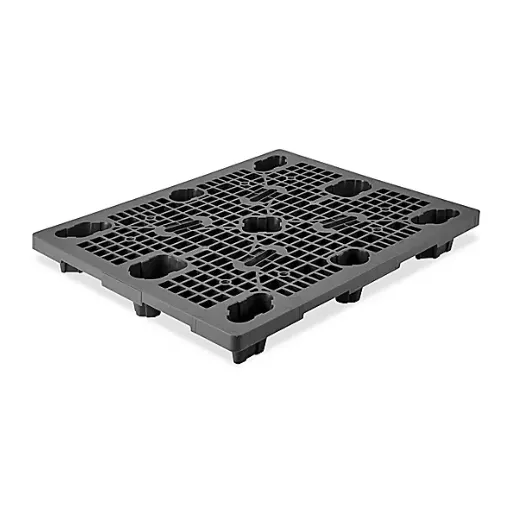
How an industrial plastic pallet is manufactured affects its precision, strength, surface finish, and unit cost. Three processes dominate the market.
Injection Molding
Injection molding forces molten resin into a precision steel mold under high pressure. This process produces the tightest dimensional tolerances, the most consistent wall thickness, and the highest structural integrity. It is the preferred method for rackable pallets and automation-compatible designs. Tooling costs are higher, but unit economics excel at volume.
At Shandong Lile, our injection molding lines produce pallets with consistent weight and geometry, batch after batch. This matters when a 0.5 mm height variation can jam an automated conveyor.
Thermoforming
Thermoforming heats a plastic sheet and draws it over a mold. The process uses less material per pallet, resulting in lighter weights and lower per-unit costs. Thermoformed pallets suit light-duty applications and one-way shipping where extreme durability is not required.
Structural Foam Molding
Structural foam injects resin with a blowing agent to create a cellular core surrounded by a solid skin. The resulting pallets are rigid and lightweight, with excellent insulative properties. The process uses lower clamp pressure than solid injection molding, which reduces tooling costs for very large pallets.
| Process | Precision | Strength | Weight | Best For |
|---|---|---|---|---|
| Injection Molding | High | High | Standard | Rackable, automated, heavy-duty |
| Thermoforming | Moderate | Moderate | Light | Light-duty, export, cost-sensitive |
| Structural Foam | Moderate | Moderate | Light | Large formats, insulative needs |
Choosing an Industrial Plastic Pallet Supplier
The right supplier is a long-term partner, not just a vendor. Here is a practical framework for evaluating industrial plastic pallet suppliers.
Verify Certifications
Request ISO 9001 quality management certification. For food and pharma applications, ask for FDA resin compliance letters and material safety data sheets. If you operate in the EU, confirm REACH compliance.
Request Sample Testing
Never commit to a large order without physical samples. Load-test samples in your actual racking and handling equipment. Check dimensional consistency across multiple units. Run washdown tests if hygiene is critical.
Evaluate Warranty & Support
A reputable supplier stands behind their product with clear warranty terms. Ask about replacement policies for manufacturing defects and whether they offer repair services or take-back programs.
Red Flags
Be cautious of suppliers who cannot provide test data, who quote prices significantly below market without explanation, or who lack traceability for their raw materials. Uncertified recycled content can introduce contaminants that compromise strength and hygiene.
At Shandong Lile, we welcome supplier audits. Our ISO 9001-certified facility operates 18 large-scale production machines with multi-layered quality control, from raw material inspection through final load testing. We ship from Qingdao Port to clients in 108 countries, with lead times of 15–20 workdays for standard products.
Sustainability & End-of-Life
Sustainability in pallet selection is more nuanced than simply choosing the material with the lowest carbon footprint at production. The full picture includes lifespan, trip efficiency, and end-of-life pathways.
Industrial plastic pallets made from HDPE or PP are 100% recyclable at end of life. Many manufacturers now offer post-consumer recycled (PCR) content options, typically 20–50% recycled material, without sacrificing structural performance. Some suppliers operate take-back programs that grind used pallets into raw material for new production.
The environmental comparison with wood is not one-sided. Wooden pallets have a 71–80% lower cradle-to-gate carbon footprint per unit than plastic. However, plastic can offset this production deficit through durability. A plastic pallet that completes 250 trips displaces six to ten wood pallets over its life. In high-trip closed-loop systems, the per-trip carbon footprint of plastic can fall below that of wood.
Approximately 95% of wooden pallets are recovered, repaired, or recycled into mulch and biomass. This high recovery rate means wood remains competitive in open-loop systems where pallets rarely return to the sender.
The honest conclusion: plastic pallets are not universally greener than wood, but they are consistently greener in closed-loop, high-trip logistics systems where return rates and durability maximize trip efficiency.
At Shandong Lile, we use HDPE and PP resins that are fully recyclable, and we engineer our pallets for maximum lifespan to minimize replacement frequency. Our commitment to sustainability starts with durability.
Frequently Asked Questions
How long do industrial plastic pallets last?
In typical logistics environments, industrial plastic pallets last 100–500 trips. Lifespan depends on handling conditions, load weights, and temperature exposure. Pallets in gentle closed-loop systems with forklifts often exceed 300 trips. Pallets in rough outdoor environments may need replacement closer to 100 trips.
What weight can industrial plastic pallets hold?
Static load ratings typically range from 1,000 kg to 15,000 kg depending on design. Dynamic loads range from 500 kg to 3,000 kg. Racking loads range from 1,000 kg to 2,500 kg. Always apply a safety factor of 1.5 to 2.0 below the rated maximum.
Are plastic pallets better than wood for warehouses?
For high-trip closed-loop operations, automated warehouses, and hygiene-sensitive industries, industrial plastic pallets generally deliver lower total cost of ownership and better compliance. For one-way shipping or low-trip open-loop systems, wood may remain cost-effective.
Can plastic pallets be used in cold storage?
Yes. HDPE performs reliably down to -40°C (-40°F). Avoid polypropylene in sub-zero environments because it becomes brittle below -20°C (-4°F). Ensure the pallet design includes features that manage condensation during thermal cycling.
What is the difference between nestable and rackable pallets?
Nestable pallets have tapered legs that fit into the deck below, saving space on return transport. They are not designed for racking. Rackable pallets have reinforced edges or steel bars to span rack beams without support from below. Some designs are both nestable and rackable, though they compromise slightly on each metric.
Are plastic pallets FDA approved?
Plastic pallets themselves are not “FDA approved,” but they can be manufactured from FDA-compliant resins suitable for food contact under 21 CFR. Always request a letter of compliance from your supplier confirming the resin meets FDA requirements for your specific application.
Can plastic pallets be recycled?
Yes. HDPE and polypropylene pallets are 100% recyclable. At end of life, they can be ground into regrind and used in new pallet production or other plastic products. Some suppliers offer take-back programs that handle recycling for you.
Do plastic pallets need ISPM-15 certification?
No. ISPM-15 applies to wood packaging materials to prevent the spread of wood-boring pests. Plastic pallets are exempt from ISPM-15 requirements, which eliminates heat treatment costs and customs paperwork for international shipments.
Conclusion
Selecting the right industrial plastic pallet is a technical decision with direct financial impact. The wrong choice drives up replacement costs, creates compliance risk, and slows your operation. The right choice delivers decades of reliable performance.
Here is the framework in brief. First, define your load requirements across static, dynamic, and racking categories. Second, match the material to your temperature and chemical environment, HDPE for cold and impact, polypropylene for stiffness and heat. Third, confirm industry compliance before you request quotes. Fourth, calculate total cost of ownership, not just acquisition price. Fifth, evaluate suppliers on certifications, test data, and warranty terms.
At Shandong Lile, we don’t just manufacture pallets, we engineer solutions that optimize your supply chain. With over 14 years of experience, 16 subsidiaries, and a global presence spanning 108 countries, we partner with procurement and operations teams to design industrial plastic pallets that match precise specifications. From standard rackable designs to fully custom OEM solutions with steel reinforcement and RFID integration, our ISO 9001-certified production delivers consistency at scale.
Ready to select the right industrial plastic pallets for your operation? Contact our engineering team for a consultation, custom quote, or sample evaluation. We’ll help you build a pallet fleet that performs under pressure, trip after trip, year after year.