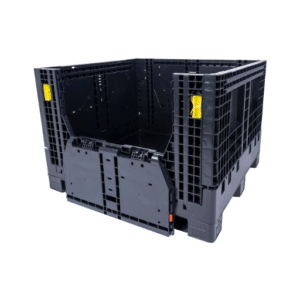

The right kind of packaging, i.e., plastic pallet boxes vs wooden crates, is extremely dependent on the supply chain structure of your firm. The ownership costs are lowered with them, the durability is assured while health standards are observed even better than ever before with plastic pallet boxes. But even the age old wooden crates still make sense in a cost-maximizing perspective, for instance, with a one-time shipment, a purpose-built package with biggest obstructions, and in the cheapest economies of scale.
A drug wholesaler located in Rotterdam carried out an analysis of packaging consumption behavior for a period of five years. During this period, a total of 340 wooden crates were used, and ISPM-15 fumigation invoices were settled every time an order was shipped. Additionally, there were three contamination cases due to moisture absorption. They managed to save operating expenses by 66% in the first year by switching to plastic pallet boxes for distribution. This is playing out across port cities all over the globe, as the shift in packaging technologies accelerates from wood to plastic.
The importance of the material has been stressed a lot. However, when do you actually use plastic for and abandon wood? Or when is it appropriate to still use wood? This guide, gives a true value comparative analysis under parameters of price, durability, hygiene and storage. There is no confusion regarding this issue after having a thorough rule based system which incorporates the Shandong Lile’s manufacturing experience and market study accumulated over the period of 14 years.
Now, this is what is discussed in the paper: a comparative table, a cost analysis, the durability in practice, the necessary regulations, the automation, the sustainability and an action plan to select suitable type of packaging for a business.
Key Takeaways
- Plastic pallet boxes break even against wooden crates within 6 to 24 months in closed-loop systems.
- Plastic lasts 10 to 15 years versus 3 to 5 years for wood, with maintenance costs roughly 66% lower over time.
- Collapsible plastic pallet boxes reduce empty return volume by 60% to 80%, cutting freight costs significantly.
- Plastic is exempt from ISPM-15 fumigation, making it the faster choice for international shipping.
- Wooden crates still win on upfront purchase price and field repairability for short-term or one-way use.
Plastic Pallet Boxes vs Wooden Crates: What Is the Real Difference?
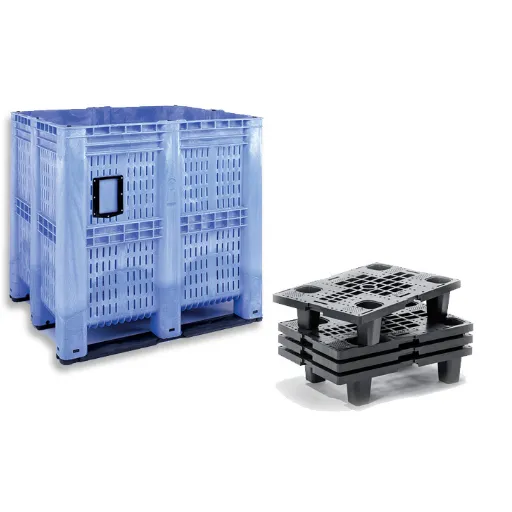
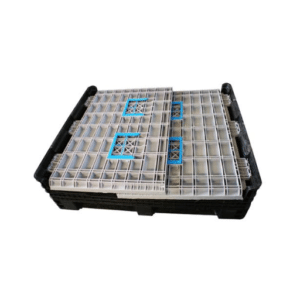
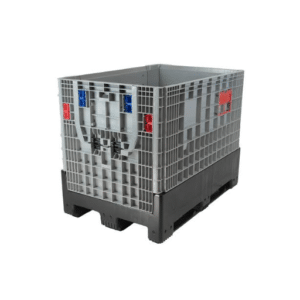
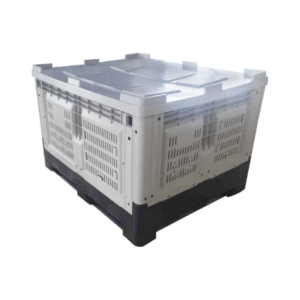
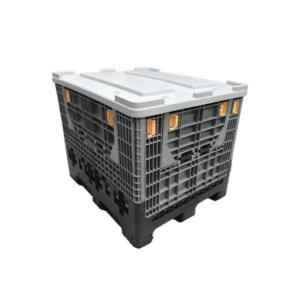
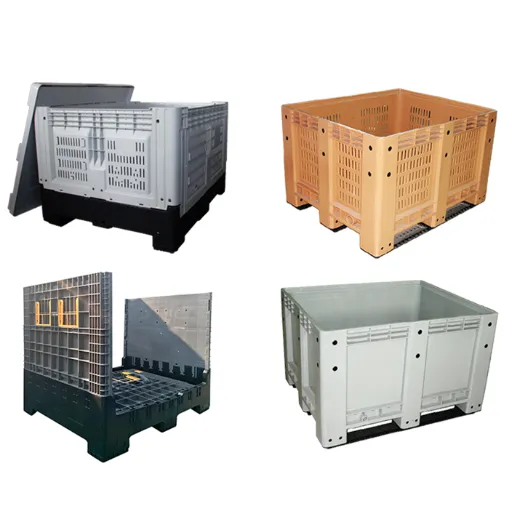
Before evaluating the performance, first it is advisable to have the proper definition of each of these terms. A plastic support tray box is a holding casket built on top of a support tray which has four enclosures and for the most part a cover. These devices are either hard or foldable, available in conventional sizes such as 1200 by 1000 mm; and they are designed to support weights within the range of 500 kg and 1000 kg and more. A wooden crate is an enclosed container made up of wooden boards usually joined together by nailing, screwing or gluing on a wooden pallet or on skids.
The international situation indicates the pace and the direction of the development of the industry. Global Market Insights indicates that the sales of plastic pallets were approximately 8.3billion in the year 2024 and the market is anticipated to reach 14.6 billion in the year 2034 at a CAGR of 5.8 %. Ofthe sameperiod, the wooden crate market was estimated to be at 986 million approximately with a projection of 1.4 billion by the year 2030. Growth of plastic does not come only in terms of speed; it has already taken the market tenfold.
At Shandong Lile, we engineer both collapsible and rigid plastic pallet boxes across our 178,000-square-meter facility. We have seen firsthand how the right container choice can transform a supply chain. The key is matching the material to the operational reality.
| Attribute | Plastic Pallet Box | Wooden Crate |
|---|---|---|
| Upfront cost per unit | ~$40 | ~$30 |
| Typical lifespan | 10 to 15 years | 3 to 5 years |
| Average load capacity | Up to 2,000 lbs | ~1,500 lbs |
| Unit weight | ~50 lbs | ~80 lbs |
| Empty return volume | 60% to 80% reduction when collapsed | Fixed volume |
| Maintenance per year | ~$5 | ~$15 |
| ISPM-15 compliance | Exempt | Required for export |
Not sure which specs match your load requirements? Explore our complete range of plastic pallet boxes to compare dimensions, capacities, and customization options.
Cost Comparison: Upfront Price vs Total Cost of Ownership
Wooden crates win on the initial purchase price every time. A standard wooden crate costs roughly 30perunit,whileaqualityplasticpalletboxstartsaround30perunit,whileaqualityplasticpalletboxstartsaround40. For a small business ordering 100 units, that $1,000 difference feels significant. But the math changes dramatically once you factor in lifespan, maintenance, and replacement.
Upfront Purchase Costs
For one-way shipping or short-term projects, wood is the budget-friendly option. If your crates leave your facility and never return, the lower entry cost makes sense. However, most industrial operations run closed-loop or multi-trip systems. In those cases, upfront price is the wrong metric to optimize.
Maintenance and Replacement Costs
The establishment of wooden crates requires consistent care for maintaining their functional ability. Boards crack, nails loosen and moisture causes warping. The annual maintenance of a wooden crate is approximately13 which includes repairs, replacements as well as fumigation. Whereas for a plastic pallet boxes vs wooden crates is also reported – comparable to the two aforementioned structures, because they can only clean whereas washing becomes more complicated within the bounds of these operations. Thanks to aggressive rosette retrofitting, annual maintenance notches up to about 5 per unit.
Replacement cycle comes very quickly. While a wooden crate can well serve for some three to five years without any problem, a plastic pallet box will not wear for ten to fifteen years. In a span of ten years, a wooden crate has been replaced thrice. A plastic box is changed once; possibly none at all.
The TCO Break-Even Point
In 2023 a medium-sized automotive supplier based in Stuttgart adopted the system change. A close circuit was operated in their plant in conjunction with three Tier 1 suppliers.
An alteration to folding plastic pallet boxes enabled them to cut costs down to about $15,000 every year. These costs were cut because of reduced replacements, decreasing weight of cargo, and abolition of ISPM-15 treatment. They achieved the break-even level in fourteen months.
In most operations where cycles are repeated, plastic pallet boxes will pay off within half a year and two years. Thereafter every year is a cost saving. Provided your crates are used within the company or are coming back from customers, it is purely the concept of the total cost (of ownership).
Want to see how collapsible designs specifically impact your return logistics? Explore our complete guide to collapsible vs rigid plastic pallet boxes and discover which design fits your cycle pattern.
Durability and Performance Under Real Conditions
Durability is where plastic separates from wood most visibly. The gap is not marginal. It is measured in years, in trips, and in consistent performance.
Lifespan: Years vs Trips
A high-quality plastic pallet box endures 200 to 500 trips over 10 to 15 years. A wooden crate manages roughly 8 to 20 trips before boards split or fasteners fail. Even when wooden crates are repairable, the labor and material costs of repeated fixes erode the initial savings.
Load Capacity and Consistency
Durable plastic pallet boxes routinely handle up to 2,000 lbs with dimensional stability across their entire service life. Wooden crates average closer to 1,500 lbs, and that capacity degrades as moisture warps the timber. A plastic box loaded today performs the same as it will in year eight. A wooden crate loaded today might sag, twist, or lose integrity if it absorbed humidity last week.
Weather, Moisture, and Pest Resistance
Wood is a natural material. It contains moisture, which leads to swelling and facilitates the growth of mold, fungi and insects. Termites and wood borers may eat a container up long before it reaches the recipient.
Plastic contains no pore spaces on the surface. It does not absorb moisture, therefore, it is not affected by rain, snow, or moisture changes in the environment.
At Shandong Lile, we produce plastic boxes made of high-density polyethylene and polypropylene. They are resistant to chemicals, heat, and light. They do not break or become contaminated with pests. This is not an added advantage for businesses in wet or exposed environments. Simply put, this is a necessity.
Hygiene, Safety, and Regulatory Compliance
Food, pharmaceutical, and healthcare operations face strict standards. In these sectors, material choice is not about preference. It is about compliance.
Food and Pharmaceutical Standards
Plastic pallet boxes feature smooth, non-porous surfaces that withstand high-pressure washing, steam cleaning, and chemical disinfection. They meet FDA, HACCP, and BRC Global Standard requirements with minimal effort. Wooden crates cannot achieve the same level of sanitation. The porous surface traps bacteria, absorbs cleaning chemicals, and releases contaminants into sensitive products.
ISPM-15 and Export Requirements
Elena, a regulatory authority at a Greek olive oil merchant, filed a waiting shipment for the Australian market in 2024. Due to incomplete ISPM-15 records, customs authorities in Australia detained the shipment for 72 hours in wooden crates. Due to the delay, she was unable to use the slot for retail. Next quarter, she started using plastic pallet boxes instead. Her following shipment passed customs clearance in less than two hours.
Crossing borders with perforated wooden crates would trigger ISPM-15 standards. This requires fumigation with methyl bromide or heat treatment. In addition, the container shall be properly marked for each shipment. All these are expensive, time-consuming and entailing unnecessary bureaucracy. Untreated wood has also been denied entry on several custom inspection requests.
No such problems exist in plastic pallet boxes. These are ready for overseas dispatch. Such a derogation entails the procurement of detailed materials and shipping orders and obviates the bottleneck of any international concern’s supply chain exports to various countries.
Worker Safety: Splinters, Nails, and Weight
A wooden crate weighs roughly 80 lbs. A plastic pallet box weighs about 50 lbs. That 30-pound difference reduces manual handling injuries and lowers freight costs.
Wooden crates also expose workers to splinters, protruding nails, and sharp edges. Plastic surfaces are smooth and uniform, reducing injury risk on the warehouse floor.
Warehouse Efficiency and Automation Compatibility
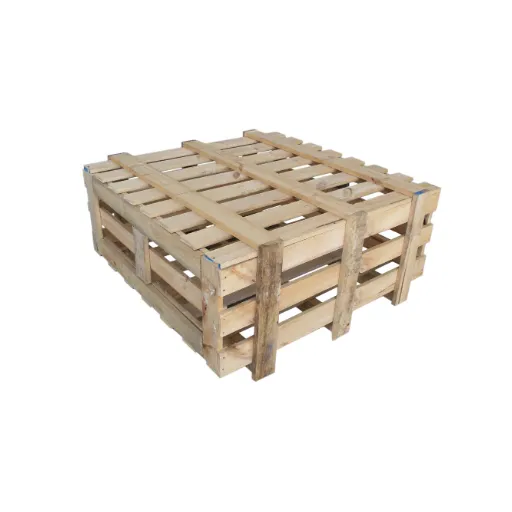
Modern warehouses run on precision. Automated Storage and Retrieval Systems, conveyor belts, and robotic pickers demand consistency. Wooden crates introduce variability that automation cannot tolerate.
Collapsible Design: Space Savings on Returns
Plastic collapsible pallet boxes can be folded down when not in use. When shippers deal with such options, their density will be reduced two to three times. Even though a single box can fit only one box, it can fit up to seven or eight boxes that have been flattened. Since there will be significant backhauls that will be necessary for these systems, a single action alters the cost of transportation and freight rates.
A report on the collapsible plastic pallet boxes in the market brings the amount to 2.16 billion in 2024 and the PBI is expected to rise to 3.8 billion dollar by the end of 2033. An increase in projection is notably influenced by in automotive industry, agriculture, and retail distribution systems that always accommodate reverse logistics. Including wooden crates does not provide this kind of improvement. A full crate occupies the same space as an empty one.
Weight and Freight Cost Impact
Freight is priced by weight and volume. Plastic pallet boxes are lighter and, when collapsed, far more compact. One logistics manager reported a 30% reduction in transport fees after switching from wood to plastic. Over hundreds of shipments per year, that savings exceeds the entire upfront cost of the containers.
ASRS and Robotics Compatibility
Automated systems rely on exact dimensions. Plastic pallet boxes are manufactured to tight tolerances, typically within plus or minus 2 mm. They have no nails, no splinters, and no loose boards to jam conveyors. Wooden crates vary in quality and dimensions, and damage accumulates with every trip. In an automated warehouse, one warped crate can shut down a line.
If you are optimizing a modern warehouse, the right container is as important as the right software. Browse our full range of plastic pallet boxes engineered for automation compatibility and high-density stacking.
Sustainability: Which Is Greener in 2026?
The sustainability debate between plastic and wood is more nuanced than it first appears.
Lifecycle Analysis
Wood is renewable and biodegradable. A single wooden crate has a lower manufacturing carbon footprint than a plastic one. But that advantage fades quickly when you account for replacement cycles. Manufacturing three wooden crates over 10 years generates more cumulative emissions than producing one plastic box that lasts the same period.
Recyclability and Circular Economy
Current plastic pallet boxes are produced using 100% recyclable HDPE and PP. After their useful life, they are crushed and molded into a new product. A significant proportion of the components are recycled. Wooden crates are either mulched or incinerated, whereas their regular replenishment results in more trees being felled more frequently.
Plastic facilitates closed-loop pooling systems as well. This model is expanding at an alarming rate because the number of cycles that the container can undergo is such that it will still be profitable. A pooling system hardly makes sense in hard-bound items.
When Wood Still Makes Sense
For true single-use shipments or very short-term projects, wood can be the greener choice. A crate used once and responsibly recycled has a smaller footprint than a plastic box manufactured for decades of use but discarded after one trip. The key is honesty about your actual cycle rate. If your crates do not return, wood may still be the better environmental option.
How to Choose: A Decision Framework for Your Operation
Every supply chain is different. Use this checklist to determine which material fits your reality.
Choose wooden crates if:
- Your operation runs one-way shipments with no return logistics.
- Upfront capital is severely constrained.
- You ship extremely heavy or irregular machinery that requires custom bracing.
- Your cycles are short-term or seasonal.
Choose plastic pallet boxes if:
- You operate a closed-loop or pool system where containers return for reuse.
- Your industry demands strict hygiene (food, pharmaceuticals, healthcare).
- You ship internationally and want to avoid ISPM-15 delays.
- You use automated handling, conveyors, or high-bay storage.
- Space constraints make empty return volume a priority.
- You want to minimize long-term replacement and labor costs.
Still unsure? At Shandong Lile, we do not just manufacture containers. We consult on packaging transitions across 108 countries. Whether you need a standard collapsible box, a rigid industrial container, or a fully custom solution with steel reinforcement and RFID tracking, we engineer products around your workflow. Contact our team for a tailored assessment.
Conclusion
We do not, however, seek to crown an ultimate champion when we evaluate plastic pallet boxes vs wooden crates. There is no need for labelling reasons; each material is for distinct operations. Wooden crates cost less; they allow easy repair and they are suitable for short-term applications. Plastic pallet boxes come out ahead on these fronts, as well as in the areas of mechanical properties, sanitary standards, fitting with automated systems, and ease of exporting goods.
The figures speak for themselves. It will be safe to say that the plastic pallets industry will have reached the customer base of $14.6 billion in 2034 vis-a-vis minor growth of wooden crates. The budget of logistics managers, procurement officers and supply chain professionals speaks volumes. In such systems, plastic pays off months, not years after the initial costs.
What you have to do next is very straight forward. Examine the existing cycle rate, maintenance costs and freight expenses. People who are engaged in an operation requiring movement of containers for some rounds will present no better strategy than using plastic pallet boxes.
In case you are looking for help regarding dimensions, capacity load, or non-standard specifications – Shandong Lile is happy to assist! We embrace your difficulties as we are committed to making it easier for you to tackle them. Let us resolve them!