Innovative and efficient supply chain systems must be characterized by the values of versatility and sustainability. Today, more than ever before, collapsible plastic pallet boxes are a symbol of such figures. As many companies strive for sustainable means of how products can be transported without damage, such as making returnable packaging the norm rather than the exception without altering efficiency, the adoption of such good designs — strong but very light — has become inevitable.
Looking further, this work expounds on why collapsible plastic pallet boxes are invaluable opportunities in the returnable packaging concepts, with details on how their use enhances cost effectiveness, space economy availability, and resilience over time. Every manager willing to optimize today’s processes or enhance existing environmental efforts cannot do without looking into the protective advantages provided by the packages.
📦
Introduction to Collapsible Plastic Pallet Boxes

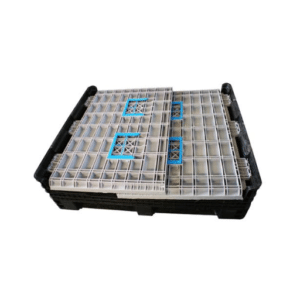
Plastic pallet boxes that can be collapsed are vital players. When empty, they can be folded; hence, space requirement is reduced, especially during return trips and storage, as space is used optimally, thus costs are also minimized. These types of boxes are made of high-quality plastic materials that are very strong, hence durable and ideal for any environmental condition, and will also keep the goods safe without damage. These also sustain development in the production industry since they are reusable, hence many need to be disposed of. Incorporating extendable plastic pallet boxes into the business operation can enable better productivity with lower expenses and environmental impact. These particular adaptations focused on addressing urgent key issues in logistics catering, thus they are essential in industries dealing with complex supply chain activities.
Overview of Collapsible Plastic Pallet Boxes and Their Design Features
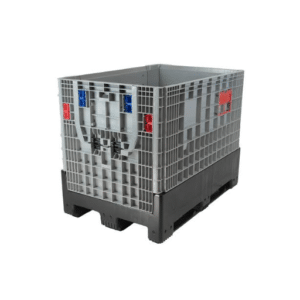
Plastic pallet boxes that can be collapsed are ingenious containers meant for storage and transport, and they make work easier as they can be used in many different sectors. High-density polyethylene, which happens to be the most employed when it comes to manufacturing heavy-duty plastic products, is present in the composition of these boxes. The collapsible nature of these boxes makes them easy to store when folded, and they also do not occupy much space when being transported at a cost that is very reasonable.
If you are looking for a heavy-duty box, it will have stiff walls for better strength, comfortable carry handles for easy management, and locking or joining features to use the boxes securely during transportation. There are certain types that have been extended and fitted with technology to include plug gates for drainage of liquids, vent holes for storage of fresh produce, and folding or flapping doors for adding items inside the box. In modern design and construction, most of the boxes are obtainable in extended assortments to sections of machinery and devices and different standards in each segment as instructed by the client. Their low weight, coupled with a high-strength design, allows for great performance of the supply chain with almost cost-effective or eco-friendly elements integrated.
Notable Design Features
- ✦
Stiff walls for structural strength and rigidity during transport - ✦
Comfortable carry handles for easy and safe management - ✦
Locking and joining features to secure boxes during transportation - ✦
Plug gates for drainage of liquids; vent holes for fresh produce storage - ✦
Folding or flapping doors for convenient item loading
Key Benefits Compared to Traditional Packaging Options
Collapsible plastic pallet boxes are far better than conventional packaging, such as wooden pallets and cardboard boxes, in that they have multiple benefits that are unheard of. Firstly, they are more durable and water, impact resistant, and temperature proof, which provides better security of items in transit and storage. In contrast to wooden pallets, they do not split or distort, nor are they subject to any form of pest attack, which can lower the costs incurred every year for the repair work.
Secondly, the efficiency of these boxes in space saving is appreciable. The feature that helps these boxes fold down when they are emptied provides space saving as well as facilitates shipping back, which eventually reduces the costs for transportation and warehouse space. This provision is more advantageous where the industry is faced with faster inventory changes or supply cycles with loops.
Apart from the above, another advantage of collapsible designs of plastic pallet boxes is that they do not have to be thrown away after every single use, but can be returned to the cycle several times, then being collected for recycling when obsolete, thereby reducing the waste burden, as is the case with cardboard types of packaging. In this way, the use of such boxes promotes the principles of corporate social responsibility because they help to either comply with laws or standards for the protection of the environment or help to lessen the impact of business activities on the environment.
The aforementioned types of boxes encompass other client desired features, such as the ability to place boxes on top of each other, radio frequency identification or cards with codes, or children’s playground-inspired boxes, so that the operations can be made more efficient and meet the needs of machines or industries where those boxes are being used. In fact, even if these products are highly durable and cost-effective, the construction of a ‘package of new type’ for all types of goods and all components of the distribution chain is still considered better than creating any traditional ones existing today.
Collapsible Plastic vs. Traditional Packaging — Comparison
| Attribute | Collapsible Plastic | Wooden / Cardboard |
|---|---|---|
| Durability | Impact, water & temperature resistant | Prone to splitting, moisture damage, pests |
| Space Efficiency | Folds flat when empty, minimising return space | Rigid — occupies full volume even when empty |
| Reusability | Multiple cycles; recyclable at end of life | Single or limited use; generates significant waste |
| Pest Resistance | Fully resistant | Susceptible to pest infestation |
| Tracking | RFID / barcode integration available | Limited or not supported |
♻️
Benefits of Collapsible Plastic Pallet Boxes in Returnable Packaging

Foldable plastic pallet boxes present many benefits, some of which improve efficiency in returnable packaging systems. The main advantage of the use of such packaging is the maximization of space. These boxes, when not needed, as opposed to some other forms of packaging, can be folded flat, eliminating a large amount of unnecessary space. Moreover, these boxes are made of light and durable material, which helps to lower the transportation expenses while ensuring the safety of the contents in transit.
The reusable plastic packaging box is beneficial as it promotes sustainability by minimizing the usage of one-time packaging materials. The use of such containers helps in minimizing the generation of wastes which is a good business practice and encourages many companies to adopt recyclable materials. More so, collapsible palletized boxes enable a wide variety of goods to be stored and or transported in various industries, offering strong capability and flexibility in their construction, respectively.
Increased operational efficiency is brought about by traits such as convenient use, stacking, and being able to work with tracking solutions such as radio frequency identification technologies. This supports the implementation of improving logistics and control of inventories. Collapsible plastic pallet boxes, which have a long useful life and can be utilized to reduce the total cost of ownership, provide a useful and effective approach towards sustainable packaging systems of a returnable nature in the current age.
💰 Cost-Effectiveness
Plastic pallet boxes designed to collapse are very durable, allowing them to be reused for long periods without wear, which is common in most industries. These are made from an impact-resistant and very strong kind of plastic that does not easily crack or bend out of shape, nor does it wear off due to weather, prolonging its viability even under load for hours on end or days before it is transported. Such durability is beneficial since it extends the replacement cycles of the boxes, thus reducing the extra cost. While at it, the light-weight of the boxes facilitates the reduction of transport budgets in contrast to the traditional wood and metal materials. Together with its collapsible nature that allows storage when they are not in use, this enhances the durability of these boxes, making them cost-effective after some period, thus making them a worthy investment to people who view capital growth as paramount.
📐 Space Optimization
Effective space usage is encouraged by physical features only found in folds and assembly, and enhancements include stacked containers and collapsible boxes. Stacked containers assist in saving space in a warehouse or truck through vertical use, diminishing the area needed to store items. Collapsing such designs enhances this concept as boxes flatten to reduce space when not in use, minimizing disused containers to return. Impact on efficiency is also affected by the use of lighter materials, which are easier and more ambitious to handle but more costly, yet strong enough. All this can be better organized in the transportation process, with less time, fewer expenses, and better control over resources.
🌿 Sustainability
Possibly, one of the main advantages gained from the inclusion of collapsible and lightweight resources, such as the designs of containers, would be the reduction of the carbon emissions caused by the transport and logistics sector. This happens owing to the reduction of empty possibilities of return and the increased possibility of loading more cargo, which eventually decreases the amount of fuel burned and the gases emitted. In addition, the use of reusable and recyclable materials during the production stage contributes towards a circular economy by conserving resources and therefore minimizing the introduction of raw materials. Such improvements do more than assist the world’s sustainability objectives; they help achieve the regulatory requirements that seek to minimize the adverse effects of various industries across the environment.
🏭
Key Industries Utilizing Collapsible Plastic Pallet Boxes

🚗
Automobile Sector
Foldable plastic pallet boxes are mostly used to transport automobile parts like body panels, engines, transmission systems, or even smaller ones. The boxes not only allow handling of heavy and sensitive materials securely but also enable Central operations to save on space by stacking the boxes, stacking them away.
🌾
Farming and Food Manufacturing
These particularly help a lot, especially when it comes to storing and relocating materials that are warm, neat, and have adequate surface area, because these types of pallets do not take up much space. They would not absorb water, and they are easily cleaned, hence making food hygiene possible.
💊
Health and Pharmacy
The bulk of raw materials, packaging material, and drugs are transported in collapsed plastic pallet boxes in the pharmaceutical industry. They are mainly sealed and sterile, making it a low-risk environment as per prescriptions.
⚙️
Transport Boxes in Manufacturing and Industry
Collapsible plastic pallet boxes are used and necessary in manufacturing, not only for raw material and semi-completed product transport, but also for tool containment. The heavy-duty cartons are not subjected to substandard environmental and physical conditions beyond the allowable limits of the working process.
Automotive, Agriculture, and Food Industries — Case Studies
Case Study 1
Automotive Sector
Plastic pallet boxes are an absolutely essential part of the logistics and supply chain areas in the automobile industry. These flexible container boxes are used to store and transport heavy automotive parts such as engines, transmissions, and other components, etc. They are collapsible as well, so the return trip costs are minimised by shrinking the volume because of no cargo, while the strength of the container permits reuse in the harsh manufacturing industries. The transport equipment is redesigned to include the lifting of parts and no damage to the necessary parts during their supply in line holdup or cross-dock, as reported in other plant facilities.
Case Study 2
Agriculture
Plastic pallet boxes provide a significant advantage for produce, seeds, and fertilizers, as well as other products stored in the perishable agriculture products section. Such containers are specifically made to preserve the state of goods, especially where sensitive items are concerned; they are constructed with perforated walls that allow the exchange of air and moisture control where necessary. Those who use these boxes know that they help to prolong the lifetime of perishable products. They also minimize the chances of contamination. This is because the boxes are made in a way that makes them durable but at the same time, light enough to be easily handled on the fields and act as a replacement for wood, which is biodegradable and reusable.
Case Study 3
Food Industry
The foldable & returnable pallet boxes specially made for food industries are designed to enhance hygienic and safety standards. They are used to ferry ready-to-eat products, meat, and milk-based products in a safe and unpolluted atmosphere. They are adopted in large scale mainly because they can be smoothened for cleaning purposes and are made from food-grade proper materials, and even meet FDA and European Union requirements. Several manufacturers in the food business are able to minimize product waste, improve inventory control, and reduce waste by using recycled-oriented or returnable structures.
Specialized Applications in the Manufacturing and Retail Sectors
Manufacturing and retail operations are progressively depending on plastic pallet boxes as reusable containers due to their effective and sustainable properties. Thanks to manufacturers, for instance, it’s common to carry such sets of containers across various production areas where raw materials, semi-finished goods, or even components are manufactured and transported. Thanks to its robust, bulky structure, it minimizes losses of materials and hence ensures continuation in continuity of products or services.
Whereas the retail sectors strategize the inventory taking using these solutions, such as those in theft and possession control, there are standardized and stackable designs aimed at curtail logistics and utilize the storage area available. There are industries like groceries, fresh fruits and vegetables, where such reusable packaging techniques serve the purpose of preventing wastage of the produce by protecting it during transportation. They are cheap, plastic products that do not have to be used; another purpose of these containers is the reduction of the use of disposable plastic. Most of the companies enhance their operations by making their containers trackable, and this is by products such as RFID or bar coding mechanisms ingrained in the reusable containers.
🎨
Design and Variations in Plastic Pallet Boxes

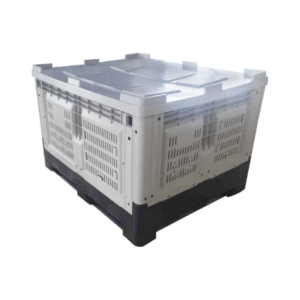
Plastic pallet boxes are designed with different style modifications that enable them to sufficiently meet the requirements of industries that vary among themselves. The key designs are those of the solid-walled pallet boxes for loose or fine materials, and the ventilated-walled designs promote air circulation, allowing for use in farming applications or the supply of fresh produce. Other variants that can be found are the folding and collapsible pallet boxes, which have the edge of reducing storage and return logistics space.
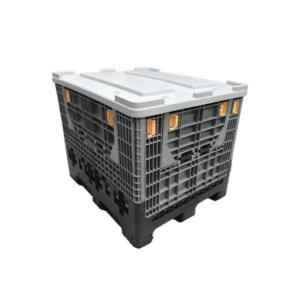
These boxes also sometimes have integrated lids to help contain the content, reinforced corners for extra strength against heavy weight or loads, and drainage plugs to help in cleaning when liquids are being used. The fact that they can be designed to have different dimensions and carry varying weights also adds to their use in other industries such as automotive, food processing, and pharmaceutical. It is only through selecting appropriate design and features that the operations of a business can be accomplished most efficiently without exposing goods to various dangers in the supply chain.
Common Design Variants and Their Applications
| Design Type | Key Feature | Typical Application |
|---|---|---|
| Solid-Walled | Enclosed walls for complete containment | Loose or fine materials, industrial parts |
| Ventilated-Walled | Perforated walls for air circulation | Fresh produce, farming, perishables |
| Folding / Collapsible | Folds flat when empty | Return logistics, warehousing space saving |
| Lidded / Enclosed | Integrated lid to contain content | Pharmaceutical, sealed component transport |
| Drainage Plug | Plug gate for liquid drainage and cleaning | Food processing, liquid goods, washdown areas |
Material Composition and Structural Integrity
The composition of industrial containers is an important aspect when considering their durability or performance. Two polymers with high reliance are HDPE and polypropylene. This is attributed mainly to their resistance to impact, chemicals, and environment-related degradation. These polymers have sufficient plasticity and are also strong, but do not have very well-developed properties and therefore are used for heavy-duty applications. Additionally, certain containers are enhanced with the addition of UV stabilizers or other additives in order to withstand high or low temperatures as well as prolonged stays outdoors.
Ensuring the structural integrity calls for meticulously engineered facilities that include reinforced walls, ribbed exteriors, integrated support columns, and other mechanisms geared towards load-bearing capacities. Injection molding and rotational molding are two ways of achieving uniform thickness in plastic components, thus minimizing weak sections. Such containers are submitted to regular stress tests, compression limit analyses, and load deformation resistance counts to ensure they adhere to the industrially set standards. This helps to ensure that the structure and the materials will be suitable for many years, even in the most challenging working conditions.
Innovative Designs Enhancing Usability and Efficiency
In advanced manufacturing, creative design solutions tend to focus on resolving not only usability issues but also ensuring that there is a benefit served. Aspects such as stackability, modularity, and the introduction of integrated ergonomic handles improve the adaptability of the solution to different use cases. Modern engineering processes employ highly accurate injection-molding of components that fit together perfectly, thereby eliminating lengthy assembly processes and extraneous details. Additionally, conceiving ‘disintegrable designs’, which incorporates the use of lightweight, strong materials that can be carried easily without lowering the carrying capacity. That’s progress at work. Even if it means evening out natural resource consumption, by for instance, utilizing plastic pallet boxes, whose components are recyclable, production processes are efficient, albeit attention is given to performance, which is, however, the main focus.
🔄
Best Practices for Implementing Returnable Packaging Systems

- 1
Execute an Exhaustive Cost Impact Evaluation
Analyse the worth of ‘returnable system of packaging’ versus the cost outlay, cost of its operation, etc., and the savings of packaging materials and processes when the routine of packaging is limited.
- 2
Optimize the Reverse Flow of Supply
Formulate comprehensive measures for the recovery, cleaning, and redistribution of packaging to ensure the barriers to its accessibility are kept to a minimum. This includes the ability to track movements of packaging through appropriate means such as barcodes and RFID tags.
- 3
Incorporate Stakeholders During Earlier Stages
Work together and not only with the suppliers and licensing customers, but also the end-customers to coordinate and create a communication about the framework and roles to undertake for all of them.
- 4
Focus on Sustainable Longevity
Choose recyclable or incorporated reusable packaging that is meant for multiple cycles to cater to the goal of going green.
- 5
Control and Evaluation
The built-in analytics feature is useful because you can return rates, indicators showing successful operations like KPIs, as well as cost-saving benefits, to health check the said system once in a while and be on the lookout for more successful windows.
Integration Strategies for Businesses Using Collapsible Plastic Pallet Boxes
We can use collapsible plastic pallet boxes in our day-to-day activities in the following manner. First and foremost, I would first take a very keen look at how things are currently done; I would critically analyze our supply chain requirements in terms of storage, transportation, and handling. Then I would look out for the areas where we can substitute these pallet boxes in the place of the classic alternatives, that would create a saving in terms of space or eliminate wastage of materials. To realize this, coordination with major players in the supply chain, such as the vendors and logistics partners, not to forget the in-house teams, is paramount. Handling the boxes is another area of concern; it would be enhanced by proper training in which the employees would be engaged. Lastly, it will be necessary to create parameters to help determine effects with respect to costs, efficiency of activities conducted, and impact on the environment, as well as make changes where applicable.
🛠️
Maintenance Tips to Prolong the Lifespan of Reusable Packaging Solutions
🧼
Periodic Cleaning and Disinfecting
Wash the product and its container to remove any form of contamination or deterioration that might arise from use. Depending on the material that makes up the clean package, use respective cleaners (making sure to use gentle or mild soap for plastics or stainless components, for example) and ensure complete drying meets expectations so as not to allow the moisture to build up, which could create mold or destroy the structure.
🔍
Examine for Any Dents
It is important to regularly inspect and heal any cracks, bruises, or thinning issues in a good time. Timely discarding of broken articles from use avoids a mishap during application and prevents further degradation.
📋
Observe the Directions of the Manufacturer
Make sure to follow all instructions for proper use and care of the products that are provided by the manufacturer. Such instructions are specifically created in order to ensure maximum efficiency and avoid premature aging.
⚖️
Do Not Overload
Equivalent weight is acceptable with every reusable container. Overstressing it will cause pressure, which weakens the good and makes its use unsafe.
🏪
Store Well
Ensure the storage environment is dry, away from harsh conditions, particularly direct sunlight or temperature variations that could affect the materials. Proper stacking and arrangement to ensure they do not collapse or get damaged accidentally.
👷
Training Staff
Ensure the staff members receive continuous education on how reusable packaging is accepted for use and how it should be maintained. Informing the employees reduces the possible misuse of the product, which can cause damage over time.
Maintenance Quick Reference
| Task | Frequency | Goal |
|---|---|---|
| Cleaning & Disinfecting | After every use / periodically | Prevent contamination and structural damage |
| Damage Inspection | Regularly / before each use | Early detection and removal of damaged units |
| Load Compliance | Every load | Avoid structural overloading or warping |
| Proper Storage | When not in use | Preserve material integrity from heat/UV/moisture |
| Staff Training | Ongoing / onboarding | Reduce misuse-related damage over time |
Their maintenance strategies allow the organizations to increase the efficiency of the plastic pallet boxes, decrease the awareness replacement associated support costs, and maintain such practices in the long run.
Summary & Conclusion
A Strategic Investment in Sustainable Logistics
Collapsible plastic pallet boxes represent a genuine convergence of efficiency, sustainability, and cost management within modern supply chains. Their design versatility, robust material composition, and ability to adapt to regulated industries — from pharmaceuticals to fresh produce — make them an indispensable asset for any operations team.
By following best practices for implementation, integration, and ongoing maintenance, organizations can maximize the return on their packaging investment while contributing meaningfully to environmental goals and long-term operational resilience.
Reference Sources
“Comparisons of environmental impacts between wood and plastic transport pallets”
Key Findings: Wood pallets are more eco-friendly than primary plastic pallets. However, using secondary plastic for pallet production reduces environmental impacts significantly.
Key Findings: Plastic pallets are lighter but require energy-intensive production processes. Repairing plastic pallets is also challenging compared to wooden ones.
“Reusable plastic crate or recyclable cardboard box? A comparison of two delivery systems.”
Key Findings: The study compares the life cycles of reusable plastic crates and recyclable cardboard boxes, focusing on manufacturing and delivery systems.
Frequently Asked Questions (FAQs)
Can you explain the concept of plastic pallet boxes?
When speaking of plastic pallet boxes, they are enhanced protective plastic containers. The uses are in handling, transporting, storing, and shipping materials. They are different from simple plastic bins; pallet boxes are pallet packs with compounded bases and even triple-wall, which is meant to contain thousands of pounds while being light in weight. Out of all benefits, they include packaging or logistics issues, transportation, and export as they are durable packaging instead of wood, crates, or containers being used.
Is it true that, understandable that pallet pack contains are stackable and intended for use with a pallet?
Most plastic containers are indeed stackable in design or molded with an intention for efficiency and optimal storage during the transportation process. Stackable configuration and pallet pack infusion have proven to be very economical and practical in storage and transportation, as they minimize costs and risks during such activities as handling and transportation. The application finds immense acceptance in the case of warehouses and distribution centers, where plastic pallets are stored efficiently through stacking and handling of pallets becomes most important.
Is it possible to use plastic pallet boxes as containers for liquids or containers equipped with covers and sleeves?
There are some plastic pallet boxes that support liquid containers and those that can be added with covers or sleeves, or liners to safely store liquids or semi-solid materials. This is because it ensures the fitting of the polyethylene liner or a suitable sleeve in the box to make it suitable to store safely agricultural or industrial liquid, although it is generally reused and reduces contamination of the box.
Can you tell us whether you have bins for use in handling waste materials in the industry, and or agroprocessing purposes?
Plastic pallet boxes are developed from long-lasting plastic materials such as High Density Polyethylene (HDPE) or reprocessed Polyethylene to create a solid panel which could be quite light in weight. Some heavy-duty and industrial designs are designed to handle harsh environments or repeated movements and transport of products and agricultural produce without compromising their recyclability. Most are capable of being reused and can also be customized to deal with the crop’s harvesting or logistics during storage and distribution.
Is there any reduction in cost or use of space in the collapsible bulk pallet boxes and the hopper-style containers?
All collapsible bulk containers, as well as hopper-type pallet box constructions, affectionately aid shipping while not in use by shrinking the return freight and warehouse volume. Hopper varieties contribute to faster bulk loading and hence processing of bulk materials, so less time consumption for business on hall and halls as well as warehousing, according to shrinks, while utilization for transport pallets goes up.
What handheld plastic crates and containers that are small-sized exist or can be recommended for various handy functions?
Handheld containers and hand-held plastic crates come in different sizes and are suitable for any operations that require mobility, such as customer order picking, short-distance transportation, and harvest operations. These crates, which can support longer pallets in a logistics network, are designed around heavier load-bearing, larger units; hence, they promote dissemination strategies and practices in agricultural centers and warehouses.
What are the uses of plastic pallet boxes in relation to export, freight, and transportation?
Plastic pallet boxes allow uniform, hygienic, and convenient shipping and storage containers to facilitate export and freight handling. These containers are hardy enough to withstand most transit-related damages, lightweight due to the lack of wood, and hence cheaper in freight because of lower weight. Moreover, several phytosanitary issues that affect wood pallets cause them to fall off. They can be used in all logistics, distribution, and shipping applications where reusable containers help to enhance cost efficiency across the lifecycle.