Understanding One-Way Pallets
One-way pallets are meant for only one use for the transportation of goods. Very few types of pallets are meant to be sent along with cargo to a location where sending them back would pose challenges and exorbitant costs, and would not be feasible in most cases. Materials such as plastic, wood, or cardboard help in the making of pallets that are lightweight and cost-effective, thus purely economic for exporters or businesses that ship goods abroad. They are designed to be an economically sound option for whatever direct one-way transaction where cost is a priority, while transportation is another reason not to engage in a talk about recycling. Even if such pallets are made for only a short while, they actually serve within the load limits of standardized carriers until goods reach their destination. It is a simply designed waste-assignment system if we think in terms of quick and straightforward execution.
Definition and Characteristics of One-Way Pallets
Export pallets, disposable pallets, or one-direction one-way pallets, whatever they are called, are very good for long-distance or international trade transportation because they are useful for one-way shipping, and retrieval is merely wasteful. With the advancement of built-in load requirements and cost-minimization approaches for shipment of lightweight materials, such as compressed paper, wood, or plastic, are used for their construction. They are less costly than reusable pallets without any reverse logistics or tracking issues.
Key Characteristics
Key characteristics include their lightweight design that makes it easier the bear transportation costs and the existence of wood standards set up by international guidelines related to phytosanitary standards, such as ISPM-15, when made of wood. From the standards of ISPM for wooden pallets to global freight container specifications, the dimensions marker is aligned such that they, too, are compatible with easy loading and accommodation within global shippers. Much in the same vein are the one-way formats made from recycled or biodegradable resources in certain eco-friendly styles, responding to sustainability initiatives. Most commonly, those palletrons see the deep-rooted acceptability in adhering to all concerns of efficiency whilst fending under cost curtailment.
Benefits of Using One-Way Pallets in Logistics
One-time use pallets have become an integral part of smart logistics operations. They result in high-cost savings and logistic simplicity, as reverse logistics or transportation back to the origin is sidestepped. This aspect makes them a highly viable option when it comes to exports and long travel. Because they are lightweight and easy to handle, one-time use pallets increase work efficiency, boosting the loading and unloading process. Ultimately, environmentally friendly one-time use pallets, which are the ultimate expression of sustainability while adhering to international standards, such as ISPM-15 for wooden pallets, are biodegradable and/or made with recycled materials. Cost effectiveness, versatility, together with environmental considerations make one-way pallets an essential component in any modern streamlined logistics operation.
Comparison with Traditional Pallets
Traditional pallets are less cost-efficient and heavier compared with one-time pallets. Traditional pallets are typically made from expensive hardwood and heavy plastic, making them more expensive and increasingly heavy, leading to high transportation costs and infrastructural issues. One-time pallets, on the other hand, are designed to be the cheapest route possible by being used only once; thus, their early entry cost and administrative complexities of pallet returns are significantly decreased.
Durability vs. Practicality
Talking about the associated conventional pallets, they are providing greater holding power and sustaining power, or are designed by keeping these features in consideration, making life easy for vertical industries dealing with enormous weights. On the other hand, one-way equivalents are rather light in weight, generating ease in handling, minimizing impact on fuel consumption during the journey. The one-way pallet is also a better way for sustainability with biodegradable or recyclable materials and in sustainable initiatives. Without this, the old pallets must go through complicated and resource-absorbing treatment if they have to be recycled. But what can be said definitively here is that the right choice for a given entity, whether the old pallet or one-way, will come down to the company’s operational considerations, like money, logistics, and environmental priorities.
Types of One-Way Pallets

One-way pallets come in several types, all designed to carry well in specific instances of transport and shipping requirements:
Wooden One-Way Pallets
This one is very well known, offering a long-lasting and inexpensive solution. Among the best things about wooden pallets is that they are handy and light for single-use transportation.
Plastic One-Way Pallets
The safest way is to have a pallet manufactured newly made totally of plastic: these would provide permanent efficacy in hygiene situations without the need for maintenance intervention, since they are generally suitable for international shipping and industries with hygienic conditions like food and pharmaceuticals.
Corrugated One-Way Pallet
This is a one-way pallet material made out of strong double-walled cardboard. It is a recyclable pallet and can handle light-weight loads. It has been discarded after one-way use.
Composite One-Way Pallets
Constructed with various materials such as wood and plastic, composite pallets combine lightness with greater durability for more strenuous shipping.
Each variation has its advantages based on its design input for shipping requirements, economical solutions, and environmental concerns.
Plastic One-Way Pallets
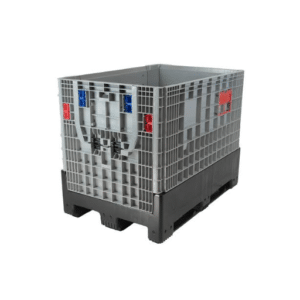
One-way pallets made of plastic are tough and effective in facing moisture, chemicals, and pests. They can, thus, be used for many shipping purposes. Made of high-density polyethylene (HDPE) or polypropylene (PP), these pallets are light and can take extremely huge loads. They are effectively homogeneous and are capable of being used with today’s automation systems, including conveyors and forklifts. Thus, they are very easy to clean and sanitize, thereby adhering to basic standards of hygiene that are required for such industries as pharmaceuticals and food processing. Due to other advantages, although with increased upfront costs compared with the other options, the reusability and the extended life span of plastic pallets will ensure that the initial costs are quickly offset. However, environmental regulations vary from region to region, and access to facilities for processing will determine the effective disposal or recycling of these items.
Wooden One-Way Pallets
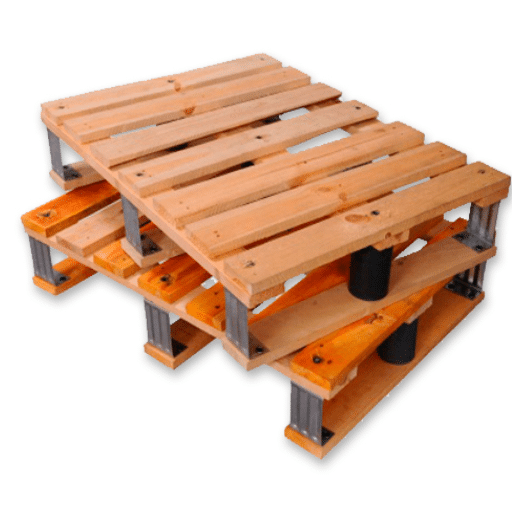
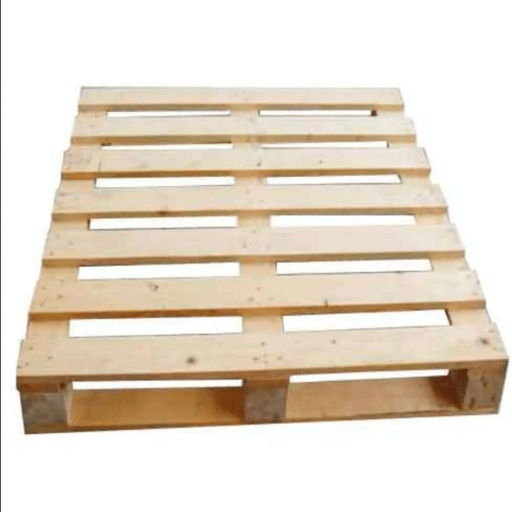
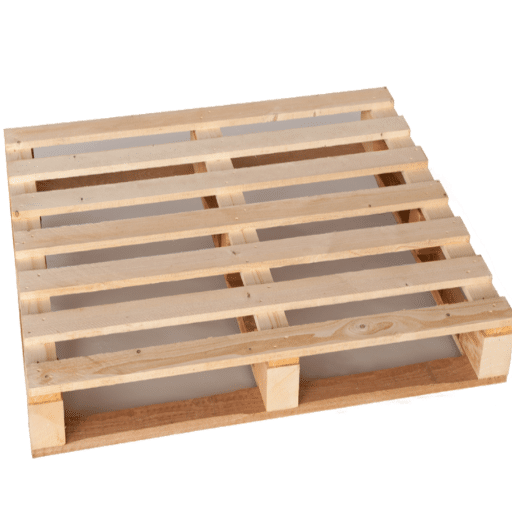
One-way wooden pallets are a traditional, cost-efficient mode of transporting goods, especially in one-time transport scenarios. Typically, these pallets are made out of softwood or relatively cheaper hardwood, which keeps costs low in comparison to other pallets made to be reused. Since these pallets are more fragile and less stable than their reusable counterparts, they are not for use in sustained productive cycles, but their affordable cost and accessibility render them tangible in numerous shipping contexts-particularly situations calling for reduced transportation expenditures. Wooden one-way pallets are light and can be tailored to any specific size, meeting numerous transport needs. However, they are unavoidably more vulnerable to spoilage, water, and contamination, leading to many issues for their use in specific applications, such as food or drugs. Once disused, most of these pallets can go through recycling or wood chipping, based on the peculiar dumping habit regulated by different bodies and infrastructures. But still, they are accepted widely and continue to constitute the major transport and supply mechanism across the globe.
Nestable Plastic Pallets
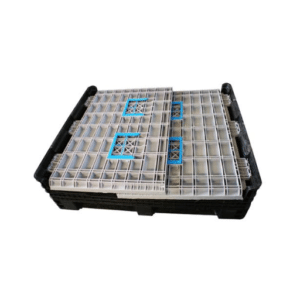
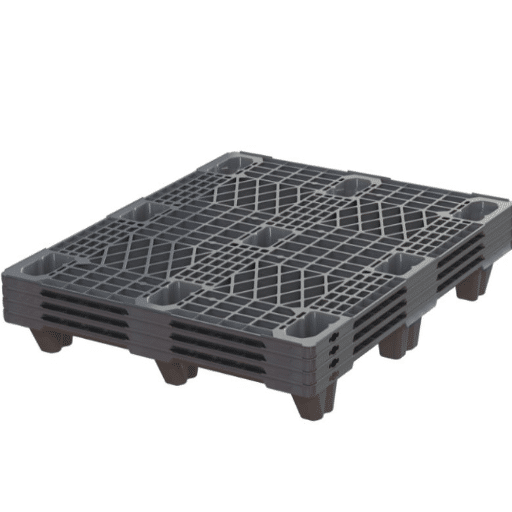
Nestable plastic pallets are an excellent option for both storage and conveyance due to their lightweight construction and durable design, made to save space. “Nestable” here signifies that the pallets can get stacked into one another, hence reducing the space of storage quite exceptionally when placed together against a majority of traditional wooden pallets. The pallets are typically made in high-density polyethylene (HDPE) or polypropylene (PP) and are designed to have good moisture, chemical, and pest resistance, effectively placing them in industries that demand high cleanliness, such as pharmaceuticals and food industries.
Plastic pallets meant for nesting weigh the same and have identical dimensions, which helps assure compatibility with automated systems and minimal transport inefficiency. Plastic pallets cost more than wooden pallets at the point of origin; nevertheless, plastic pallets tend to lead to customer cost savings because of a long and generally damage-free service life, making any high-impact odd costs of plastic pallets easily manageable. The slight disadvantage of plastic pallets involves bearing weight only when comparing rated, rackable, or block pallets, and climate considerations must be taken into account accordingly, with hot loads being a concern. With the end-of-life recovery stream, recyclables count within par, thus leaving behind a life-cycle impact that must be reviewed in decision-making for an environment-focused operation.
Applications of One-Way Pallets
The one-way pallets are widely used in shipping and export business since economical and convenient transport is of prime importance. They are intended for one journey, where it is impractical or expensive to bring the pallet back. They have numerous field applications, like international transport, where the use of disposable and lightweight materials is given preference to reduce legality and logistics issues. There are also instances where retail or agriculture industries might prefer one-way pallets for end-user goods transportation or temporary storage. With cheap pricing and the ease in disposal of one-way pallets, they are considered by most for temporary leave.
Export Pallets: A Key Solution for International Shipping
The export pallet unquestionably undermines conventional means of transport. It has unarguably proven fundamental for the fastest and safest delivery of products through the web of all global supply chains. For the express purpose of one-off use, the sheeting, or without face panels, is usually of wood, compressed fiber board, or even plastic, which makes the cost low and regulation-compliant in terms of international rules for treated material laid down in the ISPM-15 standard. The element of one-way design seems to obliterate the requirement for reverse logistics as it expedites the transportation system and has value for the carriers in shipment cost.
Primary Advantages
The primary advantage of using export pallets lies in their ability to ensure product safety while minimizing handling time. They provide perfect support for products packed in various sizes, thereby preventing damage during transit. Their compatibility with standard equipment, for example, forklifts or pallet jacks, also allows easy loading and unloading of goods.
Export pallets themselves are exclusive to various industry requirements, such as fumigation and customs compliance, as fulfilled with treated wood or other materials, all of which considerably reduce the risk of delays in transportation. Furthermore, these export pallets contribute positively to the environment by being recyclable or biodegradable, which goes along with the growing drive towards environmental responsibility in world trade.
Industry-Specific Uses of One-Way Pallets
Because of their cost-effectiveness and flexibility, one-way pallets provide strongly demanded support throughout many industries. They are employed in the manufacturing industry where they serve to transport parts or raw materials with higher efficiency. Food and beverage industries also use one-way pallets, particularly those that are expected to meet hygienic and safety criteria in order to deliver perishable and packaged items safely and soundly. Moreover, in retail and e-commerce, one-way pallets are a great way of streamlining the movement of goods from distribution centers to the very end sale, thus reducing the in-store logistics burden and giving supply-chain management an enormous benefit by eliminating the laborious and costly process of bringing the pallet back into the distribution chain. Pharmaceutical industries may communicate with these pallets when they deliver crucial and delicate medical supplies with at least risk of theft and maximum compliance with regulatory guidelines. No wonder the various uses of the one-way pallet system are anything but ultimate as an indispensable asset in the logistics process of modern industry.
Manufacturing
Efficient transport of parts and raw materials
Food & Beverage
Hygienic delivery of perishable items
Retail & E-commerce
Streamlined distribution to end customers
Pharmaceuticals
Secure delivery with regulatory compliance
Container and 48 x 40 Pallet Configurations
The way pallets are arranged within containers is dependent upon the size of the pallet and also on the internal dimensions of the container. In North America, the standard 48 x 40-inch pallet is commonly used and optimized for use in 20 ft and 40 ft high-cube shipping containers. In a 20-foot container, a standard 40-inch x 48-inch pallet can usually accommodate 10-11 pallets, if loaded in a single stack and if the tightest fit into the space available is effected. In a 40-foot container, this goes up to 20-21 pallets in a single-stacking configuration. In certain instances, double stacking may be preferred; however, this requires careful attention to weight distribution, stability, and the type of product to avoid harm to the product.
Employing pallets that comply with standard dimensions is what offers effective use of packaging in international shipping. All that further determines the kind of final configuration includes legal and industrial factors—limits on the weights of the goods, security tiedown procedures, and gross weight—thereby looking into these factors will enable the companies to carry out a huge reduction in logistics cost and the safety factor.
Choosing the Right One-Way Pallet
Another prominent consideration in the IT outsourcing process is due diligence. With business cases and desired outcomes already chalked out, appropriate vendor selection should focus on the arrangements for capabilities, cost, and other necessary factors relating to supplier capabilities. Build these tests and capabilities in your statement of work, along with how you will go about demonstrating or certifying each one. Whether you want to maintain high communication, aim for bug-fixing processes, and require clear and definitive project scopes, the vision, the plan, and the reputation of the potential IT outsourcing partner also have considerable importance.
Factors to Consider When Selecting One-Way Pallets
When it comes to selecting one-way pallets, several critical points must be considered to ensure good operational efficiency and compliance:
Material Composition
When thinking about the material of the pallet for weight, cost considerations, and regulations involved as per a destination, it helps one decide whether that pallet should be wood, plastic, or cardboard. Wood pallets are simple and strong, but must conform to ISPM-15 regulations—for instance, if they are to be shipped internationally. Plastic pallets, if a bit more expensive, offer lightweight, reusable solutions that are more resistant to moisture and pests.
Load-Bearing Capacity
You must check the load-bearing capacity for loads that do not need to be borne more by the pallet than each compartment is designed for. Overloaded pallets can endanger being washed out, resulting in damaged shipments.
Need to Scale Dimensions and Be Stackable
Sturdy stackability will allow these pallets to be stacked together when stored and transported within a container operating to full capacity. Hence, the size of the pallet should meet normal container sizes. Factoring in enough stackability to stabilize the considered stack is an aspect of pallet design to take into account.
Between saving money and using the pallet, the equilibrium of pallets between certain initial and operational emptiness costs. Typically, wooden pallets come cheaper, but depending on the shipping route, potential return, and durability expectations (let alone shipping requirements), plastic or corrugated pallets might offset the costs significantly.
Complying with international shipping standards from an ecological view
Scrutinize whether the pallet is compliant with the latest International Phytosanitary Standards (ISPM) as set down for wooden pallets. Such standards should refer to antimicrobial treatment and certification. Regulations in different countries might vary on the ISPM standards. Compliance results in smooth customs clearances and reduces costs for any fines.
By evaluating these points, any organization or enterprise will be in a good place to select pallets that render to the organization an appropriate level of logistics fulfilment while employing the environmental posture and trading standards endorsed at the international level.
Cost-Effectiveness of Plastic vs. Wood Pallets
Some contrast-based information can be shed on the plastic pallets versus the wooden pallets in terms of cost. Any pallet’s cost depends on many other factors, including the initial outlay, the estimated time during which it incurs servicing, and so forth. Generally, the costs of wooden pallets are lower on the front end, making them especially attractive for industries with budget constraints or for a single logistics shipment. However, the wooden pallets can wear down quickly and resist little in terms of moisture, pests, or general rough handling, resulting in increased costs through a number of cycles due to added maintenance or repair actions.
By contrast, plastic pallets are likely more expensive upfront but comparatively much more economical in terms of these operational factors with respect to durability and serviceability. When a greater degree of value is associated with the longer functional lifespan of a plastic pallet, it is always seen as a big advantage over available substitutes. They are impervious to moisture, chemicals, and impacts, and there will obviously be less wear that the pallet itself would sustain. Another aspect getting more overhead maintenance work is the uniformly dispersed weight and dimensions of the pallet, ensuring good response in materials handling automation (MHA) applications and, consequently, a reduction in operational expenses due to this parameter of automation.
Another factor in reinforced pallet selection consists of environmental constraints upon overall investment. Plastics, when they become pallets, can usually give them life-cycle value, whereas, in comparison, wooden ones are not to their disposal; wooden pallets are biodegradable, but they must likewise face associated costs owing to excess damage or disposal. The choice is generally dependent on the company’s specific requirements, including its budget, application, and period expectancy.
Environmental Impact of Using Plastic Pallets
Plastic pallets possess a wide variety of effects on the environment that depend greatly on the stages of their production (including petrochemical manufacture), use, and end-of-life management. In general, an initial carbon footprint throughout pallet creation results from oil-based raw materials; however, these pallets last and endure much longer than wood pallets, lessening the need for replenishing the necessities and also assisting in the conservation of resources. A great many plastic pallets are, in fact, recyclable and could be fed back into the materials manufacturing process to produce special and unusual items, reducing the environmental impact of landfill waste. But on the flip side, some plastic pallets may end up polluting the environment through disposal, particularly by improper incineration or disposal as off-site dumping. In that same breath, they offer a solution by minimizing environmental footprints and engaging companies that prefer recycled plastic pallets; such pallets enable closed-loop economic models and lessen the general impact on the environment.
Future Trends in One-Way Pallet Solutions
The future of single-use pallets is on sustainability, affordability, and technological integration. Encompassed within these are raw materials as lightweight and durable as recovered polymers and biodegradable composites to reduce environmental strain. Production of smart pallets with dedicated tracking technologies, for RFID, RFID increasing in number is providing supply chains with greater visibility and the potential to optimize across logistics. Another regard is developing designs for efficient pallets while simultaneously fully utilizing available space for transportation to cut down costs and carbon footprint. These developments allow for increased innovation while beginning to give a response to the market’s rapidly growing need for environmentally friendly and efficient solutions within the global supply chain.
Innovations in Plastic Pallet Design
Advances made regarding the development of plastic pallets have focused on boosters for interconnectedness, durability connected to the elements of environmental friendliness, and economy. The modern plastic pallets developed are engineered with high-performance materials, particularly recycled plastic and composites, in order to guarantee increased lifespans and minimized environmental impact. These design developments largely make these innovations perfectly suited to lightweight designs that promote economically lower transportation costs by reducing the weight carried en route, all the while still retaining virtually the same load and structural capacities. Another category we have is the modular and stackable designs that fully maximize the space used in the warehouse and inter-stock transfers.
State-of-the-art manufacturing techniques like those used in injection molding and thermoforming articulate pallets from impeccable engineering for consistent strength and quality. To even advance these, RFID tags and IoT sensors being embedded in these pallets is now a de facto assumption for real-time tracking and inventory management within the supply chain. More and more innovations will provide an enhanced guarantee that plastic pallets also meet today’s logistical demands, while they meet the goals of sustainability and regulatory standards.
The Role of One-Way Pallets in Sustainable Logistics
One-way pallets are important for sustainable logistics, providing an economical and environmentally responsible means for meeting one-way supply chain applications. One-way heavy-load pallets reduce fuel consumption when carried and tread lightly with their recyclability and sustainable resources to aid in environmental matters. Yet more to the point, one-way pallets permitted not only keeping the company’s goals of sustainability but also being able to do away with the expense of reverse logistics, ensuring a very streamlined operation.
Emerging Markets for One-Way Pallets
A rapid increase in the usage of one-way pallets has been seen in several of the most prominent emerging markets. E-commerce is definitely among the top sectors driving the demand. Additionally, the demand for reliable and safe transport solutions to handle hazardous and sensitive products is also derived from the pharmaceutical and healthcare industries. The food and beverage sector has been active in implementing one-way pallet solutions since the products are very sensitive to contamination and require optimization in supply chain logistics. These sectors play an even bigger and prominent role in regions situated in the Asia-Pacific. An uplift in the permissiveness of innovation necessitates an industrial approach to further endorse the usage of one-way pallets. These reasons command the favor of one-way pallets in these applications owing to sustainability, scalability, and high operational costs.
Reference Sources
“Adoption of Value-Adding Processes in Swedish Sawmills”
“Effect of Nitrogen on Stored-Product Insect Control at Industrial Scale”
Frequently Asked Questions (FAQs)
What are the one-way pallets, and how are they used?
One-way pallets are pallets whose design is appropriate for use only once, predominantly in shipping and logistics. They are often used when exporting goods as they spare a return trip for their pallets. These pallets are available in various materials, such as wood or plastic, and can act as a more efficient way for companies to meet logistical needs.
Are one-way plastic pallets, in any way, a sustainable option for quick export and shipment?
Yes, one-way plastic pallets are considered a sustainable option. Many manufacturers fabricate them out of high-density polyethylene (HDPE), a recyclable material; multiple manufacturers make pallets out of HDPE. This makes it an environmentally friendly choice for any business trying to shrink its carbon footprint and still maintain its logistical requirements.
What is the measurement of the euro plastic pallets?
The size of a standard Euro pallet is in the order of 1200 mm x 800 mm. This size can be confirmed by the shipping industry and used for many shipping containers as well. With this feature, Euro plastic pallets become handy alternatives for shipments in Europe.
What pallet type can be nestable?
Most of these plastic pallets are designed to be nestable, which means they can be stacked inside each other when empty to save space. This feature certainly earns the pallets good consideration for companies tight on warehouse space.
What is the cost involved in recovering the one-way pallets?
The cost of attracting one-way pallets greatly diverges, depending on the intricacies one is involved with. Because the pallets are supposed to be used only once, companies do not receive the incentive to reclaim them. Instead, the purchase price plus the disposal cost, if any, should be noted by businesses.
How do Euro export pallets differ from regular pallets?
Euro Export Pallets are manufactured especially according to the European Union standard of dimensions 1200 mm x 800 mm. A majority of them, therefore, carry an IPPC logo representing their thermal treatment, rendering them in solidarity with the international regulations for shipping goods, unlike regular pallets that might not guarantee meeting these standards.
Could one assess the effects of mildew on one-way pallets in light of environmental factors?
Indeed, one-way wooden pallets can be very much exposed to mildew and other environmental variables if they are untreated or stored incorrectly; plastic pallets in particular usually prove to have more resistance to bacteria and other such problems, making them the best sort of pallets in entirely different shipping or storage conditions. These standard-sized pallets are made to fit all different industries. However, manufacturers can also offer custom sizes for some other logistics solutions, enabling companies to get the perfect pallet options for their products.