Understanding Steel Reinforced Pallets
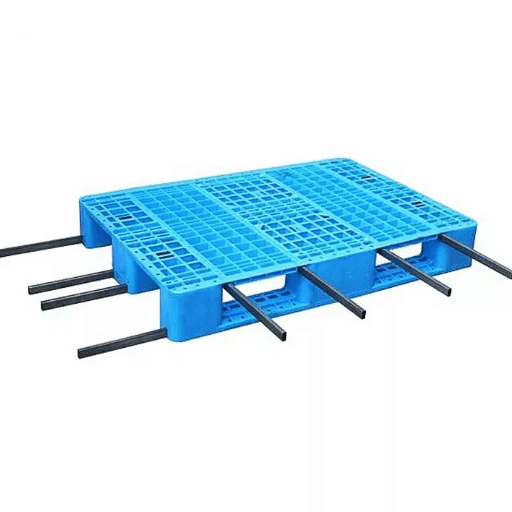
Steel-reinforced skids are reinforced by steel strength, offer traditional pallet flexibility, and reduce steel structural load. Manufactured under a sort of hybrid design, they can be used to add load-bearing capability and damage resistance. The breed has been tailored specifically for extreme loads at work, like heavy industrial work with extended storage, where strength and safety have become even more important. By providing some sense of resistance against cracking or failure under heavy loads, reinforced pallets go a long way to ensuring that operational efficiency is improved through reduced loss of goods or injury in activities. Design durability and total operational costs give any steel-reinforced pallet system a high-value proposition.
What are Steel Reinforced Pallets?
Steel reinforced pallets are specialized pallets with integrated steel components that help to enhance their load capacity, durability, and resistance to mold ing. These pallets are able to provide the advantages of steel structure in addition to materials like plastic or wood; hence, they can serve some brutal-duty job designs. They are commonly employed to face high-strength endeavors like manufacturing, warehousing, and logistics operations, which further ensures heavy load stability, less breakage risks, and extended life. Another advantage of their build and structure is the resistance to different environments, such as temperature changes and humidity, thus making long-lasting, repeat-use clean pallets for an unforgiving supply chain.
Benefits of Using Steel Reinforcement
The properties of steel reinforcement are durability, strength, and versatility, rendering the steel reinforcement an essential constituent part of industries that are intensively under demand. All in all, it increases the load-bearing capability of structural systems, so that operations can smoothly swing even under heavier dynamic loads of any kind. This allows a structure to withstand any eventuality of failure, such as those qualifying as repetitive stress in regular applications. Again, these reinforcement characteristics of steel are resistance to corrosion and environmental degradation if rightly treated. These advantages amount to a longer life span of the material and lower maintenance costs over the long term. Steel becomes a valid option with versatility in respect of a structure that can be creatively designed to serve diverse purposes in the gamut of the industrial process, right from construction, transportation, to oversized warehousing. All these contribute heavily towards enhancing operational efficiency and fortifying a resilient supply chain.
Comparison with Traditional Plastic Pallets
Steel pallets certainly withstand any heat checking owing to their poor handsome resistance. Benefit in terms of longevity shares the rug alongside robustness, the latter leading to lesser decay hardly caused by rust or wearing on account of tough handling, or, to put it, bad handling. Also, the nice-looking pallets fight abrasion, which is more of a limit in plastic pallets that crack and turn out positive disgust- strong yellow or get their general structure ruined. In addition, great pallet Paris is highly resistant to chemical and water damage, the threat every other invention faces, which is to degrade or end in structural peaceability when in contact with some kind of substance or long-term moisture.
Steel pallets are highly recyclable from an environmental standpoint, which makes them one of the more desirable materials in terms of sustainability, whereas the process for recycling plastic pallets is energy-intensive and has the possibility to contribute to growing problems in the plastic waste issue. Also, steel pallets are even better in terms of how they inhibit fires, which is a crucial safety criterion in industries where fire plays a critical role, while plastic pallets can be easily ignited due to their vast flammability, and they emit poisonous gases in case of fire.
Now, from an economic perspective, steel pallets require more investment while there exists less need for curation, so they may stay in service longer and need less frequent replacing, comparatively, hammering down on the advantages of their expenses against plastic pallets. Visualization, after clear realization of their advantages, should enable multiple support for these steel pallets in industries that see them as lucrative long-term service appliances due to exacting operability and sustainable stance.
Types of Steel Reinforced Pallets
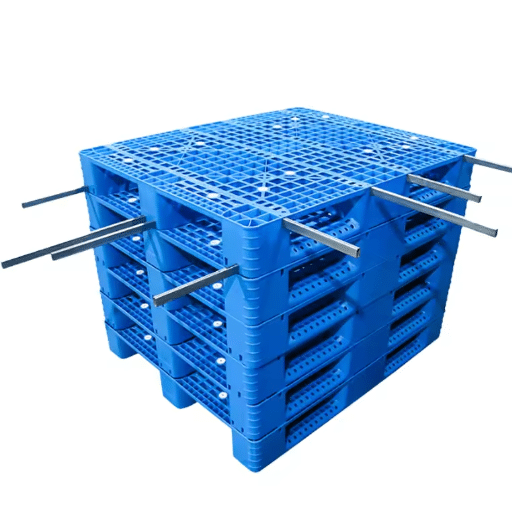
Categories of steel-reinforced pallets depend upon design and application, comprising:
| Type | Description | Best For |
|---|---|---|
| Partial Reinforcement | This style uses steel elements only where needed. It has its flooring and basic support of stringers. This guarantees complete support while maintaining a minimum weight. | Moderate load applications with weight considerations |
| Full Steel Reinforcement | These pallets have steel throughout their structure. This gives pathogens maximum liability up to a load weight of any harsh industrial operations. | Heavy industrial operations and extreme loads |
| Hybrid Pallets | Hybrid pallets require the use of steel reinforcements with other materials under pig plastic and wood. They offer, in this way, a better balance between the strengths, costs, and weight to meet all possible needs for function and mechanisms. | Balanced applications requiring strength and cost efficiency |
All are designed for specific purposes, so of importance is the necessity for different types of businesses to opt soundly according to many good specifications, such as the importance of robustness, durability, and profitability, all for individual purposes.
Steel Reinforced Plastic Pallets
Making them incredibly sturdy, steel-reinforced plastic pallets have found a way to merge the strong structural part of steel with the flexibility and leanness of plastic, giving them a reason to be used in high-durability as well as high-load-bearing applications. The usual strengthened steel embedded into the plastic-making materials is fortified with the needed strength, thereby enhancing the chemical resistance and antimicrobial property traits of the high-quality plastics. These pallets are most suited for the food industry as well as pharmaceutical and other heavy industries where cleanliness techniques are used and where heavy or value-laden goods ought to be handled.
Furthermore, one of the benefits of a medium to long life of plastic pallets is potential resistance to chemicals, moisture, and extreme temperatures; their savings from having low maintenance costs would also conserve an investment return. Their designs, therefore, often pair these with standard sizes to be well-matched with most computerized systems to enhance the operational efficacy. Usually, steel-reinforced plastic pallets have a high price compared to other types of pallets upfront; however, as durable and flexible products for numerous storage and transit functions, they more than pay for their cost over a short while.
Heavy Duty Plastic Pallets with Steel Reinforcement
The duty has much to do with heavy plastic pallets to remain with steel for client demands, but to uphold very heavy weights securely and last very long. These hybrid pallets are a combination of the steel rigidness of plastic resistance to water and corrosion, and favoured by miles for their lightness. Owing to the embedded steel reinforcements, the strong and accumulative steel-contained power gives them unbeatable support for firm, static, and dynamic loads in industrial as well as manufacturing applications.
The additional benefit of an embedded metal beam under the pallet flooring allows it to remain unwavering under stress in the rough and tumble of industrial setups. With automation compatibility, these pallets can be fed via conveyors, stackers, or robotic material handling systems. The environmentally friendly nature of the pallets goes hand in hand with their potential uses in hygienically necessary industrial environments such as food, pharmaceuticals, and all the sectors where cleanliness is a priority.
The initial investment over regular plastic alternatives is higher, but then the solid product’s life and wear resistance guarantee significant cost savings in due course. Such is the temperature tolerance and resistance to acids, oils, etc., of the aforementioned properties that suit the material for diverse applications in logistics and supply chain.
HDPE Steel Reinforced Pallets
Advantages of HDPE Steel Reinforced Pallets
When it comes to resilience, function, and durability, HDPE steel reinforced pallets outshine all other products, having an edge over the others in many industries. Beams are made of a bed of high-density polyethylene (HDPE) material with an embedded steel core, enabling them to hold their shape under heavy-weight exposure in highly stressed environments. They can support static loads of up to 6,000 kg and dynamic loads up to 2,000 kg as per respective hard industrial standards.
It’s hygienic and has compliance features
HDPE pallets are moisture impermeable to minimize water absorption and bacterial threats. The seamless pallets with no joints or crevices are very quickly cleanable by meeting stringent hygiene requirements in food, pharmaceutical, and chemical industries. The sanitation and steam cleaning methods that can facilitate ultimate cleanliness are perfectly validated by SRHDPE pallets.
Thermal and Chemical Resistance
HDPE steel-pallet-frameworked pallets cater to the most extreme conditions. From -22°F to 140°F (-30°C to 60°C), the pallets maintain their physical properties, for unparalleled versatility with a wide range of resiliences against oil, acid, and other corrosive chemicals. These pallets, therefore, are well adapted to cold storage and chemical processing facilities, which are closed due to these influences.
Longevity and Sustainability
Lasting over a decade with the right handling and maintenance, HDPE steel-reinforced pallets are a tough material for pallets. Their high durability and strength lead to permanent savings as well as supporting sustainability aims by enabling temporary changes by reducing replacement frequency and materials wastage. Additionally, most HDPE pallets can be recycled at the end of life, which enhances the environmentally friendly character of the pallet.
These are just some of the features that HDPE steel-reinforced pallets introduce in serious terms of efficiency; they operate reliably within a modern firm that is one with highly demanding performance requirements and a compliant nature.
Applications of Steel Reinforced Pallets
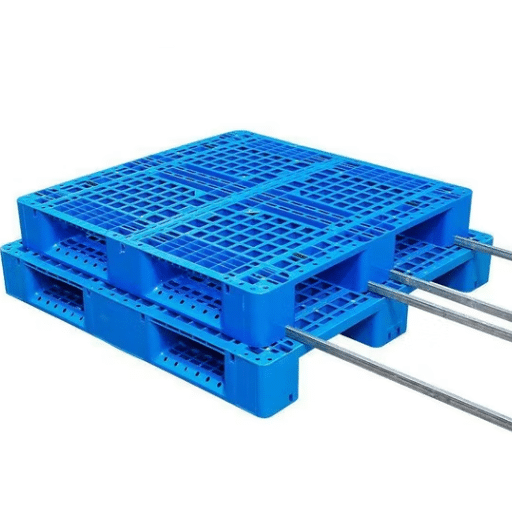
Steel-reinforced pallets are widely used in varied sectoral operations that require high power, strength, and utility. Examples of use include…
- Pharmaceutical Industry: Here, they find their own significance for the carriage of medicines and laboratory equipment as required by public health hygiene and safety regulations.
- Food and Beverage: Predominantly applied for maximum and efficient storage of bulk volumes with hygienic conditions imparted to potential foodstuffs and beverages.
- Chemical Industry: They are excellent in the spread of chemicals contained in heavy containers, with their resistance to rust and some damage.
- Automobile: Offers reliable handling of things like small parts, machinery, and equipment, thus ensuring their sturdy storage and delivery.
- Warehousing and Distribution: The long-term durability provides a very reliable asset in the high-volume warehouse.
Steel-reinforced pallets are nothing but the market leaders where toughness ought to be shown for any specified industrial regulation.
Industries that Benefit from Steel Reinforced Pallets
Relatively important to industries prominently loaded with high-strength and durability and compliance to regulations, the steel-reinforced pallets foster substantial value within their fields.
- Pharmaceuticals and Medical: In hygienic and easy-to-clean conditions, EPAL-licensed and that were very heat-resilient and in compliance very sturdy steel-reinforced pallets are necessary in places with high sanitation requirements, such as strict cleanliness. The pallets are used for transportation or storage of really hot, heavy products, e.g., autoclaving processes, in compliance management of production efficiency.
- Food and Beverage: They are well known for a proper-food-level-grade application-excessive use of steel-reinforced pallets. The moisture hardly affects the neighboring temperature matters to these pallets, while protecting the materials in all they ensuring the safety of raw and finished commodities wrapped.
- Chemical Processing: Steel-reinforced pallets are designed to handle materials that are hostile or corrosive in nature, and also hazardous substances. They are suitable for extreme exposure to harsh conditions. Their durability makes them safe for handling heavy loads; the heaviest cases of toxic or reactive chemicals are out of the equation.
- Heavy Process Manufacturing: When needing something more resilient to move machinery, HVAC equipment, and construction-related goods for large manufacturers in the heavy industry, these folks need considerably more wear and tear than your everyday pallet.
- Logistics and Export: In today’s global supply chains, steel jack-ready pallets are found to be crucial, particularly in cases where durability and reusability are key. These resilient pallets are expected to lead to secure transportation and save a lot of money in the long run, escaping heavy-handed handling.
These industries demonstrate the adaptability and versatility of the steel-reinforced design when it comes to higher productivity, anticipatory prowess, and adherence to industry standards.
Use Cases in Heavy Duty Logistics
What is the importance of steel-reinforced pallets for the harsh world of logistics? While talking about high strength and load-bearing capacity, they should be capable of being used in some significant areas:
- Warehouses and Distribution Centers: These pallets are good for taking care of high-density materials, whether they are stored or handled in different ways for long periods. The steel reinforcement has been incorporated into the construction; therefore, hence, they are capable of withstanding any static and dynamic loads, avoiding undue damage.
- Automobiles and Mechanics: Sturdy pallets, like steel meshes, are extensively employed for transporting somewhat bulky auto parts such as engines or transmission components, thus ensuring strength and protection along the supply chain of the auto parts inside.
- Food and Drink Supply Chains: Meeting the highest sanitary-care standards, these pallets assure safe carriage of high-weight, perishable, or temperature-sensitive goods while showing that they are immune to environmental stressors like humidity or temperature fluctuations. They can insulate the food material and have a longer shelf life.
Containerization and Steel Reinforced Pallets
Steel reinforced pallets are significant for container-moving because they comply with the strict mandates of global transport for freight our days. Because of their innate strength and rigidity, they are able to endure point loads and stack weights common in shipping containers. Steel-reinforced pallets do not bend or wear out, unlike wooden pallets or plastic pallets from the conventional library.
Pallets in container shipping are provided for durability, whereby they can work towards high weighing capacity while fitting in set ISO codes. The pallets will bear any sort of temperature changes without getting damaged by moisture or chemical exposure, making them an option in pharmaceuticals, car parts, and heavy machinery industries. Moreover, their sturdiness has saved high warehousing costs because of fewer pallet turnovers during long-term logistics. Having the extra benefit of increased stiffening with steel will bring about increased efficiencies in supply chains, as they not only optimize space within the container fairing but also offer extra separation for the protection of goods against possible damage in transit and give assurance of adhering to global shipping regulations. Such things emphasize their worth for a secure and trustworthy global transference.
Choosing the Right Supplier for Steel Reinforced Pallets

While narrowing your selections down for a supplier of solid pallets, the character of the organization should be good; the proven history in making a superior product and keeping the customer satisfied. It goes without saying that the supplier should be complying with industry standards and certifications for longevity and safety. Feeling safe with a reasonable large volume that can be produced and respecting the deadlines should never be tackled anymore. It is also necessary to find out their generic know-how, adapted to the requirements of that particular industry, and their capabilities for customization. Another point concerned with after-sales support and warranty legalization is a reliable way to ensure long-lasting services.
Evaluating Quality and Durability
For accurate quality and durability evaluations, one could start by checking whether the manufacturer subscribes to recognized industry standards, such as appropriate ISO certifications or compliance with ASTM or other relevant benchmarks about material or product reliability. Inquire what procedures they have put in place to ensure quality control, such as inspections, testing protocols, and third-party audits, which are pledged for the product always comes out consistently. He may also demand samples and verify ancillary services on-site to physically test the performance or durability of materials or products under conditions similar to real-world use.
In addition, one can experience several customer testimonials, case studies, or other related documentation detailing the supplier’s track record with other clients. The suppliers whose operational parameters result in positive sentiment with respect to high product life cycles and low rates of defects appear to be more reliable. Additionally, understand what materials and technologies they employ. As said, considerable breakthroughs in technology, such as reinforced composites and unique manufacturing techniques, promise ultimate durability.
The possibility of customizing is another chief factor; an authorized supplier shall be able to integrate materials or designs to comply with one’s operational necessity without going against the product’s policy. Lastly, the assessment of the terms and conditions of warranty, as well as any after-sales support by the supplier, gives a good impression that they have confidence in the longevity and performance of the products.
Factors to Consider When Selecting a Supplier
Undeniably, working with suppliers requires the consideration of a series of key areas that would contribute to the firming of partnerships. To prioritize the first set of considerations, customers must put quality assurance on the physical inspection and tests at the forefront, such as procuring ISO certification and adhering to strict disciplined testing techniques. In that way, product irregularities can multiply fold. Secondly, one ought to examine more the production capabilities and lead times by the supplier to ascertain that it produces according to its inventory; otherwise, it will.
Thirdly, assess the supplier’s compliance with regulatory requirements and ethical standards. This includes environmental compliance, labor practices, and adherence to specific industry vertical guidelines. Moreover, cost-effectiveness should have a balanced weight with long-term value rather than being weighed only against prices for units and being dependent on factors that include the costs associated with the product life-cycle and product-life expectancy. Establishing open communication channels and clear terms of payment, deliveries, and contract management also builds a base on mutual trust and successful cooperation. Considering these areas altogether will lead to better-informed decisions, better supplier-vending relationships, and working towards operational excellence.
Cost Considerations for Heavy Duty Solutions
When preparing for financial considerations for heavy-duty solutions, it is hardly questionable that it is required rather than focusing on values on the basis of their upfront rates. TCO is all about factors from purchase price, operating costs, maintenance, and disposal of the asset at the end of its useful life. This may sound stiff in looking for initial investments for equipment with durability; however, ultimately, many savings occur for minimized downtime, expanded lifecycle, and less repair costs.
Another hugely important factor is energy efficiency, as the operational energy consumed is counted among the main chunks of ongoing costs. Any solutions that can significantly lower energy costs over the years by certification of their high efficiency, like ISO or Energy Star standards, are surprisingly encouraged. Moreover, standardization and compatibility with existing systems would play a crucial role in terminating unnecessary retrofit costs.
Just as necessary will be identifying vendors able to provide additional services like Subject advice, extension warranties, and preventive maintenance plans, all aimed at reducing unwarranted costs. Flexibility and scalability should factor into the equation, ensuring that the solution could be capable of addressing future operational demands without forcing a major upgrade. With such a standpoint firmly ingrained across each prong from a product lifecycle perspective in procurement, costs are optimized, and a heavy-duty application will rest in long-term reliability.
Future Trends in Pallet Technology

Eco-Friendly Materials: An emerging trend in pallet technology is the use of eco-friendly materials. The manufacturers are transitioning seamlessly into using recycled plastics, compressed woof fibers, as well as biodegradable materials to reduce the environmental impact. These materials are in concord with the sustainability initiative while offering a solution packet with a combination of strength and reduced weight for lower transport costs.
Pallets that are IoT-enabled: Pallet innovations are now being expanded to leverage the postmodern Industrial IoT, which guarantees safe ledgering for each pallet. Equipped with tracking sensors, they allow real-time exchange of location, temperature, and humidity data, thereby guaranteeing complete insights on each pallet, ensuring the safety of all products.
Half-Built Customization: They are put together with modular customization in mind for future pallets, so as to allow companies the ability to change configuration per specific shipping needs, thus improving storage space utilization and lessening the wastage of logistics processes.
The adoption of all these trends represents a remarkable operational advantage for cost slashed, tracking upgrades, and less of an environmental footprint.
Innovations in Steel Reinforced Design
Steel-reinforced pallets are revolutionizing material handling and logistics with unmatched durability and load-bearing capacity. These pallets have high-tensile steel reinforcement located inside the core, which allows them to accommodate heavy loads without giving in to deformation or breaking. Keeping operational safety in mind, such design innovations also increase the pallet lifespan, reducing their replacement costs in the long run.
Steel-and-lightweight-corrosion-resistant-materials-pallet-hybrid propositions abound in relation to the very newest pallet advances. Such hybrid designs would try to improve the balance between weight and load-bearing strength to improve transport efficiency while retaining durability. And steel reinforcement prevents all imaginable forms of mechanical continuing operational failures, which, in extension, ensures reliability in tough settings, such as warehouses and shipping docks.
Steel-reinforced pallet design can be tailored so as to fit the loads of any given original manufacturer’s specifications. Modern manufacturers may now weld and fasten in advanced ways to make the unions between the steel elements seamless, hence minimizing vulnerable points and ensuring that the quality of pallets is very uniform. These specifics become all the more beneficial for safety, reduced maintenance, and a long life for material handling equipment when considered with one another.
Sustainability in Pallet Manufacturing
From my point of view, green aspects within pallet industries should refer to all practices that dampen the environmental side effects while making sure performance and efficiency are still featured. This could involve either the usage of recycled or sustainable materials, enhancing design for waste minimization, and improving energy saving during production processes. With a focus on durability and reusability, pallets can last this long, hence diminishing the need for new resources used at a higher rate for environmental pollution.
The Rise of Smart Pallets
Smart pallets are an innovation in modern logistics-one that links technology with supply chain efficiency and visibility. Fitted with sensors, RFID tags, and IoT, they provide for real-time location tracking while also offering data on condition and environmental factors, such as temperature and humidity. Thus, businesses will have a more precise record of inventory management, as they protect their goods from loss by damage and theft and have an edge in optimizing transportation routes.
Smart pallets are not just about tracking; they are also claimed to contribute to improving operational performance in terms of predictive maintenance and asset management automation. Use of smart pallets is reminiscent of tracking the lifespan of these pallets and ensuring timely repairs, which lengthen the pallets’ lifecycle. Furthermore, it adds to an organization’s construct of sustainability by cutting waste along the supply chain and enhancing resource efficiency.
Sectors exploiting smart pallets achieve higher transparency in informed decision-making, which enables shorter work phases and cheaper costs. Providing a deliverance on tactical insights, these innovative solutions are revolutionizing how companies administer logistics in an aggressive, data-driven atmosphere.
Reference Sources
Behavior of steel storage pallet racking connection – A review
Seismic performance of dissipative automated rack-supported warehouses
Frequently Asked Questions (FAQs)
What is said about steel-reinforced pallets and the advantages they offer?
Steel-reinforced pallets are pallets that include steel items, like metal tubes, to increase strength and maintain durability. They are therefore apt for severe applications but can withstand a considerable static load capacity, which makes them used for heavy and bulky things during transport.
How do plastic pallets differ from steel-reinforced pallets?
Plastic pallets are generally made light in lightweight and moisture- and chemical-resistant material for various applications. Otherwise, with steel-reinforced pallets, they provide not only added support in terms of structure but have been designed to endure much heavier loads, thanks to the steel components installed in their structure.
Where to locate plastic pallet suppliers, then?
One can find companies selling plastic pallets using online marketplaces, goods and service platforms, or calling directly to sources or factories in China. The diverse range of plastic pallet products provided by many manufacturers or sources caters to just about every need or industry.
What kind of plastic pallets are available?
Plastic pallet types such as nestable, rackable, and stackable are used in compliance with unique forms of services, including storage for optimal space usage and handling by forklifts. Choose the right pallet type based on requirements and compatibility in your operation.
How much do steel-reinforced pallets go for when wholesaled?
Pricing options for steel-reinforced plastic pallets differ enormously in terms of size, design, and the dealer who sells the product. To identify and test prices for no fewer than bulk purchases-and therefore, compare what prices the manufacturers demand for shipment of successive orders-you may ask producers to offer a quote.
How do I calculate the static load capacity of a pallet?
A pallet’s static load capacity is typically determined by the makeup of the materials used and the design of the pallet. For Steel Reinforced Pallets, manufacturers provide specifications indicating the maximum weight the pallet can support when stationary. Always consult these specifications to ensure safe handling.
What materials are used to create Steel Reinforced Pallets?
Steel-reinforced pallets are made with a combination of high-quality plastic and steel components, such as steel pipes or metal tubes, providing strength and durability. These pallets are able to withstand heavy-duty applications as well as being resistant to wear and tear.
Is it possible to adjust steel-reinforced pallets?
Yes, many suppliers are open to customizing the steel-reinforced pallets by simply changing sizes, colors, and configuration, adjusting to what you require. Remember, it is always helpful to furnish the exact specifications to the suppliers who will help you decide the most appropriate solution for you.
Any maintenance tips specifically for steel-reinforced pallets?
Steel-reinforced pallets require very little maintenance. However, regular checking of the pallets is essential to ensure that none of them shows any signs of damage or wear, particularly on steel fronts. Also, proper cleaning and storage will only prolong their life, maintaining their condition intact.