
How much do custom plastic pallets cost? Most buyers can expect to pay 25to25to100+ per unit once a mold exists, plus a one-time tooling investment that typically ranges from 5,000to5,000to50,000+. The final custom plastic pallet cost depends on material, design complexity, load capacity, order volume, and where you source them.
That answer frustrates a lot of procurement teams. They need a firm number for the budget, not a range wider than a loading dock. If you are new to industrial pallets, start with our complete guide to plastic pallets for background on sizes, materials, and load ratings. Then come back here for the custom plastic pallet cost details.
But the truth is that a “custom” pallet can mean very different things: a standard footprint with your logo molded in, a heavy-duty rackable design for automotive parts, or a food-grade hygienic pallet with embedded RFID tags. Each one hits the invoice differently.
In this guide, we’ll break down exactly what drives custom plastic pallet pricing, show real-world cost ranges by volume and use case, and give you a checklist to get an accurate quote the first time. Whether you need 200 pallets or 20,000, you’ll leave with a clear idea of what you should pay and where you can save.
Key Takeaways
- Custom plastic pallets typically cost 25–25–100+ per unit after tooling, with high-volume orders often falling to 18–18–40.
- One-time mold and tooling costs usually range from 5,000to5,000to50,000+, depending on size, complexity, and cavitation.
- The seven biggest price drivers are material, design, load capacity, manufacturing process, features, order volume, and shipping terms.
- Plastic pallets often beat wood on total cost of ownership in closed-loop systems, despite a higher upfront price.
- Preparing detailed specs before requesting a quote can cut weeks off lead time and prevent surprise tooling charges.
Quick Answer: How Much Do Custom Plastic Pallets Cost?
If you’re looking for a fast budget estimate, here is how custom plastic pallet pricing typically breaks down in 2026. These ranges reflect current factory-direct and distributor pricing data from industry sources such as CN Plastic Pallets and iGPS.
Per-Unit Prices After Tooling
| Order Volume | Typical Custom Price per Pallet | Best For |
|---|---|---|
| 200–500 units | 45–45–85 | Small custom runs, pilot programs, niche sizes |
| 500–1,000 units | 35–35–65 | Mid-size operations testing a new design |
| 1,000–5,000 units | 25–25–50 | Established workflows ready to scale |
| 5,000–10,000+ units | 18–18–40 | Large-volume, long-term supply agreements |
| Heavy-duty / specialized | 65–65–150+ | Automotive, pharma, cold chain, or automation |
These figures assume the mold already exists or is amortized across the order. If you need a brand-new mold, the tooling charge is usually quoted separately from the custom plastic pallet price.
Mold and Tooling Costs
Custom designs often require a dedicated injection mold. According to industry sources, mold development alone can push the total project cost well above standard pallet pricing. Typical mold investments fall into these bands:
- Simple, small-footprint mold: 5,000–5,000–15,000
- Mid-size, multi-cavity mold: 15,000–15,000–35,000
- Large or highly complex mold: 35,000–35,000–50,000+
Who owns the mold matters. Some manufacturers keep ownership and charge higher per-unit prices. Others let the buyer own the mold outright, which lowers long-term unit costs but requires more capital upfront. At Shandong Lile, we typically discuss mold ownership clearly in the quote so you can choose the structure that fits your cash-flow model.
Custom vs. Standard vs. Wood at a Glance
| Pallet Type | Upfront Cost | Typical Lifespan | Best Use Case |
|---|---|---|---|
| Wood pallet | 10–10–25 | 3–5 years / 10–30 trips | Low-cost, short-term, domestic shipping |
| Standard plastic pallet | 20–20–80 | 8–15 years / 100–500+ trips | Reusable closed-loop logistics |
| Custom plastic pallet | 25–25–100+ (after tooling) | 8–15 years / 100–500+ trips | Specialized loads, automation, branding, compliance |
The upfront gap between wood and plastic is real. But as we’ll see later, the math changes quickly when you factor in lifespan, repairs, compliance, and freight.
Want a number tailored to your specs? Request a custom plastic pallet quote and we’ll outline pricing, tooling, and lead time in 24–48 hours.
7 Factors That Determine Custom Plastic Pallet Pricing
When buyers ask how much do custom plastic pallets cost, what they really need is a checklist of what moves the number. Here are the seven levers every procurement team should review.
1. Material Choice
The resin selection is usually the single largest per-unit cost driver.
- Virgin HDPE (high-density polyethylene): 12–12–50+ per unit. Excellent impact resistance, chemical resistance, and consistency. Required for many food and pharmaceutical applications.
- Virgin PP (polypropylene): Slightly lower density than HDPE, good for higher-temperature environments.
- Recycled / regrind resin: 6–6–15 per unit. Lower cost but more variation in strength and color consistency. Common for export and one-way pallets.
- Specialty blends: ESD (anti-static), fire-retardant, metal-detectable, or UV-stabilized resins add 5–5–20+ per unit depending on the additive.
Food-grade and pharmaceutical buyers usually need virgin HDPE with a smooth, sealed deck. That material choice alone can push a custom pallet from the bottom of the range to the top.
2. Design Complexity and Size
A standard 48″ × 40″ footprint is inexpensive to tool because molds already exist in many factories. Move away from common sizes and the cost rises.
- Standard footprints (48″×40″, 1200×800mm, etc.): Lower mold risk, faster lead time.
- Non-standard dimensions: New mold required, longer engineering review.
- Base style: 9-leg nestable designs use less material than 3-runner or 6-runner rackable bases.
- Deck type: Solid decks cost more than grid or ventilated decks because they use more plastic and require higher clamping force.
3. Load Capacity and Structural Requirements
A pallet rated for 1,000 kg in a static stack uses far less material than one rated for 5,000 kg in a racking application.
- Light-duty (<1 ton): 6–6–15 — suitable for one-way export or light consumer goods.
- Medium-duty (1–2 tons): 15–15–30 — daily warehouse use, floor stacking.
- Heavy-duty (>2 tons): 30–30–50+ — rackable, double-sided, or steel-reinforced designs.
Steel reinforcement tubes can add 8–8–15 per unit but are often non-negotiable for automotive and heavy-machinery applications.
4. Manufacturing Process
Not all plastic pallets are made the same way, and the method affects both tooling cost and per-unit price.
- Injection molding: 10–10–35 per unit. Fast cycle times, high precision, best for large volumes. Tooling is more expensive but efficient at scale.
- Blow molding: 12–12–50 per unit. Hollow, impact-resistant structure. Common for durable, medium-duty pallets.
- Rotational molding: 40–40–100+ per unit. One-piece, extremely durable, chemical-resistant. Slower cycles and higher resin use make it the most expensive option.
Most custom industrial pallets use injection molding because it offers the best balance of precision, speed, and cost at volume.
5. Custom Features and Add-Ons
Small details add up quickly on a per-unit basis.
- Custom colors / Pantone matching: 2–2–5 per unit
- Logo or branding embossment: Often included in mold cost or low per-unit fee
- RFID or barcode embedding: 5–5–12 per unit
- Anti-slip surfaces or grommets: 1–1–3 per unit
- ESD / anti-static treatment: 5–5–15 per unit
When James, an operations manager at a Midwest automotive supplier, ordered custom rackable pallets, the base design was modest. But adding steel tubes, color coding by assembly line, and RFID tags pushed his per-unit price from roughly 38to38to62. The extra cost was justified because it eliminated misrouted parts and cut rack-loading errors by 40%.
6. Order Quantity and MOQ
Factories need minimum volumes to justify machine setup and mold amortization.
- Standard custom orders: 200–500 units
- New mold projects: 500–2,000 units
- Large OEM programs: 5,000–10,000+ units
Higher volumes almost always reduce per-unit cost. A mold that costs 30,000adds30,000adds30 to each pallet at 1,000 units but only $3 at 10,000 units. That is why buyers who can forecast multi-year demand often negotiate better pricing.
7. Shipping, Duties, and Incoterms
The quoted pallet price is rarely the landed price. Freight, duties, and insurance can add 1–1–5+ per pallet, and sometimes more for remote destinations.
- FOB (Free on Board): Buyer pays ocean freight and insurance. Lower unit price, more logistics control.
- CIF (Cost, Insurance, Freight): Seller handles shipping to destination port. Easier for buyers, but per-unit cost is higher.
- DAP (Delivered at Place): Seller delivers to buyer’s facility. Most convenient, highest quoted price.
If you are comparing quotes from a Chinese manufacturer and a North American distributor, make sure both are using the same Incoterms. Otherwise, you’re not comparing apples to apples.
Custom Plastic Pallet Cost by Type and Use Case
Different industries buy different types of custom pallets. Here is how custom plastic pallet pricing typically shakes out by application.
Export / One-Way Custom Pallets
These are designed to leave with the shipment and not return. They are usually lightweight, nestable, and made from recycled resin to keep cost down.
- Typical price: 8–8–20 per unit
- Why custom: Non-standard dimensions for specific product loads, company branding, or country-specific regulations.
- Savings tip: Use recycled material and a simple 9-leg nestable design.
Nestable and Stackable Custom Pallets
Nestable pallets save space on return trips, while stackable models handle heavier loads.
- Nestable custom: 15–15–35 per unit
- Stackable custom: 25–25–50 per unit
- Why custom: Color coding, logo embossing, or slight dimensional tweaks for existing racking.
Rackable and Heavy-Duty Custom Pallets
Built to sit safely in warehouse racking systems and handle dynamic loads.
- Typical price: 50–50–120+ per unit
- Why custom: Precise rack beam spacing, steel reinforcement, or load-specific dimensions.
- Common industries: Automotive, heavy machinery, chemicals.
Food-Grade and Pharmaceutical Custom Pallets
These require virgin HDPE, smooth sealed decks, and often compliance documentation.
- Typical price: 65–65–150+ per unit
- Why custom: Hygienic design, traceability features, temperature resistance, or FDA/GMP compliance.
- Common industries: Food processing, cold chain, pharmaceuticals.
When Elena, a supply chain director at a frozen-food processor, switched from wood to custom hygienic pallets, her upfront cost more than doubled. But she eliminated splinter contamination, reduced sanitation labor by 25 hours per week, and passed her next BRC audit with no pallet-related findings. The pallets paid for themselves within 14 months.
Custom Plastic Pallets vs. Standard vs. Wood: A Cost Comparison
Buyers often frame the decision as “custom plastic pallet cost vs. wood pallet cost.” That is the wrong comparison for most operations. The better question is: what does the pallet cost over its useful life?
Upfront Purchase Price
- Wood: 10–10–25 new
- Standard plastic: 20–20–80
- Custom plastic: 25–25–100+ (plus tooling)
Wood wins the first-round price battle every time.
Lifespan and Cost Per Trip
- Wood: 3–5 years, roughly 10–30 trips
- Plastic: 8–15 years, roughly 100–500+ trips
- Cost per trip (plastic): Often 0.19–0.19–0.50
- Cost per trip (wood): Often 0.80–0.80–3.00
In a closed-loop system where the same pallet circulates hundreds of times, plastic’s cost per trip can be one-quarter that of wood.
Maintenance and Compliance
Wood pallets crack, splinter, and lose nails. Repairs can run 3–3–5 each, and some operations simply discard damaged wood pallets. Wood also requires ISPM-15 heat treatment for international shipments, adding roughly $3 per pallet.
Plastic pallets need little maintenance. They do not absorb moisture, do not harbor pests, and do not require heat treatment for export. The main end-of-life question is recycling, which many suppliers now offer as a take-back program.
When Custom Plastic Pallets Pay Off
Custom plastic pallets make the strongest business case when:
- The pallet circulates in a closed loop with high trip frequency.
- Automation requires precise dimensional tolerances.
- Hygiene, contamination, or compliance is critical.
- Product damage from wood splinters or nail failure is costly.
- Branding, traceability, or color coding improves operational efficiency.
If you ship one-way domestically and the pallet never returns, wood or a simple export plastic pallet is usually the smarter spend. If the pallet lives in your network for years, custom plastic often wins on total cost of ownership.
For a deeper side-by-side, see our plastic pallets vs wood pallets cost comparison.
How to Get an Accurate Custom Plastic Pallet Quote
The fastest way to get a precise answer to “how much do custom plastic pallets cost” — and to control your total custom pallet cost — is to send your manufacturer a complete spec sheet. Vague requests get vague quotes.
What Specs to Prepare
Before contacting a supplier, gather:
- Dimensions: Length, width, height, and any nesting or stacking height limits.
- Load requirements: Static load, dynamic load, and racking load.
- Environment: Temperature range, exposure to chemicals, indoor vs. outdoor use.
- Material preference: Virgin HDPE, PP, recycled content, or specialty resin.
- Features: Steel reinforcement, RFID, color, logo, anti-slip, ESD, etc.
- Quantity: First order, annual forecast, and any planned reorder cadence.
- Shipping terms: Preferred Incoterms and destination.
Questions to Ask Your Manufacturer
- Is the mold cost quoted separately or amortized into the per-unit price?
- Who owns the mold after it is built?
- What is the MOQ, and does it change if I use a standard size with minor customization?
- What is the typical lead time for samples, first production, and reorders?
- What testing or certifications do you provide?
- Do you offer mold maintenance or repair if the design needs adjustment?
Red Flags in a Quote
- No tooling line item: If the design is truly custom, tooling should appear somewhere. Hidden tooling usually reappears as a higher unit price.
- Extremely low per-unit price: If a quote is half the next lowest bid, ask what material, load rating, or warranty is being cut.
- No lead time: Custom pallets require engineering and mold scheduling. Anyone promising next-week delivery for a new mold is either reselling or mistaken.
- Vague Incoterms: Make sure freight, duties, and insurance are clearly assigned.
If you are still in the early planning stage, our complete guide to custom plastic pallets walks through the design process from concept to production.
How to Reduce Custom Plastic Pallet Costs Without Sacrificing Quality
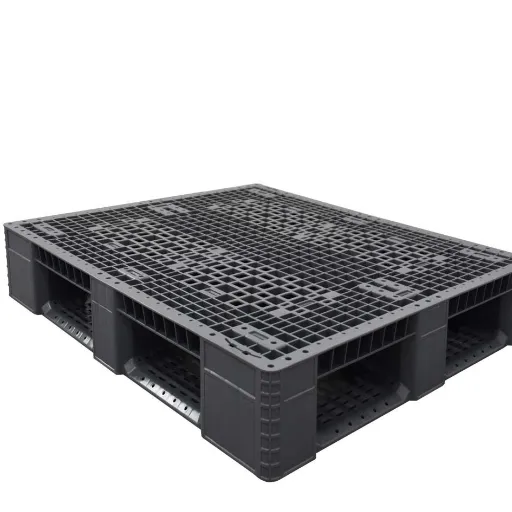
You do not have to choose between a custom fit and a reasonable budget. Here are five ways to reduce how much custom plastic pallets cost without sacrificing quality.
1. Start With a Standard Footprint
The closer your design is to a common size, the more likely a manufacturer can adapt an existing mold or use a modular base. Even small deviations from 48″×40″ or 1200×800mm can require new tooling.
2. Optimize Order Volume
Combine forecasted demand into fewer, larger orders. The per-unit savings from moving from 500 to 2,000 units often outweigh the carrying cost of extra inventory.
3. Consider Semi-Custom or Modular Options
If you only need a custom color, logo, or minor dimensional tweak, ask about semi-custom programs. These avoid the full cost of a new mold while still giving you a branded or tailored pallet.
4. Choose the Right Material for the Job
Do not spec virgin HDPE for a one-way export pallet. Likewise, do not use recycled resin for a food-contact application. Matching material to use case is the easiest way to avoid over-engineering.
5. Plan for Long-Term Use
A custom mold is painful at 200 units but trivial at 20,000 units. If you expect the pallet to be part of your operation for years, the tooling cost becomes a small fraction of the total program value.
For more on general plastic pallet pricing, see our plastic pallet prices guide.
How Much Do Custom Plastic Pallets Cost? Lead Times and Delivery
When you ask “how much do custom plastic pallets cost,” don’t forget that delivery timing affects your total investment. Lead time affects working capital, launch schedules, and inventory planning.
| Stage | Typical Timeline |
|---|---|
| Design review and quotation | 3–7 days |
| Mold design and manufacturing | 30–60 days |
| Sample production and approval | 7–14 days |
| First production run | 15–30 days |
| Shipping (FOB China to North America/Europe) | 20–40 days |
Total from PO to delivery: 60–120 days for a new custom mold. Reorders of an existing design usually take 15–25 days plus shipping.
Rush fees are common if you compress the mold-building window. The best way to avoid them is to start the conversation before you are under deadline pressure.
Conclusion
So, how much do custom plastic pallets cost? In 2026, the realistic range is 25–25–100+ per unit after tooling, with mold investments typically running 5,000–5,000–50,000+. The exact number depends on material, design, load capacity, features, order volume, and shipping terms.
The key is to stop thinking about the sticker price alone. A custom plastic pallet is a long-term asset. In the right application, it cuts maintenance, reduces product damage, improves automation performance, and lowers cost per trip compared to wood.
If you are ready to pin down a real number for your project, request a custom plastic pallet quote from Shandong Lile. With 14+ years of manufacturing experience, 16 subsidiaries, and a presence in 108+ countries, we can help you balance performance, compliance, and budget from the first sketch to final delivery.
FAQ: Common Questions About Custom Plastic Pallet Cost
How much do custom plastic pallets cost on average?
Most custom plastic pallets fall between 25and25and100+ per unit after the mold is built, depending on volume, material, and features.
Why are custom plastic pallets more expensive than standard ones?
Custom designs usually require a new mold and engineering review. That tooling cost is either paid upfront or spread across the unit price.
What is the typical MOQ for custom plastic pallets?
Minimum order quantities typically range from 200 to 500 units for simple customizations, and 500 to 2,000 units for designs requiring new molds.
Are plastic pallets cheaper than wood in the long run?
Usually yes, in closed-loop systems. Plastic pallets last longer, require less maintenance, and avoid ISPM-15 treatment costs, giving them a lower total cost of ownership.
How can I get a lower price on custom plastic pallets?
Use standard footprints, increase order volume, choose the right material, and consider semi-custom options that do not require a completely new mold.