This piece explains the difference in the construction and operation of the two most popular types of pallets, as well as within what industry, and whether there are certain advantages or disadvantages in using them. For those maximizing carrying capacity, or seeking a match between the load and the devices, or even aiming at the lowest operational costs over time, below will be the information that will help you out to choose correctly.
Introduction to Block Pallets and Stringer Pallets
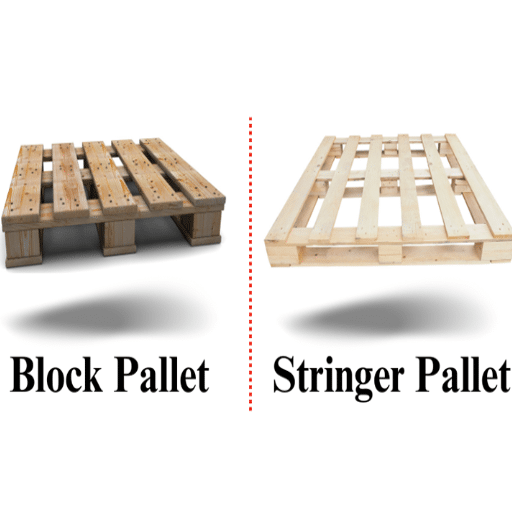
Cargo supporting equipment is employed in commercial logistics for a wide range of purposes and is seen in machines: block pallets and stringer pallets. Block pallets are manufactured from very strong material and include both orthogonal and non-orthogonal internal strings, thus permitting a four-way lift with a forklift. These types of pallets are strong and can withstand heavy loads. On the other hand, the stringer pallets consist of two purely horizontal flat wooden sections separated by vertical wooden ribs that leave holes for the forks on the two opposite sides of the pallet. Each type has its own pros; block pallets have more strength and utility, as opposed to stringer pallets that are easy to move and cheaper. Therefore, choosing the proper pallet will be influenced by the weight-bearing, handling, and cost efficiency factors.
Block pallets are constructed with the help of both perpendicular and parallel wooden or plastic blocks at the base, making them more ideal for strenuous operations. The majority of these pallets allow forklifts to enter them from four sides, making them ideal for use in warehouses and shipping. The structures are designed in such a way that they can withstand heavy loads — they are durable and can withstand even long use.
Stringer pallets are made with wooden slats neatly lined next to one another. Such pallets are typically used for forklifts that can be used in only two directions; however, some can also be partly fitted with four-way notches. They are much less expensive and more affordable, hence they come in handy for businesses whose primary focus is on minimizing costs and providing efficient one-time services.
Importance in Supply Chain and Warehouse Operations
Using pallets is crucial for the success of the supply chain and warehouse management; they aid in easy and swift movement and storage of loads. They serve as a standardized interface to facilitate the connection between transportation systems and storage facilities, especially where forklifts, pallet jacks, and automated warehouses are used. The manner of choosing block or stringer pallets will determine productivity, as well as the cost and safety of goods optimization. For stringers, this can mean their use in one-off projects or in very low-capacity industries when compared with block pallets, which cater for high utilization, high capacity, and even cross-border transport. The choice of a pallet to use in a warehouse will have such effects as how much to store, the cost of operation, and transportation damage control. It follows that in an efficient and cost-effective supply chain, pallets do not stand alone as passive elements.
Key Factors to Consider When Choosing Between the Two Designs
-
1Understanding Load Capacity and Weight Distribution
It is crucial to be well-acquainted with the total weight and the type of goods being transported or stored. Stringer pallets are well-suited for light to moderate loads, whereas block pallets are designed with even more stringers, meaning they can handle a heavier weight load. -
2Construction Materials and Their Durability
Due to the stronger materials used in their manufacture, the durability of block pallets outmatches that of stringer pallets, which are typically made of softwood. Consider the material in light of the duration required and the external conditions. -
3Usability with the Bump and Bracket System
Block pallets are suitable as they are four-way entry pallets, where handleable goods can be retrieved from any of the four sides, thus especially useful when the warehouse has tight corners. A stringer pallet tends to be two-way entry-based, which can be unsuitable for that purpose. -
4Cost Efficiency
More often than not, stringer palettes are a better choice in terms of price. Yet in the more extended run, particularly in the case of intense usage, block pallets may internally be less expensive because they last longer and can be reused. -
5Regulatory Compliance and Export Requirements
Block pallets oftentimes conform with international shipping norms, e.g., ISPM-15 wood treatment. This aspect is important when the supplies in question are subject to international export control, since simple stringer pallets may limit supply for such services. -
6Environmental Impact
Examine the disposal design course of the pallets and their recyclability. Plastic block-type pallets or block pallets made of solid materials can be redesigned more effectively for high-energy reduction targets and any organization.
Structural Design Differences
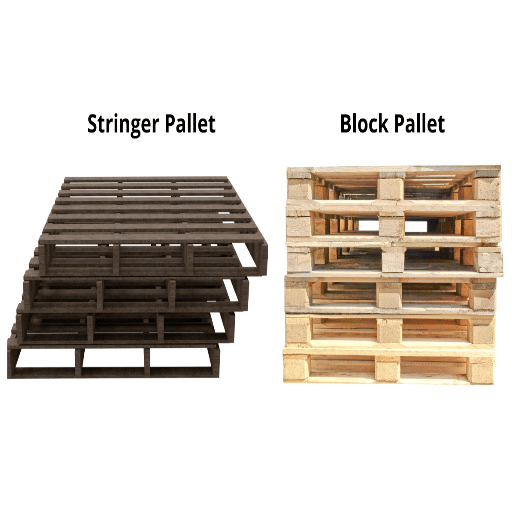
Block pallets can be compared to stringer pallets in terms of their construction and design, affecting their roles and relevance in different circumstances. Block designs, with the help of nine blocks, make things compact and strong with a four-way entry. This structure is a win-win situation as the pallet can be lifted from all four sides and thus moved by forklifts and pallet jacks. Stringer pallets, on the contrary, permit entrance from two ends only with the help of parallel boards — ‘stringers’ — which cannot be changed but can be altered to provide a partial four-way entrance in the form of notched stringers. Block pallets are usually more load-worthy and robust, whereas stringer pallets are feasible whenever minimizing cost and weight exceeds the desire for structural integrity. The appropriate use must be determined based on the operations, efficiency, and green supply chain that the company requires.
Block Pallets’ Design: The Nine-Block Construction
Due to their sturdy nine-block structure, block pallets are much more stable than other types of pallets. The configuration consists of nine blocks of either solid wood, composite materials, or plastic blocks that are strategically placed within a 3×3 grid to support and distribute the weight around the entire surface of the pallet evenly. Deck boards connect the blocks on the top as well as the bottom and add reinforcement and stability. Unlike stringer pallets, block pallets are generally made so that they can be lifted from any of the four sides by forklifts or pallet jacks. This property facilitates a smooth operation in warehouses and transport systems, for it reduces movement restrictions. The nine-block configuration is not only practical in terms of carrying heavy loads easily but is also more resistant, thus allowing longer life and less frequent handling. Moreover, compared to stringer pallets, block pallets are considered more green, as they can be used again and, in case of wear and tear, be repaired instead of being disposed of. This design is favorable, particularly in industries that require long-lasting and durable handling, and is also multi-functional.
Stringer Pallet Design: Parallel Stringers
In contrast, block pallets make use of pockets bounded by separate blocks from the top and bottom decks, which do not touch each other, ensuring easy loading due to their all-surface empty area. The stringer pallet construction is almost as solid as a rectangle when there are only a few open areas on the pallet skeleton’s side. The point of that construction is to give the most effective floor loading possible. Construction with lightweight materials is employed in applications where even stress can cause structural collapse, since the tension structures themselves can bear almost no stress. More demanding applications would employ heavy construction.
In the case of stringer pallets, the structure is primarily based on either hardwood, softwood, or plastic, although the physical dimensions of the pallet comply with national or universal specifications — the common size in North America being 48″ by 40″. Although they are not as rigid as block pallets, stringer pallets are still functional in certain one-time or limited applications, especially in fields devoid of complicated materials movement methods or processes. These are repairable without much difficulty, and they cannot easily be disposed of, thus encouraging sustainable logistical processes where this type is used.
Implications of Design Differences on Functionality and Load Capacity
The construct of a pallet hugely affects its aptitude and load-bearing capacity, factors surrounding material, configuration, and application. Stringer pallets are easy to make and cheaper, and carry lightweight loads. However, their open-sided entry design renders them less durable when it comes to heavy weights or unbalanced loads, as they provide fewer points for a forklift to lift up the pallet. Block pallets are those in which sections are formed using additional blocks; such pallets facilitate four-way entry and hence better load distribution across a wide variety of equipment.
Material type is equally important due to the differences it makes, in terms of cost and the convenience of lighter wood pallets as opposed to the stronger plastic and metallic pallets. Such design variations eventually define the application of a said pallet in certain industrial areas, with particular attention given to aspects such as durability, reusability, and economics. Deliberate consideration ensures that operations are handled effectively without the unnecessary expenses and risks associated with damage to items.
Material Composition and Durability

The durability, weight, and overall effectiveness of a pallet design in an application are dependent on the material used to make the pallets. The costs involved and the ease with which wear and tear issues can be addressed take precedence over the durability of wooden pallets, most of which are usually made of softwoods or hardwoods. On the other hand, plastics mainly applied for block pallets are usually manufactured from PP or HDPE, and hence they withstand factors of exposure; do not break easily, thus last longer, and their structure remains the same, making them fit the highly organized and exploitative industries. Lastly, metal pallets, which are either steel or aluminum, last longer and withstand harsh conditions; however, they are more costly and much heavier. To achieve the desired fitting, one needs to figure out existing priorities; meet load limitations, determine environmental conditions, and take a stand on lifecycle aspects to ensure that there is no under- or over-utilization of any material in a given industry.
Common Materials Used in Block Pallets
Wood
The market is significantly influenced by wooden block pallets, as they are not only cheaper but also have a high penetration rate. They are biodegradable and can be easily repaired, thus being more friendly to the environment. Their durability, however, is challenged as they can be damaged or worn out more easily due to swollen wood, insect attacks, or overuse of the structure. The use of timber pallets may result in contamination, and thus cannot be preferred in industries that comply with high hygienic levels.
Plastic
Maintenance of plastic block pallets is easier since they do not absorb moisture, chemicals, or pests. The fact that they weigh very little makes them easy to use, and they’re ideal in places where hygiene is important, like the feeding industry or the pharmaceutical industry. However, plastic is more costly to purchase compared to other materials and is less eco-friendly, unless recycled pallets are used.
Metal
Metal block pallets, fabricated out of steel or aluminum, are very robust and can be used in very punishing environmental conditions and also in heavy-duty applications. They can carry heavy loads and withstand impact, water, and pest infestations. Nevertheless, their weight and cost of production make them impractical in most cases unless used in a specific industry where those factors are outweighed by the advantages.
Knowing what every material makes possible, businesses are capable of making the right choice of a pallet to use in the operation to ensure effectiveness and savings in the supply chain.
Materials Used in Stringer Pallets and Their Effect on Durability
Stringer pallets could be manufactured using materials like wood, plastic, and metal. However, the material used for its manufacturing defines how durable a pallet is, the load it can withstand, and in what situations:
- Wooden Stringer Pallets
These are either soft or hard timbers of various trees, for instance, oak and mahogany, compared to pine and spruce, respectively. These types of pallets have the advantage of being relatively cheaper to use among hardwoods. However, softwood is cheap and light, though it gets damaged very easily. Both are traditionally susceptible to moisture, which makes wooden pallets swell.
- Plastic Stringer Pallets
Strong and healthy, plastic pallets constructed from high-density polyethylene (HDPE) or polypropylene (PP), have remarkable resistance to water and moisture, chemicals, and other elements in the environment. Since they are made of strong materials, they are more durable than wooden pallets, which are prone to rot and other such negative effects. But when used in high-stress applications or when the temperature is very cold, they might be too brittle to be appropriate. Their past construction development is designed for durability and even quality maintenance; however, this is not possible because of the higher initial cost of the product.
- Metal Stringer Pallets
Metal pallets are typically used mostly in heavy-duty environments that require strength and durability under extreme conditions and are usually made of steel or aluminum. Steel is a favorable material due to its durability and support, especially in high-load operational environments. Although aluminum is more expensive than steel, it is lightweight and corrosion-resistant. This type of pallet may be used for long-term purposes, although it is more expensive to make, transport, and maintain.
Such material characteristics provide a business model for assessing the cost-effectiveness of durability before assessing the loads that have to be transported and the environmental factors of the load itself in selecting the most appropriate pallets for their domain of operations.
Comparative Analysis of Longevity and Wear Resistance
Plastic and wooden block pallets also differ significantly when it comes to wear resistance. As already mentioned, the wooden variants are the cheapest of all and the most accessible, but their structural strength is limited because they can be easily damaged by water or insects and undergo natural erosion. As for plastic materials, they are the most durable because they do not suffer from water absorption, non-corrosion and chemicals. They can be moved many times because they do not curve, but this causes them to break down over sustained ultraviolet exposure. Metallic ones take the crown in wear resistance as they are stable even in areas with odious weight limits, erosive surfaces, or repeated levels of hard handling. But then again, the initial investment and operational costs may outweigh the costs in the long run. Such is the case especially when outdoor sitting environments are considered aimed at a certain weight and a certain period. It is important to think of the cradle-to-grave process, where consideration of the supply chain is the main focus.
Material Durability at a Glance
Performance in Handling and Logistics

When assessing the performance of handling and logistics tasks, several important issues must be resolved in order to improve outcomes. Firstly, ergonomics in terms of components or materials that are within frequent handling is very important because these do not increase wear and tear, and therefore improve reliability and availability. Secondly, the environmental adequacy of materials for chemical, thermal, or moisture exposure situations, if avoided, extends their functional life. Thirdly, considering the weight and load-bearing limits keeps using the transportation and storage facilities optimally. Lastly, economic advantage is derived from initial expenditure vis-a-vis the lifecycle operation and maintenance, repair, and overhaul operations, as well as replacement intervals. Address the above factors in turn, and better still, in desired supply chains, you will gain enhanced material performance while still working within the finances for the materials, as well as logistical constraints.
Compatibility with Different Types of Handling Equipment
It is critical from an operations perspective to ensure that the bulk materials, block pallets, and containers in use are in conformity with various handling equipment, including the use of forklifts or pallet jacks. A clear specification on the size and format of the materials and containers facilitates efficiency in the integration of equipment, therefore eliminating downtime and risks associated with the handling of these materials. These include cases where the corners of the pallets have equally sized fork entry points for improved usability during transportation. Come to think of it, it would make a good selection of materials as some of them are durable and require properties that are heat-resistant and do not bulge easily in heat or under heavy weights. Such standards include, for example, the ISO requirements for pallet sizes and allow the use of different types of equipment in multiple supply chains. Such a method minimizes the amount of logistics while enhancing output.
Operational Efficiency in Automated Systems
The productivity and efficiencies within automated systems are governed by how accurate and well-designed the technologies and processes involved are. Industrial productivity is possible without compromising on downtime, and this is made possible through data analysis, monitoring, and artificial intelligence or AI-based technologies. Repetitive tasks are perfected through automation, eradicating the possibilities of human error and thereby enabling a sustainable structure. Furthermore, predictive maintenance also suffices to ensure that the equipment will work properly for a very long time by identifying and solving the problem before it causes any damage. This includes the usage of automation design suitable for block pallets, hence making systems agile and ever-evolving. Collectively, such measures result in decreased execution levels, greater prevalence of accuracy, and enhanced outputs from complicated processes in large industries.
Load Stability and Weight Distribution During Transportation
Load stability and appropriate weight distribution are essential in ensuring safety, minimizing damage to the goods being transported, and ultimately, proper control of the vehicle. Improper load can cause several problems, such as shifting the centre of gravity closer to the carriage roof, which exposes more advanced risks of toppling, particularly when making a sharp turn or applying the brakes suddenly. Occupants bring down all movements and spillage focused on the springs, such as axles — it does not allow them to carry the weight properly, which can cause undesirable effects on the formed suspension and road transgressions.
Among the key practices is to make sure the goods are stable in load by the use of block pallets and bracing materials such as straps, tie-downs, or load bars to avoid any motion whatsoever, even with the most shaking roads possible. Besides, properly putting the load in a vehicle reduces any tendency of the vehicle toppling, thus improving driving performance. Respecting the legal gross and axle weight limits comes first, which requires accurate calculations and the use of weighing systems to ensure compliance. These measures help to ensure safety and efficiency in the transportation operation.
Making the Right Choice for Your Supply Chain

Choosing the best method to manage your supply chain requires determinants assessment for achievement, including cost, growth potential, assurance, and avoiding breaking the law. Firstly, a thorough analysis of the operational requirements must be carried out, and aspects such as speed and cost must be weighed against each other, trying to balance demand regarding such elements. Identifying demand earlier, using a lot of data, and usually addressing the red flag that one’s business process might not burn smooth, is essential. Make certain that partners and all practices comply with any laws pertinent to the distribution of weight and procedures of loading, among others. With a proper logistics strategy, timely profitable technology application, and plan enhancement, advanced benefits and benefits reach improvement, supply chain resilience can be preserved structurally, which is more beneficial for such a mission.
Key Factors to Evaluate: Block vs. Stringer Pallets
Case Studies: Successful Pallet Choices Across Sectors
Food Service
Many food companies prefer plastic pallets because they last for a long time, do not absorb any moisture, and meet all sanitary norms.
Construction
In the sphere of construction, industrial use of wooden pallets is more typical since their carrying capacity is exceptional and they are conveniently cheap and easily fixed.
Pharmaceutical
In pharmaceutical storage facilities, metal block pallets are employed owing to their strong composition and capacity to be sterilized as per regulations.
Future Trends in Pallet Design
Adapting pallet design to the contemporary milieu boils down to the burgeoning issues of safeguarding the planet, which pallet designers have to contemplate, the incorporation of technology, and making operations more effective. Among the amendments with the most impact is embracing the reuse of materials and the extension of biodegradable materials within the industries that are seeking sustainable designs. Inclusion of newer materials such as composite block pallets utilizing recycled plastics or even biodegradable polymers is present due to their environmental savvy and strength.
Growth of technology use in pallets is another worthy mention and concerns making use of RFID, sensors, and other smart devices in designing the pallets. Such developments entail equipment for inventory control, tracking, and supply chain management all at once, hence raising the organization’s productivity levels. For instance, they include devices to maintain desired temperature and moisture levels, which are a requirement in such fields as pharmaceuticals and food distribution.
During the last two decades, there has been a rising tendency towards designing pallets that are lightweight in order to lower transportation expenses and enhance ergonomics. The use of modern materials, especially carbon fiber composites, is being considered because of their potential to offer strength without weight. All of these tendencies, put together, change the way pallets are selected, the materials adjusted to the requirements of ecology, techniques available, and logistical issues.
Conclusion
In light of the findings above, enterprise-level firms can identify which type of pallet is better geared to meet their specific allocation patterns, financial costs, and efficiency. From load capacity and material durability to forklift compatibility and future-ready smart features, both block pallets and stringer pallets serve distinct purposes across industries. The right choice ultimately hinges on your operational environment, budget horizon, and the demands of your supply chain — making a fully informed decision the most valuable step any logistics manager can take.
Reference Sources
Key Findings: Preemptive remanufacturing policies can reduce costs and CO2 emissions by 30–40%, with greater benefits under good handling or light loading conditions. Transportation distance significantly influences the efficiency of these policies.
Wooden and Plastic Pallets: A Review of Life Cycle Assessment (LCA) Studies (2019)
Key Findings: Wooden pallets generally have a lower environmental impact compared to plastic pallets, especially when considering carbon footprints. The study emphasizes the importance of reuse and repair in reducing environmental impacts.
Key Findings: No single pallet management strategy (single-use, buy/sell, or leased pooling) is universally optimal for minimizing carbon emissions. The choice depends on handling, loading, and end-of-life scenarios.
Frequently Asked Questions (FAQs)
What are block pallets and stringer pallets, and how are they similar and different?
The pallets known as block pallets contain blocks (usually made of wood, plastic, or composite material) at the edges and, sometimes, between the deck boards, to enable forklifts to lift the object in all directions. Unlike stringer pallets, which use long planks with notches, block pallets offer greater load-bearing capacity, more accurate load distribution, and, in some cases, enhanced resistance to double stacking. Understanding these differences is useful, especially when you are a complete beginner, for the advantages and disadvantages, which help you determine which ammunition you need for your warehousing or logistics.
What are the materials for block pallets, and how can I choose the most relevant option for my purpose?
Wooden block pallets are usually fabricated using such materials as hardwood and softwood, molded plastic structures, and composites. Good as wooden block pallets may be, they are very affordable and can be easily maintained. However, plastic block pallets are on another level in terms of hygiene, moisture, chemical resistance, and durability, but unfortunately, costs are incurred at the acquisition stage. Once you are set to make a choice, look at the weight of the loads, the conditions under which the pales will be used, sanitary needs, and the expected duration of use of the particular product for its purpose.
Are block pallets capable of export and cross-border transportation?
Yes, most of the block pallets can be exported provided they comply with the international phytosanitary standards, such as ISPM 15, which states that wood pallets must be heat-treated or fumigated and marked with the respective ISPM 15 stamps. On the other hand, plastic and even composite block pallets are exempt from such insect-related issues, which helps in lessening compliance. In case you just started exporting, check the regulations of the country you are exporting your goods to and find out what changes or papers you are supposed to have.
What is the weight capacity of block pallets?
Due to the block support and more durable construction than Stringer Pallets, the block pallets are supposed to carry more static and dynamic weights than stringer pallets. The actual weight-bearing capacity is determined by the material, design, and size used; some heavy-duty wood or plastic block pallets can hold several tonnes. Consistent with this, for the proper selection of pallets, it is important to establish the loading average and extremes and find the pallets that are correspondingly approved for those weights.
What can I do to make sure block pallets will service longer periods?
Make sure to regularly conduct maintenance tasks such as checking for any cracks on the boards or broken blocks and checking that those get fixed in time, correct usage of the forklifts so as to avoid any damages at the sides, and keeping the pallets away from the grounds, both in dry and ventilated places. Familiarize yourself with the basic skills in tossing repairs on the wooden block pallets. Also, apply anti-humidity treatment where necessary. Explore the importance of routine inspection and how it will impact the duration of the new batch of block pallets before they begin to cause problems.
Are block pallets eligible for recycling, or do they suit the green requirements?
Wooden block pallets are generally usable again, in that they can be repaired or remade; the usage of heat-treatable lumber does not have export issues that involve the usage of chemicals. Plastic block pallets are recyclable on a few levels, but break down very slowly. To adopt greener practices, explore reusing pallet pools and other strategies that help minimize operations yet allow for the fulfillment of necessary functions.
Do block pallets prove to be cheaper over time?
It is a given that block-pallets made of either plastic or heavy-duty wood-type may cost more than the traditional stringer pallets initially. However, the cost of ownership of block pallets can be lower due to the enhanced durability, higher loads, and less frequent failures. Look into the new and refurbished pallets, compare the prices, expected lifespan, and ease of use of these pallets. Find out how the estimation of LCC is made and ascertain if the cost elements of block pallets actually add value to your business.