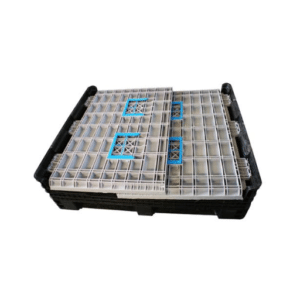
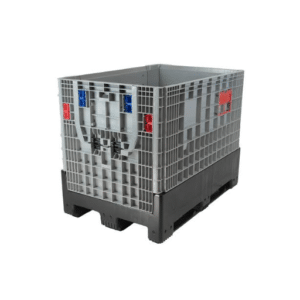
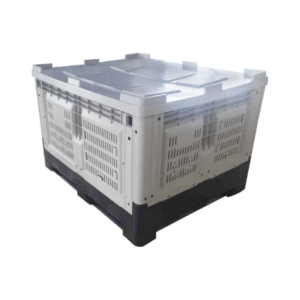
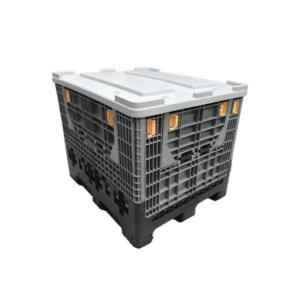
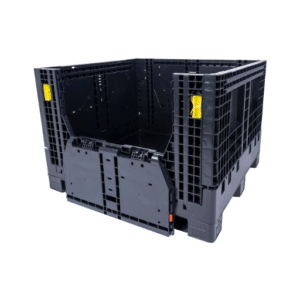
In every sector, the efficiency of operations is also determined by how well assets are managed. In today’s modern world, advancements in tracking techniques have transformed the way operations are run. It is in this regard that the utilization of RFID technology, especially for plastic pallets, has become very popular. Many supply chains use plastic pallets, reusable, strong pallets. However, poor handling of these pallets could result in loss of revenue, suboptimal performance in operations, and factors that impede productivity. This blog will focus on the power of RFID pallets in businesses with regard to the monitoring of various movements of plastic pallets for inventory purposes and the benefits of a smart system that can be accessed for real-time updates. If you want to reduce asset wastage, enhance the level of automation, or get ahead of the competition, this piece will demonstrate the need for RFID-based tracking technologies as a means of effective asset management in a rapidly transforming supply chain.
Overview of RFID Pallet Tracking
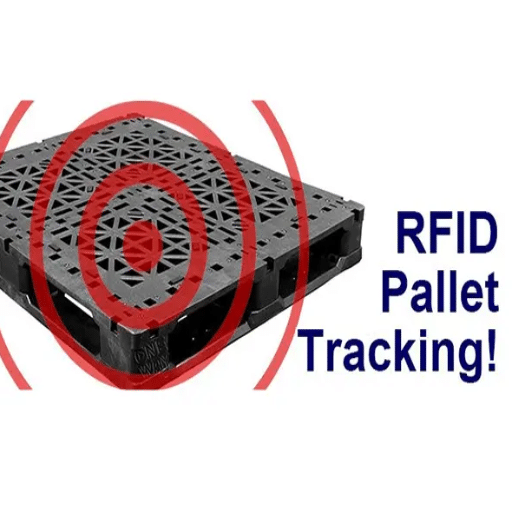
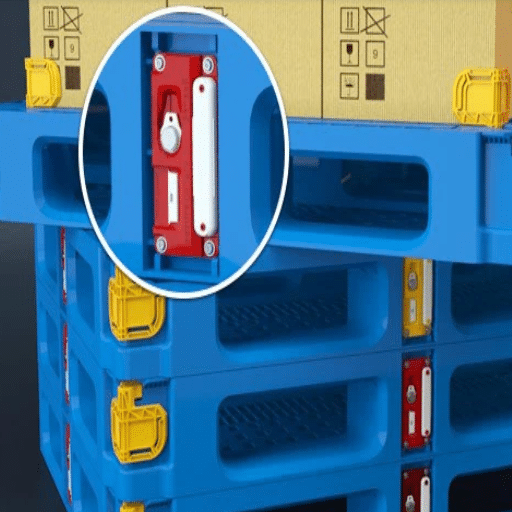
The technology behind RFID is used in tracking processes including plastic pallet management systems since RFID pallets are embedded with an RFID tag which is a tiny chip carrying a globally unique identifier information that can be read at multiple points along the supply chain from the RFID readers installed at various busts to avoid labor cost in checking the supply chain and to maintain accurate records of what is standing where. The approach explains the benefits of accurate order fills without the hazard of human factors and also allows assets to be controlled as they move. Thus, the use of RFID pallet tracking is critical to logistics since it ensures the coordination of operational practices both externally and internally for efficient activities.
Defining RFID and Its Impact on Supply Chains
Radio Frequency Identification – better known as RFID – happens to be quite the technology, which helps in the identification and tracking of objects with the help of tags, activated by electromagnetic fields. The tags are capable enough to collect and send information to a reading device that will communicate with them from wherever they are, and in that way, provide tracking without the need of having to see them, all thanks to RFID technology.
The Three Core Components of RFID
🏷️ The Tag
A microchip with an antenna containing an identification code or data.
📡 The Reader
Scans and reads the tag, sending data to the back-end system.
🗄️ The Database
A central information repository where collected data is processed and stored.
Tech has transformed business in radical ways not anticipated in previous centuries, in ways that have facilitated, inter alia, the supply chain operations. Ways of the Wheel always aided human labor, but looking back now, it was actually the wheel that had helped increase efficiency and speed in the clearing of freight at a much faster rate and with more accuracy, thanks to the management practices in place then. Supply chains have evolved to support the flow of goods from production to consumption, and rfid pallets, too, have been advocated for. From an operational point of view, such would be possible since RFID provides a system allowing for real-time material accounting practice using existing rfid based material accounting procedures. The ominous use of new techniques in supply chain management will lead to the rise of RFID-based supply chains with modified business models.
Benefits of Implementing RFID Technology
The introduction of RFID technology in different sectors is primarily motivated by the need to improve productivity, precision, and management of activities.
- 1
Live Inventory Monitoring
RFID allows live monitoring of inventories, which means there is less need for physical counts, and the possibility of stock-outs is eliminated. Such a feature helps to lower any instances of stockout, getting more stock than necessary, or any other inventory issues. - 2
Accelerated Supply Chain Speeds
RFID technologies enhance the supply chain speeds due to the automated gateways, which ensure that assets are transferred without any hitches and minimize the variables related to humans. - 3
Enhanced Security
The technology boosts security by enhancing how assets are accessed, how pilferage is controlled, and how goods are moved along the chain of delivery. - 4
Long-Term Cost Reduction
RFID decreases the costs related to operating the business in the long run by enhancing the processes and reducing the waste, as well as enabling enhanced analytics by providing comprehensive data on asset utilization and movement.
Current Trends in Supply Chain Management
The landscape of supply chain management is currently experiencing rapid changes as a result of technological developments and evolving market dynamics.
🤖 AI & Machine Learning
Deployed to enhance demand prediction, inventory management, as well as decision making processes.
⚙️ Automation & Robotics
Applied to minimize tedious warehousing and distribution activities while reducing possible operational mistakes.
🔗 Blockchain Technology
Offers increased transparency, accountability, and immutability of data across the supply chain.
🌱 Sustainability
Companies strive to enhance logistics and minimize the harm to the environment, such as waste generation and material acquisition.
🛒 Omnichannel Supply Chains
Driven by the fast expansion of physical and digital retail distribution channels, requiring seamless integration.
As these changes suggest, the management of vibrant and effective supply chains demands a heavy investment in innovation and sustainable practices.
The Value Proposition of RFID Plastic Pallets
These rfid pallets boast durability, efficiency, and technology aspects, which have become advantageous to modern-day activities, particularly supply chains. The plastic versions, unlike the conventional ones that have rfid, are different in that they have chips that are implanted within them that enable easy monitoring of goods on the move. They are quite strong and not easily broken down; they do not even get stained and are even lighter in weight than the wood ones, and thus can be transported with low costs, if any maintenance is required at all.
Business firms’ adoption of RFID improves inventory control in the supply chain, consequently addressing errors by contributing towards accurate inventory counts and the detection of supply chain impediments. Additionally, RFID data offers a means of tracking products and monitoring associated environmental conditions, which promotes adherence to sector standards and increases the visibility of the supply chain. RFID pallets in plastics are also efficient as they replace wooden pallets, which are not eco-friendly and which only serve a short-term purpose, while these can be recycled and significantly have a longer lifespan than wooden pallets. This makes them applicable in sectors that promote green policies and high performance.
Core Problems Solved by RFID Technology
Enhancing efficacy, precision, and clarity are some of the critical issues that deployment of RFID technology addresses in nearly all disciplines.
- 📦 Inventory Management
Real-time tracking and ensuring all the assets on the organisation’s inventory — for example, by doing away with counting, reducing existing condemning quantities against actuals or levels, and cutting operational costs. - 🔒 Loss and Theft Prevention
Every item that is valuable is found within the supply system, because the system allows every asset and commodity to be monitored perfectly. - ⚡ Process Automation
Instead of having human intervention in data inputting, RFID goes a step further and provides data collection processes that directly cut down on employee expenses and limit tendencies to human errors. - ✅ Compliance Management
The health industry, food industry, among others, very much require compliance, and rfid pallets improve such compliance management systems through the introduction of tracking accounts of merchandise — where it came from, how it was handled, etc.
Benefits of RFID Pallet Tracking
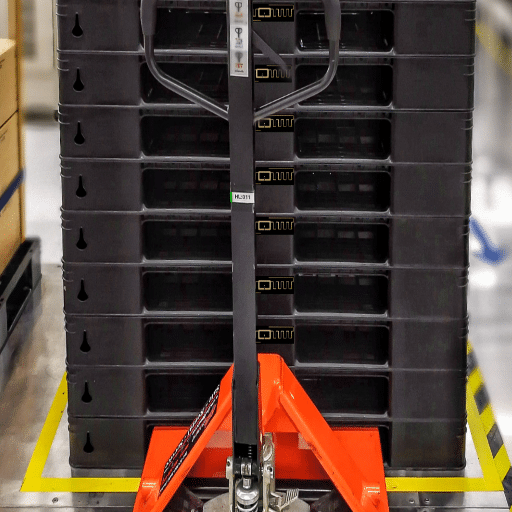
RFID technology, when used in the process of monitoring pallets, enables certain obligatory advantages such as visibility of the inventories, speed of transactions, or development of correct operations at a much faster pace and at all times. When there is a need to check everything in order to find a pallet in a warehouse or elsewhere, a real-time tracking mechanism comes into play and shortens the waiting period, the loss being avoided. The collection of data is automated, which means that there are no more unnecessary actions of writing records, which in fact are accurate and save a lot of wages. RFID pallets also help in decision-making because of highly accurate information on stock levels and movements of the organization at all times, helping the organization manage inventories as well as operate the supply chain better, instead of ‘managing’ it. As a whole, these factors contribute towards efficiency, which ultimately reduces costs.
Improved Supply Chain Efficiency
In order to optimize the effectiveness of supply chains, tools and approaches need to be employed for better visual display, a higher level of accuracy, and increased process automation. Rfid pallets, for instance, allow goods to be tracked at every instant with detailed pictures of stock levels and in-between movement stages. With the help of predictively guided optimization, operations can be maintained with potential disrupters minimized or eliminated, and lead times reduced. Utilizing the cloud supply chain system also allows systems integration and collaboration through data consolidation and communication. A rampant catalogues of worst practices in the adoption, maintenance, and use of inventory exhaustive techniques, as well as demand estimation methods without excess, and relegated production activities to market levels. Such improvements make the supply chain more adaptive, more efficient, and more robust.
Enhanced Accuracy with RFID Tags
The use of RFID tags has been instrumental in advancing efficient supply chains. It is a technology that uses wave frequencies to track inventory in real-time, thereby eliminating errors due to manual inputting and misplacement of goods, among others. A tag with this technology has a mechanism to link any physical object with a digital infrastructure, leading to enhanced supply chain management with free data input. The primary advantage of an RFID tag over a barcode is that it can be read without line of sight, hence enhancing the workflow process by eliminating redundancy and wasted time.
95%+
Inventory accuracy supported by RFID technology — optimizing stock and significantly reducing risk of lost inventory.
RFID technology uptake results in improved demand-driven production and its maintenance, thanks to additional information available instantly. The system is helpful in cases of theft and tracking of assets since location data is also readily available. If combined with other top-notch analytic systems, the use of RFID lifts the whole spectrum of operations and enhances effectiveness and cost-saving while streamlining the supply chain.
Cost Savings and ROI Analysis
The deployment of Radio Frequency Identification (RFID) Technology results in measurable savings in various operational aspects. RFID is used in this case because it eases inventory management by reducing the manual item count of the items and also tracking, and the work costs are greatly reduced. It additionally aids in inducing rfid mismanagement of inventory, leading to direct costs and misuse damages. The products from within the shelves, back in which rfid pallets are employed, shrinkage is minimized, and credits are increasing.
⏱️ Expected ROI Timeline
For the most part, companies that set up RFID technologies or processes can look forward to recouping the costs within a timeframe of 12 to 18 months; however, this is also contingent on the scale and scope of implementation.
- Lower levels of stockouts and increased inventories
- Faster distress replenishment, enhancing clients’ loyalty
- Maintenance and infrastructure expenses expanded over the long term via cloud analytics
- Enhanced resilience versus strong competitors in dynamic markets
Applications of RFID Technology in Pallet Management

Pallets with rfid technology make it easier to manage inventory as they can be tracked and viewed from any point of the supply chain. This means that it is possible to identify and find the pallets without any physical intervention, decreasing the amount of work and the possibility of errors. Systems enhanced with RFID increase effectiveness in warehouse activities as they optimize processes of wall loading and unloading as well as inventory reconciliation, thus preventing shipment checking errors and short turnover periods. Moreover, the information contained in the RFID allows employing more sophisticated data analysis tools to better plan, for instance, the maintenance of assets or the forecasting of demand. In addition, this technology is well-equipped with integration capabilities compatible with any existing supply chain management practices, aiding in higher levels of efficiency and effectiveness.
Real-Time Tracking of Plastic Pallets
Those radio frequency identification-enabled plastic platforms, also known as rfid pallets, are capable of sending information, including location, activity, and status of the subject, back to the central systems in the cloud, making it possible to track such assets in real-time. Such use minimizes the risk of losses or pilferage and improves accountability and efficiency in distribution. The terms of reference in this memorandum include the analysis or graphics due to the excessive data generated for applications in route optimization and in the reduction of the lead time for the same. Furthermore, the internet of things has enabled the monitoring of highly perishable commodities sensitive to temperature and humidity, ensuring that any other regulatory measures are adhered to and the integrity of the product is maintained. In general, for better supply chain control and quality, the technology facilitates this function.
Integration with IoT for Enhanced Data Insights
It cannot be overemphasized how impactful the use of the Internet of Things (IoT) can be in supply chain management. With IoT’s real-time data analytics capabilities, IoT helps improve supply chain performance. The numerous IoT wireless technologies, including GPS and infrared, in the wireless technologies track, trace, and monitor the physical location of the controlled objects. Warehouses with hygienically sensitive product tracking can also be done with these devices, as temperature, moisture, and vibration are installed within the transport vehicle to help measure and monitor those factors in the course of transit. In addition, the IoT induces predictive modeling techniques and machine learning applications to generate maintenance, risk, and delay forecasts. Put simply, IoT creates a virtuous cycle of generating and exploiting feedback to obtain fast decision-making results, avoiding possible disruptions and maximizing potential performance. IoT within the supply chains should not be a nice-to-have but rather a ‘should’ in the era of fierce competition and customer expectations.
Sustainability Benefits of RFID Pallets
The utilization of RFID pallets presents a range of sustainability strategies, such as minimizing waste, resource allocation, and increasing the visibility of the whole chain. The ability to monitor the movements of goods and other commodities with great accuracy helps prevent excess inventory and production of goods that are not needed, both of which contribute to energy saving and wastage of materials. The RFID technology contributes to the proper functioning of the pallets because it reduces losses of pallets and allows for optimal operation, helping to restore every pallet many times. It also enables capturing environmental parameters like temperature and moisture, which can be needed for empowerment and preservation of food products by meeting the set timelines for sustainability. In sum, these benefits help, in turn, to reduce the impact of the supply chain on the environment, an argument that makes RFID pallets indispensable for sustainable logistics.
Comparison of RFID Pallets and Traditional Methods

Comparison study of Rfid pallets and conventional approaches throws up a few obvious differences that define the appreciation in technology and efficiency of operation. Conventionally, there are still a lot of paper-based tracking systems that try to avoid errors in the system, but the ones that employ such systems do not enjoy the advantages of real-time updates and spend a lot of hours keeping the system error-free. These glitches are sufficient to cause errors in stock levels, make the control of inventories sluggish, and push the costs of operation up.
On the other hand, the rfid pallets systems provide a real-time way of tracking the pallets, use computerized information acquisition, and are added into the supply chain management system without any disruption. The use of this technology minimizes errors, helps in using the resources better, and speeds up decisions. Furthermore, rfid system enables tracking of environmental conditions, which is very important for goods with short shelf life and is hardly done via the old systems.
Although the initial investment for the conventional means may be cheaper, it would be outweighed by the enhanced effectiveness, fewer labor related costs, and the environmental impact of using rfid pallets. The contrast illustrated here outlines a shift in perspective on the use of the supply chain with technology.
| Feature | RFID Pallets | Traditional Methods |
|---|---|---|
| Tracking | ✅ Real-time | ❌ Manual / Delayed |
| Data Collection | ✅ Automated | ❌ Manual / Error-prone |
| Environmental Monitoring | ✅ Supported | ❌ Not available |
| Initial Investment | ⚠️ Higher upfront cost | ✅ Lower upfront cost |
| Long-Term ROI | ✅ Superior | ❌ Higher labor & error costs |
| Inventory Accuracy | ✅ 95%+ | ❌ Below average |
| Sustainability | ✅ Eco-friendly, recyclable | ❌ Often non-recyclable |
RFID vs. Barcode: Key Differences
Barcoding and RFID (Radio Frequency Identification) are the two main inventory management technologies, and they significantly differ in their principles and applications.
All of these differences provide respective benefits of rfid, which may prove to be critical in fast, accurate, and large-scale inventory or asset management in relevant industries. Though barcodes are considered to be still an affordable and functional solution for tasks supporting the vast simplicity of operations.
Advantages of RFID in Asset Management
RFID possesses a distinct edge in participation accessibility. This is achieved through real-time monitoring in inventory, facilitating remote-controlled processes, and boosting accuracy to advantage. Through the application of RFID, members access automated stock shots as data is considered up to date as it is, rather than as with bar codes, optical elements, and many more improvements. It is also worth noting that the memories contained in the tag are high, and since it is built to withstand any conditions, it is highly reliable. This service helps manage activities better in time, offers understanding accuracy to the addressed area, and widens data based operations over decision-making.
Case Studies on Successful Implementations
Both of the examples below illustrate why rfid pallets can be leveraged as a tool to improve efficiency within activities, accuracy of performance in conducting activities, and satisfaction of clients in a variety of industries.
Key Takeaway
RFID Pallets: An Indispensable Tool for the Modern Supply Chain
Whether it is improving stock accuracy, reducing theft, automating compliance, or delivering sustainability gains, RFID pallet tracking represents a decisive competitive advantage. The examples of Walmart, Delta Airlines, and Macy’s demonstrate that the technology pays for itself — and then some — across industries of every kind. As supply chains continue to evolve, businesses that invest in RFID today will be best positioned to lead tomorrow.
Reference Sources
RFID-Integrated Plastic Pallets in the Grocery Industry: Contribution to Supply Chain Efficiency
A Scenario Analysis for Evaluating RFID Investments in Pallet Management
Tracking Air Force Pallets Using RFID Technology: A Concept Study
Frequently Asked Questions (FAQs)
How can RFID tracking of pallets enhance intelligent inventory management in real time?
RFID uses passive radio frequency to read tags instantaneously when pallets pass through RFID-enabled passages at the loading points or some other warehousing bottleneck areas. The need to scan and trace every single pallet manually is eliminated by the system, and it still has many other advantages, including the accuracy of stock, the history of goods, and the rapid movement of pallets over a series of transportation stages. Using RFID application data on the pallets is aggregated and displayed on dashboards to monitor pallet movement in real time and handle disruptions quickly.
Is it possible to substitute the pallet manual scanning ways with the RFID optimized tracking solutions?
Yes. In RFID-enabled pallet systems, one need not resort to scanning because there is no scanning to be done in line of sight, unlike bar codes, which are distance scanned and require the cartons to be turned around. Elimination of additional busywork carried out in pulling out every pallet, associated tasks, and scanning them occurs due to having RFID-enabled tags on the pallets, as well as the use of applied software applications for the consumption of the information of the tags in the process of storage, sorting, carrying millions of pallets in manufacturing and transport logistics.
Question: Where is biometrics employed in terms of the utilization of rfid pallets in warehousing operations?
RFID pallet tracking is used for various purposes in warehouses, such as automatic receipt of goods at docking stations, inventory cycle count, tracking pallets, and verifying shipments. The use of RFID enables seamless monitoring of pallets in motion and prevents losses due to missing or misplaced pallets as the information passes through RFID streams. The implementation of this technology reduces processing time, enables higher inventory precision, and also gives good returns in warehousing management and logistic practices due to its availability over an extended time period.
When RFID pallets are in use, how is it possible to enhance the traceability of assets along the supply chain if tracking pallets is done?
When a receiver is commissioned with rfid pallets, the tags are attached. At every stage of the supply chain, an automated identification device comprises tags that have antennas for the exchange of radio signals with RFID readers. Pallets covered with RFID tags are tracked to provide continuity in creating records and preserving an audit trail of the movements of the pallets through the process of manufacture and within the supply chain. An RFID system provides many benefits over the traditional barcode system since it allows for moving trays or stacks of goods through a gate or RFID reader without physically pausing the operations to affect reading.
What structural components constitute the pallet tracking systems with rfid tagging?
Typically, the pallet tracking system that uses RFID tags should include mounted RFID tags should be mounted onto the pallets, fixed readers and portals at the necks of bottles, hand-held readers for exceptions, and RFID software that collects, filters, and displays information about the pallets. The warehouse management systems are integrated with the RFID Software to ensure that the tracking is reliable, allows for real-time awareness, and simplifies the work in the warehouse to ensure that pallets can be moved, all the stocks are accurate, and the shipments are in the best state in the logistics and supply chain.
In what way does the use of the rfid pallets help in facilitating the movement of the pallets through loading docks as well as distribution centers?
By implementing RFID, it is possible for the flow to be processed and tracked without stopping every time the pallet reaches the dock, as the grade can automatically be read, speeding up throughput and reducing points of intervention. RFID gateways and readers that are fixed create the ability to read pallet details within milliseconds, which makes retrieval and excretion at warehouses fast and reduces congestion. Minimizing such manual procedures to keep pace with the speed of warehouse activities, which can improve operational processes, to the extent that avoiding such loss due to either pallet or transport misplacement becomes common.
What objectives and advantages, as well as the reasoning behind the recommendation, would you say come into play when it comes to rfid pallets tracking?
The application of the RFID pallet tracking system is beneficial to an organization in terms of warehouse operations and logistics as it translates to better inventory accuracy, less labor due to manual scanning, fewer cases of lost pallets, and, most importantly, faster transaction process. The longer-term strategies encompass enhanced supply chain traceability, improved service delivery, minimized shrinkage, and the development of information that facilitates the constant improvement of the activities of the warehouse and the supply chain. All these advancements in the technology of RFID are reasons why it is an advantageous option over conventional bar coding systems for companies that handle large quantities of pallets.