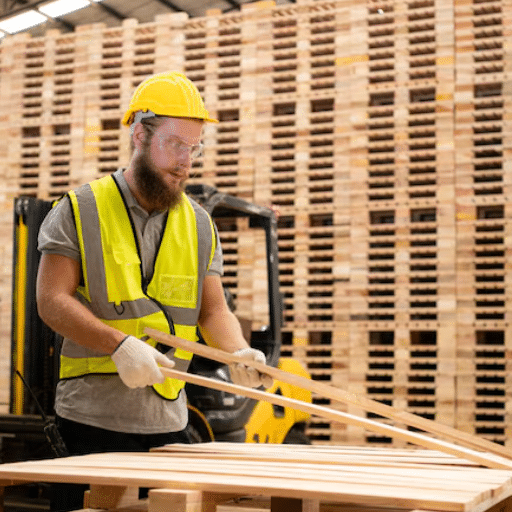

Proper pallet handling is an essential requirement which provides both workplace safety and operational efficiency benefits to industries that heavily depend on forklifts and material handling equipment. Every year, improper handling and overlooked safety protocols lead to costly damages, workplace injuries, and downtime that could otherwise be avoided. Understanding and applying best practices in pallet handling not only protects employee safety but also enhances productivity and decreases dangerous situations. The article will investigate safe pallet handling principles through forklift operating techniques and load management methods and essential safety procedures. These insights will assist you in creating a safe and productive material handling space whether you are an experienced expert or a beginner in your profession.
Pallet Handling Safety Overview
Importance of Pallet Safety
Pallet safety helps prevent employee injuries, protects stored materials and maintains efficient business operations. Improper pallet handling procedures lead to multiple dangers which include musculoskeletal injuries and forklift accidents and inventory destruction. The implementation of safety protocols through proper lifting methods and equipment maintenance checks and organized storage space handling leads to improved business safety and work productivity. The implementation of pallet safety measures enables businesses to meet regulatory requirements while creating a workplace atmosphere which promotes responsibility and workplace welfare.
Common Hazards in Pallet Handling
Pallet handling operations face their most common dangers from slips and trips and falls which occur when workers encounter unstable or broken pallets and from injuries which happen when workers lift objects incorrectly or exceed their safe lifting limits. Forklift-related accidents are also a significant concern, often stemming from insufficient operator training or incorrect loading practices. Workers face serious dangers from collapsed pallet stacks which create falling object hazards. The solution to these dangers depends on conducting inspections to detect defects and enforcing weight limits and providing staff training and supplying ergonomic equipment for physical workload reduction.
⚠️ Most Common Pallet Handling Hazards
- Slips, trips, and falls from unstable or broken pallets
- Musculoskeletal injuries from incorrect lifting techniques
- Forklift-related accidents due to insufficient training
- Collapsed pallet stacks creating falling object hazards
- Injuries from exceeding safe lifting limits
Key to Preventing Injuries
Workplace injury prevention requires organizations to implement safety protocols while training employees and maintaining their equipment. The organization needs to conduct safety audits at regular intervals so that hazards can be discovered and employees from all departments should receive complete training on machinery operation and material handling and the organization needs to require employees to wear personal protective equipment (PPE). The implementation of automated systems alongside ergonomic equipment leads to a decrease in physical demands on users while it improves security throughout the work environment. The establishment of an effective reporting mechanism for potential hazards enables organizations to respond quickly to new security risks which arise.
🛡️ Injury Prevention Checklist
| Prevention Measure | Implementation |
|---|---|
| Regular Safety Audits | Conduct at regular intervals to discover hazards |
| Employee Training | Complete training on machinery operation and material handling |
| PPE Requirements | Require all employees to wear personal protective equipment |
| Automated Systems | Decrease physical demands and improve security |
| Hazard Reporting | Establish effective mechanisms for quick response |
Safe Pallet Stacking Techniques
Proper Stacking Methods
Proper stacking methods require users to organize pallets into a safe and stable arrangement which prevents any risk of tipping or collapsing that would result in injuries or damages. Stack pallets on a flat level surface while placing heavier objects at the bottom to create a stable foundation. The workplace safety guidelines require all materials to be stacked at a uniform height which should not exceed the 4 to 6 feet maximum limit. The use of banding and shrink wrapping or corner protector attachment for pallet securing will create better stability for the load. The practice of maintaining clear aisles between stacks and proper spacing between stacks provides both safe movement paths and safe access areas.
📦 Essential Stacking Guidelines
- Stack pallets on a flat, level surface
- Place heavier objects at the bottom for stability
- Maintain uniform height (4 to 6 feet maximum)
- Use banding, shrink wrapping, or corner protectors
- Keep clear aisles between stacks
- Ensure proper spacing for safe access
Tips for Secure Stacking
Before starting the stacking process, you should inspect all materials to find any signs of damage or instability. Use pallets or similar platforms to keep items off the ground and ensure a flat, solid base for stacking. The process of creating a uniform structure requires item alignment, while interlocking patterns should be used to increase stability. The weight and size of items should determine stack height limits, which require compliance with safe stacking guidelines that prohibit reaching a height-to-base ratio of greater than 4 to 1. The use of stretch wrapping and straps, along with adhesive materials, creates restraints which stop objects from shifting during handling. The safety checks should occur at regular intervals to maintain stack integrity throughout the entire period.
✅ Best Practices for Secure Stacking
- Pre-Stack Inspection: Check all materials for damage or instability
- Proper Base: Use pallets to keep items off the ground
- Uniform Structure: Align items and use interlocking patterns
- Height-to-Base Ratio: Never exceed 4:1 ratio
- Load Restraints: Apply stretch wrapping, straps, and adhesive materials
- Regular Checks: Conduct safety inspections throughout the period
Using Two People for Heavy Loads
The process of moving heavy loads with two people requires both individuals to work together through proper technique operations to achieve their goals. Both individuals should lift simultaneously, keeping their backs straight and using their legs for power to minimize strain on the spine. The process requires constant communication to maintain synchronized movements, which becomes especially important during tight space navigation and uneven terrain traversal. The load assessment process needs to take place before lifting because it helps to determine whether the weight is suitable for both individuals and whether the load distribution is proper. The use of appropriate lifting aids will help reduce accident risks when you need them for your work tasks.
👥 Two-Person Lift Protocol
| Step | Action Required |
|---|---|
| 1. Assessment | Evaluate weight suitability and load distribution |
| 2. Communication | Maintain constant verbal coordination |
| 3. Positioning | Keep backs straight, prepare legs for lifting |
| 4. Simultaneous Lift | Lift together using leg power, not back |
| 5. Movement | Navigate synchronized, especially in tight spaces |
Forklift Safety and Best Practices
Operating Forklifts Safely with Pallets
The process of operating forklifts with pallets requires operators to first check that their loads remain stable and secure before they begin to lift or move their loads. The pallet needs assessment to check for structural damage which includes both cracks and other defects that might jeopardize the weight capacity of the pallet. The forklift operator must position the forklift forks straight under the pallet while they set the correct width distance for patch to stop it from tipping over. The forklift’s maximum load capacity needs to be followed because exceeding this limit will cause equipment malfunctions and hazardous situations. The driver needs to operate their vehicle at safe speeds while keeping the load near the ground because this practice improves stability during turns and uphill driving. The organization needs to establish proper training programs for operators which include the implementation of safety protocols to achieve better results in risk reduction.
🚜 Forklift Operation Safety Checklist
- ✓ Check load stability and security before lifting
- ✓ Inspect pallets for cracks and structural damage
- ✓ Position forks straight under the pallet
- ✓ Set correct fork width to prevent tipping
- ✓ Never exceed maximum load capacity
- ✓ Operate at safe speeds
- ✓ Keep loads near the ground for stability
- ✓ Complete proper operator training programs
Preventing Accidents During Lifts
The combination of modern lifting technologies with proper operational methods provides organizations with an effective method to decrease accident probability. All lifting equipment needs to undergo regular inspection and maintenance procedures which help ensure the equipment meets required safety standards. Workers must wear the correct personal protective equipment (PPE) while they check that all loads have secure fastenings before they start their lifting tasks. The operators need to follow the weight capacity limits and lifting methods according to manufacturer instructions while using load-monitoring tools to check weight distribution in real time. The creation of a marked lifting area together with equipment-specific training will enhance workplace safety by decreasing lift-related dangers.
⚡ Accident Prevention Strategies
| Strategy | Implementation Details |
|---|---|
| Equipment Inspection | Regular maintenance to meet safety standards |
| PPE Compliance | Wear correct personal protective equipment |
| Load Security | Verify secure fastenings before lifting |
| Weight Monitoring | Use real-time load-monitoring tools |
| Designated Areas | Create marked lifting zones |
| Specialized Training | Equipment-specific operator instruction |
Lowering Loads Safely
The process of lowering loads needs control which requires operators to move loads at a slow and steady speed for safe descent. Operators need to check that the area under the load remains empty of people and things while they move toward their destination through a clear route. The use of automated descent control systems together with load-stabilizing tools will increase both safety and precision during their operation. The equipment safety guidelines demand operators to keep their load visible at all times while they use proper signals to inform workers who work nearby about their operations during the unloading process.
🔽 Safe Load Lowering Protocol
- Move loads at slow and steady speed
- Verify area beneath load is clear of people and objects
- Follow a clear route to destination
- Utilize automated descent control systems
- Employ load-stabilizing tools
- Maintain load visibility at all times
- Use proper signals to alert nearby workers
Hazards to Avoid in Pallet Handling
Identifying Common Hazards
The handling of pallets presents multiple hazards because improper stacking creates unstable loads which risk collapsing and because damaged pallets endanger the structural integrity of the load. Manual handling without proper ergonomic techniques can result in musculoskeletal injuries while poor visibility or obstructed views increase the chance of collisions or accidents. The failure to inspect pallets for defects and the improper use of pallets which exceeds their maximum load capacity both increase operational hazards. The reduction of these hazards requires organizations to implement safety protocols through their ongoing safety inspections and personal protective equipment (PPE) usage.
🚨 Critical Hazard Identification Guide
| Hazard Type | Description | Risk Level |
|---|---|---|
| Improper Stacking | Creates unstable loads at risk of collapse | HIGH |
| Damaged Pallets | Endangers structural integrity of load | HIGH |
| Poor Ergonomics | Results in musculoskeletal injuries | MEDIUM |
| Obstructed Visibility | Increases collision and accident risk | MEDIUM |
| Exceeding Capacity | Overloading beyond maximum limits | HIGH |
Strategies to Avoid Injuries
To effectively avoid injuries workers should prioritize ergonomically sound practices which include maintaining proper posture and ensuring workstation adjustments align with their body mechanics. Workers need to receive ongoing training about safe handling techniques together with knowledge about load limits when they handle heavy materials. The equipment and tools require routine inspections to discover any defects or hazards that need to be addressed before they can be used. The use of personal protective equipment (PPE) which includes gloves and helmets and safety boots constitutes an essential measure that protects workers from risks present in their work environment. The implementation of clear communication protocols together with the development of a safety-oriented culture will improve the effectiveness of injury prevention efforts that protect all areas of the organization.
💪 Comprehensive Injury Prevention Strategies
- Ergonomic Practices: Maintain proper posture and align workstations with body mechanics
- Ongoing Training: Continuous education on safe handling and load limits
- Routine Inspections: Regular equipment and tool checks for defects
- PPE Compliance: Gloves, helmets, and safety boots are mandatory
- Clear Communication: Establish protocols for safety information sharing
- Safety Culture: Develop organization-wide commitment to prevention
Understanding Logistics Challenges
Logistics challenges arise from a combination of factors, including fluctuating demand, supply chain disruptions, and the increasing complexity of global trade networks. Key issues include managing inventory efficiently while minimizing transportation delays and addressing rising fuel and shipping costs. The introduction of real-time tracking systems and automation technologies brings organizations both operational benefits and implementation hurdles. The solution of these challenges requires companies to establish operational flexibility while they invest in advanced technological solutions and develop thorough risk management strategies for their supply chain operations.
📊 Key Logistics Challenges & Solutions
| Challenge | Solution Approach |
|---|---|
| Fluctuating Demand | Establish operational flexibility |
| Supply Chain Disruptions | Develop thorough risk management strategies |
| Inventory Management | Implement real-time tracking systems |
| Transportation Delays | Invest in automation technologies |
| Rising Costs | Optimize routes and fuel efficiency |
Guidelines for Unstacking and Handling Pallets
Safe Methods for Unstacking Pallets
The correct procedure for pallet unstacking needs to be followed because it protects workers from harm while keeping operations running smoothly. Start by checking that no items block the area around the pallets and then assess whether the pallet stack maintains its equilibrium. Workers need to wear protective equipment which includes gloves and steel-toed boots to protect themselves against workplace dangers. Workers who need to lift high pallet loads should use forklifts or pallet jacks which require trained operators to operate these devices. Workers who need to move pallets should avoid using pulling or pushing methods which might make the stack unstable they should lift pallets while using correct lifting techniques which require them to bend their knees instead of their backs. The guidelines establish a framework which enables organizations to enhance their accident prevention efforts while maintaining secure material handling operations.
📋 Step-by-Step Unstacking Procedure
- Area Clearance: Ensure no items block the surrounding area
- Stability Assessment: Check if pallet stack maintains equilibrium
- PPE Verification: Wear gloves and steel-toed boots
- Equipment Selection: Use forklifts or pallet jacks for high loads
- Operator Qualification: Confirm trained operators handle equipment
- Proper Technique: Bend knees, not back; avoid pushing/pulling
- Controlled Movement: Maintain stack stability throughout process
Best Practices for Handling Plastic Pallets
Plastic pallets require handling procedures that maintain their capacity limits to stop structural failure from occurring. Pallets need to undergo regular inspections which check for cracks and warping and any other damage that might impact their structural integrity. The use of forklifts and pallet jacks should be implemented as appropriate lifting equipment because it decreases physical discomfort while preventing pallet dragging across rough surfaces which results in damage. Plastic pallets should be stored in an area that maintains cleanliness and dryness to protect the pallets from extreme temperature conditions and ultraviolet light exposure, which will cause material degradation over time. The implementation of these practices leads to extended plastic pallet durability, which also creates safer conditions for workers in their workplace.
♻️ Plastic Pallet Handling Best Practices
| Practice Area | Guidelines | Benefits |
|---|---|---|
| Capacity Management | Never exceed weight limits | Prevents structural failure |
| Regular Inspection | Check for cracks, warping, damage | Maintains integrity |
| Proper Equipment | Use forklifts and pallet jacks | Reduces physical strain |
| Surface Protection | Avoid dragging across rough surfaces | Prevents damage |
| Storage Conditions | Keep clean, dry, away from UV/extreme temps | Extends durability |
Final Safety Tips for Pallet Handling
Pallets require inspection before handling to check for visible damage including cracks and splinters which create safety hazards. The weight distribution needs to match the pallet capacity limit while staying within the designated load limits for the pallet. Personal protective equipment (PPE) needs to be used by workers who require gloves and steel-toe boots for their protection against workplace injuries. The storage areas and handling spaces need to stay free from objects which might create tripping hazards. The stacking process needs to follow safe height limits to stop tipping and falling from happening. The implementation of these guidelines will help you create a safer work environment because they help you reduce workplace risks.
🎯 Essential Safety Tips Summary
References
-
Important Tips for Pallet Use – Michigan State University Environmental Health & Safety
Read more here -
Safe Use Of Hand Pallet Trucks – Ohio State University Ohioline
Read more here -
Manual Pallet Jacks Safety Sheet – University of Oregon Safety and Risk Services
Read more here
Frequently Asked Questions (FAQ)
✅ Conclusion
Implementing these comprehensive pallet handling safety practices creates a foundation for workplace protection and operational excellence. Organizations that prioritize proper training, equipment maintenance, and adherence to safety protocols will experience fewer accidents, reduced downtime, and improved productivity. Remember that safety is not just a requirement but a commitment to protecting your most valuable asset—your workforce.