Pallet Load Basics
It is absolutely vital to comprehend fundamental pallet load concepts to have safe and efficient practices. A pallet load is the combination of weight or volume of materials that can be put on one pallet without breaking the rules of safety and security. The two main loads that are of concern are the static load, which is the weight a pallet can carry when not moving, and the dynamic load, which is the weight a pallet can carry when moving that including its transportation process. The choice of the right kind of pallet, along with following the weight limits, reduces the chances of product damage and also ensures adherence to the safety standards.
What is a Pallet Load?
A pallet load means the total quantity of goods or materials that can be physically stacked, secured, and moved on a single pallet securely and effectively. It includes the considerations of weight, volume, and arrangement of items, as well as the stability of the pallet itself. Mostly, the aim is to maximize the use of space and the efficiency of logistics while adhering to safety rules.
The weight limit of a pallet depends on factors like the type of material and the design of the pallet. For instance, wooden pallets with a standard size bear static loads of 2,800 to 4,600 pounds at the most, while plastic pallets may provide the same strength, albeit having a lighter weight. Hence, enabling carrying. The dynamic load capacities usually vary between 1,500 and 3,000 pounds, depending on the type of pallet.
Quality stacking and securing methods are very important when creating a pallet load. Typically, the goods are stacked to a height of 48 to 60 inches to maintain stability and avoid falling over when being transported. Besides, stretch wrap, strapping, or other securing methods are applied to prevent the load from moving or falling. If weight distribution is maintained evenly, it will greatly lessen the stress on the pallet and forklifts; hence, it will be safer and there will be no damage to the goods being transported.
Furthermore, the consideration of pallet load efficiency, truck or container space, is one of the factors involved. An ordinary GMA (Grocery Manufacturers Association) pallet is 48 inches by 40 inches and fits perfectly within the dimensions of trucks that are most frequently used. For instance, in a standard 53-foot trailer, there can be up to 26 standard pallets accommodated in a single layer; thus, the cargo space is maximized. The proper management of pallet loads leads to the maximization of operational efficiency, reduction in transportation costs, and support in supply chain optimization.
Types of Pallet Loads
Pallet Loads, in general, are mainly classified into three different types based on their stacking and stability needs:
Block Pallets
The interlocking stacking of these loads is done in a secure way, and it is usually accompanied by stretch wrapping or straps to bind boxes extremely tightly. Block stacking is the method that uses the maximum vertical space without adding any extra equipment, and it is suitable for heavy and non-flexible items.
Pinwheel Pallets
This specific load type twists together the boxes on each tier in a different direction to create a design. The pinwheel layout not only enhances pallet stability but also minimizes the movement sideways during shipping. It is frequently the case that when the freight consists of different sizes and shapes of boxes or irregularly shaped packages that this method is used.
Column Stacked Pallets
Such loads consist of boxes that are stacked in a way that they are perfectly aligned, and an equal number of layers are placed one on the other. Though this stacking method results in a very compact and tidy arrangement, nevertheless, extra wrapping or banding is often needed to stop the loads from shifting.
The choice of the proper pallet loading type is determined by factors like the characteristics of the goods, the maximum allowable height of the stack, and the conditions of transportation, which in turn, affect both the protection of the product and the efficiency of the logistics.
Importance of Load Ratings
Load ratings are vital for pallet handling and transportation to be safe, stable, and efficient. The ratings define the maximum weight the pallet can bear safely under certain conditions, which can be either static loads, dynamic loads during moving, or racking loads in storage systems. If one goes above the load rating, the pallet’s strength will be reduced, causing it to fall apart, harming the products, or risking people’s safety.
The load ratings are affected by various factors, such as the material of the pallet, which can be wood, plastic, or metal, the design, which can be block or stringer construction, and environmental conditions like humidity and temperature. Following the load ratings not only keeps the risks of operations away but also brings about cost savings through damage minimization and confirmation of compliance with safety standards set for the industry. Training of logistics staff on load ratings and their awareness is crucial for maintaining compliance and operational reliability.
Static vs. Dynamic Load

The main aspect that differentiates between static and dynamic loads is the way the weight is applied and supported. A static load is the weight that is put onto a pallet when it is not moving, for example, when goods are kept in one place, either on the floor or in racks. In contrast, dynamic load is the maximum weight that a pallet can safely carry during movement or transportation, such as during the handling or traveling by forklift. Static loads are usually higher as there are no forces from motion, while dynamic loads are lower due to movement, acceleration, and vibrations that cause additional stress. Having clarity on these definitions is a prerequisite not only for the safety but also for the efficiency of pallet use in any logistics operation.
Defining Static Load
Static Load
Static load means the heaviest weight that a pallet can bear while being immobile, for instance, when it is put on the floor or in a racking system without moving. This consists of the entire weight exerted by the load on the pallet for a long time. The most important factors that impact the static load capacity are the pallet’s material, design, and how the load is spread over the pallet’s surface. An accurate assessment of the static load limits is critical in avoiding structural collapse and guaranteeing safety in the storage area.
Understanding Dynamic Load
Dynamic Load
Dynamic load is the term used to describe the weight that a pallet can bear while it is being moved, for instance, during transportation by a forklift, pallet jack, or conveyor belt. Typically, the dynamic load capacity is lower than the static load because of the extra strains caused by movement, acceleration, and uneven weight distribution during handling. The dynamic load capacity is affected by several factors, such as the pallet’s material composition, structural integrity, design features like reinforcements, and the type of handling equipment used. To avoid accidents like tipping, cracks, or equipment failure, it is very important to properly secure the load and make sure it is distributed evenly during transportation.
Comparing Static and Dynamic Loads
The main difference between static and dynamic loads is that the forces applied interact with the pallet over a different period of time. A static load is when a constant weight is applied to the pallet while it is not moving, for example, when goods are packed in a warehouse or are stacked on racks. Also, static loads are less challenging to calculate and control because, apart from the weight of the load, there are no other forces acting on the pallet. The maximum capacity of a static load is mostly determined by the material and design of the pallet.
In contrast, dynamic loads are those that apply a force to the pallet when the pallet is in motion. Such loads occur during the movement of the pallets, for instance, when they are transported by forklifts, conveyors, or other types of transport systems. Dynamic loading makes the whole thing complicated because of the acceleration, vibrations, sudden stops, and uneven weight distribution. Therefore, it is common for a pallet’s dynamic load capacity to be lower than its static load capacity because the stresses involved can reduce the strength of the structure.
However, it is important to acknowledge that the pallet’s performance under both conditions is affected by proper load distribution, the use of stretch wrap or straps, and compatibility with the handling equipment. Regular inspections and following manufacturer specifications are crucial for maintaining safety and operational efficiency through various load scenarios.
Pallet Design and Load Capacity

The capacity of a pallet load is mainly established by the material type, pallet design and purpose of application. Wooden pallets, for instance, usually have a higher load capacity than plastic or corrugated ones. The structural design is another critical factor—reinforced stringers, wide board spacing, and heavy-duty fasteners greatly boost strength. Moreover, dynamic load capacity is affected by the distribution of weight and the kind of handling equipment used.
Following the manufacturer’s advice on load limits and making sure the conditions of use are correct are very important to avoid malfunctions and guarantee safety. It is recommended that the pallet be designed according to the exact weight and dimensions of the load it is to support for the best results.
Factors Affecting Load Capacity
Material Composition
The material composition of a pallet or platform is a very important factor when it comes to determining the load capacity of the pallet or platform. One could take wooden pallets as an example; they are very strong and flexible, but can also easily give up their strength if they are not kept dry or are worn out. In contrast, plastic pallets not only have great durability but also resistance to moisture and chemicals; however, they can be stiff and hence not able to adapt under uneven loads. Metal pallets offer the greatest strength, but they not only need to be maintained in order to avoid rust, but they are also usually more expensive. Material selection has a direct influence on performance, life span, and safety in different fields of application.
Design Structure and Construction
The geometric design of a pallet is one of the main points that affect the load capacity. Factors like using block or stringer construction, the distance between the boards, and the reinforcement pattern influence the force distribution and the stress resistance. Moreover, the corners or cross braces of the pallets provide better support for the dynamic and static loads compared to thin or poorly spaced boards that may cause the load to become unstable when pressure is applied.
Load Type and Distribution
The load type and its distribution on the pallet surface are equally important factors to take into consideration. Concentrated center loads cause uneven pressure that can lead to the deformation of the pallets, while evenly spread weight enables the pallet to fully utilize its capacity to bear heavy loads.
Environmental and Operational Conditions
Temperature, humidity, and handling frequency are among the environmental and operational factors that have a significant impact on the load-bearing ability of the pallets. Certain materials, like plastics, can be ruined by heat and cold, while wood, on the other hand, can absorb moisture, thus weakening its structure. The performance of pallets constantly deteriorates with the passing of time due to repeated lifting or use in high-impact environments; consequently, regular inspections, maintenance, and compliance with operational requirements are essential.
Calculating Load Capacity for Different Pallet Types
To come to the right conclusion regarding the load capacity of pallets, one has to think about several things, like the kind of material, how the load is distributed, and what the intended application is. Wooden pallets, for instance, generally have a static load capacity of 2,800 to 4,600 pounds, but their dynamic load capacity is usually in the range of 1,500 to 3,000 pounds. Plastic pallets are not heavy, but they can still reach similar capacities depending on the process used to make them and the reinforcements, like HDPE plastic, which is added to make them stronger.
| Pallet Type | Material | Static Load Capacity | Dynamic Load Capacity | Key Features |
|---|---|---|---|---|
| Wooden Pallets | Wood | 2,800 – 4,600 lbs | 1,500 – 3,000 lbs | Strong, flexible, moisture-sensitive |
| Plastic Pallets | HDPE/PP | 2,500 – 5,000 lbs | 1,500 – 3,000 lbs | Lightweight, chemical-resistant, durable |
| Metal Pallets | Steel/Aluminum | 5,000 – 10,000 lbs | 3,000 – 6,000 lbs | Highest strength, rust-prone, expensive |
The way the load is distributed has a great impact—uniformly spread out loads produce less stress on the pallet than the ones that are concentrated, which can cause the pallet’s failure point to be at that spot. A rackable pallet is built to remain strong even when it is only supported at the edges, and calculating the capacity of such pallets usually involves taking a look at beam deflection under pressure.
Besides that, the by-products of environmental and operational factors like temperature and handling should also be taken into account by engineers since these factors can damage pallet materials gradually. The considerations stated above, along with the manufacturer’s specifications and the testing standards recognized, such as ISO 8611, can be applied in the safe and effective use of pallets across various industrial applications.
Plastic Pallet Advantages in Load Management
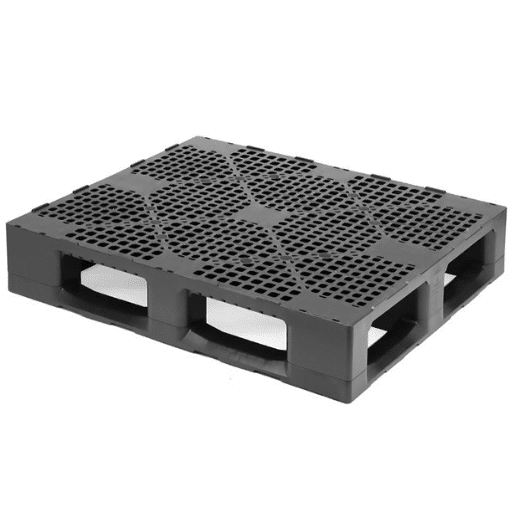
Plastic pallets have a number of advantages over other materials that make them the best option in industrial load management. Durability and resistance to high temperatures, moisture, and chemicals, for instance, are qualities that plastic pallets have, which significantly extend their lifespan when compared to wooden pallets. The uniformity of their design minimizes the chances of cracking or bending, thus maintaining the load performance during the whole period of use.
- Moreover, plastic pallets are lighter, so that the manual handling becomes easier and the cost of transportation gets reduced by the overall shipping weight being reduced.
- Plus, they can be cleaned easily, which makes them perfect for industries that have very strict hygiene requirements, like pharmaceuticals and food.
- Many of the plastic pallets have an accurate dimensional consistency that enhances the compatibility with the automated systems and at the same time ensures that the stacking and storage operations are carried out more safely.
- The environmental advantage of the recyclability of plastic pallets fits well with the eco-friendly initiatives and helps the supply chains to be less wasteful.
By taking these advantages into account, companies can not only increase their operational effectiveness but also make sure that the cost savings are permanent and the reliability of load management systems is improved.
Pallet Design and Warehouse Logistics

Pallet design is a very important factor in the optimization of logistics in warehouses, as it improves utilization of space, making the handling easier, and also cutting off the risk of damage to goods during transit or storage. Good pallets will make the system of automatic devices (such as conveyor belts and forklifts) work together, thus speeding up the flow of materials and lowering the costs of labor. The use of standardized dimensions and strong structures is a must for the stackability and transportability of the goods, which in turn makes a direct contribution to the safety and efficiency of operations. To sum up, effective design of pallets is in line with the logistics strategy and thus leads to increased productivity and reduced disruption of operations.
Importance of Proper Pallet Design
Proper pallet design is critical to ensuring supply chain efficiency, workplace safety, and reduced environmental impact. Key considerations include material selection, weight distribution, and durability. Pallets are commonly constructed using wood, plastic, or metal, with the selection influenced by the type of goods being transported and specific industry requirements. Uniform weight distribution is essential to prevent product damage during stacking and transit, while robust materials ensure prolonged usability under varied load conditions. Furthermore, pallet designs optimized for recyclability and reusability align with sustainability goals, helping reduce waste within logistics operations. Overall, effective pallet design minimizes costs, enhances operational reliability, and supports lean manufacturing practices.
Warehouse Storage Solutions
Warehouse storage solutions are very important for maximizing space usage, making sure the inventory is always accessible, and also staying effective in operations. The most popular systems are selective pallet racking, which gives direct access to every pallet; drive-in or drive-through racking, which is meant for density storage; and automated storage and retrieval systems (AS/RS), which use robots for accurate retrieval and placement. Moreover, mezzanine flooring can practically double vertical storage capacity without the need to expand the building. The right storage option is determined by some factors, like how fast the inventory moves, the product size, and the access frequency. Integrating sophisticated warehouse management systems (WMS) will not only improve the tracking of the inventory but also make the condition fit for the overall supply chain strategies due to the enforced alignment of operations.
Impact of Load Types on Logistics Efficiency
Logistics efficiency is mainly determined by what type of load being carried. The attributes of the load, including size, weight, and fragility, will steeply dictate the choice of transport, methods of handling, and packaging needs. For example, the transportation of ungainly and bulky loads often involves the use of particular equipment, which may include flatbed trucks and cranes, while on the other hand, delicate items might need not only packaging but also careful handling to avoid any damage caused by transit.
Dense and even loads high, such as those found in palletized, are usually transported and stored in a way that space is fully utilized, leading to improved overall efficiency. Mixed or irregularly shaped loads, on the contrary, are a major source of increased costs and time for companies, due to the necessity of treating them differently and requiring additional handling and storage solutions that may not be efficient or effective. Besides, load stability through transit is essential for the safety of the operation and to reduce accident risks.
The logistics performance can be greatly improved by the proper identification and planning of the load type by means of advanced tools like load optimization software. These systems work on the fly, analyzing the different loads and configurations simultaneously, thus maximizing the utilization of containers but also heeding the restrictions imposed by the weights, which results in less fuel consumption and operating costs. Moreover, synchronizing load strategies with supply chain requirements, such as just-in-time (JIT) delivery models, ensures operations are both timely and cost-effective. Manufacturers can better utilize their resources and gain a stronger competitive advantage by customizing their logistics strategies according to the specific load types.
Stacking and Storage Considerations

Correct stacking and storage are the main factors that keep logistics operations safe, efficient, and ensure product integrity. For stacking optimization, check the weight distribution by putting the heaviest items on the ground and the lightest ones at the top. Standardized pallets and containers should be used to encourage uniformity and stability. Moreover, compliance with height and weight limits established by safety standards is necessary to avoid any storage rack collapses or strain. Temperature-controlled storage should be used for sensitive or perishable goods as needed to uphold quality. Regular inspections of stored items and equipment are also a must for safety protocols compliance and operational efficiency.
Best Practices for Stacking Pallets
Proper Weight Distribution to Be Done
The whole weight of the cargo should be spread out equally on the pallets so that the imbalances, which could cause the pallets to tip over or fall, do not take place. The placement of the heavier objects should always be at the lowest level, and the lightest items should be placed at the highest level. Through this method, the center of gravity becomes stable, and the force on the pallet structure is minimized.
Application of Layering and Alignment Techniques
Stack goods in straight and equal layers to support each other. Interlocking stacking methods, wherever possible, can be employed to eliminate movement during transport or storage. It is better not to have overhanging loads in order not to create damage, and also to allow easier handling.
High Restrictions and Safety Limits Should Be Taken Into Consideration
Height restrictions given by the factory’s own rules and the industry’s requirements should be strictly followed. The maximum height should be decided based on the total weight and the stability of the materials, so that the pallets will be easy to handle and safe.
Loads Should Be Secured Properly
Stretch wrap, shrink wrap, or banding can be used to hold items very tightly to the pallet. This not only stops movement during shipping but also gives the whole load extra stability. If there are very fragile or difficultly shaped items, corner boards or edge protectors can be put into place to give extra support.
Pallets and Goods Condition Check
Before the pallets are put into use, check that all of them are in very good condition, i.e., no cracks, splinters, or warping. Check the goods for any possible damage and, at the same time, make sure that the safety and quality standards are followed. Damaged pallets can interfere with the flow of work and may also cause safety hazards.
Use of the Right Equipment
Transporting the loaded pallets, make use of accurate forklifts or pallet jacks. The operators should be trained and certified in the safe use of the equipment, thus reducing the risk of accidents in storage areas or during transportation.
Following these best practices, companies will be able to drastically enhance the efficiency, safety, and reliability of their pallet-stacking processes.
Static vs. Dynamic Stacking Techniques
When it comes to choosing between static and dynamic stacking methods, the knowledge about both methods’ pros and cons and their applicability becomes a major factor in the optimization of storage and handling processes.
Static Stacking
Static Stacking describes the arrangement of pallets stepwise, one on top of another, in a certain place where they will remain untouched until needed again. This method is picture-perfect for the storage of all kinds of products that are not intended to be accessed frequently for a long time. It assures very dense storage and is also the most effective in terms of cost if there is not much space available. Nevertheless, it needs very careful monitoring of the weight and stability of the products in order to avoid any tipping or collapse.
Dynamic Stacking
In contrast, Dynamic Stacking is the method where pallets are continuously moved and rotated so as to be positioned for easy access or provide the best practicable conditions for the inventory turnover. This technique is often found in warehouses applying FIFO (first-in, first-out) or LIFO (last-in, first-out) systems. Dynamic stacking gives an increase in operational flexibility, a reduction in the amount of inventory that becomes stagnant, and a guarantee of good storage space utilization. However, more modern equipment, systems, and labor management are needed to carry out the operation in a safe manner.
The two methods are characterized by specific applications and their inherent difficulties. Static stacking is concerned with safety and density, whereas dynamic stacking is primarily about easy access and responsiveness. Through careful consideration of the operational objectives and storage requirements, firms will be able to select the most appropriate technique or a combination of techniques to enhance warehouse productivity.
Safety Measures in Pallet Stacking
Critical Safety Measures
In the process of deciding the safety measures for pallet stacking, I take into account several important practices to guarantee a safe and effective workspace. To begin with, I make sure that all pallets that are to be used have been checked for any defects, since using damaged pallets may result in causing the whole stack to become unstable. I also make sure to respect the maximum weight limits and load the pallets in such a way as to create balanced stacks that will not be in danger of turning over or collapsing. Employees must receive proper training on stacking methods and equipment usage, and there must be the establishment of maximum stacking heights as a means of maintaining stability, which is also crucial. Moreover, I carry out routine checks on both the racking systems and the storage areas to spot dangers that can put workers at risk and make sure that the company continues to meet the safety standards set for its operation.
Reference Sources
“Behavior of Steel Storage Pallet Racking Connection – A Review”
- Key Findings: This study reviews the behavior of steel pallet racking systems under various load conditions. It highlights how pallet load and beam length influence deflection and connection performance.
“Design of Intelligent Weighing and Picking System Based on Sensing Technology”
- Key Findings: This paper introduces an intelligent system for weighing and picking loads on pallets, utilizing advanced sensing technologies to improve efficiency.
“Seismic Performance of Dissipative Automated Rack Supported Warehouses”
- Key Findings: This research evaluates the seismic performance of automated rack-supported warehouses, focusing on pallet loads and structural types. It identifies key design parameters for improving resilience.
Frequently Asked Questions (FAQs)
How is the load capacity of a pallet determined?
In determining the load capacity, the design of the pallet has to be taken into account, which includes the material, size, and type of construction. For instance, wooden stringer pallets generally have the highest load rating, which depends on the strength of the wood and how the top and bottom decks are arranged. In addition, the dynamic capacity represents the maximum load a pallet can bear when it is being moved, whereas the static load is the maximum weight a pallet can bear when it is not moving.
What different palette types are used in logistics?
There are various kinds of pallets used in logistics, such as wood pallets, plastic pallets, and stringer pallets. Every type has its own load limits and is appropriate for particular handling techniques. For instance, plastic pallets are no different in that they have the advantage of being able to last a very long time and are highly used in the automobile industry, while wood pallets are used in long-term storage areas.
What does pallet design imply in terms of load bearing?
Pallet design is the phrase used to describe the technical features that are responsible for the load-bearing ability of a pallet. This includes the top deck, bottom pallet, and any additional support beams that reinforce the structure. A good design pallet permits the stacking process to be done efficiently by utilizing the available load capacity fully and at the same time reducing the chances of overload.
How does the maximum pallet weight relate to shipping operations?
The maximum weight that can be placed on a pallet has a great impact on shipping operations. In the case of uneven weight distribution, the result can be the movement of goods in transit. Knowing the highest load and ensuring that the loading requirements are met will assist in avoiding incidents of accidents and subsequent product losses during shipping.
What’s the basic difference between dynamic load and static load?
The basic distinction between dynamic load and static load is the usage conditions of the pallet. Dynamic load is the maximum weight a pallet can bear during the movement, while static load is the maximum weight that a pallet can bear when it is not moving. Each type requires different implications to the pallet’s strength and general safety during storage as well as transport.
How do I identify the appropriate pallet for my warehouse?
Choosing the best pallet entails considering such aspects as load capacity, material, and use. For example, if your warehouse has a requirement of dealing with heavy goods, then a strong pallet should be your choice. Also, the knowledge of the distribution of the pallet and its capability to carry the required weight will ensure that operations run smoothly.
What are the advantages of igps plastic pallets?
Igps plastic pallets bring with them a couple of advantages that include being tough, light, and not susceptible to moisture and chemicals. These characteristics make them perfect for not only long-term storage but also handling in a wide range of industries. In addition, they have uniform load capacity, which means that one can save on the total cost of replacing and maintaining pallets when one switches from traditional wood pallets to igps plastic pallets.