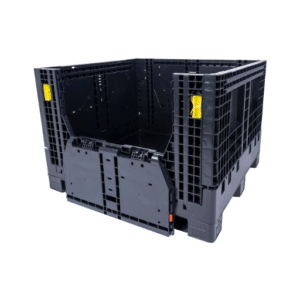
Due to their strength, plastic pallets are the very core of modern logistics, offering versatility and efficiency to many different industries. However, to select the right plastic pallet, dimensions must be fully understood in relation to the exact application. Pallet size is a major factor toward operational efficiency-from making the best use of storage space in warehouses to ensuring that the pallets meet basic worldwide transportation standards. This article goes into great detail about the standard plastic pallet dimensions, describing their properties and advantages, and the industries that use them. Use this guide to understand in-depth supply chain efficiencies or to ensure that your products conform to relevant shipping requirements.
Introduction to Plastic Pallets

As goods are to be moved in an efficient manner, plastic pallets are sturdy, light, and reusable. They are designed to resist a variety of environmental conditions and hence serve as a good alternative to the conventional wooden pallet. Polyethylene or polypropylene is often used in making plastic pallets, rendering them consistent in quality while moisture-resistant, and easy to clean. The consistent size of plastic pallets allows them to be used in diverse shipping and warehousing systems. Thus, it has become the choice for many industries such as pharmaceutical, food and beverage, and logistics.
What is a Plastic Pallet?
Plastic pallets, a product of innovative thinking in modern industries, offer multiple merits in comparison to wooden alternatives. In terms of protection against impact force, weather, and utility-based attacks, plastic pallets are known to last nearly 10 times longer than wooden types. Being a plastic pallet, it is not susceptible to moisture, bites from pests, or fungi, enhancing its hygienic factors, a major concern for industries such as pharmaceuticals and food, and beverage.
Another important item to consider is their ability to be recycled. Most plastic pallets are made from recycled materials, but recycling can also occur at the end of their useful life, therefore fulfilling sustainability goals and reducing negative environmental impacts. Also, the weight of plastic pallets is generally less than that of wooden pallets, hence saving shipping costs and manual handling. For industries operating automated warehouse systems, plastic pallets are considered the most valuable due to their good uniformity and weight, which allows smooth operations by robotic handling equipment.
Plastic pallets vary in load capacity, being intended for both light and heavy-duty operations. Depending on the configuration, some can carry up to 5,000 pounds or more, static load. They can also be stackable, nestable, or rackable, making them flexible enough to suit different storage and transportation needs.
Market Growth: Globally, the market for plastic pallets continues to grow, this growth being supported by advancements in material technology and increasing demand for hygienic, environment-friendly, yet cost-efficient logistics solutions. With their long life span, plastic pallets provide industries with efficiency and environmental benefits, greatly contributing to supply chain efficiency.
Benefits of Using Plastic Pallets
Plastic pallets are now an indispensable favorite among modern supply chains, having much to offer over traditional wooden pallets. These advantages are derived from factors such as durability, hygiene, and efficiency, making them preferred across industries.
Durability and Longevity
- In general, wood cannot be subjected to the intense conditions that cause slabs to splinter, warp, or break during use; plastic pallets, however, are designed to take repeated use with minimal wear and tear
- These pallets can last 10 times as long as wooden pallets, thereby lessening the cost of replacement and increasing the return on investment
- Pallets made from HDPE resist almost any adverse environmental condition and are thus excellent performers in a variety of applications
- Plastic pallets are non-porous, inhibiting the absorption of moisture, chemicals, or bacteria
- Smooth finish eliminates danger of splintering or sharp edges, reducing workplace injuries and damages to products during handling and shipping
Sustainability and Environmental Issues
- Plastic pallets are mostly made nowadays from recycled materials in order to contribute to establishing a circular economy for minimizing waste
- Plastic pallets are recyclable when they come to the end of their life, thus preventing landfill
- This perfectly correlates with the increasing corporate sustainability goals and regulatory requirements
- They also require less energy in their manufacture compared to treated wooden pallets
Lightweight And Cheap To Transport
- Lightweight compared to wood, plastic pallets reduce shipping charges, especially for international transport, where freight charges are highly dependent on weight
- Their constant weight and size make them better stackable and optimally installed in a container, hence improving logistics efficiency
Resistance to Pests and Chemicals
- Plastic pallets cannot be infested by termites or mildew and need not be fumigated or heat-treated, unlike wooden pallets
- They also resist most chemicals and, therefore, can be used to transport hazardous materials
Automation Compatibility
Plastic pallets are attractive for use in automation since their standardized designs and sizes enable compatibility with automated handling equipment such as conveyors and robotics. This consistency also improves operational accuracy and cuts downtime for pallet handling in automatic warehouses.
Industry Forecast: The growing pallet business is a part of the increasing demand for plastic pallets. It is forecasted that the plastic pallet trade will hit above $12 billion by 2032, rising at a CAGR of 5.4%, representing a slow-paced shift toward durable, environmentally-friendly, and cost-efficient solutions that serve both their operational and environmental requirements.
By including plastic pallets in supply chains, companies can make huge savings in the long run, realize operational efficiency, and meet the ever-changing sustainability standards.
Comparison with Wooden Pallets
When comparing plastic pallets to wooden pallets, there are several critical factors to consider. Plastic pallets are more durable and have a significantly longer lifespan, typically lasting up to 10 times longer than wooden ones. They are also resistant to moisture, chemicals, and pests, which reduces the risk of contamination and makes them ideal for industries such as pharmaceuticals and food and beverage.
In contrast, wooden pallets are more affordable upfront but tend to deteriorate faster due to splintering, warping, and susceptibility to environmental factors. They are heavier than plastic pallets, which can increase shipping costs, and often require treatment to meet international shipping standards such as ISPM-15.
Additionally, plastic pallets are easier to clean and sanitize, making them a better choice in settings where hygiene is a priority. While wooden pallets are biodegradable and can be repaired easily, plastic pallets are increasingly designed for recyclability, aligning with sustainability goals. Ultimately, the choice between the two depends on the specific operational needs, cost considerations, and environmental priorities of the business.
Standard Plastic Pallet Sizes

Plastic pallets are available in many typical sizes to meet industry requirements diversity. The very common sizes include:
| Dimensions | Primary Region/Industry | Common Applications |
|---|---|---|
| 48″ by 40″ | United States | Retail and warehousing |
| 1200mm by 1000mm | Europe and Asia | Industrial applications |
| 1100mm by 1100mm | Asia-Pacific | Shipping and export |
| 48″ by 45″ | Global | Automotive industry for parts and materials |
They are in such dimensions as to fit transport, storage systems, and international trade requisites.
Common Dimensions of Plastic Pallets
Plastic pallets are designed in myriad sizes for diverse industries and geographic requirements. Yet, it is essential to comprehend dimensions with respect to industrial and logistics applications:
48″ x 40″ (1219mm x 1016mm)
This size is considered an industry standard within the United States, while accounting for more than 30% of usage worldwide. It is rather favored among retail, warehousing, and grocery industries because of its compatibility with racking systems and freight dimensions.
1200mm x 1000mm
Mostly used in Europe and Asia, the size is generally versatile in agriculture, manufacturing, and pharmaceutical sectors. The design ensures seamless interfacing within ISO containers, thus allowing international shipping with ease.
1100mm x 1100mm
This is the standard pallet size in Asia Pacific territories. It is chosen for efficient transportation and export. It coincides with the dimension of common containers used in electronics export and other goods.
48″ x 45″ (1219mm x 1143mm)
This size is the automotive workhorse, designed for carrying heavy parts, components, and materials that go into making vehicles.
Each pallet dimension is efficient relative to strength, stackability, and compatibility with the supply chain systems of today. Also, many plastic pallets have been developed recently, focusing on sustainability with recycled materials and longer life spans to decrease environmental impact. Their uniform shape and being impervious to moisture make them supreme choices among the industries requiring the highest hygiene standards, including food and pharmaceuticals.
Industry-Specific Pallet Sizes
The industrial sectors have preferences for pallet sizes based on their own operational criteria and the global supply chain standards. Below are some pallet sizes commonly used across major industries:
Retail and Consumer Goods
48×40-in. is the size most widely used in North America for retail and consumer goods applications. It fits standardized racking systems and works with many automated systems in distribution.
Pharmaceutical and Healthcare
Plastic 48-by-40-inch pallets are used in industries requiring high levels of hygiene because of an easily cleanable surface and resistance to contamination. Euro pallets (1200x800mm) are also used for pharmaceutical purposes in European markets.
Food and Beverage Industry
The 40×48 and 42×42 pallets see extensive use and provide certain durability levels in transporting packaged goods. These pallets are either heat-treated or plastic to comply with strict sanitary standards.
Automotive
A 48×45-inch pallet is the standard size for automotive component transport, such as engines and transmissions, due to its strength and compatibility with containerized shipping.
European Standard Pallets
Known as the Euro pallet(1200x800mm), it is, and has been for years, for many industries throughout Europe, due to the fact that it is ISO standards-compliant and adaptable to various transportation systems.
Key Insight: A proper knowledge and utilization of pallet size can reduce logistic costs and maximize efficiency across global supply chains.
Understanding 48×40 and Other Standard Sizes
Designed to provide the utmost versatility in the handling of goods, the 48 x 40 pallet remains the most commonly encountered pallet size in North America and is distinguished by its conformance to Grocery Manufacturers Association (GMA) standards. The GMA pallet is recognized in many industries and serves as an ideal storage method-together with the transport and distribution of goods. The pallets occupy space both in retail and warehouses, and hence keep space management and operation aside.
Other widely accepted pallet sizes include the 42×42 and 48×48, generally used in telecommunications and chemical industries, respectively. In areas including Asia and Australia, the 1200x1000mm pallet is commonly used, while the 1200x800mm Euro pallet takes precedence in Europe due to its integration with European systems and standardization via ISO. Factors allowing pallet choice include industry requirements, regional standards, and the very nature of goods being handled; all these ensure a smooth and less expensive supply chain.
Types of Plastic Pallets

Plastic pallets are manufactured in different types, each aimed at fulfilling a particular need:
Export Pallets
These are lightweight and cheap pallets used for export purposes and for one-way shipment.
Rackable Pallets
Rackable pallets are built to sustain heavy loads and are, therefore, placed in racking systems for storage or shipments.
Nestable Pallets
Nestable pallets allow stacking for storage and keep space when they are not being used; hence, they find applications in storage and shipping.
Hygienic Pallets
The hygienic pallets with their smooth surfaces allow applications and cleaning in hygienic standards and are, therefore, designated for industries such as food and pharmaceuticals.
Custom Plastic Pallets
Customized plastic pallets cater to special size, design, or weight capacity requirements. Hence, they are suitable for any special industrial requirements.
Detailed Pallet Type Analysis
Stackable Plastic Pallets
Stackable plastic pallets are stackable to provide a durable and safe stacking solution for industries during storage and transport. The pallet is designed to interlock with another pallet to enable it to remain in a stable position so that slippage or damage to goods cannot occur. These pallets are a natural fit in storage, production, and distribution centers, giving varied load capacities without compromising on performance. These pallets stand against moisture, chemicals, and impacts, thereby ensuring long-term reliability. Also, they are lightweight, reducing handling-related expenses and enhancing operational efficiency, thus making it a favored agreement in several logistical tasks.
Nestable Plastic Pallets
Nestable pallets are designed to optimize space during storage and to cut down on the transportation costs when empty. These pallets can essentially nest within one another, unlike their stackable counterparts, with some types even achieving up to a 4-to-1 nesting ratio, minimizing footprint during storage or return trips. Nestable pallets are made out of materials such as HDPE or recycled plastics, which make them light but sufficiently strong for light- to medium-duty usage. Commonly used in retail, food, beverage, and pharmaceutical industries, the pallets offer easy cleaning with sterile surfaces and, hence, dimensional stability. They are also an environmentally friendly solution for today`s logistics and supply chains, given their compatibility with automotive systems and recyclability.
Rackable Plastic Pallets
Being custom-built for racking systems, sturdier and more load-stable, and reusable as compared to traditional wooden pallets, rackable plastic pallets are used. Constructed usually of HDPE or PP, this provides an excellent strength-to-weight ratio against temperature fluctuation, chemical, and moisture. In warehouses, these pallets are considered the best option to optimize storage space since they are dimensionally consistent and rackable for different kinds of racking systems, such as beam racks or supported edge systems.
Rackable plastic pallets support sustainability initiatives because they last longer and can be recycled. Their lightweight construction helps save on shipping costs. Advanced designs, such as nestable or stackable, further provide advantages of efficiency. Different industries, ranging from automotive all the way to food and beverage, use these pallets for clean and secure handling of materials. Rackable plastic pallets have come to be an indispensable entity in modern supply chain management, owing to their benefits that include cleaning convenience, fewer work-related injuries, and environmentally friendly features.
Specialty Plastic Pallet Dimensions
Specialty plastic pallet sizes can be any range of dimensions, depending on diverse industrial requirements. Common dimensions are:
- 48″ x 40″ (Standard size in many industries)
- 42″ x 42″ (Meets certain storage and transportation requirements)
- 48″ x 48″ (Usually for bulkier goods)
These sizes are made to fit with racking systems, forklifts, and other handling equipment, but they provide different storage and transportation needs, so always verify the actual dimensions depending on any industry or application requirements.
Half Pallets and Their Sizes
That said, half pallets are versatile and compact, suitable for industries that require maximum emphasis on space conservation. These pallets are in the ranges of 48″ x 20″ or 40″ x 24″, thus functioning well for small loads or retail displays. The smaller size implies less weight for maneuvering in storage sites and retail floors. Being half a size down from full pallets, they are compatible with common equipment, making many designs maintainably stable and durable. For a business focused mostly on flexibility and space maximization, half pallets will serve as the perfect choice, worth opting for. You can always determine the specific size and material needed depending on the application to be used for.
Crate and Container Pallet Options
When selecting crate and container pallet options, it is essential to consider material, size, and load-bearing requirements according to your needs. Options are usually plastic pallets, wooden pallets, or metal pallets. Each of these has unique merits and demerits. Plastic pallets are light, durable, moisture-resistant, and are great for industries where hygiene is a concern, such as the food and pharma industries. Wooden pallets are cheap and widely used, but they need maintenance, and their greatest downside is moisture and pests. Metal pallets, being highly durable, are suited for heavy-duty operations, but they are bulky and costly.
Another important consideration is compatibility with your storage and transportation systems. Choose pallets that conform to your operational standards and are stackable or accessible by forklifts. Some pallets are designed for particular types of crates or containers; for example, a design having fixed sides may provide extra stability for the load, while another design may disregard its supervising shadows for ventilation. Always weigh the expectancies of one use versus the need to be sustained in reusable life-bearing spirit, from which stand both economic and regulatory constraints, into consideration in an attempt to reach an informed decision.
Unique Dimensions: 1140 x 800mm and 1000mm Plastic Pallets
Plastic pallets with unusual dimensions, such as 1140 x 800mm and 1000mm, can provide practically unlimited possible applications. The 1140 x 800mm size is mostly used by beverage distributors since it fits readily with European goods and storage systems. On the other hand, 1000-mm plastic pallets are suitable for export and international shipping as they satisfy several competing world standards for maximizing efficiency. These pallets are lightweight, strong, and non-absorbent, thus making them environmentally friendly and cost-efficient. Talking about the choice between these pallet sizes, consider the load you are going to place on it, what kind of goods you are going to handle, and, more importantly, the storage system in use. Both of them provide excellent support in yielding well to a streamlined process while concentrating on durability and long-term use.
Pallet Dimensions for Shipping and Storage
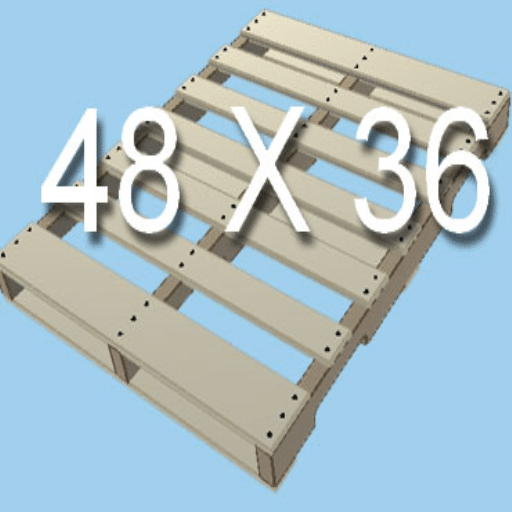
The two most common sizes for pallets are 48 x 40 inches and 42 x 42 inches. The 48 x 40-inch pallet is considered the “standard” pallet in the industry; it is highly adaptable and widely accepted by retailers, grocers, and warehouse associations. The 42×42-inch version is popular with telecommunications and chemical industries, providing a compact and sturdy option for specialized goods.
In choosing pallets, the principal considerations should include the size of the product being shipped, the type of transportation, and the available storage space. Having the right size of a pallet helps in saving space, reducing transport costs, and making operations efficient.
Plastic Pallet Dimensions in Shipping Containers
The right plastic pallet sizes maximize the space inside a shipping container and ensure goods are transported safely. An ISO standard shipping container usually has a length of 20 or 40 feet, with an internal width of about 7.8 feet. The most common pallet sizes placed in these containers are 48×40 inches (of the North American standard) and 1200×1000 mm (of the European standard). These sizes present ideal loading options and make for the best space utilization; under a typical setup, a 20-foot container usually accommodates 10-11 pallets of 48×40 inches or 9-10 pallets of 1200×1000 mm.
Choosing the right plastic pallet depends upon the weight capacity, stackability, and durability required for the goods being transported. Lightweight nestable pallets are the best option to reduce space and thus the shipping cost. Also, get familiar with the container’s specific layout because tighter packing and less shifting during transit ensure product safety. Proper alignment of the pallets inside the container would increase efficiency and, by a great amount, cut down wastage or damage.
Maximizing Space: Choosing the Right Pallet Size
The crux of maximizing space is to ultimately synchronize pallet size with container interior measurements. Any mismatch could result in the loss of space; a proper fit should be created so that goods do not move around during transportation. Secondarily, the considerations relevant to the size and weight of the load ensure that the pallet would be able to safely carry the loading without sacrificing efficiency.
Durability Considerations for Plastic Pallets
Having been rendered unfit for use would depend on a variety of circumstances, and some of these need careful assessment when evaluating the durability of plastic pallets. Plastic pallets, theoretically long-lasting, resist various external adverse conditions: moisture, chemical exposure, and temperature fluctuations for various industries. As strength and toughness are required, they are commonly manufactured from high-density polyethylene (HDPE) or polypropylene (PP). Importantly, plastic pallets do not absorb moisture, and this avoids warping and contamination, hence guaranteeing reliability for prolonged use. The smooth, one-piece surface of plastic pallets provides more durability by resisting abrasion during manual handling. Selecting the correct type of plastic pallet, be it injection-molded or thermoformed, for the particular application will do much to preserve the life of these pallets. Also important is the regular inspection as well as the correct use of them.
Key Takeaways for Optimal Pallet Selection
- Consider your industry requirements: Different industries have specific size preferences and standards
- Evaluate your storage and transportation systems: Ensure compatibility with existing equipment and infrastructure
- Factor in load capacity: Choose pallets that can safely handle your typical loads
- Think long-term: While plastic pallets may cost more upfront, their durability and longevity provide better ROI
- Consider environmental impact: Plastic pallets support sustainability goals through recyclability and longer lifespan
Reference Sources
Pallet of Weighing Sensor Error Calibration Device FEM Analysis and Optimization (2021)
Frequently Asked Questions (FAQs)
What are the standard pallet dimensions for plastic pallets?
Standard pallet dimensions for plastic pallets would be such as 48×40 inches and 1200mm x 1000mm. These could be the dimensions that many industries employ since these are in line with standard shipping containers and forklifts, hence allowing easy transport and storage.
How does the size of plastic pallets compare to wood pallets?
Plastic pallets often conform to the size of wooden pallets but add a few other benefits. For example, plastic pallets weigh less than wooden pallets and thus allow reductions in shipping costs. Also, an inherent feature of this strong plastic is durability and waterproofing, which makes it ideal for reuse and hygienic purposes.
What are the common selling sizes of plastic pallets?
Sizes mainly sold include 48×40 in., 1200mm x 1000mm, and 1140mm x 800mm for plastic pallets. Half pallets, such as 48×24 in. and certain custom-made sizes, can be availed for those willing to fit the pallet and their operations. This variety gives freedom to both storage and transportation solutions.
What is the weight capacity of a specific plastic pallet?
The maximum weight that a particular plastic pallet can sustain will largely depend on its design and the materials used in making it. Heavy-duty plastic pallets are capable of handling very heavy loads, often over 1500 kg, whilst lighter plastic pallets can carry smaller weights. It is recommended that the specifications of a particular plastic pallet be checked with the plastic pallet experts for suitability for the use in question.
Are there export plastic pallets?
Yes. Plastics’ export shipping pallets are specially manufactured. Those pallets usually meet international standards and are subjected to rigorous testing during transportation. Popularized by models, such as CP9 plastic pallets, these pallets are durable and fit into standard shipping containers for load stability during transit.
What are some of the qualities of rackable plastic pallets?
Unlike non-rackable plastic pallets, rackable plastic pallets can be stored in high-density racking systems. Their dimensions are designed for maximum stability while still being easy to handle and stack. Given that warehouses are eager to maximize storage capacity for efficiency, this feature becomes a boon.
Can plastic pallets be reused, and what implications will such reuse have on their cost efficiencies?
Plastic pallets can be used repeatedly and thus provide businesses with an inexpensive option. They are designed for heavy-duty use while delivering consistent service through many cycles, thereby minimizing frequent replacement. The plastic pallet is a long-lasting product that requires very little maintenance and upkeep compared to wood. Therefore, it can greatly reduce costs over time.
What industries generally use the 1200mm x 1000mm plastic pallets?
Industries like food and beverage, pharmaceutical, and manufacturing widely use the 1200mm x 1000mm plastic pallets. These are mostly used due to their hygienic nature and tolerance to environmental factors, which makes them suitable for sensitive products and heavy-duty applications.
What are the benefits of nestable plastic pallets?
When not in use, nestable plastic pallets offer great space savings as they can be stacked to minimize storage requirements. This also helps in easy handling, and normally, being made of durable plastic, it resists weathering and thus aids businesses in efficiency.