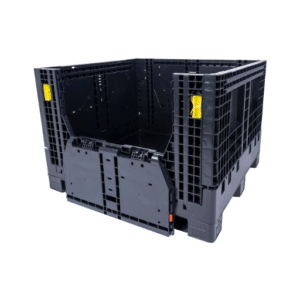
Custom plastic pallets for food industry use are engineered logistics platforms designed around your specific products, workflows, and compliance requirements, not one-size-fits-all shipping bases. Unlike standard pallets, they can be tailored in size, material, deck style, color, reinforcement, and tracking features to meet FDA food-contact rules, HACCP prerequisite programs, and FSMA preventive controls while improving throughput and reducing total cost of ownership.
What if the pallet under your shipment is the weakest link in your food safety plan? For many operations, it is. Wooden pallets absorb moisture, harbor bacteria, and splinter into products.
Standard plastic pallets solve the hygiene problem but may not fit automated lines, segregate allergen zones, or support recall traceability. That is where custom plastic pallets for food industry operations become a strategic investment rather than a commodity purchase.
In this guide, you will learn how to design a food-grade custom pallet that matches your application, which compliance standards matter, what customization options deliver the strongest ROI, and how to choose a manufacturing partner that can scale with your global supply chain.
Key Takeaways
- Custom plastic pallets for food industry use combine food-grade materials with tailored dimensions, features, and tracking to reduce contamination risk and improve operational efficiency.
- Virgin HDPE or polypropylene, smooth closed-deck designs, and documented FDA 21 CFR compliance are non-negotiable for direct food-contact applications.
- Strategic customizations, color coding, RFID tags, drainage holes, anti-slip surfaces, and steel reinforcement, solve sector-specific challenges in dairy, meat, bakery, produce, and frozen food operations.
- Food-grade plastic pallets outperform wood on hygiene: a National Consumers League study found E. coli on 10% of wooden pallets versus 1.4% of plastic pallets.
- A structured five-step design process keeps custom pallet projects on budget, compliant, and aligned with automation and cold-chain requirements.
What Are Custom Plastic Pallets for Food Industry?
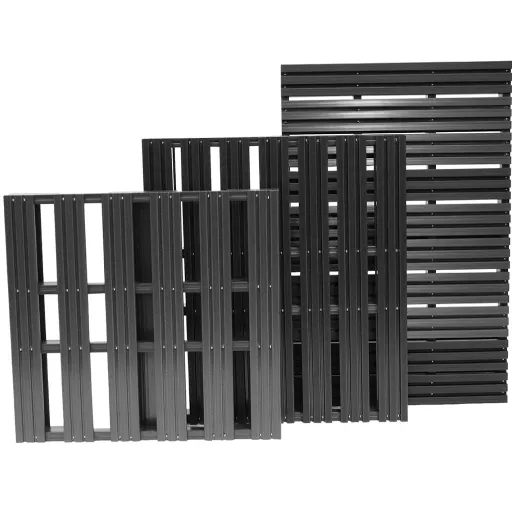
Custom plastic pallets for food industry applications are OEM-designed platforms built to move, store, and protect food products under strict hygiene and regulatory conditions. They are typically molded from virgin high-density polyethylene (HDPE) or polypropylene (PP), then tailored to the buyer’s exact load, facility, and workflow requirements.
Standard food-grade pallets address basic hygiene needs. Custom pallets go further. They can be sized for a specific conveyor system, colored to identify allergen zones, reinforced for heavy bulk ingredients, or embedded with RFID chips for lot traceability. The goal is to make the pallet an integrated part of the food safety system rather than a passive container.
When Maria, a QA manager at a Midwest dairy processor, audited her plant in early 2025, she traced three near-miss contamination events back to shared wooden pallets moving between raw milk and finished goods areas. Switching to color-coded custom HDPE pallets with dedicated zone assignments eliminated the cross-traffic risk and simplified her HACCP documentation.
How They Differ from Standard Plastic Pallets
| Factor | Standard Plastic Pallet | Custom Plastic Pallet for Food Industry |
|---|---|---|
| Dimensions | Fixed industry sizes (e.g., 48″×40″, 1200×1000 mm) | Sized to product, equipment, or automation specs |
| Material options | Limited to stock grades | Virgin HDPE, PP, or specialty blends selected for temperature/chemical exposure |
| Surface design | Generic deck pattern | Closed-deck, ventilated, drainage, or anti-slip as needed |
| Identification | Plain or basic labels | Color coding, embossing, RFID, barcodes for traceability |
| Reinforcement | Standard duty | Steel bars, extra runners, or enhanced rack capacity |
When Customization Becomes Necessary
Customization is worth considering when standard pallets create measurable friction. Common triggers include:
- Automated linesthat require tight dimensional tolerances.
- Allergen managementprograms that need visual segregation.
- Cold chain operationswhere moisture and freeze-thaw cycles damage wood.
- Export shipmentsthat benefit from ISPM 15 exemption.
- Heavy or irregular loadsthat exceed standard dynamic load ratings.
- Recall readinessrequiring pallet-level traceability.
Why Food Operations Choose Custom Over Standard Plastic Pallets
Food and beverage operations face a unique combination of regulatory pressure, contamination risk, and throughput demands. As a result, custom plastic pallets for food industry use solve problems that standard pallets often ignore.
Load and Dimensional Mismatches in Automated Lines
Automated warehouses and processing plants run on precision. A pallet that is even a few millimeters out of spec can jam conveyors, misalign in rack systems, or fail in robotic handling cells. Custom pallets are molded to the exact tolerances your automation requires, typically within ±2 mm, reducing downtime and product damage.
Hygiene Zones and Allergen Segregation
Color coding is one of the simplest and most effective customizations. A bakery might use blue pallets for gluten-free products, yellow for products containing nuts, and red for rework areas. This visual control reduces the risk of cross-contact and makes audits faster because inspectors can verify zone segregation at a glance.
Branding, Traceability, and Recall Management
Custom pallets can carry embossed logos, serial numbers, or embedded RFID tags. In a recall scenario, this traceability can shrink the affected lot size and protect both consumers and brand reputation. Learn more about how food-grade pallet certifications support recall readiness in our complete food industry pallet guide.
Cold Chain and Washdown Environment Demands
HDPE and PP withstand repeated washdown cycles, aggressive sanitizers, and temperatures from -40°C to +60°C. Custom features like drainage holes prevent pooled water in seafood operations, while closed-deck designs protect packaged goods in cold storage. These details matter when a single temperature excursion or sanitation failure can trigger a costly recall.
Food-Grade Customization Options That Matter
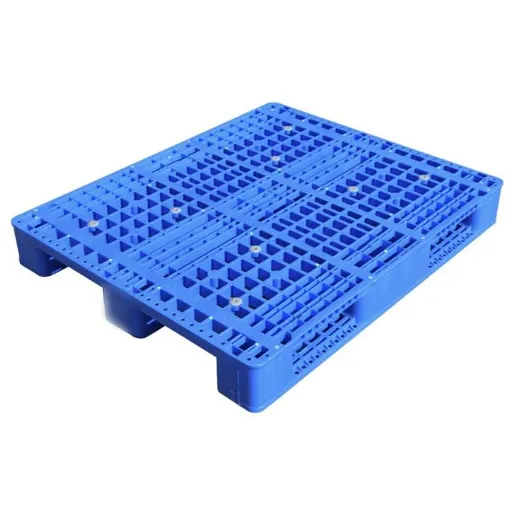
Not every customization delivers equal value. However, the most impactful options for food operations fall into four categories: material and structure, hygiene and handling, identification and traceability, and reinforcement.
Size and Load Capacity Tailoring
Custom pallets can be produced in non-standard footprints for specialized equipment or product dimensions. Specifically, load ratings are typically expressed in three ways:
- Static load:The weight a pallet can hold when stationary on a flat floor, often up to 6,000 kg.
- Dynamic load:The weight it can carry during forklift or pallet jack movement, typically 1,500–2,000 kg.
- Rack load:The weight it can support in a warehouse racking system, often 1,000–1,500 kg.
Specifying the right combination prevents over-engineering, which drives up cost, and under-engineering, which risks failure.
Material Choice: HDPE vs. Polypropylene
Virgin HDPE is the default for most food-grade pallets because it offers excellent impact resistance, chemical tolerance, and performance across a wide temperature range. By contrast, polypropylene becomes the better choice when higher heat resistance is needed, such as in hot-fill operations or environments with frequent steam cleaning.
Both materials are recyclable, but for direct food contact, virgin resin is strongly preferred over recycled content. The FDA’s food-contact regulations require that materials do not leach harmful substances into food, and recycled resins can carry unknown contaminants from previous use.
Closed-Deck vs. Ventilated Designs
A closed-deck pallet has a solid top surface with no gaps. As a result, it is easier to clean, prevents small packages from falling through, and is preferred for direct food contact or pharmaceutical-grade hygiene. Conversely, a ventilated deck allows airflow and drainage, which is useful for fresh produce, seafood, or blast-freezing applications.
The right choice depends on what touches the pallet. If open food products sit directly on the surface, closed-deck is usually the safer choice. If the pallet carries sealed cases in a wet environment, ventilation may be more valuable.
Color Coding for Allergen and Zone Control
Color customization is inexpensive but highly effective. For example, common food industry conventions include:
- Blue:Raw ingredients or allergen-free zones.
- Yellow:Allergen-containing products.
- Red:Rework, quarantine, or non-conforming goods.
- Green:Finished goods ready for shipment.
- White:High-hygiene areas such as dairy or bakery.
Embedding the color into the resin ensures it will not fade or chip, maintaining zone integrity over years of use.
Anti-Slip Surfaces, Drainage Holes, and Raised Edges
Anti-slip strips or textured surfaces reduce load shift during transport. Drainage holes help liquids escape in wet processing environments. Raised edges contain spills and hold stretch wrap in place. Each feature should be specified based on the actual handling conditions, not added as an afterthought.
RFID Tags, Barcodes, and Serialization
Traceability is becoming a competitive requirement. Therefore, embedding an RFID tag or barcode into the pallet frame enables automated tracking from receiving through production to shipping. This supports FSMA traceability rules and can reduce the time and cost of a recall by identifying exactly which lots moved on which pallets.
Steel Reinforcement and Special Reinforcements
For bulk ingredients, beverage stacks, or heavy export loads, steel-reinforced decks and additional runners increase load capacity and rack performance. The steel is encapsulated inside the plastic so it never contacts food, preserving hygiene while adding strength.
Logo Embossing and Branding
Embossed logos or company names support asset control and brand visibility. They also deter theft by making pallets identifiable as company property. For businesses with pooling or rental models, this customization pays for itself quickly.
Want to see how these custom features fit your operation? Explore our custom plastic pallet OEM design and manufacturing process to start mapping your requirements.
Compliance Considerations for Custom Plastic Pallets in Food Industry
Compliance is not a label you buy; it is a set of material, design, and documentation requirements you verify. Therefore, The FDA’s food-contact substance framework governs what materials can safely touch food in the United States, while international markets follow their own standards.
FDA 21 CFR Food-Contact Material Requirements
Under 21 CFR Parts 170–199, any material intended for food contact must be safe for its intended use. For plastic pallets, this typically means using resins and additives listed in 21 CFR 177.1520 for olefin polymers. Consequently, suppliers should provide a declaration of conformity that cites the applicable regulations.
HACCP Integration and Prerequisite Programs
HACCP is a management system, not a product certification. Therefore, pallets are treated as part of the prerequisite program for hygiene and sanitation. Custom plastic pallets support HACCP because their smooth, non-porous surfaces can be validated as cleanable, unlike wood, where bacteria can embed in grain and cracks.
FSMA Preventive Controls and Supplier Verification
The Food Safety Modernization Act shifts focus from reacting to contamination to preventing it. Under FSMA, food facilities must verify that their suppliers have effective preventive controls. For pallets, this means reviewing material documentation, auditing manufacturing controls, and confirming cleaning protocols.
EU 1935/2004 and BRCGS/IFS for Global Exporters
Companies exporting to Europe must comply with EU Regulation 1935/2004, which requires that food-contact materials do not endanger human health or change food composition. BRCGS and IFS certification schemes often specify hygienic pallet requirements for suppliers. A custom pallet manufacturer with global experience can help navigate these overlapping standards.
ISPM 15 Exemption for International Shipping
Plastic pallets are exempt from ISPM 15, the international wood packaging phytosanitary standard. This eliminates the need for heat treatment or fumigation certificates, speeds customs clearance, and reduces documentation costs for exporters. See how plastic pallets meet food-grade standards in our detailed comparison.
Custom Plastic Pallet Design for Food Industry Sectors
Different food sectors place different demands on pallets. Consequently, designing around the specific sector improves both compliance and operational performance when selecting custom plastic pallets for food industry use.
Dairy and Beverage
Dairy and beverage operations need pallets that resist moisture, tolerate frequent washdowns, and support heavy liquid loads. Custom features often include closed-deck hygiene, drainage channels, and anti-slip surfaces to prevent bottle or carton movement. Color coding separates raw receiving from finished goods.
Meat and Poultry
Meat and poultry plants operate in wet, cold, and heavily regulated environments. Washdown-compatible custom pallets with smooth surfaces and rounded corners prevent bacterial harborage. Steel reinforcement may be needed for bulk meat tubs, while color coding separates raw, processed, and ready-to-eat areas.
Bakery and Packaged Goods
Bakery products are vulnerable to foreign material contamination from splinters, nails, or loose particles. Custom plastic pallets eliminate those hazards. Anti-slip surfaces protect stacked product, and closed decks keep small packages clean and secure.
Fresh Produce and Agriculture
Produce pallets often need ventilation to maintain airflow and reduce ethylene buildup. Drainage holes help after field washing, while UV-stabilized materials extend outdoor life. Custom sizes can match harvest bins or retail display requirements.
Frozen Food and Seafood
Frozen food and seafood operations require pallets that perform at sub-zero temperatures without cracking or absorbing moisture. HDPE performs reliably down to -40°C. Drainage holes and sloped surfaces prevent ice buildup, while closed decks protect packaged goods in blast freezers.
When a Pacific Northwest seafood processor switched to custom HDPE pallets with integrated drainage and RFID tags, they cut load rejection due to moisture damage by 30% and reduced the time to trace a lot through their cold chain from hours to minutes.
Designing Your Custom Food-Grade Pallet: A 5-Step Process
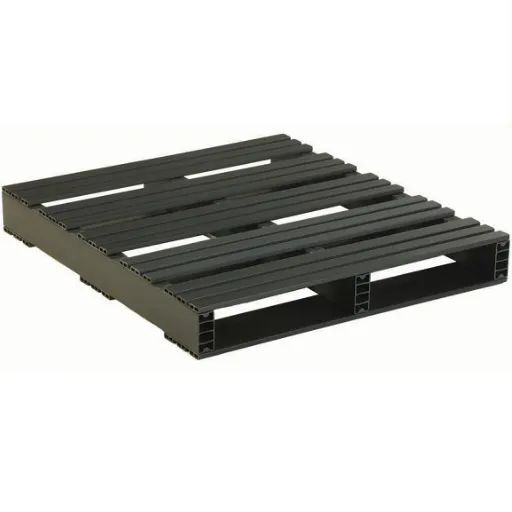
A structured design process keeps custom pallet projects aligned with both operational needs and compliance requirements. Specifically, follow these five steps when planning custom plastic pallets for food industry facilities.
Step 1: Define Your Product, Load, and Environment
Document the product type, packaging, weight, handling method, temperature range, and exposure to chemicals or moisture. A pallet for frozen fish boxes has very different requirements from one for ambient bakery trays.
Step 2: Select Material and Compliance Standard
Choose virgin HDPE for general food logistics or polypropylene for higher heat exposure. Confirm the resin meets FDA 21 CFR, EU 1935/2004, or other relevant standards. Request material declarations and certificates of analysis from your supplier.
Step 3: Choose Structural Features
Decide on deck style, runner configuration, load ratings, and any steel reinforcement. Match the design to your racking, conveyors, forklifts, and automated handling equipment.
Step 4: Add Operational Features
Specify color, embossing, RFID pockets, anti-slip surfaces, drainage holes, or raised edges based on your workflow. Each feature should solve a documented problem rather than add cost without purpose.
Step 5: Validate with Samples, Audits, and Supplier Documentation
Before full production, test prototypes in your actual environment. Run sanitation validation, load testing, and compatibility checks with your equipment. Confirm the supplier can provide lot traceability, compliance documentation, and consistent quality at volume.
At Shandong Lile, we guide customers through each step using our OEM custom molding capabilities, ISO 9001 quality control, and global logistics network serving over 108 countries. Whether you need a prototype for a single line or a high-volume program across multiple facilities, we scale with your requirements.
Total Cost of Ownership: Are Custom Pallets Worth It?
Custom plastic pallets for food industry use carry a higher upfront cost than standard wood or generic plastic pallets. Nevertheless, the long-term economics usually favor them.
Upfront Cost vs. Long-Term Savings
A custom food-grade plastic pallet may cost two to four times more than a standard wooden pallet. However, it typically lasts five to eight years and supports 200 or more trips, while wooden pallets often survive only 10 to 20 trips in food environments. Therefore, when you factor in reduced replacement, repair, cleaning labor, and recall risk, the five-year total cost of ownership can be 40–60% lower.
How Customization Reduces Waste, Damage, and Recalls
Properly sized pallets reduce product damage and stretch-wrap waste. Color coding reduces allergen incidents. RFID traceability shrinks recall scope.
Drainage and closed-deck designs prevent contamination events. Each customization that solves a specific problem delivers measurable ROI.
How to Choose a Custom Plastic Pallet Manufacturer
Not every manufacturer can deliver consistent, compliant custom pallets at scale. Therefore, evaluate partners on four dimensions.
Certifications and Documentation Capabilities
Look for ISO 9001 certification and experience producing FDA-compliant, HACCP-supporting pallets. The manufacturer should provide material declarations, test reports, and lot traceability without prompting.
Mold Design and Prototyping Services
Custom pallets require custom molds. A strong partner offers design for manufacturability feedback, rapid prototyping, and the ability to refine the mold before mass production. This reduces risk and speeds time to value.
Production Scale and Quality Consistency
High-volume food operations cannot afford dimensional drift or inconsistent quality. Ask about production capacity, in-process inspection, and final testing protocols. Shandong Lile operates 16 subsidiaries with large-scale injection molding capacity and strict quality requirements.
Global Logistics and Support
If you operate across regions, your pallet supplier should too. Global logistics capabilities ensure consistent product, reliable lead times, and local support wherever you produce or distribute.
Ready to design a custom pallet for your food operation? Browse our full range of plastic pallets or contact our team for a consultation and tailored quote.
Conclusion
Custom plastic pallets for food industry operations are more than upgraded shipping platforms. In fact, they are engineered components of a modern food safety system. By combining the right material, design, compliance documentation, and operational features, food and beverage companies can reduce contamination risk, improve automation performance, and lower total cost of ownership.
The best results come from treating pallet design as a collaborative engineering process. Start with your product and workflow requirements, select materials that meet FDA and international food-contact standards, add features that solve real operational problems, and validate everything with samples and supplier audits. Following this approach ensures your custom plastic pallets for food industry use deliver compliance, efficiency, and long-term value.
At Shandong Lile, we bring over a decade of pallet manufacturing experience, ISO 9001 quality control, and a global footprint across 108 countries to every custom project. If you are evaluating FDA-compliant custom pallets for your food facility, our team is ready to help you design a solution that fits your products, your compliance requirements, and your budget.
Take the next step: request a custom pallet consultation today and discover how the right platform can protect your products, streamline your supply chain, and strengthen your food safety program.
FAQ
What makes a plastic pallet food grade?
A food-grade plastic pallet uses virgin HDPE or PP resin, has a smooth non-porous surface, contains no harmful additives, and comes with documentation proving compliance with FDA 21 CFR or equivalent food-contact regulations.
Are recycled plastic pallets safe for food contact?
Generally no. Recycled resins can contain unknown contaminants that may not meet FDA food-contact requirements. Virgin resin is the safer choice for direct food contact applications.
Do custom plastic pallets cost more than standard pallets?
Yes upfront, but they typically last five to eight years and deliver 40–60% lower total cost of ownership than wood in food operations due to reduced replacement, cleaning, and recall risk.
Can plastic pallets be used in freezers and washdown areas?
Yes. HDPE food-grade pallets perform from -40°C to +60°C and withstand high-pressure washing and food-safe sanitizers.
How long does it take to develop a custom plastic pallet?
Timeline varies by complexity. Simple customizations may take a few weeks, while full OEM mold development can take several months. Prototyping and validation should be built into the schedule.