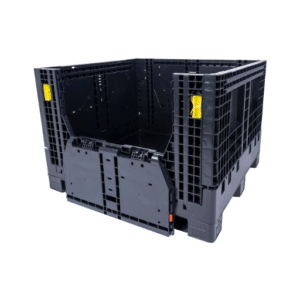
It is well known that many difficulties affect various business sectors, especially when trying to figure out safe and efficient ways of transportation, such as weather conditions, as well as damage in transit. In terms of solving such problems within business, corrugated plastic products have been understood more widely than other solutions for transportation protection. These materials can be considered as efficient solutions in order to protect the goods and still ensure that supply processes are efficient because they are very strong, light, and adjustable.
This piece of writing goes deep into the main issues surrounding the concept of double-faced cardboard with plastic corrugation, and demonstrates why business that looks for economy, ecology, and effective shielding of their product along the entire logistical activity cycle tends to exploit such material.
📦
Introduction to Corrugated Plastic Products
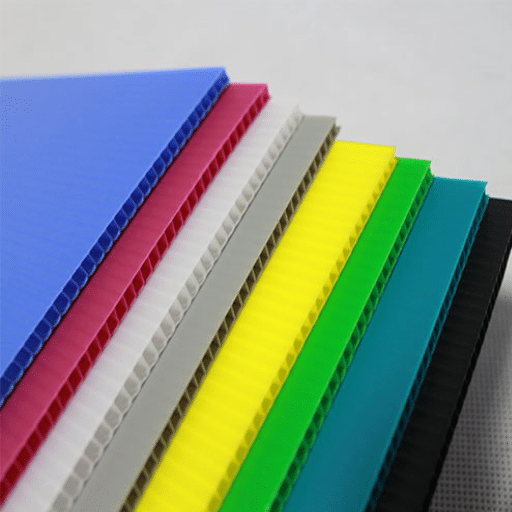
Corrugated plastic products, on the other hand, are essential packaging material components, especially in the transportation or delivery industry. This light and durable polypropylene or polyethylene corrugated plastic sheeting can be waterproof and chemical-proof as well, alleviating damage issues in a wide range of environments. Its unique construction offers structural flexibility, which, in turn, offers a number of design variations to suit different packaging requirements. Therefore, factories that opt for these commodities in order-to-order processes can more optimally manage their distribution networks because of lower returns and cost reduction.
Definition and Key Characteristics of Corrugated Plastic Products
Lightweight yet sturdy sheets referred to as corrugated plastic products are made of polymer resin, polypropylene, and polyethylene. Corrugated sheets comprise two structures, opposite one another on a plane, fluted in the center, thereby ensuring greater stiffness together with flexibility. These sheets have important properties that include water impermeability, chemical resistance, and high impact strength, for instance. These are coupled with the fact that these products are 100% recyclable, and the thickness, color, and aesthetic appearance are modifiable to fit particular industrial or packaging purposes. Among their advantages, therefore, is the possibility to use them for signage, packaging, building, or even farming purposes, which in turn makes them very efficient and green in such versatile fields.
💧
Waterproof
Non-porous and hydrophobic — resists moisture absorption
⚗️
Chemical Resistant
Resists salts, acids, and environmental pollutants
🛡️
High Impact Strength
Absorbs and redistributes energy from dynamic loads
♻️
100% Recyclable
Fully recyclable and modifiable in thickness, color, and design
Overview of Applications in Various Industries
Corrugated plastic products use increases enormously in many other industries because of the versatility and efficiency of these products.
📦
Packaging Sector
Light in weight but strong, these products are perfect for making protective packings like the creation of marquees, partitions, and any other boxes as per the customer’s requirements. The waterproof nature and crush resistance ensure the hassle-free transit and storage of any goods.
🏗️
Construction Sector
Within this industry, the more common use of these boards is in the form of protection mats, insulating mats, temporary walls, etc. These boards also have good weather-resistant characteristics and structural rigidity. Interface in building solutions, lowering the cost and speeding processes.
🌾
Agricultural Sector
Such products are widely applied in the construction of shelters for greenhouses, covering crops, and even making storage options for such crops. Strengthened by UV resistance, these materials are perfect for outdoor use, with a finish strong enough to withstand any condition, ensuring the welfare of the crops or any agricultural materials.
🪧
Signage and Displays
Having flexibility in terms of thickness, colors, and designs, these materials are adopted in the industry for promotions like displays, billboards, and signs indoors. Low power consumption and light physique simplify operations like installation and transportation.
The multifaceted use indicates the practicality of the industries towards the existing challenges and, at the same time, promotes eco-friendliness and helps in a considerable reduction of cost.
🛡️
Durability and Structural Integrity

The strength and longevity of these corrugated plastic products are a result of their solid construction that is stable even when the materials are impacted or weathered. These structures are built to endure severe conditions, hence they are highly resistant to ultraviolet rays and moisture, and do not easily change with temperature changes. Such durability extends the period of time that they are useful in both built and non-built environments. Secondly, owing to their firm yet light build, these materials offer high load-bearing capacities without causing any instability, thus making them suitable for use in many business structures.
Examination of the Material’s Resistance to Impact, Moisture, and Corrosion
The material absorbs and redistributes most of the energy during impacts thanks to its molecular configuration, and such disfiguration as stretching or splitting is inherent in it to a minimum degree when subjected to such conditions, dynamic, and instantaneous loads inclusive. In terms of the properties that relate to moisture uptake, the material being nonporous and hydrophobic will not soak up water and will not degrade, which is helpful in wet conditions. Moreover, corrosion of the material is because of a protective oxide layer or its chemistry that prevents assault by substances found in the environment, like salts, acids, and pollutants. All these ensure the material is safe for use even in demanding conditions with more complex products or functions.
Comparison with Traditional Materials Like Cardboard and Wood
Although cardboard and wood are popular, they cannot match the suitability of the subject material in terms of strength, capability to repel water, and durability. For example, cardboard is very light as well as affordable; however, it is very weak when wet and waterlogged or in high-humidity conditions. Cardboard does not serve its purpose as it should. Whereas wood, being stronger than cardboard, does not last long because it warps, molds, and is attacked by pests easily over time. Wood also needs regular maintenance or treatment. On the other hand, the property of the material discussed allows it to bear a lot of load without disintegrating due to water, and it cannot rust, making it durable in all weather conditions. Furthermore, the quality of being light and easy to manipulate adds to more reasons as to why it is a repairless and more effective replacement of the conventional materials.
Material Comparison — Corrugated Plastic vs. Cardboard vs. Wood
| Property | Corrugated Plastic | Cardboard | Wood |
|---|---|---|---|
| Water Resistance | Excellent — fully waterproof | Poor — absorbs moisture, weakens | Moderate — warps and molds |
| Durability | High — impact & weather-resistant | Low — degrades quickly | Moderate — pest/rot susceptibility |
| Weight | Very lightweight | Lightweight | Heavy |
| Maintenance | Minimal — no treatment needed | Minimal — but single-use | High — regular treatment required |
| Recyclability | 100% recyclable | Recyclable (when dry) | Limited — requires processing |
💰
Lightweight and Cost-Effective Solutions
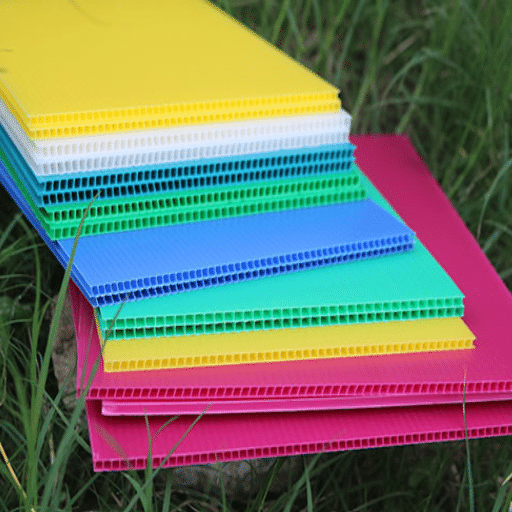
The materials considered present several benefits, particularly relating to weight and cost. Being lightweight means it doesn’t cost much to transport and lay without losing the strength of loading required, thus many applications can be built. Furthermore, the fact that it will endure and the cost of maintenance is low, in the long term, it saves even more money as opposed to other materials, which are superior in life cycle cost. Such a set of qualities makes it clear why it is the best option for the industries that want low-cost yet high-strength materials.
How Weight Reduction Translates to Reduced Shipping Costs
Lower weight implies cost directly as less fuel is used, thereby implying greater cargo space. The use of lighter materials implies that most transport vehicles can accommodate more goods without breaching the acceptable weight limits. Storage space, however, is just one aspect of efficiency as light weight also results in lesser fuel usage per mile and therefore virtues shared cost particularly in regional or international shipping containers. Companies operating in the logistics industry structure their pricing policies based on the weight of their shipments, thus emphasizing the benefits of lighter goods. Even though the effect of weight is subtle at first, over a prolonged period of time, the cost difference becomes apparent. Hence, this confirms the need for lightweight materials and more effective designs for such systems through corrugated plastic products, among others.
💡 Cost Efficiency Insight
Lighter packaging allows transport vehicles to carry more cargo per trip, reduces fuel consumption per mile, and lowers weight-based freight pricing — delivering compounding savings over time in regional and international shipping operations.
Reusability and Its Impact on Cost-Efficiency
Reusability is an important factor that enhances cost-effectiveness in supply chain operations by reducing the use of consumables and thereby decreasing nonbiodegradable objects. It is one of the fundamental objectives in packaging, and as such, most packaging designs are reusable. This involves old and strong boxes, containers, and pallets, which can be reused over many trips and reduce the regular cost of such one-time use boxes. This cuts down the purchases of such materials, and waste management is eased up in the sense that less is spent on collecting and recycling waste. Reusable materials, on the other hand, make possible the application of modular designs in logistics, where the parts are not merely disposed of at the end of their shelf life but are exchanged or repaired instead of being replaced each time and every time. Ultimately, sustainability goals are met most efficiently with reusability, as it lowers the operational expenditures on resources by decreasing the need for fresh inputs and reducing the operating costs in the long run.
🌿
Sustainability and Environmental Benefits

The use of reusable systems is one of the most efficient ways of ensuring ecological benefits, as these systems heavily reduce the creation or generation of waste and limit the usage of naturally occurring products. These systems decrease the dependence of a user on single-use applications, and therefore, emissions that would be produced in the manufacture and use of those applications are also decreased. This is because the procurement of these reusable materials does not involve harvesting very many fresh materials that replace what has been consumed. Lastly, eventually, these systems encourage the adoption of a sustainable and circular economy that ensures environmental health as well as cost-effectiveness.
Discussion on Recyclability and Eco-Friendly Manufacturing Processes
Recyclability and sustainable manufacturing are essential elements in helping manage sustainability. Definition — recyclable material: the attribute that enables a particular material or a product to be recycled. This means not always relying on fresh resources, but instead trying to work with what you have. Highly recyclable industries typically include the production of aluminum, glass, and there are some unique polymers that remain usable for several generations.
Eco-friendly manufacturing focuses on minimizing disturbances to the ecology where the production takes place. Options to practice energy saving, minimize the generation of waste, and practice closed-loop manufacturing, for example, have been on the increase. An example is using solar and wind energy by production industries, which reduces emission levels. Furthermore, modern manufacturing systems also embody new innovations, e.g., waterless processes or bioplastics, so as to avoid pollution.
Incorporating the concept of product recyclability makes production more environmentally friendly, which is important in conjunction with international endeavors such as EPR (Extended Producer Responsibility), which aims to make corporations create their goods to make disposal their business as well. Helping in aiding with climate change, resource efficiency, and shifts towards more circular economic systems, organisations also push for recycled components and practices that involve minimal impact.
Contribution to Sustainable Supply Chains
Eco-friendly supply chains are respectful of economics and society, refraining from most of the adverse effects on the environment. General resource management, waste, and labor issues are the focus of these approaches at every supply chain stage. Providing such accountability, as with arrangements like ISO 14001 or Fair Trade, helps to track or strengthen such credentials. Collaborative arrangements among buyers, sellers, and other direct and indirect partners also help propel such progress as the use of alternative sources of energy, the minimization of waste, and the cultivation or use of resources in a responsible way. Corrugated plastic products can be the elements of such innovations. Appeasing the masses and the regulators also has cost-reducing and sustainability benefits to the companies, making the accomplishment possible.
♻️ Recyclability
100% recyclable polymer material reduces reliance on virgin resources and supports circular economy principles.
🔄 Reusability
Multi-trip reuse reduces single-use packaging demand, cutting procurement costs and waste management burdens.
🌱 Supply Chain Alignment
ISO 14001 and EPR frameworks enable companies to track and strengthen sustainable supply chain credentials.
🚛
Enhanced Protection for Goods in Transit

Many reasons exist to suggest a robust protection strategy in logistics. Controls should be put in place in order to eliminate common risks attached to goods in transit; for example, damage to the goods, shipping container theft, weather-related risks, and so forth. Protective measures, including the utilization of state-of-the-art packaging methods, which could involve the use of shock-proofing materials, the use of dehumidifiers, and temperature-altering tracking systems to keep the product in good condition during transportation. On another vein, there are real-time GPS monitoring systems as well as IoT device-enabled data collecting devices which give coordinates and conditions in case a problem has arisen, for instance. Other measures that temper supply chain vulnerability include coordinated efforts within the cargo handling chain, such as appointing certified handlers and ensuring that cargo is insured appropriately before shipment. In this way, different strategies are incorporated, and thus the firms will most likely be able to protect their assets in a more efficient manner.
Prevention of Product Damage Due to Shock, Vibration, or Poor Weather
In order to reduce the harmful effects of shock, vibration, or weather elements that might affect any business, it is necessary to take as few measures as possible and also make use of sophisticated tools. Quality packaging materials like shock-absorbing foam, air cushions, or corrugated plastic products help protect the goods from hefty loads and direct hits during shipment. Further, suspension-mounted pallets and other shock/vibration isolation devices shall help in safeguarding the products during their movement on rough surfaces. Moisture-proof packing materials and desiccant packages are essential to prevent water penetration and damage or moisture-induced wear and discoloration of any item that is delicate enough.
The use of environmental monitoring devices equipped with IoT technology helps in actively controlling the thermal and hygroscopic environments as well as the impact levels. Such sensors emit an alert when the conditions exceed the calibrated limits; thus, quick remedial measures can be carried out. In addition, employees can conversely be trained to act responsibly in order to avoid a deviation from prescribed procedures, which in effect reduces the risk of exposure externally. In this manner, proactive approaches as well as monitoring devices can help in curbing product damage within a supply chain.
Transit Protection Strategies at a Glance
- 1
Shock-Proofing Materials — Use corrugated plastic products, shock-absorbing foam, and air cushions to protect goods from heavy loads and direct impact during transit. - 2
Vibration Isolation — Suspension-mounted pallets and isolation devices safeguard products during movement over rough surfaces. - 3
Moisture Control — Moisture-proof packaging materials and desiccant packages prevent water penetration, wear, and discoloration of delicate goods. - 4
IoT Environmental Monitoring — Sensor-equipped monitoring devices track temperature, humidity, and impact levels in real time, triggering alerts when conditions exceed calibrated limits. - 5
Certified Handlers & Insurance — Coordinated cargo handling chains with certified personnel and appropriate shipment insurance reduce exposure to avoidable losses.
Real-World Examples of Reduced Losses During Shipping
There has been a notable reduction in spoilage of perishables cases as a result of relying on modern temperature management technology. For example, in one of the projects initiated, a refrigerated container was fitted with IoT sensors, which enabled the detection of temperature changes in real time, to avoid or mitigate any possible damage. Apart from that, the risk of goods being broken during shipment was substantially reduced — loss rates plummeted by more than 40% due to improved packaging procedures and impact-compliant materials, which protected fragile corrugated plastic products. This considerably improved the quality of the purchased products, which in turn helped in increasing the consumers’ loyalty.
📊 Real-World Impact
40%+
reduction in in-transit breakage losses achieved through improved packaging procedures and impact-compliant corrugated plastic products — directly increasing customer satisfaction and brand loyalty.
Summary & Conclusion
Corrugated Plastic: The Future of Smart, Sustainable Transit Protection
Corrugated plastic products offer a compelling combination of structural strength, lightweight efficiency, weather and chemical resistance, and full recyclability — making them the packaging material of choice for businesses that need reliable transit protection without environmental compromise.
From reducing shipping costs through lighter loads, to enabling multi-trip reuse and supporting ISO 14001 supply chain standards, corrugated plastic delivers measurable value at every stage of the logistics cycle — proving that sustainability and operational excellence are not mutually exclusive.
Reference Sources
Corrugated Solutions recycles to success
Discusses the manufacturing and recycling of corrugated plastic products.
Structural Design Procedure for Corrugated Plastic Drainage Tubing
This document provides examples and analysis of corrugated plastic drainage tubing, focusing on structural design accuracy.
A Comparative Study of the Compression Strength of Corrugated Shipping Containers
This study examines the compression strength of corrugated shipping containers based on different corrugation directions.
Frequently Asked Questions (FAQs)
What is a Coroplast sheet, and how is it produced?
Coroplast sheet, also known as corrugated polypropylene or practical coroplast, is a twin-walled extruded polypropylene sheet with polypropylene floating between the two opposite flat faces to form a fluted core. The strength or rigidity of any material in combination with the above production technique is achieved with only a basic coating; there are plastic sheeting choices in thickness (gauge), 4 mm or 6 mm being a few. Usually, they come in rolls or flat cut sheets of corrugated plastic sheeting, which can be cut and fabricated into panels, boxes, trays, or displays.
Is it possible to have customized corrugated plastic boxes and totes for packaging purposes?
Corrugated plastic boxes, totes, containers, and the like can indeed be overspecified in order to provide the best packaging solution to a business. Some of the corrugated plastic products that are available for customization include boxes, partitions, pallets, and even dunnage. These are used for internal or external movement of goods, with the imprinting of pictures and/or texts, any color, and sizes modified to suit the goods intended for packaging, transportation, and or storage.
Do you think using reusable corrugated plastic containers and packages makes it possible to sustain the environment?
One of many benefits associated with corrugated plastic containers is the recyclability of the material and the potential for closed-loop reuse. They avoid the need for single-use wastage used in fiber-like packaging because of their durability and multiple uses. In many businesses, totes, bins, and dividers are utilized several times, which helps in cutting down the environmental burden through the enhancement of their entire life cycle. Such as the ability to recycle, however, may not be available based on the existence of the necessary polypropylene recycling or any other relevant infrastructure under consideration.
In what way are corrugated plastic products, dividers, pads, or dunnage used in protecting goods during handling and transportation?
Inside of boxes, trays, and containers, additional separation and cushioning, and even structural supports may be achieved through the use of dividers, pads, and dunnage made of corrugated plastic sheets. Ergonomically designed, their lightweight and water-impermeable properties provide impact and abrasion resistance, and at the same time ease of reusability. Boxes and dividers may be manufactured as single units to serve both as fitment for certain products and also as stabilizers of loads placed on the pallets during store transports.
How about when it comes to the extent of printing or displaying graphics on the corrugated plastic material?
Indeed, corrugated plastic packaging and display materials could be printed with implausible quality using either digital printing or screen printing. Various designs, such as graphics, logos, and text, are usually printed on point of sale displays, outdoor signages or even on products such as packages. Printers and ink types should be appropriate for polypropylene so that there is no concern over the fading of the color, even if it is used outside.
Would anyone consider corrugated plastic products instead of paper corrugated in the manufacture of reusable bins and pallets?
More often than not, corrugated plastic makes for a better option for returnable systems like those made with bins and pallets due to its ability to come intact without the effects of moisture, tougher use, and prolonged life. Despite the lower cost, the paper corrugated works best for designing single-use packages, while the plastic corrugated works best for multipurpose packaging because it lasts longer in the case of reusable containers, is cleaner for food and agronomic use, and does not fade when exposed to harmful chemicals or humidity.
What is the process of getting a quotation when customizing colors, prints, thickness, etc.?
To get a price quote, one has to reach out to the distributors and provide specific details such as the product (sheet, box, tote etc.) that you have in mind and its dimension, ideal thickness or flute ratio, expected volume, color preferences or even customized color if need be, printing specifications and any other special additives or closures such as orders containing blocks ready for use in tape applications. The providers are also able to offer prices on Coroplast colored musubo construction and formation, which are multi-purpose tooling panels, quick dial molding of packaging, which is of a certain shape to fit some goods during transfer.