Chen Wei stared at the splintered wooden pallet on his warehouse floor. This marked his third operational loss for this […]
Optimize your storage and shipping operations with our advanced stackable & nestable pallets. Designed for superior performance, our solutions reduce spatial requirements, lower freight costs, and enhance operational durability.
Stackable and nestable plastic pallets offer distinct yet powerful strategic advantages that optimize storage, transport, and overall supply chain efficiency. Stackable pallets are engineered with a solid bottom deck or runners, providing the stability required for block stacking with product, maximizing vertical warehouse space, and ensuring safety in high-density storage racks. Their robust design is ideal for internal loops and automated systems where load stability is paramount. In contrast, nestable pallets are designed with hollow legs that allow them to fit snugly inside one another when empty. This ingenious feature dramatically reduces their footprint, saving up to 75% of floor space in storage and on return shipments. This space optimization translates directly into significant cost savings in warehousing and reverse logistics, making nestable pallets the superior choice for export and distribution networks where empty pallet returns are a key cost factor.
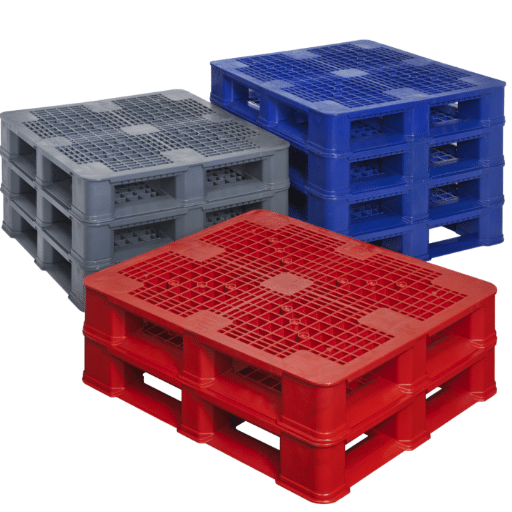
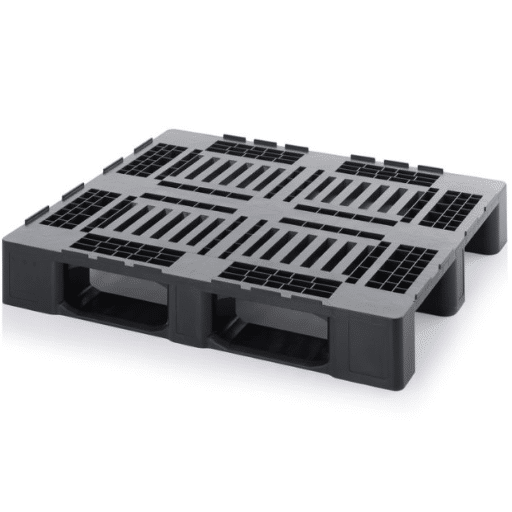
Engineered for strength and stability, this pallet is the workhorse of any demanding warehouse or closed-loop system. It features a solid bottom deck or runners that provide a secure, flat surface, allowing pallets to be safely block-stacked with heavy loads without damaging the product underneath. Its robust construction makes it the ideal choice for use in high-bay racking systems and automated conveyors where reliability and structural integrity are critical.
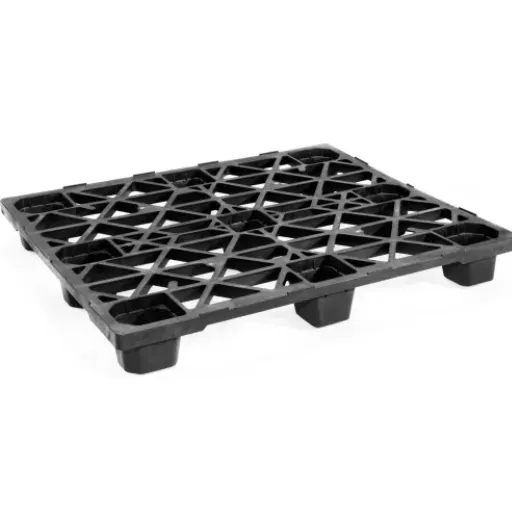
This pallet is the ultimate space-saving solution, designed to dramatically reduce costs in shipping and storage. Featuring specially designed legs, empty pallets fit snugly into one another, cutting storage space requirements by up to 75%. Its lightweight yet durable construction lowers freight costs, making it the superior choice for one-way export shipments and large-scale distribution networks where optimizing return logistics is essential.
| Parameter | Stackable Plastic Pallet | Nestable Plastic Pallet |
|---|---|---|
| Primary Design Feature | Solid bottom deck or runners (e.g., 3-runner or picture frame base). | Hollow, tapered legs that fit inside one another. |
| Racking Load Capacity | Yes, specifically designed for use in pallet racking systems. | No, cannot be placed in racks due to the lack of a bottom deck. |
| Stacking (with Load) | Excellent; can be safely block-stacked with heavy product loads. | Not recommended; the legs can damage goods on the pallet below. |
| Storage When Empty | Can be stacked, but does not save significant space. | Nests together, saving up to 75% of floor or truck space. |
| Return Logistics Cost | Higher, as they occupy the same space whether full or empty. | Very low, as many pallets can be returned in a single stack. |
| Automation Compatibility | High; works seamlessly with most automated conveyors and ASRS. | Low; legs can get caught on rollers and are generally unsuitable for automation. |
| Typical Applications | Closed-loop systems, warehousing, manufacturing, food processing, ASRS. | One-way export, retail distribution, air freight, large-scale logistics. |
| Weight | Heavier, due to a more robust and solid construction. | Lighter, designed to reduce shipping costs. |
| Initial Cost | Higher, reflecting a more durable and complex design. | Lower, optimized for one-way shipping and mass distribution. |
| Durability / Lifespan | Very high; built for long-term, repeated use in demanding environments. | High, but generally lower than stackable models; built for resilience. |
Stackable plastic pallets and nestable plastic pallets are both designed to utilize storage space efficiently. Stackable pallets allow for vertical stacking, maximizing warehouse floor space, while nestable pallets can nest inside each other, saving even more space when not in use.
Using stackable or nestable pallets enhances material handling efficiency. Stackable pallets are ideal for heavy loads and can be easily moved with forklifts. Nestable plastic pallets, on the other hand, are lightweight and easy to handle, making them suitable for various applications, including export and shipping.
Stackable & Nestable Pallet types can lead to reduced freight costs. Stackable pallets maximize pallet storage in trucks, while nestable pallets minimize the volume needed for transportation, ultimately lowering shipping costs.
Plastic pallets are designed to withstand heavy-duty use without the risk of mildew or structural damage. Nestable plastic pallets are made from hygienic materials, making them ideal for industries like pharmaceuticals, where cleanliness is crucial.
Different pallet designs cater to various needs. Stackable plastic pallets are perfect for racking systems, while rackable plastic pallets can be used in edge-racking configurations, allowing for flexibility in storage facilities.
Choosing the right pallet type can significantly impact your storage system. Stackable pallets provide a solid base for heavy loads, while nestable pallets offer unique designs that allow them to sit tightly together, maximizing your storage capabilities.
The core technical difference between these two pallet types lies in their base construction, which dictates their primary function. Stackable pallets are engineered with a solid bottom deck or a runner system. This design distributes weight evenly and provides a stable, flat surface, making it structurally sound for stacking with heavy loads and for use in racking systems. Nestable pallets, conversely, feature hollow, tapered legs. This design’s sole purpose is to allow the pallets to “nest” or collapse into one another when empty.
Performance is evaluated using three key metrics: static, dynamic, and racking load capacity. Stackable pallets consistently offer superior performance across all three. Their robust base gives them a high racking capacity, making them the only choice for storage in high-bay pallet racks. They also boast high static and dynamic load ratings suitable for heavy industrial use.
While both pallet types are accessible by forklifts and pallet jacks (usually with 4-way entry), their compatibility with automated systems differs significantly. The consistent and flat bottom surface of stackable pallets makes them ideal for use on automated conveyors, sorters, and within ASRS (Automated Storage and Retrieval Systems), where stability and predictability are essential.
Both pallet types are typically made from highly durable polymers like High-Density Polyethylene (HDPE) or Polypropylene (PP). However, stackable pallets are often manufactured using high-pressure injection molding to create a more rigid and solid part, sometimes with steel reinforcements for extreme racking loads. This results in exceptional durability and a very long service life, making them ideal for demanding, high-frequency, closed-loop systems. Nestable pallets are designed to be lightweight yet resilient. They are often made using thermoforming or a lower-pressure injection molding process to balance impact resistance with the need to keep weight (and cost) down for shipping.
The economic calculation for each pallet is different. The primary advantage of nestable pallets is their unmatched logistical efficiency in reverse logistics. Because they save up to 75% of space when empty, they drastically reduce the cost of return freight and minimize warehouse storage footprint. This makes them the most cost-effective choice for export and large distribution networks. Stackable pallets have a higher initial purchase price but deliver a strong return on investment (ROI) in closed-loop or internal systems. Their extreme durability, long lifespan, and reusability mean a lower cost-per-trip over hundreds or even thousands of uses.
A heavy machinery manufacturer was dealing with safety and efficiency issues in their parts warehouse. Wooden pallets used to store dense metal components were frequently failing in their high-bay racking systems, posing a significant risk to workers and damaging high-value inventory. To resolve this, they adopted our heavy-duty stackable pallets. The pallets’ superior structural integrity and high racking capacity completely eliminated storage failures. Their consistent dimensions streamlined handling with forklifts and automated conveyors, improving the overall speed and reliability of their internal logistics loop.
A national retail chain with hundreds of stores faced enormous logistical costs in their supply chain. They were using wood pallets to ship goods from distribution centers to stores, and the expense of shipping empty pallets back was substantial. Furthermore, the space taken up by these empty pallets in store backrooms was inefficient. They switched to a fleet of our lightweight nestable pallets. This solution drastically reduced their reverse logistics costs, as the pallets’ space-saving design meant far fewer trucks were needed for returns. This move also freed up valuable storage space at their retail locations and improved handling ergonomics for store employees.
Chen Wei stared at the splintered wooden pallet on his warehouse floor. This marked his third operational loss for this […]
This piece explains the difference in the construction and operation of the two most popular types of pallets, as well […]
Procurement and operations teams face a persistent dilemma: choose low-cost wooden pallets that wear out quickly, or invest in reusable plastic […]
Driven by increased industrialization, expanding e-commerce sectors, and supply chain inefficiencies, the global pallet market is moving at an unusual […]
The importance of proper chemical storage extends beyond ensuring safety at the place of work as legislations and policies have […]
In the complex world of logistics, the humble pallet is the unsung hero. These structures form the backbone of supply […]
Choosing the wrong type of pallet means wasting money on storage and transport. Stackable and nestable pallets are the most […]
Demand for such traditional wooden pallets has grown over the last few years as a result of their enhanced structural […]
An expert manufacturer of industrial plastic pallets and custom solutions for businesses worldwide.