The operation of the supply chain is at the heart of all industries today, and the use of green practices in businesses has increased, and looking at the concept of durability in issues concerning resources like pallet pooling. It is a new logistics venture that seeks to overhaul the old-school pallet systems by providing a pallet-sharing system that is environmentally conscious. This involves pooling of standard pallets between players in a supply chain so that resources are conserved, efficiency is enhanced, and costs are saved – all aiming at reducing pollution. This paper aims to appreciate the new wave that is pallet pooling and the services that it seeks to provide to the logistics field, its functions, and the need for such services in the wake of the green movement. Be it the integration of logistics processes or the fight for greener companies, pallet pooling has solutions.
Introduction to Pallet Pooling
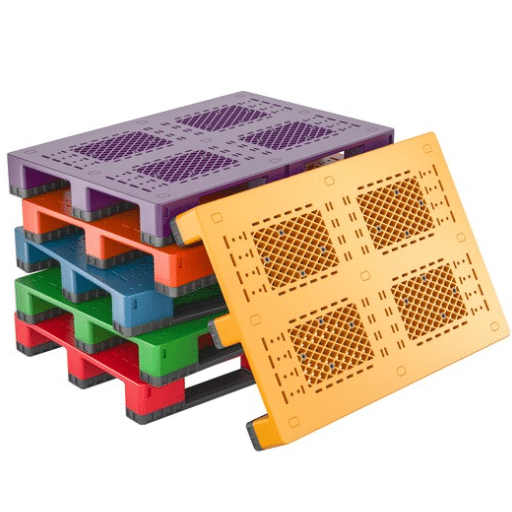
It is common knowledge that the logistics field is one of the fastest-growing fields. Pallet pooling is a concept that favors the sharing of a single pool of standard pallets rather than the use of pallets by individual companies for their products. The concept of pallet pooling works on the principle of rentals, wherein pallets are made available, controlled, and maintained by the third-party pooling provider. It does away with the need for multiple pallets, saves on the inconvenience of handling them, and most importantly, guarantees the availability of high-class pallets to the users. The system is popularly known in the transportation industry for the enhancement of the chain of logistics, cost effectiveness, and being eco-friendly due to the use of recyclable goods.
The Concept of Pallet Pooling
Simply put, pallet pooling is a method that brings many operational and management advantages to fields of activity that include the movement of goods. It provides advantages such as negating the purchase of costly pallets by using a common set of pallets that are shared amongst businesses and pooling providers due to economies of scale. This therefore reduces the occurrence of pallets getting lost or destroyed because the company controls making sure the pallets are available, in good condition, always. This includes all the cleaning and maintenance, as well as quality checks.
It is convenient because pallet pooling allows better logistics, which includes handling of stock, pallets, and pallet storage, thus reducing availability issues. There is also consideration of sustainability because there is a reduction in the major production of new pallets; therefore, waste and carbon emissions are minimized through the entire system. Its dynamic nature encourages the use of pallet pooling systems even in smaller volume business organizations. In conclusion, there is no other option that has proved to be as effective and functional as producing the goods that are currently trendy as pallet pooling.
Why Pallet Pooling Matters in Today’s Logistics
Across the globe, pallet pooling is used to coordinate logistics within supply chains, increasing effectiveness and reducing the ecological footprint of distribution operations. During various phases of the supply chain, the sharing of pallets of the same size and specifications leads to daunting cost implications of purchase and repair of the pallet, as well as the elimination of storage costs for businesses. This approach does away with the inherent inconvenience and failures of one-way or proprietary pallets, helping companies stop worrying about assets and do more work.
Like any other industry, pallet pooling upholds sustainability in that it reduces competition for wood in manufacturing, helps lower overall emissions, and generates less waste due to less disposal of materials. Additionally, pallet users within logistics outsourcing industries derive advantages from smoother supply chains since the same pallets enable the transformation of transport, handling, and warehousing operations. Nonetheless, on top of the above, many pallet pooling systems have come up since then as track and trace has gained momentum alongside IoT and RFID applications in hard but real-time visibility, making stock control better and reducing time ‘losses’. Thus, looking further, one can say that as more and more countries become a part of globalization, establishing cost-efficient, sustainable, and scalable logistics has evolved to be one of the most important methods within the system of pallet pooling.
Core Problems Addressed by Pallet Pooling
Substantial Capital Outlay for Pallets
Purchasing and sustaining pallets in large numbers can be expensive for organizations. In pallet pooling, there is no need for organizations to possess their own pallets, as this enables them to access pallets through a common pool, which reduces the initial expenditure of capital.
Lapses in Managing Pallets
Hoarding inefficiency tends to be within reach when a company uses and manages pallets, as extremely poor tracking, storage, and retrieval can be experienced, resulting in shortages and excesses of pallets. With a pallet pooling scheme in place, this is attainable because such enhanced systems, including IoT and RFID, make it easier for the tracking and retrieval of the pallets to flow seamlessly, thus improving efficiency and reducing wastage.
Environmental Accounting
Practices that utilize pallets in a traditional fashion destroy many pallets due to their single-use orientation and also cause a bottleneck in recycling. Instead of single-use pallets, pallet pooling will considerably reduce the negative impact on the environment by reducing waste and enhancing resource consumption through the reuse and repair of pallets.
Global Operations Bring Complexity
It is not uncommon for businesses that have operations in many countries to encounter difficulties in the management of pallet distribution. Thanks to standardized “pallet pooling networks” that can easily be adopted in any region’s supply chain, pallet distribution does not pose a problem to global economies anymore.
The Costs Related to Returns
The cost of tracking and returns when it comes to reverse logistics is not a cheap one. There is a group of pallet pooling companies that handle such matters, leaving the chaining companies to run their business and not worry about pallets after they have served their purpose.
Pallet Pooling vs. Traditional Pallet Management
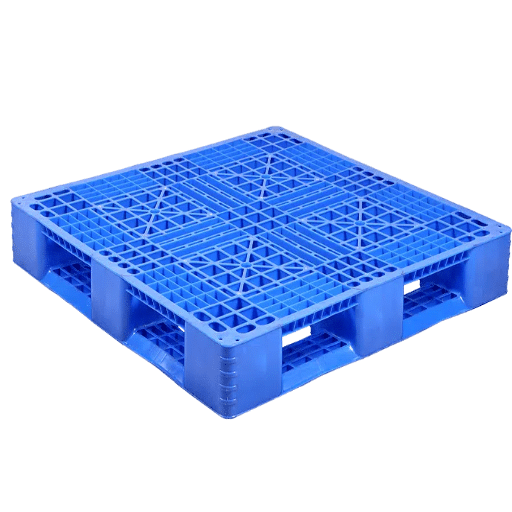
The concept of pallet pooling has changed the arduous process as compared to the management of pallets. To need to buy, store, or maintain cycles of pallets, the systems have been entirely taken care of by the service provider, even though it is not necessary due to pallet management. Therefore, it limits the financial engagements, capital injections, and repairs or replacement in the future. However, it is important to note that a pallet management strategy is indicative of the ownership and operational engagements with pallets, hence leading to limitations in operational efficiency. Also, pallet pooling, on the contrary, enhances the availability and quality of pallets while traditional compellations may hinder this owing to wear and tear and lack of care. All in all, pallet pooling improves logistics by effectively utilizing resources.
Defining Pallet Pooling
Pallet pooling is a way of service delivery with logistics that companies operate by leasing deliveries and pallets of goods through a common sharing network of a third party. In contrast with the ownership, storage, and maintenance of its own pallets, a company opting to use such a system is supplied with pallets, stored and maintained by the provider. Thus, there is a mitigating factor for capital asset spending; inordinate variation in the quality of pallets is avoided, and operational inefficiencies in the supply chain are curbed. Pallet collection, repair, and recycling, for example, tend to be offered and managed by the provider while the business participants concentrate on making the best use of pallets, thereby reducing waste generation and enhancing performance. This method reduces the costs of operation and processes, and also protects the environment due to conservation and the use of less and fewer materials.
Comparing Pallet Pooling and Ownership Models
When considering the benefits and downsides of pallet pooling and pallet ownership, you need to focus on several issues. These issues include cost, operational efficiency, and the effect on the environment. In most cases, the use of pallets financially attention as opposed to pallets financing is able to shift from day one costs. Such a setup is usually accompanied by maintenance, service logistics costs, in addition to certain package repairs that are based on a pay-per-use basis, thus ensuring that the operations of those using the pallets remain very efficient. The pallet pooling service providers also help in empty pallet handling and redistribution, thus reducing inefficiencies within the chain.
In contrast, possession frameworks provide opportunities to exercise authority over the use of pallets in full and entail a series of costs related to the purchase, maintenance, and storage of pallets. It also includes the cost and complexity of providing spare parts. The disadvantage is that quite often this may seem advantageous due to fairly stable loads and their predictable usage, not least because such existing pallets can be redesigned more conveniently and appealingly, respectively.
But the environmental perspective advocated by pallet pooling is that these systems are environmentally-friendly, because they promote the acceptability of recycled and reused pallet monopolies among people to reduce their prevalence and remove them altogether. As with most things, eco-friendly possession is also conceivable, only afforded does not offer such efficiencies as a pooling system. This is because the effectiveness of using any of these ownership types is determined by the necessary range, funds, and environmental policy of the firm.
How Pooling Works in Supply Chain
In the business context, pallet pooling refers to an entrepreneurship model whereby participants hire wooden flat structures commonly known as pallets, cradles, or boxes, among others, rather than buying the entire requirement of such wooden pallets. There are, however, typical phases in such a system.
Deployment and Distribution: In need of proper and standardized vehicles, and such is provided by pooling companies at the specified areas. Those boxes or whatever else it is that they are given are subsequently used for movement, cross transportation, etc.
Management and Tracking: To avoid any hiccups in terms of efficiency and asset losses, the use of IoT technology or RFID systems is embraced as advanced tracking methods, which can report the position and conditions of the assets at any given time. This allows information about the maximum use of available assets to be provided in real-time optimization.”
Recovery and Reconditioning: After the assets have finished the transit process, they are given back to the supplier, and they are assessed in terms of whether they are broken and, if possible, the broken ones are fixed or discarded before they are returned back.
This practice reduces the need for capital investment over time and enhances the procurement processes, thus enhancing integration of plans and sustainability activities within the firm by helping cut wastage and increasing the life of the assets. By transferring these elements to logistical partnerships or third parties, this enables companies to concentrate on their primary functions while taking advantage of scale economies, and environmental concerns become minimal. For instance, due to pallet pooling, companies are in a position to perform their primary function of production with ease without worrying about wasted pallets and carting them back individually.
Key Benefits of Pallet Pooling

Cost Efficiency: More businesses can collectively use pallets, thus reducing the out-of-pocket cost, typically spent on buying, looking after, and changing broken pallets.
Sustainability: Such an arrangement broadens the lifespan of pallets and enhances repair and maintenance procedures, which reduces piling of waste in the environment.
Convenience: Standardization of pallets allows coordinated logistics as well as storage and inventory procedures because pallets are always readily available.
Quality Assurance: As a result of periodic cleaning and maintenance of the shared pallets, all containers remain in good shape, and problems in the supply chain do not occur.
Scalability: In turn, pallet pooling enhances business development by allowing for less rigid and more effective approaches to fulfill different needs.
Sustainability and Environmental Impact
One more way of going Green is pallet pooling, which helps with saving resources by reducing waste produced, conserving the environment, and reducing emissions. Reusability of pallets in shared mode, as opposed to single usage, ensures less production of new material and less waste, as opposed to broken and tossed away pallets. The principles of green business apply very effectively to the business model of pallet pooling, which addresses prolonging the life of a pallet quite a bit through repairing and recycling it. Furthermore, requirements for transportation in pooling systems are selected in such a way as to minimize the use of vehicles and their emissions by routing the vehicles effectively. All these practices contribute to achieving the supply chain objectives using low energy resources and are able to practice economic paybacks together with environmental positives.
Cost-Efficiency in Logistics Operations
Advanced technology, business process management, and optimum utilization of resources enhance logistical services at reasonable costs. Some of these strategies were practicing the implementation of modern systems, such as WMS (warehouse management system) and TMS (transportation management system), that facilitate monitoring of stock levels and management of processes such as routing. Moreover, economies of scale in forwarding reduce costs where, for example, the addressing of consolidation of freight or effective arrangement of the premises helps in the reduction of overheads. Utilizing third-party logistics models in order to reduce both owned headcounts and self-operating centers is another alternative. Companies also use pallet pooling despite the explicit attention given to saving such expenses. Such approaches help cut down costs without sacrificing the core functions of the firm.
Scalability and Flexibility of Pallet Pools
Pallet pools are designed to provide efficient and effective planning for this, when demand changes. Their business is based on shared user palette systems, allowing for excess palette only at times, when it is required, i.e., during high production cycles or seasonal demand. Thus, businesses do not need to buy and maintain dedicated palettes in the house, which is a capital saving as well as a reduction in space management. Further, providers offering pallet pooling usually feature sophisticated diagnostics techniques that make it possible to accurately follow the status and location of the pallets in use. This system makes it easy for business firms to grow or shrink without worrying about logistical constraints, while new businesses appreciate the flexibility that caters across countries with different supply chains, enhancing efficiency at minimum cost.
Challenges in Implementing Pallet Pooling

Even though pallet pooling has its benefits, there are also some difficulties that a company might face in the process of execution:
Initial Setup Expenses – The decision to implement a pallet pooling system may require high capital outlay in terms of infrastructure, technology, and staff education.
Incompatibility Problems – Meeting particular operational or equipment requirements may also be hard, especially for sectors with pooled pallets that have unique needs.
Supply Chain Coordination – The coordination of the use and return of pool pallets among various interested parties takes elaborate planning and communication.
Locational Availability – There may not be other providers of the pallet pooling services in some locations. This limits the integration of globally dispersed activities.
Damage and Servicing – Damage to the use of the pooled pallets might become a challenge with frequent use, thus raising the cost of repair or replacement of the pallets.
It will be beneficial to engage in responsive tackling of these issues by means of proper planning, cooperation, and resources to qualified providers to enhance the advantages of pallet pooling practices.
Identifying Common Challenges in Adoption
Pallet pooling systems are beneficial to several businesses, but their adoption is not without its fair share of critical issues. To begin with, the variations in cost are a major issue, especially the start-up cost and the differential rental rates, which may overstretch the budget of any small to medium-sized business. Supply chain variation also poses a challenge because during this period, the supply of standardized pallets may be inadequate either for certain regions or schedules, leading to logistics delays and inefficiencies. In large operations, however, due to the large-scale mention of palleting units, it becomes difficult to form one’s own systematics and rules on asset accountability and tracing of such palleting units from their original borders and primary bases.
Making pallet pooling possible calls for an inclusive strategy. This typically involves applying the most advanced tracking technology, encouraging partnership between suppliers, and ensuring periodic assessments in order to adequately address such concerns.
Strategies to Overcome Barriers
To efficiently address the issues that have been brought by pallet pooling, firms should consider employing a variety of approaches to address the issue.
Introducing the Use of Advanced Track Technology
With the aid of RFID, GPS, and also through the use of blockchain, there is improved effective coordination as pallets will be easily tracked. This helps in cutting down, if not eliminating, the loss of assets, as well as serves as the proper arrangement of assets in inventory.
Build Effective Relationships
There is efficiency in terms of working within networks that involve pooling service providers and benchmarking most of the problems arising from pooling activities. Regular engagement and clarification of roles minimizes the intra-organization distribution and consequently, enhances the production of the collection and use of controlled pallets.
Improve the Function of the Supply
An in-depth study of the operational processes that are in place in an organization will identify inefficiencies and bottlenecks that will need to be addressed. These processes can then be altered and ‘machines’ introduced with a view to helping organizations to make use of pallets as fully as possible physically, even as reducing downtimes and delays.
Bias Zero Measures
In the context of loss prevention and safer material handling practices, it is evident that a regular audit of the available pallets and the assessment of their condition play an important role. Performing damage control, especially in the case of replacing or repairing broken pallets promptly, needs to be planned.
The growing demand for pallet pooling should be addressed
When its operations become massive, it’s necessary to look at growth-oriented solutions in warehousing management processes like scalable pooling in combination with dynamic forecasting, such that even with ups and downs in demand, it’s not expected to have any disruption in asset management or on any of the services offered to the customers.
When businesses augment their processes with these precise approaches, they will be overcoming the usual challenges in pallet pooling, which will optimize the supply chain logistics in terms of effectiveness and environmental impact.
Ensuring Shipment Security with Pallet Pooling
In the process of supply chain management, there is a critical aspect of the shipment, and such is the use of pallet pooling systems. Standard safety procedures are essential to ensure the smooth running of the activities involved. This involves using safe and standard pallets, and all the standards of the pallet are maintained in order to avoid any damage or pollution during the movements. Also, regular checks and repairs of the pooled pallets guarantee that the pallets are strong to avoid any damage to the goods being carried or even accidents.
The last but not least aspect of shipment security is traceability. With the use of devices like RFID or Global Positioning System (GPS), businesses are able to track the movements of deliveries and their security. The gadgets ensure that the product can be monitored throughout the transportation and even address theft, breakage, and interruptions. Digital coordination with storage management systems increases control as well as ease in the reconciliation of stock.
Finally, active coordination with reliable pallet suppliers contributes to improving all the logistics safety perspectives discussed. Cooperation with partners focusing on managing data responsibly, maintaining hygiene and cleaning practices, as well as those conformant with international standards (for instance, ISPM-15 standards for wood pallets exported to other countries), helps address the external environment and ensures compliance. Robust infrastructural systems, tracking technology, and partnering strategies, so implemented, shall make pallet pooling a feasible way of achieving secure shipments at every level within the supply chain.
Current Industry Trends and Innovations

The most significant shifts in the barriers align with the leading trends in pallet pooling industries embraced in today’s world – sustainability and digitalization. In the case of the aforementioned industries, it is seen that most of the companies have already started to use ‘green’ type of materials that might include plastic pallets, activities aiming to lower the carbon footprint, etc., due to environmental pressures and more often imposed regulations. At the same time, improvements in control systems, and more so in RFID and IoT systems, have propagated in supply chains, promoting operational effectiveness. This progress combats the problem of loss, assists with the allocation of resources, and is in line with the fact that the logistics and supply chain sector goes green and smart.
Latest Developments in Reusable Plastic Pallets
Plastic pallets that can be reused are improving thanks to enhanced focus on leading capabilities such as technology, sustainability, and durability. One innovation is the inclusion of more robust pallets that use high-density polyethylene and polypropylene, which increases the loading performance of the pallets, increases their lifespan, while reducing costs for repair and maintenance. It is also reported that some manufacturers seek to reduce the environmental footprint by using recycled plastics, though without affecting the performance. The ideas behind all these strategies, among others, favor the concept of ‘pallet pooling,’ which is less costly, wasteful, and more ethical.
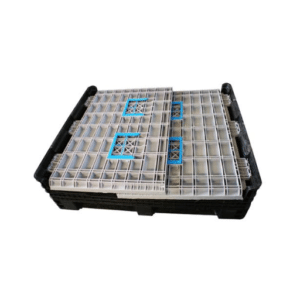
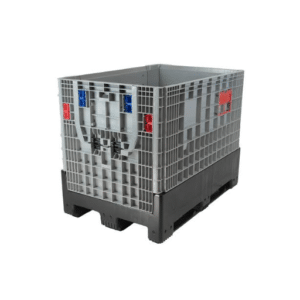
Regarding technology, attention is shifting to smart elastic boards with inbuilt RFID tags and synchronised IoT sensors, which have made their usage more prevalent. These technologies allow stakeholders to track the position, temperature, and mode of transport in real time, which is crucial for industries like pharmaceuticals and food chains where tight supply chain management is required. Moreover, more collapsible and modular pallet designs are being embraced for their benefits in efficient storage and transport, especially during reverse logistics. These strategies expressed herein demonstrate considerable progress in the effective management of resources, tactful design, and an economical mode of transportation.
Impact of Real-Time Tracking on Pallet Pooling
Pallet pooling has been significantly enhanced by the invention of real-time tracking, which makes it possible for every pallet inside the supply chain to be closely monitored in terms of its movements, usage, and location. This, in my opinion, helps users to forecast demand efficiently, cut down on losses, and boost productivity. There is also a provision of information on demand that enhances the distribution of resources and, consequently, lowers the overall investment and also improves the visibility of the supply chain.
Future of Pallet Exchange Systems
In order to carry on the development of the traditional pallet swapping systems, automation, digitization, and sustainability will play a big role and will push the system’s scale further. Automation will be in the next level using machine vision, as well as robotics in smart sorting and stacking/decoupling of the pallets, or even handling of the individual pallets themselves. Too many factors mentioned above can be seen compounded while handling the pallet pooling process. People need to be connected for a pallet to reach its destination. Hence, the Internet of Things comes in handy, providing insights based on available data in order to prevent losses incurred on pallets. On the other hand, the recording of processes, as well as transactions which involve the movement of the pallets throughout their lifetimes, can possibly aid the process of accountability too, with the introduction of the predominantly distributed ledger.
As people become more conscious of environmental friendliness, some sustainable pallet materials are being vigorously pursued. At the same time, principles of the circular economy are emphasized in order to reduce pollution. Enhanced efforts are being made towards the development of new lightweight, robust, and ecological pallets, which are expected to substitute existing types and reduce the waste associated with them, along with any carbon emissions that may arise
In general, a new attitude will appear in respect to pallet pooling – joint technologies and sustainability will revolutionize transport systems, making them more effective and economical in the majority of global chains and less destructive towards the environment as well.
Reference Sources
A Review Analysis of the Pallet Supply Chain
This paper discusses closed-loop schemes like pallet pooling or rental systems and their impact on the supply chain.
An End-to-End Bidirectional Authentication System for Pallet Pooling
This study explores sustainable and cost-effective measures for pallet pooling and addresses challenges like weak data.
Joint Decision on Wooden Pallet Lease Pricing and Purchase Volume
This paper examines pallet pooling in the Chinese market, focusing on leasing and recycling modes.
Frequently Asked Questions (FAQs)
What are some of the benefits of pallet pooling in the context of sustainable supply chain management?
Pallet pooling enhances many areas of environmental protection, including supply chains, as they help in the replacement of disposable units with returnable ones inside closed loops. Instead of several firms owning expensive disposable products constructed from disposable wood, only a few will own such equipment that will help use stocks for longer, thus decreasing the rate of production of pallets, hence less CO2 and transportation expenditure. Sanitization and repair where indispensable, are only possible with preventive pooling, which satisfies the food safety programs’ concerns and leads to less damage to products and better overall sustainability, including mitigation of costs.
Why would I opt for a pooling system in a high-volume context rather than invest in the creation of a pallet fleet myself?
When it comes to logistics management on a large scale, opting for pallet pooling rather than owning pallets might be a more economically viable option since it minimizes certain costs, such as administrative costs, auxiliary storage, and even disposal. Rental of pallets and reusables supplied by way of service centres provides a constant asset allocation along with a steady supply aimed at the achievement of the core business. Pooling, after all, serves to lower shipping expenses and enhance the supply chain efficiency as every company makes sure that top form pallets are always on hand.
What defines the standards of good pallet quality in a pool system and for reusable pallets?
Contained pallet systems emphasize the quality and durability of pallets in order to prevent the destruction of goods and also encourage smooth logistics. Regular operations done in service centers are upkeep of pallets, i.e., refurbishment, repairing, and cleaning of pallets, especially concerning food safety intervention standards in some instances, and sorting out pallets known as durability blocks and the normal ones. This reduces the amount of low-quality pallets in the system and also has a drawback of returns and losses as well.
Can the use of various types of pallets other than wood block pallets eliminate the hidden costs?
Yes. If one does pallet pooling, they can avoid some costs, such as human resources bent on monitoring owned assets, extra storage space for excess pallets that are not meant for use, and there are other costs as well that occur for replacing lost, broken, or defaced pallets. However, renting or accessing a common pool of pallets shifts burdens related to repairs and recoveries to the provider and would, in essence, generate better cash flows to the organization and make it more cost-effective as well as limit the environmental impact of new pallets.
What are the effects of product damage and compliance with food safety programs as a result of pooling?
Generally, it is the practice of pooled pallet service companies to inspect and clean, repair if need be, all pallets before they are taken into custody to ensure that certain food safety programs are adhered to, and hence there is no point of contamination in whatever way possible or even damage, for that matter. It is advisable to utilize pallets that are made of good quality and suitable for the appropriate specification in a non-returnable setup, all these factors contributing to the increase of food and medical supply concentration.
Does the use of the pallet pooling approach extend to a number of other organizations, and also mainly to collaborative supply chain structures?
Yes, it is possible. The pallet pooling approach is created for multiple or different clients through the entire supply chain who come together to practice collaborative logistics. A pooling system allows for the provision of pallets, reducing every organization’s need to keep a huge number of pallets since they can be retrieved and redeployed to different service points, therefore keeping the structure filled up in terms of pallets at a minimal cost.
How does pallet pooling fight against deforestation and relieve the atmosphere from carbon emissions?
Pooling significantly lengthens the usage of reusable pallets and, therefore, reduces the need for endless manufacturing of pallets. Consequently, a smaller number of new pallets required suggests fewer resources and CO2 from production and transportation. Reuse within the closed loop, repair schemes, and service centres pooling is an ecologically friendly option that ensures sustainability without compromising on the logistic effectiveness.
In case of transition to pallet pooling, what amount of efficiency-related shortcomings should the businesses expect?
In some cases, there are difficulties, such as adjusting supply chain management practices for a pooling system, applying block or other standard types of pallets, and including renting costs in the financial forecast. Furthermore, if there is an asset sharing, as this would be what we can call the ‘rental’ or ‘pooling’ environment, enterprises will need enhanced technological structures to monitor the sharing and return of these assets to the service centers. The advantages, though, come from factors such as cost reduction, including shorter turnaround time due to effective logistics; regardless, these problems are usually overcome.